
You are here
Feed aggregator
En Egypte, le président assure qu’il quittera le pouvoir en 2030, mais œuvre à la pérennité de son régime militaire
Dans deux discours prononcés la semaine du 12 octobre, Abdel Fattah Al-Sissi, au pouvoir depuis 2013, a annoncé qu’il ne briguerait pas de quatrième mandat. D’ici à 2030, il veillera toutefois à ce que ses éventuels successeurs soient sélectionnés et formés par la hiérarchie militaire.
Categories: Afrique, Diplomacy & Crisis News
Le drone sous-marin australien Ghost Shark sera doté de munitions rôdeuses Altius 600 et de mines navales
Même si elle a obtenu la garantie qu’elle recevra trois sous-marins nucléaire d’attaque [SNA] de type Virginia prélevés dans la dotation de l’US Navy au cours de la prochaine décennie, la marine royale australienne [RAN – Royal Australian Navy] devra maintenir en service ses six sous-marins appartenant à la classe Collins pendant bien plus longtemps...
Cet article Le drone sous-marin australien Ghost Shark sera doté de munitions rôdeuses Altius 600 et de mines navales est apparu en premier sur Zone Militaire.
Categories: Défense
Food Insecurity and Child Malnutrition Worsen in Afghanistan Despite Strong Agricultural Season
Credit: UN Photo/Luke Powell
By FAO and WFP
KABUL, Afghanistan, Oct 20 2026 (IPS)
Nearly 40 percent of the population of Afghanistan is projected to face high levels of acute food insecurity this winter, and cases of acute malnutrition are expected to soar during 2027, the Food and Agriculture Organization of the United Nations (FAO) and the United Nations World Food Programme (WFP) warned.
This is according to the latest Integrated Food Security Phase Classification (IPC) analysis, which projects that approximately 19.2 million people (38% of the population) will face high levels of acute food insecurity during the November-April lean season, which lasts through the winter. This is an increase from 17.4 million projected for the same period a year earlier.
An estimated five million of those who are acutely food insecure will be facing emergency levels of hunger (IPC Phase 4) – double the number projected for April-September 2026 – meaning immediate food assistance and urgent emergency agriculture support are needed to prevent deaths and total livelihood collapse. The most severe classifications are projected in Badakhshan, Badghis, Daykundi, Ghor, Samangan, Sar-e-Pul and rural Ghazni.
Acute malnutrition is beginning to define the crisis in Afghanistan with mothers and children at the forefront. Malnutrition cases are expected to increase by nearly 10 percent compared to 2026 to four million. One-quarter of these are expected to be severe and life-threatening. Prevention and treatment services are lagging well behind despite cases increasing, leaving women and particularly children more exposed.
The crisis in Afghanistan is being driven by several shocks that are affecting Afghan families and the humanitarian response. More than 1.2 million Afghans have been forced to return home from Iran and Pakistan this year, adding pressure to already overstretched communities. Border closures and disruptions to shipping through the Strait of Hormuz and other critical trade routes are also driving up prices for basic goods. At the same time, dramatic funding shortfalls are limiting humanitarian assistance just as needs are growing. All these issues are converging to drive hunger and malnutrition higher, particularly as winter approaches.
Improved harvests have not restored families’ access to nutritious food
Favorable rainfall supported crop production and pasture recovery in 2026, benefiting many farming households. The anticipated El Niño season could also bring above-average rainfall, helping replenish water sources, restore pasture and support winter and spring crops. Timely agricultural support could help farmers turn favorable conditions into food and income, but rainfall alone will not secure the next harvest. High fertilizer and agricultural input costs and low crop prices may force poorer farmers to plant less or use fewer inputs. Wetter conditions also increase the risk of localized flooding, erosion, crop damage and plant and animal disease.
However, improved harvests and greater food availability are not necessarily translating into improved food security. Persistent unemployment means many families who do not grow their own food cannot afford a nutritious diet, even when food is available. Winter will bring fewer opportunities for agricultural work, further reducing incomes and increasing the need for humanitarian assistance.
Scale up support before needs deepen further
FAO and WFP are calling for urgent funding to scale up food assistance, emergency agricultural support, and malnutrition prevention and treatment. Support must reach families before winter restricts access to vulnerable communities and farmers miss critical planting windows. Afghanistan cannot afford another year of worsening hunger and malnutrition.
Richard Trenchard, FAO Representative in Afghanistan:
“This year’s strong harvest shows what Afghan farmers can achieve. But for a parent with no steady income, nutritious food in the market can still be out of reach for their family. The drumbeat of shock and crisis is relentless, but we know progress is possible. Past experience shows that timely, targeted food and emergency agricultural assistance can bring acute food insecurity down. Helping families grow or afford nutritious food for their children can also help prevent malnutrition long before children need treatment. We need to scale up these practical solutions now, act ahead of foreseeable shocks and invest in processing and local agribusinesses that connect farmers to markets and create jobs. Families need support to get through this winter and opportunities to earn a dependable living that helps them withstand the next shock.”
John Aylieff, WFP Country Director in Afghanistan
“Hunger and malnutrition are tightening their grip on Afghanistan’s families, pushing more people towards the brink just as resources to respond are running short. This crisis is increasingly being defined by the gap between growing needs and shrinking funding. We still have a window to act, but it is closing fast. With urgent support, families can get through the winter with dignity. Without it, many will face impossible choices no parent should have to make.”
IPS UN Bureau
Excerpt:
High food and transport costs, scarce work and declining humanitarian assistance are squeezing families’ access to food as winter approaches.
Categories: Africa
« C’est un ping-pong permanent » : à l’Assemblée, LFI et le gouvernement s’accusent mutuellement de la responsabilité des violences urbaines
RÉCIT - Ce mardi, lors d’une séance très agitée de questions au gouvernement, l’exécutif et les mélenchonistes se sont renvoyé la balle, pointant leurs responsabilités respectives.
Categories: France
Est de la RDC : au Parlement européen, Hilde Vautmans réclame l’application des sanctions contre le Rwanda
La situation sécuritaire dans l’Est de la République démocratique du Congo ( RDC) a été évoquée lundi 19 octobre 2026 lors d’une session du Parlement européen à Strasbourg par l’eurodéputée belge Hilde Vautmans. Elle a interpellé les institutions européennes sur la persistance du conflit dans l’Est du pays et sur la nécessité de mettre en œuvre les résolutions déjà adoptées par le Parlement européen.
Categories: Afrique
Bavuma epic drags SA back into Test - have they time to beat Australia?
Captain Temba Bavuma drags South Africa back into their Test series against Australia but did his side bat on too long on day three?
Categories: Africa
Réunion des ministres sectoriels de l'UEMOA ce 23 octobre
La Commission de l'Union économique et monétaire ouest-africaine (UEMOA) organise, le 23 octobre 2026 à Ouagadougou, une réunion des ministres sectoriels des États membres consacrée à la restitution des livres blancs des filières coton-textile, phosphates-engrais et riz.
Cette rencontre vise à présenter aux ministres sectoriels les livres blancs et les programmes relatifs aux filières coton-textile, phosphates-engrais et riz afin de favoriser leur appropriation, de susciter leur adhésion et d'obtenir leur soutien politique pour une mise en œuvre réussie.
Selon le communiqué de presse, les échanges permettront de recueillir les orientations et recommandations des ministres, ainsi que leur adhésion à la vision régionale. Il s'agira aussi de renforcer leur engagement dans une coalition d'acteurs publics et privés en vue de mobiliser les financements nécessaires et d'assurer la mise en œuvre des livres blancs et des programmes régionaux des filières concernées.
Trois filières prioritaires
Les filières coton-textile, phosphates-engrais et riz sont les trois premières retenues dans le cadre du Plan stratégique 2025-2030 de la Commission de l'UEMOA, dénommé « IMPACT 2030 ». Ce plan constitue une déclinaison de la Vision prospective 2040 de l'Union.
En prélude à la réunion ministérielle, les experts des États membres se retrouveront du 20 au 22 octobre 2026 à Ouagadougou pour une rencontre préparatoire.
Categories: Afrique
Brussels wakes up to Arctic meltdown
Also, in tonight's edition: Kallas takes aim at Washington
Categories: European Union
Au Kenya, un gourou est reconnu coupable du meurtre de 190 enfants
Le pasteur autoproclamé Paul Nthenge Mackenzie prônait de jeûner jusqu’à la mort pour « rencontrer Jésus ». Il est reconnu coupable de la mort de 191 fidèles.
Categories: Afrique, Diplomacy & Crisis News
Swimmer, 65, killed in shark attack off South Africa's east coast
Janine Lochrenberg, 65, was out on her daily morning swim with her club when she was attacked, her family tell the BBC.
Categories: Africa
Limited progress after military mobility Strasbourg trilogue
Negotiators are likely to meet again in November
Categories: European Union
Afghan Women Defy Taliban Restrictions Through Online Protests
Members of the Kabul Critical Thinking Movement conceal their identities to minimise the risk of being identified and facing reprisals from the Taliban. Credit: Learning Together.
By External Source
PARWAN, Afghanistan, Oct 20 2026 (IPS)
Afghan women have resorted to online protests as their only available recourse, even though the risks of being caught are high and carry enormous consequences.
Dawn has not yet fully broken over the quiet streets of Parwan. The morning air carries the stillness of the early hours, and the footsteps of a few passersby are the only sounds that break the silence.
In one of the town’s more modest homes lives 28-year-old Gulsuum (name changed), who is effectively living two lives.
To her neighbors, she is a quiet young woman who goes out to buy food, lives with her family, and tries to lead an ordinary life. Yet behind this facade is a person fighting, under a pseudonym, for the education, freedom, and human dignity of Afghan women.
"Sometimes I wonder if we will ever see the results of our efforts, if this path is worth all the fear and uncertainty. But whenever I think of the girls who have been denied the right to go to school, I know I must go on. If we stay silent today, the next generation might lose even the hope of protesting"
She uses the name Gulsuum to protect her identity. Her fears, hopes, and life story, however, are entirely real.
Gulsuum lives with her father, mother, aunt, and two brothers in a residential area of Parwan province. Her unmarried aunt has long been an integral part of the family.
Only her aunt knows Gulsuum’s secret
Her aunt has not only kept Gulsuum’s secret but has also supported her during her most difficult moments. She lets Gulsuum use her mobile phone when needed, keeps an eye on the situation, and warns her immediately if she senses danger.
Gulsuum’s biggest worry is her older brother. The reason lies in his traditional views: he considers women’s protests dangerous. Gulsuum is certain that if her brother found out about her activities, he would take away her phone, restrict her movements, or send her to live with relatives in another province.
Before the Taliban returned to power, Gulsuum studied law and taught at a private school. Back then, her life revolved around books, pens, and the voices of her students.
“My entire life was bound up with books, writing, and the classroom. I believed that Afghanistan’s future would be built by girls who could transform society through knowledge and education, not weapons.”
After the Taliban returned to power, universities and girls’ schools across Afghanistan were shut down one by one. The private school where Gulsuum taught ceased operations, and her own studies came to an end as well.
Gulsuum’s gaze drifts to the corner of the room, where her university books still sit on the shelf.
“My books are still there, but there is no longer a classroom, no students, and no dream I can pursue the way I used to.”
Gulsuum says she remained silent during the first few months, fearing arrest and that her family would be put in danger.
“But whenever I heard about the arrests of female protesters or girls being denied an education, I asked myself: Is silence, too, a form of surrender?”
That question changed the course of her life.
“Two years ago, a university friend introduced me to the Kabul Critical Thinking Movement. At first, I only followed the movement’s statements and writings. Gradually, I began participating in its online meetings under a pseudonym, and later, I became one of its active members.”
Most of the movement’s activities take place on its official Facebook page, where statements, campaigns, and public messages are published.
Even a small mistake could endanger everything
To protect their identities, members never share material on their own social media accounts. Instead, they record images and videos independently and submit them for publication via the movement’s official page. Pseudonyms are used to protect the identities of those involved.
Many images and videos are recorded indoors or in locations with few or no other people present. Members wear face masks, sunglasses, and black chadari robes to minimize the risk of being identified.
Gulsuum explains that every action requires careful planning and an assessment of potential risks, as even a single protest could lead to consequences for both her and her family.
“Every decision I make, every phone call, and every message I send could have serious consequences. My phone is protected by multiple passwords. I carefully manage messages, photos, and anything else that could put me in danger. I never reveal the identities of other members or where we meet to anyone. Even a small mistake could endanger my life and the lives of my family members.”
Gulsuum says she sometimes wonders whether her brothers, who browse through her phone, have found out about her activities.
“A moment later, I realize nothing has happened. They were just scrolling through social media. But those few minutes feel like hours to me. Fear has become a part of my everyday life.”
Once, while walking through the city, she noticed a Taliban pickup truck a few blocks behind her. She told a passing woman she was thirsty and was invited into her home for tea. The vehicle was still nearby when she left, but she was relieved to learn that Taliban members had rented a house in the neighborhood a few days earlier. The truck had nothing to do with her.
“I could breathe again, and I realized that sometimes fear paralyzes us long before any danger is even in sight. Every unknown call, every suspicious glance, and every unexpected question brings a new wave of fear. But I don’t think fear should define the lives of Afghan women.”
Despite fear, activism continuesDespite her fears, Gulsuum has not given up her activism.
“Sometimes I wonder if we will ever see the results of our efforts, if this path is worth all the fear and uncertainty. But whenever I think of the girls who have been denied the right to go to school, I know I must go on. If we stay silent today, the next generation might lose even the hope of protesting.”
The chadari robe she wears at demonstrations is more than just a garment.
“Every evening, I tuck it away in the corner of my room. Whenever I hide it, it feels as though I am concealing a part of my identity, my dreams, and my true life from the eyes of others.”
Gulsuum’s voice is calm, devoid of hesitation.
“I believe that no voice raised for justice goes to waste. Change may not happen today. But if no one speaks, there is no hope for tomorrow.”
“What matters most to me is that the world knows Afghan women, even under the most intense pressure, continue to stand up for freedom, justice, and human dignity. Our voice may be quiet, but it will never be silenced.”
Gulsuum’s story is not that of just one woman. It reflects the lives of thousands of Afghan women and girls, caught between fear and hope, continue the fight for education, freedom of choice, and human dignity.
Beneath the black chadar worn for safety, her voice still rings out. It is quiet, yet unwavering. Despite everything, that voice has not been silenced.
Excerpt:
The author is an Afghanistan-based female journalist, trained with Finnish support before the Taliban take-over. Her identity is withheld for security reasons
Categories: Africa
Le Parlement roumain approuve un gouvernement pro-UE après des mois d'impasse
Le Parlement roumain a approuvé, mardi 20 octobre, le gouvernement du Premier ministre pro-européen Luca Niculescu, mettant fin à plusieurs mois d'impasse politique.
Categories: Union européenne
Commission resists fisheries policy reform in new plan
Ministers and MEPs wanted to reopen the 13-year-old text
Categories: European Union
Le Royaume-Uni renforce son soutien à l’Arabie saoudite avec l’envoi d’Eurofighter Typhoon et d’un A400M
Avec un budget militaire annuel de 72,5 milliards de dollars [soit 5,7 % de son PIB] et des forces armées bien équipées, l’Arabie saoudite peine pourtant à faire face aux attaques lancées depuis le Yémen par les rebelles houthistes qui, liés à l’Iran, se sont récemment assurés du contrôle du détroit de Bab el-Mandeb. À...
Cet article Le Royaume-Uni renforce son soutien à l’Arabie saoudite avec l’envoi d’Eurofighter Typhoon et d’un A400M est apparu en premier sur Zone Militaire.
Categories: Défense
Protokoll - Donnerstag, 25. Juni 2026 - PE790.755v02-00 - Ausschuss für Umweltfragen, öffentliche Gesundheit und Lebensmittelsicherheit , Ausschuss für Industrie, Forschung und Energie , Ausschuss für Sicherheit und Verteidigung
Quelle : © Europäische Union, 2026 - EP
Categories: Europäische Union, France
Intégration : Le Burkina Faso renforce les liens entre les communautés africaines vivant sur son sol
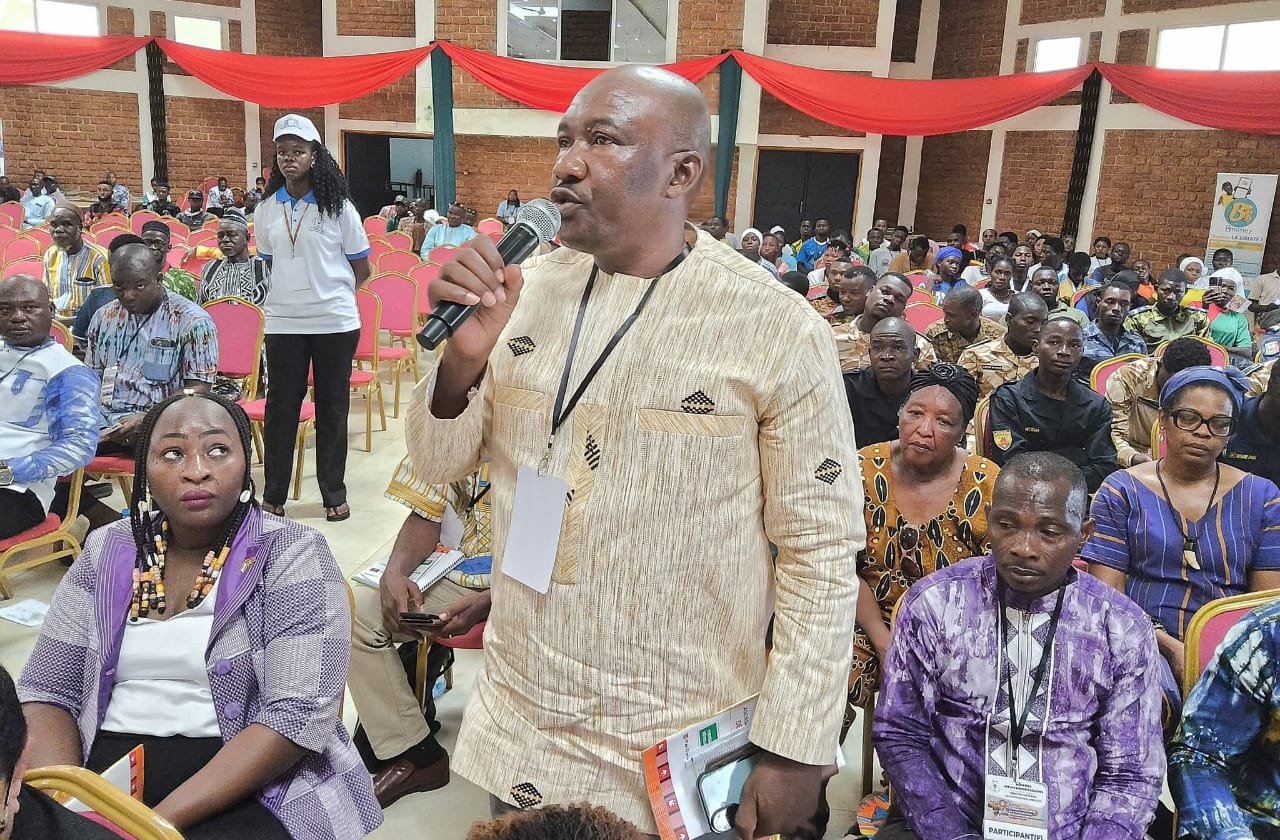
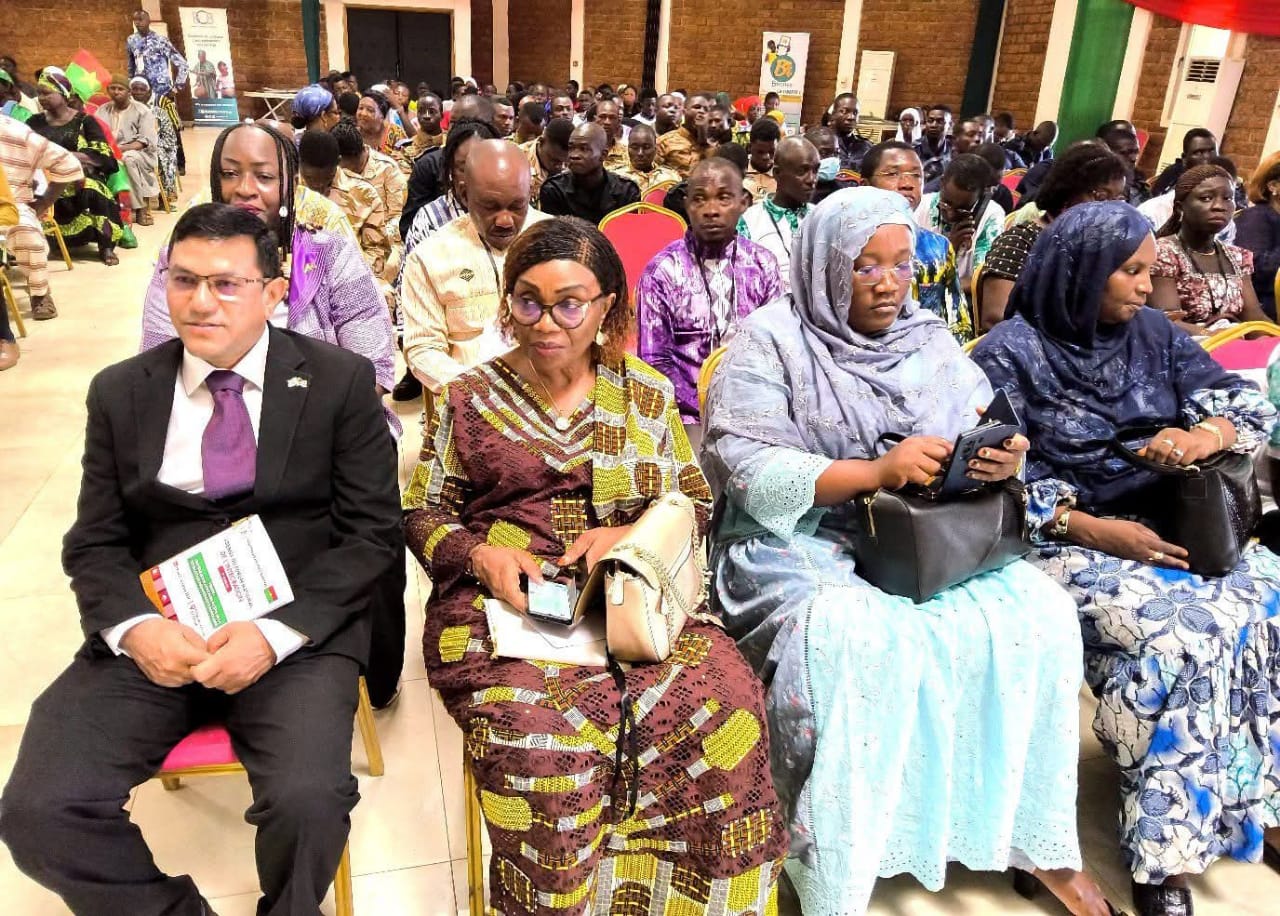
Les acteurs institutionnels et les représentants des communautés africaines vivant au Burkina Faso sont mobilisés du 19 au 22 octobre 2026 à Gaoua, chef-lieu de la région du Djôrô, pour réfléchir sur les moyens d'une intégration continentale fondée sur la souveraineté, la solidarité et les aspirations des peuples. Cette rencontre, IXè édition du Forum national de l'Intégration, se tient sous le thème :« L'intégration africaine à l'ère de la Révolution progressiste Populaire ».
Pour le gouvernement burkinabè, représenté par le ministre délégué auprès du ministère des Affaires étrangères, Stella Eldine Kabré, qui a présidé l'ouverture du forum, il y a nécessité de transformer les liens historiques et culturels entre les pays africains, en réponses concrètes aux besoins des populations : faciliter les échanges, rapprocher les administrations, encourager la mobilité des jeunes et des travailleurs et soutenir les initiatives communautaires.
Et le choix de la ville de Gaoua pour accueillir ce forum n'est pas fortuit ; elle est présentée comme un lieu de mémoire, là où le président Thomas Sankara, leader de la RDP (Révolution démocratique et populaire) et défenseur des idéaux de souveraineté, de justice sociale et d'émancipation africaine, a, entre autres liens, fait ses études primaires.
C'est pourquoi, Mme la ministre déléguée auprès du ministère des Affaires étrangères, Stella Eldine Kabré, a, s'inspirant de l'héritage du capitaine Thomas Sankara, rappelé que le Burkina Faso est une terre d'hospitalité et de fraternité, qui œuvre pour la souveraineté économique, la valorisation des capacités endogènes et la solidarité entre les peuples africains.
« Faisant un lien entre la Révolution démocratique et populaire (RDP) et la Révolution progressiste populaire (RPP), prônée par le camarade président du Faso, le capitaine Ibrahim Traoré, elle a insisté sur la nécessité de bâtir une intégration africaine fondée sur la souveraineté des peuples, la défense de leur dignité et leur pleine participation au développement du continent », a relevé Mme la ministre déléguée, Stella Eldine Kabré, réaffirmant l'engagement du Burkina Faso et de la Confédération AES pour une intégration africaine souveraine, basée sur la sécurité collective, la solidarité économique et culturelle.
Mme la ministre déléguée auprès du ministre des Affaires étrangères, Stella Eldine Kabré.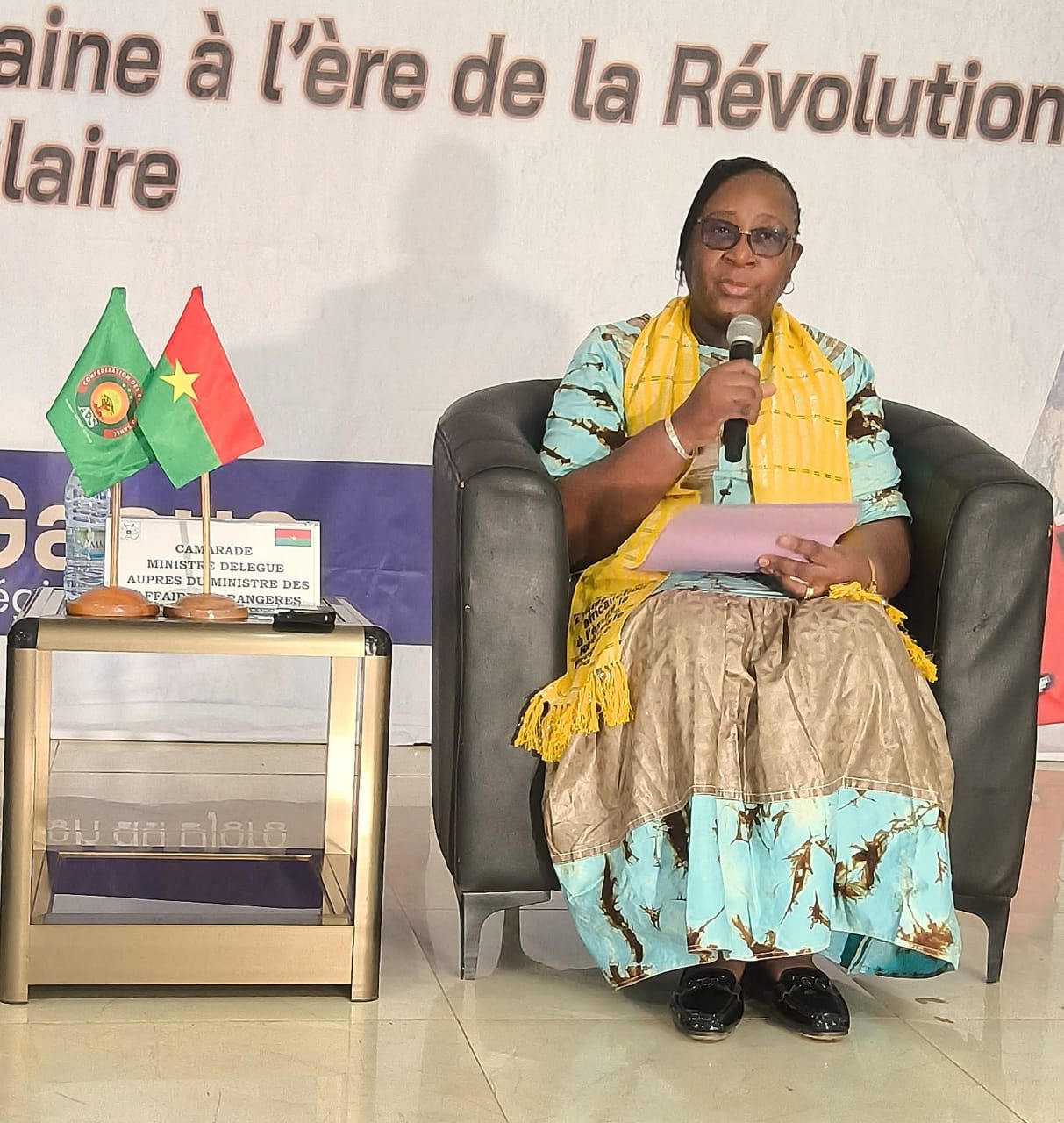
Selon l'autorité, cette vision implique une rupture avec les modèles d'intégration qui s'éloignent des préoccupations des citoyens ; l'intégration ne peut prospérer contre les peuples, elle doit se construire avec eux et pour eux. De ce fait, estime-t-elle, les mécanismes institutionnels ne devraient jamais devenir une source de souffrance pour les peuples qu'ils sont censés protéger.
Le porte-parole de la coordination des communautés africaines vivant au Burkina Faso, A. Saliou Dokpema a salué les avancées enregistrées en matière de circulation des ressortissants africains, notamment la gratuité des visas pour les citoyens des pays africains. Il note également que les conditions de déplacement vers le Burkina Faso sont aujourd'hui plus favorables qu'auparavant, permettant aux ressortissants africains de circuler avec un sentiment accru de proximité.
Pour lui, les Africains vivant au Burkina Faso se doivent donc de contribuer au développement du pays, respecter ses lois et participer à la dynamique nationale dans un esprit de solidarité. M. Dokpema apprécie en outre les bonnes relations entre les communautés étrangères et les populations burkinabè ; relations qu'il décrit comme celles familiales, marquées par une co-habitation et un vivre-ensemble, exemplaires.
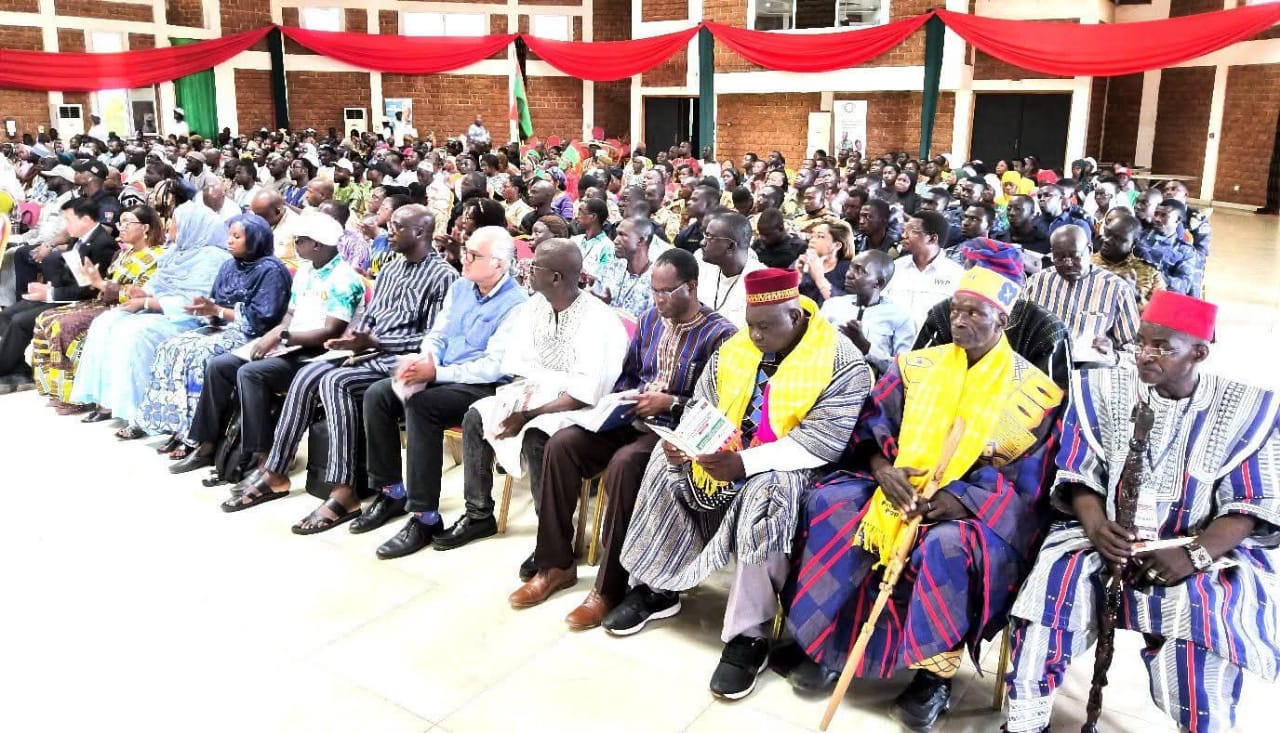
Le IXè Forum national de l'intégration comporte donc plusieurs activités, visant à raffermir les liens entre les communautés et à favoriser une connaissance des différentes cultures africaines. Ainsi, panels, dialogues thématiques, échanges directs avec les représentants des communautés vivant au Burkina Faso, exposition de stands culturels et culinaires, sport et jeux de société (tirs à l'arc, aérobic…), activités de promotion de la santé (dont des dépistages des cancers du sein et du col de l'utérus), visite touristique sur le site historique de Loropéni (patrimoine mondial de l'UNESCO) … sont au programme du Forum national de l'Intégration 2026, qui enregistre la présence également du président de la Commission nationale de l'Alliance des États du Sahel, Bassolma Bazié.
Lefaso.net
Sources : Bafujiinfos et DCRP Ministère des Affaires étrangères
Categories: Afrique
Ukraine: en visite en Norvège, Volodymyr Zelensky tente de relancer une diplomatie en crise
Volodymyr Zelensky est arrivé mardi 20 octobre en Norvège pour des entretiens avec les émissaires américains, alors que les relations entre Kiev et Washington se sont fortement tendues.
Categories: Union européenne
Weapons to Russia, Wigs to China: How North Korea Balances Its Allies
A clear division of labor ensures North Korea’s alliances with Russia and China are complementary, not competitive with each other.
Categories: Diplomacy & Crisis News
À São Paulo, les sans-terre à la conquête des populations urbaines
Depuis sa fondation, en 1984, les quelque deux millions de membres revendiqués du Mouvement des travailleurs ruraux sans terre (MST) militent pour une réforme agraire au Brésil, en occupant des terres pour les cultiver jusqu'à obtenir leur régularisation par l'État. / Brésil, Agriculture, (…)
/ Brésil, Agriculture, Réforme agraire, Mouvement de contestation
Categories: Diplomacy & Crisis News
Pages


© 2012-2018 Europa Varietas Foundation © 2015-2018 Europa Varietas Association
www.europavarietas.org | info(@)europavarietas(dot)org | Switzerland
We are looking for sponsors for the English translation of these books, please contact turkeandras(at)gmail(dot)com