
You are here
Feed aggregator
EXCLUSIVE: Capitals weigh whether mass arrivals alone justify asylum curbs
New EU emergency plan could allow exceptional measures during mass arrivals – even without evidence of foreign interference
Categories: European Union
Norway cheers as EU drops call for ‘moratorium’ on Arctic drilling
Oslo sees Brussels' strategy for the region as green light for oil, gas exploration
Categories: European Union
European Socialist leader accuses Mette Frederiksen of betrayal
Danish prime minister attacked Sánchez's pro-migration policy as a threat to Europe
Categories: European Union
Toothpicks, pearls: Industry pushes limits with new nicotine products
Eight EU governments want market freeze as regulation struggles to keep pace
Categories: European Union
Health advocates push to ring-fence funding in EU budget
Minimum spending targets could bridge the gap between Commission and Parliament
Categories: European Union
What Does Beijing Mean By ‘Strategic Stability’?
After the Trump summit, China wants managed competition.
Categories: Diplomacy & Crisis News
DIGITAL 00 H : les numéros gagnants
DIGITAL 00H : Avez-vous tenté votre chance ?
Le tirage DIGITAL 00H N°285 a livré son verdict !
Mercredi 21 Octobre 2026
Avez-vous joué ?
Avez-vous misé sur vos numéros porte-bonheur ?
RÉSULTAT : 43 • 78 • 70 • 81 • 51
Félicitations aux heureux gagnants !
Pas encore cette fois ? Gardez le sourire.
Rendez-vous à 08H pour le prochain tirage.
Jouez dans les points de vente ou : Tapez *590# ou rendez-vous sur lnbloto.bj
Jouez avec modération et responsabilité. Le jeu doit rester un plaisir.
A TOI DE JOUER #XòGbɔnAlɔkpaVo
#LNBSA #JeuResponsable #LaChanceAvecModération
Categories: Afrique
Un chauffeur jugé pour 3 000 cartouches découvertes dans sa voiture
Un chauffeur a comparu, lundi 19 octobre 2026, devant la Cour de répression des infractions économiques et du terrorisme (CRIET), après la découverte de 3 000 cartouches de calibre 12 dans son véhicule à Kandi.
A la barre, lundi 19 octobre 2026, un chauffeur transportant 3 000 cartouches de calibre 12 a expliqué ne pas savoir que son véhicule transportait des cartouches.
Selon les informations rapportées par Libre Express, le chauffeur transportait douze passagers en provenance d'Accra, au Ghana, lors de son interpellation. Il a expliqué qu'il ne procédait pas lui-même au chargement des bagages, une tâche qu'il confiait habituellement aux chargeurs présents sur le parc.
Ces explications ont suscité des interrogations du président de la juridiction, qui lui a notamment demandé s'il lui était interdit de vérifier le contenu des colis embarqués dans son véhicule.
Le prévenu a répondu que rien ne l'empêchait de procéder à ces vérifications.
Les 3 000 cartouches de calibre 12 ont été découvertes lors d'une fouille effectuée à Soubroukou, dans la commune de Kandi. D'après les éléments rapportés à l'audience, elles étaient dissimulées dans un sac, sous plusieurs vêtements, à l'intérieur du véhicule.
Le conducteur, qui affirme exercer ce métier depuis plus de trente ans, a maintenu qu'il ignorait la présence des munitions. Il a également évoqué un état de santé fragile le jour des faits, tout en assurant qu'il était en mesure de conduire.
L'identité de la personne à qui appartenait le colis n'a pas été établie au cours des débats.
À l'issue de l'audience du lundi 19 octobre, la Cour a renvoyé le dossier au 23 novembre 2026 pour les réquisitions du ministère public et les plaidoiries de la défense.
M. M.
Categories: Afrique
Des enfants découvrent le corps de leur père dans la rue
Un homme de 36 ans a été retrouvé mort lundi 19 octobre 2026 dans un buisson du quartier Nikki-Kpérou, à Parakou. Ses enfants ont fait la découverte en se rendant à l'école.
Dans la matinée du lundi 19 octobre, les enfants d'un homme de 36 ans ont retrouvé le corps de leur père dans un buisson, à proximité de leur domicile, au quartier Nikki-Kpérou, dans le troisième arrondissement de Parakou.
La dépouille se trouvait à environ 200 mètres de la maison familiale, selon Fraternité fm.
L'homme aurait été victime d'un accident de moto alors qu'il rentrait d'une soirée passée avec des amis.
Ce n'est que le lendemain matin que ses enfants ont découvert son corps, alors qu'ils prenaient le chemin de l'école. Ils ont aussitôt alerté leur mère et les voisins, qui ont prévenu la Police républicaine.
Les forces de l'ordre se sont rendues sur place avec un médecin légiste et les autorités locales pour le constat.
A l'issue des formalités, le corps a été remis à la famille pour l'inhumation.
M. M.
Categories: Afrique
Une dame retrouvée morte dans une ruelle
Le corps sans vie d'une dame a été découvert ce mardi 20 octobre 2026 dans une ruelle à Atrokpocodji, dans la commune d'Abomey-Calavi.
Une dame a été retrouvée morte ce mardi 20 octobre 2026 dans une ruelle à Atrokpocodji, dans la commune d'Abomey-Calavi.
La découverte a été faite aux environs de 16 heures, à proximité du séminaire Saint-Jean-Eudes.
Aucun habitant du quartier n'est parvenu à reconnaître la défunte comme une résidente d'Atrokpocodji.
Les sapeurs-pompiers et le chef quartier ont été alertés.
Les circonstances du décès ne sont pas encore connues.
M. M.
Categories: Afrique
France : des manifestations interdites dans plusieurs villes, Emmanuel Macron appelle à "la fermeté"
Les autorités ont annoncé mercredi que les manifestations seront interdites jeudi à Paris et Lyon et samedi dans des villes comme Rouen et Toulon en raison des risques de troubles. À trois jours d'une nouvelle journée de mobilisation, les syndicats sont sortis déçus de Matignon. Depuis le Qatar, Emmanuel Macron n'a pas fait d'annonces sur les revendications portées par les manifestants mais a, en revanche, appelé à "la fermeté" envers les auteurs des violences. Voici le fil du 21 octobre 2026.
Categories: France
17 octobre : le retour des courtes peines
L'État, souvent accusé de lenteur judiciaire, a décidé de serrer la vis pour les violences du week-end dernier. Le ministre de la Justice, Gérald Darmanin a déjà annoncé des peines de prison ferme pour certains individus non connus des services de police. Au total à ce jour, 149 personnes ont été incarcérées et 800 déférées devant des tribunaux.
Categories: France
Burkina/Justice : La peine de mort réintroduite dans le Code pénal, des sanctions revues à la hausse
Le ministre de la Justice et des droits humains, Me Edasso Rodrigue Bayala, a défendu, ce mardi 20 octobre 2026 devant les parlementaires de l'Assemblée législative du peuple (ALP), le projet de loi portant relecture de la loi n°025-2018/AN du 25 mai 2018 portant Code pénal au Burkina Faso. Au terme des votes, l'ALP a adopté à l'unanimité de ses 71 parlementaires, la nouvelle loi portant Code pénal au Burkina Faso, avec la réintroduction de la peine de mort (qui avait été abolie le 31 mai 2018).
Cette réforme législative vise à, selon le ministre de la Justice et des droits humains, renforcer l'ordre public, à consolider les valeurs fondamentales de la Nation et à garantir la sécurité des personnes et des biens. Elle permet d'introduire des innovations majeures visant à adapter le dispositif pénal aux exigences de protection de la société et de lutte contre les différentes formes de criminalité.
Parlant des orientations générales du Code pénal qui vient d'être adopté, Me Edasso Rodrigue Bayala explique qu'il vise d'abord à contribuer à la lutte contre le terrorisme au Burkina Faso. Ensuite, contribuer à protéger suffisamment l'ordre public, lutter contre la criminalité économique et financière au Burkina, protéger l'environnement, la famille et également à assurer l'ordre public au niveau de la sécurité routière.
Comme innovations majeures, le premier responsable du département de la Justice et des droits humains, Me Bayala, énumère la restauration de la peine pour un certain nombre d'infractions qui sont en lien avec le terrorisme. Sur ce point, le ministre fait le constat que sur le terrain, les terroristes recrutent en faisant comprendre également aux candidats qu'ils ne risquent pas gros en matière de peines, même s'ils venaient à être arrêtés, et comme auteurs ou complices.
Aussi, poursuit-il, l'espionnage et la trahison sont désormais passibles de la peine de mort, tout comme l'importation de produits périmés ou prohibés, lorsque cela entraîne la mort (et ce, aussi bien pour l'auteur que pour le complice de l'acte).
La criminalité économique et financière est dorénavant punie d'un emprisonnement à vie, à partir d'un certain montant pour le détournement, et d'une peine d'amende correspondant au triple du montant détourné.
Le Code pénal qui vient d'être adopté se caractérise aussi par le durcissement des peines en matière de sécurité routière (les statistiques montrant que l'insécurité routière est la première cause de mortalité au Burkina). Des comportements en circulation qui n'étaient pas appréhendés le sont maintenant et punis par des peines d'emprisonnement.
Plusieurs autres peines sont revues à la hausse, en faisant passer des infractions de contravention à délit (donc punies de peine d'emprisonnement).
Au niveau de la famille, le Code réaffirme la pénalisation de l'homosexualité et pratiques assimilées.
Pour ce qui est de la protection de l'environnement, les peines d'amende ont également été revues à la hausse, pour permettre une sanction suffisante et décourager d'éventuels candidats.
Le phénomène d'abattage et d'exportation des ânes et chevaux est repris dans le Code pénal et sanctionné.
Par ailleurs, le Code intègre des infractions nouvelles liées aux technologies de l'information et de la communication.
Au terme des votes, l'ALP a adopté à l'unanimité de ses 71 parlementaires, la nouvelle loi portant Code pénal au Burkina Faso
O.L.
Lefaso.net
Sources : DCRP/MJ et Service Presse de l'ALP
Categories: Afrique
Le Faso Digital 2026 : La finance numérique, un levier d'inclusion à concilier avec la souveraineté, selon Dr Corinne Nikiéma
La finance numérique peut-elle permettre à tous d'accéder aux services financiers sans compromettre la souveraineté financière des États ? C'est autour de cette interrogation que s'est tenue, ce mardi 20 octobre 2026, une conférence en ligne organisée dans le cadre de la deuxième édition de Le Faso Digital, la foire virtuelle des solutions digitales initiée par Lefaso.net. Placée sous le thème « Finance digitale pour tous : comment concilier inclusion, innovation et souveraineté ? », la rencontre a été animée par Dr Corinne Nikiéma, économiste et experte en finance, avec pour modérateur Dr Francis Dayamba, chercheur à l'Institut des sciences des sociétés (INSS) du Centre national de la recherche scientifique et technologique (CNRST).
En introduction, Dr Corinne Nikiéma est revenue sur l'évolution de la notion d'inclusion financière. Selon elle, les politiques publiques se sont longtemps concentrées sur la microfinance et l'accès au microcrédit. Progressivement, les acteurs du secteur ont toutefois compris que d'autres services, notamment les paiements, l'assurance et les transferts de fonds, contribuaient également à améliorer les conditions de vie des populations.
« Il y a une vingtaine d'années, on parlait beaucoup plus de microfinance. C'était la microfinance qui jouait véritablement un rôle dans les politiques de développement. Mais, chemin faisant, on s'est rendu compte que les autres services financiers étaient tout aussi importants que l'accès au microcrédit. L'assurance, les paiements et les transferts de fonds sont également des services qui permettent d'améliorer le bien-être des populations. Tout le monde n'a pas nécessairement besoin d'un microcrédit ; certaines personnes ont plutôt besoin de pouvoir effectuer des paiements, épargner, se protéger contre les risques ou transférer de l'argent à leurs proches », a-t-elle expliqué.
Pour la spécialiste, l'inclusion financière ne saurait donc se limiter à la détention d'un compte bancaire ou d'un portefeuille électronique. Elle suppose un accès effectif à des produits et services financiers adaptés aux besoins des utilisateurs, proposés à des coûts abordables et utilisés de manière efficace.
Dans cette perspective, la finance numérique apparaît comme un moyen d'élargir l'accès aux services financiers grâce aux téléphones mobiles, à Internet et aux différentes plateformes digitales. Elle permet notamment de toucher des personnes éloignées des agences bancaires traditionnelles.
Le mobile money, un moteur de l'inclusion financière au Burkina Faso
S'appuyant sur des données présentées au cours de la conférence, Dr Nikiéma a souligné la contribution importante de la monnaie électronique à l'amélioration de l'inclusion financière dans l'espace de l'Union économique et monétaire ouest-africaine (UEMOA).
Selon les chiffres qu'elle a évoqués, le taux global d'inclusion financière au Burkina Faso se situait autour de 80 % en 2024, tandis que le taux de bancarisation stricte demeurait nettement inférieur. Cet écart témoigne du rôle joué par les services de monnaie électronique dans l'accès des populations aux services financiers.
« Aujourd'hui, lorsque nous regardons les statistiques, nous constatons que la finance numérique a fortement contribué à l'amélioration de l'inclusion financière au cours des dix dernières années. Au Burkina Faso, comme dans les autres pays de l'Union, une part importante des personnes considérées comme financièrement incluses l'est grâce à la monnaie électronique. Cela montre que les nouveaux acteurs et les solutions numériques ont permis d'élargir l'accès aux services financiers au-delà des circuits bancaires classiques », a-t-elle indiqué.
Toutefois, l'accès ne constitue qu'une première étape. Pour la conférencière, le véritable défi consiste désormais à faire en sorte que les comptes ouverts soient effectivement utilisés et que les services proposés répondent aux besoins réels des populations.
« L'inclusion financière ne doit pas se limiter à l'accès. Nous devons également nous intéresser à l'usage et à la qualité des services. On peut avoir plusieurs comptes, mais si ces comptes restent inactifs ou si les personnes ne les utilisent que pour effectuer quelques transactions, nous n'avons pas encore atteint tous les objectifs recherchés. Il faut aller au-delà des transferts d'argent pour permettre aux populations d'épargner, d'accéder à des crédits adaptés à leurs activités, de souscrire à des assurances et de réaliser des investissements », a-t-elle soutenu.
Elle a également insisté sur la nécessité de proposer des services transparents, à des coûts raisonnables, tout en garantissant la sécurité des fonds et des données personnelles. Pour elle, la confiance demeure une condition essentielle à l'adoption durable des solutions numériques.
Innovation et souveraineté financière : un équilibre nécessaire
Au-delà de l'accès aux services financiers, la rencontre a permis d'aborder la question de la souveraineté financière à l'ère du numérique. Pour la conférencière, les innovations digitales ne peuvent pas produire des effets durables si les États et les acteurs locaux ne disposent pas d'une maîtrise suffisante des infrastructures, des données et des technologies utilisées.
Le modérateur de la conférence, Dr Francis Dayamba, a rappelé que la détention d'un compte ne garantit pas nécessairement l'autonomie de son titulaire dans l'utilisation des services financiers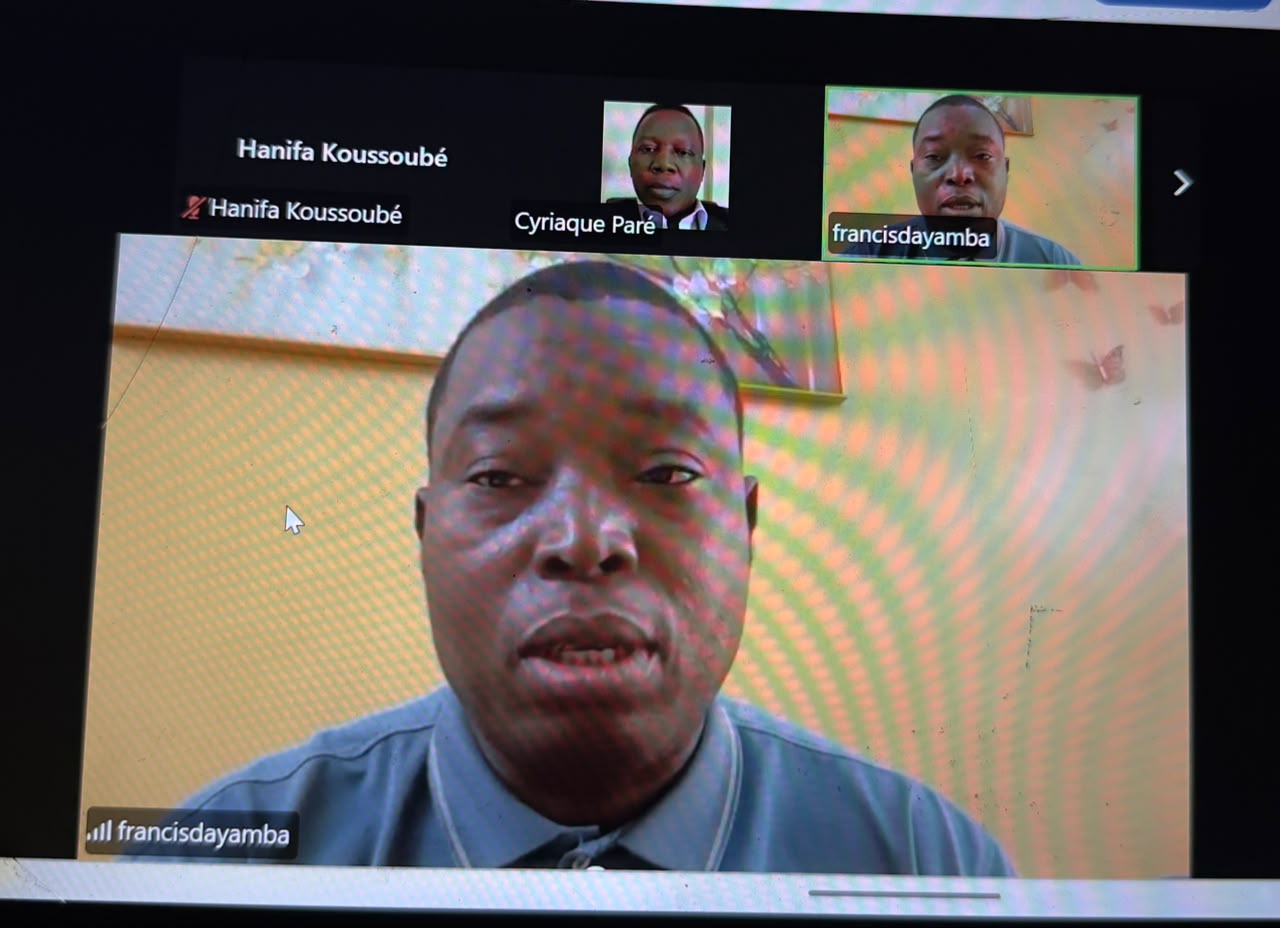
« La finance numérique doit permettre d'élargir l'accès aux services financiers et d'améliorer leur utilisation, mais nous devons également trouver un équilibre avec la souveraineté financière. Sans cette souveraineté, nous ne pouvons pas garantir une inclusion financière durable. Il s'agit d'un triangle indissociable : l'inclusion constitue la finalité, l'innovation est un moyen et la souveraineté est une condition essentielle pour construire un système financier résilient et digne de confiance », a-t-elle fait savoir.
Dr Corinne Nikiéma a notamment relevé quatre dimensions importantes de cette souveraineté que sont la maîtrise des infrastructures, le contrôle et l'hébergement des données, la capacité technologique ainsi que la cybersécurité. Elle a aussi souligné l'importance de disposer de mécanismes permettant aux autorités publiques de prendre des décisions éclairées sur la base des données et des réalités nationales.
Elle a toutefois précisé que la souveraineté ne signifie pas nécessairement l'isolement. Dans un environnement financier marqué par l'intégration régionale, l'enjeu consiste plutôt à préserver une capacité de décision et de contrôle tout en bénéficiant des opportunités de coopération.
La mise en place de solutions interopérables constitue, à cet égard, un chantier important. L'interopérabilité doit permettre aux différents prestataires de services financiers de communiquer entre eux et de faciliter les transactions entre les utilisateurs, indépendamment de la plateforme employée.
La conférencière a également plaidé pour un meilleur maillage des territoires, afin d'éviter que les populations vivant dans les zones rurales ou insuffisamment couvertes par les réseaux de télécommunication ne soient exclues des bénéfices de la transformation numérique.
Protéger les consommateurs contre les risques du numérique…
Si la finance digitale ouvre de nouvelles perspectives, elle s'accompagne également de risques. Les fraudes, les coûts des transactions, les difficultés de recours en cas de litige et les problèmes de sécurité des données peuvent fragiliser la confiance des utilisateurs.
Pour Dr Nikiéma, le développement de solutions innovantes doit impérativement s'accompagner d'un cadre de protection des consommateurs. Elle a notamment insisté sur la transparence des conditions d'utilisation, la sécurisation des fonds, la protection des données personnelles et l'existence de mécanismes de recours accessibles aux clients.
« L'innovation doit aller de pair avec la protection des consommateurs. Il ne faut pas qu'une personne soit incluse aujourd'hui et se retrouve exclue demain à cause de difficultés financières, d'un endettement excessif ou de pratiques qui ne lui permettent pas de comprendre les services auxquels elle souscrit. Les produits proposés doivent être transparents, les coûts clairement expliqués et les utilisateurs doivent savoir vers qui se tourner lorsqu'ils rencontrent des difficultés. C'est à ces conditions que nous pourrons préserver la confiance et favoriser une adoption durable des services financiers numériques », a-t-elle affirmé.
La question du crédit numérique a également été abordée. Grâce aux données issues des transactions, les prestataires peuvent, dans certaines conditions, mieux apprécier la capacité financière des demandeurs de crédit. Cependant, cette possibilité nécessite des garde-fous pour éviter le surendettement et les enchaînements de prêts destinés à rembourser d'autres emprunts.
La conférencière a ainsi plaidé pour un encadrement approprié des pratiques de crédit numérique, notamment à travers des mécanismes de supervision et des mesures permettant de mieux apprécier la capacité d'endettement des bénéficiaires.
L'ANPFI, un acteur d'accompagnement des populations et des prestataires
Au cours de son intervention, Dr Corinne Nikiéma a également présenté le rôle de l'Agence nationale de promotion de la finance inclusive (ANPFI) dans le développement de l'inclusion financière au Burkina Faso.
Selon elle, l'Agence intervient notamment dans l'accompagnement des prestataires de services financiers, le renforcement de leurs capacités techniques, la facilitation de l'accès aux financements et la promotion de l'éducation financière. Elle contribue également à la conception de produits adaptés aux besoins des populations insuffisamment desservies par les services financiers.
« Notre rôle consiste notamment à accompagner les acteurs pour améliorer l'accès et l'utilisation des services financiers. Cela passe par le renforcement des capacités des prestataires, la conception de produits qui répondent aux besoins des usagers et la promotion de l'éducation financière. Nous travaillons aussi sur la protection des consommateurs, notamment à travers des mécanismes de veille sur la qualité des services financiers et de médiation en cas de litige », a-t-elle précisé.
Elle a indiqué que l'Agence participe également à des cadres de concertation réunissant les différents acteurs de la finance numérique afin d'identifier les difficultés du secteur et de rechercher des solutions concertées.
L'ANPFI intervient notamment dans l'accompagnement des prestataires de services financiers, le renforcement de leurs capacités techniques, la facilitation de l'accès aux financements et la promotion de l'éducation financière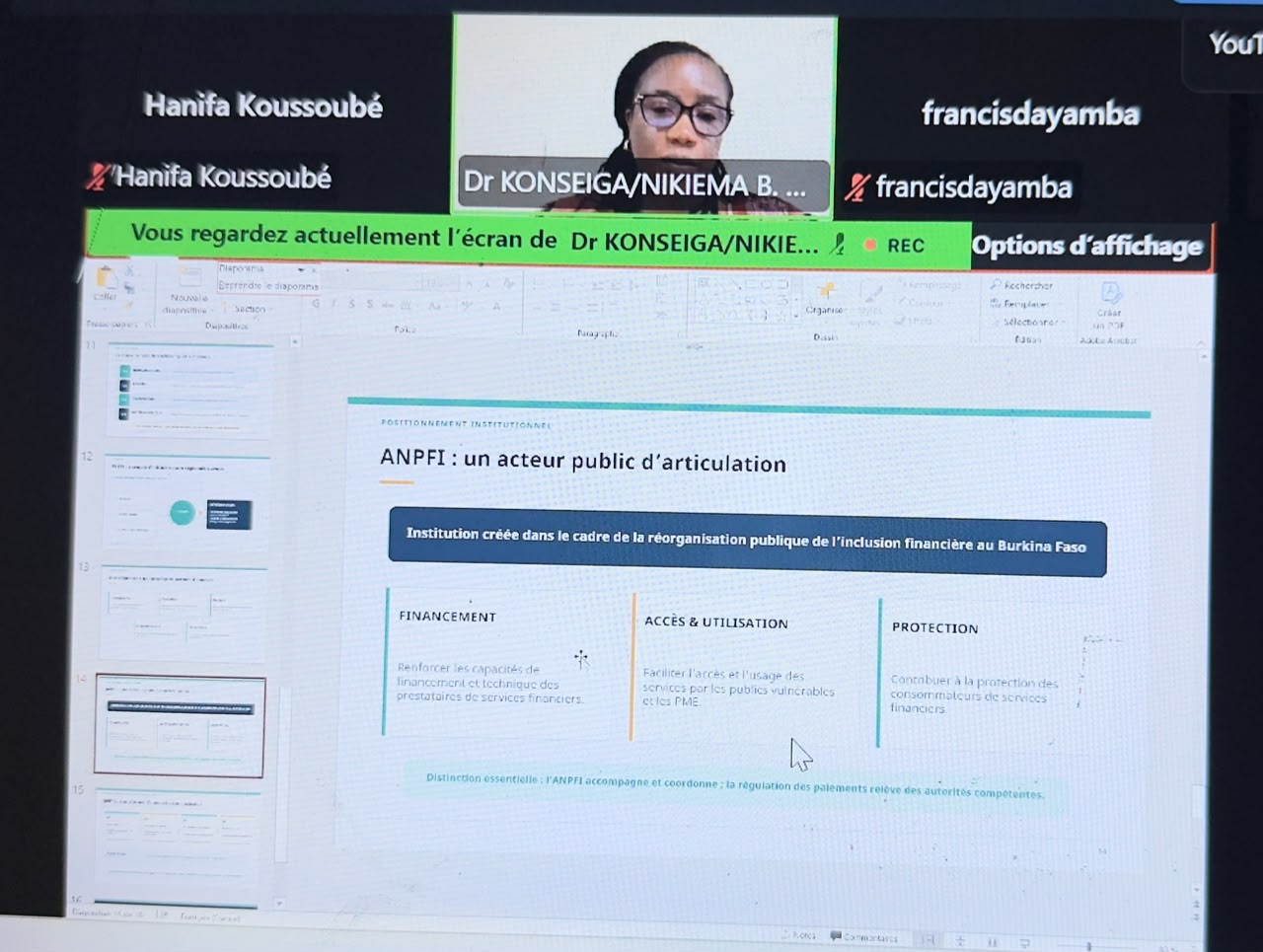
Dr Nikiéma a, par ailleurs, souligné l'importance de l'éducation financière numérique pour permettre aux utilisateurs de mieux comprendre les services proposés, d'évaluer les risques et de prendre des décisions éclairées.
Langues locales et accessibilité : ne laisser personne de côté
Les échanges avec les participants ont permis de mettre en évidence d'autres obstacles à l'inclusion financière, notamment les barrières linguistiques, les difficultés rencontrées par les personnes en situation de handicap et l'accès limité à Internet dans certaines localités.
Le modérateur de la conférence, Dr Francis Dayamba, chercheur en économie numérique à l'INSS/CNRST, a notamment rappelé que la détention d'un compte ne garantit pas nécessairement l'autonomie de son titulaire dans l'utilisation des services financiers.
De son côté, Étienne Bagré a insisté sur la nécessité de concevoir des solutions accessibles aux personnes qui ne maîtrisent pas le français ou qui présentent un handicap visuel.
En réponse, Dr Nikiéma a reconnu que l'innovation devait tenir compte des spécificités des différentes catégories d'utilisateurs, notamment à travers l'intégration des langues locales et le développement d'interfaces plus simples.
« Si nous voulons réellement parvenir à une inclusion financière pour tous, les solutions proposées doivent tenir compte des capacités des personnes qui vont les utiliser. Nous devons notamment travailler à la prise en compte des langues locales dans les modules d'éducation financière et dans les outils numériques. Il faut aussi envisager des solutions qui permettent à une personne qui ne sait pas lire de comprendre les opérations qu'elle effectue, par exemple grâce à des instructions vocales qui lui indiquent le montant et lui demandent de confirmer son choix », a-t-elle expliqué.
Elle a également évoqué la possibilité de recourir à des solutions alternatives dans les zones où la connexion Internet demeure insuffisante. Pour elle, la technologie doit être complétée par un accompagnement humain, notamment à travers les agents et les relais locaux capables d'aider les populations à utiliser les services financiers.
L'éducation financière, un rempart contre les arnaques
Les risques d'escroquerie liés aux services financiers ont occupé une place importante dans les échanges. Le président du comité d'organisation, Dr Cyriaque Paré, a notamment interpellé la conférencière sur les mécanismes de contrôle des institutions financières et les moyens de prévenir les pertes d'épargne, en particulier lorsque des structures proposent des rendements élevés sans disposer des autorisations requises.
Il a également soulevé la question de l'éducation financière, en évoquant les cas de personnes, notamment des étudiants, attirées par des promesses de gains rapides avant de perdre leur argent.
En réponse, Dr Nikiéma a précisé que l'ANPFI n'est pas un organe de régulation du secteur financier. Les missions de surveillance et de contrôle des institutions concernées relèvent notamment des services compétents de l'administration du Trésor. Elle a toutefois rappelé que l'Agence contribue à la promotion de l'éducation financière en accompagnant les acteurs qui interviennent auprès des populations.
« Concrètement, notre action consiste à mettre à la disposition des acteurs des modules d'éducation financière adaptés, à contribuer à la formation de formateurs et à accompagner les initiatives de sensibilisation. Il est également important de coordonner les interventions des différentes structures qui travaillent dans ce domaine, afin que les populations reçoivent des informations fiables et puissent mieux se protéger contre les risques liés à l'utilisation des services financiers, notamment numériques », a-t-elle indiqué.
Elle a ajouté que les supports de formation doivent être adaptés aux réalités des bénéficiaires, notamment par la traduction des contenus en langues locales et par le développement de parcours d'apprentissage accessibles sur différents types de téléphones.
De son côté, Dr Francis Dayamba a attiré l'attention sur les techniques d'ingénierie sociale utilisées par les fraudeurs, notamment les faux messages de confirmation de dépôt, les appels trompeurs et les manipulations psychologiques destinées à pousser les victimes à effectuer des transactions.
Pour lui, la sensibilisation doit être renforcée afin que les utilisateurs apprennent à vérifier leurs soldes et leurs opérations directement dans leurs comptes, à ne pas communiquer leurs informations confidentielles et à se méfier des offres promettant des rendements exceptionnellement élevés.
Consolider davantage la transformation numérique au Burkina Faso
Au terme des échanges, les intervenants ont convenu de la nécessité de poursuivre les efforts en faveur d'une finance numérique plus inclusive, plus sûre et mieux adaptée aux besoins des populations. Les discussions ont notamment mis en évidence l'importance de l'interopérabilité des plateformes, de la maîtrise des données, de la protection des consommateurs et du renforcement de l'éducation financière.
Pour le modérateur, l'enjeu est désormais de faire en sorte que les innovations numériques contribuent véritablement au développement économique, sans alourdir les charges des utilisateurs ni accroître leur exposition aux risques de fraude.
Pour rappel, cette conférence s'inscrit dans le programme de la deuxième édition de Le Faso Digital, organisée du 17 au 24 octobre 2026 par Lefaso.net. La plateforme est accessible à l'adresse lefasodigital.net.
Hanifa Koussoubé
Lefaso.net
Categories: Afrique
Les 100 Visages du Burkina Digital : Ben Idriss Coulibaly, de la voix des clients à la vitrine numérique des télécoms
Quatre jours après l'ouverture de Le Faso Digital 2026, nous poursuivons notre série consacrée aux femmes et aux hommes qui construisent le Burkina numérique. Cent personnalités, cent parcours. Aujourd'hui, nous mettons à l'honneur Ben Idriss Coulibaly, professionnel de la communication digitale et webmaster, dont le parcours de près de vingt ans dans les télécommunications illustre comment l'expérience de la relation client peut devenir un véritable atout pour accompagner la transformation numérique des entreprises.
Avant les sites Internet, les réseaux sociaux et les tableaux de bord, il y avait le téléphone. Au bout du fil, des clients avec leurs questions, leurs attentes et parfois leurs réclamations. Pour Ben Idriss Coulibaly, c'est là que tout commence. En juin 2007, il entre dans le secteur des télécommunications comme téléconseiller. Son quotidien consiste à écouter, informer, expliquer et trouver des solutions.
Près de vingt ans plus tard, il exerce un métier bien différent : webmaster chez Moov Africa Burkina, où il contribue à la gestion des plateformes Web, à la communication digitale et au suivi des performances numériques. Entre ces deux étapes, une conviction semble guider son évolution : la technologie ne prend tout son sens que lorsqu'elle répond aux besoins de ceux qui l'utilisent.
2007 : il apprend le numérique par la relation client
Ben Idriss Coulibaly commence sa carrière dans les télécommunications en juin 2007. Pendant plus de sept ans, il exerce comme téléconseiller. Il accueille les demandes des abonnés, fournit des informations, traite les réclamations et contribue à la satisfaction des clients. Cette expérience lui permet de comprendre les attentes des utilisateurs, mais aussi les difficultés qu'ils peuvent rencontrer face aux services de télécommunications.
Au téléphone, il faut savoir écouter, expliquer clairement et apporter des réponses adaptées. Ces compétences humaines constitueront un socle important pour la suite de son parcours. Car derrière chaque service numérique, il y a un utilisateur dont il faut comprendre les besoins.
2015 : de la supervision au métier de webmaster
En janvier 2015, Ben Idriss Coulibaly devient superviseur du centre d'appels et de renseignements. Il assure le suivi des performances, produit des rapports d'activité, accompagne les téléconseillers et participe à l'amélioration de la qualité de service. Cette nouvelle responsabilité lui permet de développer une culture de l'analyse et de l'évaluation.
Quelques mois plus tard, en octobre 2015, il franchit une autre étape : il devient webmaster au sein de l'opérateur aujourd'hui connu sous la marque Moov Africa Burkina. Son environnement professionnel change. Il passe de la gestion des interactions téléphoniques à l'administration des espaces numériques de l'entreprise. Mais l'objectif reste le même : faciliter l'accès à l'information et améliorer la relation avec les clients.
Faire vivre la présence numérique de Moov Africa Burkina
Depuis octobre 2015, Ben Idriss Coulibaly participe à l'administration et à la gestion des plateformes Web de Moov Africa Burkina. Ses missions couvrent la mise à jour et le suivi des espaces numériques, l'optimisation du référencement naturel et l'analyse des statistiques de fréquentation. Il contribue également à la conception, à la refonte et au suivi de projets numériques.
Dans un environnement où les clients recherchent de plus en plus leurs informations sur Internet, le site Web constitue un point de contact essentiel entre l'entreprise et ses publics. Il doit être accessible, compréhensible et régulièrement actualisé. Le rôle du webmaster consiste précisément à contribuer à cette qualité de service. Pour Ben Idriss Coulibaly, cette mission prolonge son expérience de la relation client, avec de nouveaux outils et de nouvelles exigences.
Des réseaux sociaux à l'analyse des performances
Son activité s'étend également à la communication sur les réseaux sociaux. Il participe à l'animation des communautés numériques de Moov Africa Burkina, au suivi des performances des publications et à la production de contenus visuels, notamment à travers la photographie événementielle. Cette dimension du métier demande de comprendre les usages des plateformes et les attentes des publics.
Mais publier ne suffit pas. Il faut aussi mesurer les résultats. Ben Idriss Coulibaly utilise les statistiques de fréquentation et les rapports d'activité pour apprécier les performances des dispositifs numériques. Il intervient par ailleurs dans l'analyse de dossiers de sponsoring liés au numérique, en formulant des recommandations destinées à éclairer les décisions. Son parcours associe ainsi trois dimensions complémentaires : la communication, l'analyse des données et l'évaluation des projets numériques.
Une formation commerciale enrichie par le digital
L'originalité de son profil tient également à son parcours académique. Avant de se spécialiser dans les métiers du Web, Ben Idriss Coulibaly suit une formation commerciale. Il obtient un brevet de technicien supérieur en gestion commerciale en 2005, puis une licence en gestion et marketing en 2008, à l'Institut supérieur privé polytechnique. Ces formations lui apportent une compréhension des enjeux commerciaux, de la relation client et du fonctionnement des entreprises.
En 2024-2025, il décide de renforcer ses compétences en suivant un master professionnel en management de projets numériques et transformation digitale à l'École supérieure de commerce et d'économie numérique (ESCEN), à Lomé. Cette démarche témoigne de sa volonté d'accompagner l'évolution de son métier. Elle lui permet d'approfondir des compétences liées à la conception des projets numériques, à l'élaboration des cahiers des charges, au suivi des réalisations et à l'analyse de leur valeur ajoutée. Son expérience professionnelle et sa formation se complètent désormais autour d'un même objectif : contribuer à des projets numériques utiles et performants.
Apprendre, s'adapter et transmettre
Tout au long de son parcours, Ben Idriss Coulibaly développe ses compétences à travers des formations complémentaires. Son CV mentionne notamment la conception de sites Web, les nouveaux outils de communication et Power BI, utilisé pour l'analyse et la présentation des données. Il intervient également comme formateur dans deux domaines : l'initiation à l'utilisation des réseaux sociaux et les techniques de communication téléphonique.
Cette activité de transmission donne une cohérence particulière à son histoire. Il a commencé dans un métier où la communication constituait son principal outil de travail. Il a ensuite accompagné des équipes dans l'amélioration de leurs pratiques. Aujourd'hui, il associe cette expérience à des compétences numériques. Son parcours montre que la transformation digitale ne repose pas uniquement sur l'acquisition de nouvelles technologies. Elle exige aussi des professionnels capables d'apprendre, de s'adapter et de partager leurs connaissances.
Près de vingt ans au rythme des transformations des télécoms
Depuis 2007, Ben Idriss Coulibaly a accompagné, à son échelle, l'évolution des métiers des télécommunications. Téléconseiller, superviseur, puis webmaster : chaque étape lui a permis de développer de nouvelles compétences sans perdre le lien avec les besoins des utilisateurs. Son histoire est celle d'une progression construite dans la durée. Elle rappelle qu'une entreprise peut aussi réussir sa transformation numérique en valorisant l'expérience de ses collaborateurs et en leur permettant d'évoluer vers de nouveaux métiers.
Dans un secteur où les technologies changent rapidement, cette capacité d'adaptation constitue une richesse. Ben Idriss Coulibaly incarne ainsi un profil essentiel du Burkina numérique : celui du professionnel qui relie la connaissance des clients, les outils digitaux et les objectifs de l'entreprise.
Pourquoi fait-il partie des 100 Visages du Burkina Digital ?
Parce que Ben Idriss Coulibaly représente une génération de professionnels qui ont su évoluer avec les transformations du secteur des télécommunications et que son parcours, de téléconseiller à webmaster, démontre que la connaissance des utilisateurs constitue un atout pour réussir la communication digitale.
Parce qu'il contribue depuis 2015 à la présence numérique de Moov Africa Burkina, à travers l'administration des plateformes Web, le référencement, l'animation des réseaux sociaux et l'analyse des performances.
Parce qu'il participe également à la transmission des compétences, notamment dans les domaines de la communication téléphonique et des réseaux sociaux.
Et parce que son histoire rappelle que la transformation numérique est autant une aventure humaine qu'une évolution technologique. Avec Ben Idriss Coulibaly, le Burkina Digital met à l'honneur un professionnel qui a su passer de l'écoute des clients à la maîtrise des outils numériques, démontrant que l'expérience, la formation continue et l'adaptation sont aussi des moteurs de la transformation digitale.
Categories: Afrique
Le Faso Digital 2026 : Carrefour Innovations offre six mois d'abonnement aux trois meilleures solutions de chaque catégorie du Concours national d'innovation digitale
Les lauréats du Concours national d'innovation digitale 2026 bénéficieront d'une nouvelle opportunité pour accroître leur visibilité et développer leurs projets. Dans le cadre de son partenariat avec Le Faso Digital, Carrefour Innovations, plateforme de mise en relation entre startups et investisseurs, offrira un abonnement de six mois aux trois premières solutions classées dans chacune des catégories du concours. Une initiative destinée à accompagner les innovations burkinabè au-delà de la compétition.
Ouagadougou, le 20 octobre 2026 — Le Comité d'organisation de Le Faso Digital 2026 annonce un nouvel avantage au profit des lauréats de son Concours national d'innovation digitale. Dans le cadre du partenariat entre Le Faso Digital et DIGITALES SOLIDAIRES, organisation porteuse de la plateforme Carrefour Innovations, les trois premières solutions de chaque catégorie du concours bénéficieront chacune d'un abonnement gratuit de six mois à Carrefour Innovations.
Cette initiative vise à offrir aux porteurs de projets distingués une possibilité supplémentaire de faire connaître leurs innovations, de renforcer leur visibilité auprès des acteurs économiques et d'accéder à un environnement propice aux rencontres professionnelles. Elle s'inscrit dans l'ambition de Le Faso Digital : contribuer à l'émergence de solutions numériques capables de répondre aux besoins du Burkina Faso et de trouver des débouchés économiques.
Une récompense pour prolonger les opportunités après le concours
Le Concours national d'innovation digitale 2026 constitue l'une des activités phares de la deuxième édition de Le Faso Digital, organisée du 17 au 24 octobre 2026 sous le thème « Inclusion, souveraineté, innovation : Vers un Burkina digital pour tous ».
À la clôture des candidatures, le 30 septembre dernier, 208 solutions avaient été enregistrées, témoignant de la vitalité de l'écosystème numérique burkinabè. Les projets soumis couvrent des domaines variés, notamment le commerce et l'entrepreneuriat, l'éducation, la santé, l'agriculture, la finance, la gouvernance, l'environnement et les infrastructures numériques.
À travers l'offre de Carrefour Innovations, les solutions les mieux classées dans les différentes catégories du concours pourront bénéficier d'une visibilité supplémentaire après la compétition. L'objectif est de permettre aux innovations récompensées de poursuivre leur développement et d'explorer de nouvelles opportunités de partenariat, d'accompagnement ou de financement.
Carrefour Innovations : connecter les startups aux investisseurs et aux partenaires
Portée par l'organisation DIGITALES SOLIDAIRES, Carrefour Innovations est une plateforme destinée à faciliter les relations entre les startups, les porteurs de projets innovants et les acteurs susceptibles de contribuer à leur développement.
Accessible à l'adresse www.carrefour-innovations.africa, elle propose un environnement dans lequel les entrepreneurs peuvent présenter leurs projets de manière structurée et améliorer leur visibilité auprès d'investisseurs et de partenaires potentiels.
La plateforme met notamment en avant plusieurs fonctionnalités :
• La création de profils structurés, permettant aux startups de présenter leurs activités, leurs équipes, leurs réalisations et leurs perspectives de développement.
• La visibilité auprès d'investisseurs et de partenaires, grâce à un catalogue de projets et d'entreprises innovantes.
• La mise en relation ciblée, afin de rapprocher les porteurs de projets des acteurs dont les centres d'intérêt correspondent à leurs activités.
• Des espaces d'échanges sécurisés, facilitant les premiers contacts et le partage d'informations entre entrepreneurs et partenaires potentiels.
• Des outils de suivi, permettant aux startups de mieux organiser leurs démarches et leurs relations professionnelles.
Pour les bénéficiaires de l'offre, l'abonnement de six mois constituera ainsi une occasion de mieux présenter leurs solutions et d'explorer les possibilités offertes par un réseau tourné vers l'innovation et l'entrepreneuriat en Afrique. L'accès à la plateforme ne constitue toutefois pas une garantie d'obtention de financement : il vise avant tout à faciliter la visibilité, les contacts et l'identification d'opportunités.
Un partenariat pour accompagner les innovations locales
L'offre d'abonnement s'inscrit dans le cadre d'une collaboration entre Lefaso.net / Le Faso Digital et DIGITALES SOLIDAIRES / Carrefour Innovations, fondée sur une ambition commune : renforcer la visibilité, la valorisation et l'accompagnement des innovations numériques locales. Ce partenariat prévoit notamment de favoriser l'identification de projets prometteurs, leur présentation sur Carrefour Innovations, leur mise en relation avec des experts et des partenaires, ainsi que le développement d'initiatives conjointes au profit des entrepreneurs.
L'abonnement offert aux lauréats du concours constitue une traduction concrète de cette volonté de rapprochement entre les deux initiatives. Pour Le Faso Digital, il s'agit de contribuer à créer des passerelles entre les innovations révélées par la Foire et les réseaux susceptibles de les aider à franchir de nouvelles étapes. Pour Carrefour Innovations, cette collaboration représente une occasion de valoriser des projets issus de l'écosystème burkinabè et de les intégrer à une dynamique de mise en relation ouverte sur l'Afrique de l'Ouest.
De la reconnaissance à la mise en relation
De nombreuses innovations prometteuses rencontrent des difficultés à dépasser le stade du développement technique. Le manque de visibilité, l'insuffisance de relations professionnelles, les difficultés de structuration des projets et l'accès limité aux partenaires constituent autant d'obstacles à leur croissance. En associant une récompense à un accès prolongé à une plateforme de mise en relation, Le Faso Digital et Carrefour Innovations souhaitent contribuer à réduire certains de ces obstacles.
Cette approche repose sur une conviction : récompenser une innovation est important, mais l'aider à rencontrer des utilisateurs, des partenaires et des opportunités de développement l'est tout autant. Les trois premières solutions de chaque catégorie du Concours national d'innovation digitale 2026 disposeront ainsi d'un outil supplémentaire pour poursuivre leur parcours entrepreneurial.
Le Faso Digital 2026, un tremplin pour les talents burkinabè
Avec cette nouvelle initiative, Le Faso Digital 2026 renforce sa vocation de plateforme de valorisation et de promotion des innovations nationales. Au-delà des prix et distinctions attribués dans le cadre du concours, la Foire entend contribuer à créer un environnement favorable aux rencontres, aux échanges d'expériences et aux collaborations entre innovateurs, entreprises, institutions et investisseurs.
Le Comité d'organisation salue l'engagement de DIGITALES SOLIDAIRES / Carrefour Innovations et remercie son partenaire pour cette contribution à la valorisation des talents numériques burkinabè.
Les modalités pratiques d'activation des abonnements seront communiquées aux bénéficiaires à l'issue de la proclamation des résultats du concours.
Pour en savoir plus :
Le Faso Digital : www.lefasodigital.net
Carrefour Innovations : www.carrefour-innovations.africa
LE FASO DIGITAL 2026
La Foire virtuelle des solutions digitales pour un Burkina résilient, initiée par Lefaso.net.
17–24 octobre 2026 — 100 % en ligne
Thème : « Inclusion, souveraineté, innovation : Vers un Burkina digital pour tous »
Le Burkina digital se construit avec vous.
Categories: Afrique
Autorité de Régulation de la communication et du traitement des données à caractère personnel : W. Louis Modeste Ouédraogo nommé président
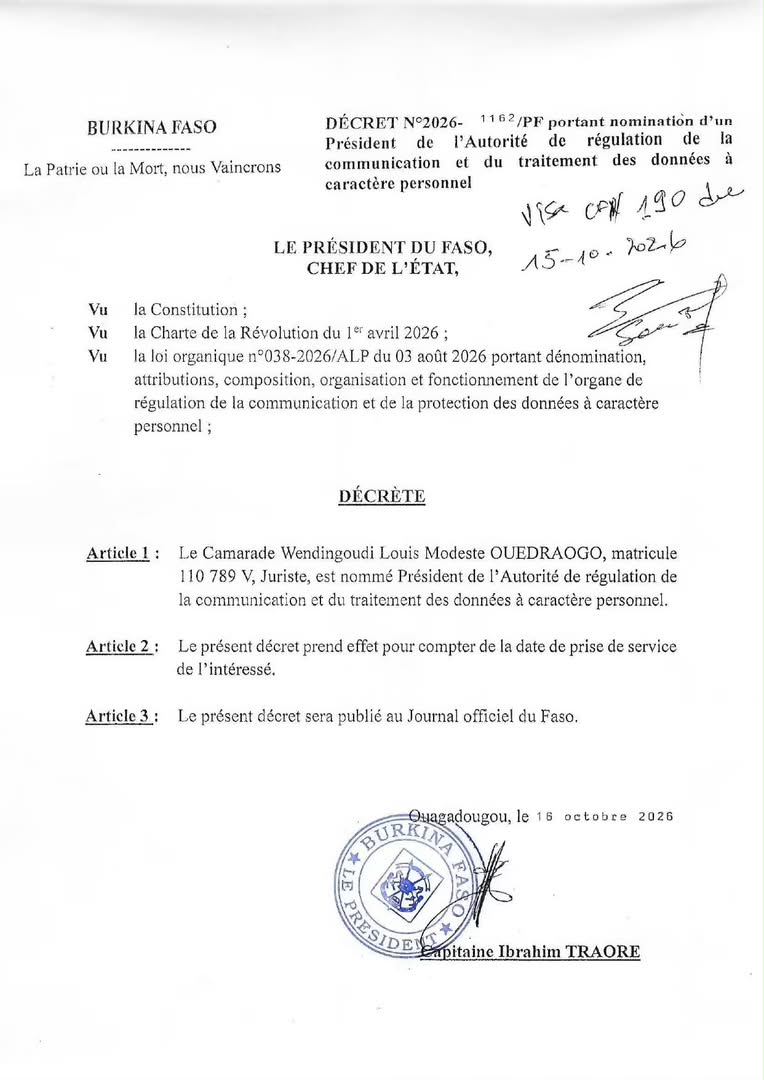
L'Autorité de Régulation de la communication et du traitement des données à caractère personnel est une fusion du Conseil supérieur de la communication (CSC) et de la Commission de l'informatique et des libertés (CIL). Par décret en date du 16 octobre 2026, Wendingoudi Louis Modeste Ouédraogo, jusque-là président du CSC, est nommé président du nouvel organe issu de cette fusion.
Lire aussi : Les 100 Visages du Burkina Digital : Louis Modeste Ouédraogo, penser les règles d'un monde devenu numérique
Categories: Afrique
UMOA : Trois banques sanctionnées à hauteur de 900 millions de francs CFA pour manquements réglementaires
Les autorités de supervision bancaire de l'Union monétaire ouest africaine (UMOA) ont infligé un blâme et une sanction pécuniaire de 300 millions de francs CFA à chacune des banques concernées, implantées en Côte d'Ivoire, au Niger et au Sénégal. Les insuffisances relevées portent notamment sur la gouvernance, la gestion des risques et la lutte contre le blanchiment de capitaux et le financement du terrorisme. C'était à l'issue de la 155ᵉ session de la Commission bancaire de l'UMOA, tenue les 29 et 30 septembre 2026,
La Commission bancaire de l'UMOA durcit le ton face à des manquements aux règles applicables aux établissements de crédit, en particulier les banques. Son Collège de supervision a prononcé des sanctions disciplinaires et pécuniaires à l'encontre de trois banques, respectivement implantées en Côte d'Ivoire, au Niger et au Sénégal.
Après avoir entendu les dirigeants concernés, l'organe de supervision a infligé à chacune des trois banques un blâme, assorti d'une amende de 300 millions de francs CFA. Le montant cumulé des sanctions pécuniaires atteint ainsi 900 millions de francs CFA.
Gouvernance, risques et conformité dans le viseur
En Côte d'Ivoire, les insuffisances relevées concernent la gouvernance, la gestion des risques ainsi que le dispositif de lutte contre le blanchiment de capitaux, le financement du terrorisme et la prolifération des armes de destruction massive.
Au Niger, les griefs sont pratiquement similaires et s'étendent également au respect des normes prudentielles. La Commission bancaire a notamment relevé des faiblesses dans la gouvernance, la gestion des risques et les mécanismes de lutte contre le blanchiment de capitaux, le financement du terrorisme et la prolifération des armes de destruction massive. Tandis qu'au Sénégal, les manquements identifiés portent sur la gouvernance, la gestion des risques et le dispositif de lutte contre ces mêmes formes de criminalité financière.
Les sanctions pécuniaires de 300 millions de francs CFA ont été prononcées au regard d'infractions et d'insuffisances relevant des 2e et 3e catégories, conformément à l'Instruction n° 006-05-2018 du 16 mai 2018. Ce texte fixe les modalités d'application des sanctions pécuniaires prononcées par la Commission bancaire de l'UMOA à l'encontre des établissements de crédit de l'Union.
À travers ces décisions, l'organe de supervision rappelle aux acteurs bancaires l'importance du respect des exigences réglementaires, notamment en matière de gouvernance, de maîtrise des risques, de respect des normes prudentielles et de prévention des flux financiers illicites.
Hamed Nanéma
Lefaso.net
Source : BCEAO
Categories: Afrique
Burkina/Contrebande : Plus de 10 milliards de FCFA de marchandises saisies par la Douane en trois mois de traque
Des millions de comprimés de Tapentadol, des médicaments contrefaits, des explosifs, des centaines de tonnes d'engrais, des denrées alimentaires et bien d'autres produits frauduleux. Le bilan de l'opération Manya, conduite par l'administration des douanes du 10 juillet au 15 octobre 2026, donne la mesure de l'ampleur de la contrebande au Burkina Faso. Ce mardi 20 octobre 2026, au magasin de Ouaga Inter, la Douane a présenté aux hommes de médias et à plusieurs structures partenaires, le fruit de trois mois d'opérations : des marchandises d'une valeur globale estimée à 10 859 217 954 francs CFA.
Habituellement, les 5 000 mètres carrés du magasin central de Ouaga Inter accueillent des marchandises appartenant à des opérateurs économiques venus accomplir leurs formalités douanières. Ce mardi 20 octobre, le décor est tout autre. Des sacs d'engrais empilés, des cartons de médicaments, des produits alimentaires, des explosifs et diverses marchandises occupent les lieux. Tous ont un point commun : ils ont été interceptés par les services douaniers dans le cadre de l'opération Manya.
Face à cet impressionnant éventail de produits, le directeur général des douanes, Dr Yves Kafando, ne cache pas sa préoccupation. Pour lui, ces saisies témoignent de la persistance de circuits frauduleux dont les conséquences dépassent largement les seules pertes économiques pour l'État. « Malheureusement, ce matin, ce qui nous a donné de la voix est tout autre chose. Le magasin est rempli d'un parterre de marchandises issues de la contrebande », a-t-il indiqué, avant de présenter les résultats de l'opération. Lancée le 10 juillet et achevée le 15 octobre 2026, Manya a permis d'intercepter des marchandises de diverses natures, pour une valeur totale estimée à près de 10,86 milliards de francs CFA.
Le Tapentadol représente à lui seul la part la plus importante de ces saisies, avec 4 234 935 comprimés évalués à 8 334 353 750 francs CFA. À cela s'ajoutent 11 087 kilogrammes de médicaments contrefaits, estimés à plus de 1,108 milliard de francs CFA.
Le bilan fait également état de 533 tonnes d'engrais, 490 tonnes de riz auxquelles s'ajoutent six sacs, 2 686 bidons d'huile alimentaire, 2 480 colis de pesticides, 19 véhicules automobiles, 10 bonbonnes de mercure, 91 sacs de cyanure, 2 000 grammes de cocaïne et 344 000 bâtons de cigarettes. Sur le plan sécuritaire, les douaniers ont notamment intercepté 15 760 bâtons d'explosifs et 25 000 cordeaux détonants.
Des chiffres qui traduisent, selon le premier responsable de la Douane, la volonté de son administration de renforcer la lutte contre les réseaux de contrebande. « Nous avons choisi d'appuyer sur l'accélérateur. Nous avons appuyé sur l'accélérateur. Cette opération, c'est clair que beaucoup de contrebandiers, beaucoup de faux importateurs vont mettre la clé sous le paillasson », a lancé Dr Yves Kafando. Il a réaffirmé sa détermination à assainir les circuits commerciaux afin de garantir un commerce libre et équitable, conformément aux orientations du ministre de l'Économie et des Finances, Dr Aboubakar Nakanabo.
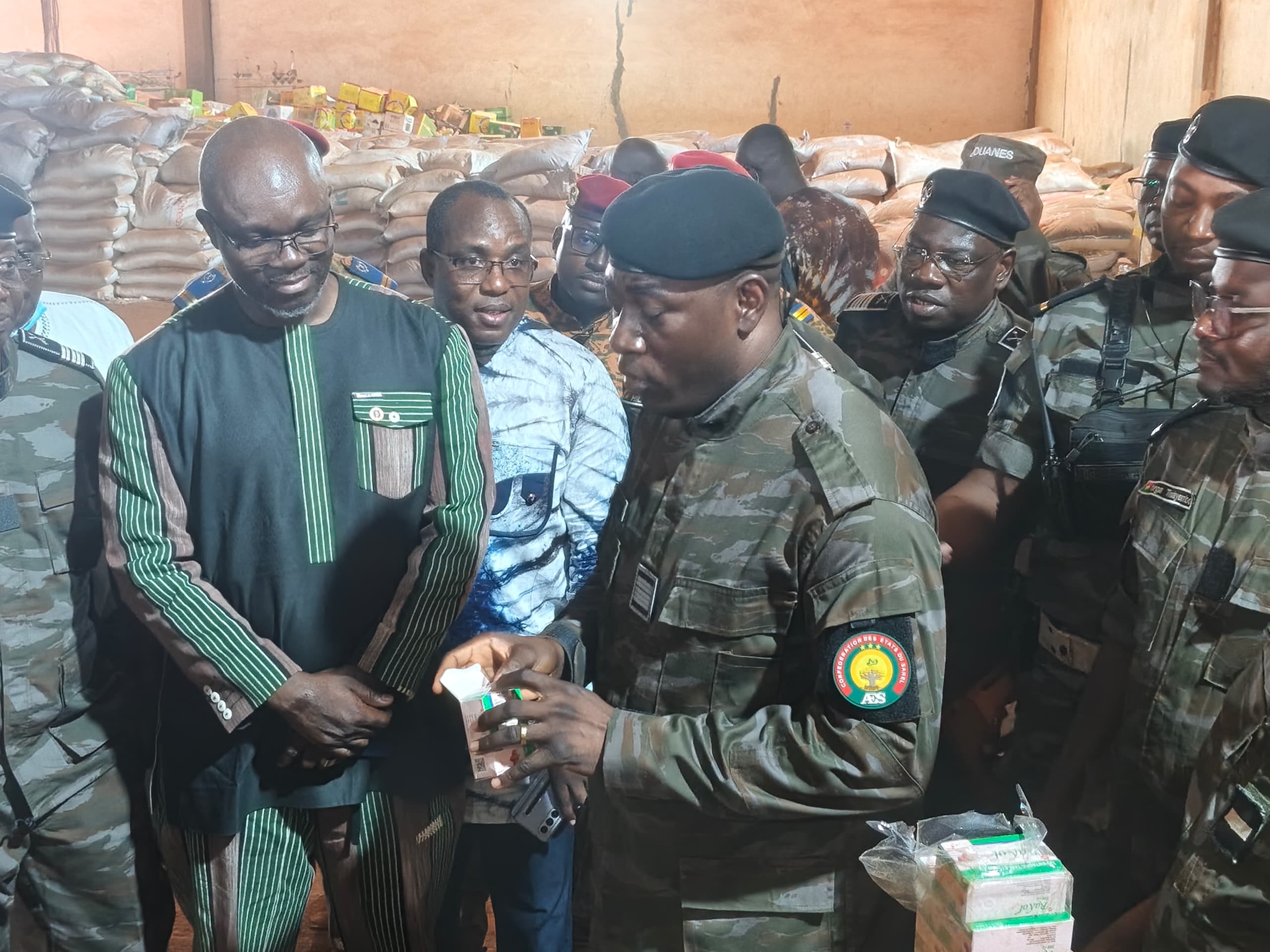
Des saisies qui touchent directement à la santé et à la sécurité des populations
La particularité de cette présentation réside également dans la diversité des acteurs associés à l'opération. Génie militaire, Faso-FDA, Société burkinabè d'intrants et de matériels agro-pastoraux (SOBIMAP) et Ligue des consommateurs du Burkina ont été conviés pour apprécier les saisies relevant de leurs domaines respectifs.
Pour le lieutenant-colonel Tedono Aristide Alira, directeur central adjoint du Génie militaire, l'interception des matières explosives constitue un acquis majeur pour la sécurité nationale. Il a salué le travail des douaniers qui ont permis de soustraire du circuit illégal des produits susceptibles de tomber entre les mains de personnes mal intentionnées, notamment des groupes terroristes. « On n'imagine pas le nombre de vies sauvées grâce à cette opération », a-t-il déclaré. Selon lui, l'importation incontrôlée de ces matières représente un danger aussi bien pour les populations civiles que pour les Forces de défense et de sécurité engagées dans la lutte contre le terrorisme. Il a donc invité les importateurs à respecter la réglementation en vigueur et encouragé les citoyens à continuer de renseigner les services compétents sur les activités suspectes.
- À lire : Burkina : Plus de 20 000 cannettes de boissons alcoolisées et 1,31 million de comprimés saisis par la douane
La préoccupation est tout aussi importante du côté de la santé publique. Dr Arsène Ouédraogo, pharmacien et directeur général de Faso-FDA (Faso Food and Drug Administration), a exprimé son inquiétude face à la nature et à la quantité des produits exposés. « Quand je regarde les saisies et les produits qui sont là, ça fait froid dans le dos », a-t-il confié. Il a expliqué que Faso-FDA, issue du regroupement de l'ancien Laboratoire national de santé publique et de l'Autorité nationale de réglementation pharmaceutique, dispose désormais de compétences élargies en matière de contrôle des produits de santé, des aliments et de leur environnement.
"On ne pourra pas mettre un agent de sécurité derrière chaque personne, mais chaque personne est un agent de sécurité", le Président de la Ligue des consommateurs, Marcel Kouaraogo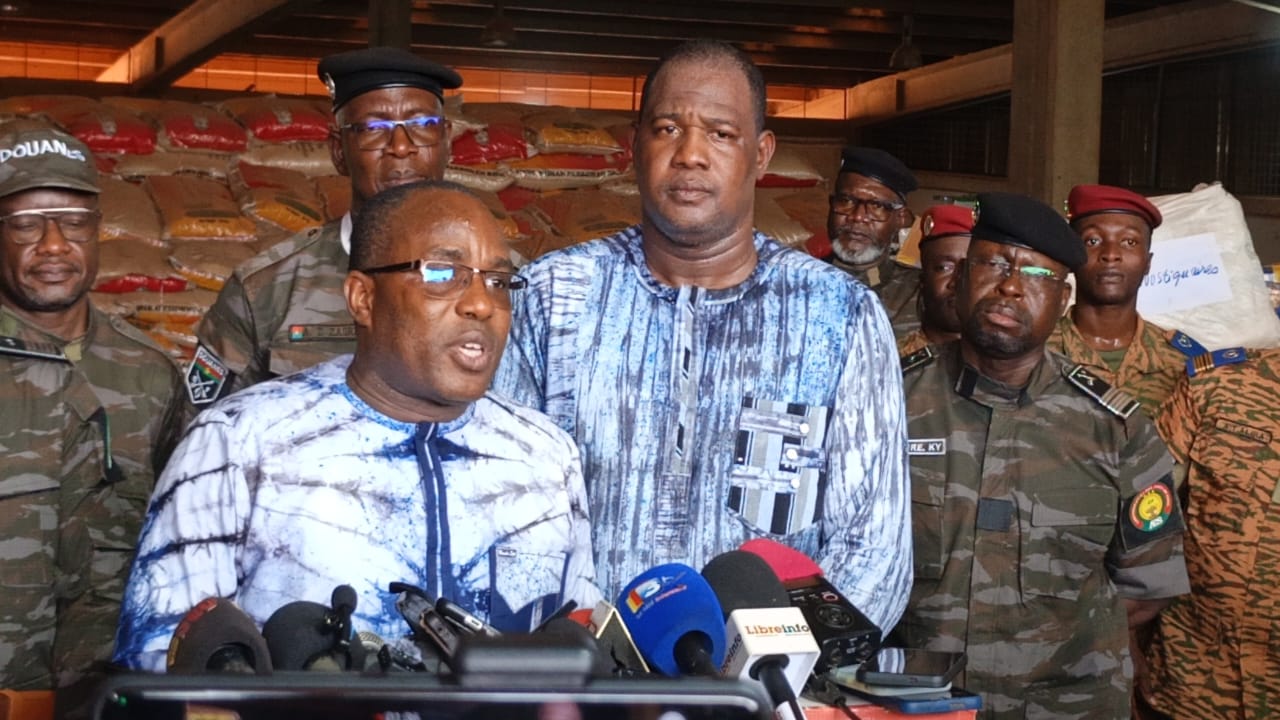
Des équipes techniques procéderont ainsi à des prélèvements sur les médicaments saisis afin d'en déterminer la composition réelle, les dosages et les éventuelles substances dangereuses qu'ils pourraient contenir. Les denrées alimentaires et les huiles feront également l'objet d'analyses pour rechercher notamment la présence de toxines ou d'autres éléments susceptibles de compromettre la santé des consommateurs. Pour le directeur général de Faso-FDA, la lutte contre ces trafics ne peut cependant reposer uniquement sur les opérations de saisie. « Le trafiquant existe parce qu'il y a un demandeur. Lorsqu'on supprime la demande, l'offre disparaît », a-t-il rappelé, invitant les populations à privilégier les circuits légaux d'approvisionnement.
Engrais, denrées alimentaires : les partenaires appelés à jouer leur partition
Autre saisie significative de l'opération Manya, ce sont les 533 tonnes d'engrais introduites frauduleusement sur le territoire national, pour une valeur estimée à 266,5 millions de francs CFA. Une quantité qui interpelle dans un contexte où l'approvisionnement des producteurs en intrants agricoles constitue un enjeu important.
Présent à la cérémonie au nom du directeur général de la SOBIMAP, Ibrahim Bakouan, directeur des approvisionnements et des achats, a salué l'accompagnement de l'administration douanière dans la mise en œuvre du monopole d'importation des engrais confié à la société d'État. Il a insisté sur la nécessité de garantir aux producteurs des intrants de qualité, rappelant les sacrifices financiers consentis par ces derniers pour acquérir leurs engrais.
Dans le lot de marchandises saisie, les médicaments contrefaits représentent la plus grande part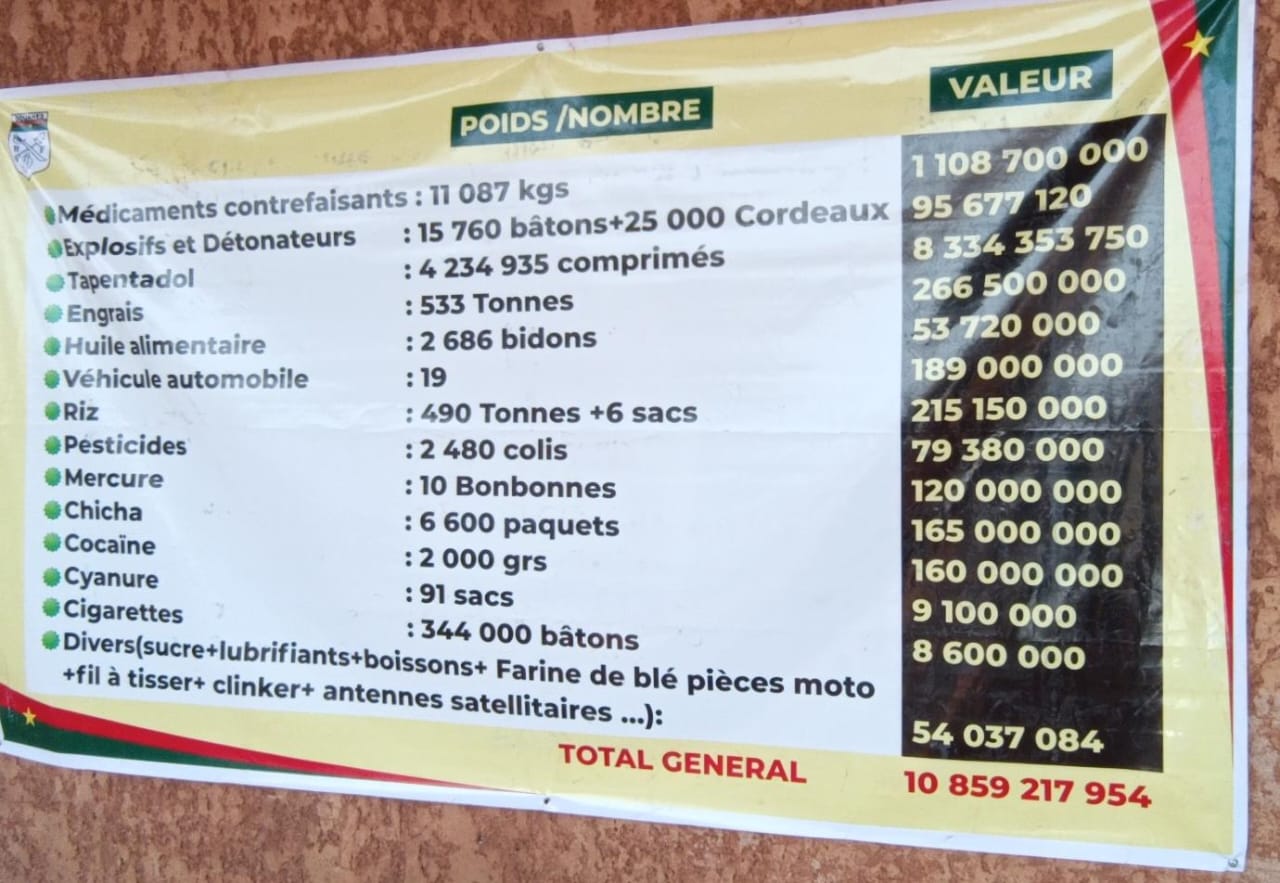
Pour lui, permettre l'entrée d'engrais de mauvaise qualité reviendrait à compromettre les efforts des agriculteurs et, par ricochet, les rendements agricoles. La SOBIMAP, qui a bénéficié d'une remise symbolique des engrais saisis, entend poursuivre les échanges avec la Douane afin d'examiner les conditions réglementaires de leur éventuel enlèvement, à travers une convention, au profit des producteurs.
Du côté de la Ligue des consommateurs du Burkina, cette opération est perçue comme une action concrète de protection des citoyens. Son président, Marcel Kouraougou, a particulièrement insisté sur deux droits fondamentaux : le droit à la santé et le droit à l'information. Selon lui, en présentant publiquement ces marchandises, l'administration douanière ne se contente pas de rendre compte de ses résultats. Elle contribue également à sensibiliser les populations sur les dangers des produits de contrebande qui circulent sur les marchés. « La Douane pouvait saisir, elle pouvait ne pas communiquer. Mais si elle a communiqué, c'est qu'elle poursuit un objectif : celui de donner de l'information, de sensibiliser et d'éduquer le consommateur. Mais On ne pourra pas mettre un agent de sécurité derrière chaque personne, mais chaque personne est un agent de sécurité », a-t-il relevé, invitant les citoyens à ne pas rester indifférents face aux pratiques frauduleuses.
Pour le Directeur général des douanes, les résultats de l'opération Manya sont aussi le fruit de l'engagement des agents déployés sur le terrain. Il leur a adressé ses félicitations, tout en les exhortant à maintenir une vigilance permanente.
Farida Thiombiano
Lefaso.net
Categories: Afrique
Burkina/Transport et logistique : La résilience logistique au centre des débats à la 5ᵉ édition de Translog Africa 2026
Le Conseil burkinabè des chargeurs (CBC) tient du 20 au 22 octobre 2026 à Ouagadougou la 5ᵉ édition du Symposium international sur le transport et la logistique (TRANSLOG AFRICA 2026). La cérémonie d'ouverture s'est tenue ce 20 octobre sous le patronage du président du Faso, le capitaine Ibrahim Traoré, représenté par le président de l'Assemblée législative du peuple, Dr Ousmane Bougouma. Souleymane Zidnaba est le parrain de cette édition.
Cette rencontre se déroule sous le thème : « Résilience et sécurisation des chaînes logistiques dans un environnement mondial en pleine mutation ». Durant les trois jours de travaux, les participants examineront plusieurs questions essentielles pour l'avenir du secteur, notamment la sécurisation des flux logistiques, la digitalisation des procédures, la performance des corridors, le financement des infrastructures et la contribution de la logistique à l'industrialisation du continent africain.
Ces échanges visent à identifier des réponses adaptées aux défis actuels du transport et de la logistique, dans un environnement international où les crises et les incertitudes peuvent rapidement affecter les chaînes d'approvisionnement.
À l'ouverture des travaux, le président de l'Assemblée législative du peuple a souligné l'importance stratégique de la logistique dans un contexte marqué par les tensions géopolitiques et les perturbations des routes maritimes. « Les tensions géopolitiques et les perturbations des routes maritimes ont révélé la vulnérabilité de nos économies face aux chocs extérieurs. La crise n'est plus une exception, elle devient un paramètre de notre environnement », a-t-il souligné.
Le président de l'Assemblée législative du peuple Dr Ousmane Bougouma en train de couper le ruban pour la visite des stands, à sa droite, le ministre Emile Zerbo, à sa gauche la directrice générale du CBC, Denise Bado/ Bouda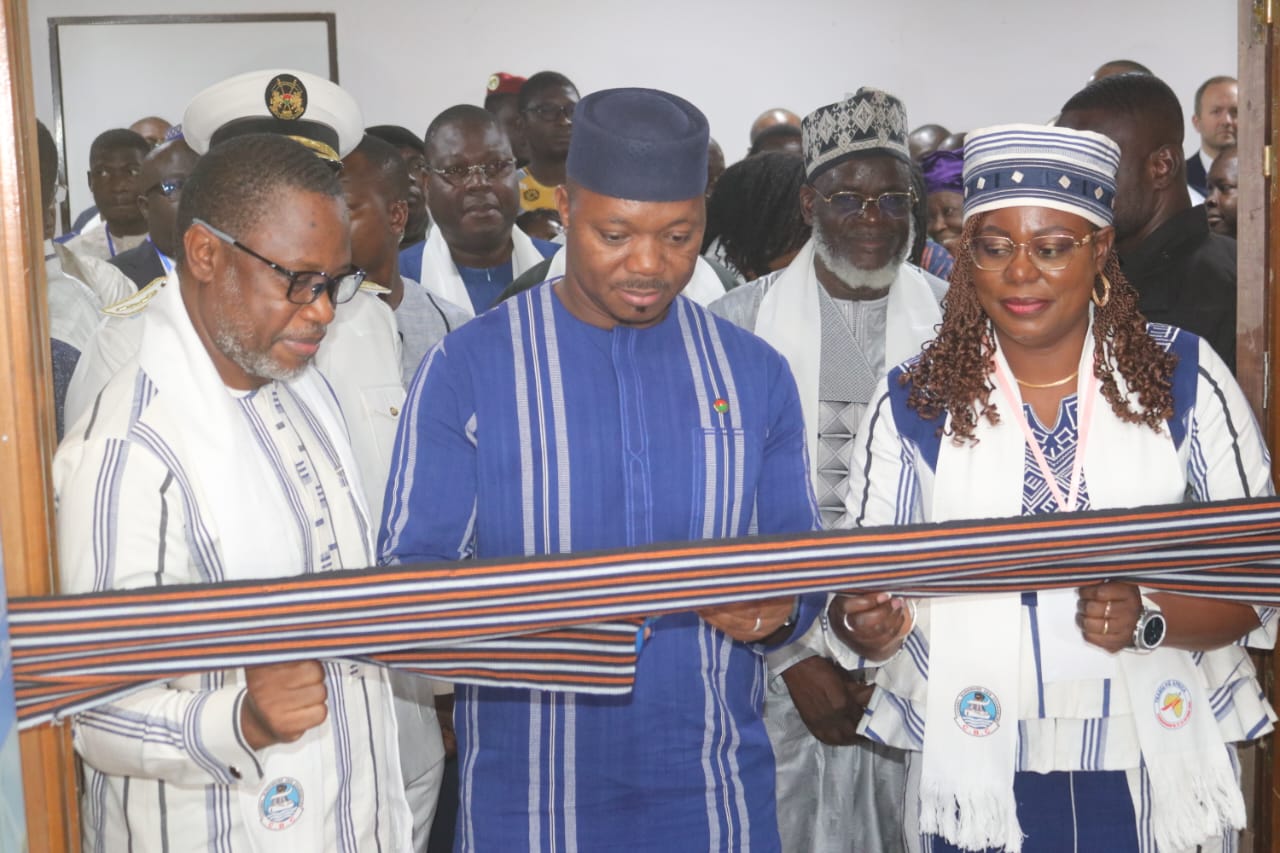
Pour le représentant du président du Faso, ces bouleversements imposent une nouvelle approche de la performance logistique. Celle-ci ne doit plus être appréciée uniquement à travers les coûts et les délais, mais également au regard de sa capacité à résister aux crises, à sécuriser les flux et à contribuer à la souveraineté économique des États. « Pour le Burkina Faso, pays sans littoral, cet enjeu est vital. Chaque rupture de corridor, chaque congestion portuaire, chaque formalité de trop pèse sur le coût des marchandises et la compétitivité de nos entreprises. À l'inverse, chaque procédure simplifiée et chaque corridor sécurisé constituent un investissement direct dans notre économie. Notre responsabilité collective est de faire de nos corridors non plus de simples voies de transit, mais de véritables axes de développement et d'intégration », a indiqué Dr Ousmane Bougouma.
Dans cette perspective, il a appelé à faire des corridors de transport de véritables leviers de développement et d'intégration régionale, au-delà de leur simple fonction de transit. L'amélioration de la fluidité des échanges, la réduction des contraintes administratives et le renforcement de la sécurité des marchandises apparaissent ainsi comme des priorités pour accroître la compétitivité des entreprises burkinabè. « Les routes, les ports et les chemins de fer sont indispensables, mais ils ne suffisent plus. L'Afrique doit également investir dans la donnée, l'innovation et la coopération, afin de passer d'une logistique qui subit les transformations du monde à une logistique qui les anticipe. L'Afrique n'a pas seulement besoin de corridors qui la traversent. Elle a besoin de corridors qui la transforment. Elle n'a pas seulement besoin de chaînes logistiques plus rapides. Elle a besoin de chaînes logistiques qui renforcent sa souveraineté économique. Tel est, au fond, l'enjeu des travaux. Je formule le vœu que cette cinquième édition fasse émerger des propositions concrètes, des partenariats solides et des engagements durables pour l'avenir logistique de notre continent », a dit le président de l'Assemblée législative du peuple.
Une vue des participants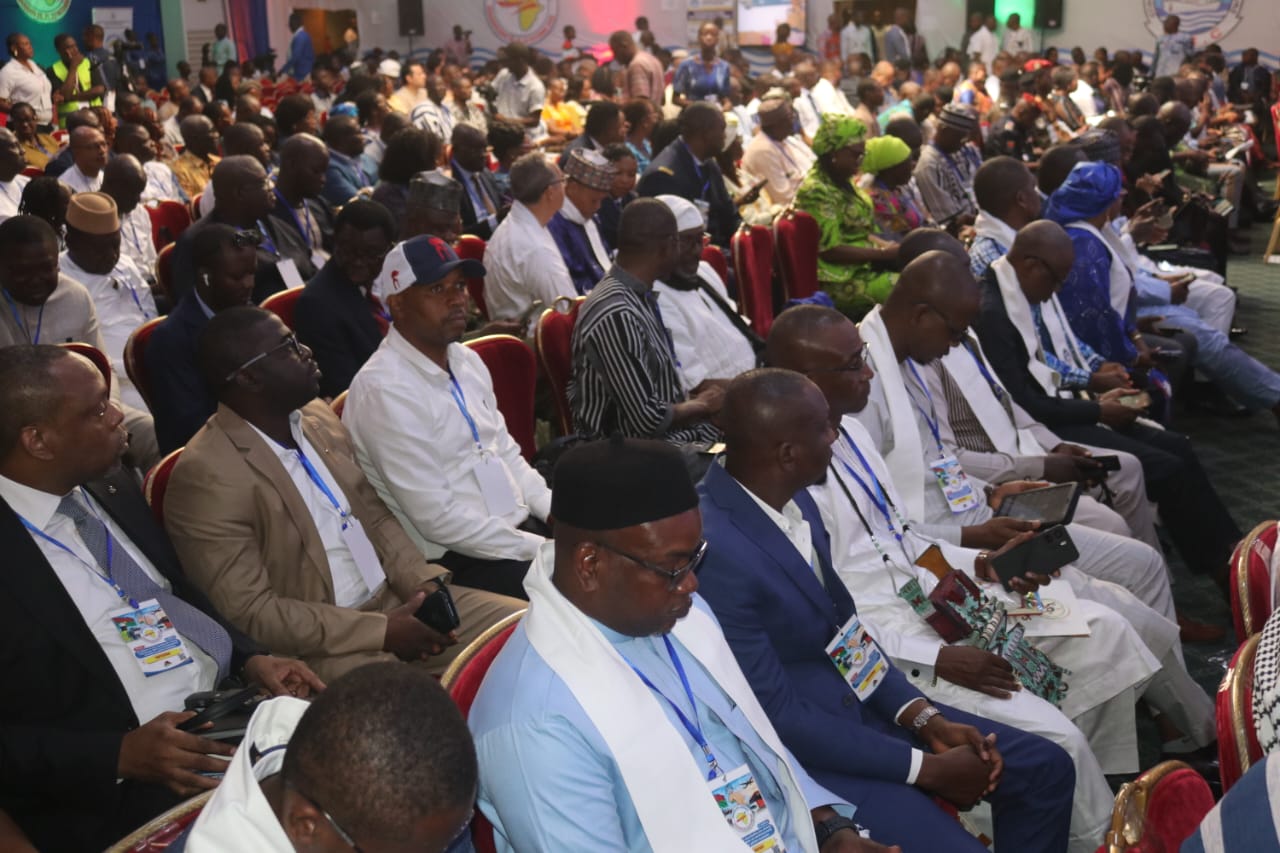
Pour le ministre en charge de la Mobilité, Émile Zerbo, si Translog n'existait pas, il fallait le mettre en place. Car la géopolitique internationale fragilise les économies des pays africains. « Quand on regarde la géopolitique internationale, elle fait subir à nos économies une certaine difficulté, il faut donc ce genre de cadre pour trouver des solutions endogènes, des solutions africaines aux problèmes africains. Nous attendons des solutions qui permettent de faciliter le transport des marchandises et des personnes », a laissé entendre le ministre Zerbo.
Selon la directrice générale du Conseil burkinabè des chargeurs, Denise Bado/Bouda, quinze pays sont présents à cette édition. Parmi eux le Cameroun, le Bénin, la Côte d'Ivoire, le Mali et la Belgique. Pour elle, cette rencontre est le cadre idéal pour réfléchir et trouver des solutions concrètes sur les défis de la fluidité du transport en Afrique, notamment pour les pays sans littoral. « Les contraintes structurelles nous invitent à innover, à mutualiser nos efforts, à bâtir des systèmes logistiques plus intégrés, plus sûrs et plus résilients », a indiqué la directrice générale du CBC.
Le parrain de la cérémonie, Souleymane Zidnaba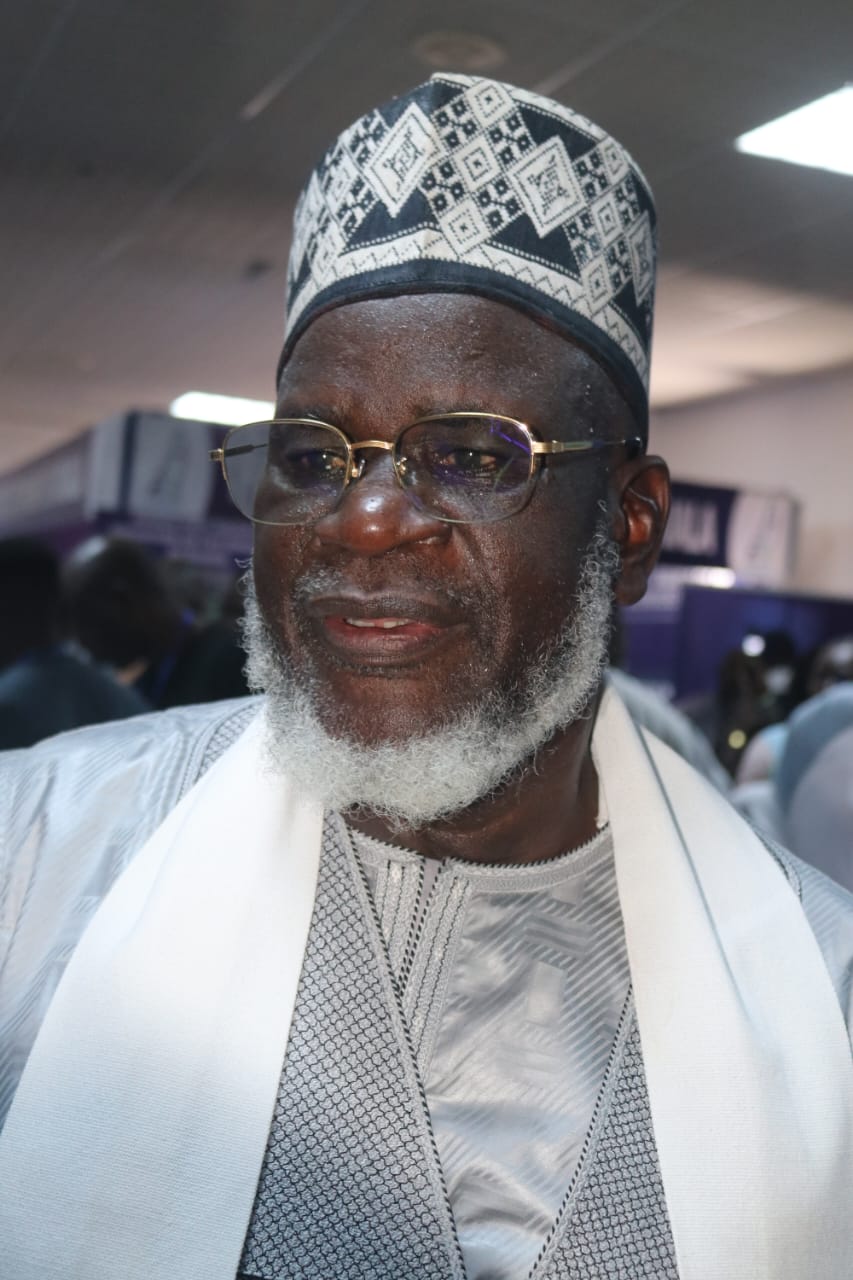
Pour le parrain de la cérémonie, Souleymane Zidnaba, cette rencontre revêt une importance capitale pour le Burkina Faso. Car la compétitivité des entreprises burkinabè dépend de la performance et de la fiabilité des corridors qui relient le pays aux ports et aux marchés internationaux. « Chaque rupture fragilise nos entreprises et affecte l'ensemble des activités économiques. Un corridor performant équivaut à un coût moindre, à un moindre délai et à une compétitivité des entreprises », a relevé le parrain. Il a terminé en invitant l'ensemble des acteurs à trouver des solutions adaptées aux problèmes des entreprises et aux populations africaines.
Rama Diallo
Lefaso.net
Categories: Afrique
Pages


© 2012-2018 Europa Varietas Foundation © 2015-2018 Europa Varietas Association
www.europavarietas.org | info(@)europavarietas(dot)org | Switzerland
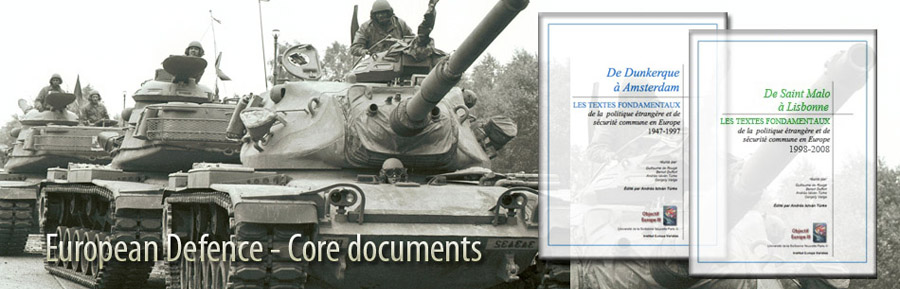
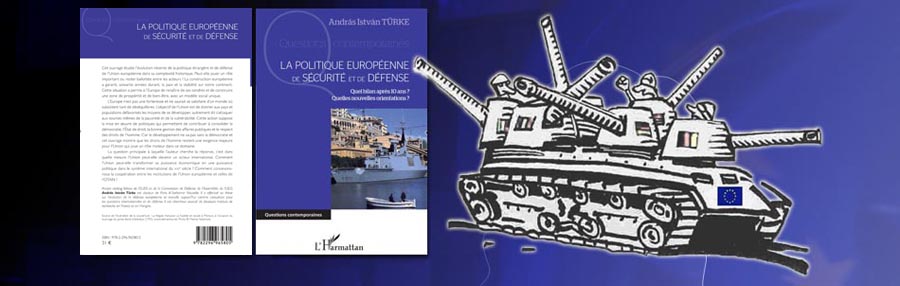
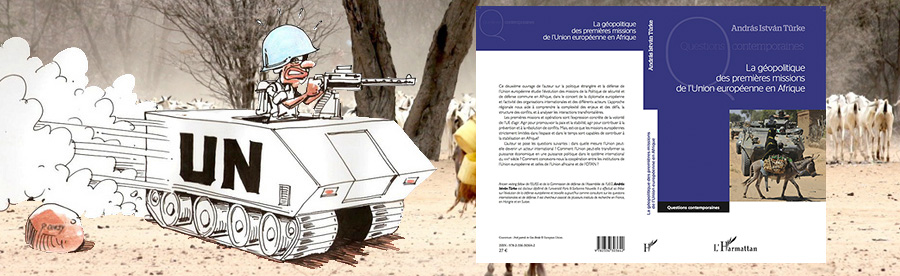
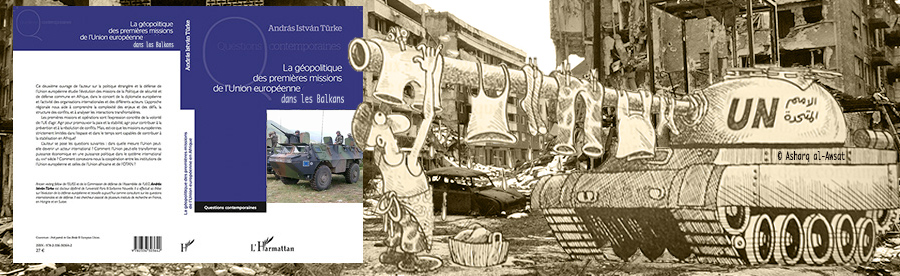
We are looking for sponsors for the English translation of these books, please contact turkeandras(at)gmail(dot)com