
You are here
Diplomacy & Defense Think Tank News
COVID-19 beeinflusst Risikopräferenzen kaum
Eine neue Analyse von Daniel Graeber, Ulrich Schmidt, Carsten Schröder und Johannes Seebauer auf Basis von SOEP-Daten und unter Berücksichtigung regionaler Unterschiede bei Infektionsraten zeigt: Trotz steigender finanzieller Sorgen und Ängste bleiben individuelle Risikopräferenzen weitgehend stabil ...
Staatskonsum stabilisiert die Wirtschaft kurzfristig, Steuersenkungen wirken stärker, aber verzögert
Finanzpolitischer Kurswechsel umfasst neben Sondervermögen und gelockerter Schuldenbremse auch steuerliche Entlastungen – Wirkung der Instrumente ist entscheidend, sie sollten gezielt kombiniert werden – Ein zusätzlicher Euro Staatskonsum erhöht das BIP kurzfristig um rund einen Euro – Eine ...
Global value chains in Egypt: overview, challenges, and opportunities chapter
Categories: Afrique, Diplomacy & Defense Think Tank News
Global value chains in Egypt: overview, challenges, and opportunities chapter
Categories: Diplomacy & Defense Think Tank News, European Union
Global value chains in Egypt: overview, challenges, and opportunities chapter
Categories: Diplomacy & Defense Think Tank News, Europäische Union
Global value chains in Egypt: overview, challenges, and opportunities chapter
Categories: Afrique, Diplomacy & Defense Think Tank News
Global value chains in Egypt: overview, challenges, and opportunities chapter
Categories: Afrique, Diplomacy & Defense Think Tank News
Global value chains in Egypt: overview, challenges, and opportunities chapter
Categories: Diplomacy & Defense Think Tank News, European Union
Influence without Power: Rethinking Greek-African relations
This policy brief argues that Greece should rethink its engagement with Sub-Saharan Africa through selective partnerships, education, religion, diaspora networks and civil society. Instead of competing financially with larger powers, Greece can generate long-term influence by concentrating resources where it has comparative advantages. A policy aligned with EU priorities that will focus on practical, low-cost initiatives can produce significant diplomatic dividends.
Read here in pdf the Policy brief by Asterios Huliaras, Professor in the Department of Political Science and International Relations, University of the Peloponnese and member of ELIAMEP’s Advisory Committee.
IntroductionAfrica[1] is emerging as one of the most strategically important regions of the twenty-first century. Despite armed conflicts, democratic backsliding, debt crises, and persistent poverty, the continent is characterized by rapid demographic growth, increasing urbanization, expanding markets, and rising geopolitical significance. Global actors such as China, Russia, Turkey, India, the United Arab Emirates, and Brazil have significantly expanded their political and economic engagement with African countries. Greece, by contrast, has traditionally maintained weak and fragmented relations with Sub-Saharan Africa. However, recent European developments, particularly the European Union’s Global Gateway strategy and the African Continental Free Trade Area agreement (AfCFTA), create an opportunity for a strategic rethinking of Greek policy.
The challenge for Greece is not whether it should engage with Africa, but how it can do so with limited diplomatic, financial, and administrative resources. Rather than attempting to imitate larger powers, Greece should adopt a selective strategy emphasizing concentrated partnerships, network diplomacy, educational links, and societal actors.
The Policy ChallengeThe starting point of Greek engagement with Africa is structurally weak. Although geographically close to the continent, Greece maintains only eight embassies across forty-nine countries of Sub-Saharan Africa serving a population of approximately 1.2 billion people (in comparison, Turkey maintains thirty-two embassies in the region). Furthermore, only the Greek embassy in South Africa has a commercial attaché, while official high-level political visits have been extremely rare (an exception was Foreign Minister Nikos Dendias official visits to several Sub-Saharan African countries, looking mainly for support for Greece’s candidature for the UN Security Council). No Greek Prime Minister has visited a Sub-Saharan African country during the last three decades. Greek exports to Africa represent only approximately 0.3 percent of total exports, while investment remains minimal.
The weakness of institutional engagement contrasts sharply with the continent’s growing significance. Africa currently hosts some of the fastest-growing economies in the world and the African Continental Free Trade Area aims to create a market of approximately 1.5 billion consumers. In addition, under the European Union’s Global Gateway initiative, €150 billion out of the overall €300 billion package are directed toward Africa.
At the same time, Greece possesses assets that remain largely underutilized.
Existing Greek Assets and Untapped OpportunitiesThe Orthodox Church represents one of Greece’s most important but often neglected channels of influence in Africa. The Patriarchate of Alexandria maintains bishoprics in twelve African countries with an estimated flock of approximately 1.2 million faithful. Historically, religious diplomacy has often operated as an informal channel for strengthening relations and promoting social initiatives in education, health, and community development.
The Church could therefore function as an instrument of soft power by supporting educational programmes, scholarships, local partnerships, and social services. For example, cooperation between Greek universities and schools connected to the Patriarchate of Alexandria could create educational networks extending from Egypt and Kenya to countries of Central and Southern Africa. Such initiatives would be relatively inexpensive while generating long-term influence. However, the Russian Orthodox Church has increasingly attempted to expand its presence in Africa, potentially weakening the historical position of the Patriarchate of Alexandria (numerous African Greek Orthodox priests have joined the Russian Church in recent years). Consequently, supporting the activities of the Patriarchate also acquires broader geopolitical significance, especially in the current context.
Diaspora communities constitute another important but largely underexploited resource. Although the Greek diaspora in Africa has declined dramatically—from approximately 150,000 individuals in 1960s to only a few tens of thousands today—it still provides networks and contacts across various sectors. At the same time, the African diaspora in Greece, including entrepreneurs, artists, athletes, and community organizations, has become more influential and can function as an important bridge.
Civil society organizations have already demonstrated the potential of such engagement. Organizations including the Greek-African Chamber of Commerce, several consultancies, but also NGOs like Doctors Without Borders–Greece, Lalibella, YouthmakersHub, and ELIX already undertake projects across African countries, often financed through European and private resources. University initiatives such as the AfriquEurope programme of the University of the Peloponnese illustrate that society has often moved ahead of the state and ELIAMEP’s agreement with Pretoria University.
Policy RecommendationsGiven its limited resources, Greece should avoid a continent-wide strategy and instead focus on one or two strategic partner countries that can function as anchor states. Kenya, for example, combines strong economic growth, regional influence, and importance in logistics and maritime activities. Ethiopia represents another possible case because of historical links and religious connections. Concentrating resources would allow Greece to build expertise and create visibility at manageable cost.
Second, Greece should strengthen educational and digital partnerships. Universities could expand English-language and French-language programmes specifically targeting African students. Visa procedures should also be simplified. It is inefficient for prospective African students to wait five or six months for visa appointments.
Third, Greece should establish a national volunteer programme inspired by international examples such as the Peace Corps in the US or similar programmes in Europe. Young Greeks could participate in educational, environmental, or healthcare projects in African countries. Such a programme could seek financial support from the Greek Public Employment Service (DYPA) and the EU, create networks and simultaneously improve Greece’s currently limited development profile.
Moreover, Greece should create a digital platform on Greek–African relations that could serve as an innovative mechanism for strengthening coordination, visibility, and interaction among the multiple actors involved in the relationship. The platform could function as a shared digital ecosystem bringing together public institutions, private enterprises, civil society organizations, academic institutions, diaspora networks, and cultural actors from Greece and African countries. It could include databases of ongoing initiatives and partnerships, funding opportunities, business and educational collaborations, cultural exchanges, and development projects, while also providing interactive tools such as discussion forums, thematic working groups, and networking spaces. Beyond its informational role, such a platform could facilitate dialogue and the co-production of ideas, reduce fragmentation among existing initiatives, and create synergies between actors who currently operate in isolation. In this way, it could strengthen relational ties and transform dispersed activities into a more coherent framework of engagement, enhancing Greece’s visibility and influence through networking, participation, and sustained interaction rather than through traditional forms of state power.
Finally, Greece should adopt a broader understanding of migration and mobility by creating more legal pathways for seasonal workers in agriculture, construction, and care services. Bilateral agreements with countries such as Ethiopia could address labour shortages while strengthening long-term partnerships.
ConclusionGreece cannot compete with larger powers in Africa through financial resources or extensive diplomatic infrastructures. However, it can develop influence through networks, education, religion, and societal links. Rather than perceiving Africa as a distant periphery, Greece should view the continent as an emerging strategic space where modest but carefully designed interventions can generate substantial diplomatic dividends.
[1] In this paper, the term “Africa” refers specifically to Sub-Saharan Africa, unless otherwise indicated. North Africa is treated separately due to its distinct historical, political, economic, and socio-cultural dynamics.
Categories: Afrique, Diplomacy & Defense Think Tank News
Workshop Call: Firms, Workers, and Households in Times of Crisis and Digital Transformation
Als Teil des SOEP-LEE2-Projekts veranstaltet AKempor (Arbeitskreis Empirische Personal- und Organisationsforschung) am 26. und 27. November einen Workshop im DIW Berlin, der Forschungsarbeiten zu den Themen Resilienz, Krisenreaktionen, digitaler Wandel und Cybersicherheit verbinden soll. Der Fokus ...
Categories: Diplomacy & Defense Think Tank News, Nyugat-Balkán
Workshop Call: Firms, Workers, and Households in Times of Crisis and Digital Transformation
Als Teil des SOEP-LEE2-Projekts veranstaltet AKempor (Arbeitskreis Empirische Personal- und Organisationsforschung) am 26. und 27. November einen Workshop im DIW Berlin, der Forschungsarbeiten zu den Themen Resilienz, Krisenreaktionen, digitaler Wandel und Cybersicherheit verbinden soll. Der Fokus ...
Categories: Afrique, Diplomacy & Defense Think Tank News
Share Your Ideas: SOEP Feature Requests – neues Angebot im Forum4Mica
Das Forum4Mica ist eine Plattform, bei der Datennutzende Fragen zu Daten und Generierung stellen können und zeitnah Antworten der entsprechenden Expert*innen erhalten.
Haben Sie Ideen, wie das SOEP noch besser werden kann? Ab sofort steht Ihnen das Forum4MICA auch für Feedback, Anregungen oder ...
Categories: Afrique, Diplomacy & Defense Think Tank News
Share Your Ideas: SOEP Feature Requests – neues Angebot im Forum4Mica
Das Forum4Mica ist eine Plattform, bei der Datennutzende Fragen zu Daten und Generierung stellen können und zeitnah Antworten der entsprechenden Expert*innen erhalten.
Haben Sie Ideen, wie das SOEP noch besser werden kann? Ab sofort steht Ihnen das Forum4MICA auch für Feedback, Anregungen oder ...
Categories: Afrique, Diplomacy & Defense Think Tank News
Variable „Einwanderungsgeschichte“ (mighist) verfügbar
Ab sofort können Datennutzende die Variable mighist („Einwanderungsgeschichte“) sowie die Infovariable mighist_info für SOEP-Core v41 per E-Mail an soepmail@diw.de bestellen. In SOEP-Core v42 werden beide Variablen regulär enthalten sein.
Mit mighist übernimmt das SOEP das Konzept der ...
Categories: Afrique, Diplomacy & Defense Think Tank News
Variable mighist „Einwanderungsgeschichte“ verfügbar
Datennutzende können ab sofort die Variable mighist „Einwanderungsgeschichte“ und die dazugehörige Infovariable mighist_info basierend auf den Daten der Version 41 (v41) bestellen. Bitte senden Sie eine E-Mail an soepmail@diw.de.
Für die kommende Version 42 (v42) wird sie regulär in der Datenweitergabe enthalten sein und muss nicht separat bestellt werden.
Mit der Variable mighist passt sich das SOEP an das Konzept des Mikrozensus an und vereinfacht die internationale Vergleichbarkeit der verwendeten Definition: „So müssen entweder die Person selbst oder beide Elternteile seit 1950 auf das heutige Gebiet Deutschlands zugezogen sein, damit sie als Eingewanderte beziehungsweise als in Deutschland geborene Nachkommen von Eingewanderten gelten“ (Statistisches Bundesamt (Destatis), Einwanderungsgeschichte, 2026).
Categories: Afrique, Diplomacy & Defense Think Tank News
Südafrikas beunruhigender Umgang mit der afrikanischen Migration
Die fremdenfeindlichen Ausschreitungen in Südafrika schaden dem Ansehen des Landes und könnten zu einer Abwanderung an unternehmerischem Geschick und Fachwissen führen, warnt die Anthropologin Rose Jaji vom German Institute of Development and Sustainability (IDOS) im Gastbeitrag.
Categories: Afrique, Diplomacy & Defense Think Tank News
Südafrikas beunruhigender Umgang mit der afrikanischen Migration
Die fremdenfeindlichen Ausschreitungen in Südafrika schaden dem Ansehen des Landes und könnten zu einer Abwanderung an unternehmerischem Geschick und Fachwissen führen, warnt die Anthropologin Rose Jaji vom German Institute of Development and Sustainability (IDOS) im Gastbeitrag.
Categories: Afrique, Diplomacy & Defense Think Tank News
Südafrikas beunruhigender Umgang mit der afrikanischen Migration
Die fremdenfeindlichen Ausschreitungen in Südafrika schaden dem Ansehen des Landes und könnten zu einer Abwanderung an unternehmerischem Geschick und Fachwissen führen, warnt die Anthropologin Rose Jaji vom German Institute of Development and Sustainability (IDOS) im Gastbeitrag.
Categories: Balkans Occidentaux, Diplomacy & Defense Think Tank News
16. Internationale SOEP-Nutzendenkonferenz in Berlin
Das Sozio-oekonomische Panel (SOEP) begrüßte am 8. und 9. Juli 2026 rund 90 Forschende aus dem In- und Ausland zu seiner Nutzendenkonferenz in Berlin. Alle zwei Jahre treffen sich Nutzer*innen der SOEP-Daten aus verschiedenen Fachrichtungen unter anderem der Sozial- und Wirtschaftswissenschaften, um ...
Categories: Afrique, Diplomacy & Defense Think Tank News
Die große weiße Leinwand
Acht Staaten, unzählige indigene Völker, rivalisierende Großmächte: Die Arktis ist Heimat, Klimaindikator, Ressourcenreservoir und geopolitisches Terrain zugleich. Vor allem aber ist sie keine klar umrissene Region, sondern eine Projektionsfläche - geprägt von konkurrierenden Interessen, Narrativen und der Frage, wessen Stimme zählt.
Categories: Afrique, Diplomacy & Defense Think Tank News
Pages
the old site is here


© 2012-2015 Europa Varietas Foundation © 2015-2020 Europa Varietas Association
www.europavarietas.org | info(@)europavarietas(dot)org | Switzerland
This is a GDPR ready site
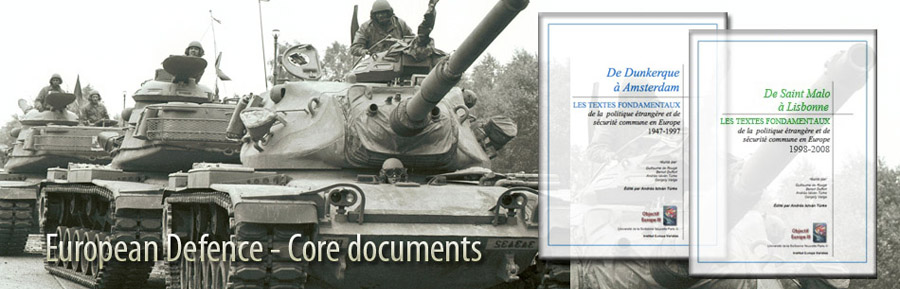
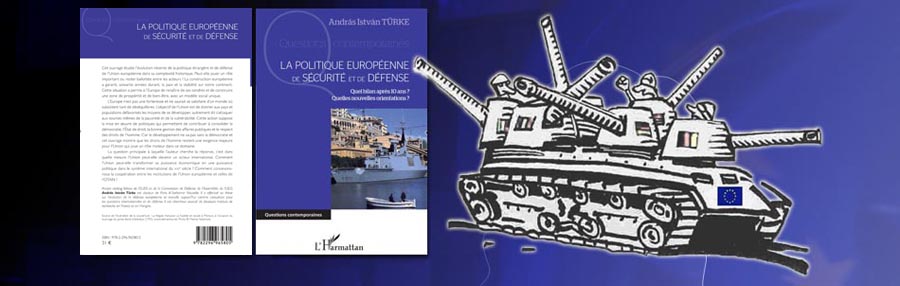
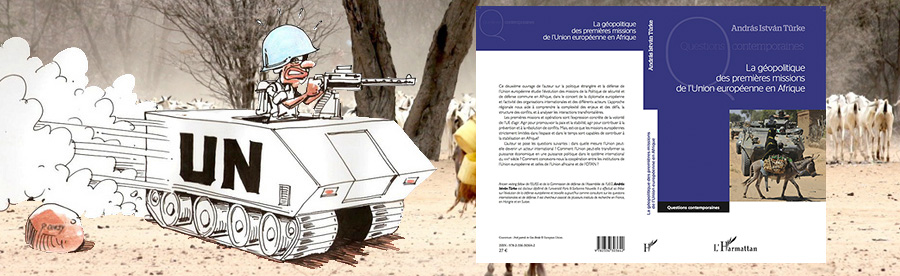
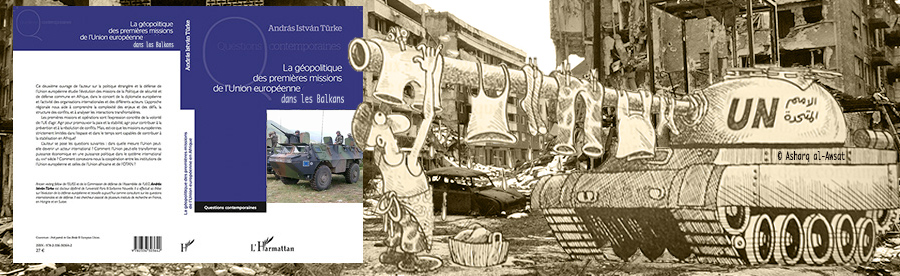
We are looking for sponsors for the English translation of these books, please contact turkeandras(at)gmail(dot)com