
You are here
Feed aggregator
Bell Completes First MV-75 Fuselage
Bell has completed the first fuselage for the MV-75 Cheyenne II, which will soon be mated with the already completed wing structure and nacelles.
Bell announced on Nov. 16, 2026, that the production of the first fuselage for the MV-75 Cheyenne II, the U.S. Army’s Future Long Range Assault Aircraft (FLRAA), has been completed. The fuselage was manufactured at the Wichita Assembly Center in Wichita, Kansas, and has now been delivered to the Amarillo Assembly Center in Amarillo, Texas, to continue with the assembly of the first aircraft.
The company highlighted that the milestone comes “just two years after Bell selected Wichita as the site for MV-75 fuselage manufacturing.” According to the press release, the fuselage is made of four major assemblies: Fwd Fuse, Mid Fuse, Aft Fuse and Fuselage Mate.
“This achievement is a testament to the dedication and agility of Bell and the entire MV-75 team, who rapidly established infrastructure and moved with purpose to design and assemble the first fuselage,” said Adam Blackford, general manager, Wichita Assembly Center, Bell. “The completion of this fuselage reflects our unwavering commitment to delivering the MV-75 Cheyenne to our warfighters.”
The next phase of the work will see the fuselage mated with the already completed wing structure and nacelle. The completion of the production of these structures was announced June and October, respectively.
A rendering of what the production MV-75 Cheyenne II could look like. | Source: Bell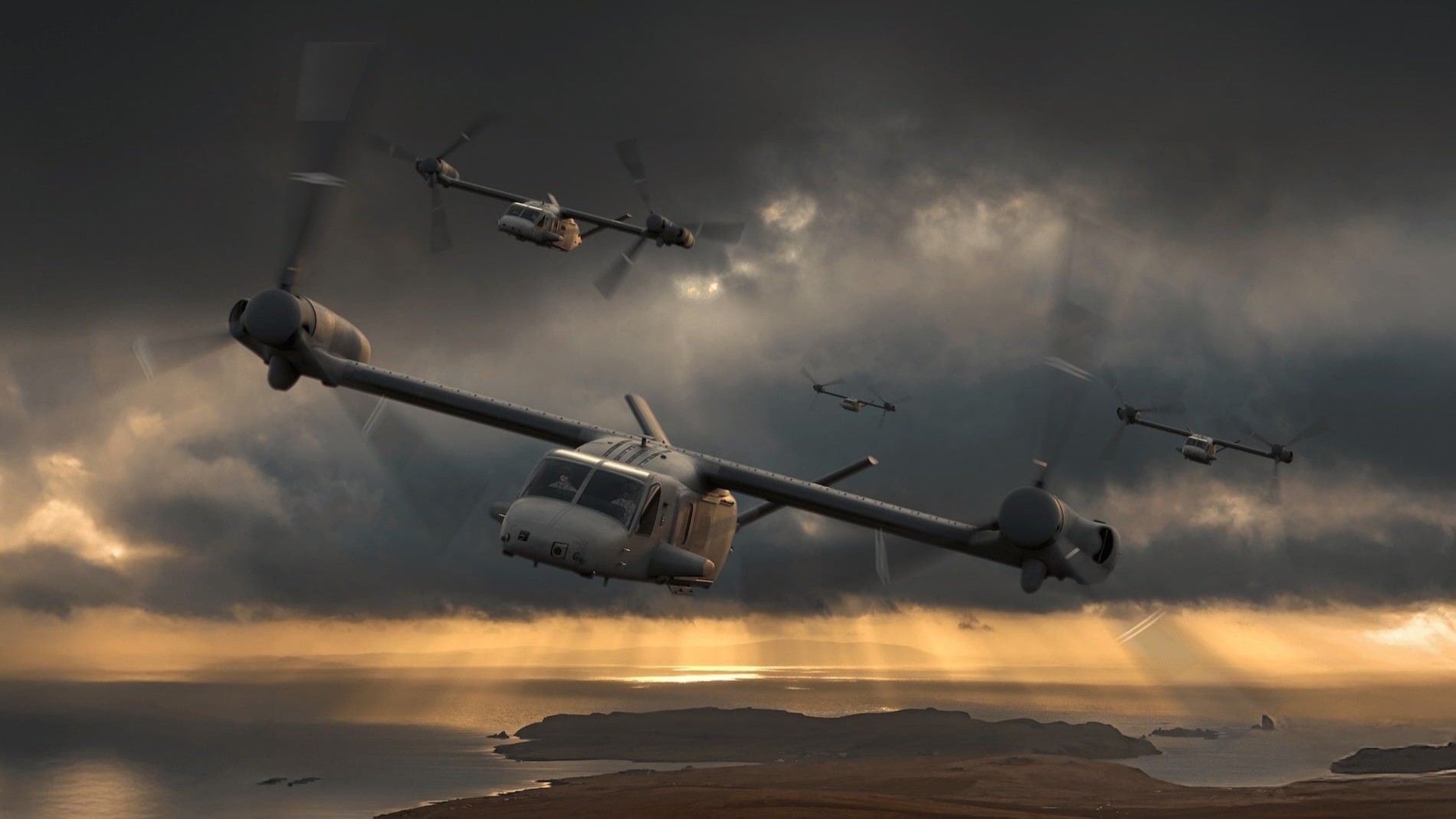
Following the assembly, Bell says the MV-75 will be loaded into a full-scale structural test fixture being purpose-built to calibrate instrumentation strain gauges and proof load the aircraft. The company describes this as “the first major test of the MV-75’s capability and demonstrate its structural reliability and safety.”
Bell additionally said the significant progress gets the MV-75 test aircraft one step closer to completing the build and beginning flight test. The delivery of the first MV-75 prototype was scheduled by the end of 2026, however this timeline has now been pushed to early 2027.
Recent progressOn Oct. 14, 2026, Bell announced that the first nacelle structures for the MV-75 Cheyenne were completed at the Amarillo Assembly Center. These were then assembled on the wings which were completed earlier this year.
“The completion of the nacelle structures reflects the successful application of digital engineering to advance through engineering, tooling, detail part manufacture and assembly of critical structures,” said the company at the time.
The nacelles of the MV-75A Cheyenne II mated to the wing. | Source: Bell Textron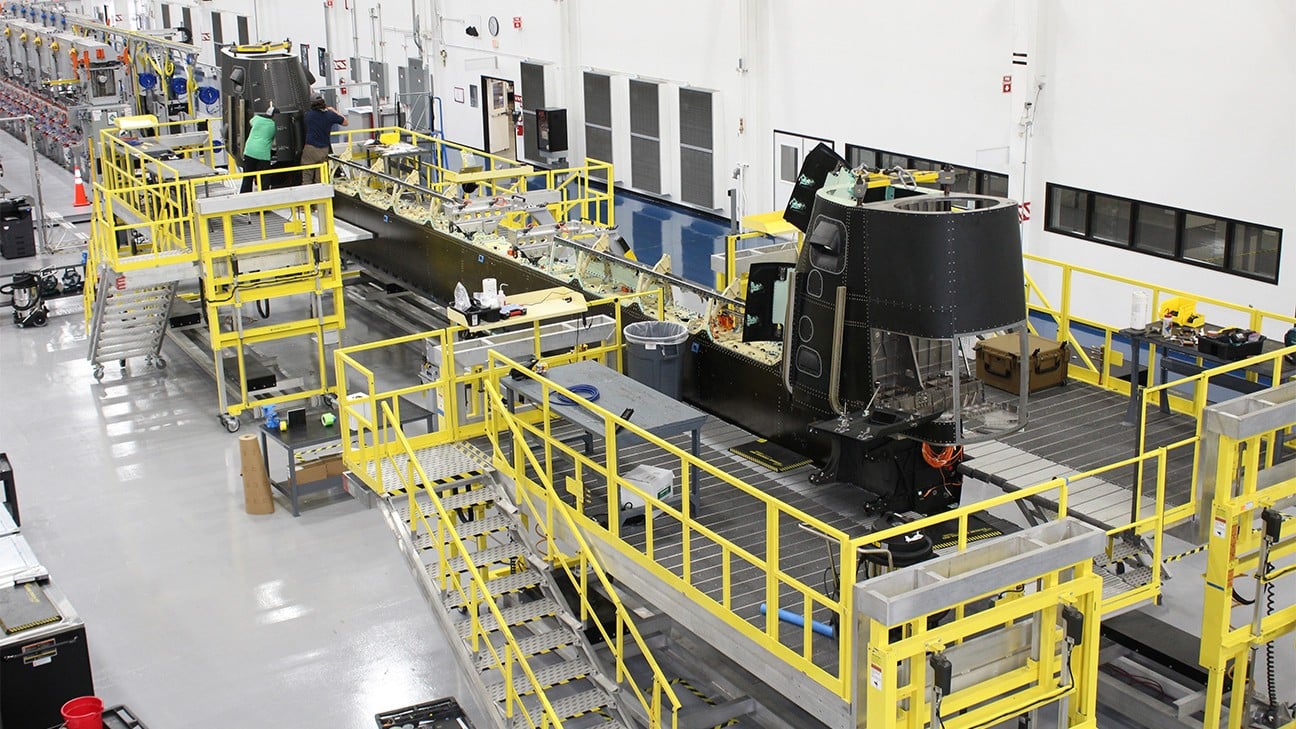
Meanwhile, testing is ongoing on the gearboxes of the MV-75’s drive system. The company says these will power electrical power generators, hydraulic pumps and cooling blowers for the engine and nacelle.
Additionally, Bell is working to mature the MV-75’s software and digital backbone in the Weapon System Integration Lab (WSIL). Among the systems being tested are the flight control computers, general purpose computers, actuator drive unit, electrical components and large area displays.
Previously, the company disclosed in June that the first two wing structures were completed, and specified that the first was completed in February. The company described the components saying that the wing is made by composite wing skins and spars on a tailored aluminum substructure, all produced and assembled in-house.
Notably, Bell mentioned that the production of the first wing required “ 90% fewer labor hours compared to the initial V-22 wing build.” The lessons learned allowed for “an additional 40% reduction” during the production of the second wing compared to the V-22 Osprey.
The first two completed wing structures for the MV-75 Cheyenne II. | Source: Bell Textron The MV-75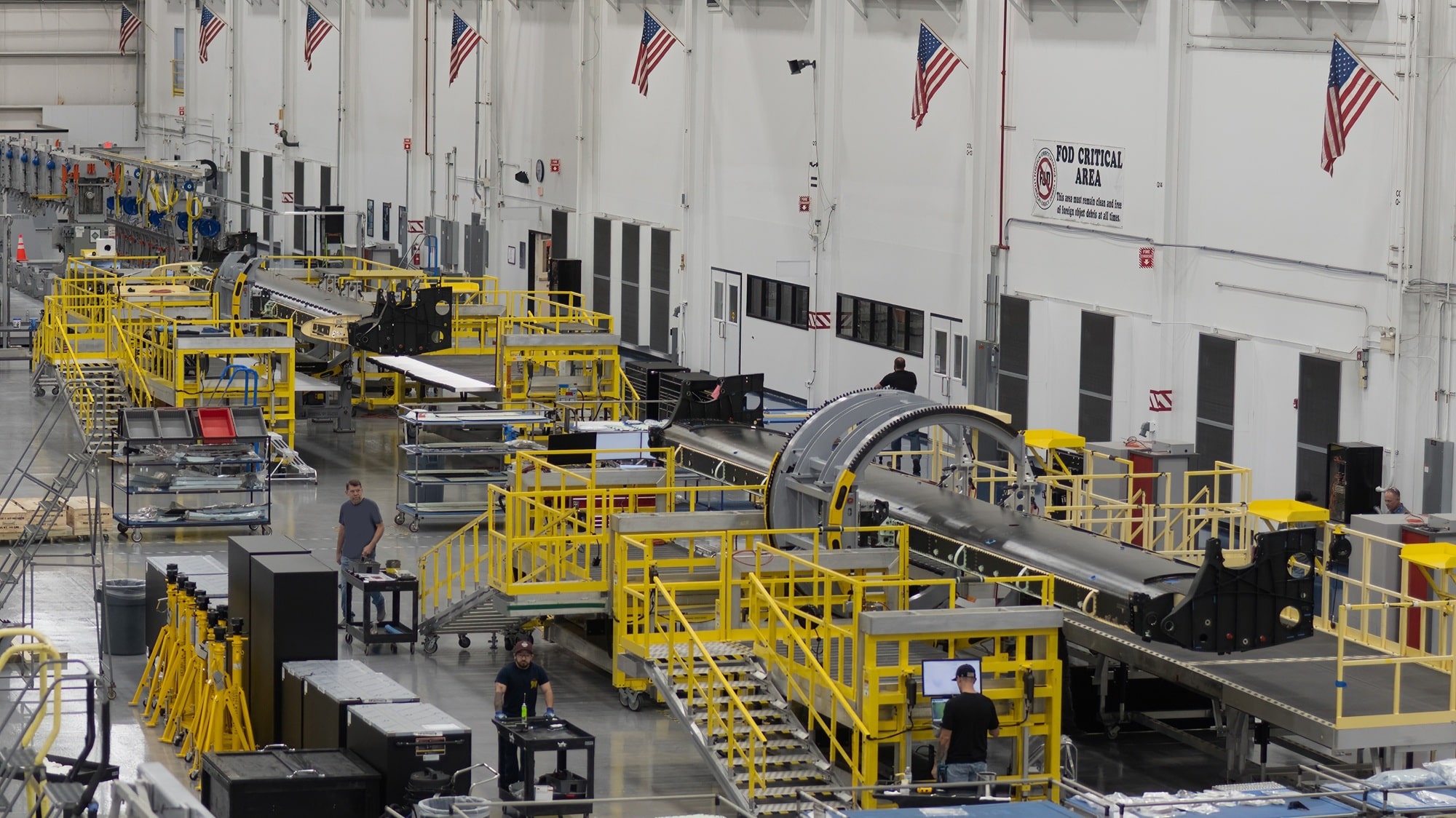
In April 2026, the U.S. Army has officially announced that the MV-75 Future Long Range Assault Aircraft (FLRAA) will be named as Cheyenne II, continuing the service’s tradition of honoring Native American tribes with the names of its aircraft. The Army explained the MV-75’s speed, range, and adaptability mirrored the historical attributes of the Cheyenne tribes.
The service also acknowledged that the MV-75 Cheyenne II is the first entirely new platform to be introduced into the inventory since the 1980s. The tiltrotor will complement the helicopter currently in service, allowing to extend the reach of Army Aviation units.
“The MV-75 Cheyenne II represents a new era of Army aviation, with capabilities that far exceed the current fleet,” said the service. With the publicly disclosed range of roughly 2,440 nautical miles, the MV-75 is said to be able to fly twice as fast and twice as far as the current UH-60M Black Hawk.
The Army initiated the FLRAA program in 2019 as part of its Future Vertical Lift initiative to replace a portion of its assault and utility helicopter fleet. The Bell V-280 Valor won the competition for the Army’s new helicopter in late 2022, with FLRAA becoming the only Future Vertical Lift (FVL) platform to move into the EMD phase.
The Bell V-280 Valor, upon which the MV-75 is based. | Source: Jay Miller via U.S. Army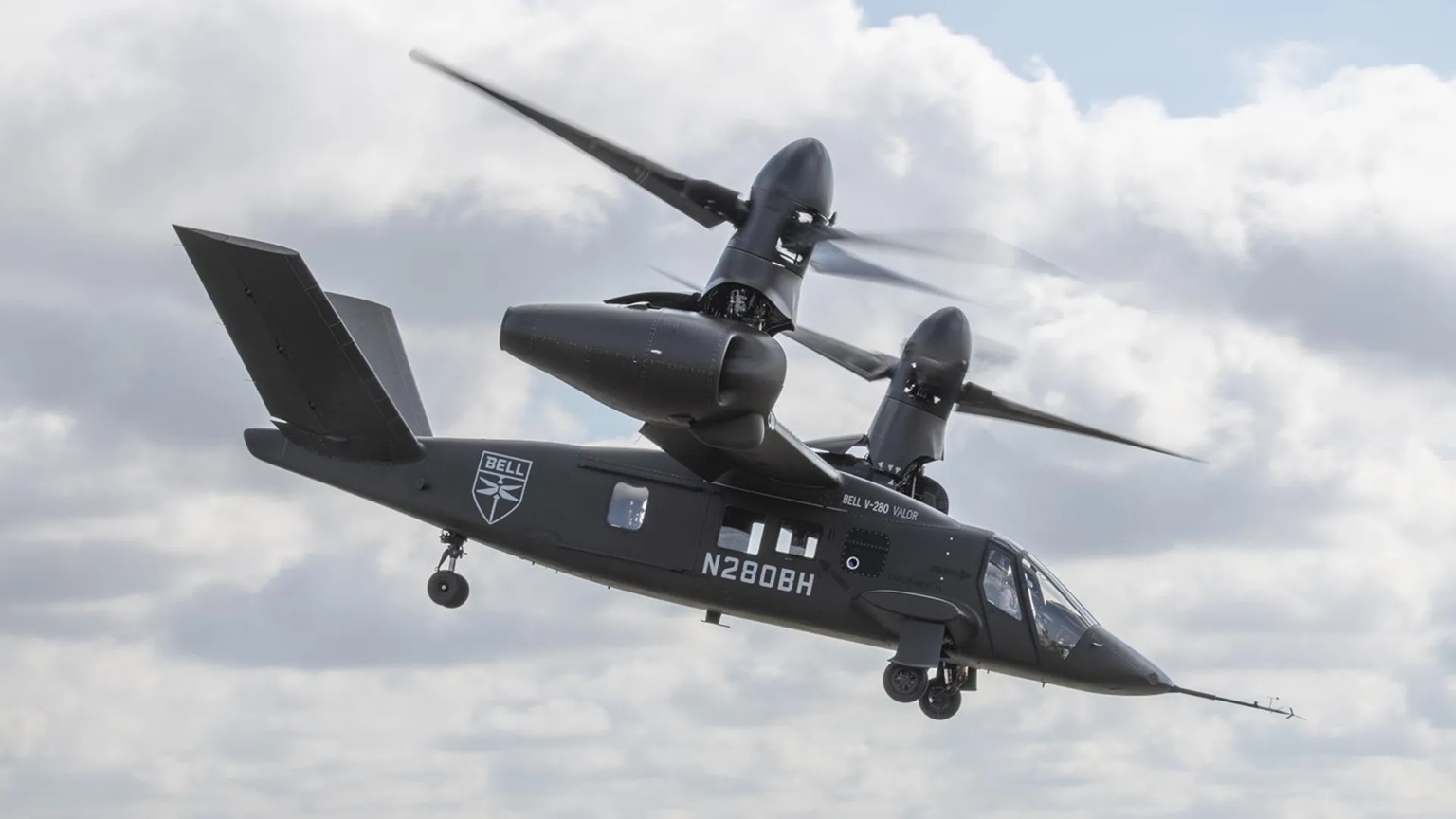
The U.S. Army has officially designated MV-75 as the Mission Design Series (MDS) for the new aircraft in May 2025. The service explained the number “75” commemorates the Army’s founding year, 1775, while the MDS indicates “M” stands for multi-mission and “V” stands for vertical takeoff.
The first virtual prototype was accepted by the U.S. Army on June 24, 2025, at the Redstone Arsenal, Alabama, while the second on was delivered later that month to Fort Rucker’s Aviation Center of Excellence. These virtual prototypes are advanced simulators based on a digital twin of the FLRAA weapon system, explained the service.
In January 2026, then U.S. Army Chief of Staff Gen. Randy A. George said the MV-75 might fly as soon as this year. The General motivated this by citing the urgency of rapidly integrating advanced capabilities in response to global technological shifts and battlefield needs.
On that occasion, we reached out to the U.S. Army to clarify this aspect and a spokesperson told us in an emailed statement that “the MV-75 prototype is scheduled to be delivered at the end of this calendar year and begin testing in early 2027.”
A snapshot of the interior of the MV-75 FLRAA virtual prototype. | Source: U.S. Army photo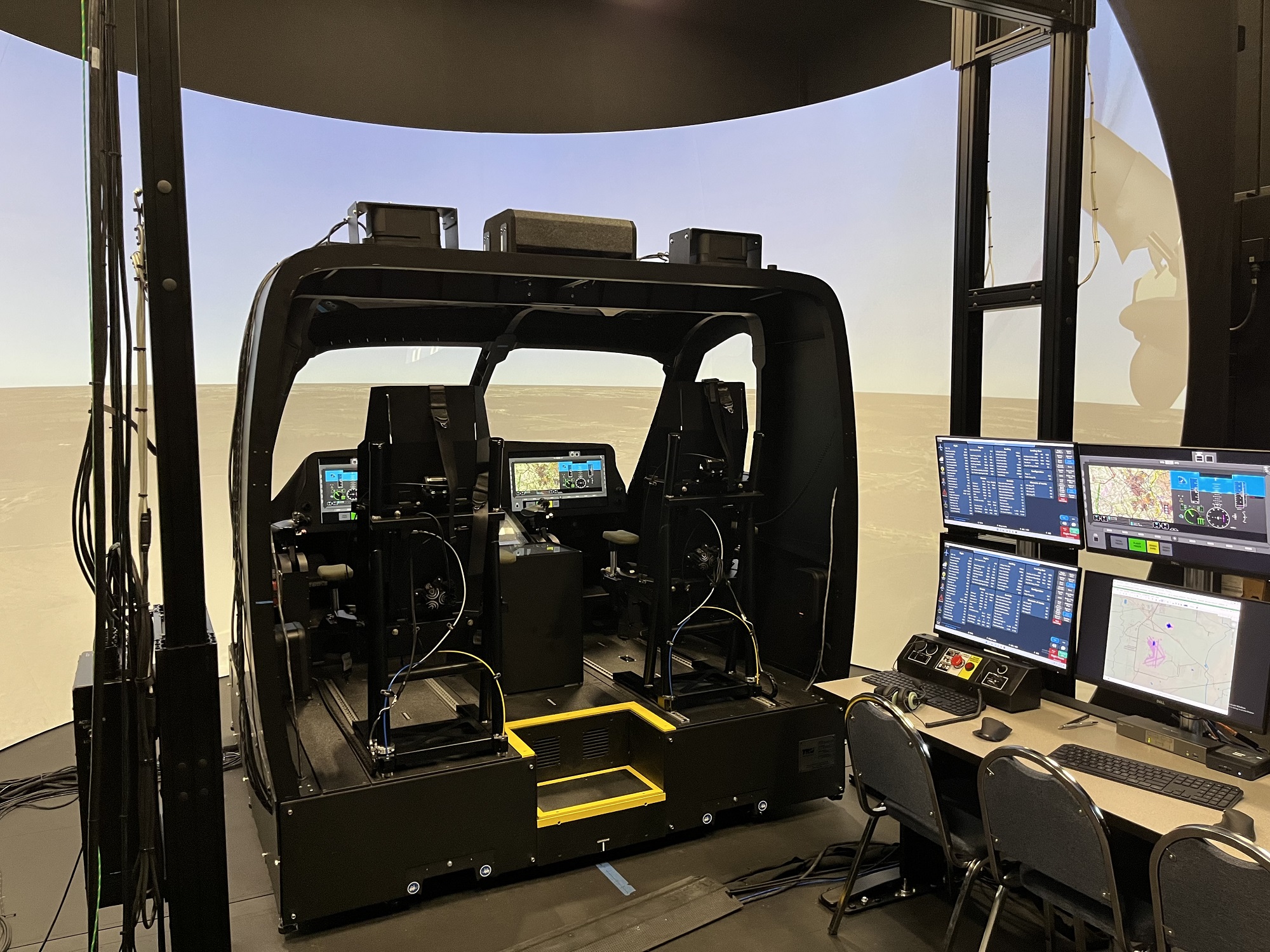
The service is closely guarding the timeline, and it is thus unclear when the first flight will actually take place. “It’s going to happen when it’s going to happen. So we are moving as fast as we can,” said Maj. Gen. Clair Gill, Program Acquisition Executive for Maneuver Air, according to Breaking Defense’s report.
The current timeline sees the MV-75 delivered to units in the 2031-2032 timeframe. The service already designated the 101st Airborne Division as the first unit to field the MV-75, and said special operations-specific requirements were incorporated into the FLRAA’s design to facilitate the introduction in the elite 160th Special Operations Aviation Regiment (SOAR).
Categories: Defence`s Feeds
Bell Completes First MV-75 Fuselage
Bell has completed the first fuselage for the MV-75 Cheyenne II, which will soon be mated with the already completed wing structure and nacelles.
Bell announced on Nov. 16, 2026, that the production of the first fuselage for the MV-75 Cheyenne II, the U.S. Army’s Future Long Range Assault Aircraft (FLRAA), has been completed. The fuselage was manufactured at the Wichita Assembly Center in Wichita, Kansas, and has now been delivered to the Amarillo Assembly Center in Amarillo, Texas, to continue with the assembly of the first aircraft.
The company highlighted that the milestone comes “just two years after Bell selected Wichita as the site for MV-75 fuselage manufacturing.” According to the press release, the fuselage is made of four major assemblies: Fwd Fuse, Mid Fuse, Aft Fuse and Fuselage Mate.
“This achievement is a testament to the dedication and agility of Bell and the entire MV-75 team, who rapidly established infrastructure and moved with purpose to design and assemble the first fuselage,” said Adam Blackford, general manager, Wichita Assembly Center, Bell. “The completion of this fuselage reflects our unwavering commitment to delivering the MV-75 Cheyenne to our warfighters.”
The next phase of the work will see the fuselage mated with the already completed wing structure and nacelle. The completion of the production of these structures was announced June and October, respectively.
A rendering of what the production MV-75 Cheyenne II could look like. | Source: BellFollowing the assembly, Bell says the MV-75 will be loaded into a full-scale structural test fixture being purpose-built to calibrate instrumentation strain gauges and proof load the aircraft. The company describes this as “the first major test of the MV-75’s capability and demonstrate its structural reliability and safety.”
Bell additionally said the significant progress gets the MV-75 test aircraft one step closer to completing the build and beginning flight test. The delivery of the first MV-75 prototype was scheduled by the end of 2026, however this timeline has now been pushed to early 2027.
Recent progressOn Oct. 14, 2026, Bell announced that the first nacelle structures for the MV-75 Cheyenne were completed at the Amarillo Assembly Center. These were then assembled on the wings which were completed earlier this year.
“The completion of the nacelle structures reflects the successful application of digital engineering to advance through engineering, tooling, detail part manufacture and assembly of critical structures,” said the company at the time.
The nacelles of the MV-75A Cheyenne II mated to the wing. | Source: Bell TextronMeanwhile, testing is ongoing on the gearboxes of the MV-75’s drive system. The company says these will power electrical power generators, hydraulic pumps and cooling blowers for the engine and nacelle.
Additionally, Bell is working to mature the MV-75’s software and digital backbone in the Weapon System Integration Lab (WSIL). Among the systems being tested are the flight control computers, general purpose computers, actuator drive unit, electrical components and large area displays.
Previously, the company disclosed in June that the first two wing structures were completed, and specified that the first was completed in February. The company described the components saying that the wing is made by composite wing skins and spars on a tailored aluminum substructure, all produced and assembled in-house.
Notably, Bell mentioned that the production of the first wing required “ 90% fewer labor hours compared to the initial V-22 wing build.” The lessons learned allowed for “an additional 40% reduction” during the production of the second wing compared to the V-22 Osprey.
The first two completed wing structures for the MV-75 Cheyenne II. | Source: Bell Textron The MV-75In April 2026, the U.S. Army has officially announced that the MV-75 Future Long Range Assault Aircraft (FLRAA) will be named as Cheyenne II, continuing the service’s tradition of honoring Native American tribes with the names of its aircraft. The Army explained the MV-75’s speed, range, and adaptability mirrored the historical attributes of the Cheyenne tribes.
The service also acknowledged that the MV-75 Cheyenne II is the first entirely new platform to be introduced into the inventory since the 1980s. The tiltrotor will complement the helicopter currently in service, allowing to extend the reach of Army Aviation units.
“The MV-75 Cheyenne II represents a new era of Army aviation, with capabilities that far exceed the current fleet,” said the service. With the publicly disclosed range of roughly 2,440 nautical miles, the MV-75 is said to be able to fly twice as fast and twice as far as the current UH-60M Black Hawk.
The Army initiated the FLRAA program in 2019 as part of its Future Vertical Lift initiative to replace a portion of its assault and utility helicopter fleet. The Bell V-280 Valor won the competition for the Army’s new helicopter in late 2022, with FLRAA becoming the only Future Vertical Lift (FVL) platform to move into the EMD phase.
The Bell V-280 Valor, upon which the MV-75 is based. | Source: Jay Miller via U.S. ArmyThe U.S. Army has officially designated MV-75 as the Mission Design Series (MDS) for the new aircraft in May 2025. The service explained the number “75” commemorates the Army’s founding year, 1775, while the MDS indicates “M” stands for multi-mission and “V” stands for vertical takeoff.
The first virtual prototype was accepted by the U.S. Army on June 24, 2025, at the Redstone Arsenal, Alabama, while the second on was delivered later that month to Fort Rucker’s Aviation Center of Excellence. These virtual prototypes are advanced simulators based on a digital twin of the FLRAA weapon system, explained the service.
In January 2026, then U.S. Army Chief of Staff Gen. Randy A. George said the MV-75 might fly as soon as this year. The General motivated this by citing the urgency of rapidly integrating advanced capabilities in response to global technological shifts and battlefield needs.
On that occasion, we reached out to the U.S. Army to clarify this aspect and a spokesperson told us in an emailed statement that “the MV-75 prototype is scheduled to be delivered at the end of this calendar year and begin testing in early 2027.”
A snapshot of the interior of the MV-75 FLRAA virtual prototype. | Source: U.S. Army photoThe service is closely guarding the timeline, and it is thus unclear when the first flight will actually take place. “It’s going to happen when it’s going to happen. So we are moving as fast as we can,” said Maj. Gen. Clair Gill, Program Acquisition Executive for Maneuver Air, according to Breaking Defense’s report.
The current timeline sees the MV-75 delivered to units in the 2031-2032 timeframe. The service already designated the 101st Airborne Division as the first unit to field the MV-75, and said special operations-specific requirements were incorporated into the FLRAA’s design to facilitate the introduction in the elite 160th Special Operations Aviation Regiment (SOAR).
Categories: Defence`s Feeds
REPORT ‘Towards an EU strategy to protect and strengthen the international justice system and its institutions, mechanisms and partners’ - A10-0281/2026
REPORT ‘Towards an EU strategy to protect and strengthen the international justice system and its institutions, mechanisms and partners’
Committee on Foreign Affairs
Mounir Satouri
Source : © European Union, 2026 - EP
Categories: European Union
Ukraine-Verhandlungen: Europa kann mehr als zuschauen
Dass Wladimir Putin an diesem Donnerstag mit Chinas Staats- und Parteichef Xi Jinping und US-Präsident Donald Trump zusammenkam, konnte der russische Präsident als Erfolg verbuchen. Das Treffen am Rande des APEC-Gipfels im chinesischen Shenzhen ging auf seine Initiative zurück. Trump und Xi zeigten sich mit ihm auf der Weltbühne, ohne dass er kritische Fragen zu seinem Krieg gegen die Ukraine fürchten musste. Beim G20-Gipfel in Miami Mitte Dezember, zu dem Trump ihn eingeladen hat, wäre das anders gewesen. Das dürfte Putin bewogen haben, Shenzhen vorzuschlagen.
Es ist sein zweiter Punktsieg binnen zehn Tagen. Den ersten errang er in Abu Dhabi, wo Delegationen aus den USA, der Ukraine und Russland am 10. und 11. November über ein Ende des Krieges sprachen. Die Kriegsparteien einigten sich auf einen Gefangenenaustausch. Jeder aus den Schrecken der russischen Gefangenschaft befreite ukrainische Soldat ist ein Grund zur Freude. Nur sollte dabei nicht in Vergessenheit geraten, dass die Ukraine und Russland seit Februar 2022 mehr als siebzig Gefangenenaustausche vereinbart haben, meist ohne amerikanische Vermittlung.
Schwerer wiegt etwas anderes. Abu Dhabi hat eine Debatte über die Zukunft der europäischen Sicherheit entfacht. Trumps Unterhändler, Steve Witkoff und Jared Kushner, öffneten sich für das russische Propagandanarrativ von den »Ursprüngen des Krieges«, die angeblich in der russlandfeindlichen Politik der USA und der NATO lägen und deshalb vor allem anderen behoben werden müssten. Das russische Non-Paper, das nach Abu Dhabi durchgestochen wurde, geht über den Forderungskatalog vom Dezember 2021 noch hinaus. So fordert Russland, dass Frankreich und Großbritannien den Einsatz ihrer Atomwaffen zum Schutz anderer europäischer Staaten ausschließen oder dass die Ukraine nach einem EU-Beitritt der gemeinsamen Verteidigungspolitik fernbleibt.
Der Geist von AnchorageNeu ist das alles nicht. Die amerikanischen »Friedensinitiativen« folgen seit 20 Monaten demselben Muster. Im Februar 2025 führten Trump und sein Vize J. D. Vance den ukrainischen Präsidenten Wolodymyr Selenskyj im Oval Office vor. Die Botschaft: Auf amerikanische Unterstützung konnte die Ukraine nicht mehr zählen. Kurz darauf unterbrachen die USA erstmals die Waffenlieferung und die Versorgung Kyjiws mit Aufklärungs- und Zieldaten. Monate hektischer ukrainisch-europäischer Diplomatie brachten den PURL-Mechanismus hervor, über den Europa von nun an Waffen für die Ukraine in den USA einkaufte.
Am 15. August 2025 empfing Trump Putin mit großer Geste in Anchorage. Im November 2025 legte Washington einen 28-Punkte-Friedensplan vor, der direkt aus der Feder der Kreml-Administration zu stammen schien. Wieder gelang es der ukrainisch-europäischen Diplomatie, den in Russland gefeierten »Geist von Anchorage« halbwegs zurück in die Flasche zu drücken: Die unverschämtesten Punkte verschwanden aus dem Papier.
Vom Diesel-Deal zwischen Trump und Putin am 9. Oktober über Abu Dhabi bis Shenzhen wiederholte sich dieses Muster nun zum dritten Mal. Wieder reagiert Europa mit der Entsendung von Vertreter:innen an die jeweiligen Verhandlungsorte und symbolischen Gegengewichten: Am Donnerstag treffen sich die Koalition der Willigen und Präsident Selenskyj in Berlin. Seit Anfang 2025 ließ sich so viel Schlimmes verhindern. Doch die europäische Politik bleibt taktisch und reaktiv, wo sie proaktiv und strategisch sein müsste.
Neue Chancen zur GestaltungDabei hat sich die Lage verschoben. Die Ukraine hat in diesem Jahr bewiesen, dass sie Russland militärisch unter Druck setzen kann. Der nächste US-Kongress wird ab Januar den außenpolitischen Handlungsspielraum der Trump-Administration einschränken. Das eröffnet der Ukraine und Europa die Chance, Krieg und Verhandlungen selbst zu prägen.
Europa muss dafür drei Dinge klären: Erstens seine Rolle. Europa vermittelt nicht in diesem Krieg. Es steht auf der Seite der angegriffenen Ukraine, es ist selbst zunehmend russischen hybriden Angriffen ausgesetzt. Das nicht anzuerkennen, sendet falsche Signale an alle Beteiligten.
Zweitens seine Ziele. Als Partei muss Europa seine Ziele für das Kriegsende und die Zeit danach klar definieren. Ziel ist eine Ukraine, die ihre Unabhängigkeit erfolgreich gegen den russischen Aggressor verteidigt hat, und eine europäisch-ukrainische Abschreckung, die Moskau von weiteren Angriffskriegen abhält. Auf dem Weg dahin muss es erst um einen stabilen Waffenstillstand in der Ukraine gehen, bevor die großen Fragen der europäischen Sicherheit auf den Tisch kommen.
Drittens seine Strategie. Sie leitet sich aus diesen Zielen ab, und ihr dringlichstes Element bleibt die Stärkung der Ukraine auf dem Schlachtfeld. Putin simuliert Verhandlungen, um Zeit für seinen Krieg zu gewinnen. Erst wenn dieses Kalkül nicht mehr aufgeht, kann es Verhandlungen geben, die diesen Namen verdienen. Dann muss Europa sie federführend gestalten, die Ukraine eingeschlossen.
Categories: Diplomacy & Defense Think Tank News
Are Kazakhs Giving Up on Civic Action?
With a politically tense year coming to an end, a new national survey suggests that Kazakhs are increasingly disillusioned with the country's political life, feeling that engagement has little impact on government decisions.
Categories: Diplomacy & Crisis News
Le financement de l'action publique aujourd'hui
Les décisions prises à partir de la fin des années 1960 visent à renverser le rapport de forces entre pouvoir politique et pouvoir économique, ce dernier devant être en mesure de faire valoir ses priorités en dépit des élections. Ce sont désormais les marchés financiers (en partie créés de (…)
/ Dette, Économie, État
Categories: Diplomacy & Crisis News
Press release - Press briefing on next week’s plenary session
Spokespersons for Parliament and for the political groups will hold a briefing on the 23-26 November plenary session, on Friday at 11.00 in Parliament’s Anna Politkovskaya press room.
Source : © European Union, 2026 - EP
Categories: Europäische Union, Union européenne
Press release - Press briefing on next week’s plenary session
Spokespersons for Parliament and for the political groups will hold a briefing on the 23-26 November plenary session, on Friday at 11.00 in Parliament’s Anna Politkovskaya press room.
Source : © European Union, 2026 - EP
Categories: Europäische Union
Press release - Press briefing on next week’s plenary session
Spokespersons for Parliament and for the political groups will hold a briefing on the 23-26 November plenary session, on Friday at 11.00 in Parliament’s Anna Politkovskaya press room.
Source : © European Union, 2026 - EP
Categories: Európai Unió : hírek magyarul
Press release - Press briefing on next week’s plenary session
Spokespersons for Parliament and for the political groups will hold a briefing on the 23-26 November plenary session, on Friday at 11.00 in Parliament’s Anna Politkovskaya press room.
Source : © European Union, 2026 - EP
Categories: European Union
ICJ Delivers Historic Verdict: Myanmar Guilty of Genocide Against the Rohingya
Myanmar's security forces killed thousands of Rohingya civilians and committed "widespread sexual violence" against women and "extreme violence" against children, the court said.
Categories: Diplomacy & Crisis News
At APEC, Lee Urges Asia-Pacific Leaders to Back Talks With North Korea
The South Korean president made his appeal in Shenzhen, hoping to entice fellow leaders to address North Korea issues.
Categories: Diplomacy & Crisis News
COP31: the Pacific and climate finance illustrate what’s at stake in the EU’s budget 2028–2034 talks
In the second week of the UN climate conference – COP31 – in Antalya, Pacific delegates continue to demonstrate their leadership in global climate policy, pushing for ambitious outcomes. Meanwhile, the EU’s current high-level political focus seems adrift from the urgency of the climate crisis affecting the Pacific region. This has implications for the EU’s global role, both directly in the Pacific region and beyond, and links to the ongoing EU budget discussions.
Categories: Diplomacy & Defense Think Tank News
Information integrity and digital information pollution in Indonesia: implications for democratic governance and polarization
This article examines how digital political communication, information pollution, and institutional change interact in processes of democratic erosion and polarization. Drawing on the case of Indonesia since 2014, it analyzes two interconnected dynamics: the weakening of institutions central to transparency, accountability, and access to information, and the increasing pollution of the digital information environment through coordinated influence operations and manipulated online content. The study further highlights the growing role of generative artificial intelligence in political communication, including the AI-supported image rebranding of candidates during the 2024 presidential election campaign, which raised concerns regarding electoral integrity and democratic discourse. Based on over 30 expert interviews, this article contributes to theory building by connecting debates in public administration and governance research on information integrity, transparency, and accountability with political science research on disinformation, polarization, and democratic change. It further argues that digitally mediated depolarization strategies may also serve to normalize elite collusion and reshape polarization dynamics in ways that affect social cohesion and democratic quality.
Categories: Diplomacy & Defense Think Tank News
The ICJ Just Recognized the Genocide of the Rohingya. What’s Next?
The international community must recognize that the well-being of the Rohingya is inseparable from the well-being of Myanmar.
Categories: Diplomacy & Crisis News
Pages



© 2012-2018 Europa Varietas Foundation © 2015-2018 Europa Varietas Association
www.europavarietas.org | info(@)europavarietas(dot)org | Switzerland




We are looking for sponsors for the English translation of these books, please contact turkeandras(at)gmail(dot)com