
You are here
Feed aggregator
Un expert médico-légal affirme que son analyse des photos de l'autopsie d'Epstein suggère que le financier a été assassiné en prison
Le professeur Michael Freeman a déclaré à la BBC qu'il estimait que les blessures du délinquant sexuel condamné étaient compatibles avec un homicide.
Categories: Afrique
What the Trump-Xi-Putin Meeting at Shenzhen Means for Pakistan
Islamabad sees the consensus on nuclear risk reduction and non-use as a validation of its warnings over the dangers of confrontation between nuclear-armed states.
Categories: Diplomacy & Crisis News
Press release - COP31: MEPs urge all parties to implement climate change commitments
Before leaving the UN Climate Change Conference in Antalya, the MEPs leading Parliament’s delegation commented on the status of the negotiations.
Committee on the Environment, Public Health and Food Safety
Committee on Industry, Research and Energy
Source : © European Union, 2026 - EP
Categories: Europäische Union, Union européenne
Press release - COP31: MEPs urge all parties to implement climate change commitments
Before leaving the UN Climate Change Conference in Antalya, the MEPs leading Parliament’s delegation commented on the status of the negotiations.
Committee on the Environment, Public Health and Food Safety
Committee on Industry, Research and Energy
Source : © European Union, 2026 - EP
Categories: Europäische Union
Press release - COP31: MEPs urge all parties to implement climate change commitments
Before leaving the UN Climate Change Conference in Antalya, the MEPs leading Parliament’s delegation commented on the status of the negotiations.
Committee on the Environment, Public Health and Food Safety
Committee on Industry, Research and Energy
Source : © European Union, 2026 - EP
Categories: Európai Unió : hírek magyarul
Press release - COP31: MEPs urge all parties to implement climate change commitments
Before leaving the UN Climate Change Conference in Antalya, the MEPs leading Parliament’s delegation commented on the status of the negotiations.
Committee on the Environment, Public Health and Food Safety
Committee on Industry, Research and Energy
Source : © European Union, 2026 - EP
Categories: European Union
India’s Gen Z Revolt Against Disenfranchisement
Supporters of India's main opposition party shout slogans while women police officers attempt to stop them during a protest in Srinagar, Jammu and Kashmir, India, on 17 October 2026. Credit: Firdous Nazir/NurPhoto via AFP
By Andrew Firmin
LONDON, Nov 20 2026 (IPS)
India’s Gen Z cockroach movement has already forced the resignation of the education minister. Now it’s part of a mass mobilisation demanding the Hindu nationalist government reverse and be held accountable for the deletion of some 130 million names from the electoral rolls.
Last year, the Election Commission of India embarked on what it calls a Special Intensive Revision of the electoral rolls, which it says is needed to remove duplicate and ineligible names, including those of people who’ve died. With the task completed in 30 of India’s 36 states and centrally administered territories, around an eighth of the electorate has been struck off. Millions have complained that they’re eligible voters who’ve been disenfranchised.
The purge threatens to turn the universal franchise into a selective privilege, violating a fundamental principle of democracy, that every adult citizen has the same right to vote. Women are disproportionately affected, because many move states when they marry, complicating the paper trail. Muslims, long vilified by the ruling Bharatiya Janata party (BJP), are disproportionately impacted. In Bihar state, around 33 per cent of final-stage deletions were of Muslims, even though they make up roughly 17 per cent of the state’s population.
The suspicion is that the changes will benefit the BJP and Prime Minister Narendra Modi.
Deletions could swing elections. In May, the BJP won the election in West Bengal state, previously an opposition stronghold, after 9.1 million names, over 10 per cent of the electorate, were removed from the roll. In some Muslim-majority constituencies, close to half of voters were removed from the roll.
Cockroaches rise
India’s cockroach movement arose in response to an insult. In May, the country’s Chief Justice, Surya Kant, told a courtroom that unemployed young people who protested and spoke out on social media were like cockroaches. Communications strategist Abhijeet Dipke posed a simple question: what if all the cockroaches came together? The answer was a movement of millions, organised around the satirical Cockroach Janta Party.
The movement found its galvanising issue in the leak of the national medical college entrance exam paper, likely the act of corrupt officials in return for bribes. Cockroach movement protesters camped out for weeks in Delhi, until the authorities unleashed violence, beating them with batons and wooden sticks, firing teargas and arresting many. Public revulsion at the violence forced the government to hold talks with the movement, and Education Minister Dharmendra Pradhan quit.
On 2 October the cockroach movement took part in nationwide protests, demanding the resignation of Chief Election Commissioner Gyanesh Kumar, a criminal investigation, reinstatement of deleted voters, a review of recent state elections and independent selection of election commissioners.
This time, the cockroach movement’s protests have formed part of a broader campaign. Civil society organisations have been raising the issue for some time, and established student movements, emerging leftist student leaders and opposition parties are active and vocal. The Congress party, once India’s dominant political force, has organised protests, including one attended by tens of thousands in Delhi on 1 November.
Civil society groups have also taken practical steps to help the disenfranchised, setting up helpdesks near places where excluded groups are concentrated so people can file petitions and gather the documents needed to get their vote reinstated. These efforts could make a crucial difference, as without the capacity to appeal, many risk losing their vote by default.
Stare lashes out
The government has made clear it has no intention of walking back the changes by mobilising large-scale force.
Ahead of the protest on 2 October, police barricaded Jantar Mantar, the main protest site, and set up checkpoints around the city. Police invoked section 133 of the Indian Citizen Safety Code, which bans gatherings of over four people, the use of slogans and speeches and other common protest activities, and authorities suspended internet services close to the protest site. When people protested regardless, police detained around 1,000, including student and political leaders. Police also banned a protest in Mumbai that same day.
The crackdown escalated on 10 October, when police detained several thousands, among them Dipke, detained as he arrived at Delhi airport from Mumbai, along with other leading Cockroach Janta Party figures. Authorities deployed around 30,000 officers, sealed Delhi’s borders, shut down public transport routes and stationed anti-riot vehicles with teargas launchers along major roads. Police ordered Delhi hotels to refuse customers, told Uber drivers not to drop people off near protest sites and said they were tracking food delivery services in case they were used to supply protesters. Following the protest, police ended Jantar Mantar’s designation as a protest site.
Police have twice detained Congress party leader Rahul Gandhi and put one of India’s most popular YouTubers, Dhruv Rathee, under house arrest. They’ve detained journalists covering the protests. Police have met subsequent protests with the same responses of barricades, transport restrictions, internet shutdowns and mass arrests. Still, the protests continue.
The state’s hostile response is part of a broader pattern. In recent years it has passed draconian laws that enable it to hold activists in lengthy pretrial detention, restrict civil society funding and force organisations to close, while police routinely use violence against protests. Having made it harder for people to speak out, organise and protest, now the government is taking away their right to vote.
Wider struggles
If the protest movement wins again, the repercussions will be felt beyond India. The story of India’s cockroach movement has travelled the world, inspiring others, as part of a wider wave of Gen Z-led protests that has unfolded in many countries. Young people are rising up against corruption, economies that fail them and out-of-touch politicians, and they’re having an impact. A student movement has just won power in Serbia, while high school protests in France have forced the government to concede several demands.
A Modi climbdown would offer further proof that mass organising and protesting, spearheaded by Gen Z, can make a difference. The Indian government should swallow its pride and offer dialogue instead of violence. The protesters have shown how much they value democracy, and made clear they intend to keep going until the damage the government has caused it is undone.
Andrew Firmin is CIVICUS Editor-in-Chief, co-director and writer for CIVICUS Lens and co-author of the State of Civil Society Report.
For interviews or more information, please contact research@civicus.org.
Categories: Africa
Congress and the Coming Crises
How to defuse looming threats to U.S. national security.
Categories: Diplomacy & Crisis News
America’s Bad Bargain in Venezuela
Washington’s dealmaking is strengthening the Chavista regime.
Categories: Diplomacy & Crisis News
Comment Jensen Huang, visionnaire de l'IA, a été victime de ses propres mauvaises décisions
Zoe Kleinman explique comment l'homme qui a bâti Nvidia à partir de rien a tout perdu en quelques jours.
Categories: Afrique
DRAFT REPORT European Parliament recommendation to the Council, Commission and the Vice-President of the Commission / High Representative of the Union for Foreign Affairs and Security Policy on EU-Azerbaijan political relations - PE796.351v01-00
DRAFT REPORT European Parliament recommendation to the Council, Commission and the Vice-President of the Commission / High Representative of the Union for Foreign Affairs and Security Policy on EU-Azerbaijan political relations
Committee on Foreign Affairs
Dan Barna
Source : © European Union, 2026 - EP
Categories: Europäische Union
DRAFT REPORT European Parliament recommendation to the Council, Commission and the Vice-President of the Commission / High Representative of the Union for Foreign Affairs and Security Policy on EU-Azerbaijan political relations - PE796.351v01-00
DRAFT REPORT European Parliament recommendation to the Council, Commission and the Vice-President of the Commission / High Representative of the Union for Foreign Affairs and Security Policy on EU-Azerbaijan political relations
Committee on Foreign Affairs
Dan Barna
Source : © European Union, 2026 - EP
Categories: European Union
Africa’s Just Transition Ambitions Face Hurdles at COP31
Valepi Banda still remembers the day she lost dozens of chickens in June last year in Zambia’s capital, Lusaka, after the heating system failed due to power cuts. The southern African nation was experiencing load-shedding schedules lasting eight hours a day, and the 22-year-old poultry farmer had no backup power. Zambia, which relies on hydropower […]
Categories: Africa
After the ICJ Verdict, What for Dhaka?
By Mohammad Zaman
DHAKA, Bangladesh, Nov 20 2026 (IPS)
The world’s highest court has delivered a historic legal and moral victory. It does not get any more definitive than this. On 19 November 2026, the International Court of Justice (ICJ) found that Myanmar committed genocide against the Rohingya in northern Rakhine State. It is the first time the court has held a state responsible for committing genocide under the 1948 Genocide Convention. By a 9–6 majority, the judges also found that Myanmar failed to prevent and punish genocide. The ICJ has spoken for the Rohingya. The ruling is final, and there is nowhere left to appeal. However, turning this verdict into a safe journey home will take political muscle that the court itself does not have. The international community must act now.
Dr Mohammad Zaman
A verdict seven years in the makingThe case was brought in November 2019 by The Gambia, a small West African state with no direct connection to the crimes, backed by the Organisation of Islamic Cooperation. The court examined the military’s 2017 “clearance operations” in detail: an estimated 10,000 Rohingya killed, and nearly 400 villages, about 40 per cent of those in three northern townships, partly or wholly destroyed before being bulldozed and built over. It concluded that Myanmar’s security forces intentionally killed members of the group, caused them serious bodily and mental harm, and imposed measures intended to prevent births.
Reading the judgment, ICJ President Yuji Iwasawa said: “The evidence of brutal acts of sexual violence and the targeting of children for violence in Rohingya communities also supports an inference that there was a desire to destroy the foundations of the group. The systematic nature of these actions further indicates a reasonable inference that Myanmar acted with genocidal intent.”
A legal and moral victory
The legal weight of this ruling is hard to overstate. In the 2007 Bosnia case, the court found that Serbia had failed to prevent the Srebrenica genocide but stopped short of holding it responsible for committing genocide. This time there is no such hedge. The court also made clear that genocidal intent can coexist with other aims, including military ones. That undercuts Myanmar’s long-standing claim that it was simply fighting an insurgency.
The moral victory matters just as much. For decades, the Rohingya have been denied citizenship, confined to camps and dismissed by Myanmar’s generals. Now the world’s highest court has put their suffering on the authoritative record. UN Secretary-General António Guterres called the ruling a “powerful recognition of the Rohingya victims of genocide”. That recognition cannot be undone, and it is a form of justice in its own right.
What the court ordered, and what it cannot do
The court’s directives are binding. Myanmar must stop any ongoing violations and pass legislation giving full effect to the Convention. It must investigate, prosecute and punish those responsible, and give guarantees that the atrocities will not happen again. It must also provide restitution, including the “safe, voluntary and dignified return” of displaced Rohingya to their homes and the reunification of families, and compensate the victims. Myanmar has two years to report on what it has done.
In practical terms, little is likely to change in the short run. The ICJ has no police force. Nor does it try individuals: it rules on disputes between states. The fate of Senior General Min Aung Hlaing, who oversaw the 2017 campaign and now heads the state, lies with the International Criminal Court. The ICC prosecutor’s pending warrant application against him now carries greater weight.
Enforcement and the politics of the veto
If Myanmar ignores the judgment, just as The Gambia says it failed to comply with the court’s 2020 provisional measures, The Gambia can take the matter to the UN Security Council under Article 94 of the UN Charter. This is where justice meets geopolitics. Any one of the five permanent members can veto action, and history offers little comfort. When the court ruled against the United States in the Nicaragua case in 1986, Washington vetoed the resolutions calling for compliance. In 2007, China and Russia vetoed a draft resolution on Myanmar’s human rights record.
China holds the key
No country matters more here than China. Beijing is Myanmar’s most important patron. It has shielded Naypyidaw at the UN, invested heavily in Rakhine and has acted as a broker between the junta and ethnic armed groups. Its priority is stability along its economic corridor to the Bay of Bengal, not accountability.
The situation on the ground complicates matters further. The junta has lost much of Rakhine State to the Arakan Army, and Myanmar has been in turmoil for years. When the ICJ orders a safe return to the Rohingya’s “place of residence”, Naypyidaw can simply say it no longer controls the territory. Any credible repatriation will therefore have to be negotiated with both the junta and the Arakan Army, most likely with Beijing as guarantor. China wants Rakhine stable and its investments secure. If Dhaka and its partners can show that an orderly, rights-based return serves that goal, China’s interests may line up with the court’s orders.
What Bangladesh should do now
Bangladesh has carried the heaviest burden of a crisis it did not create. About 1.4 million Rohingya now live in the camps around Cox’s Bazar. Since 2017, repatriation talks have produced little. The verdict gives Dhaka a kind of leverage it has never had before. It should use the verdict to work with allies to find out a workable solution.
First, make the judgment the baseline. Every repatriation deal should meet the court’s standard: a safe, voluntary and dignified return to the Rohingya’s original homes, not to transit camps, with a clear path to citizenship.
Second, talk to whoever controls the ground. Dhaka should engage the Arakan Army pragmatically, alongside Naypyidaw, so that any agreement can be carried out in Rakhine.
Third, work with China, not around it. Bangladesh should press Beijing to guarantee a deal and present a stable, rights-based return as good for China’s investments.
Fourth, build a coalition for compliance. Bangladesh should work with The Gambia, the OIC, the 11 states that intervened in the case, ASEAN and Japan to keep Myanmar’s compliance before the UN General Assembly and Security Council, and to hold Myanmar to its two-year reporting deadline.
Finally, keep the Rohingya at the centre. Refugees must have a voice in any negotiation. Reparations must reach those living in Bangladesh, and humanitarian funding, education and livelihoods in the camps must be protected while talks continue.
From verdict to homecoming
The ICJ has done its part. It has named the crime, identified the state responsible and set out what justice requires. The verdict will not, by itself, send a single family home. But it changes the terms of every conversation about the Rohingya from this day on. Whether it becomes a turning point or a footnote now depends on what allies and states do next, starting with Bangladesh.
Dr. Mohammad Zaman has written extensively on the Rohingya crisis since 2017. His recent edited (co-editors Robert Anderson and Kawser Ahmed) book is titled Rohingya Stories: History and Geopolitics in a Multipolar World (Springer 2025).
IPS UN Bureau
Categories: Africa
The Future of Surgery in Africa
Two surgeons perform a surgery on their patient, Miracle, in the operating room at the National Cleft Care Center in Kumasi, Ghana. Credit: Smile Train
By Nkeiruka Obi
LAGOS, Nigeria, Nov 20 2026 (IPS)
In too many communities across our continent, a baby born with a cleft lip or palate is met with fear instead of a plan. Some families are told the child is cursed. Some mothers are even forced out of their homes. Yet a cleft is one of the most common and treatable conditions in medicine. A safe operation, done early, lets a child eat, speak and grow up with a bright future.
So when that child goes untreated, the problem is not biology. It is a sign that something is missing: the surgeon, the anesthetist, the nurse, the working operating room, the reliable electricity, the road to the right hospital. In this way, cleft is a bellwether for the strength of health systems overall.
Across sub-Saharan Africa, 93% of people cannot get safe, affordable surgery and anaesthesia when they need it, compared with under 4% in wealthier regions. In Ethiopia alone, roughly five million needed operations go undone each year.
From November 19 to 21, health leaders, surgeons, researchers and partners from across Africa will meet in Addis Ababa for the fourth Pan-African Surgical Healthcare Forum (PASHeF). Its goal is ambitious and overdue: a continental action framework for surgical care.
A doctor measures the nutritional development of a cleft patient at a hospital in Tanzania. Credit: Smile Train
Surgery is health care, not a luxury
For decades, surgery was treated as something that could wait until vaccines, bed nets, and clinics were in place. As a result of that longstanding underinvestment, an estimated 93 million Africans need surgical care every year, yet only about 5% receive it.
The World Health Assembly has recognized emergency and essential surgery and anaesthesia as a core part of universal health coverage. Invest in surgical capability, and you strengthen the whole hospital’s ability to deliver across a wide range of needs: emergency care, safe childbirth, trauma, cancer.
Ethiopia took that commitment seriously. In 2016, it became one of the first countries to write a national surgical plan, Saving Lives Through Safe Surgery (SaLTS).
What we have learned
The challenges were familiar: leadership changes, too little reliable data, and no dedicated budget to reach the whole country. A study of the plan’s rollout found that government ownership was the most important ingredient for success.
Experience from outside government points the same way. Over 25 years, Smile Train’s approach has been to support local teams working inside national systems rather than fly in visiting surgeons. Those teams have now performed nearly 250,000 free cleft surgeries across Africa, more than 46,000 of them in Ethiopia since 2007. Three lessons stand out.
Build with government, not beside it. In Kumasi, Ghana, the Ministry of Health, Komfo Anokye Teaching Hospital and the Ghana Cleft Foundation co-created the National Cleft Care Center. Government clinicians staff it, and cleft surgery there has gone from one day a week to every day.
Train together. When Africa’s surgical colleges agreed on a single cleft surgery curriculum, it spread across the continent in English, French and Portuguese.
Fix the basics. A well-equipped theatre is useless in a blackout, yet families are still asked to bring diesel for the generator. Solar systems installed with Kids Operating Room now power more than 85 children’s operating theatres in 28 countries, three of which are public hospitals in Ethiopia.
Together they show what works: government ownership, a local workforce, data that is tracked, and infrastructure that actually runs.
What the framework must do
The Addis Ababa forum should commit African governments to four key things:
- • Put surgery in the budget. Plans without money stall. Finance ministries belong at the table from day one, and domestic funding should anchor what partners add.
• Train and keep the workforce. Shared regional curricula, scholarships, and alumni networks can prepare young specialists to replace an aging generation of surgeons.
• Count what matters. Every country should track surgical access and outcomes in its national health data, as Ethiopia now does with its registry.
• Start with families. Ending the stigma around conditions like cleft takes midwives, community health workers, religious leaders and traditional rulers, not just doctors.
A year ago, the African Union and Africa CDC unveiled the Health Security and Sovereignty Agenda, a blueprint for African countries to build stronger health institutions, finance health from their own resources and grow local capacity. Surgery is where that ambition is tested: a country that can staff, equip, power and pay for its own operating theatres can meet its people’s needs on its own terms.
These steps can have a meaningful impact now and for future generations. As long as children are born, some will be born with a cleft. A poor child in a rural district deserves the same chance of a safe operation as an affluent child in a capital city. This week in Addis Ababa, Africa’s leaders can commit to making that happen.
Nkeiruka Obi is Vice President and Regional Director, Africa, Smile Train
IPS UN Bureau
Categories: Africa
The ICJ’s Myanmar Genocide Ruling: What Comes Next?
The verdict marked broke new legal ground, but enforcing the judgment on Naypyidaw will not be easy.
Categories: Diplomacy & Crisis News
More climate money for Africa? Europe says use what's already pledged
African countries at the UN climate summit in Turkey are demanding more funding from developed nations to help them cope with climate change.
Categories: Africa
Jordan : Ahmed Husni Hatoqay, King Abdullah II’s loyal Circassian spymaster
The arrest within 72 hours of those responsible for the 23 October attack on the Greek Orthodox Church of St [...]
Categories: Balkan News, Defence`s Feeds
France : DGSE's clandestine Service Action's new chief appointed
Intelligence Online can confirm that the new head of the DGSE foreign intelligence service's clandestine military unit, the Service Action, [...]
Categories: Balkan News, Defence`s Feeds
Pages


© 2012-2018 Europa Varietas Foundation © 2015-2018 Europa Varietas Association
www.europavarietas.org | info(@)europavarietas(dot)org | Switzerland
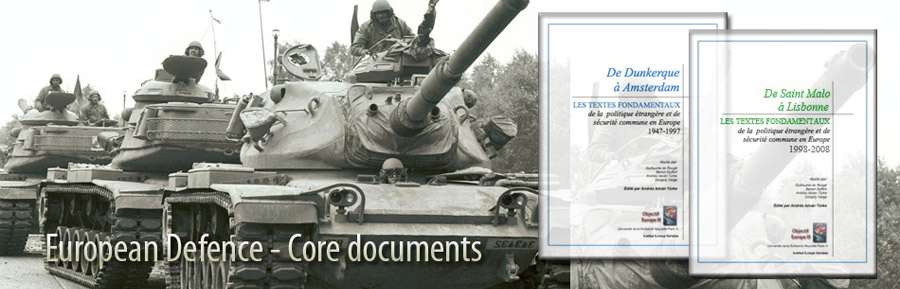

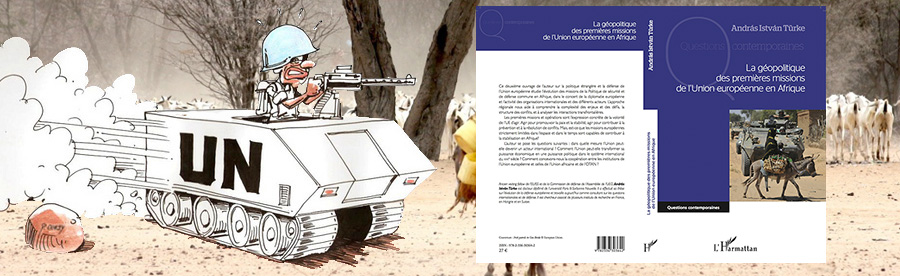
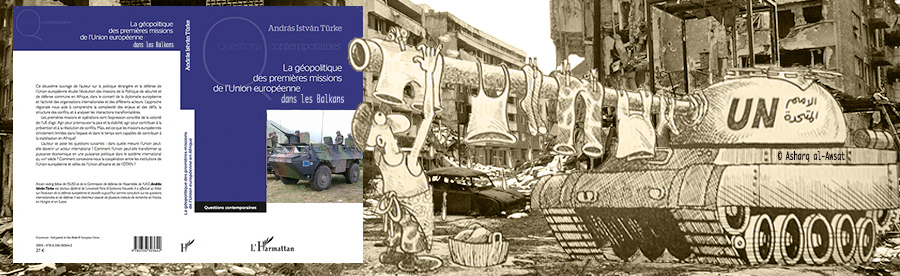
We are looking for sponsors for the English translation of these books, please contact turkeandras(at)gmail(dot)com