
You are here
Feed aggregator
Communiqué de presse - Les députés soutiennent de nouvelles règles pour le secteur spatial européen
Jeudi, les députés de la commission de l’industrie ont approuvé des mesures visant à renforcer la souveraineté et la compétitivité de l’Europe dans le domaine des activités spatiales.
Commission de l'industrie, de la recherche et de l'énergie
Source : © Union européenne, 2026 - PE
Categories: Europäische Union, Union européenne
Press release - MEPs back new rules to encourage EU competitiveness in space
On Thursday, Industry Committee MEPs agreed to boost European sovereignty and competitiveness in space-based activities.
Committee on Industry, Research and Energy
Source : © European Union, 2026 - EP
Categories: Europäische Union
Press release - MEPs back new rules to encourage EU competitiveness in space
On Thursday, Industry Committee MEPs agreed to boost European sovereignty and competitiveness in space-based activities.
Committee on Industry, Research and Energy
Source : © European Union, 2026 - EP
Categories: Európai Unió : hírek magyarul
Press release - MEPs back new rules to encourage EU competitiveness in space
On Thursday, Industry Committee MEPs agreed to boost European sovereignty and competitiveness in space-based activities.
Committee on Industry, Research and Energy
Source : © European Union, 2026 - EP
Categories: European Union
Takaichi Meets Putin a Day After Suspected Russian Aircraft Violate Japanese Airspace
Russian military flights near Japan and Taiwan raise questions about Moscow’s message to Beijing.
Categories: Diplomacy & Crisis News
Der Scientific Use File „German Social Cohesion Panel 2021-2023 – Wave 1-3“ ist verfügbar
Wir freuen uns, die Veröffentlichung des Scientific Use Files „German Social Cohesion Panel 2021–2023 – Wellen 1–3“ (SCP 2021-23 W1-3; siehe https://fgz-risc-data.de/datenportal/datenangebot/german_social_cohesion_panel/waves1-3_2021-2023) bekannt zu geben.
Highlights:
Daten der Welle 3, mit dem ...
Categories: Diplomacy & Defense Think Tank News
Krankenversicherung ohne Angst vor dem Kleingedruckten
Ein Stapel ungeöffneter Briefe auf dem Küchentisch, auf den Umschlägen Fachwörter wie Selbstbehalt oder Beitragsbemessungsgrenze: So beginnt bei vielen Menschen die Beschäftigung mit der eigenen Krankenversicherung. Welcher Brief eine Frist enthält und welcher nur Werbung ist, lässt sich auf den ersten Blick kaum unterscheiden. Für viele ist das eine eigene Sprache.
Ein paar typische Ausgangslagen zeigen, wie unterschiedlich die Fragen sind. Angenommen, eine Grafikerin hat sich gerade selbstständig gemacht und darf nun zwischen gesetzlich und privat wählen. Ein Ehepaar geht in Rente und überlegt, ob die private Zusatzversicherung noch sinnvoll ist. Ein Student fällt aus der Familienversicherung und soll zum ersten Mal selbst Beiträge zahlen. Drei Lebenslagen, und doch dasselbe Grundgefühl: Man ahnt, dass eine falsche Unterschrift teuer werden kann, und schiebt die Entscheidung deshalb vor sich her.
Das Problem ist selten ein Mangel an Angeboten. Eher gibt es zu viele davon, und die entscheidenden Unterschiede stecken in Nebensätzen. Zwischen zwei Tarifen, die auf den ersten Blick gleich aussehen, kann im Ernstfall die Frage stehen, ob eine Reha bezahlt wird oder nicht.
Dabei ist der gesetzliche Rahmen erstaunlich stabil. In Deutschland ist praktisch die gesamte Bevölkerung krankenversichert, die große Mehrheit gesetzlich, wie das Statistische Bundesamt zum Krankenversicherungsschutz ausweist. Gesetzlich Versicherte zahlen nach Einkommen und bekommen Leistungen nach Bedarf; wegen einer Vorerkrankung wird bei der Kasse niemand abgelehnt. Die Sicherheit endet allerdings dort, wo Zusatzleistungen und private Tarife anfangen. Ab da wird es individuell, und ab da beginnt das Grübeln am Küchentisch.
Genau an diesem Punkt hilft nüchternes Vergleichen mehr als jedes Bauchgefühl. Wer den Tarif wechseln oder erstmals selbst wählen muss, sollte Leistungen, Zusatzbeitrag und Kündigungsfristen nebeneinanderlegen, bevor er etwas unterschreibt, so raten die Fachleute von Versicherungs-Wiki. Ein halber Nachmittag mit Tabelle und Taschenrechner kostet wenig Zeit und erspart im Leistungsfall manche Überraschung.
In der Beratung werden aus Fachbegriffen wieder Entscheidungen, die man versteht.
Warum das System verwirrt, obwohl es logisch istWer verstehen will, warum sich die Krankenversicherung so unübersichtlich anfühlt, muss zwei Ebenen trennen. Die eine ist das solidarische Grundgerüst der gesetzlichen Kassen: Der Beitrag richtet sich nach dem Einkommen, die Leistung nach dem medizinischen Bedarf, und die Gesunden tragen die Kranken mit. Die Bundeszentrale für politische Bildung erklärt dieses Solidarprinzip der gesetzlichen Krankenversicherung anschaulich. Im Kern gleicht es zwischen Jung und Alt aus, ebenso zwischen hohen und niedrigen Einkommen.
Die zweite Ebene ist der Markt darüber: Zusatzversicherungen für Zähne oder Einbettzimmer, private Vollversicherung für Beamte und gut verdienende Selbstständige, dazu Dutzende Kassen mit leicht unterschiedlichen Zusatzbeiträgen. Beide Ebenen sind für sich genommen nachvollziehbar. Verwirrend wird es erst, wenn sie sich im Briefkasten mischen und niemand erklärt, welcher Umschlag welche Ebene betrifft.
Ein Beispiel für die erste Ebene ist der Beitrag selbst. Der allgemeine Beitragssatz liegt nach § 241 SGB V bei 14,6 Prozent der beitragspflichtigen Einnahmen und ist bei allen Kassen gleich. Unterschiede entstehen über den Zusatzbeitrag, den jede Kasse selbst festlegt. Als Orientierung gibt das Bundesgesundheitsministerium spätestens am 1. November einen durchschnittlichen Zusatzbeitragssatz für das Folgejahr bekannt. Wer den eigenen Satz daneben legt, sieht sofort, ob die Kasse teurer oder günstiger als der Schnitt ist.
Vergleichen statt raten: Wer die eigenen Zahlen kennt, entscheidet ruhiger.
Welche Fragen je nach Lebenslage anstehenFür Selbstständige wie die Grafikerin aus dem Beispiel steht die Wahl zwischen gesetzlich und privat im Vordergrund. Der heutige Beitrag sagt dabei wenig, wichtiger ist, was in zwanzig Jahren und mit möglicher Familie tragfähig bleibt. Ein Detail wird oft übersehen: Ab dem 55. Geburtstag ist der Weg zurück in die gesetzliche Versicherung weitgehend versperrt, wenn man in den fünf Jahren davor nicht gesetzlich versichert war und mindestens die Hälfte dieser Zeit versicherungsfrei war (§ 6 Abs. 3a SGB V). Die Entscheidung für privat ist deshalb eher eine fürs Leben.
Für das Ehepaar im Ruhestand rückt dagegen die Pflege nach vorn, ein Thema, bei dem sich der Blick über die Grenze lohnt, denn wie Pflegeleistungen in Europa bewilligt werden, unterscheidet sich von Land zu Land erheblich.
Beim Studenten hängt viel am Alter. Kinder in Schul- oder Berufsausbildung, dazu zählt auch das Studium, sind nach § 10 SGB V höchstens bis zum 25. Geburtstag familienversichert. Ein gesetzlicher Dienst oder Freiwilligendienst kann diese Grenze um seine Dauer verschieben. Zusätzlich darf das eigene regelmäßige Einkommen eine Grenze nicht überschreiten: ein Siebtel der monatlichen Bezugsgröße, bei einem Minijob die Geringfügigkeitsgrenze. Plant er nach dem Abschluss ein Auslandssemester, kommt prompt die Frage nach dem Schutz auf Reisen auf. Zwei Bausteine gehen dabei leicht unter: die Patientenerklärung zur europäischen Krankenversicherung, die im EU-Ausland gilt, und eine ergänzende Reisekrankenversicherung für Europa, die dort einspringt, wo die Kassenleistung endet.
Kasse wechseln: die Fristen im ÜberblickViele bleiben bei einer teuren Kasse, weil sie die Kündigungsregeln für kompliziert halten. Tatsächlich sind sie in § 175 Abs. 4 SGB V knapp geregelt:
- An eine gewählte Kasse ist man mindestens zwölf Monate gebunden.
- Danach kann man zum Ablauf des übernächsten Kalendermonats kündigen. Eine Kündigung im März wirkt also zum Ende Mai.
- Erhebt die Kasse erstmals einen Zusatzbeitrag oder erhöht ihn, gilt ein Sonderkündigungsrecht unabhängig von der Bindungsfrist. Kündigen kann man dann bis zum Ablauf des Monats, ab dem der höhere Beitrag verlangt wird.
Gerade das Sonderkündigungsrecht lohnt einen Blick in die Post zum Jahreswechsel, denn Erhöhungen gelten meist ab Januar. Private Versicherungen folgen eigenen Regeln aus dem Vertrag und dem Versicherungsvertragsgesetz; dort lohnt es sich, vor einer Kündigung die Bedingungen genau zu lesen.
Vorbereitung zählt mehr als PerfektionAm Ende einer guten Beratung steht nicht zwingend ein neuer Vertrag. Oft reicht schon die Gewissheit, welche Zahlen man vergleichen muss. Für die meisten sind das diese:
- der eigene Zusatzbeitrag im Vergleich zum Durchschnittswert,
- die Leistungen, die im eigenen Alltag tatsächlich anfallen (Zahnersatz, Brille, Vorsorge),
- Fristen für Kündigung und Wechsel.
Niemand muss Versicherungsjurist werden. Es reicht, die eigenen Unterlagen einmal im Jahr durchzusehen und die Fristen im Kalender zu notieren. Bei Zweifeln hilft eine Nachfrage bei der Kasse mehr als ein weiterer ungeöffneter Brief auf dem Stapel. So verliert das Kleingedruckte seinen Schrecken, und die Entscheidung passt zum eigenen Leben statt zum lautesten Werbeversprechen. Dieser Überblick ersetzt keine individuelle Beratung, etwa bei der eigenen Kasse oder der Verbraucherzentrale.
Der Beitrag Krankenversicherung ohne Angst vor dem Kleingedruckten erschien zuerst auf Neurope.eu - News aus Europa.
Categories: European Union
World marathon champion Jepchirchir gets three-year doping ban
Reigning world marathon champion Peres Jepchirchir is banned for three years for a doping violation.
Categories: Africa
Des dizaines de personnes sont portées disparues après le naufrage d'un bateau transportant une centaine de migrants au large des côtes du Sénégal
Certains médias locaux rapportent qu'au moins quatre corps ont été retrouvés.
Categories: Afrique
Tuvalu’s Maina Talia: ‘We Are Not Here To Play. We Are Here for the Survival of Our People’
Tuvalu's Minister for Climate Change and Pacific Political Champion of Mitigation, Dr Maina Vakafua Talia, interacts with another delegate at COP31. Credit: Sera Tikotikovatu-Sefeti/IPS
By Sera Sefeti
ANTALYA, Türkiye, Nov 19 2026 (IPS)
“This is about the survival of people, and we should not sugarcoat anything here at COP31. If you are trying to sugarcoat things, you shouldn’t be coming. We should be frustrated all the time because we are dealing with the very lives of our people.”
Tuvalu’s Minister for Climate Change and Pacific Political Champion of Mitigation, Dr Maina Vakafua Talia, does not believe there is room for complacency in the climate negotiations.
For him, the urgency is measured by whether his people will still have a country they can call home.
Talia has been part of the climate negotiations since COP18 in Doha, Qatar. Fourteen years later, he remains in the same fight, carrying a responsibility he says extends far beyond his position in government.
“I continue to be part of this because it’s important for the survival of our people,” he says.
“I think the survival element is what keeps us all going, not just for me, but for all the Pacific negotiators, our Pacific ministers, and those who have taken the fort way before us.”
At the centre of that commitment is a simple message he says the world must understand: Tuvaluans do not want to leave their islands.
“If you ask some of our elders, the answer is very straightforward. We don’t want to leave. This is our God-given land.”
For Talia, the prospect of displacement cannot be reduced to a conversation about relocation, migration or adapting to a changing environment.
It is a question of what happens to people when they lose the land that holds their history, language, culture and identity.
“Losing an island is literally losing your identity, losing your culture, losing your language, and we’re nothing. We don’t want to end up as second-class citizens in another country. We don’t want to pack and leave.”
He speaks of his mother, who has passed away, and the question he would face if he were forced to leave Tuvalu.
“My mum passed, and if I am asked to move, the biggest question for me is, ‘How are we going to look after those who are resting in the land?'”
He explains that in Pacific belief, those who have gone before are not simply gone.
“Those who went before us, they are not dead; they are just resting.”
It is this connection between land, ancestry and belonging that gives the negotiations a deeply personal meaning for him.
“The issue is not simply whether Tuvalu can adapt to rising seas. It is whether future generations will have the same relationship with their homeland that generations before them knew.”
Talia has four children and is soon to become a grandfather. He says the responsibility to keep fighting is also about the future they deserve.
“I can be in government today, and I can be outside government tomorrow, but we should never lose sight of this. We should continue to fight.”
He describes the climate crisis as an issue of justice, security and sovereignty, particularly for countries whose contribution to global emissions is negligible.
“Our contribution is almost next to nothing. It’s 0.0001. Why do our children have to suffer at the expense of other people? That’s injustice.”
It is also why he rejects the suggestion that Pacific ministers and negotiators should temper their frustration during international climate meetings.
Asked why he and other Pacific representatives appear angry during negotiations, his response is unequivocal.
“We are dealing with the very survival of our people that cannot come to COPs to speak for themselves, to tell their stories. We are here on behalf of 10,000 people. We are here on behalf of millions of people who cannot attend the COP meeting.”
For Talia, the responsibility of representing those communities demands honesty about what is happening and what is not being delivered.
“You cannot live a lie,” he said.
“You cannot romanticise climate change and tell people that you give me the money, and then we will do this. We will tick the box. No, you are playing around with the livelihoods of people.”
He says progress remains too slow, despite years of negotiations and commitments.
“We should have that feeling of being frustrated, being angry, that little changes are coming slowly, too slow.”
He is equally critical of the contradiction between financial commitments to vulnerable Pacific countries and continued investment in fossil fuels by major economies.
“We want some moral guidance, moral clarity, and moral leadership. We cannot continue to say that we will provide financial support to the Pacific, and then on the other hand, we will continue to entertain opening new coal mines or extending the life of other coal mines.”
His analogy is direct: “We cannot continue to mop the floor while not closing the tap.”
For Talia, the transition away from fossil fuels must be accompanied by political decisions that match the urgency of the climate crisis.
That is why Tuvalu is preparing to host the second international meeting on transitioning away from fossil fuels, following the process initiated in Santa Marta, Colombia, co-chaired by Colombia and the Netherlands.
He sees the meeting as an opportunity for the Pacific to take a leading role in shaping the global transition.
“Tuvalu and the Pacific never waited or stood on the sideline – we always lead and so the leadership from the Pacific is important.”
At COP31, that leadership is also reflected in the positions he is pushing through the negotiations as the Pacific’s Political Champion of Mitigation.
The region continues to fight to keep the 1.5°C temperature limit within reach, secure the continuation of the mitigation work programme and accelerate the implementation of decisions already agreed at previous COPs.
Talia says there has been strong resistance to continuing the mitigation work programme, but Pacific negotiators are working to keep it on the table.
“We want to fast-track, and we want to implement some of the decisions that have been made in previous COPs.”
He argues that keeping 1.5°C alive cannot be separated from climate finance, adaptation and implementation on the ground.
For Tuvalu, the stakes are immediate. The country has experienced dry spells in recent months, while the prospect of changing weather patterns and El Niño adds further pressure on communities already exposed to climate impacts.
“We don’t need to convince the world that they need to put money into the Pacific Resilience Facility (PRF), we don’t need to convince the world that they need to respond because it is already there,” Talia said. “They need to put money into the Loss and Damage Fund.”
His message is that the Pacific is not asking the world to imagine what climate change might mean. Its people are already living with the consequences.
After 14 years in the negotiations, Talia knows the process can be exhausting. He describes COP as psychologically damaging for those who repeatedly have to return to the negotiating rooms and argue for action on issues that determine whether their communities can remain where they are.
“We should not treat COP as a place where we meet friends or as a place where we see one another. It’s a frustrating process, and we should take advantage of the opportunity of coming and tell the world that we are not happy with how things are progressing.”
There is little separation between the political responsibility he carries and the personal future he is trying to protect.
His children, his future grandchild, the elders who want to remain on their land and the generations resting beneath it are all part of the same argument he takes into the negotiating rooms.
For Talia, the measure of success is not simply what governments agree to at the end of COP31. It is whether those decisions give Tuvaluans a genuine chance to remain on their islands, preserve their identity and determine their own future.
“We are not here to play; we are not here on a holiday trip, but we are here because of the survival of our people.”
IPS UN Bureau Report
Related Articles
Categories: Africa
Draft agenda - Thursday, 3 December 2026 - PE798.442v01-00 - Committee on Foreign Affairs
Source : © European Union, 2026 - EP
Categories: European Union
Kenya Says IPCC Report Delay Debate Is About Capacity, Not Politics
Climate activists protesting, in solidarity with the flood victims in Nepal, at COP31 in Antalya, Türkiye. Credit: Farai Shawn Matiashe/IPS
By Farai Shawn Matiashe
ANTALYA, Türkiye, Nov 19 2026 (IPS)
The publication timetable for several climate reports has become one of the most contentious issues at this year’s United Nations climate conference, as several fossil-fuel-dependent countries want to delay the next round of scientific assessments.
The scientific reports, released every five to seven years by the UN-backed Intergovernmental Panel on Climate Change (IPCC), help governments plan their climate policies.
Limited Resources for Africa’s Scientists
Several African countries, including Kenya, are also among those at COP31 pushing for a delay to the report. But for them, this is not about the fact that they heavily rely on fossil fuels but about a lack of capacity building and limited resources. Kenya generates 90% of its electricity from renewables, according to the International Energy Agency.
Patricia Achieng’ Nying’uro, Kenya’s (IPCC) Focal Point, said that Kenya’s position on the Seventh Assessment Report (AR7) timeline comes down to capacity, not politics.
“We are in favour of a schedule that gives our technical reviewers, negotiators, and authors enough time and support to engage properly with the process,” she told reporters at the Conference of the Parties, or COP31, in Antakya, Turkey.
“We have a history of under-representation across the cycles, and we have an opportunity with AR7 to remedy this to some extent.”
The IPCC Seventh Assessment Report (AR7) cycle began in July 2023. Member governments have not agreed on a final delivery date.
Countries like China, Saudi Arabia, India and Russia are pushing to delay the report from 2028 to 2029, saying they want wider participation from developing nations.
Countries like Chad and some island nations want to align AR7 publication timelines and budget lines with the 2028 Global Stocktake.https://www.ipcc.ch/meeting-doc/ipcc-65/
At the IPCC’s 65th plenary session in Addis Ababa, Ethiopia, in October, Chair Jim Skea suspended the session after delegates did not agree on the dates.
Nying’uro said several of the authors already involved in AR7 have raised concerns about time and workload constraints.
“As an example, many scientists from developing countries, including the focal point teams, are not given dedicated time off their regular jobs for IPCC work, so they are juggling it alongside everything else they do,” she said.
Nying’uro said a compressed timeline only deepens that strain and risks the region being under-represented in the final product.
“Ultimately, what we care about most is that the IPCC’s assessment stays robust and genuinely representative of the regions it covers, and we think that depends as much on giving people the capacity to do the work well as it does on the calendar itself,” she said.
Countries Making Profit From Fossil Fuels Protect Own Interests
Critics say that China, Russia, Saudi Arabia and India, countries that make billions of dollars from fossil fuels, are protecting their own interests under the guise of inclusivity of developing nations.
Mary Robinson, former president of Ireland and founding member of The Elders, an independent group of global leaders, said that developed nations can address the lack of resources and capacity building for scientists from developing countries without delaying the report.
“There are legitimate concerns among African countries about capacity building, and they should be addressed. But that is a separate, important issue on its own. It is not a reason to hold up, try to undermine the IPCC itself,” she said.
She said it is important for the Seventh Assessment Report to be published in time for the next Global Stocktake.
“We know that science is under attack in different parts of the world, and there is a lot of disinformation and misinformation. Actually, those timelines are the timelines that the scientists have agreed on. And they should proceed,” Tubiana said.
She said that countries like Saudi Arabia are blocking the release of the report, but vulnerable countries like Nepal and island nations want its release so they can make informed decisions.
“Because it is vital for them to prepare themselves. And also, the least developed countries and developing countries can benefit much from the assessment reports,” Tubiana said.
“The most vulnerable of the developing countries badly want this report because they do not have the capacity to have separate reports. They rely on the report.”
The AR7 will provide coverage for loss and damage for the first time.
Laurence Tubiana, chief executive officer of the European Climate Foundation, said that the delay is not about scientific position but political.
“Equity is important. The contribution of scientists from the Global South, wherever they are, is very central. The real motive behind this attack is that it is a political enterprise. It is not scientific positioning,” she said.
Tubiana said that there is a need to mobilise resources to capacitate the least developed and developing countries.
“This is true and necessary, but even these small island nations want the report,” she said.
IPS UN Bureau Report
Related Articles
Categories: Africa
The Only Way to End the Netanyahu Era
Arab citizens of Israel can bring change, but they can’t do it alone.
Categories: Diplomacy & Crisis News
The Paradox of American Credibility
How fighting weakens Washington’s reputation—and backing down may strengthen it.
Categories: Diplomacy & Crisis News
Avoiding Colombia’s Escalation Trap
Why a U.S.-backed offensive against armed groups could backfire.
Categories: Diplomacy & Crisis News
Press release - AgoraEU 2028-2034: MEPs demand stronger EU support for culture and democracy
Committees MEPs want to strengthen AgoraEU, the key EU programme supporting culture and the creative sector, journalism, civil society, and European values.
Committee on Culture and Education
Committee on Civil Liberties, Justice and Home Affairs
Source : © European Union, 2026 - EP
Categories: European Union
Fermeture du Social Bar à Paris : « trois personnes m’ont dit que ça leur avait sauvé la vie »
Categories: France
Pages


© 2012-2018 Europa Varietas Foundation © 2015-2018 Europa Varietas Association
www.europavarietas.org | info(@)europavarietas(dot)org | Switzerland


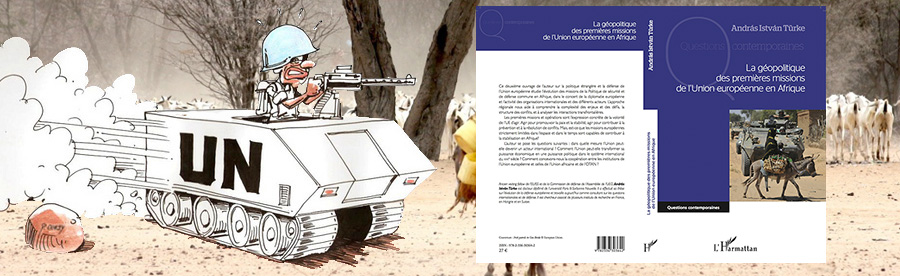
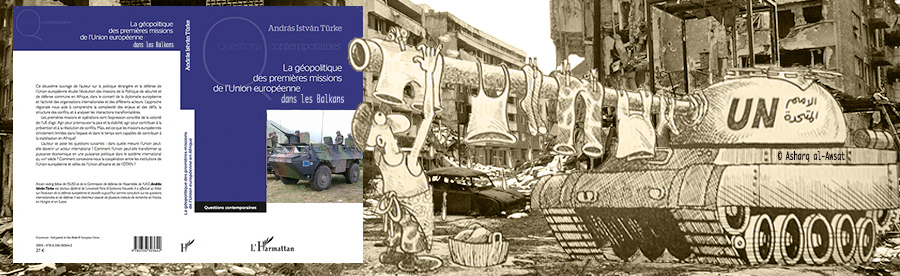
We are looking for sponsors for the English translation of these books, please contact turkeandras(at)gmail(dot)com