
You are here
Feed aggregator
Netherlands : Leiden University enters a golden age of intelligence studies
On 1 December, the head of the General Dutch Intelligence Agency AIVD, Simone Smit, will be the guest of honour [...]
Categories: Defence`s Feeds, Russia & CIS
Germany/Taiwan : Taiwanese master spies' Berlin trip signals long-term rapprochement
Taiwan's Deputy Minister for Foreign Affairs, François Wu; the deputy secretary-general of the National Security Council, Lin Fei-fan; and Lieutenant-General [...]
Categories: Defence`s Feeds, European Union
Bosnia/United States : US Republicans shun Serbian separatist leader
The former president of the Bosnian Serb Republic Milorad Dodik failed to line up any significant meetings with figures close [...]
Categories: Defence`s Feeds, Russia & CIS
The Inflation of Kim Yo Jong’s Statements
The supreme leader’s sister is speaking out more frequently. There is a risk in that.
Categories: Diplomacy & Crisis News
COP31: Why India’s Stress on Country-led Just Transition Pathways Is Justified
India cannot allow the energy transition to further outpace the socio-economic transition of millions dependent on coal.
Categories: Diplomacy & Crisis News
Where the Mango Meets the Orchid: Prospects in Pakistan-Singapore Relations
The recent visit to Pakistan by Singapore's foreign minister offers an opportunity to establish a framework of cooperation connecting South Asia with Southeast Asia.
Categories: Diplomacy & Crisis News
EU Governments Sign Off on Previously-agreed Trade Deal With Indonesia
The Comprehensive Economic Partnership Agreement marks an important milestone in the relationship between the EU and Southeast Asia’s most populous nation.
Categories: Diplomacy & Crisis News
South Korea’s Coal Use Is Surging – and Not Just Because of the Iran War
Data suggests the country's current energy transition pains began before the war in the Gulf.
Categories: Diplomacy & Crisis News
COP31 Nears Close as ‘Weak’, ‘Compromised’ Draft Draws Fierce Backlash
Civil society organisations and delegates from climate-vulnerable countries have sharply criticised the latest draft of the Presidency-led cover decision at the UN climate summit. They accuse negotiators of removing commitments on fossil fuels and failing to provide concrete climate finance, as the talks enter their final hours. Released by the COP31 Presidency on November 19, […]
Categories: Africa
Genocide Ruling Against Myanmar Sparks Rohingya Celebrations
Rohingya refugees in Jamtoli camp, Bangladesh, watch the live hearing of the International Court of Justice in The Hague convicting the state of Myanmar of genocide. Credit: Mohammed Zonaid/IPS
By Mohammed Zonaid and Sara Perria
COX’S BAZAR, Bangladesh & THE HAGUE, Nov 19 2026 (IPS)
Cheers and celebrations erupted in mass refugee camps across the border from Myanmar on Thursday as a landmark world court ruling found the military regime had committed genocide against its Rohingya minority.
Crowds gathered around screens set up in Jamtoli, one of a complex of camps of bamboo and tarpaulin shelters for over one million refugees in Cox’s Bazar, Bangladesh, to listen to the live reading of the verdict of the International Court of Justice (ICJ) in The Hague.
After nearly three hours of reading the court’s final statement, ICJ president Judge Yuji Iwasawa of Japan finally pronounced the first-ever ruling by an international court convicting a state of genocide.
By nine votes to six, he said, the judges of the 80-year-old court established by the UN Charter found that Myanmar had “committed genocide against the Rohingya group in northern Rakhine state”.
Crowds cheered and applauded across Cox’s Bazar as interpreters used loudhailers to convey the message they had waited years for.
“It’s a historic moment for the Rohingya and for the people of Myanmar, for all people who are suffering under different crises around the world. Today the ICJ also recognised the truth and reality, and the world wins today,” declared Mohammed Tofile, a 30-year-old activist.
“It is proof that the world stands against impunity, dictatorship, and brutality. It’s a starting point for accountability,” he told IPS, thanking Gambia for bringing the case to the ICJ, supporters of the Rohingya across the world, and Bangladesh for hosting over one million refugees.
The court’s investigations, hearings and deliberations had taken seven years to complete, focusing mostly on the events of 2017 when the Myanmar military launched what it called “clearance operations” in Rakhine state following attacks by Rohingya militants on police units.
The ICJ’s genocide verdict is sure to trigger widespread debate as the nine judges upholding the conviction found there was sufficient circumstantial evidence to infer genocidal “intent”, an essential element in a decision under the 1948 Genocide Convention.
Some defenders of Israel, and particularly members of the US administration, had warned the 15 ICJ judges not to “lower the bar” in seeking a genocide conviction, fearing a precedent would be set. Israel is facing a case before the ICJ, brought by South Africa, over Gaza.
In reaching 13 separate rulings, the ICJ also found that Myanmar had violated its obligations to prevent genocide committed by individuals alongside its security forces, that it had covered up evidence of crimes of genocide, and that it had failed to enact legislation to prevent genocide, nor had it punished perpetrators.
Specifically, the court found that the numbers of civilians among the more than 10,000 people killed far outweighed combatants and that civilians were killed as they fled to Bangladesh among a total of 700,000 crossing the border.
Sexual violence committed by armed forces and others was “pervasive and systematic”, gang rapes of women were commonplace, and credible estimates indicated that over 730 children under the age of five had been killed. Boys and men were executed. Nearly 400 villages in northern Rakhine were partially or totally destroyed.
During the 2017 “clearance operations”, hate speech against the Rohingya by Min Aung Hlaing – the then military commander who elevated himself to the presidency this year – was systematically disseminated, while the military whipped up anti-Rohingya diatribes through sympathisers on Facebook.
The court set the violence in the context of decades of discrimination and stigmatisation against the mostly Moslem community in predominantly Buddhist Myanmar, with the intent of reducing their numbers. A 1982 law stripped most Rohingya of their citizenship; restrictions in the main township were placed on marriage and childbirth; access to higher education and freedom of movement were denied or curbed.
In another historic first – one that also exposes the court’s lack of powers of enforcement – the ICJ ordered Myanmar to make reparations by facilitating the safe and voluntary return of refugees to their homes, or failing that, compensation. Myanmar was given two years to report back with the ICJ to determine modalities and amounts.
But the reality is that the Myanmar regime has lost control over most of Rakhine to ethnic Arakan insurgents in the civil war that erupted after Min Aung Hlaing ousted Aung San Suu Kyi’s elected government in 2021. Now installed as president, he travels freely these days among neighbouring countries and between his main allies, China and Russia. The US is also engaging with his regime.
The ICJ’s mandate allows it to adjudicate only cases between states, not prosecute individuals, and must rely on the UN Security Council and political pressure to back up its rulings. The UK expressed its support on Thursday and expelled Myanmar’s defence attaché.
The Trump administration had already expressed its displeasure with the ICJ judges before they issued their rulings. The powerful juxtaposition of President Trump joining on Thursday with Russia’s Vladimir Putin in the summit hosted by President Xi Jinping of China did not go unnoticed, with the reform of the UN on the agenda.
Despite all this, the Rohingya know this is their moment of vindication.
“Today the world’s highest court has confirmed what the Rohingya people have said for years: what happened to us was genocide,” said Mohammed Amin, head of the Rohingya Centre of the United Kingdom. He attended the hearing in The Hague with his mother, who carried him out of Rakhine aged three.
“To hear it is very emotional. We were denied for so long, and now the law has recognised the truth, and no one can deny it any more. This judgment belongs to the families in the camps, to those still living in Arakan, and to those we lost,” he told IPS.
Sabekun Naher, founder of Arakan Network for Women’s Rights, was 11 years old when she fled the carnage in Myanmar with her family, her grandfather dying along the way. She told IPS in Cox’s Bazar that she felt goosebumps and cried while listening to the ICJ ruling.
“As a Rohingya woman, I feel incredibly happy. I am sure many other Rohingya women feel the same way, perhaps even more deeply,” she said.
She earnestly thanked The Gambia for its support and the ICJ judges. “Until today, there seemed to be confusion and disagreement over whether the atrocities committed against us constituted genocide and whether we, as Rohingya, truly belong to Myanmar. Today, I feel that this confusion has been clarified and addressed,” she said.
IPS UN Bureau Report
Categories: Africa
China Ratchets Up Its Weaponization of Trade
China’s expansive export-control system is in key respects modeled on that of the United States. But there is an important difference.
Categories: Diplomacy & Crisis News
‘It’s Impossible to Refuse’: State-Imposed Forced Labor and Exploitation in Uzbekistan’s Silk Sector
The country's government has big ambitions for its silk industry, but what do those ambitions mean for farmers?
Categories: Diplomacy & Crisis News
Présidentielle 2027 : près de cinq ans après l’invasion russe, l’« effet drapeau » disparu de la guerre en Ukraine
DÉCRYPTAGE - Menacés d’être exclus du second tour de la présidentielle, les candidats pro-européens tentent de remettre le dossier ukrainien dans le débat public.
Categories: France
France/United States : Macron to meet Kamala Harris at the Élysée amid tensions with the White House
French President Emmanuel Macron is due to meet today, 20 November, with Kamala Harris, the unsuccessful candidate for the Democrats [...]
Categories: Defence`s Feeds, Russia & CIS
Mongolia’s President Steps Down Amid Corruption Allegations
Yet more turnover in Mongolia’s leadership highlights factional politics and a lack of accountability mechanisms.
Categories: Diplomacy & Crisis News
Kenya Contained Ebola With Preparation, Not Luck. Africa Needs More of the Same
Investing in virtual networks permanently strengthens local health capacity, which is ultimately our strongest protection against future outbreaks. Credit: WHO
By Caroline Kisia
NAIROBI, Nov 19 2026 (IPS)
Last week, on 11 November, Kenya discharged its last Ebola patient, just 37 days after the country recorded the first-ever case of the virus in its territory. If no new cases emerge over the next six weeks, Kenya will be officially declared Ebola free on 23 December. So far, zero community transmission has been recorded in the country.
That’s an outcome that Kenya can be proud of, and it’s not just a case of good luck. In June – shortly after the Ebola outbreak had been declared in Uganda and the Democratic Republic of the Congo, but months before Kenya saw its first case – Kenya’s National Public Health Institute (KNPHI) invited a Ugandan epidemiologist to teach some 200 Kenyan health workers the importance of investigating every health alert and looking into every unexplained death.
Using simple digital tools to both support and elevate local expertise is a quick, cost effective way to ensure that communities – and nations – stand robust in the face of outbreaks
And when Kenya’s first case was declared on October 6, KNPHI sprang into action, running twice-weekly virtual training sessions for frontline health workers and surveillance officers across the country. The Ugandan experiences, particularly on contact tracing, became essential here, helping Kenyan public health officials break the chain of transmission.
That kind of response – both nimble and far-reaching – is precisely what’s needed to contain an outbreak of a disease like Ebola. KNPHI was able to move fast and reach so many people thanks to virtual networks that were set up before the outbreak reached Kenya. Africa needs more investment in these kinds of networks, which my organization, Project ECHO, supports – not just in the middle of a crisis, but before the next emergency hits.
One reason that virtual networks are so powerful is that they elevate the voices of community members, which are our strongest shields against future outbreaks. Local health workers, officials, faith leaders, civil society groups, and trusted volunteers are often able to spot unusual health events before formal systems do.
Engaging with community leaders also allows us to combine global expertise with essential local context. As we’ve seen with Ebola, a failure to respect local traditions regarding burial practices, for example, has proven to be a serious challenge in containing the disease’s spread.
Embedding medical best practice with established and respected members of the local community – who understand the cultural context, and can work through it – can help us guard against such challenges.
Investing in virtual networks permanently strengthens local health capacity, which is ultimately our strongest protection against future outbreaks. Recent funding cuts to the WHO and other global health programs have undercut health staffing in many communities, making such networks more essential than ever.
Networks that include community health workers can also be used to spread knowledge and information to communities between outbreaks – which is just as essential as emergency response.
In Senegal, for example, the Institut Pasteur runs virtual training sessions on hemorrhagic and viral diseases that are reaching healthcare workers in communities across francophone West Africa and beyond.
And in Zambia, where the government has embraced virtual learning networks for more than a decade, regional and local information hubs are actively connecting frontline health workers with national and international expertise in real time, accelerating the sharing of evolving guidance, supporting mentorship, and creating peer networks that reduce professional isolation.
Even in conflict zones these digital networks have proved remarkably resilient. Since 2023, Sudan has been torn apart by civil war, genocide and gender-based violence. But an international digital network, built in close collaboration with local partners, has enabled global experts to train Sudanese health workers on how to treat victims of rape and other violence.
Some of the sessions have been facilitated through Telegram to accommodate the limited Internet bandwidth. Sometimes, the sessions take place late at night, when the connection is stronger.
The cases of Senegal, Zambia and Sudan show what’s possible when technology is used to serve local leadership. As we respond to the ongoing Ebola outbreak – and as we prepare for future crises – we must apply these lessons at scale.
We will always need high-level expertise and cutting-edge medicine. But we cannot let our investments in those areas distract us from investing in the networks that reach the communities on the frontlines, and that allow for cultural considerations to be taken into account. Using simple digital tools to both support and elevate local expertise is a quick, cost effective way to ensure that communities – and nations – stand robust in the face of outbreaks.
Existing virtual networks gave KNPHI the digital infrastructure it needed to move quickly in response to Kenya’s first Ebola case, broadcasting essential information to frontline health workers and surveillance officers across the country in a matter of days. Africa needs more of these virtual networks to reach communities across the continent – to protect the communities themselves, and to protect us all.
Dr. Caroline Kisia is Africa Director of Project ECHO.
Categories: Africa
Uzbek Professor Reportedly Convicted of Espionage in Kazakhstan
Neither Kazakh nor Uzbek authorities have commented on the case, with Dr. Ikboljon Qoraboyev’s relatives stating that he’s been sentenced to 10 years.
Categories: Diplomacy & Crisis News
Was hinter Trumps Atom-Deal mit Saudi-Arabien steckt
Die USA und Saudi-Arabien haben ein Abkommen zur friedlichen Nutzung der Kernkraft geschlossen. Kritiker warnen, dass Trumps Atom-Deal und die Zugeständnisse Washingtons die Verbreitung von Atomwaffen begünstigen könnten. Doch ein Scheitern des Abkommens könnte Saudi-Arabien in die Arme Chinas treiben und die Risiken sogar erhöhen.
Categories: Diplomacy & Defense Think Tank News
China, Russia, US Talk UN Reform, Nuclear Risks, and Ukraine at Trilateral Summit
Xi seems to have been a reluctant host who decided to turn the event to his own advantage.
Categories: Diplomacy & Crisis News
Measuring the Promise of the Gaza Peace Plan One Year Later
A year after the Comprehensive Plan to End the Gaza Conflict was announced, assessments of its implementation diverge sharply. Official statements emphasize breakthroughs, while critics argue that the plan has paused the war without ending it. Both draw on real evidence, but neither is anchored in an agreed standard of what was promised and by whom.
Rather than assessing whether the plan is the right framework for Gaza, this issue brief takes the plan’s own texts as its baseline. Drawing on the Comprehensive Plan, the Sharm el-Sheikh agreement, Security Council Resolution 2803, and the Board of Peace’s roadmap, it identifies twenty-seven core obligations and rates progress on each. It then examines why implementation has stalled on humanitarian access, the transfer of governance, and security.
The brief finds that discrete acts such as the exchange of hostages and prisoners have been delivered, but none of the new institutions meant to carry the plan into its second phase has moved beyond a framework. It argues that obligations the texts treat as separate have been made conditional on each other and that no body is mandated to establish who has done what. It outlines a minimum verification mechanism, building on the International Verification Committee the roadmap already provides for, and sets out recommendations for each of the actors with responsibilities under the plan.
The post Measuring the Promise of the Gaza Peace Plan One Year Later appeared first on International Peace Institute.
Pages


© 2012-2018 Europa Varietas Foundation © 2015-2018 Europa Varietas Association
www.europavarietas.org | info(@)europavarietas(dot)org | Switzerland
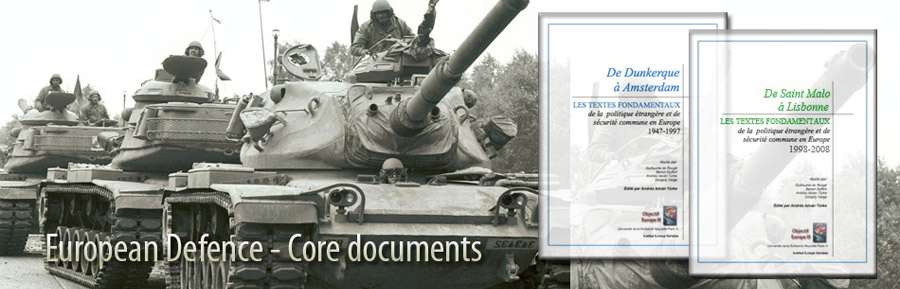
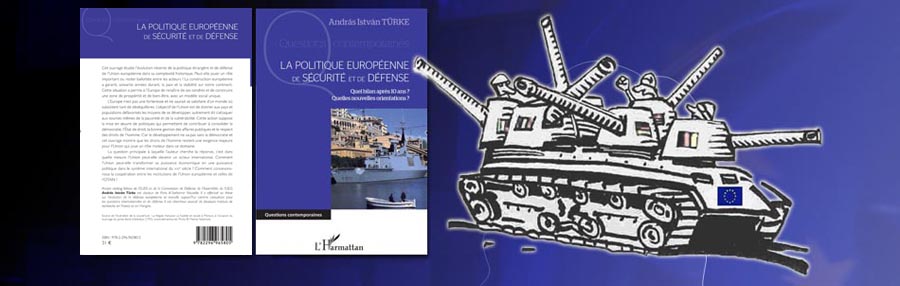
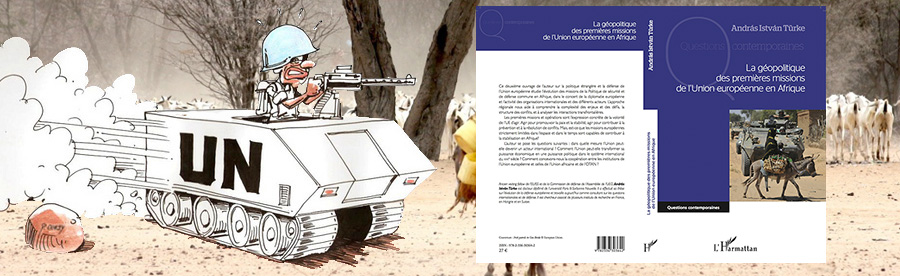
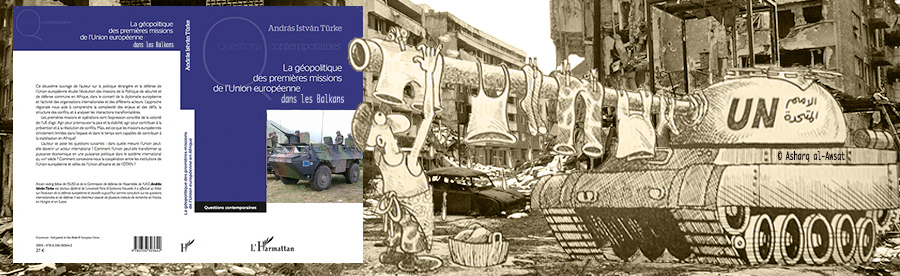
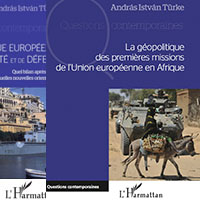
We are looking for sponsors for the English translation of these books, please contact turkeandras(at)gmail(dot)com