
You are here
European Union
Remarks by President António Costa at the High level international meeting on the Two-State solution and the Comprehensive Peace Plan for Gaza
On 22 September 2026, European Council President, António Costa, delivered a speech at the High level international meeting on the Two-State solution and the Comprehensive Peace Plan for Gaza, “The Road Ahead: One Year After the New York Declaration and the Comprehensive 20-point Peace Plan”, summit co-hosted by France, the United Kingdom and Canada, in the margins of the United Nations General Assembly High Level Week.
Categories: European Union
Ukraine's territorial integrity: EU extends individual listings for three years
The Council prolonged the restrictive measures targeting those responsible for undermining or threatening the territorial integrity, sovereignty and independence of Ukraine for another 36 months, until 22 September 2029.
Categories: European Union
European Peace Facility: Council increases support for the Djibouti Armed Forces to €20 million
The Council adopted a decision to amend the first assistance measure by increasing financial allocations to €20 million under the EPF to further strengthen the defence capacities of the Djibouti Armed Forces.
Categories: European Union
Remarks by President António Costa at the press conference following the Partners for multilateralism summit
On 21 September 2026, European Council President, António Costa, together with the leaders of Australia, Barbados, Brazil, Canada, India and Kenya, convened the Partners for multilateralism, international law, peace and prosperity summit (P4M summit), in the margins of the United Nations General Assembly High Level Week.
Categories: European Union
Opening remarks by President António Costa at the Partners for multilateralism summit
On 21 September 2026, European Council President, António Costa, together with the leaders of Australia, Barbados, Brazil, Canada, India and Kenya convened the Partners for multilateralism, international law, peace and prosperity summit (P4M summit), in the margins of the United Nations General Assembly High Level Week.
Categories: European Union
Joint press release following trilateral EU-Australia Leaders meeting
The President of the European Council, António Costa, the President of the European Commission, Ursula von der Leyen and the Prime Minister of Australia, Anthony Albanese met on 21 September in the margins of the United Nations General Assembly.
Categories: European Union
Declaration of the Partners for Multilateralism (P4M) summit, 21 September 2026
Declaration of the Partners for Multilateralism (P4M) summit, 21 September 2026: a joint commitment to multilateralism, international law, peace and prosperity.
Categories: European Union
“Multilateralism is not idealism, it’s a necessity” – op-ed article by President António Costa, President Inácio Lula da Silva, President William Ruto and Prime Minister Mark Carney
The President of the European Council, António Costa, together with the President of Kenya, William Ruto, the President of Brazil, Luiz Inácio Lula da Silva, the Prime Minister of Australia, Anthony Albanese, the Prime Minister of Barbados, Mia Mottley, the Prime Minister of Canada, Mark Carney, and the Prime Minister of India, Narendra Modi, will convene the Partners for multilateralism, international law, peace and prosperity summit (P4M summit) on 21 September 2026 in the margins of the United Nations General Assembly High Level Week.
Categories: European Union
Media advisory - General Affairs Council of 22 September 2026
Main agenda items, approximate timing, public sessions and press opportunities.
Categories: European Union
Press briefing - Competitiveness Council of 24 September 2026
Press briefing ahead of the upcoming Competitiveness Council will take place on Tuesday, 22 September 2026 at 15.00.
Categories: European Union
Russia/Ukraine: Statement by the High Representative on behalf of the EU on Russian State Duma elections held on 18-20 September 2026 and their non-applicability on Ukrainian territory
The EU issued a statement on the on Russian State Duma elections held on 18-20 September 2026 and their non-applicability on Ukrainian territory.
Categories: European Union
Statement by the High Representative on behalf of the European Union on the so-called Presidential elections in the occupied breakaway region of South Ossetia
The EU issued a statement on the so-called Presidential elections in the occupied breakaway region of South Ossetia considering their outcome as null and void, and reiterating its unwavering support for the sovereignty and territorial integrity of Georgia within its internationally recognised borders.
Categories: European Union
Draft agenda - Thursday, 1 October 2026 - PE792.229v02-00 - Committee on Foreign Affairs
Source : © European Union, 2026 - EP
Categories: European Union
Debate: Xi visits Trump: what to expect?
Xi Jinping, China's president and general secretary of the Chinese Communist Party, is due in Washington for a state visit today. The talks between the two superpowers will focus on contentious issues of global relevance: the truce reached last year in the trade war over tariffs and rare earths is due to expire in November. The regulation of AI, Taiwan, Iran and Ukraine are also on the agenda.
Categories: European Union
Truce will continue | TVNet - Latvia
Categories: European Union
Same flaws instead of far-sightedness | Financial Times - United Kingdom
Categories: European Union, Pályázatok
Debate: Berliners shift to the left
The Left Party under lead candidate Elif Eralp secured a clear victory in Berlin's state elections on Sunday, claiming around 26 percent of the vote. Mathematically, a red-red-green coalition led by The Left Party is now a possibility. What would that mean for Germany's capital and for Europe?
Categories: European Union
Pages


© 2012-2018 Europa Varietas Foundation © 2015-2018 Europa Varietas Association
www.europavarietas.org | info(@)europavarietas(dot)org | Switzerland
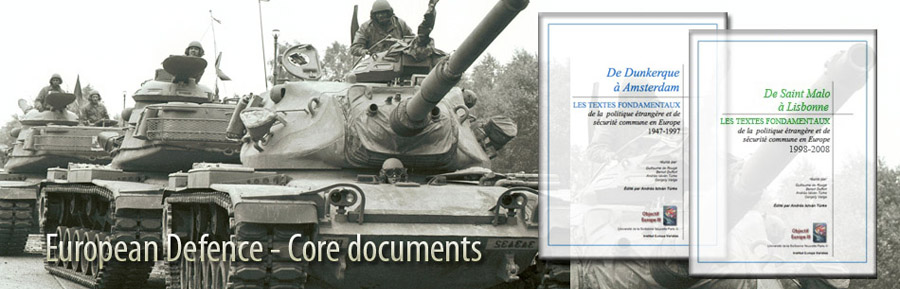
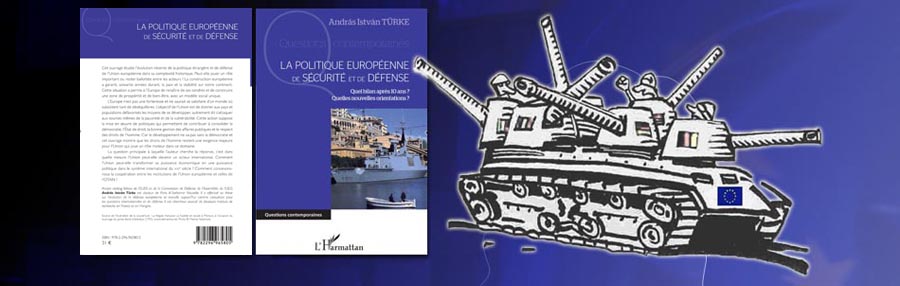
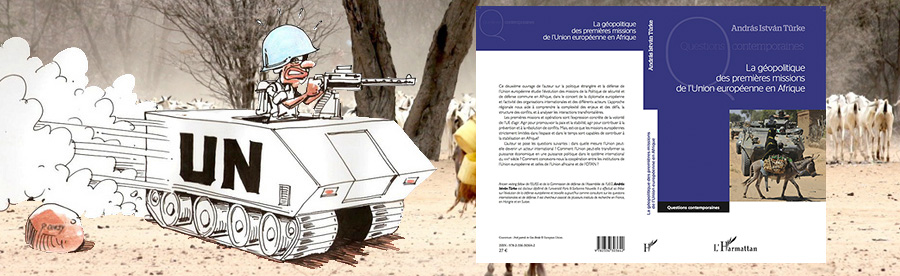
We are looking for sponsors for the English translation of these books, please contact turkeandras(at)gmail(dot)com