
You are here
Afrique
Afcon move to every four years under review by Caf
The Africa Cup of Nations may continue to be held every two years, with discussions under way to reverse its proposed switch to a four-year cycle.
Écusson brodé ou tissé : comment faire le bon choix ?
Choisir entre un écusson brodé et un écusson tissé peut sembler anodin, mais cela a un impact significatif sur l’apparence et la durabilité de votre produit. Les écussons brodés sont souvent associés à une texture riche et à des détails précis, tandis que les écussons tissés offrent une finition plus lisse et un rendu plus […]
Cigarettes : la taxe additionnelle passerait à 85 DA par paquet en 2027, selon le PLF
Le PLF 2027 propose de porter la taxe additionnelle sur le tabac de 75 à 85 DA par paquet. Il relève aussi plusieurs taxes sur […]
L’article Cigarettes : la taxe additionnelle passerait à 85 DA par paquet en 2027, selon le PLF est apparu en premier sur .
Categories: Afrique, Határon túli magyar portálok összesített hírei
Ethiopia and Eritrea accuse each other of starting conflict after troops cross border
Truckloads of Eritrean soldiers have been seen driving into Ethiopia, which has reportedly responded with drone strikes.
Prix de l’essence en Algérie : une hausse possible en 2027 ?
Le projet de loi de finances 2027 autorise une révision des prix des carburants « en cas de besoin ». Le texte ne fixe ni […]
L’article Prix de l’essence en Algérie : une hausse possible en 2027 ? est apparu en premier sur .
Categories: Afrique, Határon túli magyar portálok összesített hírei
Tanzania’s Biggest City Bets on Elevated Bridge to Dodge Chronic Flooding
Construction work on the new Jangwani bridge across the flood-prone Msimbazi valley in Dar es Salaam. The elevated road is designed to keep traffic moving when heavy rains inundate the area. Credit: Kizito Makoye/IPS
By Kizito Makoye
DAR ES SALAAM, Tanzania, Oct 9 2026 (IPS)
Each morning on her way to Kariakoo, Clementina Nyangwine looks out of her commuter bus as it crawls through Jangwani and watches giant foundation piles rising above the muddy Msimbazi valley.
Workers in safety helmets and high-visibility vests move among towering reinforcement cages. Cranes swing over the site while excavators, concrete mixers and trucks rumble below. Deep foundations are being driven into the quagmire for a bridge that will carry one of Dar es Salaam’s busiest roads above the floodplain.
Nyangwine, a 37-year-old shopkeeper, remembers what travelling through Jangwani was like when the Msimbazi River burst its banks.
“I have spent hours here waiting for the water to go down,” she told IPS. “Sometimes we got out of the bus and walked because there was no other way to reach Kariakoo. You would arrive at work with your clothes soaked in muddy water.”
On the worst days, passengers waited on the edge of Morogoro Road as murky floodwater swept across the carriageway.
“You could not tell whether you would reach work in an hour or four hours,” Nyangwine said. “When I see this bridge coming up, I think perhaps those days are finally ending.”
The bridge is part of the Msimbazi Basin Development Project, an effort to reduce chronic flooding in Dar es Salaam as climate risks intensify.
At the centre of the work is a 390-metre bridge about eight metres above the existing road level, allowing traffic to continue moving even when the Msimbazi swells during heavy rains.
The wider construction corridor stretches for about 1.2 kilometres and includes approach roads. The bridge will be approximately 41 metres wide and will accommodate vehicles as well as pedestrians, cyclists and the Bus Rapid Transit system.
In August, the Tanzania National Roads Agency, TANROADS, said construction had reached 41 percent.
Building Above the Flood
Project manager Leonard Ngayungi said the height of the new bridge is central to its design.
“The problem with the existing crossing is that the road sits within an active floodplain,” Ngayungi told IPS. “When the Msimbazi rises, water spreads across Jangwani, and the road becomes part of the flood area. We are changing that relationship by taking the transport infrastructure above the flood level.”
The bridge is being supported by hundreds of deep foundation piles driven between 35 and 42 metres underground, depending on soil conditions. Of the roughly 496 piles required, 404 had been completed, according to officials.
Ngayungi said the aim is not simply to build a stronger road but to let the river and floodplain carry water without cutting one of the city’s main transport links.
“The bridge is being designed so that the river can flow perpetually underneath while people, buses and other vehicles continue to move above.” Ngayungi said.
“We have to build for the rainfall we may face in the future, not simply the rainfall patterns people remember from 20 or 30 years ago,” he said.
A River That Can Stop a City
The Msimbazi is a relatively small river with an outsized impact on Dar es Salaam.
Its basin is home to approximately 1.6 million people and cuts through densely populated neighbourhoods.
Near Jangwani, two of Dar es Salaam’s major traffic arteries cross the lower floodplain, including the corridor used by the city’s first Bus Rapid Transit system.
When the river floods, therefore, the consequences spread far beyond households living beside its banks.
Roads close. Buses stop. Workers arrive late. Traders lose customers. Goods cannot move easily between the city centre and its western suburbs.
Issa Majega, 56, a BRT driver on the Kariakoo-Kimara route, said heavy rain can turn a routine journey into hours of uncertainty.
“Once Jangwani floods, everybody suffers,” Majega told IPS. “The buses cannot pass, passengers become stranded and traffic builds up on other roads because everyone is looking for another route.”
For drivers, he said, the danger is knowing when to stop.
“You cannot gamble with a bus full of people when water is crossing the road,” he said. “Even if passengers are in a hurry, you have to wait.”
Majega believes the elevated crossing could remove a persistent bottleneck in the city’s transport system.
“If this bridge works as designed, rain will no longer mean that the whole route has to stop because of Jangwani,” he said.
Climate Change Meets Urban Growth
Dar es Salaam’s flooding problem cannot be blamed on rainfall alone.
Rapid urban sprawl has pushed settlements into wetlands and floodplains, while buildings and roads have reduced the land available to absorb rainwater. Rubbish chokes drainage channels, while sediment has accumulated in parts of the Msimbazi.
About 70 percent of Dar es Salaam’s residents live in informal settlements, many with inadequate drainage. In 2018, a major flood in the Msimbazi basin caused an estimated US$100 million in damage — equivalent to roughly two percent of the city’s gross domestic product, according to World Bank figures.
Deusdedit Rwehumbiza, an urban planning professor at Mkwawa University in Iringa, says that is why the project should not be understood simply as a bridge-building exercise.
“The bridge is the most visible part because everybody can see the cranes and concrete,” Rwehumbiza said. “But the real issue is how you manage an entire urban watershed.”
“The strength of the Msimbazi approach is that it treats flooding as a land-use, environmental and transport problem at the same time,” Rwehumbiza said.
The project also includes river improvements, floodplain restoration, watershed management and better solid-waste management. Parts of the lower basin are intended to become flood detention areas that temporarily hold excess water.
“That is what climate adaptation should do,” Rwehumbiza said. “You give water somewhere safe to go instead of spending every rainy season trying to fight it after it has already entered people’s homes.”
Moving People Out of Harm’s Way
Around 3,500 households living in the Msimbazi floodplain were targeted for resettlement, with US$30 million allocated for compensation. Among them was Teresia Katimba, a mother of four who moved to Madale in 2024 after years of enduring floods that repeatedly filled her Jangwani home with sewage and rubbish.
“A climate-resilient city cannot simply move risk from the river to people’s livelihoods,” Rwehumbiza said. “If families are safer from floods but cannot afford transport to work, you have solved one problem and created another.”
US$260 Million Bet on Resilience
The World Bank’s International Development Association is providing US$200 million in concessional financing, while Spain and the Netherlands are contributing additional financing that brings the package described by Tanzanian authorities to around US$260 million.
The project, scheduled to run through 2028, covers the lower Msimbazi basin and extends work farther upstream towards the Pugu Hills.
TANROADS is responsible for the Jangwani bridge works, while other government institutions are involved in the redevelopment of the wider valley.
Authorities also envisage markets, commercial development and improved public transport in the redeveloped valley.
But Rwehumbiza said the project’s success will also depend on controlling waste, sediment and development upstream.
“You can build a bridge to last many decades,” he said, “but the river is connected to everything happening upstream. Climate resilience requires maintaining the whole system.”
For commuters, the test will come on a rainy morning when the Msimbazi rises.
For years, Jangwani has represented a peculiar vulnerability in Dar es Salaam: a short stretch of road where a downpour could interrupt journeys across a metropolis of millions.
As climate change increases the risks facing fast-growing African cities, such weak points are becoming increasingly expensive.
It will not prevent heavy rain. Nor can one bridge make Dar es Salaam climate-proof.
Nyangwine still remembers stepping out of stalled buses, lifting her skirt and walking gingerly along Morogoro Road as filthy water splashed around her legs.
Occasionally she reached her Kariakoo shop hours late. Sometimes customers had already left. On the journey home, another downpour could begin the ordeal again.
Now, each time her bus passes Jangwani, she watches the workers.
“The river will still flood when the rain is heavy,” she said. “But if people can cross safely above it, then the rain does not have to stop our lives.”
IPS UN Bureau Report
Air Algérie : des billets aller-retour à partir de 148 euros, voici les destinations concernées
Air Algérie a lancé une nouvelle campagne promotionnelle sur plusieurs liaisons internationales, avec des billets aller-retour à partir de 148 euros. L’offre concerne une trentaine […]
L’article Air Algérie : des billets aller-retour à partir de 148 euros, voici les destinations concernées est apparu en premier sur .
Categories: Afrique, Határon túli magyar portálok összesített hírei
Les AME invités à actualiser leurs données auprès de l'ANIP
Les Aspirants au Métier d'Enseignant (AME) disposent du 10 octobre au 9 novembre 2026 pour accomplir les formalités de mise à jour de leurs informations familiales et de confirmation de leur identité. Ces deux étapes sont indispensables à l'examen de leur dossier dans le cadre du recrutement en qualité d'agents contractuels de droit public des collectivités territoriales décentralisées.
Le processus de recrutement des Aspirants au métier d'enseignant (AME) dans la Fonction publique entre dans une nouvelle phase. Le ministère de l'Economie et des Finances, chargé du Budget et de la Fonction publique, invite les AME à actualiser leurs informations personnelles et à confirmer leur identité auprès de l'Agence Nationale d'Identification des Personnes (ANIP).
Dans un communiqué de presse en date du 8 octobre 2026, le ministère précise que cette opération se déroulera en deux étapes.
La première, prévue du 10 au 16 octobre, porte sur la mise à jour des informations familiales. Les AME sont notamment appelés à renseigner les données concernant leur conjoint ou conjointe et leurs enfants.
Cette formalité peut être accomplie en ligne, à travers l'application mobile ANIP BJ ou la plateforme eservices.anip.bj
Les AME peuvent également se rendre dans une unité de l'ANIP, où un agent sera chargé de les accompagner dans la démarche.
Une confirmation d'identité obligatoire
La seconde étape concerne la confirmation de l'identité en présentiel. Elle s'étend du 10 octobre au 9 novembre 2026. A cet effet, chaque AME devra se présenter dans l'unité de l'ANIP de son choix, sur toute l'étendue du territoire national, muni de sa carte d'identité personnelle (CIP) ou de son Certificat National d'Identification Biométrique (CNIB).
« Ces deux étapes sont nécessaires pour que votre dossier puisse être examiné », précise le ministère.
Les opérations sont gratuites.
Pour obtenir des renseignements complémentaires, les AME peuvent contacter le numéro 7054, accessible gratuitement, le +229 99 85 00 00 via WhatsApp ou écrire à l'adresse serviceclient@anip.bj.
M. M.

Categories: Afrique
Des balances de pesée non conformes saisies
Une équipe de contrôle de l'Agence nationale de normalisation, de métrologie et du contrôle qualité (Anm) mène, depuis le 6 octobre 2026, une opération d'inspection dans le département du Plateau. Cette initiative vise à vérifier la conformité des balances utilisées dans les poissonneries, notamment celles qui ne disposent pas d'une vérification métrologique à jour et d'une étiquette verte de l'Anm en cours de validité.
L'Agence nationale de normalisation, de métrologie et du contrôle qualité en mission d'inspection dans le Plateau. Objectif, vérifier la conformité des balances utilisées dans les poissonneries, notamment celles qui ne disposent pas d'une vérification métrologique à jour. Lors des contrôles qui se sont déroulés dans les villes de Sakété, Ifangny, et Pobè, plusieurs balances ont été saisies pour non-conformité métrologique.
Les contrôles ont également conduit à l'application d'amendes à certains responsables de poissonneries, qui ont depuis régularisé leur situation. D'autres promoteurs ont été convoqués pour la suite de la procédure.
Ces derniers disposent d'un délai de quinze jours pour se mettre en conformité avec la réglementation en vigueur. Passé ce délai, sans régularisation de leur situation, ils seront présentés au procureur de la République.
À travers cette opération, l'Anm réaffirme sa volonté de renforcer le respect des normes métrologiques et de lutter contre les pratiques susceptibles de porter atteinte aux droits des consommateurs.
F. A. A.
Categories: Afrique
Double Chance : les 10 numéros tirés à 14H
LES RÉSULTATS DOUBLE CHANCE SONT LÀ !
LOTO FORTUNE Tirage N°162/26
Vendredi 09 Octobre 2026 (14H)
– Zone A (5 premiers numéros) :
35 • 81 • 01 • 53 • 43
– Zone B (5 derniers numéros) :
25 • 54 • 34 • 57 • 31
Félicitations aux heureux gagnants.
Pas encore cette fois ? Gardez le sourire !
Rendez-vous à 18H pour le prochain tirage.
Jouez avec modération et responsabilité. Le jeu doit rester un plaisir.
A TOI DE JOUER #Akaxòa
#LNBSA #XòGbɔnAlɔkpaVo #JeuResponsable #LaChanceAvecModération
Categories: Afrique
Brûlures d’estomac et remontées acides : comment en finir avec le reflux gastro-œsophagien
Une brûlure derrière le sternum après un repas copieux, un goût acide au fond de la gorge au réveil : la plupart des adultes connaissent […]
L’article Brûlures d’estomac et remontées acides : comment en finir avec le reflux gastro-œsophagien est apparu en premier sur .
Categories: Afrique, Határon túli magyar portálok összesített hírei
The 0.7% ODA target: a norm in retreat
The 0.7 per cent official development assistance/gross national income (ODA/GNI) target, adopted by the UN General Assembly in 1970, is best understood as a partially successful norm that is now in active retreat. In this paper we discuss the history of the target using Finnemore and Sikkink's (1998) norm life cycle framework. We compare the 0.7 to analogous targets in defence, climate, education, health, and biodiversity. We argue that systematic underperformance is a structural feature of politically negotiated international input targets. The rise and retreat of the 0.7 is then not a distinct feature of development finance. The NATO 2 per cent/5 per cent case demonstrates that cascade is achievable under conditions of salience and enforcement. However, these are conditions that the 0.7 has not had. We propose ways forward based on the 0.7 target’s original rationale.
Categories: Afrique, Diplomacy & Defense Think Tank News
La juriste sud-africaine Navi Pillay remporte le prix Nobel de la paix 2026
Le Comité norvégien du prix Nobel a décerné le prix Nobel de la paix 2026 à l'ancienne Haut-Commissaire des Nations unies aux droits de l'homme.
Categories: Afrique, Swiss News
La juriste sud-africaine Navi Pillay remporte le prix Nobel de la paix 2026
Le Comité norvégien du prix Nobel a décerné le prix Nobel de la paix 2026 à l'ancienne Haut-Commissaire des Nations unies aux droits de l'homme.
Categories: Afrique, European Union
La juriste sud-africaine Navi Pillay remporte le prix Nobel de la paix 2026
Le Comité norvégien du prix Nobel a décerné le prix Nobel de la paix 2026 à l'ancienne Haut-Commissaire des Nations unies aux droits de l'homme.
Categories: Afrique
Fermeture de l’autoroute Alger-Tipaza ce samedi 10 octobre : à quelles heures ?
Les automobilistes qui comptent rejoindre Tipaza depuis Alger ce samedi 10 octobre devront adapter leur trajet. Les services de la wilaya de Tipaza annoncent la […]
L’article Fermeture de l’autoroute Alger-Tipaza ce samedi 10 octobre : à quelles heures ? est apparu en premier sur .
Daten von 890'000 Ricardo-Nutzern gehackt
Der Online-Marktplatz Ricardo ist Opfer eines Hacker-Angriffs geworden. Daten von rund 890'000 Nutzerkonten wurden dabei offengelegt. Die Sicherheitslücke hat Ricardo jetzt geschlossen.
Categories: Afrique, Swiss News
«Benkos Lifestyle war gar nicht meine Welt»
Die österreichische Unternehmerin Elisabeth Gürtler spricht über ihre Sacher-Hotelgruppe, die Fehler des Pleitiers René Benko und ihr Langzeitverwaltungsratsmandat bei Lindt & Sprüngli.
Categories: Afrique, Swiss News
Pages
the old site is here



© 2012-2015 Europa Varietas Foundation © 2015-2020 Europa Varietas Association
www.europavarietas.org | info(@)europavarietas(dot)org | Switzerland
This is a GDPR ready site


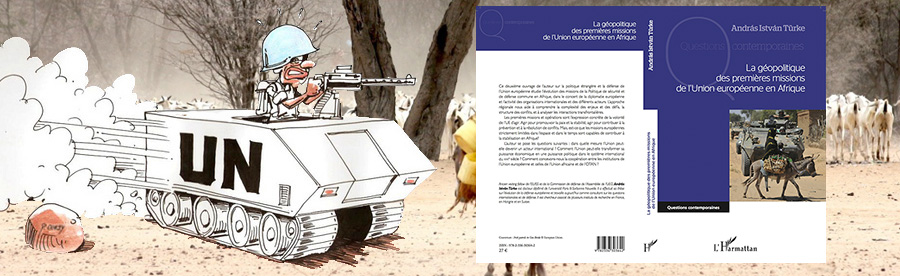

We are looking for sponsors for the English translation of these books, please contact turkeandras(at)gmail(dot)com