
You are here
Feed aggregator
Lula re-elected Brazilian president in runoff -- official results
Brazilian incumbent President Luiz Inacio Lula da Silva, candidate of the ruling Workers' Party, won Sunday's presidential runoff, according to results released by Brazil's Superior Electoral Court on Sunday night.
Categories: Defence`s Feeds
Netanyahu Says Iran Could Seek To Disrupt Israeli Elections, Warns Tehran
Israeli Prime Minister Benjamin Netanyahu warned that Tehran and its proxy groups could try to disrupt Israel's October 27 elections.
Categories: Afrique, Defence`s Feeds
Over 1,300 arrested during protests across France on Saturday: media
A total of 1,314 people were arrested, and 53 law enforcement officers were injured during a new round of protests across France on Saturday, French daily Le Parisien reported on Sunday, citing the Interior Ministry.
Categories: Afrique, Defence`s Feeds
DPRK Permanent Representative to UN Sends Letter to President of UNSC
The DPRK permanent representative to the United Nations sent a letter to the president of the UN Security Council on October 25, as regards the provocation the ROK committed by groundlessly shifting the blame for the dubious "mine explosion incident" that occurred near the southern border of the DPRK on September 21 to the DPRK.
Categories: Afrique, Defence`s Feeds
Training today for tomorrow's fight
Capability starts with people and, for Air Force, that starts with training.
Categories: Afrique, Defence`s Feeds
Poseidon crews sharpen submarine-hunting skills
A RAAF P-8A Poseidon deployed sonobuoys to search for a Singaporean submarine during an anti-submarine warfare activity on Exercise Bersama Lima 2026.
Categories: Afrique, Defence`s Feeds
Junior leaders show their mettle on Op Tyrfing
In the early morning darkness in the woods outside the School of Infantry at Lone Pine Barracks, the temperature was close to freezing.
Categories: Afrique, Defence`s Feeds
La première session du Sénat s'ouvre mercredi
Trois mois après l'installation officielle de ses membres, la chambre haute du Parlement béninois s'apprête à ouvrir sa première session ordinaire. La cérémonie est prévue mercredi 28 octobre 2026 à Cotonou, sous la présidence de Patrice Talon.
Les 25 sénateurs sont attendus au Dôme du Sofitel de Cotonou pour l'ouverture solennelle de leur première session ordinaire, après la mise en place de cette institution le 30 juillet dernier.
Cette rentrée parlementaire intervient une semaine après celle de l'Assemblée nationale. Elle répond aux dispositions du règlement intérieur du Sénat, qui organisent le calendrier des sessions des deux chambres du Parlement.
À la tête de la chambre haute, Patrice Talon prononcera le discours d'ouverture. Son intervention devrait permettre de présenter les grandes orientations des travaux et les dossiers soumis à l'examen des sénateurs.
Des députés ainsi que des présidents d'institutions de la République sont également annoncés à cette cérémonie.
21 jours pour examiner les dossiers
Cette première session ordinaire est prévue pour durer 21 jours. Les travaux porteront notamment sur les dossiers transmis au Sénat et qui n'ont pas encore fait l'objet d'une décision, à condition qu'ils soient toujours d'actualité. L'ordre du jour pourra être complété au cours de la session, conformément aux règles de fonctionnement de l'institution.
Élu président du Sénat le 6 août 2026, Patrice Talon conduira ainsi cette première session ordinaire de la chambre haute. Il sera assisté de Louis Vlavonou, vice-président, et d'Alassane Seidou, rapporteur.
M. M.
Categories: Afrique
What Does Durga Puja Tell Us About Minorities in Bangladesh?
The largest Hindu religious festival went off smoothly – a credit to the new BNP government.
Categories: Diplomacy & Crisis News
Regional favoritism and educational attainment in Africa
We investigate the impact of regional favoritism on educational attainment in Africa. Using geocoded, individual-level survey data from the Demographic and Health Surveys (DHS), we show that men who grew up in areas geographically linked to a national leader attain higher levels of education later in life. In contrast, we observe no beneficial effects of geographical leader connections for women on average; only a subset of women who have additional ethnic ties and are possibly from wealthier families experience such effects. We interpret these results using a discrete choice framework that models decisions regarding whether children continue schooling based on perceived returns to education versus the costs of that education. This framework suggests that preferential educational policies are unlikely to be the primary cause of the higher attainment observed for men and the subset of women mentioned previously. Instead, educational choices appear to respond to expectations of local economic booms in geographically connected regions. Additional evidence, such as regarding the likelihood of skilled employment later in life, supports this interpretation.
Categories: Diplomacy & Defense Think Tank News
Entwurf der Tagesordnung - Dienstag, 3. November 2026 - PE796.502v01-00 - Ausschuss für konstitutionelle Fragen , Ausschuss für Sicherheit und Verteidigung
Quelle : © Europäische Union, 2026 - EP
Categories: Europäische Union
Le vieux monde se meurt, le nouveau monde tarde à apparaître et dans ce clair-obscur surgissent les monstres.
Categories: Afrique
Austria threatens to veto EU budget
Vienna becomes first national capital to take the EU's 2028 to 2034 budget hostage
Categories: European Union
Dr Julius Elumba : « L’exposition répétée aux embouteillages peut affecter l’équilibre psychologique »
Les embouteillages récurrents à Kinshasa affectent le bien-être physique et psychologique de nombreux usagers de la route. Retards, fatigue et stress accumulés peuvent, à la longue, favoriser l’anxiété et affecter la santé mentale, selon docteur Julius Elumba, médecin, sophrologue et comportementaliste.
Categories: Afrique
L'Ouganda impose une quarantaine de 21 jours aux citoyens revenant de la République démocratique du Congo
L'Ouganda n'autorisera pas non plus la plupart des voyageurs ayant séjourné en République démocratique du Congo à transiter par son pays.
Categories: Afrique
L'Ouganda impose une quarantaine de 21 jours aux citoyens revenant de la République démocratique du Congo
L'Ouganda n'autorisera pas non plus la plupart des voyageurs ayant séjourné en République démocratique du Congo à transiter par son pays.
Categories: Afrique
Trump Is Coming for the Deep Sea. Will Europe Stop Him? [Promoted Content]
Washington is moving to license mining on a seabed that belongs to everyone. Europe's leaders must make clear now that they will not tolerate it, and that European companies must stay out - or face consequences.
Categories: European Union
Wird Netanjahu für sein Spiel mit der Angst erneut belohnt?
Israels heterogene Gesellschaft stimmt höchst unterschiedlich ab. Ethnie, Religion und Herkunft prägen, wer am 27. Oktober welche Partei unterstützt, so Israel-Experte Peter Lintl.
Categories: Diplomacy & Defense Think Tank News
Pages


© 2012-2018 Europa Varietas Foundation © 2015-2018 Europa Varietas Association
www.europavarietas.org | info(@)europavarietas(dot)org | Switzerland


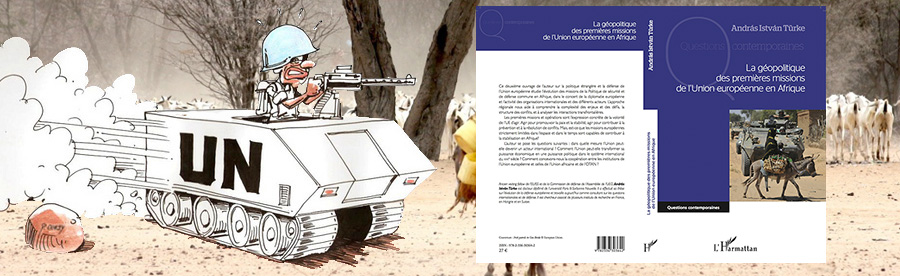
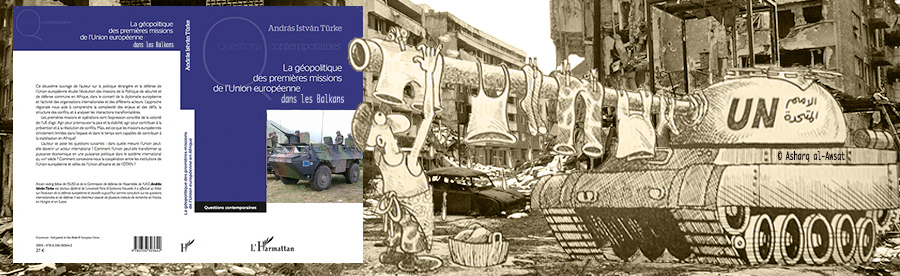
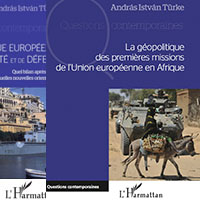
We are looking for sponsors for the English translation of these books, please contact turkeandras(at)gmail(dot)com