
You are here
Africa
2027 AFCON Qualifiers: Kurt Okraku calls for positivity and support ahead of Black Stars' opening games
Ghana Football Association (GFA) president Kurt Okraku has called for positivity and support for the Black Stars as they begin their 2027 Africa Cup of Nations (AFCON) qualifying campaign. Ghana, four-time African champions, face C ocirc;te d rsquo;Ivoire in their opening Group C fixture in Bouak eacute; on Thursday before hosting The Gam .
Categories: Africa
When African Smallholders Access Finance, They’ll Show You What’s Possible
Dr. Agnes Kalibata, speaking at the opening ceremony of the Africa Food Systems Forum in 2019. Credit: Wikimedia Commons
By Agnes Kalibata
NAIROBI, Kenya, Sep 24 2026 (IPS)
I was born in Rwanda, but my family soon became refugees in Uganda during the conflict and unrest on the cusp of independence. My father was a teacher and went to great lengths to make sure I was well educated. My parents were also smallholder farmers, and I saw firsthand the challenges my parents and other refugee families faced.
After I received my doctoral degree from the University of Massachusetts at Amherst, I returned to a new Rwanda in 2005, managing a World Bank agriculture project with the government. In 2008, I became Minister of Agriculture and Animal Resources, and over the next six years, I oversaw the country’s transition from food deficit to food security, as Rwanda cut its global hunger index by more than 50 percent. We implemented what we understood to be true: effective deliberate agricultural investment drives poverty down.
Agricultural growth is up to four times more effective at reducing poverty than growth in other sectors, and it underpins food security besides. Yet despite that evidence, Africa’s agriculture sector faces an estimated $200 billion annual financing gap.
Less than a year ago, I joined the Global Agriculture and Food Security Program (GAFSP) as Co-Chair of the Steering Committee because I have seen firsthand how GAFSP is a collaborative platform that connects governments, farmers, civil society and leverages the private sector and multiple partners to tackle food insecurity. Among its inaugural investments was a 60 million dollar investment in Rwanda’s Land Husbandry and terracing program which allowed farmers to reclaim degraded land by mobilizing more than 10 times this initial capital, reached hundreds of farmers and contributed to land restoration, food security and poverty reduction all at the same time.
GAFSP’s Business Investment Financing Track (BIFT) has made its second allocation (its first allocation was to the African Development Bank). Announced at the Africa Food Systems Forum “Investing in Africa’s Agri-Food Systems: Nourishing Nations, Growing Jobs, Building Resilience,” Rwanda’s BIFT allocation is a concrete step toward the GAFSP vision that sharing risk deliberately, and cooperatively, rather than leaving it with farmers alone, moves capital that reduces food insecurity. This $6 million allocation has already unlocked $15 million more from IFAD, the Bank of Kigali and Aceli Africa – 2.5 times GAFSP’s own contribution – reaching an expected 215 farmers’ organizations and 35,000 smallholders.
What is most encouraging about this funding is the paradigm shift it represents against the challenging context of reduced Overseas Development Assistance. Capital structured to absorb risk can shift lender considerations to bring private finance into a domain the private sector has avoided, catalyzing transformational change for smallholder borrowers.
The central obstacle isn’t capital or conviction – it’s risk. Agricultural lending is constrained by the risk of accelerating climate shocks and by the practical cost of financing smaller loans. Roughly 90 percent of staple food production in Sub-Saharan Africa depends on rain-fed agriculture, leaving households with no buffer when a season fails. Farmers in low-income countries bear the highest burden of worsening weather conditions, while African countries lose the most GDP to escalating natural disasters, from drought to surging storms. Finally, the loans these farmers need are relatively small, and small loans cost lenders more to appraise and administer.
As Rwanda’s Agriculture Minister, coordinating across ministries to run programs like the Land husbandry program mentioned above alongside the One Cow per Poor Family – a critical source of nutrition for poor families taught me that risk-sharing across government agencies, communities and financiers is what makes ambitious programs work.
It is now a question of scale. What worked for smallholders in Rwanda can work for millions more, if development finance institutions and private lenders treat risk-sharing as standard practice. I have spent my career watching farmers do more with less. Give them the finance they’ve earned, and there is no question they will transform the food system to be more efficient, resilient and a stronger driver of prosperity at scale.
IPS UN Bureau
Categories: Africa
2027 AFCON Qualifiers: It is not the fault of the players – Kurt Okraku defends Black Stars mass withdrawals
Ghana Football Association (GFA) president Kurt Okraku says no player has refused to represent the Black Stars since he took office, despite a number of withdrawals ahead of Ghana rsquo;s 2027 Africa Cup of Nations (AFCON) qualifiers.
Categories: Africa
Jerry Ahmed Shaib defends MPs' right to criticise state of Ghana football
Weija-Gbawe MP Jerry Ahmed Shaib has defended Parliamentarians rsquo; right to comment on the state of Ghanaian football, describing Ghana Football Association (GFA) president Kurt Okraku rsquo;s response to criticism from his colleague Nana Agyei Baffour Awuah as inappropriate.
Categories: Africa
2027 AFCON Qualifiers: Black Stars must win opening games against Ivory Coast and Gambia - Kofi Adams
Sports and Recreation Minister Kofi Iddie Adams says he remains confident the Black Stars can make a positive start to their 2027 Africa Cup of Nations qualifying campaign despite being without several key players.
Categories: Africa
2027 AFCON Qualifiers: GFA asks CAF for more tickets as Ghana fans miss out in Bouaké
The Ghana Football Association (GFA) has appealed to the Confederation of African Football (CAF) for additional tickets after hundreds of Ghanaian supporters who travelled to Bouak eacute; were left without access to Thursday 39;s 2027 Africa Cup of Nations qualifier against C ocirc;te d 39;Ivoire.
Categories: Africa
The Overlooked Fast Track for Cutting Planetary Warming
Credit: Matt Palmer / Unsplash
This guest post is authored by V. Ram Ramanathan, Durwood Zaelke, and Marcelo Suárez-Orozco and is informed by a presentation that Ramanathan is set to give at the Vatican on September 26.
By V. Ram Ramanathan, Durwood Zaelke and Marcelo Suárez-Orozco
NEW YORK, Sep 24 2026 (IPS)
Among the three of us, we have 15 decades of high-level experience in climate science, policies and actions, and we have never been more alarmed than we are at this moment. The United Nations has just officially declared that the world has failed in limiting global warming to a safe level. During the last decade, heat-trapping pollutants nearly doubled the rate that heat is being added to the planet—a rate that will push temperatures across the 1.5°Celsius threshold in five years or less and breach the first barrier of the Paris Agreement. This will further destabilize natural climate systems and amplify weather extremes, which are already costing the world economy more than $ 2 trillion annually. At the current rate of warming, the global temperature is likely to cross 2° Celsius in about 15 years, the outer limit of the Paris Agreement, taking us into a climate not witnessed by homo sapiens, ever.
High altitudes in the Tibetan-Himalayan region and the Alps are already warming at two to three times the global average (which may be implicated in the recent Nepal / Tibet floods that left 1400 confirmed dead and 5,000 missing). Other disastrous impacts of reaching 2°Celsius include the the transition of the Amazon from a forest into a savanna. The health impacts could be the worst of all. At 2°Celsius, heat deaths in 2050 could reach a staggering two billion in a worst-case analysis by actuarial experts at Exeter University.
If that weren’t bad enough, a new scientific study raises the possibility that the current rate of warming, if continued, could eventually shut down the ocean current called the Atlantic Meridional Overturning Circulation—AMOC. The Gulf Stream is a major part of this vital ocean current, which plays a dominant role in winter weather over north America and Europe. Worryingly, AMOC is already slowing down.
At today’s rate of warming AMOC could begin to collapse at warming as low as 2° Celsius, which could be crossed by the time today’s infants are in college. Impacts would be punishing, stranding heat in the already too hot tropics, while robbing northern countries of heat now transported north to keep temperatures temperate, leading to bitter winters. If AMOC collapses, currently a low-probability event, it could trigger massive forced internal and international displacements, ushering in the world’s largest crisis of forced migration ever.
Crossing 2°Celsius will trigger other irreversible impacts too, further amplifying warming through the loss of sea ice and glaciers. The depletion of ice and snow will make the planet darker, resulting in more absorption of incoming solar radiation, amplifying warming by 25% or more.
The good news is that we can avoid this fate if we cut the rate of warming quickly—by 50% within 15 years, which is feasible in two parts.
First, we need to cut the super-pollutants of climate. These include hydrofluorocarbons (HFCs), methane, lower-atmosphere ozone, and black carbon soot from diesel and cooking smoke. These short-lived climate pollutants are called super pollutants because they are tens to thousands of times more potent than carbon dioxide in heating the planet and are currently contributing more than half of the warming the planet has witnessed. However, and this is crucial–they dissipate from the atmosphere within two decades, whereas carbon dioxide, the best-known climate pollutant, takes multiple decades to a century to significantly decline.
Technologies exist to quickly and affordably reduce the super pollutants. In many cases we have the policies and laws as well. HFCs are being cut through the 2016 Kigali amendment to the successful Montreal Protocol—the treaty that has slowed warming by several decades while restoring the protective stratospheric ozone layer.
Methane pollution is getting more attention recently, including from Prime Minister Mia Mottley of Barbados, who is recommending a binding international agreement —inspired by the Montreal Protocol—to prevent the oil and gas industry from wasting natural gas, which is 90% methane. Other local solutions can reduce or even eliminate methane from landfills, starting by reducing food waste. There are many other such practical, off-the-shelf solutions.
The immediate task at hand is to thin the invisible heat trapping blanket. If we implement super pollutant solutions before 2030 and scale to full potential in less than10 years, the rate of warming can be reduced by 30% by 2040s. But we need to cut the rate of warming by half, i.e. 50%. The super pollutants should be our first target, because the technologies and policies are there and once we put them into action, the blanket-thinning will start immediately.
Second, as the recent IPCC report affirms, we need to focus on removing CO2. The human-made CO2 blanket up there weighs about 1,200 billion tons and we have to thin it by 5%, or 60 billion tons. Nature-based solutions are currently removing about 2 billion tons per year. Chemical/biological/technological solutions are actively pursued. Scaling to 4 billion tons per year would remove the needed tons in 15 years.
Together, these two measures would halve the rate of warming from today’s nearly 0.4° Celsius per decade to less than 0.2° Celsius per decade. We know of no other measures of thinning the heat-trapping blanket to provide the rapid cooling needed to allow us to survive and thrive. Even with rapid actions, climate disruption will continue for decades. We must make people and ecosystems resilient. Since we are all interconnected, we require global cooperation to make people and ecosystem climate resilient. Towards this global cooperation, we propose creating: One Million Climate Advocates to empower the public to support local and national actions; and One Million Climate Champions to connect civil society, governments, and industries to turn climate mitigation policies into actions at the local to the global level.
It’s time to move forward, always forward. Adelante, Siempre Adelante. Those were among the last words Pope Francis offered one of us (Suárez-Orozco). Not forward when the politics are perfect or opposition relents. Forward now, with the urgency of a species that has finally seen the iceberg but still has time to turn the tiller toward safety.
V. Ram Ramanathan is a distinguished research professor at the University of California at San Diego and the winner of the 2026 Crafoord Prize from the Royal Swedish Academy.
Durwood Zaelke is president of the Institute for Governance & Sustainable Development and adjunct professor at the University of California, Santa Barbara.
Marcelo Suárez-Orozco is chancellor of the University of Massachusetts Boston & the UCLA Wasserman Dean Emeritus.
IPS UN Bureau
Excerpt:
Guest contributors V. Ram Ramanathan, Durwood Zaelke, and Marcelo Suárez-Orozco write that we can cut the rate of warming by 30% to 50% within 15 years. “And we must.”
Categories: Africa
A New Arms Race is Threatening to Take-off—this time in Outer Space
Credit: United Nations
By Thalif Deen
UNITED NATIONS, Sep 24 2026 (IPS)
The world’s ongoing arms race is threatening to extend beyond planet earth—and spillover into outer space.
The US has deployed weapons in space and will use them to defend American forces, Air Force Secretary Troy Meink said last week, according to Cable News Network (CNN). His comments marked the first public acknowledgment of such capabilities, though he offered no details about the weapons or when they were put into orbit.
“Today we continue to ensure we remain ready to meet the challenges of evolving threats wherever they exist,” Meink told the Air, Space and Cyber Conference, an annual gathering hosted by the Air & Space Forces Association in National Harbor, Maryland.
The disclosure comes as the US faces an advancing space arms race with China and Russia, which are testing sophisticated offensive capabilities.
Specifically, American officials have said they are monitoring China’s development of a nuclear-capable partial-orbit hypersonic missile. US intelligence has also suggested Russia is developing a space-based nuclear weapon that could knock out satellites critical to weather forecasting, navigation, banking, shipping and emergency services — a claim Moscow denies, according to CNN.
The New York Times quoted Guo Jiakun, a spokesman for China’s Foreign Ministry as saying: ‘We urge the US side to stop expanding its military force and preparing for war in outer space”.
There have also been reports that “Russia could be planning to put a nuclear weapon in space, a threat that could disrupt satellite networks that are vital to everything – from communications to military operations.”
The multiple UN Conferences on the Exploration and Peaceful Uses of Outer Space (UNISPACE), have served as landmark global summits to shape international cooperation and policy for space exploration.
Convened at the Hofburg Palace in Vienna from 14 to 27 August 1968, UNISPACE 1 focused on the practical benefits of space technology and scientific exchange
Tariq Rauf, former Head of Verification and Security Policy, at the Vienna-based International Atomic Energy Agency (IAEA), told Inter Press Service (IPS) , while appreciating the transparency shown by the US, this disclosure is the most consequential open acknowledgement by any spacefaring State of weaponised on-orbit capability since the erosion of the informal post-Cold War taboo on space weapons.
The testing began with the 2007 Chinese ASAT test and the 2008 and 2021 Russian ASAT tests., the 2008 US and 2021 Russian ASAT tests, and India’s 2019 Mission Shakti ASAT test — building on earlier direct-ascent ASAT programs pursued by the United States and the Soviet Union from the 1960s through the 1980s.
The US deployment converts a long-suspected capability gap into a declared fact, and it will be read by other delegations as confirmation that at least one major power has moved decisively from space “control” doctrine to operational deployment, he said.
For the UN Committee on the Peaceful Uses of Outer Space (COPUOS) and the Ad Hoc Committee of the Conference on Disarmament on Prevention of an Arms Race in Outer Space (PAROS), the announcement raises four immediate questions:
(1) whether the deployment is compatible with the existing Outer Space Treaty regime; (2) what it means for the stalled draft Treaty on the Prevention of the Placement of Weapons in Outer Space, the Threat or Use of Force against Outer Space Objects (PPWT) and the EU Code of Conduct (EU International Code of Conduct for Outer Space Activities); (3) how the expert and policy community is interpreting the move; and (4) what practical steps the Committees can recommend to prevent a cascading arms race in space.
Rauf proposed five recommendations:
1. Convene an urgent joint briefing between COPUOS’s Scientific and Technical and Legal Subcommittees and the CD’s PAROS Ad Hoc Committee to develop a shared factual record of the announcement and its technical implications, avoiding duplicated or contradictory assessments across the two bodies.
2. Both PAROS Ad Hoc Committee and COPUOS should issue an urgent call for a moratorium on placing weapons in Space, urge the US to take down space weapons it has deployed and urge all spacefaring States to preserve Space as the common heritage of humankind and weapons-free.
3. Request, through the Conference on Disarmament Secretariat, that all spacefaring States with counterspace capability — not only the United States — provide voluntary technical briefings on the general character (though not classified specifics) of any on-orbit weapons systems, to reduce the information asymmetry currently driving worst-case assumptions.
4. Task the Legal Subcommittee with producing a technical working paper clarifying the scope of Article IV of the Outer Space Treaty as applied to conventional (non-WMD) on-orbit weapons, and the interaction of Articles III and IX with counterspace operations, to give delegations a common legal baseline rather than competing unilateral interpretations.
5. Encourage major space powers to reaffirm, at head-of-delegation level, existing voluntary moratoria on destructive kinetic ASAT testing, and invite additional States to associate themselves with such moratoria pending progress on a binding instrument.”
Jonathan Granoff, President Global Security Institute, told IPS placing offensive weapons in space is a very risky proposition.
The Outer Space Treaty has been instrumental in ensuring numerous benefits of outer space, including satellites and exploration. All major nations are parties including United States, Russia, China, India, Japan, and all member states of the European Space Agency. The Treaty in its first article establishes that space exploration and use shall only be for the benefit and in the interests of all countries and shall be the province of all mankind, ensuring free and non-discriminatory access for all states.
The deployment of weapons in space by the United States could easily be interpreted as violating that peaceful uses principle, he pointed out.
“However, there is an argument that putting weapons in space for defensive purposes only helps protect against abuses of the peace which is in the interest of all nations. This is not frivolous. The problem with that argument is that weapons used for defensive purposes can also be used offensively and the deployment of such weapons would indeed violate the the Treaty. Moreover, such a deployment by one nation will surely stimulate an arms race.”
There are several important questions, he said.
Should the entire world trust that the weapons the US places in space would only be used defensively to preserve the peace? If the US places weapons in space would this new interpretation of the Treaty stimulate other nations to do the same? Would it be wise to trust they would only use their weapons defensively?
Recall that President Reagan, addressing such questions, offered to share his Star Wars deployments of space based missile defenses with the Soviet Union. Would it be a good idea for the US to share space weapons technologies with other nations?
“The entire world benefits very much from the current military uses of outer space which allows the observation of the military activities of all nations thus helping stability. Such uses should affirmatively be protected and encouraged. Other uses that will lead to a new arms race should be prohibited. A protocol to the OST to prohibit offensive weapons in space as well as any anti-satellite weapons should be obtained”, declared Granoff..
IPS UN Bureau Report
Categories: Africa
Ethiopia and Tigray accuse each of launching offensives, fuelling fears of new war
The local authorities reportedly seize Tigray's airports following reports of recent drone strikes.
Categories: Africa
Spotlight on new coaches as road to Afcon 2027 begins
Patrick Vieira and Herve Renard are among the high-profile managerial arrivals as the qualification campaign for the 2027 Africa Cup of Nations gets under way.
Categories: Africa
Eleven killed in mass shooting at house in South Africa
One of those killed is believed to be a pregnant woman, police said.
Categories: Africa
Watch: Why is the UK reviewing its Chagos Islands deal?
The UK is reviewing its deal to hand over the Chagos Islands to Mauritius, the defence secretary has said.
Categories: Africa
UK to review Chagos Islands deal over lack of US support, Streeting tells BBC
Defence Secretary Wes Streeting has confirmed the review after Donald Trump told Andy Burnham the deal was "terrible".
Categories: Africa
South Sudan's president dissolves government ahead of country's first elections
South Sudan has not held elections since independence in 2011 - polls have twice been postponed.
Categories: Africa
Nigerian football enduring 'worst time in history' - Odegbami
Former Afcon winner Segun Odegbami has slammed those running Nigerian football after the country missed out on the men's and women's World Cups.
Categories: Africa
IRAQ: ‘Art Is the Only Weapon That Doesn’t Hurt or Kill’
By CIVICUS
Sep 23 2026 (IPS)
CIVICUS discusses public art, gender-based violence and censorship in Iraqi Kurdistan with Tara Abdullah, a multidisciplinary visual artist from Sulaymaniyah who is currently based in Oslo, Norway as part of the Safemuse – Safe Havens for Artists residency.
Tara Abdullah
In Iraqi Kurdistan, where conservative religious and social norms prevent open discussion of gender-based violence, femicide remains a persistent, under-reported crisis. Artists who take these issues into public space, instead of confining them to galleries or private institutions, risk backlash from religious authorities, legal action and the withdrawal of state permits and funding.How did you become an artivist?
I’m from Sulaymaniyah in the Kurdistan Region of Iraq, and I’ve been using art to express myself since I was a child. I fought hard to get into art school. After ninth grade, I joined the Institute of Art and studied there for five years, then studied for four more years at the College of Fine Arts at the University of Sulaymaniyah and graduated in 2020. All in all, I spent almost a decade studying art and learning new materials and methods I could bring into my work.
Since I graduated in 2020, I’ve used art in many different forms, and over the past six years I’ve tried to bring art and activism together, mainly around environmental conservation and women’s rights.
Doing art as a woman here isn’t easy. Dogmas around culture, religion and tradition mean most forms of art are considered haram, or forbidden. Even inside the art community, I’ve found a kind of disgust towards certain forms of art, with people saying some things are too provocative or politically wrong. But reading monthly data on femicide and violence against women has pushed me further to try to use elements of the culture and society I grew up in to try to break the red lines set for women.
What was the Feminine Project?
It was a project I started in 2020, in which I collected clothes from women who had faced violence. I went door to door across thousands of homes in the city and surrounding towns to interview the women and collect a piece of clothing along with their story. I stitched the pieces together and hung them along a five-kilometre stretch of the city’s main street, leading from the main court to the public park.
This was my idea of a peaceful protest. Women here can’t speak openly about the violence they face. If they did, they’d face immediate backlash. Their clothes themselves carry shame. When women hang their washing out, they cover their underwear so it isn’t seen by anyone. I wanted to show that not even women’s clothes have the freedom to be touched by the sun, let alone the women themselves.
I put up a public installation rather than a gallery, because I wanted the public exposed to it, not just the small art community that already agrees with these ideas. By the end of the first day, people started tearing the piece down and burning parts of it, and it triggered a huge backlash online and offline.
What project did you work on then?
After the Feminine Project, I had thousands of stories from the women I’d interviewed. So in late 2022 I started my Voice Project. I turned the stories into a two-minute speech carrying the weight of all of it: honour killing, suicide, violence. Women here are expected to keep a low voice and never give their opinion. Decisions are made for them by men. So I created a voice for them.
I played the message through 66 synchronised speakers across four cities and three surrounding towns in Sulaymaniyah province, all at the same time. I used megaphones deliberately. They’re symbolically loaded because they are used in mosques by mullahs for the call to prayer. In most countries, anyone can speak, but here it’s always a man’s voice, whether it’s calling people to prayer or selling groceries. I wanted to show women also had a voice.
This caused an even bigger backlash than the first project. People started shutting down the speakers, and the mullahs pushed to bring me to court, accusing me of an immoral act against our culture, religion and tradition. They accused me of promoting homosexuality, which genuinely surprised me, because the piece was straightforwardly about violence against women. When the judge called me in for a statement, he asked whether I was promoting ‘queer ideology’. I replied that my work promotes individual freedom. The case was eventually dismissed, but I had to get out of the country and stay away for a few weeks until things settled down.
I think the backlash comes from the visibility. The art community is tiny, and art typically stays inside galleries where very few people see it. But when you bring it out into the public space, it exposes feelings the public didn’t know were there.
How do you manage the risks that this work brings?
For the Feminine Project, building trust with the women was very difficult. I had to reassure them I wasn’t taking photos or recording their voices, and let them check this was true. Even then, some rejected the idea outright, saying things like, ‘So what are you going to do, are you superwoman? Things won’t change’, or accusing me of trying to destroy their families.
None of the clothes in the final installation were tied to a name, so the women’s safety was protected. That meant all the pressure landed on me. I come from a very traditional, religious family who never approved of me going into art. When I was preparing the Feminine Project, I told them I was doing charity work. When the truth came out, there was a huge conflict at home, including violence. But this didn’t make me back down. Instead, it made me more determined.
I know that by undertaking these projects I risk being taken to court, being denied permission to work or receiving online smears and threats. But if I don’t do this, who will? I’m proud of what I’ve done and I’ll keep doing it.
What support have you received?
There are always going to be people for and against, but honestly, most public reaction leans against this kind of work. But I’ve also received some encouragement. Following the Feminine and Voice projects, many women contacted me anonymously to tell me how much relief the work gave them, as someone was finally saying what they’d wanted to say themselves.
However, most of the support I receive comes from outside Iraq. After the Voice Project, I was blacklisted and I couldn’t get any funding or permission for public installations, so I started applying for international prizes instead.
In 2023 I was shortlisted for the Future Generation Art Prize in Ukraine, out of 12,000 applications, for an installation building a bridge between Kurdish women’s experience of violence and war and Ukrainian women living through the current conflict, and I won the special prize in 2024. I also received the Alpine Fellowship Visual Art Prize in 2023 and the Prince Claus Seed Award in 2025. Researchers have written papers about my work, and in 2025, I showed a rough-cut documentary about the Voice Project in Warsaw and an indoor installation about Kurdish women’s experience in Kraków, Poland. That international attention keeps me going, and I use the exposure and funding to keep building pressure back home.
How do you collaborate with others?
I work as an individual artist. I bring in craftspeople and freelancers to help make each piece, but most of them ask me not to use their names. They want the money, not the association. I always explain the risk honestly to people, and many back out.
When I can, I bring in local women to do the work and pay them. For the Feminine Project I had dozens of women doing the sewing. For my environmental work, I try to involve as many women and young people as possible. For a water festival in 2025, I made giant puppets out of reed and recycled biodegradable material alongside 20 people, running workshops over 10 days so they could learn to use art to deliver their own messages.
Collaboration carries risk. When I ran a seminar on art and peace, security forces raided it on the second day and took me in for questioning. But my message to anyone facing suppression or violence is not to be afraid. Talk about it; bring it out into the open. You don’t have to be accepted by a corrupted environment around you to accept yourself.
For me, art is a whole universe you can fit everything into: your ideas, your beautiful things and the problems around you. You can use art to try to fix things. It’s the only weapon that doesn’t hurt or kill.
CIVICUS interviews a wide range of civil society activists, experts and leaders to gather diverse perspectives on civil society action and current issues for publication on its CIVICUS Lens platform. The views expressed in interviews are the interviewees’ and do not necessarily reflect those of CIVICUS. Publication does not imply endorsement of interviewees or the organisations they represent.
GET IN TOUCH
Website
Instagram
SEE ALSO
Iraq: ‘The proposed amendments to the Personal Status Law are an attack on women’s rights’ CIVICUS Lens | Interview with Mohammed Juma 07.Dec.2024
Iraq: ‘Tolerance for abuses against LGBTQI+ people has now been made explicit through legislation’ CIVICUS Lens | Interview with Sarah Sanbar 26.Jun.2024
Iraq: ‘We’ve submitted many bills, but parliament refuses to adopt a law against GBV’ CIVICUS Lens | Interview with Alyaa Al Ansari 07.Mar.2022
Categories: Africa
Floods, Hunger and Disease Pile on Myanmar’s Civil War Misery
A street market in Yangon, Myanmar’s biggest city. Residents are anxious about high inflation and also fear recent floods will drive food prices higher. Credit: Ant/IPS
By Guy Dinmore, and a reporter in Yangon
YANGON, Myanmar, Sep 23 2026 (IPS)
Isolated and at constant war with itself, Myanmar’s humanitarian crisis is deepening as global challenges far exceed the capacity to respond of a military regime increasingly focused on its own survival.
The climate crisis, soaring commodity prices triggered by wars in Europe and the Middle East, plus worldwide cuts in donor aid are all hitting Myanmar hard. The regime’s inability to govern a fragmented and restive country with nearly four million internally displaced people has been exposed to the full since it seized power over five years ago.
Widespread floods caused by heavy monsoon rains since July have affected over 470,000 people, according to an assessment by the World Health Organization. Cases of malaria and dengue have been increasing, as well as outbreaks of cholera.
“Everyone is starving and cut off. Yes, everyone is facing food shortages,” said an activist calling himself Bruce, describing the situation in Shwebo township in the north-central Sagaing region, one of the main conflict zones and rice transshipment centres hit by floods.
Local and international aid organisations struggle to get help through conflict zones where the military is fighting a shifting array of ethnic armed organisations (EAOs) and local resistance groups while syphoning off what it can.
“Armed hostilities, movement restrictions and administrative requirements continue to block access, underscoring the need for safe, sustained and unhindered humanitarian reach to vulnerable communities,” the UN Office for Coordination of Humanitarian Affairs (OCHA) said in a July bulletin.
“Myanmar remains one of the world’s most severe humanitarian crises, with more than 16 million people in need as conflict, displacement, protection risks and access constraints intensify urgent needs nationwide,” OCHA said, noting that by end-March “humanitarian partners” had managed to reach 1.6 million people.
Floods have driven up food prices, already exacerbated by rising costs of fuel and fertilisers caused by Russia’s war on Ukraine and Iran’s blockade of the Strait of Hormuz following attacks by the US and Israel.
All sides exact a price in Myanmar, Bruce said, with cargo trucks moving north from the regime-controlled city of Mandalay to Shwebo having to pay fees at multiple military checkpoints and those run by other armed groups. Farmers in neighbouring Shan state growing rice and tomatoes are also facing “devastating losses” and being driven into deep poverty, he said.
Shwebo has experienced power blackouts of up to 20 consecutive days. As darkness falls, residents do not dare venture outside for fear of forced conscription by the regime, especially in rural areas. Households pay levies to avoid conscription, even those with only single women.
Some people are being forced into a second round of conscription as the military struggles to replenish its ranks, stretched across the country. Over 100,000 people have been conscripted, according to some estimates.
At night authorities inspect mobile phones. If they find online games, evidence of Starlink use or unauthorised communication devices then the individuals are immediately taken for military service.
Inflation and extortion reach deep into prisons too, said Bruce, a former political prisoner. Skin diseases like scabies are common, and the cost of a particular drug bought by relatives has soared more than eight times, while even traditional medicines like neem leaves have gone up fivefold.
Prison staff and those manning checkpoints even take their cuts of peanut snacks, driving up prices paid by prisoners.
The numbers displaced by conflict continue to rise. Fighting in the central Magway region in recent months has added over 200,000 more since May, according to some UN estimates. People fleeing conflict are moving to safer areas, but host communities have limited capacity to accommodate them.
U Than is a farmer in the Ayeyarwady delta and was struggling to make ends meet even before recent floods hit the major rice-growing region, destroying crops and jeopardising the next planting season. Fortunately his land has been spared destruction, but everyone is keeping a close eye on nearby levees.
“Farming has become a cycle of borrowing just to survive,” he said, complaining that the cost of fertiliser has risen five-fold and that fuel is increasingly expensive and difficult to obtain.
“We are working harder, borrowing more, and spending more, but the income from our harvest is no longer enough to cover the cost of farming or even our basic living expenses.” Families are forced to cut back their spending on health and education.
Yangon, Myanmar’s biggest city, feels somewhat insulated from the recent natural disasters and ongoing civil war. But inflation is hitting the pockets of its six million people, including city officials and their families, who squeeze more money from residents on trumped-up charges or bribes to avoid conscription.
“The junta stooges are resorting to all sorts of methods, legal or illegal, to recruit people while at the same time making money in the process,” one long-time resident told IPS.
“Life in Yangon is morphing into a new normal, with people feeling less safe about their lives as crimes are widespread. So many cases of theft and robberies go unreported or under-reported.”
A cholera outbreak in central Yangon in August, the second in two years, was blamed on poor hygiene among street vendors whose cheap food is even more attractive as inflation bites. The regime responded by shutting down their businesses in six city townships. Outbreaks have also been reported in Sittwe, one of the last regime strongholds in Rakhine State, as well as flood-affected areas.
Reports that CCTV artificial intelligence and facial scanning technology were deployed at a checkpoint in Mandalay city have raised fears that the regime is adopting widespread surveillance controls pioneered by China, its closest ally.
Min Aung Hlaing, leader of the 2021 coup, has proved resilient and uncompromising in directing a brutal retaliation against the popular resistance and was confident enough to swap his general’s uniform for a civilian suit as president after tightly orchestrated elections this year.
The Independent Investigative Mechanism for Myanmar, set up by the UN Human Rights Council, stated in its annual report that its findings “show a pattern of deliberate aerial attacks on civilians, arbitrary detentions, torture and sexual violence committed by the Myanmar military.”
The military escalated its aerial attacks and other crimes against civilians in the lead-up to the elections, and these have continued unabated, the IIMM said, listing the targeting of homes, schools, medical facilities, religious buildings and camps for internally displaced persons.
“This underscores the urgent need to hold those responsible to account,” it said. The IIMM is also investigating alleged atrocities involving armed groups opposed to the military.
For the moment, accountability seems a distant prospect, at best.
Since Min Aung Hlaing’s assumption of the presidency in April, the former general has been accepted on official visits to Belarus, Russia, Kazakhstan, India, China, Laos, Vietnam and Thailand. The Trump administration has not rolled out the red carpet but has eased sanctions against some of the regime elite and is engaging on matters of particular concern to the US, such as scam centres.
The regime’s growing de facto recognition abroad poses a further threat to the struggling efforts to exert its authority in liberated areas by the parallel National Unity Government (NUG). Established by lawmakers ousted in 2021 when Aung San Suu Kyi and other prominent leaders were jailed, the NUG managed to conclude agreements in March with several major ethnic armed organisations (EAOs) in an attempt to forge a unified political and military resistance.
Calling themselves the Steering Council for the Emergence of a Federal Democratic Union (SCEF), the alliance has stated its commitment to a negotiated political solution that would end military rule and exclude the generals from politics.
“To get there we’re pursuing all available avenues, including military means,” a senior resistance official told IPS.
However, there is scepticism that Min Aung Hlaing will deal with the new collective entity and will continue to insist on bilateral ceasefire talks with individual EAOs while refusing to recognise the NUG as an interlocutor. Several major armed groups dependant to varying degrees on neighbouring China have also kept the SCEF at arm’s length.
“Substantive negotiations between the Tatmadaw [the Myanmar military] and SCEF members are likely to prove challenging,” Morgan Michaels, a southeast Asia defence expert, wrote in a recent analysis for the International Institute of Strategic Studies.
“Meaningful progress in Myanmar – whether political, economic or humanitarian – would need to start with a broad conflict de-escalation, which at a minimum would require ceasefires between the Tatmadaw and the EAOs. Unfortunately, the path to de-escalation is likely to be long and fraught with dilemmas.”
IPS UN Bureau Report
Related Articles
Categories: Africa
What Isn’t Named Isn’t Protected and being Named Isn’t Enough
Indigenous Peoples, local communities, and Afro-descendant Peoples protest exclusion and lack of recognition at the UNCCD COP17 in Ulaanbaatar, Mongolia. Credit: Lucas Wasson for Rights and Resources Initiative
By Bayarsaikhan Namsrai, Gregoria Jimenez Amaya, Isabel Davila Pereira and Stephen Basele
ULAANBAATAR, Mongolia, Sep 23 2026 (IPS)
Rightsholders came to Ulaanbaatar from across the world, carrying declarations, demands and years of experience defending the lands on which their communities depend. Indigenous Peoples, local communities, Afro-descendant Peoples, women and youth were equally clear about what they needed from COP17. But being in the room is not the same as having power in the room.
In a year when the International Year of Rangelands and Pastoralists and the three Rio Conventions were supposed to create momentum for rights, recognition and implementation, the negotiations showed how quickly those gains can be diluted when the people concerned are not able to shape the language that governs their lands.
What happened in Ulaanbaatar should concern anyone advancing land restoration, climate resilience and biodiversity conservation. These cannot succeed while the rights of the people who govern these landscapes remain negotiable.
Ahead of COP17, the demands were clear: 2026 could not be a symbolic year. It had to be a year when secure and customary tenure for Indigenous Peoples, local communities, pastoralists, Afro-descendant Peoples, women and youth was translated into real protections and implementation across the Rio Conventions.
Pastoralists, Mobile Peoples, Indigenous Peoples, Afro-descendant Peoples and local communities are proven leaders in land stewardship, biodiversity conservation and climate resilience. Achieving global restoration goals requires recognizing their rights, knowledge and leadership.
Secure and flexible tenure and mobility rights were an urgent ask in the context of the IYRP. RRI’s legal analysis of seven countries found that only Nepal and Niger recognize pastoralists as distinct rightsholders and only Niger considers mobility as a fundamental right. Even where rights exist on paper, they routinely fail against agricultural encroachment, mining, conservation expansion and green energy projects. Tenure should not be secondary to these initiatives, but a pre-condition before any projects are attempted in community lands.
Communities requested land and customary governance rights as a formal and permanent agenda item following past land tenure decisions, with customary institutions recognized as implementing bodies rather than consulted stakeholders and Free, Prior and Informed Consent (FPIC) as a precondition for any Land Degradation Neutrality action.
Finance is not a technical question. It is a question of power. At a COP supposedly focused on implementation, it should have been a central matter that communities cannot implement priorities they did not define, using resources they do not control. Yet too much climate, biodiversity and land finance still travels through institutions far removed from the communities whose territories generate environmental benefits.
For communities, direct and flexible finance is about more than getting money to the last mile. It is about trusting organizations and customary institutions to decide what resilience, restoration and development mean in their own territories.
Rightsholders were ready to advance their distinct rights during COP17. The presence of pastoralists at COP17 was significant, but presence alone does not translate into influence. Pastoralists arrived organized, with a global declaration and clear demands, yet the experience of the negotiations showed that meaningful participation requires more than being present in the conference halls. It requires the knowledge, resources, relationships and sustained capacity to follow negotiating texts, understand procedures, build alliances and influence language as decisions are being shaped.
On Land and People Day, the Indigenous Peoples Caucus delivered the Sacred Lands Declaration directly to the UNCCD Executive Secretary, demanding recognition grounded in self-determination, a permanent seat on the Committee on Science and Technology, and a dedicated fund for Indigenous-led restoration.
The local communities caucus asked for institutional status equal to the Indigenous Peoples’, Gender and Youth Caucuses rather than as a facilitative mechanism sidelined when convenient, plus a self-determined representation model and sustained funding for its operation.
Afro-descendant Peoples asked for what the other two Rio Conventions have already conceded: to be named. Afro-descendant Peoples across Latin America and the Caribbean steward territories degraded or acutely at risk — drylands, deforested frontiers, dry forests, riverine and coastal lands. They asked the UNCCD to open an Afro-descendant desertification agenda for the first time.
Women’s demands cut across all of this. Parties have built agreed gender language across three COPs. The ask was that it hold and be implemented.
For youth, being called “the future” has become another way of postponing their participation in the present. Young rightsholders are already living the consequences of drought, shrinking mobility, changing economies and pressures on their territories. They are not waiting to inherit these challenges. What they need is more than a voice now, it is representation, resources and authority in the institutions making decisions about their future. Their minimum requests included recognition as drivers of present-day adaptation, a permanent space within UNCCD processes, culturally appropriate education, and direct financing for youth-led organizations.
How the Negotiations Went
Based on prior COP decisions, COP17 should have been the continuation of a road towards implementation. Instead, the days in Ulaanbaatar became much more focused on protecting past progress rather than operationalizing it.
The institutional failures began on day one. At the opening plenary on 17 August, only two State Parties objected to agenda items, yet no vote was held and instead the presidency provisionally adopted the agenda. Future Strategic Framework, synergies with other conventions, gender, and participation of civil society were all deferred pending consultation. The COP closed with no decision at all on civil society participation, the Riyadh mandate to bring the Indigenous Peoples’ Caucus and the Local Communities’ Caucus to full Terms of Reference under Decision 5/COP.16 was pushed to COP18, and Rio synergies were removed from all decisions. Gender never reached the negotiation floor; instead, a quiet Gender Caucus convened in Plenary as the agenda block was sustained.
Still, IYRP advocacy proved successful to some extent. Parties agreed to recognize the critical role of pastoralists as stewards of rangeland ecosystems, including the importance of transboundary mobility. However, compromise language was adopted, replacing “traditional knowledge” with “knowledge accumulated by pastoralists” in order to remove wording related to Indigenous Peoples and local communities.
This distinction matters. Pastoralist knowledge is not simply a body of information accumulated over time; it is embedded in living institutions, relationships, territories and systems of customary governance. When knowledge is separated from the peoples and institutions that hold and transmit it, it becomes a technical resource while the rights and authority of its holders remain unrecognized. Draft decisions on land tenure and sand and dust storms also advanced, but only by leaving the naming of rightsholders behind. The lack of language on Indigenous Peoples and local communities was one of the biggest gaps. Many negotiators backed Indigenous Peoples’ and local communities’ rights in plenary, but behind closed doors, agreed to language so general it protects no one in particular. Language proposed replacing references to Indigenous Peoples with “common places” or “common people.” In the land tenure text, “affected areas” was pushed toward “common areas,” a phrase with no grounding in any multilateral mechanism and no obligations attached.
This dilution of language is particularly consequential as pressure on rangelands grows from competing global agendas. Rangelands are increasingly being presented as spaces for carbon sequestration, renewable energy, conservation and large-scale restoration, often without adequately recognizing the pastoralists who already govern and steward these landscapes.
And this is where the politics of rangelands becomes unavoidable.
Rangelands are increasingly being seen as spaces for carbon, renewable energy, conservation and large-scale restoration. The danger is that landscapes already governed and stewarded by pastoralists begin to be treated as empty spaces available for solving someone else’s global environmental problem.
A green transition cannot become a new form of land dispossession.
If pastoralists are displaced in the name of renewable energy, excluded in the name of conservation, or turned into carbon credits in the name of climate action, then changing the colour of development does not change its underlying politics.
Climate, biodiversity and land restoration objectives must not be pursued by treating pastoralist territories as empty spaces or global environmental infrastructure while sidelining the people whose livelihoods, cultures and institutions are rooted in them.
The same principle applies to emerging carbon and other environmental markets. Pastoralist rangelands cannot be reduced to carbon sinks whose value is defined externally while the cumulative ecological, economic and cultural value of pastoralism remains invisible. Any financing or market mechanism operating in these territories must begin with secure tenure, meaningful participation, Free, Prior and Informed Consent (FPIC), and fair recognition of the rights and contributions of pastoralist communities.
Right through the final day, negotiators discussed whether to reference synergies among the Rio Conventions, and whether to include gender at all. These questions were either resolved by adopting ambiguous and broad language that betrays the protection from past COP decisions or by simply delaying any decisions to COP18.
Across every draft negotiating text currently available, rangelands, drought, sand and dust storms, land tenure, Afro-descendant Peoples do not appear at all. Not contested and diluted; simply absent. On the year of the three Rio Conventions, this demonstrates how UNCCD is lagging. CBD Decision 16/6 made the Convention on Biological Diversity the first Rio Convention to name them explicitly and at UNFCCC COP30 they appeared in core negotiating text. The bridge that could have carried that recognition into the UNCCD was the synergies item blocked on day one. These synergies are urgent to deal with the intersections across climate, land degradation and biodiversity conservation.
When it came to drought, the COP also fell short. Decision ICCD/COP(17)/L.15 runs to four operative paragraphs: continue discussions at COP18 with a view to adopting a decision on proactive drought management; make drought a stand-alone agenda item; ask the secretariat and Global Mechanism to keep supporting Parties; and report back. After deferring at COP16 and again here, the working group toward a binding instrument did not materialize; the next window is 2028. In the current text, Indigenous Peoples and local communities appear as people affected by drought and consulted, rather than as rightsholders.
COP17 presented an unprecedented situation in which a small number of Parties blocked key issues from meaningful consideration. There is no Land Degradation Neutrality without human rights, no resilience without gender equality, no sustainable land governance without Indigenous Peoples, Afro-descendant Peoples and local communities.
COP17 also taught us something uncomfortable about participation. It is possible to be visible everywhere at a COP and still have very little influence over what finally enters the negotiating text.
Influence requires preparation. It requires people who understand the Convention, know the procedures, follow the text, build relationships with negotiators, organize across constituencies and remain engaged long after the cameras leave. Pastoralist movements have strong knowledge of their lands and livelihoods. What they need now is equal investment in the political and technical capacity required to defend that knowledge and those rights in global decision-making spaces.
If pastoralists want to shape the next COP, they cannot only prepare declarations. They must prepare negotiators.
What Happens Next
The answer cannot be another declaration.
The remaining COPs of 2026 must turn recognition into implementation. That means three things: name the peoples whose rights are at stake; put resources directly into the hands of their organizations and institutions; and give them meaningful authority over the decisions affecting their territories.
At CBD COP17 and UNFCCC COP31, Indigenous Peoples, Afro-descendant Peoples and local communities must be recognized as rights-holders and implementing partners, not folded into generic “vulnerable groups” language. At UNCCD COP18, the gains made on pastoralists, tenure and customary governance must not be allowed to disappear into vague language.
But the responsibility does not rest with the conventions alone. Pastoralist movements must also build the capacity to influence these processes. The period between COPs must be used to coordinate positions, prepare negotiators, track decisions and negotiating texts, build alliances across the Rio Conventions and engage governments between sessions. Pastoralist organizations need investment not only to attend COPs, but to understand and shape what happens inside them.
COP18 must deliver the adoption of Terms of Reference for the Indigenous Peoples’ and Local Communities’ Caucuses, restore gender and synergies to the agenda, open an Afro-descendant desertification agenda, advance a drought decision with the communities who live its consequences first, and restore the full recognition of traditional knowledge.
Vague language does not merely fail to establish obligations. It blurs the content of rights and leaves earned recognition in a regression limbo.
Naming peoples is the beginning of recognition, not the end of it. Recognition must lead to rights, rights must be backed by institutions and finance, and those institutions must have the authority to shape the decisions that affect their territories.
The peoples who shepherd the vast majority of the world’s lands do not need another symbolic year. They need their names written into the decisions, and their voices, institutions and authority protected long after the COP is over.
Bayarsaikhan Namsrai (Steps Without Borders), Gregoria Jimenez Amaya (CITAFRO/ODECO), Isabel Davila Pereira (Rights and Resources Initiative), Stephen Basele (Pastoralist Goals Foundation)
IPS UN Bureau
Categories: Africa
How Ceuta, football and Israel are shaping Morocco's election
Young voters are being courted with football slogans, promises of jobs and anti-Israel rallying calls.
Categories: Africa
Top South African policeman charged with sexual offences
Shadrack Sibiya, who has made no comment, is alleged to have groomed a 16-year-old and raped an 18-year-old.
Categories: Africa
Pages


© 2012-2018 Europa Varietas Foundation © 2015-2018 Europa Varietas Association
www.europavarietas.org | info(@)europavarietas(dot)org | Switzerland
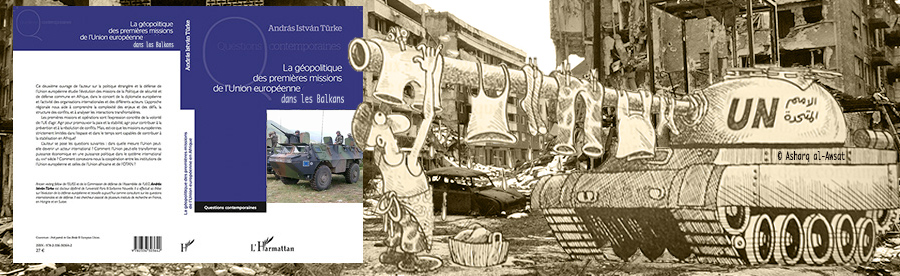
We are looking for sponsors for the English translation of these books, please contact turkeandras(at)gmail(dot)com