
You are here
Diplomacy & Defense Think Tank News
Le monde au-delà des États, une géopolitique des acteurs non étatiques
Les États souverains dominent nos représentations du monde. Pourtant, une part croissante des fonctions traditionnellement attachées à la souveraineté se déploie hors du seul cadre étatique. Multinationales, plateformes numériques, diasporas, organisations non gouvernementales (ONG), organisations sportives, groupes armés ou entités en quête de reconnaissance investissent des domaines que l’État leur concède, qui échappent à sa maîtrise ou dont le contrôle lui est disputé. Ces formes de pouvoir ne sont pas nouvelles, mais l’échelle de leurs moyens, leur transnationalité et leurs capacités à exercer des formes d’autorité modifient les rapports de force internationaux.
À l’occasion de la parution de la Revue internationale et stratégique (RIS) N°143 sur le thème « Le monde au-delà des États, une géopolitique des acteurs non étatiques », Lukas Aubin, directeur de recherche à l’IRIS, responsable du Programme Sport et géopolitique et de l’Observatoire géopolitique de l’espace post-soviétique, et Fatou Élise Ba, chercheuse à l’IRIS, responsable du Programme Sécurité humaine répondent à nos questions :
- Pourquoi est-il devenu indispensable d’analyser les rapports de force entre acteurs non étatiques et puissances étatiques ?
- Comment ces pouvoirs alternatifs parviennent-ils à la fois à avoir une capacité d’influence ou de contraindre un État, tout en restant dépendant structurellement de celui-ci ?
- Où se situe la frontière juridique et politique entre un État de facto et un État de jure ?
L’article Le monde au-delà des États, une géopolitique des acteurs non étatiques est apparu en premier sur IRIS.
Categories: Diplomacy & Defense Think Tank News
Contracts for Oct. 13, 2026
No description
Categories: Defence`s Feeds, Diplomacy & Defense Think Tank News
Arzneimittelpreise in Deutschland im Visier der USA
Am 18. Juni 2026 leitete der US-Handelsbeauftragte nach Section 301 des Trade Act von 1974 eine Untersuchung ein, die sich gegen die deutsche Arzneimittelpolitik richtet. Die Untersuchung könnte letztlich zur Verhängung von Zöllen gegen Deutschland führen. Erstmals nutzt die US-Regierung diese rechtlichen Befugnisse, um die Preisgestaltung für Arzneimittel in anderen Ländern in Frage zu stellen. Zwar fällt die Regulierung von Arzneimittelkosten in die nationale Zuständigkeit; Abwehrmaßnahmen gegen Zölle, die die USA erheben, fallen jedoch in die ausschließliche Zuständigkeit der EU und könnten den Einsatz ihres Anti-Zwang-Instruments rechtfertigen. Die Bundesregierung sollte gemeinsam mit der EU und anderen Mitgliedstaaten auf den Versuch, von außen in die nationale Arzneimittelpreisgestaltung einzugreifen, reagieren. Weitere Partnerschaften mit Drittländern könnten dazu beitragen, das transnationale Problem der Arzneimittelpreisgestaltung anzugehen.
Categories: Diplomacy & Defense Think Tank News
Artificial intelligence and inequality
This study examines the relationship between artificial intelligence and income and wealth inequality, combining theoretical analysis with empirical investigation. It focuses on skill demand, wage polarization, capital and market concentration, the digital divide and financial applications. The findings show that AI accelerates existing inequality when its adoption combines with unequal distributions of skills and economic power. This relationship depends on the institutional framework. Digital inclusion, social protection, skill development and economic policy interventions can help distribute the benefits of technological change more broadly and fairly.
Read here (in Greek) the Working paper by Manthos Delis, Professor; Audencia Business School; Sofia Anyfantaki, Senior Economist, European Central Bank; Maria Iosifidi, Associate Professor, Montpellier Business School and Nikolaos Mylonidis, Professor, University of Ioannina.
Categories: Diplomacy & Defense Think Tank News
Rente an Inflation zu koppeln hätte erhebliche Nachteile
Würden Renten künftig mit der Inflation statt mit den Löhnen steigen, fielen Rentenerhöhungen insgesamt deutlich niedriger aus – Rentner*innen mit niedrigen Einkommen und kürzerer Lebenserwartung könnten aber profitieren, wenn die Einstiegsrente deutlich erhöht und danach nur noch mit der Inflation ...
Categories: Diplomacy & Defense Think Tank News
J’ai lu… « Le triangle du pouvoir » de Alexander Stubb
À l’occasion de la parution de « Le Triangle du pouvoir » (éditions Tallandier), Pascal Boniface revient sur la vision géopolitique du président finlandais Alexander Stubb, qui distingue trois grands pôles de puissance : l’Occident, la Chine et le Sud global.
Il analyse en particulier les erreurs stratégiques des États-Unis, de la « guerre contre le terrorisme » aux échecs en Irak et en Afghanistan, ainsi que les conséquences de l’invasion russe de l’Ukraine. Selon lui, face à un Sud global qui conteste les incohérences occidentales, notamment à propos des sanctions contre la Russie et de la question israélienne, l’Occident doit repenser son approche s’il veut préserver son influence.
Pour Stubb, défendre un ordre international fondé sur des règles suppose de les appliquer avec cohérence, d’écouter le reste du monde et de montrer l’exemple plutôt que d’imposer ses valeurs.
C’est donc une réflexion lucide, portée par un dirigeant occidental conscient des limites de la puissance de son propre camp et du rôle déterminant que le Sud global sera appelé à jouer dans la définition du nouvel ordre mondial.
L’article J’ai lu… « Le triangle du pouvoir » de Alexander Stubb est apparu en premier sur IRIS.
Categories: Diplomacy & Defense Think Tank News
Nordkorea – Europas strategischer Blind Spot
Lange galt Nordkorea vor allem als regionales Sicherheitsproblem in Ostasien. Mittlerweile jedoch ist das Regime in Pjöngjang zu einem Akteur geworden, der überregionale Konflikte wie Russlands Krieg gegen die Ukraine aktiv beeinflusst und dessen aggressive Cyberaktivitäten sich unmittelbar auf Europas Sicherheit auswirken. Die europäische Nordkorea-Politik indes orientiert sich vielfach an strategischen Annahmen, die der veränderten Rolle des Landes nicht mehr gerecht werden. Europa muss daher die von Nordkorea ausgehenden Bedrohungen neu bewerten – und seine Antworten darauf entsprechend anpassen. Denn es könnte sich als Fehler mit hohen politischen Kosten erweisen, diese Gefahr zu ignorieren.
Categories: Diplomacy & Defense Think Tank News
Comment by Foreign Ministry Spokeswoman Maria Zakharova regarding the detainment of a Japanese journalist
No description
Categories: Defence`s Feeds, Diplomacy & Defense Think Tank News
Saudi National Arrested for Installing Surreptitious Audio Recording Device at OpenAI
An employee of OpenAI has been arrested for and charged with using or endeavoring to use an electronic, mechanical, or other device to intercept oral communications. Abdulrahman Alfozan, 35, a national of the Kingdom of Saudi Arabia, was arrested on Oct. 9, and made his initial appearance in federal court today.
Categories: Defence`s Feeds, Diplomacy & Defense Think Tank News
Foreign Ministry introduces AI service for processing classified information
Finland's Ministry for Foreign Affairs has introduced its AI Assistant UMAI to an initial group of pilot users. The service enables the use of artificial intelligence to process information at national security classification level IV in a secure environment. The Ministry for Foreign Affairs and the Government ICT Centre Valtori are acting as pilot organisations in the development of a common secure AI platform for central government.
Categories: Defence`s Feeds, Diplomacy & Defense Think Tank News
INDIAN NAVY SET TO COMMISSION INDIGENOUS MULTI PURPOSE WARSHIP SAMARTHAK
The Indian Navy is set to commission Samarthak at Naval Base, Karwar on 16 Oct 2026. Built by M/s Larsen and Toubro Ltd under the Government of India's Make in India initiative, Samarthak is the first of four Multi-Purpose Vessels being inducted into the Indian Navy.
Categories: Defence`s Feeds, Diplomacy & Defense Think Tank News
Raksha Mantri holds bilateral talks with 1st Deputy Prime Minister and Minister of Industry & Trade of Czech Republic
Raksha Mantri Shri Rajnath Singh held a bilateral meeting with 1st Deputy Prime Minister and Minister of Industry and Trade of Czech Republic Mr Karel Havlíček in New Delhi on October 13, 2026. During the interaction, both leaders reviewed the entire spectrum of defence industrial cooperation between the two countries. While the two sides welcomed the ongoing collaboration and successful establishment of various joint ventures, they agreed to further expand this cooperation, including under the aegis of India-Czech Joint Defence Committee to promote 'Make-in-India' and 'Aatmanirbhar Bharat'.
Categories: Defence`s Feeds, Diplomacy & Defense Think Tank News
Foreign Minister Wadephul prior to his departure for Warsaw
Foreign Minister Wadephul issued the following statement today (13 October 2026) prior to his departure for Warsaw:
Categories: Defence`s Feeds, Diplomacy & Defense Think Tank News
Justice Department Announces Coordinated Actions to Combat North Korean Remote IT Worker Schemes Affecting More than 70 U.S. Companies
Today the Department of Justice announced coordinated actions against the Democratic People's Republic of North Korea (DPRK) government's schemes to fund its regime through remote information technology (IT) work for U.S. companies. These actions include an indictment, two arrests, searches of multiple known or suspected "laptop farms" in Texas pursuant to "Operation Lonestar Roundup," and the seizure of approximately 187 computer devices used by DPRK IT workers.
Categories: Defence`s Feeds, Diplomacy & Defense Think Tank News
Foreign Ministry Spokesperson Mao Ning's Regular Press Conference on October 13, 2026
No description
Categories: Defence`s Feeds, Diplomacy & Defense Think Tank News
Midterms : Trump est-il en train de paniquer ? | Les mardis de l’IRIS
Chaque mardi, Pascal Boniface reçoit un membre de l’équipe de recherche de l’IRIS pour décrypter un fait d’actualité internationale. Aujourd’hui, échange avec Marie-Cécile Naves, directrice de recherche à l’IRIS, autour des élections de mi-mandat du 3 novembre aux États-Unis. Alors que Donald Trump et les républicains sont en baisse dans les sondages notamment à la suite de la guerre en Iran et ses conséquences sur le coût de la vie, les élections à la Chambre des représentants et au Sénat pourraient rebattre les cartes au Congrès.
L’article Midterms : Trump est-il en train de paniquer ? | Les mardis de l’IRIS est apparu en premier sur IRIS.
Categories: Diplomacy & Defense Think Tank News
The EU and the Internal Defence Market: What Are the National Perspectives?
À télécharger
Since the European Commission announced its intention to revive the project of an internal market for defence, Member States have been on alert. The issue is particularly sensitive. Using the EU budget to strengthen the European Defence Technological and Industrial Base (EDTIB) is one thing, regulating defence markets — and public procurement in particular — is quite another. Some countries are supportive, others remain sceptical, while others are still weighing up what position to take.
The idea of an internal market for defence does, after all, raise major issues. This is no longer simply a matter of supporting industry: it touches on the very exercise of national sovereignty, as governments decide which weapons and military equipment their security will ultimately depend on.
These questions have therefore been the subject of intense debate within the EU institutions for several months. In Brussels, even the terminology remains contested: a Defence Single Market? An Internal Market for Defence? A Defence Equipment Market?
But what is the view from European capitals? How are these issues perceived at national level? And what positions do the main Member States intend to defend in Brussels? To answer these questions, the ARES Group asked nine of its researchers, based in nine EU capitals, to examine the debate from their respective national perspectives. The picture that emerges is a nuanced one. National positions certainly diverge, but they are far from set in stone, and several areas of convergence are beginning to emerge. More importantly, some of these disagreements appear to stem from misunderstandings that could be clarified, potentially opening the way to compromise.
REMINDER: THE CHALLENGE FACING THE INTERNAL DEFENCE MARKET Analysing national perspectives DENMARK FRANCE GERMANY ITALY LITHUANIA POLAND SPAIN SWEDEN THE NETHERLANDS Conclusion CONCLUSION: DIVERGENCES ET CONVERGENCESL’article The EU and the Internal Defence Market: What Are the National Perspectives? est apparu en premier sur IRIS.
Categories: Diplomacy & Defense Think Tank News
Social cohesion and climate-driven planned relocation in urban settlements: evidence from Suva, Fiji
Planned relocation, the process of moving a community from one area of residence to a new one in response to an environmental risk or threat, is an important option for climate change adaptation. Given the acute climate and environmental risks facing them, small island developing states (SIDS) have taken a leading role in developing policies and processes for planned relocation in response to these risks. This policy brief will look at how planned relocation works as an adaptation strategy in informal urban settlements and will examine the role of social cohesion in planned relocation processes. Fiji has become a regional leader in planned relocation policy, with the Human Mobility in Climate Change Contexts (HMCCC) project serving as a magnifier of Fiji’s existing expertise in planned relocation. Since 2017, the Fijian government and civil society in cooperation with the German and New Zealand governments have developed planned relocation standard operating procedures (SOPs) for helping villages in high-risk areas navigate the physical, cultural, social and economic costs of relocating to higher ground or a safer location. These SOPs have become a “gold standard” for other countries to learn from and emulate in their own planned relocation policies.
The next step that the government is starting to undertake involves adapting the SOPs to informal urban settlements that are facing climate and environmental risks. Fiji’s informal urban settlements have faced a number of social, political and economic challenges over the years. These include serious issues with crime, land insecurity and historical political exclusion. Thus, along with the threats that come with climate change, particularly sea-level rise and flooding, any planned relocation policy for informal urban settlements has to simultaneously address trust in institutions, cooperation for the common good, and inclusive identity. The historical case of the Bainiose being relocated from central Suva to a suburb of Suva in the late 1990s offers guidance on how this can be done.
Key policy messages
- Planned relocation for communities in urban settings requires long-term planning for services such as new public transportation connections, schools, secure land tenure and health facilities.
- Measures should be taken to build institutional trust with urban communities, who may lack the traditional mechanisms of chiefly or customary representation that is present in rural settings.
- Community identity is often strong and can be a starting point for policy-makers and communities to identify sustainable options for relocation.
Dr Anawaite Matadradra is a Lecturer at the University of the South Pacific.
Dr Sevanaia Sakai is a Senior Lecturer at the University of the South Pacific.
Unaisi Raileqe is a Project Officer at the Pacific Centre for Peacebuilding.
Dr Timothy Fadgen is a Senior Lecturer at the University of Auckland.
Categories: Diplomacy & Defense Think Tank News
Social cohesion and climate-driven planned relocation in urban settlements: evidence from Suva, Fiji
Planned relocation, the process of moving a community from one area of residence to a new one in response to an environmental risk or threat, is an important option for climate change adaptation. Given the acute climate and environmental risks facing them, small island developing states (SIDS) have taken a leading role in developing policies and processes for planned relocation in response to these risks. This policy brief will look at how planned relocation works as an adaptation strategy in informal urban settlements and will examine the role of social cohesion in planned relocation processes. Fiji has become a regional leader in planned relocation policy, with the Human Mobility in Climate Change Contexts (HMCCC) project serving as a magnifier of Fiji’s existing expertise in planned relocation. Since 2017, the Fijian government and civil society in cooperation with the German and New Zealand governments have developed planned relocation standard operating procedures (SOPs) for helping villages in high-risk areas navigate the physical, cultural, social and economic costs of relocating to higher ground or a safer location. These SOPs have become a “gold standard” for other countries to learn from and emulate in their own planned relocation policies.
The next step that the government is starting to undertake involves adapting the SOPs to informal urban settlements that are facing climate and environmental risks. Fiji’s informal urban settlements have faced a number of social, political and economic challenges over the years. These include serious issues with crime, land insecurity and historical political exclusion. Thus, along with the threats that come with climate change, particularly sea-level rise and flooding, any planned relocation policy for informal urban settlements has to simultaneously address trust in institutions, cooperation for the common good, and inclusive identity. The historical case of the Bainiose being relocated from central Suva to a suburb of Suva in the late 1990s offers guidance on how this can be done.
Key policy messages
- Planned relocation for communities in urban settings requires long-term planning for services such as new public transportation connections, schools, secure land tenure and health facilities.
- Measures should be taken to build institutional trust with urban communities, who may lack the traditional mechanisms of chiefly or customary representation that is present in rural settings.
- Community identity is often strong and can be a starting point for policy-makers and communities to identify sustainable options for relocation.
Dr Anawaite Matadradra is a Lecturer at the University of the South Pacific.
Dr Sevanaia Sakai is a Senior Lecturer at the University of the South Pacific.
Unaisi Raileqe is a Project Officer at the Pacific Centre for Peacebuilding.
Dr Timothy Fadgen is a Senior Lecturer at the University of Auckland.
Categories: Diplomacy & Defense Think Tank News
Social cohesion and climate-driven planned relocation in urban settlements: evidence from Suva, Fiji
Planned relocation, the process of moving a community from one area of residence to a new one in response to an environmental risk or threat, is an important option for climate change adaptation. Given the acute climate and environmental risks facing them, small island developing states (SIDS) have taken a leading role in developing policies and processes for planned relocation in response to these risks. This policy brief will look at how planned relocation works as an adaptation strategy in informal urban settlements and will examine the role of social cohesion in planned relocation processes. Fiji has become a regional leader in planned relocation policy, with the Human Mobility in Climate Change Contexts (HMCCC) project serving as a magnifier of Fiji’s existing expertise in planned relocation. Since 2017, the Fijian government and civil society in cooperation with the German and New Zealand governments have developed planned relocation standard operating procedures (SOPs) for helping villages in high-risk areas navigate the physical, cultural, social and economic costs of relocating to higher ground or a safer location. These SOPs have become a “gold standard” for other countries to learn from and emulate in their own planned relocation policies.
The next step that the government is starting to undertake involves adapting the SOPs to informal urban settlements that are facing climate and environmental risks. Fiji’s informal urban settlements have faced a number of social, political and economic challenges over the years. These include serious issues with crime, land insecurity and historical political exclusion. Thus, along with the threats that come with climate change, particularly sea-level rise and flooding, any planned relocation policy for informal urban settlements has to simultaneously address trust in institutions, cooperation for the common good, and inclusive identity. The historical case of the Bainiose being relocated from central Suva to a suburb of Suva in the late 1990s offers guidance on how this can be done.
Key policy messages
- Planned relocation for communities in urban settings requires long-term planning for services such as new public transportation connections, schools, secure land tenure and health facilities.
- Measures should be taken to build institutional trust with urban communities, who may lack the traditional mechanisms of chiefly or customary representation that is present in rural settings.
- Community identity is often strong and can be a starting point for policy-makers and communities to identify sustainable options for relocation.
Dr Anawaite Matadradra is a Lecturer at the University of the South Pacific.
Dr Sevanaia Sakai is a Senior Lecturer at the University of the South Pacific.
Unaisi Raileqe is a Project Officer at the Pacific Centre for Peacebuilding.
Dr Timothy Fadgen is a Senior Lecturer at the University of Auckland.
Categories: Diplomacy & Defense Think Tank News
Pages


© 2012-2018 Europa Varietas Foundation © 2015-2018 Europa Varietas Association
www.europavarietas.org | info(@)europavarietas(dot)org | Switzerland
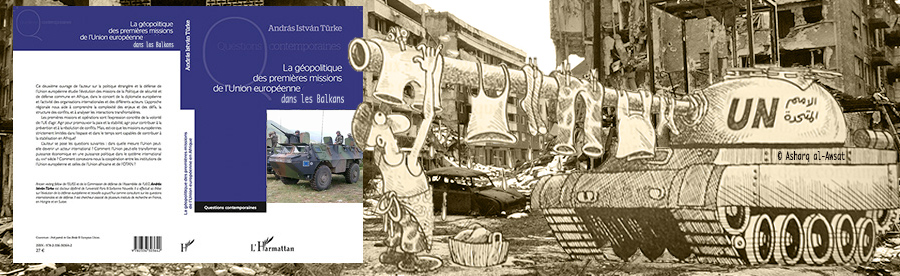
We are looking for sponsors for the English translation of these books, please contact turkeandras(at)gmail(dot)com