
You are here
Feed aggregator
Sweden and Denmark see no MFN hit to drug launches, concerns remain [Partner Content]
Nordic regulators see no MFN chill on drug launches so far, as Denmark’s task force weighs new pricing models to keep medicines flowing
Categories: European Union
En Ukraine, les restrictions américaines sur Starlink et les livraisons d'armes fragilisent Kiev
Les relations entre Washington et Kiev s'enveniment. Donald Trump a estimé lundi que la Russie « s'est bien comportée avec l'Ukraine et n'a pas fait grand-chose » alors que Moscou multiplie les frappes sur les infrastructures civiles et énergétiques ukrainiennes et qu'une frappe de drone dans la région de Kharkiv a fait six morts cette nuit. Sur le terrain, les restrictions américaines touchant Starlink et Starshield et les retards de livraison de missiles Patriot compliquent les opérations de l'armée ukrainienne.
Categories: Union européenne
The Proliferation of Illicit Drones in Southeast Asia
The past two years have seen the growing use of off-the-shelf commercial drones for criminal and militant activities.
Categories: Diplomacy & Crisis News
As El Niño Returns, East Africa’s Urban Poor Brace for Heavy Rains
Tanzania’s vice-president inspects a drainage channel in Dar es Salaam as authorities step up preparations for heavy El Niño rains expected during the October–December rainy season. Credit: Kizito Makoye/IPS
By Kizito Makoye
DAR ES SALAAM, Tanzania, Oct 20 2026 (IPS)
Nearly three decades have passed, but Japhet Gimbi still remembers the rain.
He was a Form 2 student in Tabora, western Tanzania, when the 1997 El Niño flooded the town. As the rain kept falling, fewer students made it to school. That was a super El Niño, one of the strongest on record. Since then there have been five other events including the 2014-2016 “super El Niño”.
“It just kept raining. Day after day, the rain wouldn’t stop,” Gimbi, who now lives in Dar es Salaam, recalled.
But his strongest memory is of food running short at home.
“We would only eat Ugali without vegetables,” he said.
At Kwihara village, Hatibu Halfan remembers the same season differently. He was a 27-year-old farmer when the rains initially seemed a blessing. His rice crop flourished.
Then the ground became waterlogged. Cassava and sweet potatoes rotted. Homes in low-lying areas flooded.
Twenty-nine years later, East Africa is again preparing for “super” El Niño. The World Meteorological Organization (WMO) expects it to intensify toward the end of 2026, with forecasts showing a nearly 100 percent chance of persisting through February 2027. But WMO cautions that a strong El Niño does not necessarily mean severe impacts in every country.
For East Africa, the concern is heavy rain. The October-to-December season is crucial across much of the region, with forecasts pointing to wetter-than-normal conditions that could bring floods, landslides, infrastructure damage, and disease outbreaks. In parts of Tanzania, Uganda, Rwanda, and Burundi, the season delivers up to 40 percent of annual rainfall.
The East African Community (EAC) Partner States are calling for more predictable, accessible and grant-based climate finance as they prepare to take a common regional position to the United Nations Climate Change Conference (COP31) in Antalya, Türkiye, next month.
They plan to call on developed countries to meet their public climate finance obligations, triple adaptation finance by 2035, improve direct access to climate finance, and provide greater support for adaptation and loss and damage, all without increasing the debt burden on vulnerable countries.
“The common COP31 messages further call for the full capitalisation of the Fund for Responding to Loss and Damage, direct access to its resources by national institutions and support for both economic and non-economic losses. The EAC is also calling for full funding of the Santiago Network, which provides technical assistance to countries vulnerable to loss and damage, as well as stronger cooperation on disaster risk reduction and early warning systems.
The common position calls on developed countries to meet their public climate finance obligations, triple adaptation finance by 2035, improve direct access to climate finance and provide greater support for adaptation and loss and damage without increasing the debt burden of vulnerable countries.
In Dar es Salaam and other fast-growing cities, however, the danger is not simply how much rain falls. It is where it falls—and who lives in its path.
In Southern Africa, the concern is drought, with its impacts on food security, the potential for wild fires, and water shortages. The country will use its participation at the COP31 to ask for increased adaptation finance.
Cities at Risk
“The main impacts we should expect from floods range from possible loss of lives and the number of people displaced, damaged houses, waterborne diseases, loss of employment, and disruption of livelihoods,” Romanus Opiyo, Policy and Engagement Lead for Sustainable Urbanisation at the Stockholm Environment Institute, told IPS.
In Dar es Salaam, neighbourhoods have expanded along rivers, valleys and low-lying land where housing is relatively affordable but drainage and other basic services often lag behind population growth.
Among the places Opiyo identifies as particularly exposed are Tandale, along the Sinza river system, and Jangwani, in the Msimbazi valley.
“The most vulnerable are the urban poor, especially those living near riparian areas such as those settlements in low elevations and near riparian areas,” he said.
Flooding does not affect all city residents equally. Low-income households living on daily earnings often have few savings, little or no insurance and limited options for moving somewhere safer.
A Dar es Salaam resident clears vegetation and debris from a drainage channel as communities prepare for heavy rains associated with El Niño. Credit: Kizito Makoye/IPS
When Drains Become Sewers
In crowded settlements, blocked drains sit alongside pit latrines, rubbish and open sewers. Floodwater can carry all three through homes and streets.
WMO’s regional outlook warns that excessive rainfall could increase water- and vector-borne disease while damaging roads and disrupting access to health and nutrition services.
Lessons From 1997
The 1997 El Niño brought torrential rain and widespread flooding across East Africa.
By February 1998, about 10 million people across the region needed emergency assistance, according to the UN Food and Agriculture Organization.
Tanzania suffered extensive damage to roads and railways. Communities were cut off, crops and food stocks were lost and relief efforts were hampered by damaged infrastructure.
The effects, however, varied from place to place. Rain replenished water supplies and improved pasture in some areas, and national food production rebounded in 1998. But hundreds of villages were isolated, and thousands of people were left homeless. FAO and the World Food Programme estimated that about 300,000 Tanzanians would still need targeted food aid.
Since 1997, East African cities have expanded rapidly into wetlands, river valleys and other flood-prone land. Riverbanks have been settled and open ground replaced by roads, buildings and concrete.
Opiyo says weak development control is worsening the risk.
“The major gap remains the allocation of adequate resources (finance, human, and infrastructure resources) to deal with the problem,” he said.
Tanzania Prepares
Tanzania has begun preparations for the October-to-December rains, with forecasters warning that a very strong El Niño could bring heavier rainfall to much of the northern coast, northeastern highlands, Lake Victoria basin and northern Kigoma.
The government has activated a National Emergency Plan and issued 13 directives, ordering authorities to identify high-risk areas, designate emergency shelters, clear drains, prepare rescue equipment and strengthen measures against disease and damage to infrastructure.
The government estimates that 730 billion Tanzanian shillings could be required to implement activities before, during and after a major El Niño emergency. The figure is an estimate of potential requirements, not money already set aside. The 2026/27 budget provides 10 billion shillings for activities under the plan across sectors.
Community flood mapping, identifying households that may need help evacuating, clearing drains and establishing safe routes can also reduce risks.
Beyond El Niño
Seasonal forecasts describe probabilities, not individual storms, and WMO stresses that even a very strong El Niño does not guarantee catastrophic impacts everywhere.
But the problem will outlast El Niño: each rainy season exposes many of the same neighbourhoods.
Rivers overflow and drains clog. Households move possessions onto beds, raise furniture on bricks and wait for the water to recede.
Opiyo says recurring flooding in informal settlements is also an urban-planning problem.
“The informal urban community’s vulnerability requires a collaborative approach in terms of data, creative and inclusive methodology and honest dialogue to address the recurring problem.”
Nature-based measures include protecting wetlands and river corridors, restoring vegetation and preserving areas where floodwater can spread without reaching homes.
But in cities where safe land is expensive, telling people not to live beside rivers does little for families who cannot afford to live anywhere else. Clearing a drain may reduce flooding this season; it does not resolve insecure housing, weak sanitation or the absence of affordable serviced land.
In 1997, Gimbi watched his classmates disappear from school as the rains continued and food ran short at home. Halfan watched his rice flourish before waterlogged fields began destroying other crops.
Twenty-nine years later, governments have better forecasts, satellite observations, flood maps and early-warning systems.
They can see the rain coming.
The question is whether the people living closest to the water will be safer when it arrives.
IPS UN Bureau Report
Related Articles
Categories: Africa
Minutes - Thursday, 1 October 2026 - PE796.327v01-00 - Committee on Foreign Affairs
Source : © European Union, 2026 - EP
Categories: Europäische Union
Minutes - Thursday, 1 October 2026 - PE796.327v01-00 - Committee on Foreign Affairs
Source : © European Union, 2026 - EP
Categories: Défense, European Union
Press release - EP TODAY
Categories: Union européenne
Press release - EP TODAY
Categories: Europäische Union
Press release - EP TODAY
Categories: European Union
Press release - EP TODAY
Categories: European Union
24 nouveaux conseillers techniques et chargés de mission installés
24 des 25 nouveaux conseillers techniques et chargés de mission récemment nommés par le président de l'Assemblée nationale, Joseph Djogbénou, ont été officiellement installés dans leurs fonctions, lundi 19 octobre 2026. La cérémonie s'est déroulée dans la salle polyvalente Antoine Idji Kolawolé, sous la présidence du directeur de cabinet du président, Abou Torou.
Les nouveaux conseillers techniques et chargés de mission du président de l'Assemblée officiellement installés. Ils ont pris fonction dans l'après-midi de ce lundi 19 octobre 2026, lors d'une cérémonie présidée par Abou Torou, directeur de cabinet du président de l'Assemblée nationale.
À cette occasion, les nouveaux promus ont exprimé leur gratitude au président de l'institution et pris l'engagement de servir avec loyauté, disponibilité et dévouement.
Abou Torou a souligné que leur nomination repose sur leurs compétences dans divers domaines utiles au fonctionnement du Parlement. Il les a invités à contribuer au rayonnement de l'institution parlementaire et au renforcement de sa proximité avec les populations. Il a également assuré que l'administration parlementaire les accompagnerait dans l'accomplissement de leurs missions.
Cette installation intervient dans un contexte marqué par d'importantes réformes au sein du Parlement béninois.
F. A. A.
Categories: Afrique
Nord-Kivu : recrudescence de la diarrhée cholériforme à Ufamandu, plusieurs dizaines de décès signalés
Une recrudescence des cas de diarrhée cholériforme est signalée depuis près de deux semaines dans le groupement d’Ufamandu, situé dans le secteur de Katoyi, au Nord-Kivu. Les autorités locales, la société civile et les sources sanitaires ont rapporté, lundi 19 octobre, que plusieurs personnes ont déjà succombé à cette maladie, tandis que plus d’une centaine d’autres sont touchées dans au moins quatre aires de santé.
Categories: Afrique
Le Potentiel : « En prenant la tête du FRN, Kabila brouille les cartes du dialogue national “inclusif” »
Categories: Afrique
Albanie: face aux protestations, le Premier ministre Edi Rama «veut rester au pouvoir»
Les affrontements entre les manifestants et les forces de l'ordre se sont poursuivis lundi 19 octobre à Tirana. Ce mardi, une immense manifestation est prévue dans les rues de la capitale albanaise. Depuis une semaine, Tirana est le théâtre de violents affrontements qui ont fait environ 300 blessés, dont près des deux tiers sont des policiers. Les protestataires dénoncent les mauvaises conditions d'études et la corruption et réclament la démission d'Edi Rama.
Categories: Union européenne
La rentrée scolaire enfin effective à Inongo après près de deux mois de grève
La rentrée scolaire est enfin devenue effective depuis lundi 19 octobre dans les écoles publiques de la ville et du territoire d’Inongo, dans la province du Maï-Ndombe. Les élèves ont repris le chemin de l’école près de deux mois après la date officielle de la rentrée, fixée au 1er septembre. Ce retard était dû à la grève des enseignants, qui réclamaient le paiement d’arriérés de salaires.
Categories: Afrique
Albanian PM warns of ‘red line’ as unrest drags on
Around 300 people have been injured in the clashes, more than half of them police, according to the authorities
Categories: European Union
The power behind Weber’s EPP throne
Also, in Tuesday’s edition: Commissioners warn about development budget cuts
Categories: European Union
Des manifestations des creuseurs artisanaux paralysent plusieurs quartiers de Kolwezi
Les activités socio-économiques ont été fortement perturbées lundi 19 octobre dans plusieurs quartiers de Kolwezi, à la suite d’un mouvement de protestation des creuseurs artisanaux contre une opération de contrôle menée dans les entités de traitement et les comptoirs d’achat des minerais.
Categories: Afrique
Pages


© 2012-2018 Europa Varietas Foundation © 2015-2018 Europa Varietas Association
www.europavarietas.org | info(@)europavarietas(dot)org | Switzerland

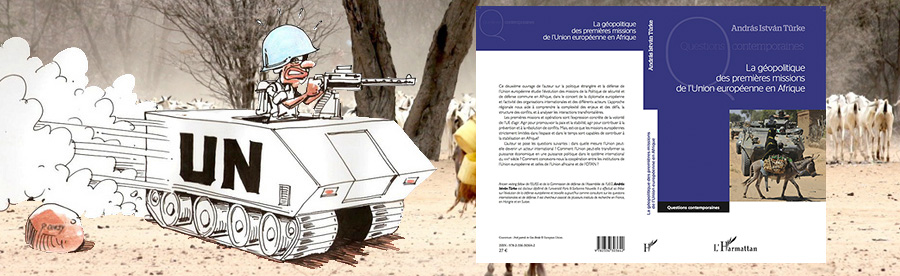
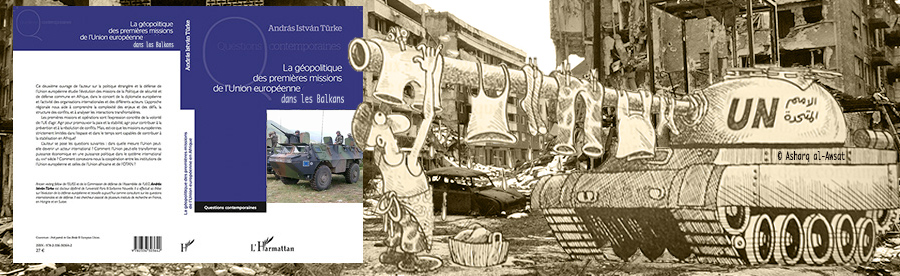
We are looking for sponsors for the English translation of these books, please contact turkeandras(at)gmail(dot)com