
You are here
Feed aggregator
Ces compagnonnages brisés par le pouvoir en Afrique
De nombreux duos ou alliances arrivés au pouvoir en Afrique ont fini par sombrer dans les conflits et les ruptures.
Ces compagnonnages brisés par le pouvoir en Afrique
De nombreux duos ou alliances arrivés au pouvoir en Afrique ont fini par sombrer dans les conflits et les ruptures.
Categories: Afrique
Press release - EU Talent Pool: deal on facilitating international recruitment in shortage occupations
A political agreement has been reached today to set up the EU Talent Pool, a digital platform to make it easier to recruit third-country nationals for work in the EU.
Committee on Civil Liberties, Justice and Home Affairs
Source : © European Union, 2025 - EP
Committee on Civil Liberties, Justice and Home Affairs
Source : © European Union, 2025 - EP
Categories: Európai Unió : hírek magyarul
Press release - EU Talent Pool: deal on facilitating international recruitment in shortage occupations
A political agreement has been reached today to set up the EU Talent Pool, a digital platform to make it easier to recruit third-country nationals for work in the EU.
Committee on Civil Liberties, Justice and Home Affairs
Source : © European Union, 2025 - EP
Committee on Civil Liberties, Justice and Home Affairs
Source : © European Union, 2025 - EP
Categories: European Union, Swiss News
Press release - EU Talent Pool: deal on facilitating international recruitment in shortage occupations
A political agreement has been reached today to set up the EU Talent Pool, a digital platform to make it easier to recruit third-country nationals for work in the EU.
Committee on Civil Liberties, Justice and Home Affairs
Source : © European Union, 2025 - EP
Committee on Civil Liberties, Justice and Home Affairs
Source : © European Union, 2025 - EP
Categories: European Union, Swiss News
Press release - EU Talent Pool: deal on facilitating international recruitment in shortage occupations
A political agreement has been reached today to set up the EU Talent Pool, a digital platform to make it easier to recruit third-country nationals for work in the EU.
Committee on Civil Liberties, Justice and Home Affairs
Source : © European Union, 2025 - EP
Committee on Civil Liberties, Justice and Home Affairs
Source : © European Union, 2025 - EP
Categories: Europäische Union, Swiss News
Eswatini confirms receiving $5.1m from the US for accepting deportees
The kingdom acknowledges for the first time it received cash as part of a deal with Trump's administration.
Matúš Šutaj Eštok, a Hlas vezérének és belügyminiszterének sajtótájékoztatója a 2022-2023-as időszakban uralkodó "totális cenzúráról"...
2025. 11. 18.
Categories: Afrique, Határon túli magyar portálok összesített hírei
Un réseau de faussaires démantelé, 20 plaques d'immatriculation saisies
Ce lundi 17 novembre 2025, le commissariat d'Aglogbè, localité située dans la commune d'Adjarra, département de l'Ouémé, a démantelé un réseau de faussaires. Des plaques d'immatriculation d'engins et d'autres objets ont été saisis.
Un réseau de faussaires démantelé à Adjarra. La Police, au terme d'une enquête a procédé à l'interpellation de deux suspects ce lundi 17 novembre 2025. La perquisition effectuée au domicile des mis en cause a permis la découverte d'un important matériel suspect, incluant notamment un ordinateur portable de marque HP, 22 plaques d'immatriculation d'engins, 30 cartes grises, des clés de motocyclettes, 19 cachets, 04 encreurs, des badges d'accès, des cartes de visite, un routeur, ainsi que divers documents et d'autres pièces à conviction.
Interrogés sur l'origine et l'usage de ces objets, les deux individus n'ont fourni aucune justification probante. Ils sont actuellement gardés à l'antenne Sud de la Brigade criminelle à Porto-Novo L'enquête se poursuit.
F. A. A.
Categories: Afrique
Le Bénin veut inscrire le Vodun sur la Liste représentative de l'UNESCO
Le processus d'inscription de « Vodun : rites, pratiques sociales et arts de vie » sur la Liste représentative du patrimoine culturel immatériel de l'humanité a franchi une nouvelle étape. Un atelier de renforcement de capacités s'est tenu, jeudi 13 novembre 2025, à Abomey, réunissant des cadres institutionnels, des universitaires et acteurs culturels engagés dans la sauvegarde et la valorisation du patrimoine national.
Organisée sous l'égide de l'Agence de sauvegarde de l'aire culturelle d'Adja-Tado, la session a permis aux participants d'examiner en profondeur les exigences de la Convention de 2003 et de s'approprier les rôles qui leur incombent dans la préparation du dossier d'inscription. L'assiduité et l'implication manifeste des représentants des institutions culturelles illustrent la volonté collective d'accompagner cette dynamique impulsée par le Gouvernement.
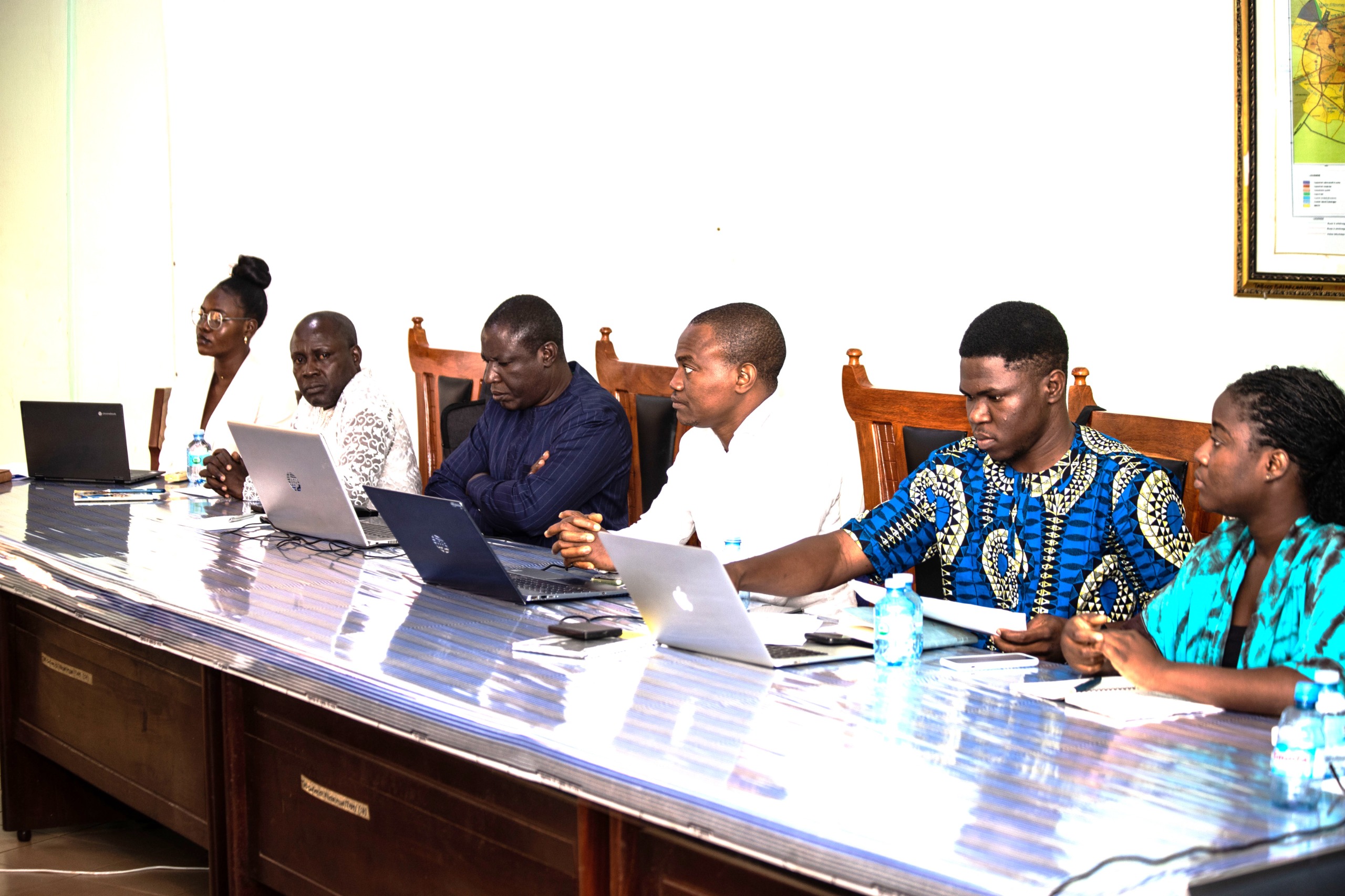
Ce projet porté par la vision du Président de la République et le leadership du Ministre en charge de la Culture, Babalola Jean-Michel ABIMBOLA, s'inscrit dans une stratégie plus large de valorisation et de rayonnement du patrimoine béninois à l'international.
Après les succès enregistrés avec Guèlèdè et Koutammakou, le Bénin entend désormais faire reconnaître le Vodun comme un ensemble vivant de pratiques, de croyances et d'expressions artistiques authentiques.
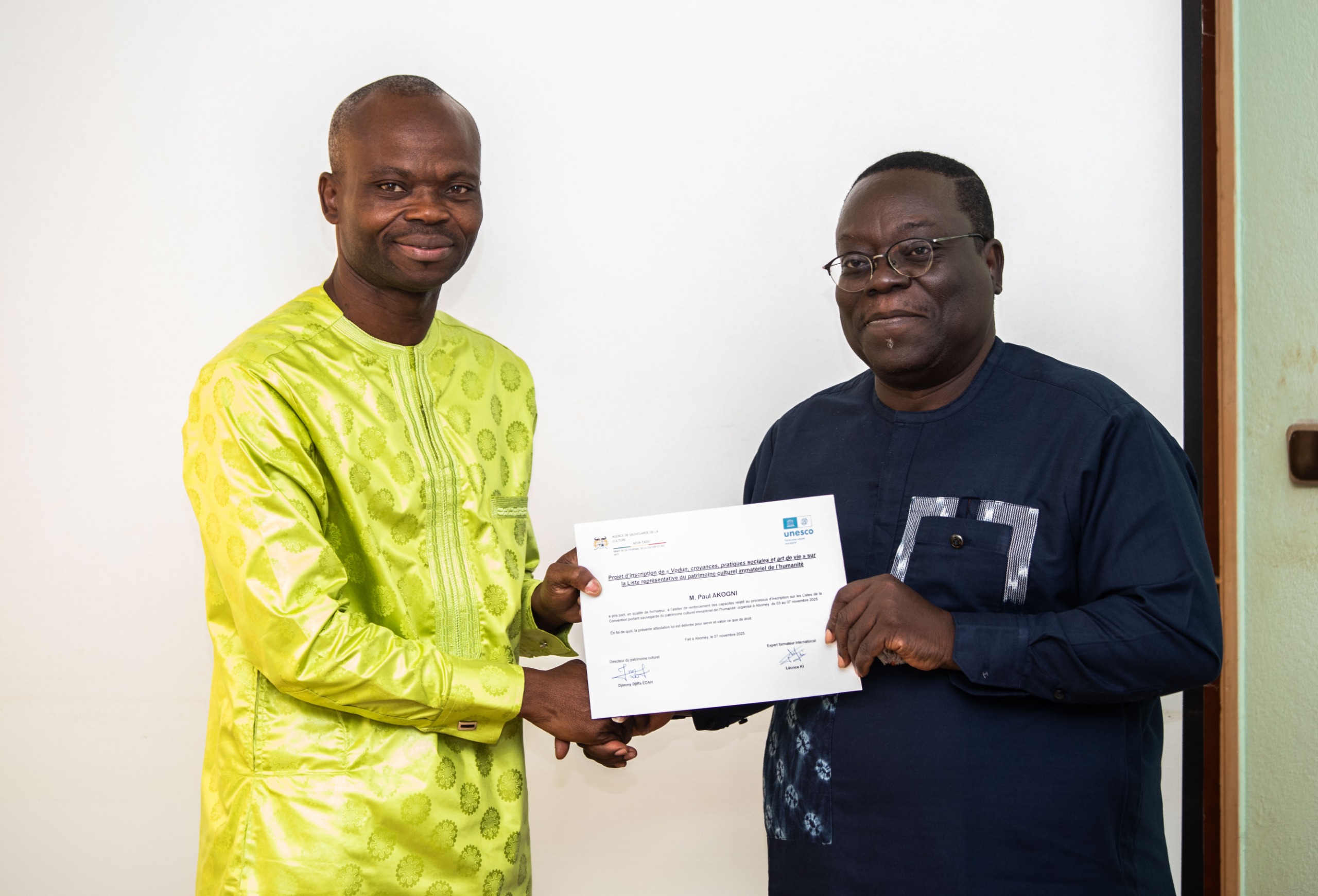
Le Conseiller technique à la Culture, Florent Raoul COUA-ZOTTI, représentant le ministre, le Directeur général de l'Agence de sauvegarde de la culture d'Adja-Tado, Dr Paul AKOGNI, ainsi que les experts dont les professeurs Dodji Amouzouvi et Bienvenu AKOHA et les cadres techniques venus des trois autres agences de sauvegarde, ont unanimement salué la pertinence de l'initiative. Tous ont réaffirmé leur engagement à œuvrer pour la réussite du dossier, convaincus de l'importance de cette reconnaissance internationale pour le Bénin et pour la mise en valeur de son héritage culturel.
Categories: Afrique
Inside Bundesrat: Ex-Bundeskanzler Walter Thurnherr plaudert aus dem Nähkästchen
An der exklusiven Lesung bei Ringier gewährte der Bundesbern-Kenner Walter Thurnherr (62) Einblicke in das politische Ökosystem des Landes – und übte im Zollstreit leise Kritik an den Medien.
Categories: Swiss News
Projekt Hospital at Home: Jetzt kommt das Spital zur Patientin nach Hause
Sonja Rindlisbacher wird mit akuter Lungenerkrankung in den eigenen vier Wänden behandelt. Ist das Zuhause das Spital der Zukunft? Eine Betrachtung aus verschiedenen Blickwinkeln.
Categories: Swiss News
Wo steigt die WM-Party?: Nati steht in Pristina vor spezieller Herausforderung
Wenn alles nach Plan geht, feiert die Nati am Dienstagabend die nächste WM-Quali. Partypläne hat die Schweiz noch nicht – und die Clubs in Pristina sind alle geschlossen.
Categories: Swiss News
Paquet sur la mobilité militaire : la Commission envisage un « Schengen de la défense »
La Commission européenne propose un cadre d’urgence qui permettrait pour une durée d’un an maximum de réduire les autorisations nationales et de permettre aux convois militaires de traverser le continent en cas de crise, selon une présentation de l’exécutif européen obtenue par Euractiv.
The post Paquet sur la mobilité militaire : la Commission envisage un « Schengen de la défense » appeared first on Euractiv FR.
Categories: Europäische Union, Union européenne
Lohnt sich der ganze Chrampf überhaupt?: So viel verdienen Schweizer Bäuerinnen und Bauern wirklich
Die Arbeitszeiten sind lang, die Einkommen schwanken: Schweizer Bauern haben einen harten Job. Neue Zahlen zeigen grosse Lohnunterschiede zwischen den Regionen und je nach Betrieb. Viele Landwirte sind auf Nebeneinkünfte angewiesen.
Categories: Swiss News
Future of trade in industrial products – Consequences of the EU-US Trade Deal
The EU-US trade deal introduced during President Trump’s administration marks a turning point for transatlantic economic relations, with direct consequences for Europe’s highly integrated industrial value chains. While the agreement promises greater predictability and tariff reduction in some sectors, lingering disputes over standards, subsidies, and state support continue to create uncertainty for European exporters. In […]
Categories: European Union
A főügyészség nem kommentálja Fico Kuciak-gyilkossággal kapcsolatos eszmefuttatásait
A főgyészség (nem nyilatkozik politikusok lezáratlan, bírósági szakaszban levő ügyhöz kapcsolódó kijelentéseiről – jelentette ki Zuzana Drobová, az ügyészség szóvivője. Ezzel Robert Fico pártvezér (Smer) és kormányfő felhívására reagált, hogy indítsanak új nyomozást a Kuciak-gyilkosság ügyében.
Categories: Afrique, Határon túli magyar portálok összesített hírei
530'000 Franken: Zürcher Reformierte unterstützen muslimische Organisationen
Die Zürcher Reformierten geben muslimischen Organisationen Geld. Das hat die Kirchensynode am Dienstag beschlossen. Anfang November entschieden sich bereits die Katholiken für die Zahlungen von 2026 bis 2031.
Categories: Swiss News
Nach monatelangen Preiseinbrüchen: Werden Swiss-Flüge in die USA jetzt wieder teurer?
Monatelang brachen die Einreisezahlen in die USA ein. Jetzt sieht Swiss-Chef Jens Fehlinger erstmals seit Trumps zweiter Amtszeit eine Trendwende bei USA-Reisen. Die Buchungszahlen steigen zum Jahresende wieder an. Das dürfte sich auch auf die Ticketpreise auswirken.
Categories: Swiss News
Faith Leaders Endorse Fossil Fuel Non-Proliferation Treaty at COP30
Kumi Naidoo with Brazilian First Lady Janja Lula da Silva and Brazilian Cultural Minister Margareth Menezes and others at a panel called “Narratives and Storytelling to Face the Climate Crisis” during the 30th Conference of the Parties (COP30). Credit: Aline Massuda/COP30
By Joyce Chimbi
BELÉM, Brazil, Nov 18 2025 (IPS)
Decades ago, a little girl was born in a place called Cleveland, Ohio, in the heart of the United States of America. Born to a woman from the deep South, the place of Martin Luther King, her mother left her ancestral lands for the economic opportunities in the north.
“Off she went, making it all the way to the east side of Cleveland,” says Rev. Dr. Angelique Walker-Smith. “To the place where most people who look like me lived, and still live, and are subjected to policies of injustice, race and gender.”
Here, she found a more pressing issue.
“I couldn’t breathe, my mother couldn’t breathe, and we all couldn’t breathe,” she narrates.
This urbanization, driven by fossil fuels, occurred in Cleveland, Ohio, where her mother relocated and where her relatives still live today. During the Great Migration, over six million people of African descent traveled from the South, believing that economic opportunities would be better in the North.
Rev. Dr Angelique Walker-Smith, regional president of the World Council of Churches, speaks at an event titled ‘Faith for Fossil Free Future.’ Credit: IPS
“Upon our arrival, we discovered that we just couldn’t breathe.”
As one of eight regional presidents representing the World Council of Churches, Walker-Smith says for the World Council of Churches in over 105 countries, over 350 million adherents, and over 350 national churches all over the world, supporting the Fossil Fuel Non-Proliferation Treaty “is all about the issue of injustice, life and life more abundantly.”
“We are saying yes to the transition from fossil fuels to renewable life-giving energy.”
Kumi Naidoo, a prominent South African human rights and environmental justice activist and the President of the Fossil Fuel Non-Proliferation Treaty, says if the goal is renewable life-giving energy, the world has been going the wrong way for the past 30 years.
“If you come home from work and see water coming from the bathroom, you pick up the mop. But then you realized you left the tap running and the sink stopper on. What will you do first? Of course! You’ll turn off the water and pull the stopper. You will not start mopping the floor first.”
“For 30 years since the time science told us we need to change our energy system and many of our other systems, what we’ve been doing is mopping up the floor. If fossil fuels—oil, coal, and gas—account for 86 percent of what drives climate change, then we must turn off the tap.”
Masahiro Yokoyama was speaking at an event titled Faith for a Fossil-Free Future co-sponsored by Soka Gakkai International. Credit: Joyce Chimbi/IPS
Naidoo was speaking at an event titled ‘Faith for Fossil Free Future’ co-sponsored by several organizations, including Soka Gakkai International (SGI), Laudato Si’ Movement, GreenFaith—a global interfaith environmental coalition and EcoJudaism, a Jewish charity leading the UK Jewish Community’s response to the climate and nature crisis.
He spoke about the contradiction of the climate talks at the doorsteps of the Amazon, while licensing for drilling is still ongoing in the Amazon even as the people in the Amazon protest, calling for a fossil-free Amazon.
Continuing with the thread of contradictions, Naidoo said, “Some of you might be shocked that even though fossil fuels are 86 percent of the cause of climate change, it took 28 years before the words ‘fossil fuels’ could even be mentioned in the COP document. It is as absurd as Alcoholics Anonymous holding 28 years of conferences before they get the backbone to mention alcohol in an outcome document. If we continue on this path, we'll warm up the planet to the point where we destroy our soil and water, and it becomes so hot we can't plant food. The end result is that we'll be gone. The planet will still be here. And the good news is, once we become extinct as a species, the forests will grow back, and the oceans will recover.
“And actually, staying with that analogy, can you imagine how absurd it is that the largest delegation to this COP this year, last year, and every year is not even the host country?
“It’s not even Brazil—for every 25 delegates that are attending the COP, one of them is from the fossil fuel industry. That’s the equivalent of Alcoholics Anonymous having the largest delegation to its conference annually from the alcohol industry.”
People, groups and movements of different faiths and consciousness are increasingly raising their voices in robust support of a rapid fossil fuel phase-out, a massive and equitable upsurge in renewable energy, and the resources to make it happen—in the form of a Fossil Fuel Non-Proliferation Treaty.
Naidoo says the treaty is “a critical success ingredient for us not (only) to save the planet, but to secure our children and their children’s future, reminding ourselves that the planet does not need any saving.
“If we continue on this path, we warm up the planet to the point where we destroy our soil and water, and it becomes so hot we can’t plant food. The end result is that we’ll be gone. The planet will still be here. And the good news is, once we become extinct as a species, the forests will grow back, and the oceans will recover.”
This treaty is a proposed global agreement to halt the expansion of new fossil fuel exploration and production and to phase out existing sources like coal, oil, and gas in a just and equitable manner.
The initiative seeks to provide a legal framework to complement the Paris Agreement by directly addressing the supply side of fossil fuels.
Its ultimate goal is to support a global transition to renewable energy and is supported by a growing coalition of countries, cities, organizations, scientists, and activists. More importantly, it has multi-faith support.
Masahiro Yokoyama of the SGI, which is a diverse global community of individuals in 192 countries and territories who practice Nichiren Buddhism, spoke about the intersection between faith and energy transition and why the fossil fuel phase-out cannot wait.
“The just transition is also about how young people in faith can be the driving force to transformations.”
“So, a fossil fuel non-proliferation treaty, in my view, is not only about phasing out other fossil fuels but it also represents an ethical framework.”
“It’s a way to move forward while protecting people’s livelihoods and dignity within the context of the environment and also the local business and economies. So, a just transition is not merely a technical issue but a question of ethics, inclusion and solidarity,” Masahiro Yokoyama said.
The most pressing issue at hand is how to implement the treaty in the current environmental context.
“The pathway that we are following is a pathway that has been followed before. We are not going to negotiate this treaty within the COP or within the United Nations system. We’re going to do what the Landmine Treaty did.
“The landmine treaty was negotiated by 44 countries outside of the UN system and then brought to the UN General Assembly for ratification. The second question that people ask, justifiably, is, what about the powerful exporting countries, for example?” Naidoo asked.
“They’re not going to sign it. And to that we find answers in the landmine treaty. Up to today, the United States, Russia and China have not signed the Landmine treaty. But once the treaty was signed, the social license to continue as business as usual was taken away. And you saw a drastic change.”
Note: This article is brought to you by IPS Noram in collaboration with INPS Japan and Soka Gakkai International in consultative status with ECOSOC.
IPS UN Bureau Report
Follow @IPSNewsUNBureau
!function(d,s,id){var js,fjs=d.getElementsByTagName(s)[0],p=/^http:/.test(d.location)?'http':'https';if(!d.getElementById(id)){js=d.createElement(s);js.id=id;js.src=p+'://platform.twitter.com/widgets.js';fjs.parentNode.insertBefore(js,fjs);}}(document, 'script', 'twitter-wjs');
Excerpt:
Some of you might be shocked that even though fossil fuels are 86 percent of the cause of climate change, it took 28 years before the words 'fossil fuels' could even be mentioned in the COP document. It is as absurd as Alcoholics Anonymous holding 28 years of conferences before they get the backbone to mention alcohol in an outcome document. —Kumi Naidoo, President of the Fossil Fuel Non-Proliferation Treaty
Pages
the old site is here



© 2012-2015 Europa Varietas Foundation © 2015-2020 Europa Varietas Association
www.europavarietas.org | info(@)europavarietas(dot)org | Switzerland
This is a GDPR ready site




We are looking for sponsors for the English translation of these books, please contact turkeandras(at)gmail(dot)com