
You are here
Feed aggregator
Wie einst seine Eltern: So gleist Roger Federer die Tennis-Karriere seines Sohns auf
Federer folgt bei der sportlichen Ausbildung seiner Kinder dem Beispiel seiner Eltern und bleibt im Hintergrund. Seit einem Jahr zeigt Sohn Leo verstärktes Interesse am Tennis.
Categories: Afrique, Swiss News
50 Metastasen in der Lunge – Dana Diekmeier gibt Update: So steht es um die krebskranke Delani Diekmeier (14)
Seit einem dreiviertel Jahr kämpft die Tochter von Ex-HSV-Spieler Dennis Diekmeier gegen einen bösartigen Tumor. Chemotherapien schlugen bisher nicht an, die Familie hofft auf ein Wunder. Nun gab Dana Diekmeier ein Update zum Gesundheitszustand ihrer Tochter.
Categories: Afrique, Swiss News
Kuriose Situation in Luzern: Auto bleibt auf Treppe stecken
Ein 74-jähriger Autofahrer fuhr am Montagmorgen versehentlich eine Treppe am Luzerner Kantonsspital hinunter. Verletzt wurde niemand, doch der Sachschaden beläuft sich auf mehrere hundert Franken. Das Auto musste mit einem Kran geborgen werden.
Categories: Afrique, Swiss News
«Das ist schon fast Arbeitsverweigerung»: Meillard-Aus in Gurgl macht Skilegende sprachlos
Mélanie Meillard scheidet beim Slalom in Gurgl im ersten Lauf aus. ARD-Experte Felix Neureuther ist erstaunt darüber und meint, dass es «schon fast Arbeitsverweigerung» sei.
Categories: Afrique, Swiss News
Draft agenda - Thursday, 27 November 2025 - PE779.624v01-00 - Committee on Security and Defence
Source : © European Union, 2025 - EP
Categories: Europäische Union, Swiss News
Press release - Press conference: rapporteurs to brief media on the EU budget 2026 on Tuesday
MEPs Andrzej Halicki and Matjaž Nemec will hold a press conference on Tuesday at 15:00, ahead of the plenary vote on the recent agreement on the EU budget for next year.
Committee on Budgets
Source : © European Union, 2025 - EP
Committee on Budgets
Source : © European Union, 2025 - EP
Categories: European Union, Swiss News
Press release - Press conference: rapporteurs to brief media on the EU budget 2026 on Tuesday
MEPs Andrzej Halicki and Matjaž Nemec will hold a press conference on Tuesday at 15:00, ahead of the plenary vote on the recent agreement on the EU budget for next year.
Committee on Budgets
Source : © European Union, 2025 - EP
Committee on Budgets
Source : © European Union, 2025 - EP
Categories: European Union
Press release - Press conference: rapporteurs to brief media on the EU budget 2026 on Tuesday
MEPs Andrzej Halicki and Matjaž Nemec will hold a press conference on Tuesday at 15:00, ahead of the plenary vote on the recent agreement on the EU budget for next year.
Committee on Budgets
Source : © European Union, 2025 - EP
Committee on Budgets
Source : © European Union, 2025 - EP
Categories: Afrique, Europäische Union
Press release - Press conference: rapporteurs to brief media on the EU budget 2026 on Tuesday
MEPs Andrzej Halicki and Matjaž Nemec will hold a press conference on Tuesday at 15:00, ahead of the plenary vote on the recent agreement on the EU budget for next year.
Committee on Budgets
Source : © European Union, 2025 - EP
Committee on Budgets
Source : © European Union, 2025 - EP
Categories: Afrique, Európai Unió : hírek magyarul
Echo auf die Sparmassnahmen: «Wer 900 Stellen abbaut, hatte vorher zu viel!»
Die SRG steht vor grossen Herausforderungen: Massive Einsparungen und Stellenabbau sorgen für Debatten. Die Leserschaft fordert eine Neuausrichtung des Service Public.
Categories: Afrique, Swiss News
‘Overloaded’ EU officials demand fewer working hours
Commission staff complain of 'extreme' workload, as 32,000-strong institution braces for review
Categories: Afrique, European Union
Überhöhte Geschwindigkeit: Türke (26) kracht mit BMW gegen Baum
Am Samstagabend kam es in Winterthur zu einem Selbstunfall, bei dem ein BMW gegen einen Baum prallte. Der unverletzte Lenker wurde festgenommen und das Auto sichergestellt.
Categories: Afrique, Swiss News
Frauen-Team verliert an EM: Schweizer Curler bezwingen Tschechien im Zusatzend
Das Schweizer Männer-Team erringt an der EM in Lohja im Süden Finnlands mit dem 10:9 nach Zusatzend gegen Tschechien den dritten Sieg im vierten Spiel. Die Frauen-Equipe muss ihre zweite Niederlage hinnehmen.
Categories: Határon túli magyar portálok összesített hírei, Swiss News
Tetra Pak ouvre de nouvelles opportunités pour développer la production laitière
L’industrie laitière et des boissons connaît une période charnière. Face aux défis de la sécurité alimentaire, de l’optimisation opérationnelle et de l’innovation produit, les producteurs […]
L’article Tetra Pak ouvre de nouvelles opportunités pour développer la production laitière est apparu en premier sur .
Categories: Afrique
Klo-Kulturkampf im Klassenzimmer: Unisex-WCs spalten Schweizer Gemeinden
In mehreren Schulen in der Schweiz führen Unisex-WCs zu hitzigen Debatten. Während manche Eltern Angst um die Privatsphäre ihrer Kinder haben, funktionieren die gemeinsamen Toiletten anderswo problemlos.
Categories: Határon túli magyar portálok összesített hírei, Swiss News
Making scents of the Chemicals Omnibus
Europe’s Chemicals Omnibus is an opportunity to address persistent challenges for the fragrance value chain. The Commission has offered clear, science-based fixes – the Council has not. We urge the European Parliament to secure practical simplification based on scientific, technical, economic and logistical feasibility, supported by fair timelines and clear rules, to preserve the safety and effectiveness of Europeans’ favourite products.
Categories: Afrique, European Union
Regional fisheries management organisations: Implementation of measures into Union law [EU Legislation in Progress]
Written by Anne Altmayer.
CONTEXTThe purpose of the proposed regulation is to implement into EU law a number of measures adopted by several regional fisheries management organisations (RFMOs) by amending the respective existing legislation. The proposal aims to speed up the implementation procedure by bundling amendments to several regulations into one legislative text. Moreover, in view of certain future amendments, the proposal includes requests to empower the European Commission to adopt delegated acts.
LEGISLATIVE PROPOSAL2025/0106 (COD) – Proposal for a regulation of the European Parliament and of the Council amending Regulation (EU) 2017/2107 laying down management, conservation and control measures applicable in the Convention area of the International Commission for the Conservation of Atlantic Tunas (ICCAT), Regulation (EU) 2018/975 laying down management, conservation and control measures applicable in the South Pacific Regional Fisheries Management Organisation (SPRFMO) Convention Area, Regulation (EU) 2019/833 laying down conservation and enforcement measures applicable in the Regulatory Area of the Northwest Atlantic Fisheries Organisation, Regulation (EU) 2021/56 laying down management, conservation and control measures applicable in the Inter-American Tropical Tuna Convention, Regulation (EU) 2022/2056 laying down conservation and management measures applicable in the Western and Central Pacific Fisheries Convention Area, Regulation (EU) 2022/2343 laying down management, conservation and control measures applicable in the Indian Ocean Tuna Commission (IOTC) Area of Competence, and Regulation (EU) 2023/2053 establishing a multiannual management plan for bluefin tuna in the eastern Atlantic and the Mediterranean – COM(2025) 195, 12.5.2025.
NEXT STEPS IN THE EUROPEAN PARLIAMENTFor the latest developments in this legislative procedure, see the Legislative Train Schedule:2025/0106(COD)
Read the complete briefing on ‘Regional fisheries management organisations: Implementation of measures into Union law‘ in the Think Tank pages of the European Parliament.
Categories: European Union, Swiss News
Le compte à rebours lancé : Tebboune annonce un « événement historique » pour l’Algérie dans 30 jours
Dans moins d’un mois, la wilaya de Béchar sera le théâtre d’un événement qualifié de « fête historique » par le président de la République, […]
L’article Le compte à rebours lancé : Tebboune annonce un « événement historique » pour l’Algérie dans 30 jours est apparu en premier sur .
Categories: Afrique
“Poison de la haine” : un sondage IFOP sur les jeunes musulmans provoque la polémique en France
Une étude Ifop, commandée par la revue Écran de veille et publiée le 18 novembre dernier, a provoqué une vive controverse en France. Intitulée « État […]
L’article “Poison de la haine” : un sondage IFOP sur les jeunes musulmans provoque la polémique en France est apparu en premier sur .
Categories: Afrique
Conflict exposure and human capital formation of children in selected Sub-Saharan African countries
Violent conflict in sub-Saharan Africa (SSA) has resulted in population displacement, psychological trauma, and the destruction of livelihoods, which has hindered economic growth. These events have increased in frequency and severity over time in the region. Violent conflict disrupts children’s human capital accumulation through widespread malnutrition and the disruption of social and emotional skills that should have been acquired in early childhood. This study aims to estimate the relationship between early-life exposure to violent conflict and children’s human capital formation (focusing on child health, nutrition, and schooling) in four selected SSA countries since 2003. Using nationally representative Demographic and Health Surveys (DHS) merged with georeferenced conflict data, the study finds that children exposed to violent conflict, measured by the number of fatalities, experience reduced human capital formation, including stunted growth, underweight status, and lower educational outcomes. Specifically, children in households exposed to violent conflict have higher dropout rates (given their enrollment) and experience delays in completing primary school. Furthermore, the impact of conflict on long-term malnutrition is particularly pronounced among young children and those living in rural areas. Limited access to health facilities during or after conflict, disruptions in livelihoods and/or markets that result in deprivations in the dietary intake of children and mothers, and the place of residence appear to be the underlying mechanisms.
Categories: Afrique, Diplomacy & Defense Think Tank News
Pages
the old site is here


© 2012-2015 Europa Varietas Foundation © 2015-2020 Europa Varietas Association
www.europavarietas.org | info(@)europavarietas(dot)org | Switzerland
This is a GDPR ready site

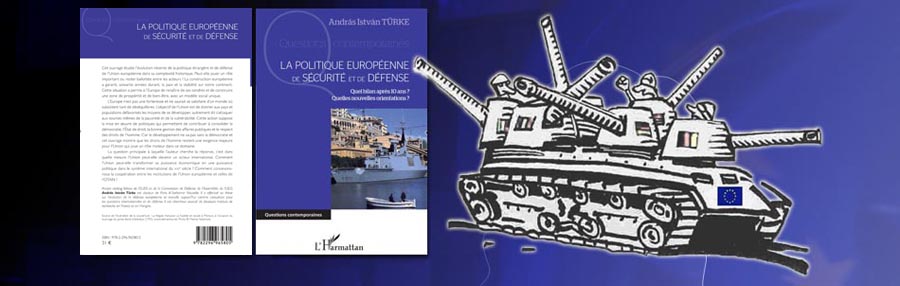
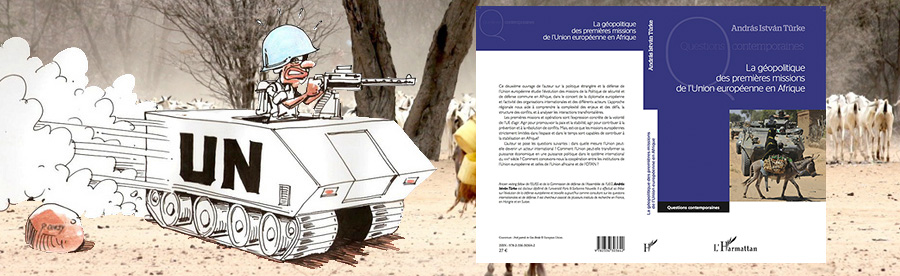
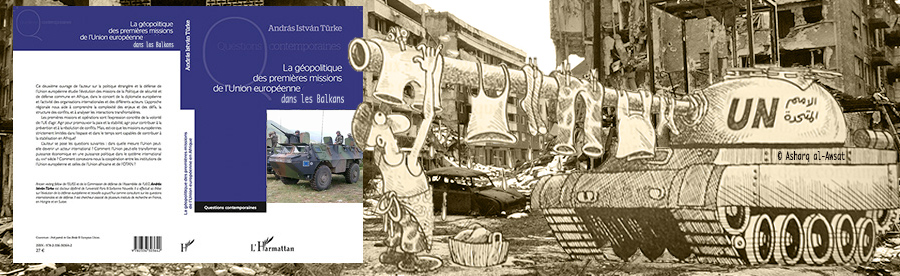
We are looking for sponsors for the English translation of these books, please contact turkeandras(at)gmail(dot)com