
You are here
Swiss News
Bahnverkehr: Zentralbahn baut Platzangebot mit Fahrplanwechsel aus
Die Zentralbahn (ZB) stellt mit dem Fahrplanwechsel am 14. Dezember mehr Sitzplätze bereit und passt die Entlastungszüge an. Davon sollen vor allem Reisende an Wochenenden und zu Spitzenzeiten profitieren.
Categories: Swiss News
Que sait-on de l'arrestation de Sanna Manjang, l'un des hommes les plus redoutés de l'ère Jammeh ?
Ancien membre des "Junglers" (les Broussards), un escadron de la mort mis en place par le président Yayah Jammeh, le lieutenant-colonel Sanna Manjang a été arrêté dans la matinée du samedi 29 novembre en Casamance, lors d’une opération conjointe de sécurisation effectuée par les forces armées sénégalaises et gambiennes.
Categories: Afrique, Swiss News
Migration en Suisse: Plus de deux tiers des expulsions décidées ont été menées à bien
Le Secrétariat d’État aux migrations indique que 69% des personnes visées par une décision d’expulsion ont quitté la Suisse l’année dernière.
Categories: European Union, Swiss News
History-maker Girmay signs for Iniesta's new team
History-making African cyclist Biniam Girmay signs for NSN Cycling - the new team co-owned by World Cup winner Andres Iniesta.
Categories: Africa, Swiss News
Douane à Saint-Gall: Un Allemand condamné pour sa vignette trafiquée
L’homme a tenté de réutiliser sa vignette autoroutière en la collant sur un film transparent. Un stratagème qui lui coûtera bien plus cher que l’achat de plusieurs vignettes.
Categories: European Union, Swiss News
The return of international war and rising deficits in state legitimacy: IDOS Constellations of State Fragility 3.0
The international context is changing profoundly, owing to rising autocratisation and the return of international war. These transformations also impact the long-standing problem of state fragility.
The IDOS Constellations of State Fragility (CSF) provides a differentiated model to measure state fragility along the three dimensions of authority, capacity and legitimacy. Rather than aggregating scores in these dimensions on a one-dimensional scale, the CSF identifies eight constellations of how deficits in these three dimensions occur jointly in reality. The CSF was launched in 2018 and was recently updated for the second time, now covering the period 2005 to 2024.
In this Policy Brief, we pursue three objectives. First, we briefly present the CSF model. Second, we describe the methodological adjustments of the 2025 update. This includes the use of a new measure for “battle-related deaths” – one indicator to assess the state’s monopoly on the use of force (authority). The modification became necessary due to a real-world development: the return of international war and, in particular, Russia’s war of aggression on Ukraine. Third, we elaborate on the main empirical trend that emerges from the 2025 update: the global rise of deficits in the legitimacy dimension, reflected in the increase of “illiberal functioning” and “low legitimacy” states. This development is in line with wider autocratisation trends. We derive the following recommendations for policy and policy-related research:
• Use multidimensional models to assess state fragility. Foreign and development policymakers as well as academics should employ multidimensional approaches to conceptualise and measure state fragility. Not only are such models better suited for adequately capturing the complexity of state fragility, but they also provide better starting points for designing tailored policy interventions sensitive to context.
• Acknowledge that deficits in the legitimacy dimension are also rising in Europe. Rather than considering state fragility a phenomenon limited to the Global South, German and European policy-makers would be well advised to acknowledge that deficits in the legitimacy dimension are also growing in Europe, including countries of the European Union (EU). Studying developments in the Global South and mutual learning with Southern policy-makers and civil society actors may contribute to enhanced resilience in Europe as well.
• Explore the relationship between state fragility and international war. Future research should explore how international war and state fragility are related, including investigating the relationship between internal fragility dimensions and vulnerabilities to external shocks, and whether defence capabilities matter in determining whether and to what extent a state is fragile.
• Explore and address the relationship between state fragility and autocratisation. Investigating how state fragility and autocratisation are interrelated is a promising research agenda. This comprises exploring whether and how changes in fragility patterns and autocratisation trends are correlated as well as under what conditions autocratisation acts as a driver of state fragility by prompting violent resistance. Foreign and develop-ment policymakers could build on the findings to design coherent policy interventions.
Dr Sebastian Ziaja is Team Lead for Survey Data Curation at GESIS (Leibniz Institute for the Social Sciences) in Cologne.
Categories: Diplomacy & Defense Think Tank News, Swiss News
The return of international war and rising deficits in state legitimacy: IDOS Constellations of State Fragility 3.0
The international context is changing profoundly, owing to rising autocratisation and the return of international war. These transformations also impact the long-standing problem of state fragility.
The IDOS Constellations of State Fragility (CSF) provides a differentiated model to measure state fragility along the three dimensions of authority, capacity and legitimacy. Rather than aggregating scores in these dimensions on a one-dimensional scale, the CSF identifies eight constellations of how deficits in these three dimensions occur jointly in reality. The CSF was launched in 2018 and was recently updated for the second time, now covering the period 2005 to 2024.
In this Policy Brief, we pursue three objectives. First, we briefly present the CSF model. Second, we describe the methodological adjustments of the 2025 update. This includes the use of a new measure for “battle-related deaths” – one indicator to assess the state’s monopoly on the use of force (authority). The modification became necessary due to a real-world development: the return of international war and, in particular, Russia’s war of aggression on Ukraine. Third, we elaborate on the main empirical trend that emerges from the 2025 update: the global rise of deficits in the legitimacy dimension, reflected in the increase of “illiberal functioning” and “low legitimacy” states. This development is in line with wider autocratisation trends. We derive the following recommendations for policy and policy-related research:
• Use multidimensional models to assess state fragility. Foreign and development policymakers as well as academics should employ multidimensional approaches to conceptualise and measure state fragility. Not only are such models better suited for adequately capturing the complexity of state fragility, but they also provide better starting points for designing tailored policy interventions sensitive to context.
• Acknowledge that deficits in the legitimacy dimension are also rising in Europe. Rather than considering state fragility a phenomenon limited to the Global South, German and European policy-makers would be well advised to acknowledge that deficits in the legitimacy dimension are also growing in Europe, including countries of the European Union (EU). Studying developments in the Global South and mutual learning with Southern policy-makers and civil society actors may contribute to enhanced resilience in Europe as well.
• Explore the relationship between state fragility and international war. Future research should explore how international war and state fragility are related, including investigating the relationship between internal fragility dimensions and vulnerabilities to external shocks, and whether defence capabilities matter in determining whether and to what extent a state is fragile.
• Explore and address the relationship between state fragility and autocratisation. Investigating how state fragility and autocratisation are interrelated is a promising research agenda. This comprises exploring whether and how changes in fragility patterns and autocratisation trends are correlated as well as under what conditions autocratisation acts as a driver of state fragility by prompting violent resistance. Foreign and develop-ment policymakers could build on the findings to design coherent policy interventions.
Dr Sebastian Ziaja is Team Lead for Survey Data Curation at GESIS (Leibniz Institute for the Social Sciences) in Cologne.
Categories: Diplomacy & Defense Think Tank News, Swiss News
The return of international war and rising deficits in state legitimacy: IDOS Constellations of State Fragility 3.0
The international context is changing profoundly, owing to rising autocratisation and the return of international war. These transformations also impact the long-standing problem of state fragility.
The IDOS Constellations of State Fragility (CSF) provides a differentiated model to measure state fragility along the three dimensions of authority, capacity and legitimacy. Rather than aggregating scores in these dimensions on a one-dimensional scale, the CSF identifies eight constellations of how deficits in these three dimensions occur jointly in reality. The CSF was launched in 2018 and was recently updated for the second time, now covering the period 2005 to 2024.
In this Policy Brief, we pursue three objectives. First, we briefly present the CSF model. Second, we describe the methodological adjustments of the 2025 update. This includes the use of a new measure for “battle-related deaths” – one indicator to assess the state’s monopoly on the use of force (authority). The modification became necessary due to a real-world development: the return of international war and, in particular, Russia’s war of aggression on Ukraine. Third, we elaborate on the main empirical trend that emerges from the 2025 update: the global rise of deficits in the legitimacy dimension, reflected in the increase of “illiberal functioning” and “low legitimacy” states. This development is in line with wider autocratisation trends. We derive the following recommendations for policy and policy-related research:
• Use multidimensional models to assess state fragility. Foreign and development policymakers as well as academics should employ multidimensional approaches to conceptualise and measure state fragility. Not only are such models better suited for adequately capturing the complexity of state fragility, but they also provide better starting points for designing tailored policy interventions sensitive to context.
• Acknowledge that deficits in the legitimacy dimension are also rising in Europe. Rather than considering state fragility a phenomenon limited to the Global South, German and European policy-makers would be well advised to acknowledge that deficits in the legitimacy dimension are also growing in Europe, including countries of the European Union (EU). Studying developments in the Global South and mutual learning with Southern policy-makers and civil society actors may contribute to enhanced resilience in Europe as well.
• Explore the relationship between state fragility and international war. Future research should explore how international war and state fragility are related, including investigating the relationship between internal fragility dimensions and vulnerabilities to external shocks, and whether defence capabilities matter in determining whether and to what extent a state is fragile.
• Explore and address the relationship between state fragility and autocratisation. Investigating how state fragility and autocratisation are interrelated is a promising research agenda. This comprises exploring whether and how changes in fragility patterns and autocratisation trends are correlated as well as under what conditions autocratisation acts as a driver of state fragility by prompting violent resistance. Foreign and develop-ment policymakers could build on the findings to design coherent policy interventions.
Dr Sebastian Ziaja is Team Lead for Survey Data Curation at GESIS (Leibniz Institute for the Social Sciences) in Cologne.
Categories: Diplomacy & Defense Think Tank News, Swiss News
Entwurf der Tagesordnung - Dienstag, 9. Dezember 2025 - PE779.808v01-00 - Ausschuss für auswärtige Angelegenheiten
Quelle : © Europäische Union, 2025 - EP
Categories: Europäische Union, Swiss News
«Je dois tirer la sonnette d’alarme»: Avant Mattea Meyer, d’autres élus ont mis la politique sur pause
La coprésidente du PS ne sera pas présente à la session parlementaire qui débute ce jour. La Zurichoise parle d’une «grande fatigue».
Categories: European Union, Swiss News
Pastor and new bride abducted in latest Nigeria attacks
A church is raided in central Nigeria and a wedding party in the mostly Muslim north.
Categories: Africa, Swiss News
Coupe d'Afrique des Nations : les cinq équipes favorites pour remporter la CAN 2025
A un peu plus d’un mois du coup d’envoi de la Coupe d’Afrique des Nations 2025, les pronostics vont bon train. Lions de l’Atlas marocains, Eléphants de Côte d’Ivoire, Lions du Sénégal, Fennecs d’Algérie et Pharaons d’Egypte partent avec les faveurs des pronostics.
Categories: Afrique, Swiss News
Météo de la semaine: Le stratus s’installe durablement sur la Suisse romande
La grisaille va dominer cette semaine. Le brouillard et les nuages bas persisteront jusqu’à vendredi sur le Plateau.
Categories: European Union, Swiss News
ENTWURF EINES BERICHTS über die EU-Strategie zum Umgang mit neuen demokratiefeindlichen Theorien - PE774.238v01-00
ENTWURF EINES BERICHTS über die EU-Strategie zum Umgang mit neuen demokratiefeindlichen Theorien
Ausschuss für auswärtige Angelegenheiten
Bernard Guetta
Quelle : © Europäische Union, 2025 - EP
Ausschuss für auswärtige Angelegenheiten
Bernard Guetta
Quelle : © Europäische Union, 2025 - EP
Categories: Europäische Union, Swiss News
COP30 Fails the Caribbean’s Most Vulnerable, Leaders Say: ‘Our Lived Reality Isn’t Reflected’
A coastal community in the Eastern Caribbean. Small island states say their extreme climate vulnerability is still not reflected in global finance decisions made at COP30. Credit: Alison Kentish/IPS
By Alison Kentish
CASTRIES, St Lucia, Dec 1 2025 (IPS)
Caribbean small island states say this year’s UN climate conference has once again failed to deliver the urgency and ambition needed to tackle escalating climate devastation across the region. From slow-moving climate finance to frustrating political gridlock, leaders say COP30 did not reflect the realities that small islands are living through every day.
Jamaica is recovering from Hurricane Melissa, which left over 30 percent of the country’s GDP in losses and billions of dollars in damage. While the country has been able to respond rapidly thanks to a suite of innovative developmental finance tools, including a USD 150 million catastrophe bond, parametric insurance and a disaster savings fund, its Minister for Water, Environment and Climate Change, Matthew Samuda, warns that the vast majority of Caribbean islands do not have similar mechanisms.
Speaking at a press conference organized by Island Innovation and themed “Islands, the Climate Finance Gap, and COP30 Reflections,” Samuda said this is precisely why global negotiations must center the lived experiences of SIDS.
“I think I perhaps may be a little more disappointed than I am usually at the end of a COP because seeing what Jamaica is going through, seeing what Vietnam is going through, seeing extreme weather events pop up all around the world over the last 10 days, you would think that the urgency and the facts staring us in the face would have brought about greater ambition,” he said, adding that “unfortunately, the global geopolitical landscape didn’t allow for us to go much further.”
A Struggle Just to be Heard?
For many small islands and territories, simply participating meaningfully at COP30 was an uphill battle. The British Virgin Islands, like other Caribbean territories, had to rely on partners, including the Organisation of Eastern Caribbean States and the Caribbean Community Climate Change Centre for accreditation and access to the negotiations.
“We try to split up and cover as much as we can,” said Dr. Ronald Berkeley, Permanent Secretary in the Ministry of Environment, Natural Resources and Climate Change. “Our reliance on partners shows how limited our reach still is.”
Berkeley said that despite the Caribbean’s visible and worsening climate impacts, it remains difficult to get major emitters to understand the region’s urgency.
“For small islands, this is real. I’m not sure a lot of the big players believe us,” he said. “Until you live through being almost blown to smithereens by a Category Five hurricane, you will never understand.”
The BVI recently established its own climate trust fund, currently funded with about US$5.5 million, to address some financing shortfalls, but Berkeley emphasized that this cannot make up for reliable, large-scale climate funding.
Barriers to Pledges
Caribbean officials are echoing the same concern—that climate finance exists on paper but rarely reaches small, vulnerable nations at the speed or scale required.
“At COP there were positive commitments, about US$1.3 trillion annually by 2035 for climate action, the tripling of adaptation finance and operationalizing the Loss and Damage Fund,” said Dr. Mohammad Rafik Nagdee, Executive Director of the Caribbean Centre for Renewable Energy and Energy Efficiency (CCREEE).
“But the elephant in the room is the global finance gap,” he said. “Even where access exists, it’s not accessible at the speed the climate crisis demands. Processes are lengthy, requirements heavy and small governments simply don’t have the technical capacity.”
Nagdee said the region needs “greater predictability, simpler pathways and finance that is actually ready to disburse.”
Living Through it—Not Debating it
For Jamaica, which is emerging from one of the most devastating storms in its history, the mismatch between climate impacts and climate action is glaring.
“In the past four years, Jamaica has had its hottest day on record, its wettest day on record, its worst droughts, two tropical storms, a Category 4 hurricane and now what could be classified as a Category 6,” Samuda said. “That’s climate change in reality. That’s not an academic debate for us.”
Caribbean leaders widely described COP30 as a ‘mixed bag,’ with negotiations with incremental progress overshadowed by inadequate urgency.
“We cannot talk about building back better if the resources arrive slowly,” Nagdee said.
For small island states living on the frontlines of warming seas, rising temperatures and record-breaking storms, the message from COP30 is clear and becoming all-too familiar—that climate change is accelerating and the price of delay is already being paid.
This feature is published with the support of Open Society Foundations.
IPS UN Bureau Report
Follow @IPSNewsUNBureau
!function(d,s,id){var js,fjs=d.getElementsByTagName(s)[0],p=/^http:/.test(d.location)?'http':'https';if(!d.getElementById(id)){js=d.createElement(s);js.id=id;js.src=p+'://platform.twitter.com/widgets.js';fjs.parentNode.insertBefore(js,fjs);}}(document, 'script', 'twitter-wjs');
Excerpt:
Regional leaders say the outcome of the ‘mixed bag’ climate talks once again overlooks the real and mounting threats faced by Caribbean countries.
Categories: Africa, Swiss News
Die Wirtschaft muss Haltung zeigen
Die Familienunternehmer öffnen sich für die AfD. Dabei lebt die Wirtschaft von offenen Märkten, Stabilität und Vielfalt. Es ist ihre Aufgabe, diese Werte zu verteidigen. , Die jüngste Öffnung des Verbands der Familienunternehmer gegenüber der AfD ist weit mehr als ein politisches Manöver. Sie ist ein Fehler, der das wirtschaftliche Fundament Deutschlands untergraben und die gesellschaftliche Spaltung vertiefen könnte. Denn Unternehmen und ihre Verbände tragen nicht ...
Categories: Diplomacy & Defense Think Tank News, Swiss News
Économie suisse: Les faillites d’entreprises ont bondi d’un tiers en dix mois
Les procédures de faillite ont progressé entre janvier et octobre, les cantons de Genève, Vaud et Zurich étant les plus touchés. Une nouvelle règle fiscale explique en partie cette flambée.
Categories: European Union, Swiss News
Sous-traiter les migrants en Albanie : le modèle italien failli inspire l'Europe
Un an après les premiers transferts forcés de demandeurs d'asile de l'Italie vers l'Albanie, la question des centres fermés en régime extraterritorial se retrouve, plus que jamais, au centre des politiques européennes. Et ce « modèle » déjà failli inspire de plus en plus en Europe…
- Articles / Migrants Balkans, Une - Diaporama - En premier, Courrier des Balkans, Albanie, Populations, minorités et migrations, Questions européennes, Une - Diaporama
Categories: Balkans Occidentaux, Swiss News
Vulnerable Populations Will Suffer With UNAIDS Early Closure
UNAIDS campaigns have dominated the global effort to end HIV/Aids as a public threat since 1999. Credit: UNAIDS
By Ed Holt
BRATISLAVA, Dec 1 2025 (IPS)
“It’s like adding fuel to an already burning fire,” says Aditia Taslim.
“We have not recovered from the impact of the US funding cuts earlier this year, and closing down UNAIDS prematurely will only make things worse, especially for key populations and other criminalized groups, including people who use drugs,” Taslim, who is Advocacy Lead at the International Network of People Who Use Drugs (INPUD), tells IPS.
Her view is shared widely by HIV activists around the world who were stunned by a proposal from UN Secretary-General Antonio Guterres in September, included in a report on progress on UN reforms, to shut down the UN’s main agency to fight HIV/AIDS next year.
UNAIDS, the civil society groups that sit on its board, experts, and national governments across the globe had already been working on a transformation plan for the agency, which would see it end in its present form around 2030 when current HIV targets expire.
And many still do not understand exactly why closure next year is now being planned.
“There is a lot of confusion around this right now. We’re not sure why 2026 was chosen. Perhaps it was because we were in fact already in a process of transformation,” Angeli Achrekar, Deputy Executive Director of the Programme Branch at UNAIDS, told IPS.
But the proposal has been met with vociferous pushback—a call from the UNAIDS Programme Coordinating Board (PCB) NGO Delegation to the Secretary General urging him to reconsider was endorsed by more than 1 000 NGOs.
World Aids Day has been commemorated since 1988 and is a significant platform for people to unite against the disease. Credit: UNAIDS
Many of those same groups have warned that if the early closure does go ahead, gains in fighting the disease will be at risk, and, some are certain, lives will be lost unnecessarily.
“If this happens, the world will be much less effective in preventing and treating HIV, which means more people dying from a disease that is completely preventable and treatable. There’s no doubt in my mind that closing UNAIDS will lead to more HIV infections and deaths,” Julia Lukomnik, Strategic Advisor at Dutch organization Aidsfonds, told IPS.
UNAIDS, which started operations in 1996, is unique among UN structures in that its governing board actually includes civil society groups. This, experts say, has meant that in all its work, those on the ground working directly with the communities affected by the disease – not just people living with HIV (PLHIV), but also key populations most at risk, including drug users, sex workers, members of the LGBT+ community, and others—have had a crucial say in developing its policy and implementing its work.
Indeed, while the agency’s activities include treatment projects, in many countries it is seen as a vital bridge, directly and through partnerships with local NGOs, between communities and local, regional, and national authorities.
“If UNAIDS were to close in 2026, the impact would be significant, particularly in countries like Vietnam where community-led organizations depend on UNAIDS for data, technical guidance, coordination, and engagement space. UNAIDS has played a critical bridging role, connecting governments, donors, and civil society in Vietnam,” Doan Thanh Tung, Executive Director at Lighthouse Vietnam, one of the largest LGBTQ+ organizations in Vietnam, told IPS.
This is of particular concern at a time when marginalization and criminalization of key populations and PLHIV in many countries is worsening.
UNAIDS has played a crucial role in advocating for the rights of key populations and PLHIV, including helping bring in landmark legislation enshrining some rights and access to services.
UNAIDS workers provide support to communities in need of their services. The organization and its workers have been badly affected by the impact of a sudden acceleration of cuts to international HIV financing. Credit: UNAIDS
Campaigners fear that without UNAIDS presence, some communities would very quickly face increased marginalization or criminalization, without anyone to speak up for them.
“We’re in a context of increasing criminalization of key populations for the HIV epidemic. We know—in part because of UNAIDS— that violating the rights of key populations leads to increased HIV cases. When you criminalize gay and trans people, you increase HIV cases. When you criminalize sex workers, you increase HIV cases. When you criminalize safe injection sites, you increase HIV cases,” said Lukomnik.
“Closing the UN body that most strongly advocates for the human rights of these groups at the very time when these rights are increasingly threatened will almost certainly increase both rights violations and HIV cases,” she added.
Within UNAIDS, officials are aware this could be a problem.
“The question is where can advocacy for key populations be maintained [without UNAIDS] in countries. UNAIDS can raise issues to do with key populations with governments. Will other organizations be able to do that?” Eammon Murphy, UNAIDS Director, Regional Support Teams for the Asia Pacific and Eastern Europe and Central Asia regions, told IPS.
“One of the critical functions we perform is being the voice of communities. The voice of the community must be safeguarded at the local, regional and global levels,” Achrekar said.
As well as allowing it to advocate for communities, the trust that communities have with the agency means it can have a better view of an epidemic in a given country than state authorities might have, say experts.
They highlight UNAIDS’ vital role in collecting and evaluating data on the disease in specific communities and using data to develop effective interventions and national policies and set HIV targets. If that monitoring and evaluation capacity is lost suddenly with no time to replace it properly, the impact on authorities’ efforts to fight an HIV epidemic could be devastating, they argue.
“UNAIDS set the targets for the global AIDS response that has given countries the ability to shape their strategic plans to respond to HIV and AIDS. Those targets and strategic plans ensured high-impact interventions that led to a reduction of new HIV infections, addressing inequalities, gender-based violence and stigma and discrimination against people with HIV or AIDS,” Tendayi Westerhof, National Director, Pan African Positive Women’s Coalition-Zimbabwe, told IPS.
“It was responsible for the Global AIDS Programme report that monitored progress of the AIDS response by countries. If UNAIDS is closed, this will have a huge impact on the monitoring of progress by countries in fighting AIDS,” she added.
The proposed closure of the agency also comes at a time when HIV groups are still reeling from recent upheavals in global aid funding.
The withdrawal of US aid at the start of this year, which had previously accounted for 73 percent of international HIV/AIDS financing, has already had a devastating effect on the fight against the disease, forcing many organizations on the frontline of the HIV response to close.
UNAIDS modeling forecasts the funding cuts could lead to an additional 6.6 million new HIV infections and 4.2 million AIDS-related deaths by 2029.
Closing UNAIDS against this backdrop could further imperil the sustainability of the HIV response in some places, especially in those where services for key populations are already underfunded.
“We have seen the impact of the abrupt funding cuts from the US, which have crippled a lot of harm reduction services and forced many drug user-led networks and organizations to close their operations. Harm reduction has also been severely underfunded. Closing down UNAIDS will only create reasons for governments to close down services and programmes, as well as funding for people who use drugs,” said Taslim.
“In most low- and middle-income countries, services and programmes for people who use drugs… are still heavily dependent on international donors. Closing UNAIDS prematurely means that services and programmes for our community will be the first to be removed from national priorities. There is no sustainability strategy in place for services and programmes for people who use drugs and other key populations, as well as other criminalized and marginalized communities,” he added.
Tung warned that dismantling UNAIDS at a time when global funding for HIV is shrinking “would likely erode global-to-local solidarity, reduce community engagement in the HIV response, and weaken independent data systems, which could further exacerbate the epidemic and undo decades of progress in HIV prevention and control that would be extremely difficult to recover.”
But while activists warn of the potential for a 2026 closure of UNAIDS to profoundly impact the world’s HIV response, they also point out that so far it is only a proposal and that there is some hope it may not come to pass.
“The proposal to end UNAIDS in 2026 was made by the UN Secretary General, but it’s really up to the UNAIDS PCB to make this call,” said Lukomnik.
UNAIDS officials point out that the agency had already begun a process of transforming itself.
Earlier this year, the PCB set out its plan to restructure between 2025 – 2027, and then review its structure and mandate again in 2027. It had been expected that after that, a transition period would see key UNAIDS functions shifted to other parts of the UN system or other actors involved in the HIV response by 2030.
The first phase of this restructuring involved the agency this year beginning a huge reduction in the number of its staff and offices around the world—both are to be cut by more than 50 percent.
Achrekar said the transformation was in part a response to global funding changes but also to reflect moves towards greater sustainability in the global HIV response.
“Our transformation is partly because of the current funding volatility, but it was already underway before that. We are focused on ending AIDS as a public health threat by 2030 and even before the General Secretary’s proposal, we at UNAIDS knew that we had to transform for where the HIV response was shifting to in the future—that as countries start to approach 2030 HIV targets, the HIV response would need to be sustainable after 2030. Our transformation means we can be fit for when the HIV response needs to become sustainably supported by countries,” said Achrekar.
“We are not certain if this SG proposal can be turned back. But we believe there could be a way to bring some coherence to what the SG has proposed and the transition we had already planned. UNAIDS is not afraid of transforming,” she added.
However, if the proposal does come to pass and UNAIDS closes next year, the organization is hoping others involved in the global HIV response will be able to step up, to some extent, to help maintain the response.
“We are just one player in the HIV response and all the others have critical roles too. The global solidarity in the HIV response must be maintained in future and we have to be able to safeguard what is critical in the HIV response and the people affected by HIV,” Achrekar said.
IPS UN Bureau Report
Follow @IPSNewsUNBureau
!function(d,s,id){var js,fjs=d.getElementsByTagName(s)[0],p=/^http:/.test(d.location)?'http':'https';if(!d.getElementById(id)){js=d.createElement(s);js.id=id;js.src=p+'://platform.twitter.com/widgets.js';fjs.parentNode.insertBefore(js,fjs);}}(document, 'script', 'twitter-wjs');
Categories: Africa, Swiss News
Politique suisse: La coprésidente du PS Mattea Meyer fait une pause dans sa carrière
La conseillère nationale zurichoise a évoqué sur Instagram dimanche une «grande fatigue». Elle ne participera pas à la session d’hiver.
Categories: European Union, Swiss News
Pages
the old site is here


© 2012-2015 Europa Varietas Foundation © 2015-2020 Europa Varietas Association
www.europavarietas.org | info(@)europavarietas(dot)org | Switzerland
This is a GDPR ready site
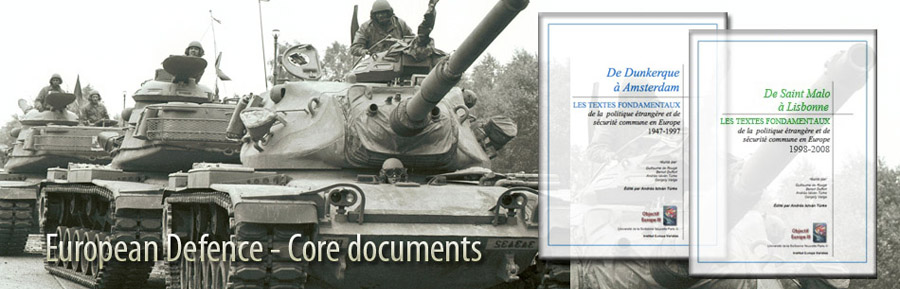
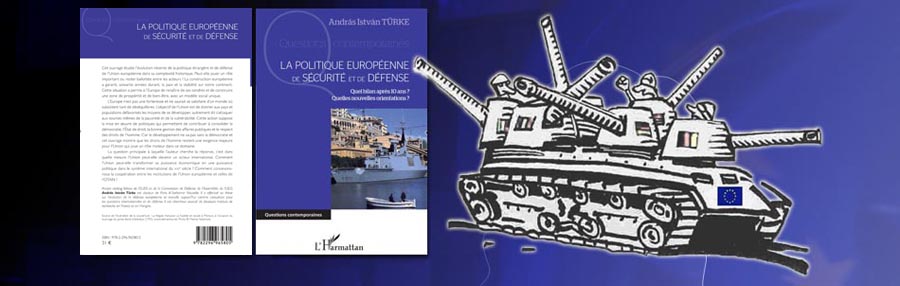
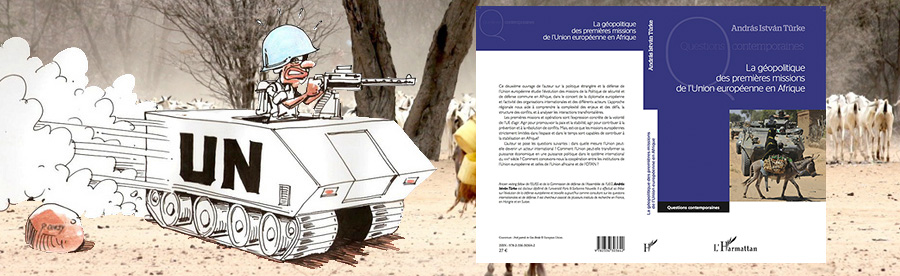
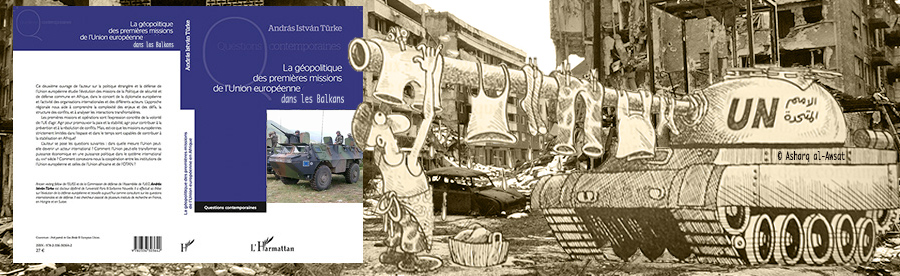
We are looking for sponsors for the English translation of these books, please contact turkeandras(at)gmail(dot)com