
Vous êtes ici
Diplomacy & Defense Think Tank News
Décès de KABORE Hilaire : Faire-part
« Mathieu, 25 : 21 – Son maitre lui dit : C'est bien, bon et fidèle serviteur, tu as été fidèle en peu de chose, je te confirai beaucoup ; entre dans la joie de ton maitre. »
C'est avec une profonde tristesse et une immense foi en la résurrection que nous vous faisons part du rappel à Dieu de notre très cher fils, époux, frère, cousin, père, oncle, grand-père et ami :
Monsieur KABORE Hilaire
Ingénieur de Conception en Electro-mécanique à la retraite, ancien Directeur général de la SONABHY, ancien Président de l'Association des Raffineurs et Distributeurs Africains (L'ARDA) de 2018 à 2019, ancien Secrétaire général du Conseil d'Administration de l'Etoile Filante de Ouagadougou (EFO) et Officier de l'ordre de l'Etalon
Décédé le 05 juin 2026 à la Polyclinique Internationale de Ouagadougou, à l'âge de 65 ans, des suites d'une courte maladie, dans l'entourage des siens et dans la paix du Seigneur.
Il était entouré de l'affection des membres de sa famille, ses amis ainsi que de toute la parenté.
PROGRAMME :
• Récitation du chapelet par la CCB St Jean Paul II : Du lundi 08 au jeudi 11 à 19H au domicile familial sis à Ouaga 2000
• Levée du corps : vendredi 12 juin 2026 à BOGODOGO à 16h00
• Veillée de prières : vendredi 12 juin 2026 au domicile familial sis à Ouaga 2000 à 19h30
• Absoute à l'église St Jean 23 de Ouagadougou, le samedi 13 juin 2026 à 08h00, suivi de l'inhumation dans son village natal à Lallé à 14h00.
La famille reconnaissante remercie toutes les personnes qui prendront part à sa peine, ainsi que le personnel soignant, les prêtres, les servants d'autel et les choristes. Elle s'excuse par avance des éventuelles omissions.
De la part de :
Sa majesté le Lallé Naaba GUIGMDE Polé ;
Son Excellence Monsieur Rock Marc Christian KABORE ;
Monsieur KABORE Rakoudondba François ;
La grande famille KABORE à Lallé, Ouagadougou, Koudougou, Cote d'Ivoire et en France ;
Le Ouidi Naaba de Lallé et la grande famille OUEDRAOGO à Lallé ;
La famille ILBOUDO, RAPADEMNABA et SAWADOGO à Boulsa et Ouagadougou ;
La famille KINDA à Boussaka ;
Les familles alliées
La veuve KABORE/ILBOUDO Candide Euphrasie ;
Sa fille KABORE Alexandra Emmanuella Désirée Wendinyolsdé ;
Ses frères et sœurs :
o Paulette, épouse OUEDRAOGO à Ouagadougou
o Chantal, épouse SINARE à Dawanegomde
o Vincent à SOMISA-SAMBRADO
o Denis à EERI BF
Les neveux, nièces et petits enfants.
Ouagadougou, le 07 juin 2026
Catégories: Afrique, Diplomacy & Defense Think Tank News
Décès de ROUAMBA née KIEMDE Colette : Faire-part et remerciements
Son Excellence le Ouidi Naba Kiiba, les grandes familles ROUAMBA et KIEMDE ainsi que leurs alliés, profondément touchés du soutien dont ils ont bénéficié, remercient du fond du cœur toutes les personnes qui, de près ou de loin, à travers divers actes et contributions multiformes, ont compati à leur douleur lors du rappel à Dieu le 06 juin 2026 suvi de son inhumation le 09 juin 2026 à Ouagadougou, de leur très chère épouse, mère, fille, sœur, belle-soeur, tante, grand-mère et arrière grand-mère,
ROUAMBA née KIEMDE Colette, à l'âge de 68 ans.
Puisse le Seigneur vous bénir tous et rendre à chacun le centuple de ses bienfaits.
Tout en renouvelant leur profonde gratitude à chacune et à chacun, la famille ROUAMBA informe les parents, amis et connaissances que la première messe pour le repos de l'âme de la défunte sera célébrée le dimanche 14 juin 2026 à 07h00 à la Chapelle Saint Barthélémy de Noos Kudguin et sera suivie de la levée du deuil au domicile familial à Nonsin.
Union de Prières !
Catégories: Afrique, Diplomacy & Defense Think Tank News
La politique chinoise du zéro droit de douane devrait ouvrir un nouveau chapitre dans les relations sino-marocaines (PAPIER D'ANGLE)
Le prochain événement au Maroc de l'Exposition économique et commerciale Chine-Afrique (CAETE) devrait renforcer les liens économiques entre la Chine et le Maroc, alors que la politique du zéro droit de douane appliquée par la Chine aux pays africains et l'intensification de la coopération industrielle ouvrent de nouvelles perspectives en matière de commerce, d'investissements et d'intégration des chaînes d'approvisionnement.
Organisé conjointement par le secrétariat de la CAETE et le ministère marocain de l'Industrie et du Commerce, l'événement se tiendra à Casablanca de mercredi à vendredi.
Il s'agit de la première grande manifestation économique et commerciale organisée en Afrique par la province chinoise du Hunan (centre) depuis que la Chine a pleinement mis en œuvre la politique du zéro droit de douane pour les 53 pays africains avec lesquels elle entretient des relations diplomatiques.
UN COUP DE POUCE POLITIQUE
Selon des analystes et des chefs d'entreprise, cette politique du zéro droit de douane devrait stimuler les échanges bilatéraux et élargir l'accès au marché chinois pour les produits africains.
Nasser Bouchiba, président de l'Association pour la coopération et le développement Chine-Afrique, a déclaré que cet événement de la CAETE au Maroc intervient à un moment où la politique du zéro droit de douane de la Chine a été pleinement mise en œuvre et où la coopération économique sino-africaine continue de s'approfondir.
Il a poursuivi que cet événement aidera les produits marocains de haute qualité à accéder plus facilement au vaste marché de consommation chinois, tout en permettant à des entreprises chinoises de renforcer leur présence en Afrique du Nord et d'approfondir l'intégration des chaînes industrielles et d'approvisionnement.
Les statistiques montrent que le commerce bilatéral entre la Chine et le Maroc a atteint 9,04 milliards de dollars en 2024, avant de passer à 10,96 milliards de dollars en 2025.
La Chine est restée le troisième partenaire commercial mondial du Maroc et son premier partenaire commercial en Asie pendant de nombreuses années consécutives.
En 2025, les exportations chinoises vers le Maroc ont totalisé 9,88 milliards de dollars, tandis que les importations en provenance du Maroc ont atteint 1,08 milliard de dollars.
Des observateurs du secteur estiment que la mise en œuvre de la politique du zéro droit de douane réduira considérablement le coût de l'exportation des marchandises marocaines vers la Chine et renforcera la compétitivité des produits de spécialité marocains sur le marché chinois.
Jawad Kerdoudi, président de l'Institut marocain des relations internationales, a estimé que la politique du zéro droit de douane allait contribuer à réduire le déficit commercial de l'Afrique vis-à-vis de la Chine et à attirer davantage d'investissements chinois, apportant ainsi des capitaux, des technologies, du savoir-faire et des opportunités d'emploi aux économies locales.
FAVORISER LA COOPERATION
Le Hunan est l'une des provinces chinoises les plus actives en matière de coopération économique et commerciale avec l'Afrique, voyant déjà nombre de ses entreprises saisir les opportunités créées par cette politique.
Depuis le début de l'année, Yang Yi, directrice générale de Hunan Yufei Industry Investment Co., Ltd., s'est activement préparée à cet événement de la CAETE au Maroc et a coordonné les plans de participation. Elle a également eu des échanges en ligne avec plusieurs entreprises chinoises opérant au Maroc concernant l'introduction de produits locaux de spécialité.
Pendant les congés du 1er-Mai de cette année, l'Exposition des produits de spécialité africains, organisée par Mme Yang, s'est achevée avec succès à Changsha, attirant environ 89.000 visiteurs en six jours.
"Nous espérons tirer parti de cet événement pour intégrer davantage de produits marocains haut de gamme, tels que les huiles essentielles et l'huile d'argan, dans le système de marque 'produits africains', élargir les canaux d'approvisionnement direct, améliorer les chaînes d'approvisionnement et tirer parti de la politique du zéro droit de douane afin que davantage de produits marocains de qualité puissent pénétrer le marché chinois sous des marques africaines", a détaillé Mme Yang.
TIRER PARTI DES RESSOURCES
Au-delà du commerce, les relations entre la Chine et le Maroc s'orientent de plus en plus vers l'intégration industrielle et la collaboration en matière de chaînes d'approvisionnement.
À Tanger, grande ville portuaire du nord du Maroc, la Cité Mohammed VI Tanger Tech est devenue une plateforme phare pour la coopération sino-marocaine en matière de capacités industrielles. En mars de cette année, cette zone industrielle avait signé des accords avec 42 entreprises, dont 34 sociétés chinoises, pour un montant total d'investissements prévus d'environ 3,5 milliards de dollars.
Le producteur chinois de matériaux pour batteries au lithium BTR New Material Group construit actuellement dans la zone industrielle des projets de production de matériaux cathodiques et de matériaux anodiques. Une fois achevés, ces projets devraient créer plus de 1.100 emplois hautement qualifiés.
Le Maroc, premier exportateur mondial de phosphate et riche en cobalt et en lithium, tire parti de ses ressources naturelles pour développer une filière industrielle dédiée aux énergies nouvelles, reliant les ressources marocaines, les capacités de transformation chinoises et les marchés européens.
Parallèlement, des institutions financières, dont la succursale du Hunan de la Banque agricole de Chine, ont continué à soutenir les entreprises du Hunan opérant au Maroc en les aidant à faciliter la fluidité des flux de capitaux transfrontaliers.
UN DEVELOPPEMENT VERT
Une série de projets verts et liés aux énergies nouvelles a également été lancée, illustrant l'approfondissement de la coopération pratique entre les deux pays.
Imad Toumi, président du groupe marocain MANAGEM, supervise actuellement les préparatifs en vue de la réception de plusieurs projets menés par des entreprises chinoises, notamment un projet de production de sulfate de cobalt de qualité batterie à Marrakech et un projet de dessalement d'eau de mer à Nador. Ces projets illustrent un modèle qui allie le développement économique et la protection de l'environnement, selon M. Toumi.
Cette année 2026 marque le dixième anniversaire de l'établissement du partenariat stratégique sino-marocain.
"La coopération sino-marocaine progresse régulièrement vers un développement de meilleure qualité et plus durable", a noté Xiao Hao, doyen exécutif de l'Institut des études africaines de l'Université du Hunan. "
Avec le coup d'envoi de la tournée africaine de la CAETE au Maroc, les échanges économiques, culturels et universitaires entre les deux pays sont sur le point d'atteindre un nouveau niveau", a-t-il dit.
Catégories: Afrique, Diplomacy & Defense Think Tank News
Réfugiés Balkans | Les dernières infos • plus de 650 migrants secourus en deux jours au large de la Crète
La route des Balkans reste toujours l'une des principales voies d'accès l'Union européenne, pour les exilés du Proche et du Moyen Orient, d'Afrique ou d'Asie. Alors que les frontières Schengen se ferment, Frontex se déploie dans les Balkans, qui sont toujours un « sas d'accès » à la « forteresse Europe ». Notre fil d'infos en continu.
- Le fil de l'Info / Bosnie-Herzégovine, Albanie, Kosovo, Bulgarie, Questions européennes, Populations, minorités et migrations, Migrants Balkans, Courrier des Balkans, Croatie, Turquie, Grèce, Moldavie, Macédoine du Nord, Monténégro, Slovénie, Roumanie, Serbie, Gratuit, Grèce immigration
Catégories: Balkans Occidentaux, Diplomacy & Defense Think Tank News
Réfugiés Balkans | Les dernières infos • plus de 650 migrants secourus en deux jours au large de la Crète
La route des Balkans reste toujours l'une des principales voies d'accès l'Union européenne, pour les exilés du Proche et du Moyen Orient, d'Afrique ou d'Asie. Alors que les frontières Schengen se ferment, Frontex se déploie dans les Balkans, qui sont toujours un « sas d'accès » à la « forteresse Europe ». Notre fil d'infos en continu.
- Le fil de l'Info / Bosnie-Herzégovine, Albanie, Kosovo, Bulgarie, Questions européennes, Populations, minorités et migrations, Migrants Balkans, Courrier des Balkans, Croatie, Turquie, Grèce, Moldavie, Macédoine du Nord, Monténégro, Slovénie, Roumanie, Serbie, Gratuit, Grèce immigration
Catégories: Balkans Occidentaux, Diplomacy & Defense Think Tank News
Réfugiés Balkans | Les dernières infos • plus de 650 migrants secourus en deux jours au large de la Crète
La route des Balkans reste toujours l'une des principales voies d'accès l'Union européenne, pour les exilés du Proche et du Moyen Orient, d'Afrique ou d'Asie. Alors que les frontières Schengen se ferment, Frontex se déploie dans les Balkans, qui sont toujours un « sas d'accès » à la « forteresse Europe ». Notre fil d'infos en continu.
- Le fil de l'Info / Bosnie-Herzégovine, Albanie, Kosovo, Bulgarie, Questions européennes, Populations, minorités et migrations, Migrants Balkans, Courrier des Balkans, Croatie, Turquie, Grèce, Moldavie, Macédoine du Nord, Monténégro, Slovénie, Roumanie, Serbie, Gratuit, Grèce immigration
Catégories: Balkans Occidentaux, Diplomacy & Defense Think Tank News
Réfugiés Balkans | Les dernières infos • plus de 650 migrants secourus en deux jours au large de la Crète
La route des Balkans reste toujours l'une des principales voies d'accès l'Union européenne, pour les exilés du Proche et du Moyen Orient, d'Afrique ou d'Asie. Alors que les frontières Schengen se ferment, Frontex se déploie dans les Balkans, qui sont toujours un « sas d'accès » à la « forteresse Europe ». Notre fil d'infos en continu.
- Le fil de l'Info / Bosnie-Herzégovine, Albanie, Kosovo, Bulgarie, Questions européennes, Populations, minorités et migrations, Migrants Balkans, Courrier des Balkans, Croatie, Turquie, Grèce, Moldavie, Macédoine du Nord, Monténégro, Slovénie, Roumanie, Serbie, Gratuit, Grèce immigration
Catégories: Balkans Occidentaux, Diplomacy & Defense Think Tank News
Réfugiés Balkans | Les dernières infos • plus de 650 migrants secourus en deux jours au large de la Crète
La route des Balkans reste toujours l'une des principales voies d'accès l'Union européenne, pour les exilés du Proche et du Moyen Orient, d'Afrique ou d'Asie. Alors que les frontières Schengen se ferment, Frontex se déploie dans les Balkans, qui sont toujours un « sas d'accès » à la « forteresse Europe ». Notre fil d'infos en continu.
- Le fil de l'Info / Bosnie-Herzégovine, Albanie, Kosovo, Bulgarie, Questions européennes, Populations, minorités et migrations, Migrants Balkans, Courrier des Balkans, Croatie, Turquie, Grèce, Moldavie, Macédoine du Nord, Monténégro, Slovénie, Roumanie, Serbie, Gratuit, Grèce immigration
Catégories: Balkans Occidentaux, Diplomacy & Defense Think Tank News
Réfugiés Balkans | Les dernières infos • plus de 650 migrants secourus en deux jours au large de la Crète
La route des Balkans reste toujours l'une des principales voies d'accès l'Union européenne, pour les exilés du Proche et du Moyen Orient, d'Afrique ou d'Asie. Alors que les frontières Schengen se ferment, Frontex se déploie dans les Balkans, qui sont toujours un « sas d'accès » à la « forteresse Europe ». Notre fil d'infos en continu.
- Le fil de l'Info / Bosnie-Herzégovine, Albanie, Kosovo, Bulgarie, Questions européennes, Populations, minorités et migrations, Migrants Balkans, Courrier des Balkans, Croatie, Turquie, Grèce, Moldavie, Macédoine du Nord, Monténégro, Slovénie, Roumanie, Serbie, Gratuit, Grèce immigration
Catégories: Balkans Occidentaux, Diplomacy & Defense Think Tank News
Suisse : Jean Ziegler est décédé
Le sociologue, écrivain et ancien conseiller national suisse Jean Ziegler est décédé ce mercredi 10 juin 2026, à Genève à l'âge de 92 ans des suites de la maladie de Parkinson. L'information, annoncée par sa famille, a été confirmée par plusieurs médias suisses.
Figure emblématique de la gauche, Jean Ziegler laisse derrière lui un héritage intellectuel et politique considérable. Pendant plus d'un demi-siècle, il s'est imposé comme l'un des critiques les plus virulents des inégalités mondiales, de la faim dans le monde et des dérives de la mondialisation libérale.
Né le 19 avril 1934, ce sociologue genevois a mené une carrière marquée par l'engagement. Ancien député au Parlement suisse, il a également exercé les fonctions de rapporteur spécial des Nations unies pour le droit à l'alimentation, plaidant sans relâche pour davantage de justice sociale à l'échelle mondiale.
Jean Ziegler a publié de nombreux ouvrages dénonçant les mécanismes qui entretiennent la pauvreté et les inégalités. Même à un âge avancé, il est resté actif dans le débat public. En 2024, à l'occasion de ses 90 ans, il publiait encore un nouvel ouvrage intitulé « Où est l'espoir ? », un plaidoyer pour la résistance face aux crises contemporaines, aux conflits armés, aux famines et aux injustices sociales.
Tout au long de sa vie, Jean Ziegler a suscité autant l'admiration que la controverse. Admiré pour son franc-parler et son engagement en faveur des plus démunis, il a profondément marqué la pensée critique contemporaine et inspiré plusieurs générations de militants, d'universitaires et de défenseurs des droits humains.
Avec sa disparition, la Suisse perd une figure intellectuelle majeure dont les combats et les écrits continueront d'alimenter les réflexions sur les défis sociaux, économiques et humanitaires du monde contemporain.
Lefaso.net
Catégories: Afrique, Diplomacy & Defense Think Tank News
Un État palestinien est-il encore possible ? Avec Rima Hassan
Malgré l’annonce du cessez-le-feu entre Israël et le Hamas le 10 octobre 2025, les violences n’ont pas cessé. Les frappes continuent de toucher des populations civiles palestiniennes, aggravant une situation humanitaire déjà dramatique. La bande de Gaza reste largement isolée de l’aide extérieure, rendant l’acheminement de denrées alimentaires, de médicaments et de matériel médical extrêmement difficile. À cela s’ajoutent les déplacements massifs de populations gazaouies, contraintes de fuir les zones de combat sur un territoire profondément dévasté par près de deux années de guerre. Face à cette crise, la réponse de la communauté internationale tarde à se faire entendre, soulevant des interrogations sur la capacité réelle des institutions internationales à protéger les populations civiles, à faire respecter le droit international et à créer les conditions d’une paix durable. La question palestinienne fait également débat au Parlement européen, où les positions des différents groupes politiques restent profondément divisées, dans un hémicycle où l’extrême droite est désormais fortement représentée. Dans ce contexte et en l’absence d’une réelle légitimité de l’autorité palestinienne auprès des Palestiniens, la perspective de la création d’un État palestinien semble s’éloigner davantage.
Quelle est l’évolution de la situation humanitaire dans la bande de Gaza ? La solution à deux États est-elle envisageable ? Quelle autorité peut légitimement représenter le peuple palestinien dans un contexte marqué par la fragmentation politique et territoriale ? Comment la question palestinienne est-elle traitée au Parlement européen ? Comment le conflit israélo-palestinien est-il traité dans les médias français ?
Autant d’enjeux abordés avec Rima Hassan députée européenne et juriste franco-palestinienne spécialisée en droit international.
L’article Un État palestinien est-il encore possible ? Avec Rima Hassan est apparu en premier sur IRIS.
Catégories: Diplomacy & Defense Think Tank News, European Union
Décès de Son Excellence Lonkou Olivier KINI : Faire-part
La grande famille KINI à Mamou, Ouagadougou, Chartres et Abidjan.
La grande famille NEBIE à Longa, Léo et Ouagadougou.
Les familles SIANI, TUINA, DOUANIO, TRAORE, BAMBIO, SEINI, GNOUMOU, YE, BASSIA, NIGNAN, AGALAOUE-ADOUA, IDO, YAGO, OUEDRAOGO, BAYALA, BASBOUGDA à Mamou, Madou, Bagassi, Yaho, Koudougou, Poupioho, Bia, Ouagadougou, Bobo-Dioulasso, Paris, Abidjan…
Les enfants Joseph, Sandrine, Charles, Diane, Léonne, Louis-Paul, Félicité.
Les petits-enfants et arrière-petits-enfants Scolastique, Marie-Anne, Alexandre, Rachid, Souleymane, Arshad, Kenyon, Amel, Brandon et Korah.
Les frères et sœurs Bono Félix, Halonkou, N'Wohounou à Ouagadougou et Mamou.
Les neveux et nièces.
Les familles alliées NAPON, BASSOLE, SANGO, PILABRE, DIRA et GANOU.
Les familles amies YAO, KERE, SERE, OUEDRAOGO…
Ont la profonde douleur de vous annoncer le décès de leur père, frère, grand-père, arrière-grand-père, oncle, cousin, beau-frère et ami.
Son Excellence Lonkou Olivier KINI
Ambassadeur à la retraite
Rappelé à Dieu le lundi 08 juin 2026 à Ouagadougou.
━━━━━━━━━━━━━━━━━━
PROGRAMME DES OBSÈQUES
Jeudi 11 juin
• 16h30 : Levée de corps à la morgue du Centre Hospitalier Universitaire de Bogodogo et transfert de la dépouille au domicile familial à Zogona.
• 19h30 : Veillée de prière au domicile familial à Zogona.
Vendredi 12 juin
• 07h30 : Levée de corps au domicile familial à Zogona.
• 08h00 : Messe d'absoute à l'Église Saint Camille, suivie du transfert de la dépouille mortelle au village à Mamou (Province des Balé).
Samedi 13 juin
• Cérémonie traditionnelle d'obsèques à Mamou (toute la journée), suivi de l'inhumation dans la soirée.
━━━━━━━━━━━━━━━━━━
« Heureux dès à présent les morts qui meurent dans le seigneur ! Oui, dit l'esprit, afin qu'ils se reposent de leurs travaux, car leurs œuvres les suivent. »
Apocalypse 14 :13
« Que son âme repose en paix »
Catégories: Afrique, Diplomacy & Defense Think Tank News
Avis de recherche : TAONSA Yamba Emmanuel, né en 1955, de nationalité Burkinabé, domicilié à Ouagadougou, partout ailleurs est prié de passer au cabinet du Juge de la mise en état des causes civiles sis au Tribunal de Grande Instance Ouaga I

Catégories: Afrique, Diplomacy & Defense Think Tank News
FCAS without a fighter jet: What can France and Germany salvage?
Catégories: Diplomacy & Defense Think Tank News
Environnement : Le festival international de musique pour l'environnement ouvre ses portes ce vendredi 12 juin 2026
LE FESTIVAL INTERNATIONAL DE MUSIQUE POUR L'ENVIRONNEMENT vous convie ce vendredi à la cérémonie d'ouverture d'ouverture de la 4em edition du FESIME placée sous le patronage du camarade Pingwende Gilbert Ouédraogo Ministre de la Communication, de la Culture, des Arts et du Tourisme, le parrainage de sa Majesté Goungha Naaba Saneem et le co parrainage de Saidou Bikienga de Nagreogo, gardien du savoir ancestral des arbres médicinaux et ambassadeur de la paix.
Vivez du 12 au 14 juin la 4em edition du FESIME le Festival International de Musique pour l'Environnement sous le thème : << Renaissance Verte : Agissons tous ensemble pour un demain meilleur >> Lieu : Intersection face au lycée Nourenne à seulement 300 mètres au sud du stade du 4 aout .
Invité d'honneur : Adama Badolo , Expert Fiscal Senior, Consultant International.
Au programme cérémonie d'ouverture vendredi 12 juin à 17h suivi du panel
( Panéliste :
Dr Traoré /Coulibaly Maminata Directrice de Recherche en Biochimie -Microbiologie au CNRST.
Ancienne Ministre de l'environnement, de l'Energie, de l'eau et de l'Assainissement.
– Dr Georges Tiendrébéogo, spécialiste en pédiatrie sociale et préventive, en médecine tropicale appliquée et titulaire d'un Master en santé publique ;
Clarisse COULIBALY
Analyste de Programme Environnement
Programme des Nations Unies pour le Développement au Burkina Faso
Bureau Pays du Burkina Faso )
ACTIVITÉS
Reboisement
Panel
Concert live
Humanitaire
Rue marchande
Théâtre
Stand d'expositions
Concours Inter-Scolaire.
Artistes invités :
La nouvelle Adja de Kaya ABIBOU SAWADOGO
IMA HADO
JOEY LE SOMDAT
IDAK BASSAVE
PATRICK ODON du Madagascar
FADOUBA
AFRIK KAMBA
TONDINDE
HIGHT MAN TAO
SABIL KOGLWEOGO
LIZA ALWAYS du Cameroun
WIMTY BLACK
BANGOSS SANGARÉ
JAH KOUGUESS
BLACK LION
RAS SIMPOSH
Et pleins d'autres surprises
Info line : 76 71 50 70
La terre ! Notre héritage commun,protegons là ensemble.
Catégories: Afrique, Diplomacy & Defense Think Tank News
Understanding loss and damage in West African climate policies: a comparative analysis of national approaches in five countries
Climate-induced Loss and Damage (L&D) is becoming a defining challenge for global climate governance, especially in West Africa, where adaptation limits are increasingly surpassed. Yet, the literature has largely overlooked how national governments in Africa conceptualize, operationalize, and govern L&D. Existing studies tend to focus on international finance debates or localized impacts, leaving a gap in understanding the national policy frameworks shaping L&D responses. This paper addresses this gap through a comparative analysis of five West African countries, Burkina Faso, Ghana, Nigeria, Senegal, and Sierra Leone, structured around four thematic dimensions: conceptual clarity, scope and depth of losses, policy integration, and institutional readiness.
Drawing on more than 60 official policy documents, including National Adaptation Plans, disaster frameworks, and climate legislation, the study applies an interpretive scoring framework and proposes a three-stage typology of L&D policy engagement (Nascent, Emerging, Integrated). The results show that Senegal and Ghana fall into the Emerging category, with partial recognition of L&D concepts but limited institutionalization in formal policy architecture. Nigeria, Burkina Faso, and Sierra Leone remain Nascent, where L&D is either subsumed under adaptation and humanitarian action or only referenced anecdotally. No country has yet reached the Integrated stage. Across all five cases, economic losses in agriculture and infrastructure are frequently reported, while non-economic losses such as displacement, cultural erosion, and psychological harm remain weakly specified. Institutional arrangements for L&D are fragmented in national frameworks, suggesting uneven preparedness for engagement with emerging international L&D governance mechanisms, including the Santiago Network and the Fund for responding to Loss and Damage.
The findings suggest that the absence of formal L&D strategies in many national policy documents may limit the visibility of irreversible climate impacts and complicate future claims-making in international arenas. By advancing a systematic baseline of how L&D is framed in national policies and introducing a heuristic typology for cross-country comparison, this study contributes conceptually, empirically, and policy-relevantly to debates on climate justice and the evolving governance of L&D in the Global South.
Key policy insights:
- Non-economic losses remain under-recognized in national climate policies, limiting justice-oriented approaches to L&D governance.
- Stronger integration of L&D across adaptation, disaster risk reduction, and development planning is needed to improve policy coherence and institutional coordination.
- Establishing dedicated L&D focal points, clearer institutional mandates, and links to existing risk-financing instruments could strengthen national engagement with emerging global L&D mechanisms.
- Embedding L&D more explicitly within NDCs, NAPs, and related reporting frameworks could improve strategic positioning within the FRLD and Santiago Network processes.
Catégories: Afrique, Diplomacy & Defense Think Tank News
Understanding loss and damage in West African climate policies: a comparative analysis of national approaches in five countries
Climate-induced Loss and Damage (L&D) is becoming a defining challenge for global climate governance, especially in West Africa, where adaptation limits are increasingly surpassed. Yet, the literature has largely overlooked how national governments in Africa conceptualize, operationalize, and govern L&D. Existing studies tend to focus on international finance debates or localized impacts, leaving a gap in understanding the national policy frameworks shaping L&D responses. This paper addresses this gap through a comparative analysis of five West African countries, Burkina Faso, Ghana, Nigeria, Senegal, and Sierra Leone, structured around four thematic dimensions: conceptual clarity, scope and depth of losses, policy integration, and institutional readiness.
Drawing on more than 60 official policy documents, including National Adaptation Plans, disaster frameworks, and climate legislation, the study applies an interpretive scoring framework and proposes a three-stage typology of L&D policy engagement (Nascent, Emerging, Integrated). The results show that Senegal and Ghana fall into the Emerging category, with partial recognition of L&D concepts but limited institutionalization in formal policy architecture. Nigeria, Burkina Faso, and Sierra Leone remain Nascent, where L&D is either subsumed under adaptation and humanitarian action or only referenced anecdotally. No country has yet reached the Integrated stage. Across all five cases, economic losses in agriculture and infrastructure are frequently reported, while non-economic losses such as displacement, cultural erosion, and psychological harm remain weakly specified. Institutional arrangements for L&D are fragmented in national frameworks, suggesting uneven preparedness for engagement with emerging international L&D governance mechanisms, including the Santiago Network and the Fund for responding to Loss and Damage.
The findings suggest that the absence of formal L&D strategies in many national policy documents may limit the visibility of irreversible climate impacts and complicate future claims-making in international arenas. By advancing a systematic baseline of how L&D is framed in national policies and introducing a heuristic typology for cross-country comparison, this study contributes conceptually, empirically, and policy-relevantly to debates on climate justice and the evolving governance of L&D in the Global South.
Key policy insights:
- Non-economic losses remain under-recognized in national climate policies, limiting justice-oriented approaches to L&D governance.
- Stronger integration of L&D across adaptation, disaster risk reduction, and development planning is needed to improve policy coherence and institutional coordination.
- Establishing dedicated L&D focal points, clearer institutional mandates, and links to existing risk-financing instruments could strengthen national engagement with emerging global L&D mechanisms.
- Embedding L&D more explicitly within NDCs, NAPs, and related reporting frameworks could improve strategic positioning within the FRLD and Santiago Network processes.
Catégories: Diplomacy & Defense Think Tank News, Europäische Union
Understanding loss and damage in West African climate policies: a comparative analysis of national approaches in five countries
Climate-induced Loss and Damage (L&D) is becoming a defining challenge for global climate governance, especially in West Africa, where adaptation limits are increasingly surpassed. Yet, the literature has largely overlooked how national governments in Africa conceptualize, operationalize, and govern L&D. Existing studies tend to focus on international finance debates or localized impacts, leaving a gap in understanding the national policy frameworks shaping L&D responses. This paper addresses this gap through a comparative analysis of five West African countries, Burkina Faso, Ghana, Nigeria, Senegal, and Sierra Leone, structured around four thematic dimensions: conceptual clarity, scope and depth of losses, policy integration, and institutional readiness.
Drawing on more than 60 official policy documents, including National Adaptation Plans, disaster frameworks, and climate legislation, the study applies an interpretive scoring framework and proposes a three-stage typology of L&D policy engagement (Nascent, Emerging, Integrated). The results show that Senegal and Ghana fall into the Emerging category, with partial recognition of L&D concepts but limited institutionalization in formal policy architecture. Nigeria, Burkina Faso, and Sierra Leone remain Nascent, where L&D is either subsumed under adaptation and humanitarian action or only referenced anecdotally. No country has yet reached the Integrated stage. Across all five cases, economic losses in agriculture and infrastructure are frequently reported, while non-economic losses such as displacement, cultural erosion, and psychological harm remain weakly specified. Institutional arrangements for L&D are fragmented in national frameworks, suggesting uneven preparedness for engagement with emerging international L&D governance mechanisms, including the Santiago Network and the Fund for responding to Loss and Damage.
The findings suggest that the absence of formal L&D strategies in many national policy documents may limit the visibility of irreversible climate impacts and complicate future claims-making in international arenas. By advancing a systematic baseline of how L&D is framed in national policies and introducing a heuristic typology for cross-country comparison, this study contributes conceptually, empirically, and policy-relevantly to debates on climate justice and the evolving governance of L&D in the Global South.
Key policy insights:
- Non-economic losses remain under-recognized in national climate policies, limiting justice-oriented approaches to L&D governance.
- Stronger integration of L&D across adaptation, disaster risk reduction, and development planning is needed to improve policy coherence and institutional coordination.
- Establishing dedicated L&D focal points, clearer institutional mandates, and links to existing risk-financing instruments could strengthen national engagement with emerging global L&D mechanisms.
- Embedding L&D more explicitly within NDCs, NAPs, and related reporting frameworks could improve strategic positioning within the FRLD and Santiago Network processes.
Catégories: Diplomacy & Defense Think Tank News, Europäische Union
Defence supply chain monitoring: Leveraging geopolitical challenges for sustainability gains
Geopolitical challenges have intensified the need to strengthen monitoring across defence supply chains. Rising military tensions, trade conflicts, and the shifting global power dynamics have increased exposure to disruptions, ranging from raw material shortages to exports of strategic components being restricted. This essay argues that the growing momentum for monitoring supply chains for security reasons should be strategically used to strengthen sustainability reporting. While enhanced supply chain oversight does not automatically generate more comprehensive data on environmental or other sustainability objectives, establishing structured monitoring systems lowers the administrative and practical barriers to integrating additional indicators. It is essential that monitoring should enhance defence readiness rather than weaken it. A phased integration over time can support supply chain security, but also environmental goals.
À téléchargerL’article Defence supply chain monitoring: Leveraging geopolitical challenges for sustainability gains est apparu en premier sur IRIS.
Catégories: Diplomacy & Defense Think Tank News, European Union
Abschreckung durch Resilienz
Um russischen Drohgebärden im Weltraum entgegenzutreten und effektiv abzuschrecken, sollten Deutschland und Europa auf Resilienz statt auf offensive Mittel setzen. Redundante Systeme und Interoperabilität sollten im Vordergrund stehen, argumentiert die SWP-Wissenschaftlerin.
Catégories: Diplomacy & Defense Think Tank News
Pages


© 2012-2018 Europa Varietas Foundation © 2015-2018 Europa Varietas Association
www.europavarietas.org | info(@)europavarietas(dot)org | Switzerland
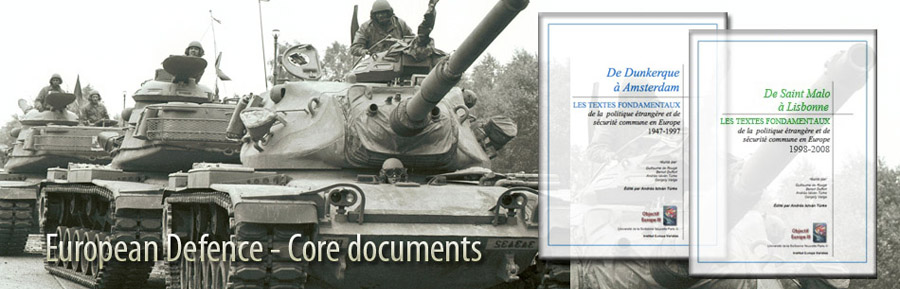
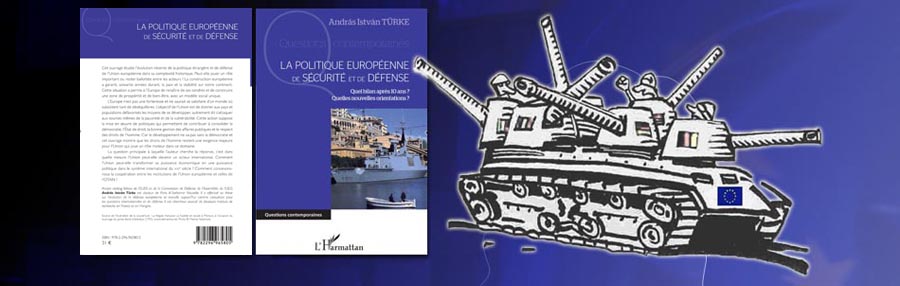
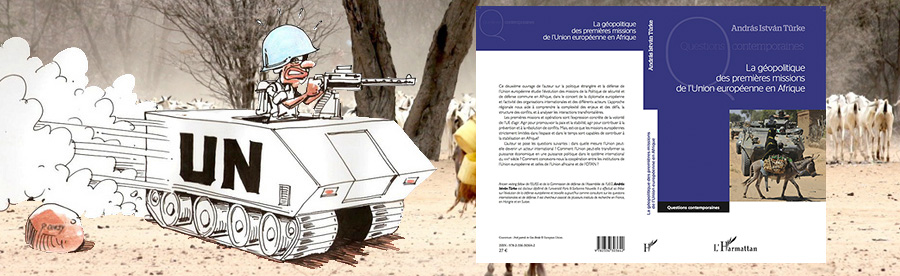
We are looking for sponsors for the English translation of these books, please contact turkeandras(at)gmail(dot)com