
Vous êtes ici
Diplomacy & Defense Think Tank News
Press release - MEPs demand EU action to fight transnational repression
MEPs strongly condemn acts of “transnational repression” and demand the EU and member states adopt a zero-tolerance approach.
Committee on Foreign Affairs
Source : © European Union, 2026 - EP
Committee on Foreign Affairs
Source : © European Union, 2026 - EP
Catégories: Diplomacy & Defense Think Tank News, Europäische Union
Pressemitteilung - Grünes Licht für neue Regeln, um Landwirtinnen und Landwirten zu unterstützen
Am Dienstag billigte das Parlament neue Vorschriften zur Stärkung der vertraglichen Position der Landwirte und zur Stabilisierung ihrer Einkommen.
Ausschuss für Landwirtschaft und ländliche Entwicklung
Quelle : © Europäische Union, 2026 - EP
Ausschuss für Landwirtschaft und ländliche Entwicklung
Quelle : © Europäische Union, 2026 - EP
Catégories: Diplomacy & Defense Think Tank News, Europäische Union
Press release - Parliament supports EU aid for laid off Belgian workers
On Tuesday, MEPs voted to support mobilising €2 million in EU aid to help former workers at car glass manufacturer Soliver, following the company’s bankruptcy.
Committee on Budgets
Source : © European Union, 2026 - EP
Committee on Budgets
Source : © European Union, 2026 - EP
Catégories: Diplomacy & Defense Think Tank News, Europäische Union
The Greek defence ecosystem in the European Defence Fund (2021-2025)
Greece has established itself as a consistent and committed participant in the EDF. Across the 2021-2025 reference period, Greek entities participated in all annual EDF calls without interruption, logging 306 total participations from 88 unique entities. Participation levels remained relatively stable year-on-year.
SMES are the backbone of Greek EDF engagement. They consistently account for the largest share of Greek participants, largely mirroring the structure of the Greek Defence Technological and Industrial Base. Yet, nearly 45% of unique Greek entities participated only once and a significant share recorded no activity in the call cycle immediately following their first project.
Greece’s partners are geographically concentrated. Whether in a coordination or simple participation role, Greek entities overwhelmingly cluster around the big defence-industrial players. Critically, Greek entities tend to cooperate with large for-profit prime contractors from those countries.
Greek EDF participants view the instrument, in principle, as a strategic success but flag a set of concerns. Most respondents to the paper’s survey highlighted the absence of pathways from EDF-funded R&D outputs to actual procurement by EU member-states, creating a structural gap that diminishes the instrument’s industrial and economic multiplier and prevents sustained participation.
The paper makes 9 targeted policy recommendations:
- Strengthen matchmaking mechanisms for Greek entities with foreign entities to build EDF consortia.
- Promote strategic partnerships with major European defence ecosystems through country-level agreements.
- Develop an open-access national monitoring and mapping mechanism for EDF participation.
- Provide targeted initiatives to achieve the transition to coordinator roles.
- Further boost the EDF’s logic and budget in the next MFF.
- Launch targeted reskilling and upskilling campaigns in dual-use technologies to strengthen Greek SME participation in the EDF.
- Develop and publicly communicate a national defence technological and industrial strategy.
- Procurement-oriented initiatives for the EDF outputs should be considered for the next MFF negotiations.
- Enhance the visibility and the legitimacy of the EDF outputs.
Read here in pdf the Policy paper by Spyros Blavoukos, Head, EU Institutions & Policies Programme, ELIAMEP; Head of the ‘Ariane Condellis’ European Programme; Professor, Athens University of Economics & Business; Panos Politis Lamprou, Research Fellow, Defence Hub, ELIAMEP; Georgios Matsoukas, Junior Research Fellow, Defence Hub, ELIAMEP; Panagiotis Kakis, Research Assistant, Defence Hub, ELIAMEP.
IntroductionΤhe European Defence Fund (EDF) represents a landmark initiative in the European Union’s (EU) efforts to strengthen collaborative defence research, innovation and capability development across member-states and associated countries. Created under the 2021-2027 Multiannual Financial Framework (MFF), the EDF is endowed with a budget of nearly 8 billion EUR, of which more than 5 billion EUR is allocated to consortia-based defence capability development projects. Since its first call for proposals in 2021, the EDF has become an established financing instrument for transnational research and industrial programmes, aiming to bolster, inter alia, interoperability, with a cumulative EU budget reaching almost reaching approximately 5.25 billion EUR applied across 281 projects selected for funding based on the results for the period 2021-2025 (DG DEFIS, 2021, 2022, 2023, 2024, 2025).
Despite its institutional consolidation, the EDF emerged through contentious negotiations for the 2021-2027 MFF. The European Commission initially proposed an ambitious budget of 11.5 billion EUR (in constant 2018 prices) for the Fund. However, during the final stages of the negotiations, which were strongly influenced by the economic pressure associated with the COVID-19 pandemic, the proposed allocation was reduced by approximately 39% (Dobber, 2020). Even though the European Parliament criticised the cuts, the debate persisted over whether significant investments should be directed towards defence research and development or alternatively towards other areas, such as policies that tackle international instability before it results in war or conflict (Csernatoni & Martins, 2019). These debates remain particularly relevant in view of the next MFF negotiations. Although security and defence are framed as strategic priorities for the Union, trade tensions and inflationary pressures, very much but not exclusively due to rising energy costs and global political tensions, continue to intensify the political dilemma between ‘guns and butter’, namely between defence spending and competing socio-economic priorities.
Against this background, broader debates on the future of EU defence and competitiveness funding have gained renewed importance. While discussion on broader EU competitiveness initiatives continues and new instruments have been proposed in the framework of the next MFF, like, for example, the Commission’s proposal for a European Competitiveness Fund, the EDF, or a new and more robust permanent funding mechanism, which will follow the same logic, will need to exist within the EU’s defence industrial architecture. In this evolving context, understanding how national defence and innovation ecosystems engage with EDF-funded collaborative networks becomes increasingly important, both for assessing the EDF’s impact and for evaluating the position of member-states within the EU defence industrial landscape.
The Greek case is particularly relevant in this regard. Despite its growing importance, the participation of the Greek defence and dual-use innovation ecosystem in EDF-funded projects, at the level of individual entities, has not been systematically and thoroughly examined. Most analyses document exclusively the number and thematic distribution of projects involving Greek entities. While this remains of utmost importance, a project/country-level perspective cannot reveal which specific entities participate or the nationality of the entities with which Greek entities most frequently collaborate. These questions matter for both academic understanding and policy-oriented purposes.
Accordingly, this paper addresses the following research question: What does the Greek defence ecosystem that participates in selected for EDF funding projects consist of? Specifically, how many and what types of Greek entities participate and with entities from which countries do they tend to cooperate? A secondary research question complements this structural mapping: How do Greek participants assess the EDF instrument, and what institutional support is provided by Greek public authorities?
To respond to the abovementioned questions, the paper is structured as follows. Chapter 2 offers a brief literature review, summarising existing research on the EDF and further elaborating on our paper’s contribution and added value. Chapter 3 describes the methodology we implemented, including our data collection and mining procedures, the reference years covered and the classification system we employed to categorise entity types. Chapter 4 presents and interprets empirical findings across two sections. The country-level dimension analyses and maps Greek entities’ coordination role and project-based cooperation footprint, by visualising Greek-led consortia structures and identifying trends apparent in the country-level overviews of projects with Greek participation. The entity-level dimension profiles the categorisation and volume of Greek entities selected for EDF funding, as well as their transnational partnership patterns, illustrated by linkages between Greek and foreign entities by thematic category and year. Throughout both analytical sections of the discussion, empirical findings are contextualised by key observations integrated directly within each set of findings, alongside relevant qualitative insights drawn from questionnaires. Chapter 5 formulates targeted recommendations for public authorities.
Brief literature review and the paper’s triple added valueThe EDF serves diverse strategic and industrial purposes across member-states. According to Fiott (2024), major industrial powers such as France view the EDF as a vehicle for heavily subsidising domestic defence sectors and for building a European ‘strategic autonomy’ free from US export controls. Germany utilises common funding to support its military modernisation (Fiott, 2024; Brøgger, 2025), while Spain and Italy leverage the fund to boost their defence industrial bases. Small and medium-sized countries like Poland and Finland participate in projects led by larger partners to access new technology and secure their position in cross-border supply chains (Blavoukos, Politis Lamprou & Matsoukas, 2025; Fiott, 2024). Conversely, countries like Romania participate only to a limited extent, partly because their defence industries are small and their procurement policies prioritise off-the-shelf US military equipment for immediate security needs over long-term European integration (Iancu, 2025).
For Greece, this reliance on EU frameworks is driven by hard economic and structural realities. Following drastic budget cuts to the Ministry of National Defence during the country’s almost decade-long harsh financial crisis, Greek private-sector defence firms were forced to actively pursue alternative pan-(EU)ropean financing like the EDF (Kamaras, 2023). This structural need for supranational financing converges directly with the institutional characteristics of the EDF, whose regulatory framework and incentives architecture promote (and in certain cases, require) the inclusion of SMEs, which constitute the backbone of Greece’s domestic defence technological and industrial base. As such, Greece strategically leverages the EDF Regulation, treating it as a structural equaliser to, among others, embed its local industry into broader European supply networks (Efstathiou, 2020). Ultimately, Greece views this funding as a useful tool for research and development of military capabilities, the acquisition of technical know-how, the rebirth of its domestic industry and the reversal of the ‘brain drain’ of young scientists. At the same time, Greece demonstrates, in practice, that it supports a stronger and more robust EU defence industrial policy.
Giumelli and Marx (2023) argue that although a limited number of large industrial actors occupy a central position in market consolidation within the European defence (still far from single) market, EU institutions simultaneously promote geographical dispersion and actively encourage the inclusion of SMEs in order to safeguard institutional legitimacy. This effort aims to preserve legitimacy through participation criteria and incentives, which, on the one hand, expand the number of participating entities but, on the other hand, slow the consolidation process. Masson (2025) also highlights this tension empirically by demonstrating a clear hierarchy in funding allocation. While SMEs account for approximately 39-43% of entities selected for funding, they receive only 18-20% of EU financial contributions. As a result, a two-speed dynamic exists: one geared toward market consolidation favoring large primes, and another driven by the institutional mandate for geographical dispersion and the inclusion of SMEs.
So far, there has been no previous work exclusively focusing on the Greek defence (and dual-use) ecosystem’s participation in selected for funding EDF projects entity-wise. Our own prior data-driven research (i.e., Blavoukos, Politis Lamprou & Matsoukas, 2025) adopted only a project-based perspective, mapping the thematic distribution of projects involving Greek participation. In contrast, the present study provides additional quantitative information on project-related Greek participation and, most importantly, shifts the core of the analysis from projects to entities. As explained earlier, we examine which types of Greek actors (i.e., for profit companies, SMEs, non-profit organisations, associations, universities, governmental entities and public research organisations, and consultancies) are selected for EDF funding, how frequently they assume the role of project coordinator, and which entities from which member-states or associated countries they most commonly tend to cooperate with.
By doing so, the article has a triple added value: a) to provide data-driven insights to Greek entities interested in joining EDF calls as consortium members (or coordinators), and b) to inform foreign entities seeking to collaborate with Greek ones within the framework of the EDF, and c) to assist the relevant Greek public authorities (e.g., Secretariat-General of National Security, Directorate-General for Defence Investments and Armaments, the Hellenic Centre for Defence Innovation) in shaping a beneficial support mechanism for the Greek defence industry and beyond.
MethodologyFor the purposes of our research, we pursued the following data collection and mining process. Data were extracted for European Defence Fund (EDF) projects in which Greek entities were selected for funding based on the 2021, 2022, 2023, 2024 and 2025 results. All the data (e.g., official entities’ names, entity nationality, etc.) were extracted from the relevant official project-based factsheets available on the Commission’s website for each year.[1] Following thorough validation, these data were subsequently organised into a large database that categorises every project (including the entities and their nationality) by year and thematic category. To record industrial relationships, two (2) matrices were constructed from the database.
The first matrix classifies entities in Greece and partner entities into four distinct types: For-profit organisations; small and medium-sized enterprises (SMEs), according to the Commission’s definition (Entities that are subsidiary to other entities that do not meet the same criteria are classified as for-profit organizations); non-profit organisations, associations, universities, governmental entities and public research organisations; and consultancies. This classification partially reproduces the process implemented by the Fondation de Recherche Stratégique (FRS). This matrix aims to provide information on a) the types of Greek entities selected for EDF funding, b) the nationality of the entities under Greece’s coordination, and c) the nationality of the entities-coordinators which coordinate the Greek entities selected for EDF funding. The SME type follows the Commission’s definition, and the classification is made possible by open-access data available on each entity’s website. The consultancy type specifically documents the participation of companies whose research and development functions are limited or non-existent, recording their project management and advisory roles within these consortia. Information on each selected entity’s primary focus and/or activity was extracted from its website or public data. In some cases, however, publicly available data do not allow for a fully unambiguous classification; therefore, some deviation may occur. The authors did not access each project’s contractual agreement and/or arrangements to further investigate whether consulting/advisory companies were partially involved in the core R&D process. A sub-matrix was generated for each year to record total metrics by country. These data document the number of entities’ nationalities under Greece’s coordination as well as the number of countries coordinating with Greece.
The second matrix records industrial partnerships between countries, with each country represented by its entities. To prevent the duplication of data entries, a filtering mechanism was utilised. Entities from countries participating in a consortium in which at least one Greek entity also participates, within a specific thematic category, were excluded after their initial entry.
To complement the quantitative analysis, questionnaires were administered to representatives of Greek entities that participated in EDF consortia between 2021 and 2025. We received responses from all categories of entities, including SMEs, mid-caps, research organisations and large for-profit subsidiaries (simple participants and consortium coordinators). Questions covered motivations for participation, partner-finding mechanisms, perceived benefits, the conversion of EDF partnerships into bilateral cooperation, evaluations of the EDF instrument itself, and assessments of Greek institutional support.
Results and DiscussionCountry/project-level dimension
The following figures cover the full reference period (2021 to 2025) and distinguish between coordination and simple participation roles to avoid overlaps. Two complementary figures are presented.
The first figure captures the number of projects in which a Greek entity assumes the role of coordinator, broken down by the nationality of the other participating entities. The second figure illustrates the number of projects in which at least one Greek entity participates alongside entities from other countries, excluding projects in which a Greek entity acts as coordinator. In both figures, the thickness of each line reflects the volume of projects. The thicker the line, the greater the number of projects. For access to country-specific project numbers, the interactive version is recommended.[2]
Figure 1: Greek-coordinated projects by nationality of participating entities (2021-2025) (interactive version)
Figure 2: Projects with Greek participation by nationality of participating entities (2021-2025) (interactive version)
A pattern emerges across both figures. Greek partnerships, whether in coordination or participation, are highly concentrated within the largest EU defence industrial ecosystems. France, Italy, Germany, and Spain occupy the most prominent positions in virtually every call across both types of consortia. Given the sheer volume of participation in EDF calls, this degree of alignment is expected. The structural weight of the defence industries of said partners is reflected in the EDF, as they participate in and coordinate the largest share of projects, while maintaining the strongest presence throughout the reference period (Fiott, 2026).
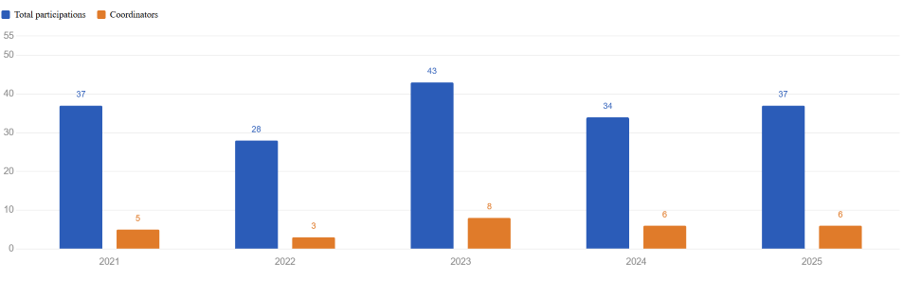
Entity-level dimensionFigure 3 shows the total number of Greek entities participating in or coordinating EDF projects annually. It shows the number of unique entities involved in each year separately and does not correspond to the total number of unique entities across the entire period, as the same entity may participate in (or coordinate) projects in more than one year. [3]
Figure 3: Total number of unique Greek entities participating in or coordinating EDF projects from 2021 to 2025.
Source: Authors’ compilation from official European Commission/DG DEFIS factsheets
A first observation concerns the evolution of participation levels across the reference period. The total number of Greek entities involved in EDF projects exhibits relatively minor year-to-year fluctuations. Participation levels are influenced by the thematic priorities of each call, the readiness of domestic actors to build networks and form consortia and the access to information about EDF calls. While participation levels vary, Greek entities maintain a consistent presence across all years, indicating that the national ecosystem has successfully positioned itself from the outset within the most important supranational defence-industrial scheme. This pattern suggests that Greece is not a marginal player and could move towards a more stable and strategically coordinated participation profile. Moreover, the coordination data point to limited leadership capacity (compared to the normal participation levels) among Greek entities that have assumed coordinator roles over the years, yet coordination remains relatively sporadic. Figure 4 illustrates the top 6 Greek entities by total participation from 2021 to 2025.
Figure 4: Greek entities positioned as the most recurrent participants within the reference period (2021-2025)
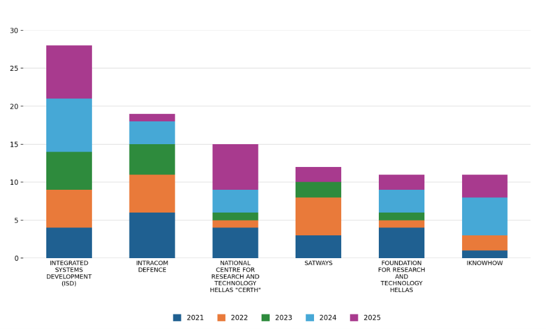
The composition of the most frequent Greek participants in the EDF broadly mirrors the structure of the wider Greek participant pool. However, the complete pool of unique Greek participants reveals more complex dynamics (Annex II). Nearly 45% of the 88 unique entities are one-time participants, suggesting that for a large share of the Greek ecosystem, EDF participation functions as a one-off experience rather than a sustained engagement. Among entities that do return, over a third record zero activity in the year immediately following their first participation. This recurring pattern suggests significant administrative friction, whereby the obligations of a first EDF project absorb substantial organisational capacity, crowding out the subsequent call cycle. What emerges is a two-speed dynamic: a small core of -primarily large- entities with genuine multi-year engagement, alongside a much larger number of smaller and medium-sized entities, with the depth of participation contingent on the capacity to absorb the instrument’s administrative demands.
The following figures present the number and types of Greek entities that received (a share of) EDF financial contribution during the period 2021-2025. The entities are classified according to the types defined in the methodology chapter and are presented both in terms of Greek coordinators and the total number of Greek participating entities.[4]
Figure 5: Categorisation per type and volume of coordinations for Greek entities in EDF projects (2021-2025)
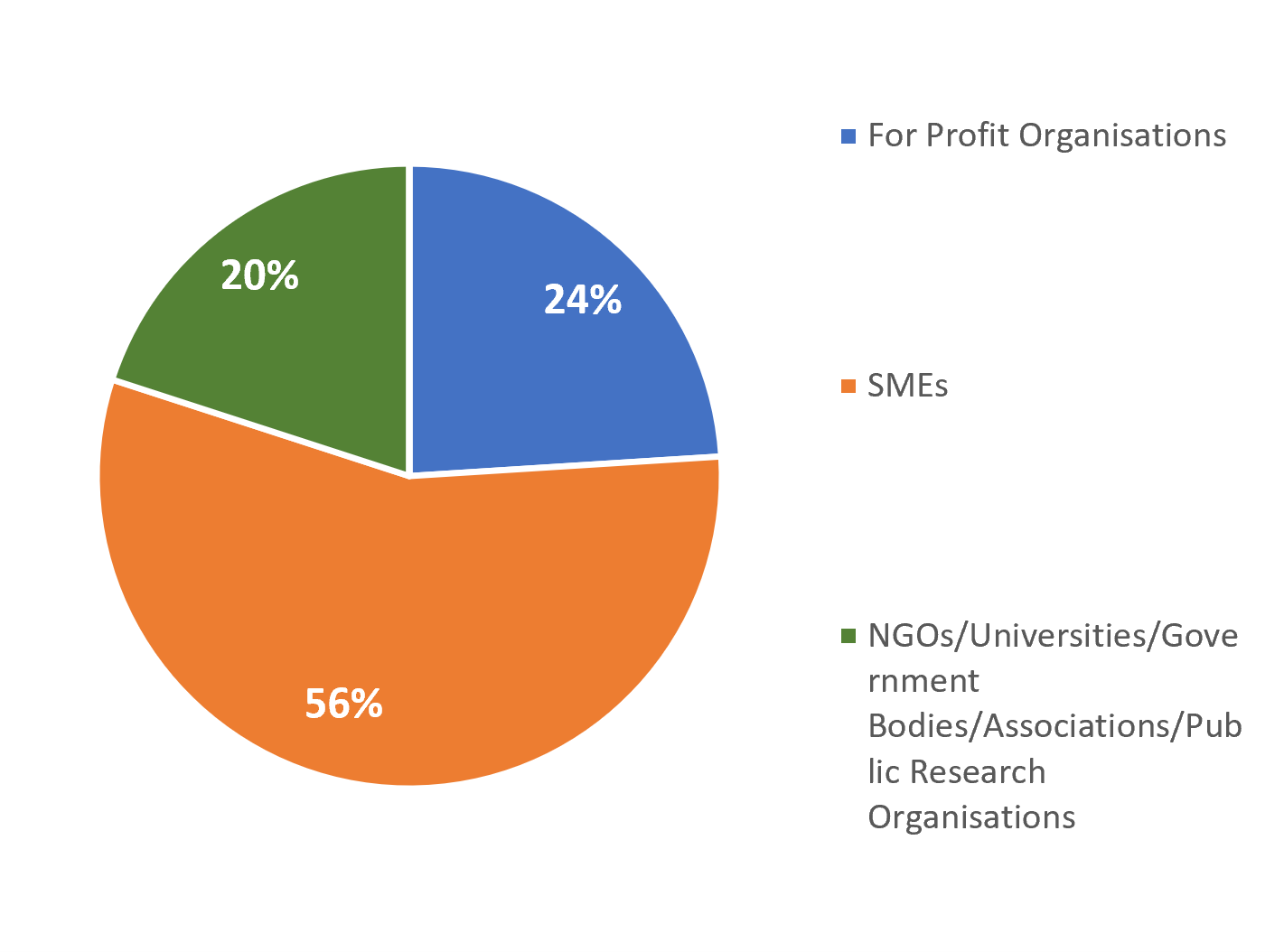
Figure 6: Categorisation per entity type and volume of total participations (including simple participations and coordinations) for Greek entities in EDF projects (2021-2025)
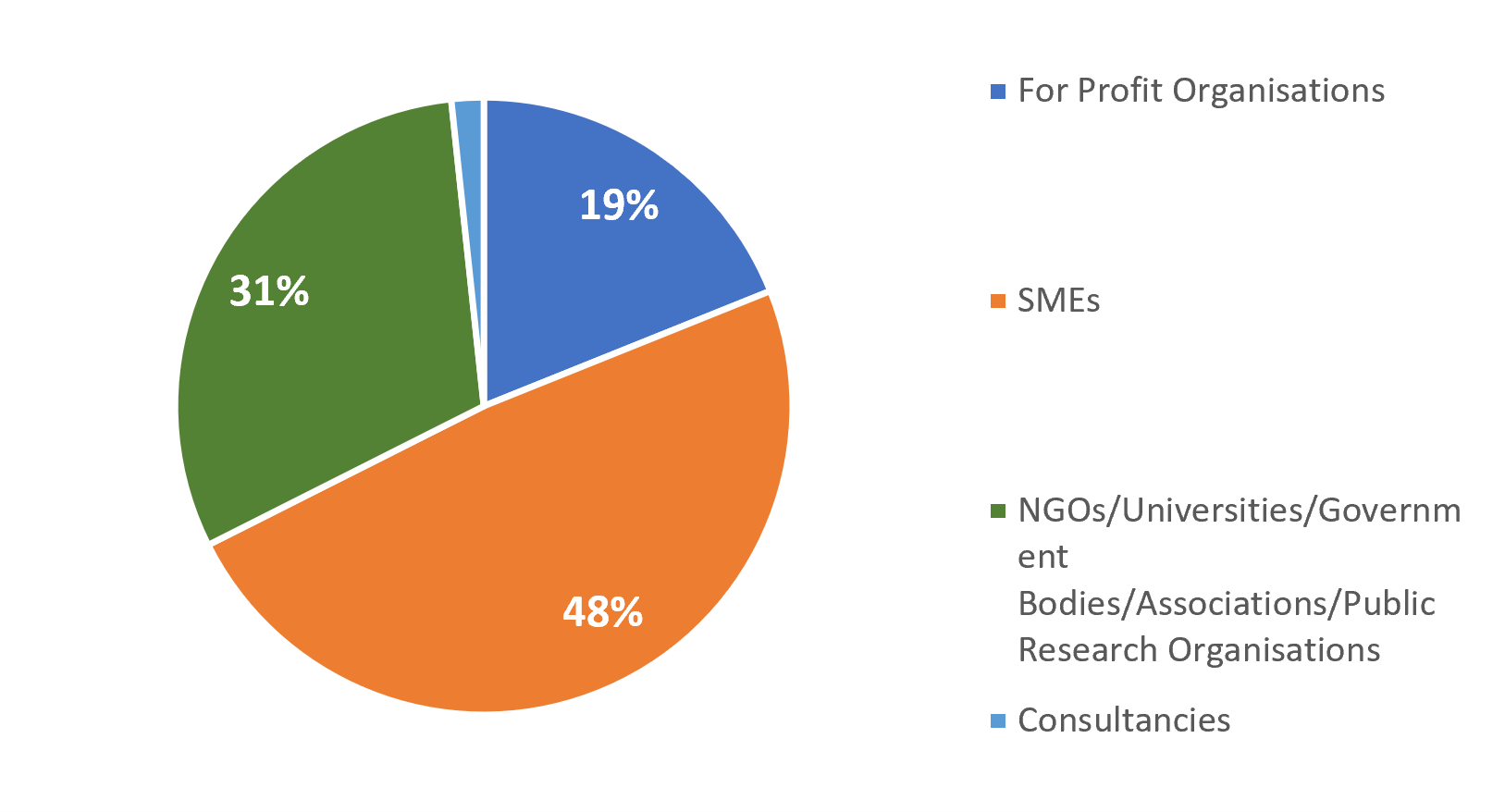
An important finding concerns the types of Greek entities involved in EDF projects. The data indicate that Greek participation is predominantly driven by SMEs, which consistently account for the largest share of Greek actors across the examined period. This trend aligns closely with the structural characteristics of the Greek Defence Technological and Industrial Base (GTIB), which is widely recognised as being composed mainly of smaller firms rather than large prime contractors. In addition to SMEs, the data also reveals a significant presence of research and non-governmental organisations, paving the way for greater involvement of the Greek university and research community. Looking more closely at the annual distribution of coordinations and total participations further reinforces this observation. The Greek industry’s interest in Open SME Calls is evident in Figure 9 below.
The following figures provide the same data visualisation but for foreign entities involved in consortia in which a Greek entity a) acts as the project coordinator, and b) participates.[5]
Figure 7: Categorisation per entity type and volume of coordinations for Greece’s foreign consortium partners in EDF projects (2021-2025)
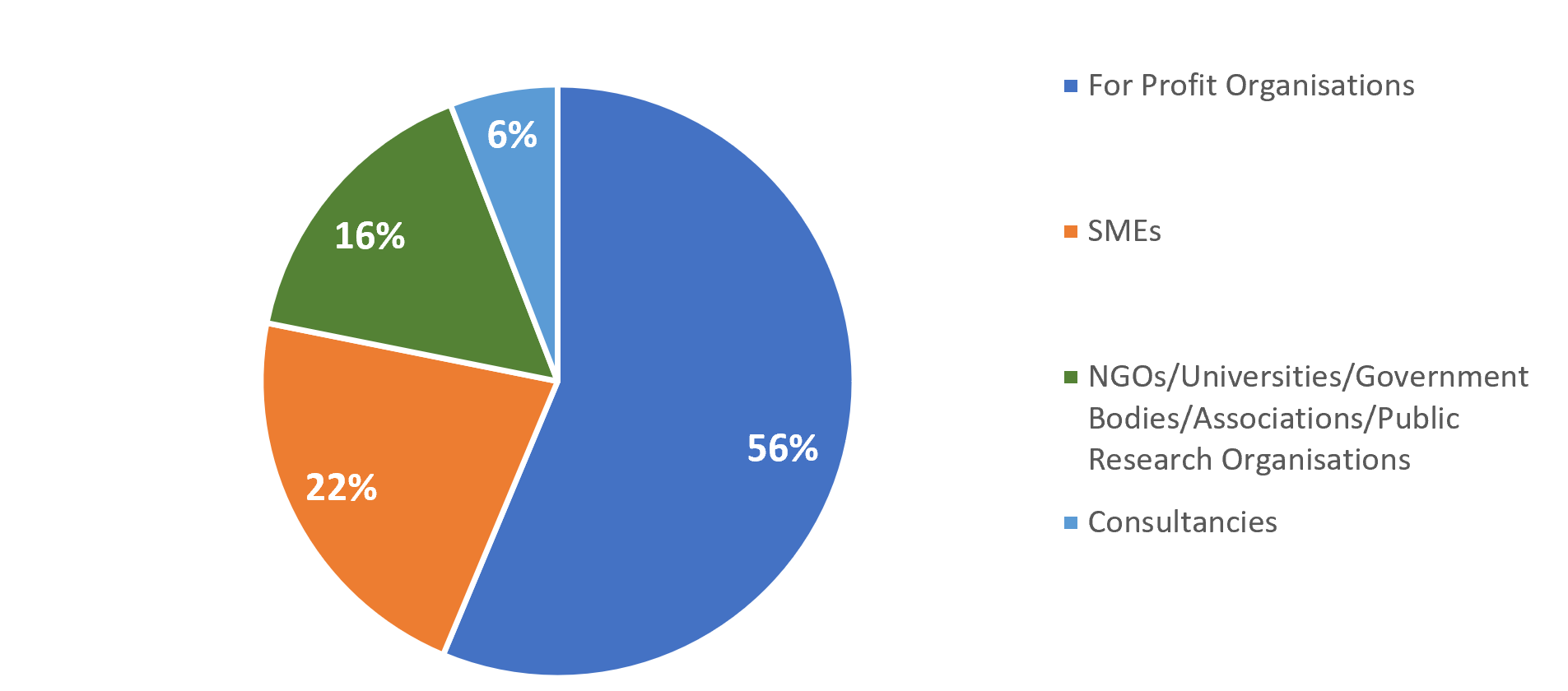
Figure 8: Categorisation per entity type and volume of total participations (simple participations and coordinations) for Greece’s foreign consortium partners in EDF projects (2021-2025)
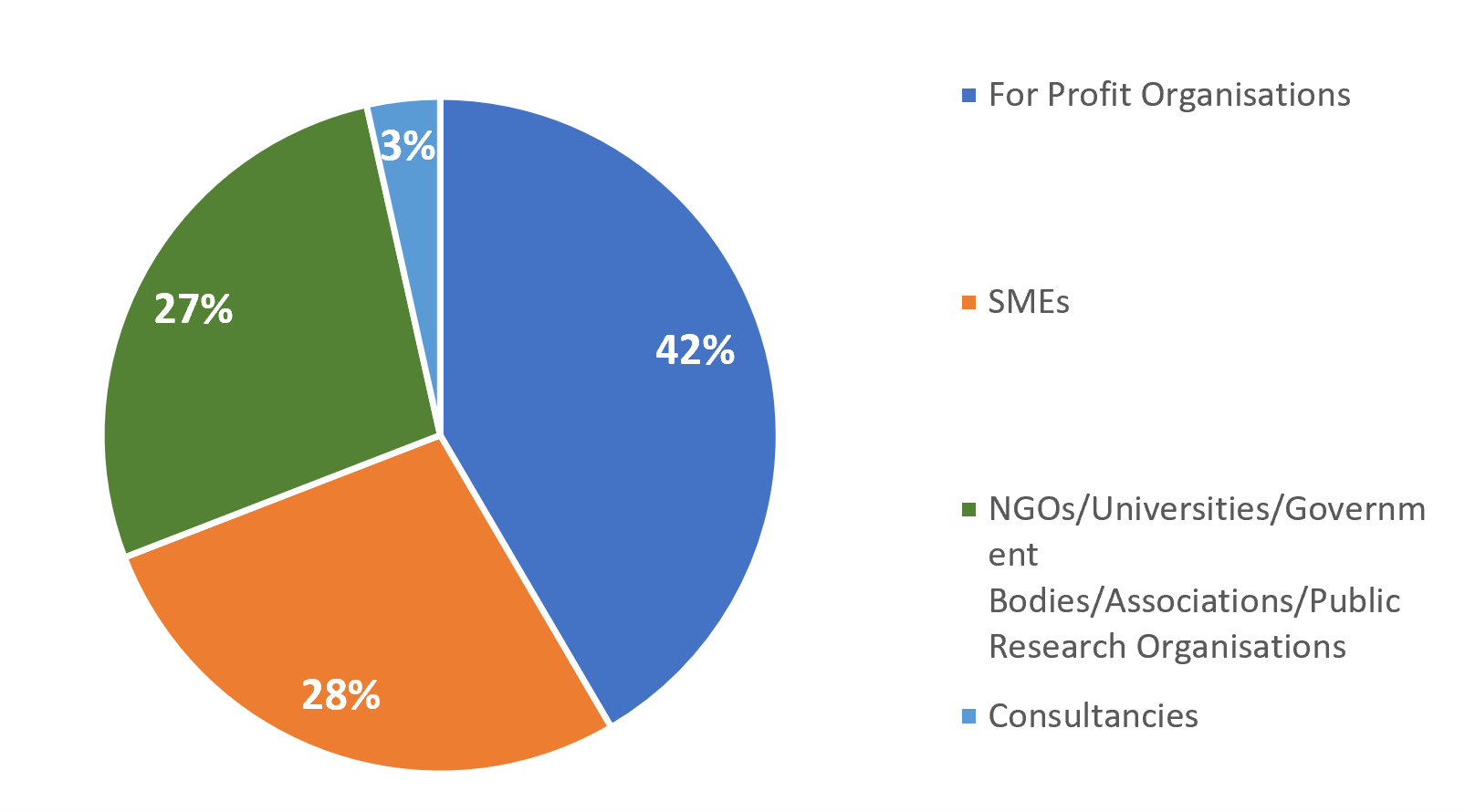
What clearly emerges is that in contrast to the Greek entities’ EDF participation, the foreign entities with which Greek actors collaborate are often for-profit companies (e.g., established defence-industrial players). Overall, the results reveal that Greek entities tend to cooperate predominantly with the largest EU defence-industrial ecosystems. This reflects both the high concentration of major defence companies in other member-states with a substantial defence industrial sector, their tendency to participate in EU-level consortia, and the incentive for Greek entities to partner with established (prime) contractors to strengthen their technological know-how and integrate smoothly into the European defence value chain.
Entity-level networks by year, Greek entity-coordinator and thematic category (2021-2025)
The following figure illustrates the number and nationality of foreign entities participating in consortia led by Greek coordinator entities, mapping the cross-border networks formed around Greek coordinators by thematic category, covering the full reference period (2021 – 2025).[6]
Figure 9: Foreign entities in consortia led by Greek coordinators per thematic area of EDF project (2021-2025) (interactive version)
Created with flourish.studio.
Greek entity-level total participations per year and thematic category (2021-2025)
The subsequent figure maps cooperation patterns at the entity level, covering the full reference period (2021 to 2025). Organised by thematic category, it illustrates the number and nationality of foreign entities collaborating with Greek entities in projects selected for EDF funding, providing a direct visualisation of transnational industrial linkages per thematic category. The darker the colour of each cell, the greater the number of entities. For access to the specific number of entities per country, the interactive version is recommended.[7]
Figure 10: Volume of third-country entity participation with Greek entities by thematic category (2021-2025) (interactive version)
Created with flourish.studio
Entity-level total participation data by nationality and thematic category reinforce our previous observation and indicate recurring patterns of intense collaboration with a group of entities from leading EU defence-industrial countries, as illustrated in Annex 1 (Figures 12-16).
In 2021, Greek entities most frequently collaborated with Italian, German, French, and Spanish entities, mainly across 4 thematic areas: energy and environment, air combat, digital transformation, and materials and components. This pattern continues in 2022, although the thematic focus expands to other areas, including medical response and CBRN, space, and sensors. In 2023, which also records the highest level of Greek participation overall, cooperation with entities from the same countries intensifies further across multiple domains, such as technological challenges, force protection and mobility, and ground combat. A similar configuration persists in 2024, particularly with French, Spanish, and Italian industrial players. Finally, a comparable trend occurs in 2025. Greek entities continue to collaborate most intensively with the aforementioned partners (plus German ones), with some evolution in thematic emphasis. Ground combat registers as the most engaging across the four core partners, closely followed by naval combat – particularly with France, Italy, and the Netherlands – while air combat remains highly relevant. Space and technological challenges consolidate as structurally significant themes across the 2025 call.
Figure 11 illustrates the distribution of the number of entities per EDF project in which at least one Greek entity participates, covering the full reference period (2021 to 2025) as well as each individual year. Each dot represents a project. The figure shows considerable variation in consortium size, ranging from 3 to 92 entities per project, with the majority clustering between 10 and 40 entities. The outlier observed in 2022 corresponds to the RESILIENCE project, which recorded the highest number of participating entities (92) across the entire reference period.[8]
Figure 11: Distribution of total volume of entities per EDF project for the reference period (2021-2025) (interactive version)
Created with flourish.studio
Insights from Greek EDF participants
The responses to the questionnaire material are organised into six thematic clusters. First, respondents articulate a range of overlapping motivations, with funding for R&D being the most commonly recurring motivation. Within this cluster, some SMEs specifically frame their motivation in terms of advancing to higher TRL. Beyond funding, participation is also linked to alignment between the technology focus and EDF priority areas, as well as to domains. A second motivation relates to access to major European prime contractors, to high-calibre consortia, and to defence markets that would otherwise remain inaccessible to Greek SMEs. A third one is more strategic in nature, framing participation as a contribution to reversing import dependence and building indigenous defence capacity, alongside engagement. Furthermore, on partner-finding mechanisms, responses reveal a relatively even distribution across three modalities: a) being approached by an existing consortium, b) proactively seeking partners, and c) establishing a consortium and inviting other entities to join. Several respondents reported using more than one of these modalities across different calls. Notably, only a minority of respondents have established consortia from scratch, a finding directly relevant to the matchmaking gap discussed below.
In addition, respondents describe benefits at multiple levels. At the technological level, EDF participation has accelerated R&D roadmaps, with one respondent reporting that their technologies are now close to the release of exploitable products. At the organisational level, one respondent reports the development of in-house capabilities in programme governance, legal and contractual management (including IPR allocation and Consortium Agreement negotiation), and financial oversight at multi-partner scale, primarily as a consequence of their coordinator role; other respondents mention capacity building in more general terms. At the strategic level, EDF involvement is described by one respondent as a “technical calling card” that provides the validation needed to enter prime contractors’ supply chains, and by another as a vehicle for European visibility and recognition. One coordinator describes a qualitative shift in positioning, from being “selected by others” to selecting partners and setting the technical and commercial agenda of collaboration, although other coordinators in the sample do not report a comparable shift, and one notes that coordination did not extend their network.
Findings regarding the conversion of EDF participation into bilateral industrial cooperation are mixed. Several respondents report concrete conversion, including business contracts, joint proposal submissions, and the exploration of other collaborative opportunities. Other respondents, however, report no conversion into bilateral cooperation or note that pre-existing relationships with primes (predating the EDF) have not been substantially altered by EDF participation. One coordinator identifies three structural barriers to conversion, namely export control constraints, differing national procurement priorities across member-states, and the inherent length of defence procurement cycles.
Respondents almost unanimously consider the EDF a success, particularly as a first-generation instrument establishing the principle of EU-level collective investment in defence R&D. Recognised achievements include the consolidation of a unified European defence ecosystem, the bridging of national industries, the increase in the number of European defence companies and their innovation capacity and a contribution to European strategic autonomy.
On the assessment of Greek institutional support, respondents who name specific Greek bodies distinguish between the General Directorate for Defence Investments and Armaments (GDDIA), described as proactive, supportive and operationally agile, and the Hellenic Centre for Defence Innovation (HCDI), described as a newcomer, still building institutional capacity but evolving rapidly. Another respondent highlights that the HCDI is now beginning to establish its support structure. These observations are consistent with recent work calling for HCDI’s budget to be doubled, as part of a wider strategy for the Greek defence technological industrial base (Kamaras, 2025).
At the same time, a consistent set of concerns emerges:
- Disproportionate administrative and reporting burden: The burden is particularly heavy for SMEs that take on coordinator roles and calls for alignment with Horizon Europe simplification practices.
- Disconnect between funded R&D and procurement: the most consistently cited weakness. Respondents describe this in various terms, including the absence of pathways from R&D to procurement, the lack of follow-up on real product development, weak adoption of EDF-developed solutions by member-states, and limited progress toward producing ammunition and platforms. The absence of a credible pan-EU joint procurement mechanism is a significant concern.
- Excessive timelines: Administrative delays are flagged as important barriers to further engagement and participation in successive calls.
- Perceived imbalances in participation: There is a view that participation remains largely concentrated among a relatively small number of member-states. In major capability categories, primes continue to play a dominant role and competition between consortia may be limited, whereas SMEs-focused calls tend to be extremely competitive, resulting in a high number of unfunded SMEs proposals. At the same time, in order to achieve maximum geographical inclusion, an entity’s (in particular, an SME’s) participation and funding may be marginal and limited compared to large primes, mostly reflecting a need by primes to satisfy specific composition requirements vis-à-vis the inclusion of SMEs in a consortium rather than a genuine intention for industrial collaboration.
- Lack of transparency in EDF commercialisation results: If we compare the U.S. Defence Innovation Unit, which publishes data vis-à-vis the number of prototype contracts and successful transitions, the EDF needs to establish a public reporting system that shows how many SMEs ultimately sell developed products to EU MoDs and what the economic multiplier of the EDF funding is.
- Barriers to a true Single Market: Export control constraints, differing national procurement priorities and lengthy procurement cycles hinder the successful conversion of EDF partnerships into long-term bilateral industrial cooperation. Concerns over participation by consultancies with limited or no R&D function.
Based on the data analysis and the discussion presented above, policy recommendations emerge for the public authorities:
- Strengthen matchmaking mechanisms for Greek entities with foreign entities to build EDF consortia
Public authorities, including the HCDI, could offer additional structured consortium-building and matchmaking services. These services should actively connect Greek entities, especially SMEs and research organisations, with potential partners in other countries, even before the publication of calls. Such initiatives could take place in international defence exhibitions, which attract a large number of relevant entities. This will allow for easier integration into the European defence value chain.
- Promote strategic partnerships with major European defence ecosystems through country-level agreements.
Our data have revealed that Greek entities frequently collaborate with entities from major defence-industrial countries. Public authorities, especially the network of Military and Economic & Commercial Affairs Attachés in our embassies abroad, should attempt to institutionalise and deepen these cooperation channels through bilateral initiatives.
- Develop an open-access national monitoring and mapping mechanism for EDF participation.
Public authorities, such as the HCDI and GDDIA, should launch an online platform that tracks Greek participation in EDF projects at the entity level, by year and by thematic category. This would allow firms (especially SMEs) and research organisations, to showcase their capabilities to potential partners across Europe. This visibility can be particularly valuable for SMEs and mid-caps that may possess strong know-how but lack international recognition compared to large prime contractors. It would also facilitate partner discovery and consortium formation among Greek actors, enabling them to form stronger national clusters before joining multinational consortia.
- Provide targeted initiatives to achieve the transition to coordinator roles.
Public authorities should implement capacity-building initiatives to strengthen coordination capabilities, particularly among high-performing SMEs. This could include training in project management, consortium building, leadership and EDF regulatory procedures
- Further boost the EDF’s logic and budget in the next MFF.
The Greek Government should actively advocate for the continuation of the EDF or a similar instrument in the next MFF, ensuring that a fund for the European defence technological and industrial base remains available. It goes without saying that the fund should be allocated a larger budget, which would expand participation opportunities.
- Launch targeted reskilling and upskilling campaigns in dual-use technologies to strengthen Greek SME participation in the EDF.
Greece’s participation in the EDF is driven predominantly by SMEs; public authorities should design structured national campaigns to reskill and upskill SMEs’ workforces in dual-use technologies directly relevant to EDF priorities, such as artificial intelligence and advanced materials. These campaigns should focus on helping civilian technology firms adapt their existing competencies to defence applications. The financing of these initiatives should be strategically layered across available instruments, such as ESPA, which could offer substantial co-financing opportunities for human capital development towards dual-use upskilling.
- Develop and publicly communicate a national defence technological and industrial strategy.
Greece should develop and publicly communicate a medium-term national defence technological and industrial strategy, identifying priority technologies and capabilities domains for public support and investment. The strategy should cover areas that the EDF does not sufficiently address, in line with Greek priorities, and aim to complement EU funding tools. This would improve predictability for Greek firms regarding future investment and research and development priorities, thereby supporting longer-term industrial planning.
- Procurement-oriented initiatives for the EDF outputs should be considered for the next MFF negotiations.
Due attention should be paid to the commercialisation process for the EDF outputs, with an emphasis on mechanisms to address the persistent procurement “disconnect” or “gap” between R&D activities (co-)funded by the EDF and the subsequent acquisition of their outcomes by interested member states.
- Enhance the visibility and the legitimacy of the EDF outputs.
Greece’s institutional stakeholders should establish a transparent reporting framework to track the transition of EDF-funded projects into defence procurement and exportable products. Inspired by the US Defence Innovation Unit’s “Transition Success” KPI, HCDI should annually report the value of EDF-supported projects that result in acquisition by the Hellenic Armed Forces, integration into European supply chains, or exports to foreign markets. This would enable better measurement of the return on public R&D investment, provide visibility for successful SMEs, incentivise the development of commercially viable technologies that strengthen both Greece’s industrial base and its export capacity and strengthen the accountability and the legitimacy of the EDF outputs.
[1] For years when the European Commission did not provide a thematic category for each project, categorisation was based on the project context and available information. Subcontractors or other entities which may participate in the execution of an EDF project, but whose names are not mentioned in the relevant factsheet, are not taken into account for the purposes of this paper.
[2] The annual breakdown, which illustrates the above figures disaggregated across each reference year, is available in Annex I.
[3] Table 1 lists all unique Greek entities that participated in at least one project selected for EDF funding during the examined years, along with the number of projects they participated in per year, in alphabetical order (See Annex II).
[4] The annual breakdown, which illustrates the categorisation of Greek beneficiaries across the 5 years, is available in Annex III. For each year, two graphs are shown, one showing Greek coordinators and one showing total participation by Greek entities.
[5] The annual breakdown, which illustrates the categorisation of foreign beneficiaries across the years, is available in Annex IV. For each year, two graphs are shown, one showing foreign coordinators and one showing total participation by foreign entities.
[6] The annual breakdown, presenting a separate figure for each year and thematic category, is available in Annex V.
[7] The annual breakdown, presenting a separate figure for each year of the reference period (2021, 2022, 2023, 2024, and 2025), is available in Annex VI.
[8] The breakdown of the most prominent foreign participants in projects involving Greek participation and coordination, by nationality and thematic area for each year of the reference period (2021-2025), is available in Annex VII.
Catégories: Afrique, Diplomacy & Defense Think Tank News
Social contracts and environmental change: conceptualizing interdependencies
Environmental change can affect social contracts, which are the relationships between societal groups and between such groups and the state. Droughts, river pollution and rising sea levels often change the distribution of resources within countries or harm some societal groups more than others, raising questions about compensation. Social contracts can also trigger environmental change, mainly because the environment and future generations cannot themselves participate in social contract negotiations. Many social contracts allow influential elites to overuse or pollute natural resources, harming the environment, other societal groups and future generations. Drawing on existing social contract and environmental governance research, this introductory article develops a conceptual approach for analyzing the bidirectional effects between the environment and the relations between different parts of society and the state. It presents different types of interaction using multiple examples. This approach helps to identify starting points for the negotiation of more sustainable and inclusive social contracts.
Catégories: Diplomacy & Defense Think Tank News
Social contracts and environmental change: conceptualizing interdependencies
Environmental change can affect social contracts, which are the relationships between societal groups and between such groups and the state. Droughts, river pollution and rising sea levels often change the distribution of resources within countries or harm some societal groups more than others, raising questions about compensation. Social contracts can also trigger environmental change, mainly because the environment and future generations cannot themselves participate in social contract negotiations. Many social contracts allow influential elites to overuse or pollute natural resources, harming the environment, other societal groups and future generations. Drawing on existing social contract and environmental governance research, this introductory article develops a conceptual approach for analyzing the bidirectional effects between the environment and the relations between different parts of society and the state. It presents different types of interaction using multiple examples. This approach helps to identify starting points for the negotiation of more sustainable and inclusive social contracts.
Social contracts and environmental change: conceptualizing interdependencies
Environmental change can affect social contracts, which are the relationships between societal groups and between such groups and the state. Droughts, river pollution and rising sea levels often change the distribution of resources within countries or harm some societal groups more than others, raising questions about compensation. Social contracts can also trigger environmental change, mainly because the environment and future generations cannot themselves participate in social contract negotiations. Many social contracts allow influential elites to overuse or pollute natural resources, harming the environment, other societal groups and future generations. Drawing on existing social contract and environmental governance research, this introductory article develops a conceptual approach for analyzing the bidirectional effects between the environment and the relations between different parts of society and the state. It presents different types of interaction using multiple examples. This approach helps to identify starting points for the negotiation of more sustainable and inclusive social contracts.
Catégories: Afrique, Diplomacy & Defense Think Tank News
Iran Abkommen: "Vorläufige Einigung scheint realistisch"
Politikwissenschaftlerin Laura von Daniels zum Abkommen zwischen Iran und USA
Catégories: Diplomacy & Defense Think Tank News
Untapped Potential at the European Public Prosecutor’s Office
Sanctions are a key instrument in the European Union’s foreign and security policy. Although their enforcement depends on the Union’s ability to act legally as well as politically, prosecutions remain constrained by national borders. For this reason, France and Germany proposed in 2022 that the mandate of the European Public Prosecutor’s Office (EPPO) be expanded to cover violations of EU sanctions. That initiative failed to gain sufficient support in the Council, nor was the problem solved by the 2024 directive defining offences and penalties. The change of government in Hungary and the review of EPPO’s mandate scheduled for 2026 offer an opportunity to revisit the issue.
Catégories: Diplomacy & Defense Think Tank News
Press release - June plenary session opening: Metsola presents procedural reforms
President Metsola opened the 15-19 June plenary session in Strasbourg by announcing several changes to plenary procedural rules.
Source : © European Union, 2026 - EP
Source : © European Union, 2026 - EP
Catégories: Diplomacy & Defense Think Tank News, Europäische Union
Press release - Deal on air passenger rights: MEPs secure improved traveller protection
MEPs have secured an air passenger rules deal that maintains compensation for three-hour delays, ensures faster reimbursement, fee-free child seating and flight price transparency.
Committee on Transport and Tourism
Source : © European Union, 2026 - EP
Committee on Transport and Tourism
Source : © European Union, 2026 - EP
Catégories: Diplomacy & Defense Think Tank News, Europäische Union
Dure réalité du doux commerce
Après avoir accusé cinq raffineries chinoises de se fournir en pétrole iranien, le Trésor américain les a ajoutées, le 24 avril dernier, à son interminable liste d'entreprises sanctionnées. Une routine, en apparence. Voilà des décennies que Washington s'arroge le pouvoir de déterminer qui peut (…)
/ Commerce international, États-Unis, Chine, Pétrole
Press release - Exchange of views with Andrzej Poczobut - 2025 Sakharov Prize laureate
MEPs from the Foreign Affairs and Development Committees and the Human rights Subcommittee will meet Andrzej Poczobut in Strasbourg this evening.
Committee on Foreign Affairs
Committee on Development
Subcommittee on Human Rights
Source : © European Union, 2026 - EP
Committee on Foreign Affairs
Committee on Development
Subcommittee on Human Rights
Source : © European Union, 2026 - EP
Catégories: Diplomacy & Defense Think Tank News, Europäische Union
La guerre en Iran et ses conséquences pour la région
Plus de trois mois après le déclenchement du conflit qui a opposé Israël, les États-Unis et l’Iran nul ne peut en prédire l’issue définitive, en dépit de l’annonce d’un accord dont les contours restent flous et les interprétations à géométrie variable. L’Iran a démontré une capacité de résilience et de riposte qui avait été sous-estimée par ses adversaires. L’Iran sort vainqueur de cette confrontation. Ses adversaires n’ayant rejoint aucun des objectifs qu’ils s’étaient fixés. Le régime est en place et son emprise est plus forte que jamais. Téhéran ne cèdera pas son uranium enrichi en dépit des déclarations triomphantes de Donald Trump. Sa capacité balistique qui semé la terreur dans toute la région n’est que très faiblement entamée. Ses avoirs à l’étranger, notamment dans le Golfe, sont partiellement débloqués et le sort du détroit d’Ormuz n’est pas scellé.
Quelles conséquences pour les alliances conclues ?Cet épisode guerrier qui a embrasé toute la région du Golfe a déjà eu des conséquences importantes. Il n’est plus sûr que les pays de la région qui ont déjà essuyé plusieurs milliers de tirs (7 500) de la part des Iraniens sur leurs infrastructures aient conservé leur confiance dans les capacités de leur allié (protecteur) américain à assurer leur sécurité. Au contraire, un ressentiment est palpable envers ceux qui les ont entrainés malgré eux dans un conflit qui met en péril la stabilité de la région et tout ce qui s’y rattache. Les contacts officiels entre Riyad et Washington se sont nettement ralentis depuis quelques mois. C’est le signe d’un refroidissement des relations.
Un conflit révélateur de l’impuissance des pays de la région face aux menacesCe qui étonne le plus c’est la paralysie dont semblent frappés les pays de la région. L’embarras dans lequel ils se trouvent est le signe d’une impuissance révélée au grand jour. La protection américaine n’a pas suffi à préserver les pays de la région. Pire, ils ont été entrainés malgré eux dans un conflit qu’ils n’avaient pas souhaité.
À la recherche d’alliances régionalesRiyad qui avait commencé à construire avant le conflit un nouvel axe régional (Turquie, Pakistan, Égypte et Qatar) se voit conforté dans cette voie. Le rapprochement de Mohamed Ben Salman avec la Turquie revêt ici une importance capitale. Riyad et Ankara ont le projet de créer (ou de faire revivre) un couloir terrestre pour l’acheminement des marchandises entre les pays du Golfe et l’Europe. Il s’agit de faire revivre la fameuse ligne du chemin de fer du Hedjaz qui reliait Istanbul à la Mecque. Ligne qui avait été inaugurée en 1908 au temps de l’Empire ottoman. Cette ligne qui passe par la Turquie, la Syrie, la Jordanie et l’Arabie saoudite serait connectée à d’autres lignes ferroviaires dans la péninsule arabique. Le Qatar étudie pour sa part l’idée de remettre en fonction un gazoduc qui le relierait au port de Banyas en Syrie.
Le projet saoudo-turc vise aussi à contourner la fermeture du détroit d’Ormuz et d’échapper aux tarifs d’assurance qui ont augmenté de 300 %.
La Syrie bénéficiaire de la situation régionaleAutre particularité, tous ces projets mettent en relief l’importance de la Syrie de l’après-Assad. Les deux principaux alliés du président syrien Ahmed al-Charaa (Turquie et Arabie saoudite) permettront ainsi à ce pays exsangue de tirer de substantiels bénéfices des droits de passage sur son territoire. Damas passe ainsi de paria du Moyen-Orient à un rôle central.
L’incapacité de riposter met en relief le désarroi des pays de la régionL’absence de riposte des pays du Golfe aux attaques qu’ils subissent de la part des Iraniens est le signe d’un désarroi. Ces pays tentent malgré tout de préserver l’avenir. Ils savent que l’Iran sera toujours leur voisin immédiat et qu’il faudra faire avec. L’absence de riposte (à part un raid de l’aviation émiratie en avril dernier) s’explique aussi par la faiblesse structurelle des armées du Golfe. Les Monarchies de la péninsule ne souhaitent pas s’engager dans un conflit dont l’issue est plus qu’incertaine. Le formidable arsenal accumulé ces dernières années ne leur sert à rien et leur dissuasion est réduite à la plus simple expression.
Oman en situation d’échec diplomatiqueDans cet ensemble le cas d’Oman est assez emblématique. Le Sultanat a toujours affiché une neutralité de bon aloi et a cherché à privilégier les voies du dialogue. Jusqu’au déclenchement des hostilités, Oman jouait le rôle d’intermédiaire entre l’Iran son voisin et les États-Unis. La contribution d’Oman à la conclusion de l’accord de Vienne sur le nucléaire iranien (JCPOA) avait été cruciale au début des négociations.
Après le début du conflit en février dernier, le Sultanat qui avait œuvré jusqu’au bout pour un accord s’est senti trahi par son allié américain et a été brutalement écarté de son rôle de facilitateur entre les deux parties au profit du Pakistan et plus tard du Qatar. C’est un camouflet de plus pour la diplomatie omanaise.
Saïd Badr al-Busaïdi, le ministre omanais des Affaires étrangères, ex-médiateur dans les discussions entre l’Iran et les États-Unis, dans une interview à The Economist avait accusé l’administration américaine de « s’être laissée entrainer » par Israël dans cette guerre alors qu’un accord semblait à portée de main. L’assassinat de Ali Larijani, ancien secrétaire du Conseil suprême de sécurité nationale iranien (2025-2026), a privé le Sultanat de son principal interlocuteur iranien.
Pourtant, Oman est un acteur régional majeur. Il partage avec l’Iran le détroit d’Ormuz dont la circulation s’effectuait principalement sur le rail omanais dans ses eaux territoriales. Le Sultanat n’a pas réagi à la fermeture d’Ormuz de la part de l’Iran, de même que les attaques iraniennes n’ont pas épargné les terminaux de Doqum et de Fahl près de Mascate. À part des protestations de pure forme, les Omanais n’ont pas réagi. Il est vrai qu’Oman tire profit de sa position en dehors des eaux du détroit. Bon nombre des denrées qui transitaient par le détroit pour approvisionner les pays du Golfe sont déchargées dans les ports omanais situés sur la mer d’Arabie et sont ensuite acheminées par voie terrestre vers leur destination.
Quelles incidences à Bahreïn et au Koweït ?La situation à Bahreïn, qui abrite le Commandement central des États-Unis (Centcom), et au Koweït est plus délicate. Ces deux pays sont les cibles d’attaques iraniennes des Iraniens, même si les défenses antiaériennes réussissent pour l’instant à contenir l’impact des frappes de rétorsion après les attaques américaines contre des cibles iraniennes. Le prix à payer semble assez élevé pour ces deux pays dont la situation intérieure est fragile : ils comptent tous deux de fortes minorités chiites et des cellules accusées d’être liées aux Gardiens de la Révolution iraniens ont été démantelées dans les deux pays.
Accord de paix : quelles perspectives pour les monarchies du Golfe ?La volonté de Donald Trump de vouloir parvenir à tout prix à un accord avec l’Iran aura des conséquences lourdes pour la région. L’Iran aura prouvé sa capacité à résister à deux puissances majeures. Si la situation dans le détroit d’Ormuz ne revient pas au statu quo ante et si l’Iran conservait sa capacité de poursuivre son programme nucléaire, les monarchies du Golfe devront revoir leur stratégie diplomatique. Elles devront, soit composer avec le régime iranien, soit se tourner vers de nouvelles alliances, aussi fragiles soient-elles.
L’article La guerre en Iran et ses conséquences pour la région est apparu en premier sur IRIS.
Operationalizing social contracts: a new measurement of government deliverables
The international development debate is increasingly referring to the notion of the “social contract”. In this paper, we measure what governments give societies, a core element of social contracts. To enable social contract comparison across countries and over time, we develop indices to capture the three “Ps”: protection against internal and external threats, provision of social and economic services, and political participation. These indices are composed of indicators, which are mainly input variables to gauge the willingness of governments to deliver the three Ps. Subsequently, we calculate the values of 154 countries for the three indices around the year 2019. The results show that the indices are useful and valid. They highly correlate with each other and with other indicators such as per capita income and the Human Development Index. Yet, these correlations are not perfect, meaning that the indices are not another redundant development index. They add information and value. Finally, we make a first step in identifying patterns in the results. Countries in Latin America were doing comparatively well on average in terms of political participation in 2019. When controlling for per capita income, governments in sub-Saharan Africa, were delivering disproportionately more on average in terms of protection and political participation, but less so in terms of provision. Countries in the Middle East and North Africa fail mainly with regard to political participation.
Catégories: Diplomacy & Defense Think Tank News
Operationalizing social contracts: a new measurement of government deliverables
The international development debate is increasingly referring to the notion of the “social contract”. In this paper, we measure what governments give societies, a core element of social contracts. To enable social contract comparison across countries and over time, we develop indices to capture the three “Ps”: protection against internal and external threats, provision of social and economic services, and political participation. These indices are composed of indicators, which are mainly input variables to gauge the willingness of governments to deliver the three Ps. Subsequently, we calculate the values of 154 countries for the three indices around the year 2019. The results show that the indices are useful and valid. They highly correlate with each other and with other indicators such as per capita income and the Human Development Index. Yet, these correlations are not perfect, meaning that the indices are not another redundant development index. They add information and value. Finally, we make a first step in identifying patterns in the results. Countries in Latin America were doing comparatively well on average in terms of political participation in 2019. When controlling for per capita income, governments in sub-Saharan Africa, were delivering disproportionately more on average in terms of protection and political participation, but less so in terms of provision. Countries in the Middle East and North Africa fail mainly with regard to political participation.
Catégories: Afrique, Diplomacy & Defense Think Tank News
Operationalizing social contracts: a new measurement of government deliverables
The international development debate is increasingly referring to the notion of the “social contract”. In this paper, we measure what governments give societies, a core element of social contracts. To enable social contract comparison across countries and over time, we develop indices to capture the three “Ps”: protection against internal and external threats, provision of social and economic services, and political participation. These indices are composed of indicators, which are mainly input variables to gauge the willingness of governments to deliver the three Ps. Subsequently, we calculate the values of 154 countries for the three indices around the year 2019. The results show that the indices are useful and valid. They highly correlate with each other and with other indicators such as per capita income and the Human Development Index. Yet, these correlations are not perfect, meaning that the indices are not another redundant development index. They add information and value. Finally, we make a first step in identifying patterns in the results. Countries in Latin America were doing comparatively well on average in terms of political participation in 2019. When controlling for per capita income, governments in sub-Saharan Africa, were delivering disproportionately more on average in terms of protection and political participation, but less so in terms of provision. Countries in the Middle East and North Africa fail mainly with regard to political participation.
Catégories: Afrique, Diplomacy & Defense Think Tank News
Nahost - Chance auf Frieden oder ewiger Krieg?
Ist das jetzt der Durchbruch? Schon häufig hat US-Präsident Donald Trump einen Deal mit Iran und damit das baldige Kriegsende angekündigt. Geworden ist daraus bislang … nichts. Doch die aktuellen Meldungen klingen anders: Nicht nur die Amerikaner verkünden das Ende des Krieges in Nahost, auch Iran bestätigt den Stopp aller Militäreinsätze.
Catégories: Diplomacy & Defense Think Tank News
Pages



© 2012-2018 Europa Varietas Foundation © 2015-2018 Europa Varietas Association
www.europavarietas.org | info(@)europavarietas(dot)org | Switzerland




We are looking for sponsors for the English translation of these books, please contact turkeandras(at)gmail(dot)com