
Vous êtes ici
Diplomacy & Defense Think Tank News
Rat und Parlament erzielen Einigung über die Vereinfachung der Anforderungen für chemische Produkte
Der Rat und das Europäische Parlament haben eine vorläufige Einigung über die Vereinfachung der Vorschriften für die Einstufung, Kennzeichnung und Verpackung (CLP) von Chemikalien, kosmetischen Mitteln und Düngeprodukten erzielt.
Catégories: Diplomacy & Defense Think Tank News, Europäische Union
"Der Iran hat sehr gut verhandelt"
Das von den USA und dem Iran unterschriebene Abkommen, das die Kriegshandlungen beendet und weitere Verhandlungen vorsieht, bringt dem Iran viel, sagt der Politikwissenschaftler Sascha Lohmann - und Donald Trump in Erklärungsnot.
Catégories: Diplomacy & Defense Think Tank News
Local Care and Feminist Foreign Policy: Lessons Learned from Mexico City’s UTOPÍAS
As feminist foreign policies face growing political backlash around the world, questions remain about how states can ensure these policies are grounded in the lived realities of the communities they seek to serve. One way to bridge the gap between international commitments and domestic implementation is through the care economy.
This policy paper examines Mexico City’s UTOPÍAS—publicly funded community centers that provide care services, educational opportunities, cultural programming, and support for economic autonomy. Drawing on field research and interviews with policymakers, civil society representatives, and community members, the paper explores how these centers embody feminist principles through an intersectional approach to care, gender equality, and social inclusion.
The paper argues that initiatives like the UTOPÍAS demonstrate how local governments can advance transformative care policies while contributing to broader feminist foreign policy goals. It highlights the potential of municipal feminist diplomacy and city-to-city exchanges as avenues for sharing innovative approaches to care, human security, and gender equality across borders.
The post Local Care and Feminist Foreign Policy: Lessons Learned from Mexico City’s UTOPÍAS appeared first on International Peace Institute.
Catégories: Diplomacy & Defense Think Tank News, Europäische Union
Palestine : maintenir l’espoir. Avec Hala Abou Hassira
Alors que la situation humanitaire à Gaza et en Cisjordanie est aujourd’hui dramatique, le bilan humain continue de s’alourdir. Malgré le cessez-le-feu à Gaza déclaré en octobre 2025, plus de mille Palestiniens ont trouvé la mort, témoignant de la poursuite des violences. Face à cette crise, la communauté internationale peine à apporter des réponses concrètes. C’est particulièrement le cas des puissances occidentales qui essuient de nombreuses critiques au regard du « deux poids, deux mesures » qu’elles appliquent dans le cadre des conflits. Si de nombreuses sanctions ont été adoptées contre la Russie depuis le déclenchement de la guerre en Ukraine, aucune n’a été prise à l’encontre d’Israël et cela malgré les conclusions d’une commission d’enquête des Nations unies faisant état d’actes de génocide commis à l’encontre de la population palestinienne. Au-delà de l’urgence humanitaire, le conflit soulève une question politique fondamentale : celle de la reconnaissance de l’État de Palestine. À ce jour, 80 % des membres des Nations unies reconnaissent officiellement l’État de Palestine, sans que cette reconnaissance ne permettent un règlement politique du conflit.
Quelle est aujourd’hui la situation humanitaire à Gaza et en Cisjordanie ? La population palestinienne est-elle abandonnée par la communauté internationale ? La reconnaissance de l’État de Palestine par certains États constitue-t-elle une avancée concrète ? L’après-Netanyahou pourrait-il ouvrir la voie à une relance de la solution à deux États ? Enfin, quels sont les défis politiques et institutionnels auxquels est aujourd’hui confrontée la représentation palestinienne ?
Autant d’enjeux abordés avec Hala Abou Hassira, ambassadeur de Palestine en France depuis 2021.
L’article Palestine : maintenir l’espoir. Avec Hala Abou Hassira est apparu en premier sur IRIS.
Peace in Crisis: Conflict Management in the Horn of Africa
The system of international conflict management is in deep crisis. Relevant instruments such as UN peace operations are being withdrawn, normative and power-political preconditions (for example, US-guaranteed international order) no longer apply and all too often agreements have led to the entrenchment of violent authoritarian systems rather than their transformation. This crisis is particularly evident in the Horn of Africa. Neither peace agreements concluded under significant international pressure (as in the case of South Sudan) nor those negotiated between armed actors with virtually no mediation (as in Sudan in 2020) have brought about stability. Rather, governments (such as that of Ethiopia) have regularly exploited peace processes to secure their own rule. More recent mediation processes have been primarily a function of regional rivalries and the diplomatic interests of the external actors involved (as has been the case in Sudan since the current war began in April 2023). If foreign support is available, the parties to the conflict have fewer incentives to make compromises. Because mechanisms for implementing agreements are poorly resourced and receive little political support, there is no inclusive political process following ceasefires to address the root causes of the conflict. Sooner or later, fighting flares up once again. As far as European contributions to conflict resolution in the Horn of Africa are concerned, there are lessons to be learned from this crisis. Europe should neither cling nostalgically to what is a largely defunct system of conflict management, nor should it, out of frustration, adopt approaches dominated solely by security considerations. Instead, it should support civilian peace initiatives, help political economies of violence die out and rethink its own cooperation with governments that exacerbate conflict (such as that of the United Arab Emirates).
Catégories: Diplomacy & Defense Think Tank News
Press release - Enlargement: MEPs assess the progress of five Western Balkans countries
On Wednesday, Parliament reviewed the EU accession progress of Albania, Bosnia and Herzegovina, Kosovo, North Macedonia and Montenegro.
Committee on Foreign Affairs
Source : © European Union, 2026 - EP
Committee on Foreign Affairs
Source : © European Union, 2026 - EP
Catégories: Diplomacy & Defense Think Tank News, Europäische Union
Press release - Georgia and Türkiye: No EU accession progress without reforms
MEPs warn of continued democratic backsliding in both countries and call for reforms and a stronger EU response.
Committee on Foreign Affairs
Source : © European Union, 2026 - EP
Committee on Foreign Affairs
Source : © European Union, 2026 - EP
Catégories: Diplomacy & Defense Think Tank News, Europäische Union
Türkische Oppositionspartei vor der Zerreißprobe: Welche Folgen Kılıçdaroğlus Rückkehr ins Amt hat
Die Republikanische Volkspartei (CHP) steckt in einer tiefen Krise, in der Kemal Kılıçdaroğlu eine zentrale Rolle spielt. Nach mehreren Wahlniederlagen hatte ihn ein Parteikongress im November 2023 abgewählt. Im vergangenen Mai brachte ihn ein verfassungswidriger Gerichtsbeschluss wieder ins Amt. Statt den fälligen Parteitag einzuberufen, setzt er seither auf Verzögerung, um sich im Amt zu halten. So kündigte er an, er wolle die CHP von »in Korruption und Vetternwirtschaft verstrickten Mitgliedern säubern« und den Parteitag erst nach Abschluss des Berufungsverfahrens einberufen. Juristen zufolge kann das bis zu zwei Jahre dauern.
Sorge vor einer Schwächung der CHPInnerhalb der Partei wächst die Sorge, dass die CHP unter Kılıçdaroğlu die Parlaments- und Präsidentschaftswahlen erneut verlieren könnte. Trotz des massiven Gegenwindes von der Basis zeigt sich Kılıçdaroğlu entschlossen und konfrontativ. Nach seiner richterlichen Wiedereinsetzung setzte er auf Eskalation und brach mit den abgesetzten Parteivertretern. Er ließ die Parteizentrale mit Polizeieinsatz räumen, unternahm mehrere Versuche, Özgür Özel die Fraktionsführung zu entziehen, und leitete Parteiausschlussverfahren gegen neun Abgeordnete ein, die ihm kritisch gegenüberstehen. Darüber hinaus deutete Kılıçdaroğlu an, die CHP sei von Gülen-Anhängern unterwandert. Özel und dessen Unterstützer beschuldigte er, einen Aufstand vorzubereiten, um die Macht in der Partei an sich zu reißen. Damit griff er weitgehend die Diskreditierungsstrategie des Regierungsblocks auf. Präsident Recep Tayyip Erdoğan, sein Bündnispartner Devlet Bahçeli und regierungsnahe Medien hatten Özgür Özel ebenfalls vorgeworfen, gesellschaftliche Spannungen zu schüren und politischen Druck über die Straße auszuüben.
Vor diesem Hintergrund erscheint für den demokratisch gewählten Vorsitzenden Özgür Özel eine Parteineugründung als Ausweg. Umfragen zufolge könnte eine solche Partei auf die Unterstützung von etwa zwei Dritteln der CHP-Wählerschaft zählen sowie mit weiteren Zugewinnen von je vier Prozentpunkten aus dem Regierungslager sowie aus dem gesamten politischen Spektrum rechnen. So könnte eine neue Formation zur stärksten politischen Kraft werden.
Dieses Szenario ist jedoch mit erheblichen Risiken verbunden. Teile der CHP sprechen sich laut Umfragen dafür aus, dass Özel in der Partei bleibt und um einen neuen Parteikongress kämpft. Sollte er aus dieser Perspektive zu früh eine neue Partei gründen, besteht das Risiko, dass die CHP-Basis nur in begrenztem Umfang zur neuen Formation übergeht. Hinzu kommen die organisatorischen und finanziellen Belastungen, die mit der Gründung einer neuen Partei einhergehen. Zudem besteht die Gefahr, dass die AKP-Regierung mit der Unterstützung von Kılıçdaroğlu und der ihm treuen Abgeordneten die parlamentarische Immunität von Özel und seinen Unterstützern aufheben lässt. Angesichts seines kompromisslosen Kurses ist dies nicht auszuschließen. Er hätte damit seine innerparteilichen Opponenten Özel und Ekrem İmamoğlu, den inhaftierten Istanbuler Bürgermeister, massiv geschwächt.
Machtkalkül des RegierungsblocksDass Kılıçdaroğlu ruf- und parteischädigend agiert, lässt sich nicht allein mit persönlichen Motiven wie verletztem Stolz oder Machtstreben erklären. Dahinter scheint vielmehr eine politische Strategie zu stehen, die auf einer spezifischen Machtanalyse beruht und zugleich als Rechtfertigungsnarrativ dient. In einer Welt zunehmender geopolitischer Spannungen und Verschiebungen dürften ausländischen Akteuren keine Einflussmöglichkeiten geboten werden. Genau dies täten aber İmamoğlu und Özel, indem sie Unterstützung im Ausland suchen. Zeitweise ist dabei im Duktus von Verschwörungserzählungen von einer »London–Tel-Aviv-Achse« die Rede, die hinter dem Duo stehen soll. Zudem wird insinuiert, es gebe einen jeglichen Partikularinteressen erhabenen, sogar dem Präsidenten Erdoğan übergeordneten »Kernstaat«, der unter gegebenen Umständen einen Regierungswechsel nicht zulassen würde. Aus solchen Deutungen leiten Anhänger dieser Sichtweise ab, dass eine systemloyale, moderate Opposition den Interessen des Landes eher entspräche als eine auf einen Regierungswechsel ausgerichtete CHP.
Die Krise der CHP ist Rückenwind für den autokratischen Regierungsblock, der ihm einen weiteren Wahlsieg bescheren könnte. Ob dies jedoch politische Stabilität nach sich zieht, bleibt offen. Sollte es der Opposition gelingen, sich neu zu formieren, die Wählerschaft programmatisch und personell zu überzeugen und die gesellschaftliche Mobilisierung aufrechtzuerhalten, könnte sie ihren politischen Einfluss deutlich ausbauen.
Catégories: Diplomacy & Defense Think Tank News
Pressemitteilung - Neue genomische Techniken für Innovationen in nachhaltiger Landwirtschaft
Das Parlament nahm heute neue Vorschriften an, die den Zugang zu neuen, klima- und schädlingsresistenten Pflanzen erleichtern.
Ausschuss für Umweltfragen, öffentliche Gesundheit und Lebensmittelsicherheit
Quelle : © Europäische Union, 2026 - EP
Ausschuss für Umweltfragen, öffentliche Gesundheit und Lebensmittelsicherheit
Quelle : © Europäische Union, 2026 - EP
Catégories: Diplomacy & Defense Think Tank News, Europäische Union
Pressemitteilung - Neues EU-System zur Rückführung von Drittstaatsangehörigen
Am Mittwoch haben die Abgeordneten Änderungen an der EU-Politik zur Rückführung von Drittstaatsangehörigen, die sich illegal in der EU aufhalten, gebilligt.
Ausschuss für bürgerliche Freiheiten, Justiz und Inneres
Quelle : © Europäische Union, 2026 - EP
Ausschuss für bürgerliche Freiheiten, Justiz und Inneres
Quelle : © Europäische Union, 2026 - EP
Catégories: Diplomacy & Defense Think Tank News, Europäische Union
Press release - 2025 Sakharov Prize laureate Andrzej Poczobut receives his award in Strasbourg
On Wednesday, Belarusian journalist Andrzej Poczobut, imprisoned in 2021 before being released in April 2026, addressed MEPs in a formal sitting.
Source : © European Union, 2026 - EP
Source : © European Union, 2026 - EP
Catégories: Diplomacy & Defense Think Tank News, Europäische Union
Not a moment to lose | Kauppalehti - Finland
Catégories: Diplomacy & Defense Think Tank News, European Union
Optimal timing | taz, die tageszeitung - Germany
Catégories: Diplomacy & Defense Think Tank News, European Union
Outrage is not enough | Le Monde - France
Catégories: Diplomacy & Defense Think Tank News, European Union
Debate: US and Iran: how secure is the deal?
Details of the framework agreement to end the war, which the US and Iran intend to sign in Geneva on Friday, have not yet been made public. The two sides have presented slightly different versions of the content. There are open questions regarding the passage of ships through the Strait of Hormuz, Iran's nuclear programme and the withdrawal of Israeli troops from Lebanon. The press sees numerous pitfalls.
Catégories: Diplomacy & Defense Think Tank News, European Union
A hornet’s nest | Dagens Nyheter - Sweden
Catégories: Diplomacy & Defense Think Tank News, European Union
Back to square one hailed as success | Habertürk - Turkey
Catégories: Diplomacy & Defense Think Tank News, European Union
Inflationary pressures could ease | Aamulehti - Finland
Catégories: Diplomacy & Defense Think Tank News, European Union
Debate: Czech Republic: public broadcasters in the crosshairs
The government in Prague has decided to scrap licence fees for Czech Television (ČT) and Czech Radio (ČRo). In future, the two broadcasters are to be financed by the state budget, but will receive less money than before. The opposition says the government is seeking to gag these key media outlets. Commentators are also critical of the move.
Catégories: Diplomacy & Defense Think Tank News, European Union
Pages


© 2012-2018 Europa Varietas Foundation © 2015-2018 Europa Varietas Association
www.europavarietas.org | info(@)europavarietas(dot)org | Switzerland
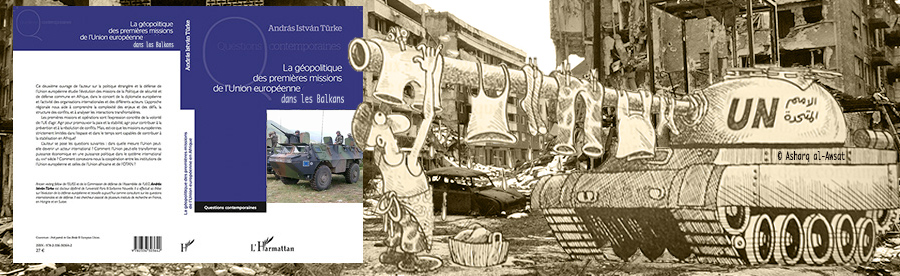
We are looking for sponsors for the English translation of these books, please contact turkeandras(at)gmail(dot)com