
You are here
Feed aggregator
Menaces hybrides : pourquoi la souveraineté devient un enjeu stratégique pour les entreprises
Les entreprises européennes ne sont plus de simples acteurs économiques : elles sont devenues des cibles stratégiques. Cyberattaques, espionnage industriel, pressions réglementaires, désinformation, sabotages logistiques ou prises de contrôle hostiles composent désormais un continuum de menaces dites « hybrides », où les frontières entre guerre, économie et influence s’effacent. Dans un nouveau Briefing, l’Institut Choiseul […]
Categories: Diplomacy & Defense Think Tank News
HARVEST: The food and health package
In today's edition: Biotech, Mercosur, pesticides
Categories: European Union
Volt egyszer egy Armătura gyár – Időutazás a közjavak nyomában
Nemrég szociológiai kutatás és performansz témájává vált az Állomás utca 19 szám alatti Armătura gyár, amelyet hamarosan lebontanak. Helyére lakónegyed épül bevásárlóközponttal, parkkal, bölcsődével. Mi maradt meg abból az épületegyüttesből, ahol több mint háromezer ember dolgozott? Egy délutáni séta, és egy színházi performansz mennyit képes felidézni a valamikori történetekből? A Commoning – Időutazás a közjavak […]
Articolul Volt egyszer egy Armătura gyár – Időutazás a közjavak nyomában apare prima dată în Kolozsvári Rádió Románia.
Categories: Határon túli magyar portálok összesített hírei
UK launches foreign interference probe after ex-MEP jailed over Russian bribes
Nathan Gill was sentenced to 10 years in prison last month after admitting having been paid around £40,000 ($53,000) to make pro-Russian statements in the European Parliament
Categories: European Union
Peut-on contraindre Poutine à cesser les combats en Ukraine ?
Face à l'incertitude planant sur le soutien américain à l'Ukraine, qu'est-ce qui pourrait potentiellement faire changer d'avis Poutine ? Et l'Europe pourrait-elle agir différemment ?
Categories: Afrique
Kolozsvár: kezelik a leprával fertőzött személyeket, nincs közegészségügyi kockázat
A leprával fertőzött kolozsvári vendégmunkások kezelése elkezdődött, további fertőzötteket nem azonosítottak, továbbá nem áll fenn a közegeszségügyi kockázat veszélye – hangzott el a Kolozs megyei Prefektúra által szervezett sajtótájékoztatón, amelyen a járványkórház szakemberei is részt vettek. Az egészségügyi minisztérium csütörtökön közölte, hogy leprás megbetegedést azonosítottak az egyik kolozsvári SPA szépségszalon két alkalmazottjánál. A minisztérium elrendelte […]
Articolul Kolozsvár: kezelik a leprával fertőzött személyeket, nincs közegészségügyi kockázat apare prima dată în Kolozsvári Rádió Románia.
Categories: Határon túli magyar portálok összesített hírei
Immobilienpreise stabilisieren sich – Mieten steigen weiter
Immobilienpreise weitgehend stabil, aber erste Anstiege bei Wohnungen – Mieten bundesweit um vier Prozent gestiegen – Zahl der Neubauten geht zurück – Politik sollte Wohnungsbau mit gezielten Investitionen stärken
Auf dem deutschen Immobilienmarkt deutet sich eine leichte Trendwende an: Nach zwei ...
Categories: Diplomacy & Defense Think Tank News
Merz hails EU flexibility for struggling auto industry
However, top Germany auto industry group slammed what it said were ill-conceived measures
Categories: European Union
Press release - EP TODAY
Categories: Union européenne
Press release - EP TODAY
Categories: Europäische Union
Press release - EP TODAY
Categories: European Union
Press release - EP TODAY
Categories: European Union
«Jour de la Réconciliation» en Afrique du Sud: Ramaphosa prône l'unité après les attaques de Trump
Comme tous les ans, l’Afrique du Sud a fêté ce 16 décembre le « Jour de la Réconciliation ». Une journée fériée célébrant la fin de l’Apartheid, qui prenait cette année tout son sens alors que le pays fait l’objet de nombreuses attaques verbales de la part du président américain Donald Trump. Ce dernier, qui se place en grand défenseur de la minorité sud-africaine blanche, considère qu'un « génocide blanc » serait en cours dans le pays.
Categories: Afrique
French lawmakers adopt social security budget, suspend pension reform
Tuesday's vote marks the first budget adopted without using article 49.3 of the constitution since 2022
Categories: European Union
The big flag issues for Global development policy in 2026: Trump 2.0, China’s status, Russia the spoiler, multi-alignment and 80% autocracy
It is clear 2026 will not be a routine year for global development cooperation. The US is now a deliberate norm-breaker under Trump 2.0, China is edging into high-income status while insisting it is still “developing”, close to 80 per cent of the population in low- and middle-income countries live under some form of autocracy, and Russia is selling long-term nuclear dependence as a development offer. At the same time middle powers from Brazil to the Gulf states are quietly turning that turmoil into leverage. In a new IDOS Policy Brief we argue that these dynamics are not background noise but the core story that will shape cooperation in the next few years.
Categories: Diplomacy & Defense Think Tank News
The big flag issues for Global development policy in 2026: Trump 2.0, China’s status, Russia the spoiler, multi-alignment and 80% autocracy
It is clear 2026 will not be a routine year for global development cooperation. The US is now a deliberate norm-breaker under Trump 2.0, China is edging into high-income status while insisting it is still “developing”, close to 80 per cent of the population in low- and middle-income countries live under some form of autocracy, and Russia is selling long-term nuclear dependence as a development offer. At the same time middle powers from Brazil to the Gulf states are quietly turning that turmoil into leverage. In a new IDOS Policy Brief we argue that these dynamics are not background noise but the core story that will shape cooperation in the next few years.
Categories: Diplomacy & Defense Think Tank News
The big flag issues for Global development policy in 2026: Trump 2.0, China’s status, Russia the spoiler, multi-alignment and 80% autocracy
It is clear 2026 will not be a routine year for global development cooperation. The US is now a deliberate norm-breaker under Trump 2.0, China is edging into high-income status while insisting it is still “developing”, close to 80 per cent of the population in low- and middle-income countries live under some form of autocracy, and Russia is selling long-term nuclear dependence as a development offer. At the same time middle powers from Brazil to the Gulf states are quietly turning that turmoil into leverage. In a new IDOS Policy Brief we argue that these dynamics are not background noise but the core story that will shape cooperation in the next few years.
Categories: Diplomacy & Defense Think Tank News
Killer Robots: The Terrifying Rise of Algorithmic Warfare
Credit: Annegret Hilse/Reuters via Gallo Images
By Inés M. Pousadela
MONTEVIDEO, Uruguay, Dec 17 2025 (IPS)
Machines with no conscience are making split-second decisions about who lives and who dies. This isn’t dystopian fiction; it’s today’s reality. In Gaza, algorithms have generated kill lists of up to 37,000 targets.
Autonomous weapons are also being deployed in Ukraine and were on show at a recent military parade in China. States are racing to integrate them in their arsenals, convinced they’ll maintain control. If they’re wrong, the consequences could be catastrophic.
Unlike remotely piloted drones where a human operator pulls the trigger, autonomous weapons make lethal decisions. Once activated, they process sensor data – facial recognition, heat signatures, movement patterns — to identify pre-programmed target profiles and fire automatically when they find a match. They act with no hesitation, no moral reflection and no understanding of the value of human life.
Speed and lack of hesitation give autonomous systems the potential to escalate conflicts rapidly. And because they work on the basis of pattern recognition and statistical probabilities, they bring enormous potential for lethal mistakes.
Israel’s assault on Gaza has offered the first glimpse of AI-assisted genocide. The Israeli military has deployed multiple algorithmic targeting systems: it uses Lavender and The Gospel to identify suspected Hamas militants and generate lists of human targets and infrastructure to bomb, and Where’s Daddy to track targets to kill them when they’re home with their families. Israeli intelligence officials have acknowledged an error rate of around 10 per cent, but simply priced it in, deeming 15 to 20 civilian deaths acceptable for every junior militant the algorithm identifies and over 100 for commanders.
The depersonalisation of violence also creates an accountability void. When an algorithm kills the wrong person, who’s responsible? The programmer? The commanding officer? The politician who authorised deployment? Legal uncertainty is a built-in feature that shields perpetrators from consequences. As decisions about life and death are made by machines, the very idea of responsibility dissolves.
These concerns emerge within a broader context of alarm about AI’s impacts on civic space and human rights. As the technology becomes cheaper, it’s proliferating across domains, from battlefields to border control to policing operations. AI-powered facial recognition technologies are amplifying surveillance capabilities and undermining privacy rights. Biases embedded in algorithms perpetuate exclusion based on gender, race and other characteristics.
As the technology has developed, the international community has spent over a decade discussing autonomous weapons without producing a binding regulation. Since 2013, when states that have adopted the UN Convention on Certain Conventional Weapons agreed to begin discussions, progress has been glacial. The Group of Governmental Experts on Lethal Autonomous Weapons Systems has met regularly since 2017, yet talks have been systematically stalled by major military powers — India, Israel, Russia and the USA — taking advantage of the requirement to reach consensus to systematically block regulation proposals. In September, 42 states delivered a joint statement affirming their readiness to move forward. It was a breakthrough after years of deadlock, but major holdouts maintain their opposition.
To circumvent this obstruction, the UN General Assembly has taken matters into its hands. In December 2023, it adopted Resolution 78/241, its first on autonomous weapons, with 152 states voting in favour. In December 2024, Resolution 79/62 mandated consultations among member states, held in New York in May 2025. These discussions explored ethical dilemmas, human rights implications, security threats and technological risks. The UN Secretary-General, the International Committee of the Red Cross and numerous civil society organisations have called for negotiations to conclude by 2026, given the rapid development of military AI.
The Campaign to Stop Killer Robots, a coalition of over 270 civil society groups from over 70 countries, has led the charge since 2012. Through sustained advocacy and research, the campaign has shaped the debate, advocating for a two-tier approach currently supported by over 120 states. This combines prohibitions on the most dangerous systems — those targeting humans directly, operating without meaningful human control, or whose effects can’t be adequately predicted — with strict regulations on all others. Those systems not banned would be permitted only under stringent restrictions requiring human oversight, predictability and clear accountability, including limits on types of targets, time and location restrictions, mandatory testing and requirements for human supervision with the ability to intervene.
If it’s to meet the deadline, the international community has just a year to conclude a treaty that a decade of talks has been unable to produce. With each passing month, autonomous weapons systems become more sophisticated, more widely deployed and more deeply embedded in military doctrine.
Once autonomous weapons are widespread and the idea that machines decide who lives and who dies becomes normalised, it will be much hard to impose regulations. States must urgently negotiate a treaty that prohibits autonomous weapons systems directly targeting humans or operating without meaningful human control and establishes clear accountability mechanisms for violations. The technology can’t be uninvented, but it can still be controlled.
Inés M. Pousadela is CIVICUS Head of Research and Analysis, co-director and writer for CIVICUS Lens and co-author of the State of Civil Society Report. She is also a Professor of Comparative Politics at Universidad ORT Uruguay.
For interviews or more information, please contact research@civicus.org
Follow @IPSNewsUNBureau
!function(d,s,id){var js,fjs=d.getElementsByTagName(s)[0],p=/^http:/.test(d.location)?'http':'https';if(!d.getElementById(id)){js=d.createElement(s);js.id=id;js.src=p+'://platform.twitter.com/widgets.js';fjs.parentNode.insertBefore(js,fjs);}}(document, 'script', 'twitter-wjs');
Categories: Africa
Dermatose : entre abattage et vaccination, des impératifs sanitaires et commerciaux
Derrière la gestion sanitaire de la dermatose nodulaire contagieuse en France se joue un arbitrage économique majeur. Entre abattage massif des cheptels et vaccination généralisée, l’État privilégie une stratégie d’éradication rapide afin de préserver le statut "indemne" de la France, clé de l’export. Un choix contesté par une partie du monde agricole, qui dénonce une politique dictée moins par l’épidémiologie que par les marchés.
Categories: France
Pages


© 2012-2018 Europa Varietas Foundation © 2015-2018 Europa Varietas Association
www.europavarietas.org | info(@)europavarietas(dot)org | Switzerland


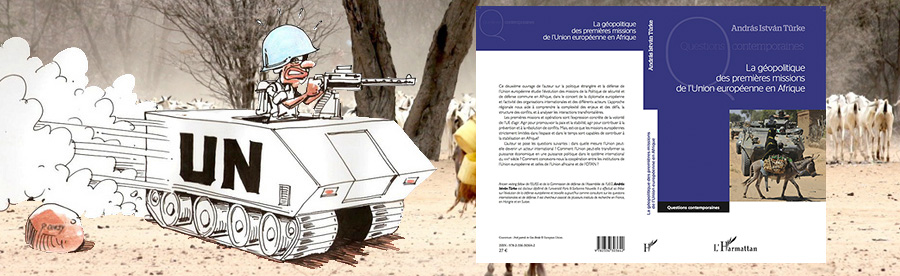
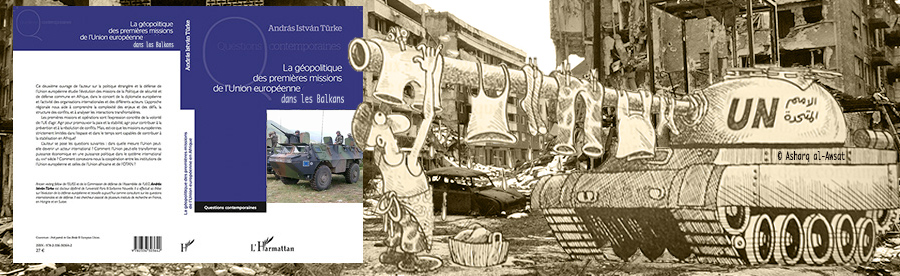
We are looking for sponsors for the English translation of these books, please contact turkeandras(at)gmail(dot)com