
You are here
Feed aggregator
The reparations loan bluff
In Wednesday’s edition: EPP-ECR, rebates grab, Spuntino, returns hubs, Mercosur
Categories: European Union
Justice et pouvoir politique : l'affaire Balluku, un test de crédibilité pour l'État de droit en Albanie
Le parquet spécial anticorruption (SPAK) demande l'arrestation de Belinda Balluku, soupçonnée d'avoir manipulé plusieurs appels d'offres publics, alors que la Cour constitutionnelle avait réintégré la ministre quelques jours plus tôt. Une affaire pleine de rebondissements et un test pour le SPAK.
- Le fil de l'Info / Courrier des Balkans, Albanie, PS Albanie, Défense, police et justice, Politique
Categories: Balkans Occidentaux
Justice et pouvoir politique : l'affaire Balluku, un test de crédibilité pour l'État de droit en Albanie
Le parquet spécial anticorruption (SPAK) demande l'arrestation de Belinda Balluku, soupçonnée d'avoir manipulé plusieurs appels d'offres publics, alors que la Cour constitutionnelle avait réintégré la ministre quelques jours plus tôt. Une affaire pleine de rebondissements et un test pour le SPAK.
- Le fil de l'Info / Courrier des Balkans, Albanie, PS Albanie, Défense, police et justice, Politique
Categories: Balkans Occidentaux
Asia and the Pacific Preparing for a New Era of Disaster Risks
Residents travel by boat through flooded streets in Colombo after heavy rains from Cyclonic Storm Ditwah. Credit: UNICEF, Sri Lanka
By the Economic and Social Commission for Asia and the Pacific (ESCAP)
BANGKOK, Thailand, Dec 17 2025 (IPS)
Cyclones Ditwah and Senyar are indications of a shifting disaster riskscape, not anomalies. Both storms broke historical patterns: Ditwah tracked unusually south along Sri Lanka’s coast before looping into the Bay of Bengal, dumping over 375 mm of rain in 24 hours and triggering landslides.
Senyar, only the second cyclone ever recorded in the Strait of Malacca, intensified near the equator and stalled over Sumatra, worsening floods in Aceh and North Sumatra.
The rising human and economic toll
According to the ESCAP Asia-Pacific Disaster Report 2025: Rising Heat, Rising Risk, the Asia-Pacific region is entering an era of cascading risks driven by intensifying heat and extreme weather with marine heatwaves and warmer sea surface temperatures fueling this new normal.
Historical low-risk zones like Sri Lanka’s central hills and Thailand’s southern strip are now climate-risk hotspots.
The report projects that in South and South-West Asia alone, average annual flood losses could increase from US$47 billion historically to 57 billion.
Across Indonesia, Malaysia, the Philippines, Sri Lanka, Thailand and Viet Nam, the storms of late November 2025 caused more than 1,600 fatalities, left hundreds of people unaccounted for, and affected well over ten million people.
Widespread flooding and landslides displaced 1.2 million people, disrupted essential services and isolated numerous communities, underscoring the scale of the response required and the substantial economic fallout expected
The value of preparedness
While improved early warnings have reduced loss of life compared to past decades, these storms show that disasters are becoming more destructive. Yes, early warnings saved lives—impact-based forecasts triggered mass evacuations and community drills helped families reach safety. But thousands were still stranded.
Alerts arrived, yet on-the-ground implementation was unclear, and some evacuation routes were already flooded. In many cases, social media became the lifeline when official systems fell short.
The trend is clear: technology alone cannot save lives without trust and rehearsed responses. Warnings work only when people know what to do and feel confident acting.
The ESCAP multi-donor Trust Fund for Tsunami, Disaster and Climate Preparedness shows that investing in preparedness pays off many times over. Its 2025–26 call for proposals offers countries a chance to strengthen coastal resilience, integrate science and technology and embed community-led action — before the next storm season tests our readiness.
The lessons we must learn
- • Trusted local networks and well-equipped community-led preparedness efforts make alerts meaningful
Early warnings have their limits. In many areas, alerts were issued and hotlines opened, yet fast-rising floods left families stranded, relying on rescue teams and volunteers. These events show that mobility constraints and uneven household preparedness can limit action even when information is available.
Community-led initiatives, such as those championed following the 2004 Indian Ocean tsunami, demonstrate how local knowledge and regular drills improve decision-making. Twenty years later, social cohesion has become a marker of resilience.
For example, the Bangladesh Cyclone Preparedness Programme (with 76,000 volunteers) has sharply reduced cyclone deaths by delivering house-to-house warnings and guiding evacuations.
- • Urban growth without risk-informed planning magnifies disaster impacts
Ditwah and Senyar exposed how rapid urban growth without risk-informed planning magnifies disaster impacts. Colombo’s wetlands have shrunk by 40 per cent, while Hat Yai’s drainage was overwhelmed.
Many hard-hit towns in Sumatra were located in known landslide-risk zones, resulting in severe disruptions to hospitals, transport networks and local businesses.
When natural buffers disappear, rainfall that once drained slowly now floods cities within hours. Urban resilience depends on integrating risk into development planning by preserving wetlands, enforcing zoning and investing in drainage and flood defences.
Infrastructure alone is not enough; it must be designed for extremes. Cities that embed resilience into planning and protect natural systems are better positioned to withstand future storms and safeguard economic activity.
- • Regional solidarity and shared solutions can save lives.
The Asia-Pacific region is faced with converging risks, with storms amplifying monsoonal hazards, cascading into mudslides and exacerbated by infrastructure weaknesses. Regional cooperation is no longer optional – it is the foundation for resilience in the most disaster-impacted region of the world.
November 2025 saw 8 countries (including Indonesia, Sri Lanka and Thailand) activate the International Charter on Space and Major Disasters, enabling rapid satellite imagery for emergency planning, proving the value of shared systems (see figure).
As floodwaters surged across the region, participants at the ESCAP Committee on Disaster Risk Reduction reaffirmed their commitment to regional early warning systems and anticipatory action – because hazards do not respect borders.
The Asia-Pacific region’s resilience depends on investing in people and preparedness cultures, regional solidarity, urban planning for extremes, protecting natural buffers and ensuring that last-mile guidance reaches every household.
Building generations and societies equipped to manage rising risks is the smartest investment for a safer future.
Source: ESCAP
IPS UN Bureau
Follow @IPSNewsUNBureau
!function(d,s,id){var js,fjs=d.getElementsByTagName(s)[0],p=/^http:/.test(d.location)?'http':'https';if(!d.getElementById(id)){js=d.createElement(s);js.id=id;js.src=p+'://platform.twitter.com/widgets.js';fjs.parentNode.insertBefore(js,fjs);}}(document, 'script', 'twitter-wjs');
Categories: Africa
The fraud storm breaking over Europe [Promoted Content]
Europe is facing a fast-escalating wave of digital, interconnected fraud. ACCA’s new report warns that weak governance, siloed controls and rising ESG risks are widening the gap between detection and action – and leaving organisations dangerously exposed
Categories: European Union
Guillaume Tabard : «L’accord du PS reste la boussole de Matignon»
CONTRE-POINT - L’objectif du gouvernement est d’avoir un budget qui convienne au Parti Socialiste. Lequel l’a bien compris en réclamant à nouveau des impôts en plus et des économies en moins.
Categories: France
Maroc: à Safi, après les inondations meurtrières, la colère des habitants après des années d'abandon
Trois jours après les inondations qui ont fait officiellement 37 morts à Safi, au Maroc, la ville portuaire est toujours sous le choc. À la tristesse et au deuil s’ajoute désormais une colère sourde. De nombreux habitants dénoncent la marginalisation dont souffre la cité et y voient une circonstance aggravante aux intempéries exceptionnelles qui ont causé la catastrophe dimanche 14 décembre.
Categories: Afrique
Tunisie: quinze ans après, «la révolution a complètement échoué», selon Moncef Marzouki
Ce 17 décembre marque le 15e anniversaire de la « révolution du jasmin » en Tunisie. En 2010, dans la ville de Sidi Bouzid, le jeune vendeur ambulant Mohamed Bouazizi s'immole par le feu devant le gouvernorat, après la saisie de ses marchandises par la police. Un geste de désespoir, qui illustre la détresse socio-économique dans le pays et la répression généralisée du régime de Ben Ali, qui sera renversé par une révolte populaire inédite un mois plus tard. L'événement inspire les populations du Maghreb et d'une partie du Moyen-Orient, et donne naissance à un vaste mouvement de contestation : le « Printemps arabe ». Quinze ans après, la Tunisie est désormais dirigée d'une main de fer par Kaïs Saïed. Quel bilan tirer de cette révolte populaire ? Notre grand invité Afrique est l'ancien dirigeant tunisien Moncef Marzouki, premier président élu démocratiquement après la chute du clan Ben Ali, et actuellement en exil. Il répond aux questions de Sidy Yansané.
Categories: Afrique
Sénégal: Ousmane Sonko lance de nouvelles directives aux différentes structures du Pastef
Dans un communiqué publié lundi 15 décembre, le Premier ministre et chef du Pastef demande aux élus et militants de se lancer dans une grande mobilisation sur le terrain en vue de se rapprocher des citoyens et de recenser à terme un million de militants actifs. Une instruction remarquée en pleine tension entre les deux chefs de l’exécutif qui cherchent, l’un et l’autre, à consolider leurs bases dans des cadres différents.
Categories: Afrique
Humans are now the minority online
The internet was never valuable because it was efficient. It mattered because it was a raucous, unpredictable global conversation where people could recognise one another. It now belongs more to machines
Categories: European Union
EU states seek tighter limits on cross-border tobacco and alcohol shopping
Several EU countries are looking beyond higher taxes, focusing instead on restricting cross-border tobacco trade
Categories: European Union
EU relies on paperwork to fight fraud and it shows, auditors find
Fraud risks are rising, but Brussels still leans on “cumbersome” administrative system that struggles to recover money
Categories: European Union
Space is now essential to European security
Europe has arrived at an orbital crossroads that will determine our future in space. But European leaders cannot hesitate to go big on defence in, and from, space
Categories: European Union
Russia/United States : Siam Aero Repair's Californian connection: the former fraudster and the hangar for sale
Several specialist property websites, such as that of commercial property consultancy group CBRE, have for weeks now been advertising an [...]
Categories: Defence`s Feeds
China/Hong Kong : Bauhinia College, Xi Jinping's laboratory for dousing Hong Kong's political ardour
At first glance, order appears to be reigning in Hong Kong, with a patriotic monopoly that has been confirmed as [...]
Categories: Defence`s Feeds
UAE : Sheikh Tahnoon bin Zayed, AI diplomat
"It would be an understatement to say the way the White House now functions suits the business style of the [...]
Categories: Defence`s Feeds
Romania : Romanian security forces raise alarm over drone incursions
Romania has been facing an increase in foreign drone flights in its airspace for nearly six months. The most recent [...]
Categories: Defence`s Feeds
France/United Kingdom : Veleda, Mintz, Sarah Knafo at ADIT
Florida / Dubai - Jay Newman joins new boutique advisory VeledaThe latest investigations group to emerge from the global intelligence [...]
Categories: Defence`s Feeds
Europe Is Missing Its Moment
It’s time to finally reform—or risk irrelevance.
Categories: Diplomacy & Crisis News
Pages


© 2012-2018 Europa Varietas Foundation © 2015-2018 Europa Varietas Association
www.europavarietas.org | info(@)europavarietas(dot)org | Switzerland
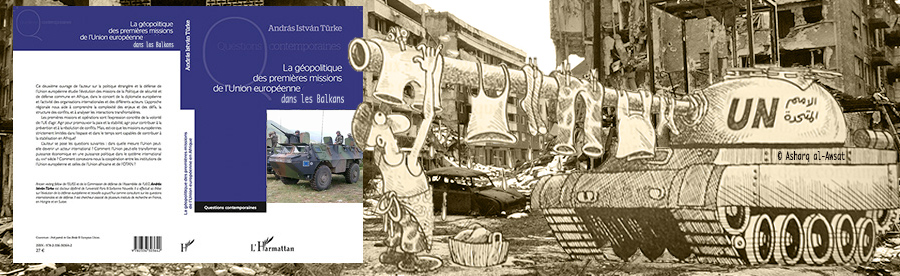
We are looking for sponsors for the English translation of these books, please contact turkeandras(at)gmail(dot)com