
You are here
Feed aggregator
Sovereign trust funds for planned climate relocations
Climate-induced planned relocation is becoming an unavoidable policy issue for some highly exposed communities. Although relocation should remain a last resort after other realistic options for adaptation in place have been assessed, ensuring that the money is available when needed to support relocation is critical. The challenge is that funding is insufficient, drawn from diverse sources and often arrives too late and in fragmented forms: for example, one project for housing, another for infrastructure, and little predictable support for consultation, land negotiations, safeguards, livelihoods, host communities or long-term maintenance. The financing problem is therefore not only the scale of the costs, but the difficulty of organising money over time and across institutions and safeguards. This can leave governments reacting after crises rather than planning before risks become unmanageable.
Sovereign trust funds offer one practical way to address this gap. They do not create finance by themselves, but they can provide a country-owned platform for receiving, sequencing and reporting domestic revenue, bilateral support, multilateral development bank (MDB) finance, climate funds, disaster risk finance, and loss and damage resources. They present an alternative to predominantly loan- and grant-based financing for planned relocation. Fiji’s Climate Relocation of
Communities Trust Fund shows both the promise and limits of this approach: It provides a legal and institutional basis for relocation finance within government and links international funding to procedures, but it still requires capitalisation, administrative capacity and long-term technical support. The model presents an opportunity to support sovereign, rights-based financing systems rather than relying solely on donor-funded, often piecemeal relocation projects. It can also make funding available at the appropriate time and without undue time pressure.
Key policy messages:
• Finance planned relocation before a crisis, especially assessment, consent, land, safeguards and project preparation.
• Treat relocation as a long-term investment in the collective good, rather than solely as a construction or emergency response measure.
• Support sovereign trust funds where they are legally mandated at the national level, budget-linked, transparent and capitalised.
• Use finance to uphold quality and rights, including community-led processes, support for host communities and support for long-term livelihoods.
Categories: Diplomacy & Defense Think Tank News
Agree to disagree: why the AU and the EU should engage in pragmatic partnerships
The AU–EU partnership should embrace the plurality within both unions, make interests transparent, and enable pragmatic cooperation between coalitions of willing countries, helping to bring proclaimed ambitions closer to actual practice, explain Benedikt Erforth and Lena Gutheil.
Categories: Diplomacy & Defense Think Tank News
Agree to disagree: why the AU and the EU should engage in pragmatic partnerships
The AU–EU partnership should embrace the plurality within both unions, make interests transparent, and enable pragmatic cooperation between coalitions of willing countries, helping to bring proclaimed ambitions closer to actual practice, explain Benedikt Erforth and Lena Gutheil.
Categories: Diplomacy & Defense Think Tank News
Agree to disagree: why the AU and the EU should engage in pragmatic partnerships
The AU–EU partnership should embrace the plurality within both unions, make interests transparent, and enable pragmatic cooperation between coalitions of willing countries, helping to bring proclaimed ambitions closer to actual practice, explain Benedikt Erforth and Lena Gutheil.
Categories: Diplomacy & Defense Think Tank News
Press release - MEPs upgrade EU energy infrastructure rules to lower energy prices
The update of the TEN-E regulation aims to boost security of energy supply, help lower prices for households and businesses, and contribute to the EU’s climate neutrality goals.
Committee on Industry, Research and Energy
Source : © European Union, 2026 - EP
Committee on Industry, Research and Energy
Source : © European Union, 2026 - EP
Categories: European Union
Press release - MEPs upgrade EU energy infrastructure rules to lower energy prices
The update of the TEN-E regulation aims to boost security of energy supply, help lower prices for households and businesses, and contribute to the EU’s climate neutrality goals.
Committee on Industry, Research and Energy
Source : © European Union, 2026 - EP
Committee on Industry, Research and Energy
Source : © European Union, 2026 - EP
Categories: European Union
Press release - MEPs upgrade EU energy infrastructure rules to lower energy prices
The update of the TEN-E regulation aims to boost security of energy supply, help lower prices for households and businesses, and contribute to the EU’s climate neutrality goals.
Committee on Industry, Research and Energy
Source : © European Union, 2026 - EP
Committee on Industry, Research and Energy
Source : © European Union, 2026 - EP
Categories: Europäische Union
Press release - MEPs upgrade EU energy infrastructure rules to lower energy prices
The update of the TEN-E regulation aims to boost security of energy supply, help lower prices for households and businesses, and contribute to the EU’s climate neutrality goals.
Committee on Industry, Research and Energy
Source : © European Union, 2026 - EP
Committee on Industry, Research and Energy
Source : © European Union, 2026 - EP
Categories: Európai Unió : hírek magyarul
Opération Lance du Sud dans la Caraïbe : où en sont les promesses de Trump un an après ?
Un an après le lancement de l’opération Lance du Sud (Operation Southern Spear), la question de son efficacité se pose alors que les États-Unis veulent désormais l’étendre à tout le continent américain. Cette campagne militaire de surveillance, mise en place par l’administration de Trump, a pour but officiel de « détecter, perturber et dégrader les réseaux criminels transnationaux et les réseaux maritimes illicites ». Or, les accusations d’exécutions extrajudiciaires portées par de nombreuses ONG ainsi que les chiffres officiels qui annoncent 227 morts interroge sur son réel impact.
Quel bilan tirer de cette première année ? Au-delà des chiffres officiels, quelles conséquences réelles pour le narcotrafic et pour la région des Caraïbes ? Et alors que le dispositif s’étend désormais à toute l’Amérique latine, assiste-t-on à l’émergence d’une nouvelle doctrine militaire américaine dans la région ?
Nouvelle chronique de l’Amérique latine avec Christophe Ventura, directeur de recherche à l’IRIS et responsable du Programme Amérique latine/Caraïbe.
L’article Opération Lance du Sud dans la Caraïbe : où en sont les promesses de Trump un an après ? est apparu en premier sur IRIS.
Categories: Diplomacy & Defense Think Tank News
Al-Qaida: 25 Years After 9/11
The current threat from al-Qaida is diffused. It relies on homegrown, lone-actor terrorists to carry out low-end attacks, such as stabbing and vehicle ramming.
Categories: Diplomacy & Crisis News
Video einer Ausschusssitzung - Donnerstag, 10. September 2026 - 09:00 - Ausschuss für auswärtige Angelegenheiten
Dauer des Videos : 30'
Haftungsausschluss : Die Verdolmetschung der Debatten soll die Kommunikation erleichtern, sie stellt jedoch keine authentische Aufzeichnung der Debatten dar. Authentisch sind nur die Originalfassungen der Reden bzw. ihre überprüften schriftlichen Übersetzungen.
Quelle : © Europäische Union, 2026 - EP
Haftungsausschluss : Die Verdolmetschung der Debatten soll die Kommunikation erleichtern, sie stellt jedoch keine authentische Aufzeichnung der Debatten dar. Authentisch sind nur die Originalfassungen der Reden bzw. ihre überprüften schriftlichen Übersetzungen.
Quelle : © Europäische Union, 2026 - EP
Categories: Europäische Union
Video of a committee meeting - Thursday, 10 September 2026 - 09:00 - Committee on Foreign Affairs
Length of video : 30'
Disclaimer : The interpretation of debates serves to facilitate communication and does not constitute an authentic record of proceedings. Only the original speech or the revised written translation is authentic.
Source : © European Union, 2026 - EP
Disclaimer : The interpretation of debates serves to facilitate communication and does not constitute an authentic record of proceedings. Only the original speech or the revised written translation is authentic.
Source : © European Union, 2026 - EP
Categories: European Union
Video einer Ausschusssitzung - Donnerstag, 10. September 2026 - 07:30 - Ausschuss für auswärtige Angelegenheiten
Dauer des Videos : 90'
Haftungsausschluss : Die Verdolmetschung der Debatten soll die Kommunikation erleichtern, sie stellt jedoch keine authentische Aufzeichnung der Debatten dar. Authentisch sind nur die Originalfassungen der Reden bzw. ihre überprüften schriftlichen Übersetzungen.
Quelle : © Europäische Union, 2026 - EP
Haftungsausschluss : Die Verdolmetschung der Debatten soll die Kommunikation erleichtern, sie stellt jedoch keine authentische Aufzeichnung der Debatten dar. Authentisch sind nur die Originalfassungen der Reden bzw. ihre überprüften schriftlichen Übersetzungen.
Quelle : © Europäische Union, 2026 - EP
Categories: Europäische Union
Video of a committee meeting - Thursday, 10 September 2026 - 07:30 - Committee on Foreign Affairs
Length of video : 90'
Disclaimer : The interpretation of debates serves to facilitate communication and does not constitute an authentic record of proceedings. Only the original speech or the revised written translation is authentic.
Source : © European Union, 2026 - EP
Disclaimer : The interpretation of debates serves to facilitate communication and does not constitute an authentic record of proceedings. Only the original speech or the revised written translation is authentic.
Source : © European Union, 2026 - EP
Categories: European Union
Political Instability Meets Fiscal Limits: Is France the Euro’s Next Big Stress Test?
With around half a year remaining before the next presidential election, France is in danger of becoming a stress test for the eurozone: a political crisis, a deteriorating fiscal position and growing market doubts about the country’s ability to finance its mounting debt burden are all converging. France faces a significant structural imbalance in its public finances. The budget deficit exceeds 5 per cent of GDP, while public expenditure stands at around 57 per cent of GDP. At the same time, public debt is rising steadily and could, without sufficient fiscal consolidation measures, exceed 130 per cent of GDP by 2030. The interest burden on public debt is rising rapidly and could rise to more than 120 billion euros, equivalent to 3.5 per cent of GDP by 2030. The central challenge, however, may not lie in the fiscal arithmetic of the budget, but in the political capacity to address it. On the one hand, the costs of social welfare expenditure are no longer sustainable; on the other, the majority of the population continues to demand more state intervention. The situation is compounded by the lack of a parliamentary majority and limited prospects of achieving one in the near future. The global environment is also weighing heavily: Tensions involving Iran are driving up fuel prices and inflation, while US fiscal concerns are putting upward pressure on bond yields.
An election campaign lacking a commitment to fiscal consolidationWith just over six months to go before the first round of the presidential election, the French economic debate is dominated by promises of additional spending, including commitments to lower the retirement age, as well as by diversionary issues such as constitutional referendums and by nationalist and protectionist rhetoric often accompanied by strongly Eurosceptic undertones. Jean-Luc Mélenchon’s call for a partial write-off of French debt held by the Banque de France, a member of the Eurosystem, is adding to market concerns about France. Marine Le Pen’s proposals, too – such as maintaining the low retirement age or escalating conflicts with the EU (over Schengen, migration policy and the EU budget) – could increase pressure on French government bonds and further weaken the economy through capital outflows. The high and rising share of foreign investors in French public debt, which stands at 56 per cent, makes the country even more vulnerable to shifts in market sentiment.
This raises the crucial question: What happens if market pressure on France persists and there is no parliamentary majority in favour of fiscal consolidation? The eurozone has no legal or political mechanisms in place in the event that the political system of a key member state becomes paralysed. The only credible safety net remains the European Central Bank’s (ECB) bond-purchasing programme, the Transmission Protection Instrument (TPI). The problem, however, is that the Eurosystem cannot finance France’s deficit or purchase French government bonds at will, solely in response to rising yields. Should broader intervention become necessary in the absence of a credible fiscal consolidation path from Paris, the ECB Governing Council would face a legally and politically difficult decision. The ECB would then find itself caught in a conflict of objectives between its mandate to protect the stability of the eurozone and its duty to prevent the single monetary policy from replacing the French government’s fiscal policy.
The real test for the eurozoneThe previous eurozone crisis was triggered by smaller economies on its periphery, yet it nearly caused the collapse of the monetary union. A growing loss of market confidence in France would be a far more severe test for the eurozone. Bond purchases can mitigate acute liquidity and refinancing risks, but they merely shift the problem into a chronic structural fiscal crisis, which, if it escalates further, could eventually overwhelm the capabilities of monetary policy. The real test for the eurozone will be whether it can maintain stability in the bond market in Europe’s second-largest economy without relieving it of responsibility for its own fiscal policy. Should this balancing act fail, the Eurosystem could, in the short term, use its instruments to limit acute market distortions in the bond markets. However, such measures cannot permanently cushion the consequences of an unsustainable fiscal trajectory. The longer the fiscal problems remain unresolved, the more they will exacerbate political tensions over the limits of European solidarity and the future of the monetary union, thereby undermining confidence in the European institutions and the cohesion of the EU.
Categories: Diplomacy & Defense Think Tank News
Clap de fin pour Netanyahou ?
Le journal israélien Haaretz a révélé, ce 8 septembre, que Benyamin Netanyahou avait connaissance de l’avènement d’une opération majeure du Hamas sur le territoire israélien par le leader émirati Mohammed Ben Zayed, dix jours avant le 7 octobre.
Des révélations réfutées, qui mettent à mal Netanyahou dans le cadre des prochaines élections législatives d’octobre.
Au lendemain des sanctions annoncées par la France, la Grande-Bretagne et le Canada contre les produits issus des colonies israéliennes en Cisjordanie, c’est un véritable revers diplomatique et politique pour Benyamin Netanyahou.
Assiste-t-on, à l’aube des élections israéliennes, à la fin de l’ère Netanyahou ?
Mon analyse dans cette vidéo
L’article Clap de fin pour Netanyahou ? est apparu en premier sur IRIS.
Categories: Diplomacy & Defense Think Tank News
Royal family rift after popular TV news presenter chosen to succeed Ugandan king
King Oyo's family say he left a will naming his young son as heir to the Tooro kingdom.
Categories: Africa, Nyugat-Balkán
Forward Eddie Nketiah close to Ghana switch from England as FIFA paperwork prepared
Crystal Palace striker Eddie Nketiah is on the verge of switching his international allegiance from England to Ghana, with paperwork being prepared for submission to FIFA to complete a long-anticipated move to the Black Stars.
Categories: Africa
«Pas de trucs marquants» à dire sur Georges Pompidou : ce président précurseur dans la protection de l’environnement et oublié par Marine Tondelier
Marine Tondelier assurait lundi n’avoir «pas de trucs marquants» à dire sur Georges Pompidou. Des platanes au premier ministère de l’Environnement, le legs du président de la croissance s’inscrit pourtant dans la généalogie de l’écologie française.
Categories: France
Pages


© 2012-2018 Europa Varietas Foundation © 2015-2018 Europa Varietas Association
www.europavarietas.org | info(@)europavarietas(dot)org | Switzerland
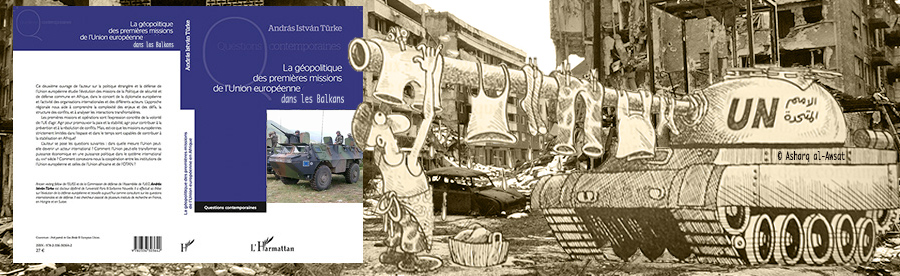
We are looking for sponsors for the English translation of these books, please contact turkeandras(at)gmail(dot)com