
Vous êtes ici
Agrégateur de flux
« Les députés piétinent le budget comme des bambins sur un château de sable » : à l’Assemblée, l’exécutif joue la montre
DÉCRYPTAGE - Alors que le vote sur la partie recettes du budget a encore été reporté, le gouvernement laisse pour l’instant les débats s’enliser au Palais Bourbon. Avant un recours inéluctable au 49.3 ou aux ordonnances.
Catégories: France
The Missing Critical Minerals Investment
To catch up to China, America and its allies must dig.
Catégories: Diplomacy & Crisis News
The Dangers of a Lame-Duck Trump
How far will he go to make peace—and war?
Catégories: Diplomacy & Crisis News
Panasonic arrive en Algérie avec IRIS : cinq gammes de téléviseurs fabriqués localement
Le géant japonais Panasonic fait son entrée officielle sur le marché algérien des téléviseurs. Il s’associe au groupe algérien IRIS, qui fabriquera localement cinq gammes […]
L’article Panasonic arrive en Algérie avec IRIS : cinq gammes de téléviseurs fabriqués localement est apparu en premier sur .
Catégories: Afrique
RDC: à Goma, le chef de la Monusco rencontre les autorités rebelles du FRN
Dans l’est de la République démocratique du Congo, le chef de la Monusco, James Swan, s’est rendu dans la ville de Goma, mardi 3 novembre, pour rencontrer les dirigeants du Front pour la refondation de la nation (FRN), nouvel avatar du mouvement politico-militaire de l’AFC/23, dirigé par l’ancien président congolais, Joseph Kabila.
Catégories: Afrique
The UAE’s Great Leap: Building the City of the Future
Abu Dhabi, United Arab Emirates
By James Alix Michel
VICTORIA, Seychelles, Nov 4 2026 (IPS)
I have stood on the corniche of Abu Dhabi at many moments over more than thirty years. Each time, I reflect on the distance this city has travelled: from a shoreline shaped by modest commercial buildings and dwellings to a capital whose architecture, institutions and ambitions look far beyond the horizon. Glass towers catch the Gulf light. The dome of the Louvre Abu Dhabi scatters sunlight across the water. Yet the transformation that interests me most is not the skyline itself. It is the thinking behind it.
What does it take to build a city of the future? Wealth, certainly. Technology, increasingly. But neither is sufficient without a vision of the society that city should serve. As a frequent visitor, a resident and a longstanding friend of the United Arab Emirates, I have watched that vision take shape. What I see is not a finished model, but a remarkable, evolving example of a country turning resources into possibilities.
That vision did not begin with glass and steel. Some leaders build institutions. Sheikh Zayed bin Sultan Al Nahyan built a nation, and gave it a soul. With wisdom, patience and an open heart, he brought the emirates together in 1971 and planted the seeds of unity, tolerance and generosity that still shape the UAE today. He believed in his people, cared for the land and the sea, and reached out to the world with kindness. The newly declared Zayed the Founder Day, to be observed each year on 7 January, is a beautiful way to honour a man whose vision lives on in every corner of this country. May Allah bless his soul.
No honest account of the UAE’s rise can overlook hydrocarbons. Oil provided the means for an extraordinary transformation. But natural wealth does not automatically produce lasting prosperity. Resources alone cannot build the institutions, skills and economic diversity needed to sustain development. What distinguishes the UAE, in my view, is its determination to treat oil revenue not simply as income to be spent, but as capital with which to prepare for a different future.
Trade, tourism, finance, manufacturing and technology have broadened its economy. Investment in education, healthcare and research reflects an understanding that the most enduring national resource is human capability. For small island states such as Seychelles, the lesson resonates. Our circumstances differ greatly, but the question is familiar: how do we use today’s opportunities to strengthen tomorrow’s resilience? The answer cannot be to wait until vulnerability becomes crisis.
One of the most revealing aspects of Abu Dhabi’s transformation is its investment in culture. The Louvre Abu Dhabi and the wider Saadiyat Cultural District express an ambition extending beyond tourism. They place art, history and encounters between civilisations within the country’s vision of development. The preservation of Qasr Al Hosn and other heritage sites provides an important counterpoint. A city moving rapidly towards the future must also maintain a conversation with its past. Modernity is too often measured in height, speed and scale. Museums, libraries and places of learning offer something less easily measured: space for reflection, creativity and understanding.
The same principle applies to education and healthcare. Institutions such as NYU Abu Dhabi, Sorbonne University Abu Dhabi and Cleveland Clinic Abu Dhabi illustrate the effort to make knowledge and specialised care part of the country’s foundations. Here, the city of the future acquires its deeper meaning: not only in what it displays, but in what it enables people to become.
Artificial intelligence has become central to the UAE’s ambitions. Its digital investments and the establishment of the Mohamed bin Zayed University of Artificial Intelligence signal a determination to help shape technological change. The value of that ambition lies in its human purpose: improving services, healthcare and education, and helping communities manage resources more intelligently. That responsiveness is also felt in ordinary moments.
I have often been struck by Abu Dhabi’s maintained public spaces, walkways and the sense of ease I experience walking its streets. The UAE ranks among the world’s safest places by residents’ perceptions of nighttime safety. Gallup’s 2025 Global Safety Report found that 90 percent of people surveyed in the country felt safe walking alone at night. For me, this is more than a statistic. That quiet freedom from fear is a precious part of daily well-being.
So, too, is the greening of a desert city. Trees, gardens and flowering verges soften the urban landscape. Abu Dhabi’s continuing tree-planting programmes, including native ghaf trees, seek to expand shade and improve the environment along walking and cycling routes. These are not merely decorative touches. They express care for how people experience the places they inhabit. As an islander and an advocate for ocean conservation, I am particularly interested in how urban ambition connects with environmental responsibility.
The UAE’s investment in solar power and other low-carbon energy sources, together with its net-zero commitment, reflects an effort to prepare for a changing energy future. Its continuing dependence on hydrocarbons also makes clear the complexity of that transition. The journey requires sustained implementation: cleaner energy, responsible water use, reduced emissions and habitat protection. The UAE’s mangrove restoration and marine conservation efforts are especially meaningful to me. Mangroves protect coastlines, shelter marine life and store carbon. Coral reefs sustain biodiversity and coastal livelihoods, even as warming seas place them under pressure. For Seychelles and other island nations, these are not abstract concerns. They are questions of security, identity and survival. A city’s relationship with the natural world does not end at its waterfront.
Another defining feature of the UAE is the diversity of those who live and work there. People from across the world contribute to its economy and daily life. Such diversity calls for more than mutual respect. It calls for belonging—and the assurance that every person’s safety matters, whatever their nationality. During the regional conflict, His Highness Sheikh Mohamed bin Zayed Al Nahyan gave powerful expression to that responsibility, placing the protection of citizens, residents and visitors at the top of the UAE’s priorities. “In the UAE,” he said, “everyone is Emirati through their love for this land and their contributions to it.” I find those words deeply meaningful. They speak of belonging not simply as something felt, but as a responsibility embraced by leadership. The Abrahamic Family House, bringing a mosque, a church and a synagogue together within one complex, offers another expression of coexistence. That spirit must also be lived beyond symbolic spaces. Workers’ dignity, fair treatment and opportunities across different backgrounds remain essential measures of progress. Recognising achievements need not mean overlooking the work that remains.
My perspective is also deeply personal. Over decades, I have witnessed the friendship between the UAE and Seychelles develop into practical cooperation. During my years in public office, I saw that partnership support water and electricity infrastructure, renewable energy, healthcare, housing and education. For a small island country, such cooperation is felt in families’ lives: access to treatment, reliable water, a home, or better opportunities for children. I remember with gratitude the late Sheikh Khalifa bin Zayed Al Nahyan. I also deeply value my longstanding friendship with President Sheikh Mohamed bin Zayed Al Nahyan, whose visionary leadership and commitment to his country’s development I have had the privilege of observing at close quarters. That friendship informs my account. It reinforces my belief that national achievement acquires greater meaning when it helps others strengthen their resilience.
The UAE’s experience cannot simply be replicated. Its resources, scale and circumstances are distinctive. The lesson here is not to imitate its skyline, but to draw inspiration from its willingness to imagine beyond present constraints—and to translate that imagination into action. Perhaps that is the deepest meaning of the UAE’s great leap. What I see taking shape is more than a skyline: it is a vision of prosperity that brings knowledge, culture, human well-being and care for the natural world into the same frame. Still evolving, still confronting the challenges that accompany rapid change, the UAE offers a beautiful example of what becomes possible when imagination is matched by the resolve to act.
Along Abu Dhabi’s corniche, the towers catch the light, but it is the horizon that holds my gaze. As someone who has returned to these shores over many years, and whose friendship with this country has deepened along the way, I find both beauty and inspiration in its unfolding story. I leave each walk with a feeling that reaches far beyond this waterfront: that the future need not simply be something we await. It can be something we have the courage to imagine—and the determination to build.
James Alix Michel is Former President of the Republic of Seychelles.
IPS UN Bureau
Catégories: Africa
Midterms: «Il est peu probable que les grandes lignes de la politique américaine en Afrique changent»
Jason Stearns, chercheur américain, directeur de recherches à l'institut Ebuteli à Addis-Abeba, est l'invité de RFI ce 4 novembre 2026. Après la victoire des démocrates aux élections de mi-mandat aux États-Unis, il évalue les conséquences de ce changement politique sur la politique africaine de Washington.
Catégories: Afrique
Attentat raciste de Trappes : le suspect a tenté de se suicider en prison
Kévin T., l'assaillant de l'attentat de Trappes qui a tué Pengo Bossio Wangi et a blessé 7 autres personnes, a tenté de se suicider en détention. Cette tentative a eu lieu il y a quelques jours. Le pronostic vital du suspect n'étant pas engagé, il a regagné sa cellule.
Catégories: France
Marcel Fratzscher: „Sieg der Demokraten bei den US-Midterms ist eine positive Botschaft – auch für Europa“
Bei den Midterm-Wahlen zum US-Kongress haben die Demokraten deutlich gesiegt und die Mehrheit im Repräsentantenhaus und im Senat gewonnen. Das Wahlergebnis schätzt Marcel Fratzscher, Präsident des Deutschen Instituts für Wirtschaftsforschung (DIW Berlin), wie folgt ein:
Der Sieg der Demokraten bei den US-Midterms ist eine positive Botschaft. Das wichtigste Signal ist, dass die Gewaltenteilung in den USA wieder besser greift: Präsident Trump dürfte es künftig schwerer fallen, staatliche Institutionen nach seinem Willen zu beschneiden und umzubauen, wie er dies beispielsweise mit der US-Notenbank in den vergangenen zwei Jahren versucht hat.
Auch für die Weltwirtschaft ist das Ergebnis eine gute Nachricht, selbst wenn es die US-Wirtschaft kurzfristig bremsen könnte. Die Mehrheit der Demokraten in beiden Kammern des US-Kongresses dürfte es Trump erschweren, seinen Handelskonflikt, vor allem mit Europa, stets neu anzufachen. Zudem kann der Kongress über sein Budgetrecht den Krieg mit dem Iran stärker begrenzen. Das könnte die Energiepreise senken, wovon auch Europa profitieren würde.
Das aggressive Gebaren der US-Techkonzerne könnte nun ein Stück weit eingehegt werden, da sich die Demokraten für eine Regulierung von KI einsetzen und den massiven Boom beim Bau von Rechenzentren wohl deutlich kritischer begleiten werden. Dies dürfte die Wachstumsaussichten vor allem in Europa verbessern, langfristig aber auch in den USA. Es könnte zudem die Überhitzung an den Finanzmärkten bei Techkonzernen etwas abkühlen. Auch in der Finanzpolitik wird Trump weniger freie Hand haben und stärker Rechenschaft ablegen müssen.
Catégories: Diplomacy & Defense Think Tank News
U.S. Strikes Iranian Targets Along Strait of Hormuz Ahead of Midterm Elections as Diplomatic Talks Stall
Ship transits through the Strait of Hormuz have dropped by over 90 per cent since the crisis escalated in late February 2026. Credit: Unsplash/Angus Gray
By Oritro Karim
UNITED NATIONS, Nov 4 2026 (IPS)
On November 2, the United States launched a series of limited, defensive strikes on Iranian targets on Qeshm Island and strategic areas along the Strait of Hormuz. Fired in response to earlier strikes from the Islamic Revolutionary Guard Corps (IRGC) on U.S. aircraft and drones over the Strait, U.S. President Trump noted that the operation does not signal a broader escalation of hostilities and that a diplomatic solution could still be reached.
“I’m not looking to, you know, kill lots of people, but if we have to, we’ll have to. But I’m not looking to do that. And we’re very strong right now,” Trump told Fox News on November 3. “Every ship is at the bottom of the sea. They had 288 airplanes. Every airplane is laying on small little pieces, tiny little pieces all over the runways of Iran. They have no airplanes.”
“They have no anti-aircraft. We took some out last night. It’s just a minor attack. It wasn’t war. They built an anti-aircraft facility. It took them about two months. We watched it get built; as soon as it was completed, we hit it last night very nicely,” he continued.
Occurring on the eve of the U.S. midterm elections, the strikes contradict Trump’s previous statement that the U.S. would not strike Iran ahead of the vote. The U.S.’s role in the Iran War has proven to be increasingly unpopular domestically, largely due to rising fuel prices and economic shocks resulting from the closure of the Strait of Hormuz. This has created significant headwinds for the Republican Party as it aims to consolidate control over Congress.
The strikes, launched with no warning, came as Iran announced a two-day plan to reopen the Strait of Hormuz and resume nuclear talks with Washington. Iranian officials previously stated that the plan could be enacted within one week if the U.S. met seven of its core conditions. This includes lifting the U.S. naval blockade on Iranian ports and coastal areas, establishing a shipping route for the reopened Strait agreed upon by Iran and Oman, removing U.S. sanctions on Iranian oil, and agreeing to a ceasefire that extends to Lebanon.
On November 3, Mohammad Bagher Qalibaf, Speaker of Iran’s Parliament and chief negotiator, declared that Iran had “delivered a firm and rational response” to Washington, adding that “the ball is now in America’s court” to accept its conditions and prevent further escalation. He warned that Iran’s military is readily prepared to retaliate against future attacks from the U.S.
“If Washington makes another strategic miscalculation, it should know that this time, it will face a new battlefield and will find itself even more desperate than it is today,” he cautioned.
Regional officials in the Middle East reported that Israeli Prime Minister Benjamin Netanyahu urged Trump to intensify military strikes, citing concerns over Iran’s nuclear infrastructure and the need to establish absolute deterrence before Iran can rebuild its capabilities. Danny Danon, Permanent Representative of Israel to the United Nations, rejected these claims, stating that the U.S. is making its own foreign policy decisions without Israeli influence.
Before the strikes, U.S. Vice President JD Vance told reporters on November 2 that both he and the president felt “pretty good” about the prospects of reaching a negotiated settlement with Tehran.
“The Iranians are always a little unpredictable, and as the president always says, he retains kinetic options. He retains non-kinetic options, but we’ve certainly made some progress. We’ll see if we can make some more,” said Vance. “Having destroyed their nuclear program, we want to make sure they don’t rebuild it or try to rebuild it. That’s what matters most to the United States. We do think that there is a pathway there, but it really does require a firm commitment and a verifiable commitment that they don’t rebuild that nuclear program,” he added.
Hours earlier, Trump told reporters at the reopening of the Lincoln Memorial Reflecting Pool in Washington that Iran reportedly “want(s) to make a deal, and that could happen.” He added that Tehran previously requested Washington stop targeting its leaders, with Trump affirming that the U.S. would comply.
On November 3, Mohsen Rezaei, Secretary of Iran’s Supreme National Security Council, stated that Washington’s response to Iran’s demands was unsatisfactory, casting doubts that mediation efforts from Pakistan and Qatar have been effective.
“America’s response to Iran’s rights and demands was not convincing,” Rezaei wrote in a statement shared to X (formerly known as Twitter). “They must fully and explicitly address Iran’s seven conditions and act upon them; only in this case will the Strait of Hormuz be reopened.”
On November 2, Iranian authorities announced plans to train a paramilitary force of over 1 million volunteers amid fears of renewed hostilities. Ali Kowsari, deputy head of training for the Basij—a paramilitary force affiliated with the IRGC—announced that starting this week, 1,5000 training bases across the country will aim to train 1 million “sacrificial volunteers.” This follows the previous openings of similar facilities in Tehran in August and September.
IPS UN Bureau Report
Catégories: Africa
Taking Stock of India-China Relations: Structural Divergences and the Limits of Diplomacy
Post Galwan, the Sino-Indian military balance has become more skewed. India’s procurement and defense industrial ecosystem has also led to lags in enhancing its military power.
Catégories: Diplomacy & Crisis News
Interjúk az erdélyi magyar néprajzkutatás csúcsrendezvényéről
A BBTE BTK Magyar Néprajz és Antropológia Tanszéke, az EME Bölcsészet-, Nyelv- és Történettudományi Szakosztálya, a Kriza János Néprajzi Társaság és az MTA KAB Néprajzi és Antropológiai Intézet által október közepén szervezett tudományos seregszemle házigazdája és főszervezője Keszeg Vilmos néprajztudós, egyetemi oktató volt, aki a Kolozsvári Rádió kérdéseire is válaszolt. Őt hallhatják az összeállítás első […]
Articolul Interjúk az erdélyi magyar néprajzkutatás csúcsrendezvényéről apare prima dată în Kolozsvári Rádió Románia.
Catégories: Határon túli magyar portálok összesített hírei
Scènes d'euphorie et résultats historiques : les moments clés des élections de mi-mandat aux États-Unis
Les démocrates ont pris le contrôle du Congrès pour le reste de la présidence de Donald Trump, ce qui est source de réjouissances.
Catégories: Afrique
Amnesty International et l'UPMB renforcent leur engagement commun
Une délégation d'Amnesty International Bénin, conduite par son Directeur exécutif, Dieudonné DAGBETO, a été reçue à l'Union des Professionnels des Médias du Bénin (UPMB), ce mardi 3 novembre 2026. La liberté de la presse et le Code du numérique étaient les principaux sujets de discussions.
Pour réaliser ses ambitions, la 8e mandature de l'UPMB peut compter sur le soutien d'Amnesty International Bénin. Le Directeur exécutif a échangé avec le président, Hervé Prudence HESSOU ce mardi 3 novembre 2026. Plusieurs sujets dont notamment, la liberté de la presse et le Code du numérique en étaient au menu des discussions.
Selon un communiqué de l'UPMB, l'appui d'organisations de défense des droits humains comme Amnesty International est indispensable pour transformer les ambitions du mandat, en réalités concrètes. Les initiatives visant à assouplir les dispositions du Code numérique, avec les articles 550 et suivants ont été également abordées.
Au terme des échanges, les deux parties ont réaffirmé la nécessité de mener un « plaidoyer vigoureux » pour la relecture de ces textes.
Pour Amnesty International Bénin, la protection des journalistes ne relève pas seulement du corporatisme, mais un pilier fondamental de la démocratie et de l'État de droit.
Les échanges entre Hervé Prudence HESSOU et Dieudonné DAGBETO laissent entrevoir des perspectives de collaboration entre Amnesty International Bénin et l'UPMB. Cette collaboration pourrait se traduire par des ateliers de formation pour les journalistes, des campagnes de sensibilisation communes et des actions de lobbying direct auprès des législateurs et des autorités compétentes.
F. A. A.
Catégories: Afrique
Pacific Scientists Build a Regional Picture of a Changing Ocean
Dr Lindon Havimana from Solomon Islands National University (SINU) and Dr Christopher Cornwall from Victoria University of Wellington collect intertidal samples from the rocky shore for incubation experiments during PIOAC training in Wellington.
By Sera Sefeti
SUVA, Fiji, Nov 4 2026 (IPS)
The Pacific Ocean connects thousands of islands, and understanding how ocean acidification is unfolding across the region requires more than individual research projects or monitoring stations.
Scientists need observations from different island environments, collected over time, to understand how seawater chemistry is changing and what those changes could mean for marine ecosystems and the communities that depend on them.
The work is being strengthened through regional collaboration, with Pacific scientists sharing data, technical knowledge and research experience to build a more complete picture of a changing ocean.
Dr Katy Soapi, Pacific Community (SPC) Coordinator for the Pacific Community Centre for Ocean Science and a Pacific scientist, says the broader scientific community is aware that ocean chemistry is changing. The priority is now building local evidence to understand how those changes may affect different island environments.
“What Pacific scientists are now doing is building the local evidence needed to understand how those changes may impact our different island environments,” Soapi said.
“At many of our monitoring sites, we are seeing considerable natural variability in pH over days, months and seasons, which is normal,” she said. “It is important to capture this data over time because coastal waters are influenced by temperature, rainfall, freshwater inputs, biological activity, land-based pollution and local oceanographic conditions.”
PIOAC members with Salesa Nihmei from SPREP and a representative from the Asian Development Bank (ADB) at the 6th International Symposium on the Ocean in a High-CO₂ World, Tākina Wellington. Credit: SPC
Monitoring programmes are at different stages across the region. Fiji has an established programme, with monitoring in the Suva area since 2023 and data that contribute to Sustainable Development Goal 14.3.1 reporting.
Samoa has received support through access to monitoring equipment, training and technical advice, while the Solomon Islands programme is newer, with scientists from Solomon Islands National University receiving regional and in-country training as they establish the technical capacity for long-term monitoring. Kiribati and Papua New Guinea also have their own monitoring histories and research priorities.
These differences matter when comparing observations across the Pacific.
“This variation is important; a harbour in Fiji, a lagoon in Kiribati, coastal waters in Samoa or reef environments in Solomon Islands and Papua New Guinea can experience very different combinations of temperature, rainfall, freshwater input, current, biological activity and human pressure,” Soapi said.
“The Pacific is connected, but it is not environmentally uniform.
“This is why local monitoring is important and why we cannot rely solely on regional or global averages.”
Manibua Rota from the Ministry of Fisheries and Ocean Resources (MFOR), Kiribati, presents on ocean acidification monitoring in Kiribati at the 6th International Symposium on the Ocean in a High-CO₂ World, Tākina, Wellington. Credit: SPC
Connecting the Science Across the Pacific
The Pacific Islands Ocean Acidification Centre (PIOAC), established in 2021, supports efforts to connect national monitoring programmes and strengthen scientific capacity across the region.
The Centre brings together the SPC, the University of the South Pacific, the University of Otago and Earth Sciences New Zealand, formerly NIWA.
PIOAC’s work spans the Pacific, through joint work and ongoing discussions with nine Pacific Island countries and territories: Fiji, Papua New Guinea, Solomon Islands, Vanuatu, Tuvalu, Kiribati, Samoa, Tokelau and New Caledonia.
Its work includes providing monitoring equipment, technical advice, training, sensor troubleshooting, data management and quality assurance. It also connects Pacific researchers with international monitoring networks and supports countries in contributing data to regional and global reporting processes.
For scientists working in small teams across geographically dispersed islands, this support helps build the technical capacity needed to maintain monitoring programmes and generate reliable data over time.
Azaria Pickering, an ocean monitoring and technical officer at SPC in Fiji, says regional cooperation has changed how scientists approach monitoring.
“We’ve moved from monitoring our waters as individual countries to building a collective understanding of what’s happening across our Pacific Ocean,” she said.
“Through the Pacific Islands Ocean Acidification Centre and regional partnerships, we’ve created a community where knowledge is shared and challenges are solved together.”
She said the use of common equipment, methods and training was helping countries strengthen their monitoring programmes at home.
“We’re beginning to close critical data gaps across the region and use that evidence to engage our governments, shape national priorities and bring the Pacific’s experience of ocean acidification into global conversations, including at COP.”
For Dr Aleluia Taise of the National University of Samoa, the research is closely connected to the future of Pacific communities.
“As Pacific Islander marine scientists, we believe it is our responsibility as citizens and custodians of the Pacific Ocean to address priority issues affecting our livelihoods and wellbeing,” she said.
Taise says there remains a critical lack of scientific evidence needed to understand the effects of ocean acidification on coral reefs and coastal ecosystems.
“Research must be supported by stronger institutional backing, policy alignment and collaboration with regional and international partners to ensure it can continue.”
Azaria Pickering from SPC selects macroalgae from the holding tank for the biological incubation tests during PIOAC training at the Victoria University of Wellington Coastal Ecology Lab (VUCEL). Credit: SPC
From Measuring Seawater to Understanding Marine Life
While monitoring seawater chemistry provides information about changing ocean conditions, scientists also need to understand how these changes affect marine organisms.
This is the next area of research being developed by Pacific scientists.
In Wellington, scientists from Fiji, Samoa, the Solomon Islands and Kiribati took part in biological experiments training from 5 to 9 October, gaining practical experience in studying how marine organisms respond to ocean acidification and higher temperatures.
The training is intended to strengthen research connecting changes in seawater chemistry with their potential effects on corals, shellfish and other marine organisms.
Soapi said biological research would help scientists develop studies around locally important species and better understand the implications for reefs, fisheries and livelihoods.
“Monitoring seawater chemistry tells us how conditions are changing, while biological research helps us understand what those changes could mean for the organisms that support our reefs, fisheries and livelihoods,” she said.
For Dr Lindon Havimana of Solomon Islands National University, the research is also about ensuring scientific knowledge reaches communities before the impacts become more pronounced.
His interest in ocean acidification research stems from a responsibility to understand, anticipate and communicate changes taking place in the ocean and to consider how communities can prepare for a threat whose impacts may not yet be fully visible.
“I believe that the greatest value of science lies not only in understanding environmental change but also in ensuring that knowledge reaches people early enough to make a difference,” Havimana said.
“As scientists, we have a responsibility to bridge the gap between scientific discovery and community preparedness, transforming evidence into awareness, awareness into action, and action into resilience.”
He said the implications extended beyond ocean chemistry to the health of marine ecosystems, coastal fisheries, food security and the continuation of traditional practices.
Participants from Samoa, Kiribati and Solomon Islands remove their monitored species after a 30-minute incubation at different pH and temperature conditions on Day 1 of the experiment during PIOAC training. Credit: SPC
Taking Pacific Research to the International Stage
These regional efforts were represented at the sixth International Symposium on the Ocean in a High-CO₂ World, held in Wellington, New Zealand, from 13 to 16 October.
The symposium brought together the international scientific community under the theme Moving from Understanding to Action using Multiple Knowledge Systems.
Discussions examined ocean acidification alongside ocean warming, deoxygenation and other pressures affecting marine ecosystems, with a focus on strengthening scientific understanding and connecting research with action.
For Pacific scientists, participation provided an opportunity to present regional research, exchange knowledge and strengthen relationships with the international scientific community.
It also highlighted the challenges facing island countries, including limited monitoring coverage, equipment maintenance, technical expertise and sustained funding.
Dr Kim Currie, an ocean acidification consultant working with SPC, said access to scientific resources differed across Pacific countries.
“Some countries like Fiji, Samoa and the Solomon Islands have the resources to do the careful measurements that are needed, but other countries do not yet have the scientist and equipment necessary to do this work,” she said.
“Working with regional and overseas partners to share knowledge and skills is one important step towards understanding how the Pacific Ocean will cope in the future.”
For Soapi, the importance of that support is also shaped by her own experience as a researcher.
Reflecting on her early work in ocean acidification, she recalled the challenges of deploying monitoring equipment and working in a field where regional scientific support was limited.
“I had received training, but I was nervous about deploying equipment – this was all part and partial of being isolated and being new in a field,” she said.
That experience has stayed with her and influenced her commitment to supporting other Pacific scientists, particularly those working in small teams across large distances.
“For me, coming together means building a Pacific community of scientists who can support each other, share knowledge and collectively understand the changes taking place across our ocean.”
The work underway across the region is still developing. More monitoring, biological research, technical training and sustained support are needed to strengthen the evidence available to Pacific countries.
But by connecting national research programmes and bringing scientists together, the region is building a stronger foundation for understanding ocean acidification.
The aim is not to produce one picture of the entire Pacific but to bring together the different observations and experiences that explain how a changing ocean is affecting individual islands, ecosystems and communities.
IPS UN Bureau Report
Related Articles
- Beyond the Horizon: Raising a Generation to Protect the Blue Pacific
- Pacific Ocean Under Pressure — Now a Region Finally Armed With Evidence
- Bridging Knowledge Systems: How Pacific Communities Are Reclaiming Climate Solutions Through Nature
Excerpt:
From Fiji and Samoa to the Solomon Islands, Kiribati and Papua New Guinea, Pacific scientists are connecting research, monitoring and expertise to better understand how changing ocean chemistry is affecting the region's marine environments.
Catégories: Africa
KI-Nutzung am Arbeitsplatz noch eher gering – Niedriggebildete und Frauen zeigen wenig Interesse an zukünftiger Nutzung
Nur wenige Beschäftigte nutzten 2025 am Arbeitsplatz regelmäßig KI – Vor allem junge und hochgebildete Männer in digitalen Berufen kommen häufig mit KI in Kontakt – Digitale Kluft könnte wachsen – Gezielte Förderung nötig, um möglichst viele Beschäftigte am technologischen Wandel teilhaben zu lassen ...
Catégories: Diplomacy & Defense Think Tank News
Dakar 2026: «Garder la maîtrise de notre récit», le pari réussi de la cérémonie d'ouverture
À la tête de la direction des cérémonies des JOJ de Dakar, Khady Niang est sortie de l’ombre grâce au succès éclatant de la cérémonie d’ouverture des Jeux olympiques de la jeunesse. Une cérémonie qu’elle revendique « profondément humaine », conçue comme un geste de fierté et de réappropriation africaines, portée par l’histoire, le quotidien et l’énergie de la jeunesse plutôt que par la surenchère technologique. Diplômée en finance, avec un parcours atypique qui l’a menée de la banque à l’entrepreneuriat dans le maquillage, puis au poste de maquilleuse en chef sur les films d’Abderrahmane Sissako (Timbuktu, Black Tea), elle revient en exclusivité pour RFI sur sa mission à la tête des cérémonies, avec une énergie intacte.
Catégories: Afrique
Humor, horror és sötét titkok – két új bemutatóra készül a Thália Színház
Catégories: Kelet-Közép-Európa
Cultures africaines: les rendez-vous indispensables en novembre 2026
De Berlin à Tunis, de Dakar à Antananarivo, la création africaine et diasporique s’empare des musées, festivals et galeries pour interroger violences coloniales, identités noires, héritages sénégalais et imaginaires cosmologiques. Voici des rendez‑vous des cultures afro et africaine à ne pas manquer en ce mois de novembre. Et n’hésitez pas à nous envoyer vos prochains événements culturels « incontournables » à l’adresse rfipageculture@yahoo.fr.
Catégories: Afrique
Pages


© 2012-2018 Europa Varietas Foundation © 2015-2018 Europa Varietas Association
www.europavarietas.org | info(@)europavarietas(dot)org | Switzerland


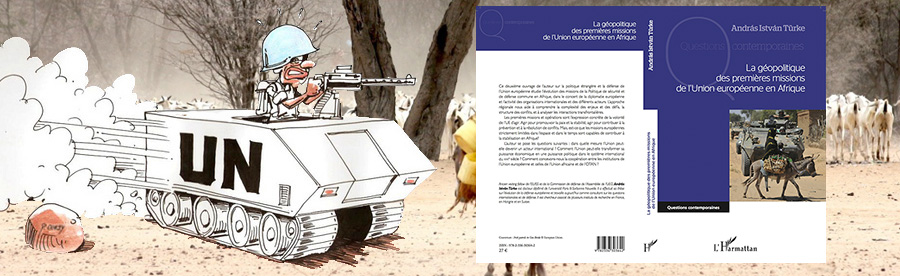
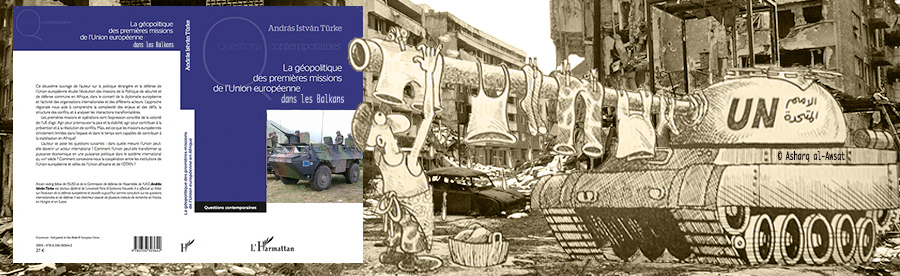
We are looking for sponsors for the English translation of these books, please contact turkeandras(at)gmail(dot)com