
You are here
Europäische Union
So lange müssen wir noch durchhalten: Nach der Schafskälte rollt eine Hitzewelle auf uns zu!
Kalt und nass ist der Juni. Aber die ungemütliche Zeit ist bald vorbei. Der Sommer kommt – und wie.
Categories: Europäische Union, Swiss News
Popstar ist wichtiger: TV-Reporter läuft wegen Shakira während Live-Sendung davon
Journalist Marcelo Benedetto unterbricht seinen WM-Bericht, um mit Shakira ein Foto zu machen. Die Star-Sängerin trat bei der Eröffnungsfeier der Fussball-Weltmeisterschaft 2026 auf.
Categories: Europäische Union, Swiss News
Press release - Press briefing on next week’s plenary session
Spokespersons for Parliament and for the political groups will hold a briefing on the 15 – 18 June plenary session, on Friday at 11.00 in Parliament’s Anna Politkovskaya press room.
Source : © European Union, 2026 - EP
Source : © European Union, 2026 - EP
Categories: Afrique, Europäische Union
Remarks by Kyriakos Pierrakakis following the Eurogroup meeting of 11 June 2026
Remarks by Eurogroup President Kyriakos Pierrakakis on the macroeconomic challenges, geopolitical instability and on long-term strategies for European competitiveness and technological sovereignty.
Press briefing - Foreign Affairs Council of 15 June 2026
Press briefing ahead of the upcoming Foreign Affairs Council will take place on 12 June 2026 at 14.30.
Press release - Conclusion of UN disability rights conference attended by MEPs
MEPs took part in the 19th Conference of States Parties to the UN Convention on the Rights of Persons with Disabilities in New York from 9 to 11 June.
Committee on Employment and Social Affairs
Committee on Petitions
Committee on Regional Development
Source : © European Union, 2026 - EP
Committee on Employment and Social Affairs
Committee on Petitions
Committee on Regional Development
Source : © European Union, 2026 - EP
Categories: Défense, Europäische Union
Minutes - Thursday, 7 May 2026 - PE789.064v01-00 - Committee on Foreign Affairs
Source : © European Union, 2026 - EP
Categories: Balkan News, Europäische Union
ÄNDERUNGSANTRÄGE 1407-1691 - Entwurf eines Berichts zur Einrichtung des Instruments „Europa in der Welt“ - PE789.071v01-00
ÄNDERUNGSANTRÄGE 1407-1691 - Entwurf eines Berichts zur Einrichtung des Instruments „Europa in der Welt“
Ausschuss für auswärtige Angelegenheiten
Entwicklungsausschuss
Robert Biedroń, Michael Gahler
Quelle : © Europäische Union, 2026 - EP
Ausschuss für auswärtige Angelegenheiten
Entwicklungsausschuss
Robert Biedroń, Michael Gahler
Quelle : © Europäische Union, 2026 - EP
Categories: Europäische Union
ÄNDERUNGSANTRÄGE 661–1053 - Entwurf eines Berichts Einrichtung des Instruments „Europa in der Welt“ - PE789.069v01-00
ÄNDERUNGSANTRÄGE 661–1053 - Entwurf eines Berichts Einrichtung des Instruments „Europa in der Welt“
Ausschuss für auswärtige Angelegenheiten
Entwicklungsausschuss
Robert Biedroń, Michael Gahler
Quelle : © Europäische Union, 2026 - EP
Ausschuss für auswärtige Angelegenheiten
Entwicklungsausschuss
Robert Biedroń, Michael Gahler
Quelle : © Europäische Union, 2026 - EP
Categories: Afrique, Europäische Union
Press briefing - G7 summit in Évian (France) of 15-17 June 2026
The press briefing will take place on Friday 12 June 2026 at 17.00.
Categories: Afrique, Europäische Union
In Afghanistan, Female Journalists Can Neither Ask Questions Nor Appear on Screen
Afghan media workers face growing restrictions under Taliban rule, with women journalists pushed further from reporting, broadcasting and public visibility. Credit: Learning Together.
By External Source
KABUL, Jun 11 2026 (IPS)
Afghanistan ranks 175th in the Reporters Without Borders Press Freedom Index this year. Out of 180 countries on the list, only Iran, Syria, China, North Korea and Eritrea ranked lower than Afghanistan.
Arrests narrow opportunities for workThe Taliban’s arrests and imprisonment of journalists have further narrowed opportunities for journalism.
Several prominent journalists are currently in prison. They include Shakib Ahmad Nazari, who is reportedly being held for collaborating with international media outlets. He was arrested in 2025 and sentenced to three years in prison according to sources.
Spokespersons for government ministries and agencies are reluctant to speak to female journalists and often do not even provide basic information or short statements. In the past, we had to sit in the last row of benches at press conferences, but recently we have not even been allocated seats anymore
Hamid Farhadi, a prominent freelance journalist, was arrested in September 2024 while working for foreign media outlets and the Afghan Etilaat Roz media outlet. He was sentenced to two years in prison. According to the human rights organization Amnesty International, Farhadi was sentenced without right to legal representation.
His arrest was allegedly related to a report he made for foreign media outlets about the situation of women and girls in Afghanistan.
The media in Afghanistan is overseen by the Taliban-run Audit Commission. Journalist and former member of the commission, Bashir Hatef, was arrested in 2025 for collaborating with foreign media and sentenced to two years in prison.
Self-censorship has become a daily routine
The arrests of male journalists, however, pale in comparison to the situation of female journalists, who face professional restrictions and are subject to gender-based discrimination. Over the past four years, many have been threatened, arrested, banned from work or treated violently.
Samandar (name changed) has 13 years of experience in television and radio. According to her, journalists currently do not have the right to criticize the Taliban, officials or state institutions.
Journalists are also not able to choose their guests freely. Only experts approved by the Taliban can be invited to programs that cover politics. Regular street interviews are practically impossible.
“We are forced to self-censor or our employer gets into trouble and we are threatened with imprisonment. So we remove criticism of the Taliban from our programs,” says Samandar.
Self-censorship is also visible in practice. A well-known television channel in Kabul – whose name will not be revealed for security reasons – was planning a program on the role of women journalists in communication.
Everything was ready and guests had been invited. However, the program had to be canceled because it was feared that the discussion would cause problems for both the channel and the guests.
Female journalists face double restrictions
Salma (name changed) is a female journalist with a journalism degree and nine years of work experience. She describes how spokespersons for government ministries and agencies are reluctant to speak to female journalists and often do not even provide basic information or short statements.
Routine press conference arrangements have also changed, she says. “In the past, we had to sit in the last row of benches at press conferences, but recently we have not even been allocated seats anymore.”
According to her, separate rooms have been built for women, from where they can follow the events but not participate in them equally.
“A partition has been erected in the hall, and we are forced to sit in a separate booth. We can only listen to the speeches of officials but are not allowed to ask questions.”
Even when questions are allowed in exceptional cases, limits are placed on what can be asked. “On rare occasions, when questions are allowed, we are not allowed to ask anything critical.”
Questions can only be asked at certain events where Taliban-approved officials, such as Zabihullah Mujahid, are present. He is considered somewhat more flexible in his approach to female journalists.
According to Salma, the restrictions do not end there. Movement and work are closely monitored.
“At press conferences, officials from the Taliban’s Ministry of Virtue and Prevention of Vice demand to know who we are with and whether we have a male escort.”
Salma also criticizes news directors who favor male journalists. According to her, it is well known in newsrooms that women are practically prevented from doing normal journalistic work and that Taliban representatives do not want to talk to female journalists.
“In most media outlets, we are not treated as employees but rather as interns who are paid only for our travel expenses. The media outlets take advantage of the restrictions imposed by the Taliban on female journalists.”
According to Salma, many women accept the situation because there are few options.
“In addition to the restrictions imposed by the Taliban, we are forced to tolerate this abuse so that we are not completely excluded from editorial and media work.”
No more female journalists in many provinces
Due to Taliban restrictions, female journalists are required to be accompanied by a male guardian even when they are supposed to be at work elsewhere, which is often practically impossible. Some women have left their jobs for fear that their family members could be arrested.
A writer in Kandahar, “Shazia,” uses a pseudonym. According to her, the restrictions on interviews imposed by the Taliban have significantly changed the way they work.
Male colleagues conduct the interviews, and female journalists have to rely on their recordings when writing their articles. Male colleagues are not always willing to cooperate in situations when follow-up questions or supplementary interviews are needed for a story.
Articles written by women are often published under the names of male colleagues. Women’s voices are not even allowed to be heard on the radio.
According to Reporters Without Borders, four out of five female journalists and media workers in Afghanistan lost their positions after the Taliban returned to power.
Before August 2021, there were 2,490 women working in the media, of whom only about 410 continued to work after the Taliban took power. According to the organization, there are no active female journalists in 15 of Afghanistan’s 34 provinces.
Ban on image further tightens surveillance
Freedom of speech in Afghanistan is also significantly restricted by the ban on the display of images of living beings.
According to the Afghan Journalists Center, the ban is in force in at least 23 provinces. Reports indicate that many media outlets have been forced to switch to audio-only format and at least 20 television stations have been closed.
Dwindling female journalists work in the media industry
Recent data highlights the scale of decline in Afghanistan’s media workforce. According to Naeem (not real name), a member of association of media organization, there are currently 4,073 male journalists and 746 female journalists working across the country.
Another female journalist, Nabila (not real name) provided similar figures, estimating that more than 4,700 journalists remain active, around 700 of them women.
These figures reflect a sharp contraction compared to previous years. According to Reporters Without Borders (RSF), there were previously around 700 women journalists working in Kabul alone; that number has now dropped to fewer than 100
Laila (name changed) was previously part of one of three women-led journalist associations and unions that supported female journalists before the Taliban returned to power.
She says none of these groups is active anymore. According to her, institutions and organizations can no longer be officially registered in women’s names under the Taliban regime.
The media sector in Afghanistan is also structurally restricted. There is no clear legal framework, live broadcasts are prohibited, the number of guests on programs is limited, and access to information is difficult.
Excerpt:
The author is an Afghanistan-based female journalist, trained with Finnish support before the Taliban take-over. Her identity is withheld for security reasons
Categories: Africa, Europäische Union
ÄNDERUNGSANTRÄGE 1054 - 1406 - Entwurf eines Berichts Einrichtung des Instruments „Europa in der Welt“ - PE789.070v01-00
ÄNDERUNGSANTRÄGE 1054 - 1406 - Entwurf eines Berichts Einrichtung des Instruments „Europa in der Welt“
Ausschuss für auswärtige Angelegenheiten
Entwicklungsausschuss
Robert Biedroń, Michael Gahler
Quelle : © Europäische Union, 2026 - EP
Ausschuss für auswärtige Angelegenheiten
Entwicklungsausschuss
Robert Biedroń, Michael Gahler
Quelle : © Europäische Union, 2026 - EP
Categories: Europäische Union
ÄNDERUNGSANTRÄGE 408 - 660 - Entwurf eines Berichts Einrichtung des Instruments „Europa in der Welt“ - PE789.068v01-00
ÄNDERUNGSANTRÄGE 408 - 660 - Entwurf eines Berichts Einrichtung des Instruments „Europa in der Welt“
Ausschuss für auswärtige Angelegenheiten
Entwicklungsausschuss
Robert Biedroń, Michael Gahler
Quelle : © Europäische Union, 2026 - EP
Ausschuss für auswärtige Angelegenheiten
Entwicklungsausschuss
Robert Biedroń, Michael Gahler
Quelle : © Europäische Union, 2026 - EP
Categories: Europäische Union
ÄNDERUNGSANTRÄGE 112 - 407 - Entwurf eines Berichts über die Einrichtung des Instruments „Europa in der Welt“ - PE789.067v01-00
ÄNDERUNGSANTRÄGE 112 - 407 - Entwurf eines Berichts über die Einrichtung des Instruments „Europa in der Welt“
Ausschuss für auswärtige Angelegenheiten
Entwicklungsausschuss
Robert Biedroń, Michael Gahler
Quelle : © Europäische Union, 2026 - EP
Ausschuss für auswärtige Angelegenheiten
Entwicklungsausschuss
Robert Biedroń, Michael Gahler
Quelle : © Europäische Union, 2026 - EP
Categories: Europäische Union
Media advisory – press point and technical press briefing on the MFF
Main agenda items, approximate timing, public sessions and press opportunities.
Categories: Afrique, Europäische Union
European Council of 18-19 June 2026 - Invitation letter by President António Costa to the members of the European Council
European Council President António Costa invited leaders to the meeting of 18 and 19 June 2026 in Brussels, during which they will discuss Ukraine, Middle East, competitiveness, global economic challenges, the next Multiannual Financial Framework, defence and security, migration and illicit drugs.
Categories: Balkans Occidentaux, Europäische Union
ETS2 market stability reserve: Council and Parliament reach provisional agreement
The Council and the European Parliament have reached a provisional agreement on the targeted amendment to the market stability reserve for the emissions trading system covering buildings, road transport and additional sectors (ETS2).
Categories: Afrique, Europäische Union
Media advisory – Eurogroup meeting of 11 June and Economic and Financial Affairs Council of 12 June 2026
Main agenda items, approximate timing, public sessions and press opportunities.
Categories: Défense, Europäische Union
Statement by President António Costa following the EU-Republic of Korea summit
On 10 June 2026, President of the European Council, António Costa, delivered a public statement following the EU-Republic of Korea summit.
Categories: Défense, Europäische Union
Joint statement following the EU-Republic of Korea summit
The leaders of the European Union and Republic of Korea held their 11th EU-Republic of Korea summit in Brussels on 10 June 2026, and issued a joint statement.
Categories: Défense, Europäische Union
Pages
the old site is here


© 2012-2015 Europa Varietas Foundation © 2015-2020 Europa Varietas Association
www.europavarietas.org | info(@)europavarietas(dot)org | Switzerland
This is a GDPR ready site
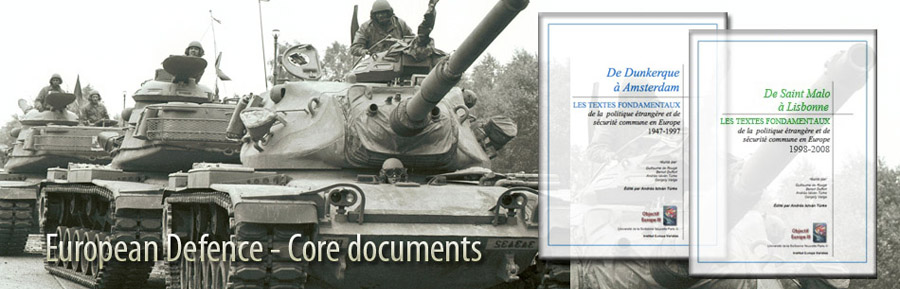
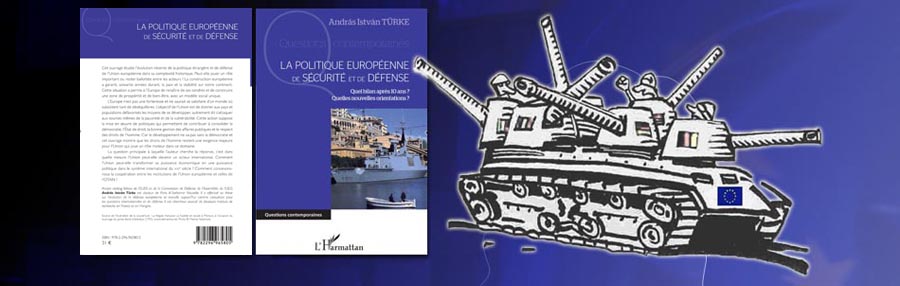
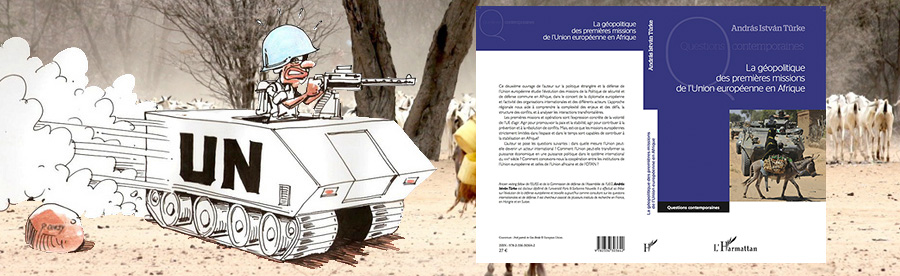
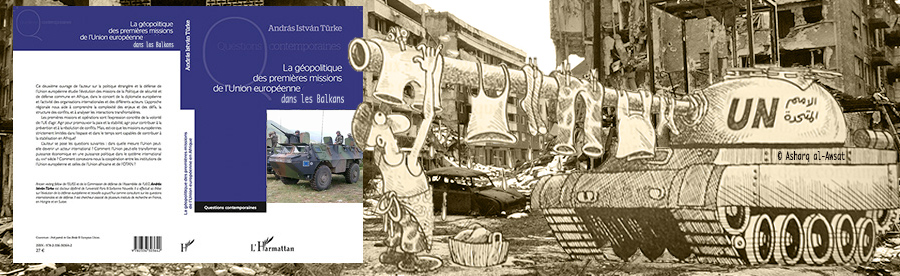
We are looking for sponsors for the English translation of these books, please contact turkeandras(at)gmail(dot)com