
You are here
Feed aggregator
WaterS beyond SDG 6: unveiling the multiple dimensions of water
Progress on SDG 6 — ensuring availability and sustainable management of water and sanitation for all — remains critically off-track. With none of its eight targets on course to be met by 2030, this commentary argues that the shortfall reflects not merely implementation failures, but a deeper conceptual problem: water governance frameworks rely on a homogeneous, techno-centric understanding of water that ignores its multiple social, cultural, political, and ecological dimensions. We introduce the concept of "waterS" (plural, capitalised) to foreground this multiplicity. Drawing on the Spanish aguas, the term captures the diverse forms, values, and meanings water holds across different communities and contexts — from a measurable substance (H₂O) to a spiritual entity, a living being, or the foundation of social and hydrosocial relations. This stands in contrast to SDG 6's universalist framing, rooted in Western modernist traditions, which reduces water governance to engineering, hygiene, and risk management. Through empirical examples — from peri-urban water use in India, desalination conflicts in Antofagasta, Chile, and infrastructure-led rural water projects in Telangana, India — we demonstrate how standardised technical approaches perpetuate inequities in access, marginalise Indigenous and local governance systems, and reproduce power imbalances in participation and decision-making. We further critique the commodification of water, the limits of market-based governance, and the inadequacy of current monitoring frameworks that rely on aggregate national data while overlooking lived local realities. Looking ahead to the post-2030 agenda and the 2026 UN Water Conference, we propose a paradigm shift toward power-sensitive, pluralistic governance frameworks. Key recommendations include community-led participatory planning, legal recognition of customary water rights, equity-based financial models, citizen-science data collection, and rights-based approaches that centre marginalized groups — especially women, youth, and Indigenous Peoples — in water decision-making.
Categories: Diplomacy & Defense Think Tank News, Europäische Union
WaterS beyond SDG 6: unveiling the multiple dimensions of water
Progress on SDG 6 — ensuring availability and sustainable management of water and sanitation for all — remains critically off-track. With none of its eight targets on course to be met by 2030, this commentary argues that the shortfall reflects not merely implementation failures, but a deeper conceptual problem: water governance frameworks rely on a homogeneous, techno-centric understanding of water that ignores its multiple social, cultural, political, and ecological dimensions. We introduce the concept of "waterS" (plural, capitalised) to foreground this multiplicity. Drawing on the Spanish aguas, the term captures the diverse forms, values, and meanings water holds across different communities and contexts — from a measurable substance (H₂O) to a spiritual entity, a living being, or the foundation of social and hydrosocial relations. This stands in contrast to SDG 6's universalist framing, rooted in Western modernist traditions, which reduces water governance to engineering, hygiene, and risk management. Through empirical examples — from peri-urban water use in India, desalination conflicts in Antofagasta, Chile, and infrastructure-led rural water projects in Telangana, India — we demonstrate how standardised technical approaches perpetuate inequities in access, marginalise Indigenous and local governance systems, and reproduce power imbalances in participation and decision-making. We further critique the commodification of water, the limits of market-based governance, and the inadequacy of current monitoring frameworks that rely on aggregate national data while overlooking lived local realities. Looking ahead to the post-2030 agenda and the 2026 UN Water Conference, we propose a paradigm shift toward power-sensitive, pluralistic governance frameworks. Key recommendations include community-led participatory planning, legal recognition of customary water rights, equity-based financial models, citizen-science data collection, and rights-based approaches that centre marginalized groups — especially women, youth, and Indigenous Peoples — in water decision-making.
Categories: Diplomacy & Defense Think Tank News, Europäische Union
WaterS beyond SDG 6: unveiling the multiple dimensions of water
Progress on SDG 6 — ensuring availability and sustainable management of water and sanitation for all — remains critically off-track. With none of its eight targets on course to be met by 2030, this commentary argues that the shortfall reflects not merely implementation failures, but a deeper conceptual problem: water governance frameworks rely on a homogeneous, techno-centric understanding of water that ignores its multiple social, cultural, political, and ecological dimensions. We introduce the concept of "waterS" (plural, capitalised) to foreground this multiplicity. Drawing on the Spanish aguas, the term captures the diverse forms, values, and meanings water holds across different communities and contexts — from a measurable substance (H₂O) to a spiritual entity, a living being, or the foundation of social and hydrosocial relations. This stands in contrast to SDG 6's universalist framing, rooted in Western modernist traditions, which reduces water governance to engineering, hygiene, and risk management. Through empirical examples — from peri-urban water use in India, desalination conflicts in Antofagasta, Chile, and infrastructure-led rural water projects in Telangana, India — we demonstrate how standardised technical approaches perpetuate inequities in access, marginalise Indigenous and local governance systems, and reproduce power imbalances in participation and decision-making. We further critique the commodification of water, the limits of market-based governance, and the inadequacy of current monitoring frameworks that rely on aggregate national data while overlooking lived local realities. Looking ahead to the post-2030 agenda and the 2026 UN Water Conference, we propose a paradigm shift toward power-sensitive, pluralistic governance frameworks. Key recommendations include community-led participatory planning, legal recognition of customary water rights, equity-based financial models, citizen-science data collection, and rights-based approaches that centre marginalized groups — especially women, youth, and Indigenous Peoples — in water decision-making.
Categories: Diplomacy & Defense Think Tank News, Europäische Union
La victoire discrète de Sánchez sur le front de l’accessibilité financière
La France baisse le pont-levis : Il n’y avait pas grand-chose de « Made in Europe » lors du sommet des dirigeants de jeudi sur la « compétitivité ». La réunion n’a même pas donné lieu à la rédaction d’un document, ce qui était d’ailleurs prévu. Mais ce qui en est ressorti, comme l’ont rapporté […]
The post La victoire discrète de Sánchez sur le front de l’accessibilité financière appeared first on Euractiv FR.
Categories: Afrique, Union européenne
Germany : Political battles begin as German intelligence's 'Big Bang' takes shape
The landmark bill to expand the powers of Germany's BND foreign intelligence service so it can better counter "hybrid threats" is gradually taking shape at the federal Chancellery. Legal experts are hard at work implementing Chancellor Friedrich Merz's wishes.Announced in [...]
Categories: Defence`s Feeds, France
Saudi Arabia/Sudan : Riyadh sent heavy artillery to Sudanese forces battling UAE-backed rebels
Intelligence Online can reveal that between 2023 and 2024, Saudi Arabia shipped three 155mm M777 artillery batteries, along with plenty [...]
Categories: Defence`s Feeds, France
Cambodia : Russian-funded nuclear information centre project in Cambodia stalls
The joint committee between Cambodia and Russia on the peaceful uses of nuclear energy held its fourth working meeting – [...]
Categories: Defence`s Feeds, France
New Caledonia : Court upholds security clearance withdrawal for New Caledonia police officer
The administrative court in Nouméa, the capital of France's Pacific territory of New Caledonia, on 29 December rejected an appeal [...]
Categories: Defence`s Feeds, France
Ukraine : Abrams apparel store in Kyiv, where fighters hang out and talk shop
Two Latin American soldiers from Ukraine's 3rd Corp Azov are relaxing at the rear of Abrams military apparel store in Kyiv's [...]
Categories: Defence`s Feeds, France
Russia/Ukraine : Ukraine recruiting in Kazakhstan, Uzbekistan to strike at the heart of Russia
A 3 February raid in Moscow by Russia's FSB domestic intelligence agency led to the arrest of a 29-year-old man, [...]
Categories: Defence`s Feeds, France
Iran’s Divided Opposition
Only a unified movement can threaten the regime.
Categories: Diplomacy & Crisis News, France
The AI Trilemma
How to regulate a revolutionary technology.
Categories: Diplomacy & Crisis News, France
INTERVIEW - «Die EU-Verträge werden positiven Einfluss auf das Wachstum haben» – «Der Einfluss auf unseren Wohlstand ist minim, doch die Nachteile sind gravierend»
Aymo Brunetti und Christoph Schaltegger zählen zu den bekanntesten Ökonomen der Schweiz, beide vertreten liberale Standpunkte. Über die EU-Verträge gehen ihre Meinungen allerdings diametral auseinander.
Categories: European Union, Swiss News
LampreyMMAUV™
Categories: Defence`s Feeds, European Union
A seat at the table or on the menu? Africa grapples with the new world order
The US president has shaken up international relations and the continent is working out where it stands.
A seat at the table or on the menu? Africa grapples with the new world order
The US president has shaken up international relations and the continent is working out where it stands.
Categories: Africa, European Union
Gleizes, OQTF, coopération... le ministre de l'Intérieur Laurent Nunez va se rendre en Algérie
Le ministre de l'Intérieur français Laurent Nunez se rendra en Algérie la semaine prochaine afin d'évoquer plusieurs sujets épineux : le cas de Christophe Gleizes, journaliste français arrêté en mai 2024 en Algérie, l'admission des ressortissants algériens sous OQTF, ou encore le renseignement en matière de lutte contre le terrorisme.
Eine hochwertige Matratze für einen erholsamen Schlaf. Worauf ist zu achten?
Es ist nicht zu leugnen, dass eine hochwertige Matratze einen großen Einfluss auf unseren Schlaf hat. Matratzen beeinflussen nicht nur den Liegekomfort, sondern auch die Haltung der Wirbelsäule und die Entlastung der Muskeln.
Suchen Sie vielleicht nach einer hochwertigen Matratze für Ihr Schlafzimmer, die die nächtliche Regeneration Ihres Körpers fördern kann? In unserem Beitrag finden Sie einige nützliche Tipps, mit denen Sie das richtige Produkt bestimmt finden!
Die richtige Härte der Matratze wählenEgal, ob Sie eine Matratze 140×200 für ein schmales Bett oder vielleicht eine breite Matratze 180×200 suchen, Sie sollten vor allem den richtigen Härtegrad auswählen. Der Härtegrad einer Matratze entscheidet darüber, ob der Körper während des Schlafs ausreichend gestützt wird. Wenn Sie eine zu weiche Matratze auswählen, kann Ihr Becken während des Schlafs einsinken. Bei einer zu harten Oberfläche wird Ihr Körper hingegen unangenehm gedrückt.
Wichtig! Bei der Wahl der richtigen Härte Ihrer neuen Matratze müssen Sie Ihr Körpergewicht in Betracht ziehen. Bei einem höheren Körpergewicht benötigen Sie eine härtere Matratze.
Unterschiede zwischen Schaum-, Federkern- und HybridmatratzenDerzeit werden ganz verschiedene Matratzen angeboten. Jeder Matratzentyp hat seine spezifischen Eigenschaften. Zu beliebten Matratzentypen gehören:
- Schaummatratzen – sie passen sich an den Körper an und bieten eine gleichmäßige Druckentlastung. Sie eignen sich für Menschen, die unruhig schlafen;
- Federkernmatratzen – sie zeichnen sich durch eine besonders gute Luftzirkulation aus. In der Praxis bedeute das, dass sich diese Matratzen für alle gut eignen, die nachts stärker schwitzen. Ferner bieten sie eine sehr gute Unterstützung für den menschlichen Körper. Diese Matratzen reagieren flexibel auf Bewegungen;
- Hybridmatratzen – Modelle, die Schaum- und Federkernschichten miteinander kombinieren. Sie sind vielseitig, weil sie Vorteile der beiden oben genannten Matratzentypen verbinden. Eine hochwertige Matratze dieser Art bietet eine stabile Unterstützung von unten und passt sich an Körperkonturen an.
Sie wissen bereits, welche Aspekte zu berücksichtigen sind, wenn Sie eine bequeme Matratze suchen. Benötigen Sie eine bequeme Matratze? MyBed! ist die richtige Wahl! In diesem Online-Shop finden Sie moderne Matratzen, die durch ihre langlebigen Materialien sowie soliden Konstruktionen überzeugen. Es gibt verschiedene Größen – Sie können sich für eine Matratze 160×200, 140×200, 180×200 etc. entscheiden.Wählen Sie das richtige Modell aus und genießen Sie den höchsten Schlafkomfort!
Der Beitrag Eine hochwertige Matratze für einen erholsamen Schlaf. Worauf ist zu achten? erschien zuerst auf Neurope.eu - News aus Europa.
Categories: European Union
Mort d'un étudiant à Dakar : l'autopsie fuite dans la presse, la famille demande des comptes
Les Sénégalais sont sous le choc. La presse a révélé jeudi les conclusions de l'autopsie de l'étudiant mort dans des affrontements avec la police sur le campus de l'Université Cheikh Anta Diop. Le rapport confirme la version de ses camarades : Abdoulaye Ba aurait bien subi des violences. La famille exige que toute la lumière soit faite. Les précisions d'Elimane Ndao, correspondant de France 24 à Dakar.
Héritage cherche héritiers
Les silencieuses font beaucoup de bruit, ces derniers mois, dans la littérature haïtienne, et c'est tant mieux. À l'automne dernier, dans Passagères de nuit (Sabine Wespieser), couronné par l'Académie française, Yanick Lahens donnait la parole à deux femmes nées au XIXe siècle, toutes deux (…)
/ Haïti, Littérature, Société
Categories: Diplomacy & Crisis News, France
Pages


© 2012-2018 Europa Varietas Foundation © 2015-2018 Europa Varietas Association
www.europavarietas.org | info(@)europavarietas(dot)org | Switzerland

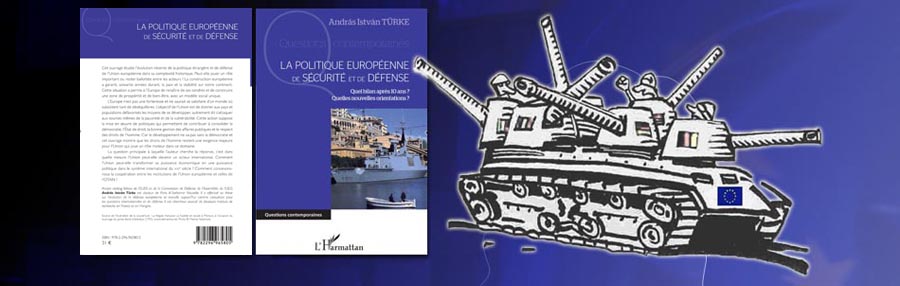
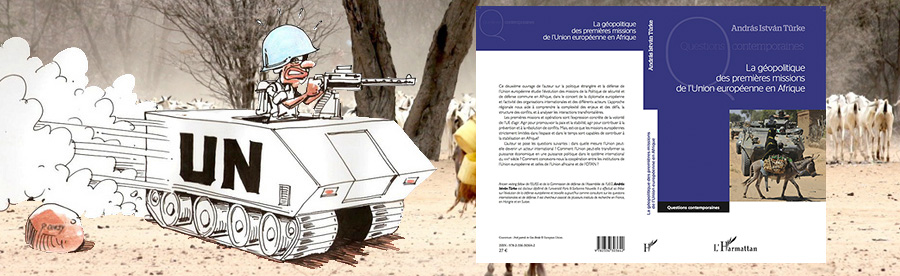
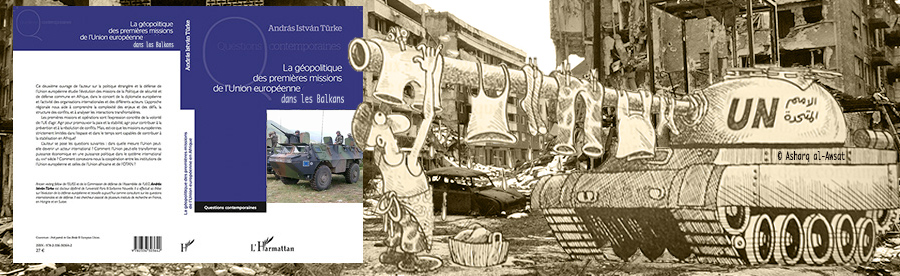
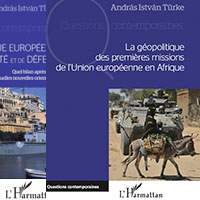
We are looking for sponsors for the English translation of these books, please contact turkeandras(at)gmail(dot)com