
You are here
Feed aggregator
TORONY, KILÁTÁSSAL
Május 15-én egy kis csapat gyűlt össze a HungaroControl Igló utcai épületében, hogy élve a nem mindennapi lehetőséggel, a Liszt Ferenc Nemzetközi Repülőtér ikonikus irányítótornyának teraszáról dokumentálja a péntek délutáni forgalmat. Erre a napra nyoma sem maradt az addig verőfényes májusi időjárásnak. Az idei év első komolyabb zivatarrendszere borult időt és esőt ígért, de ki az, akit egy kis csapadék elrettent egy ilyen lehetőségtől?
Ahhoz, hogy az Igló utcából eljussunk a toronyba, a HungaroControl minibuszába szállunk és belépünk a repülőtér üzemi területére. Ez nem egy „rendben, hajtson tovább” mozzanat és éppen úgy zajlik, mintha repülőgépre szállnánk: minden nálunk lévő csomag és tárgy – beleértve a nadrágból kihúzott övet is - tálcára kerül, jómagunk pedig átballagunk a detektoros kapun. Minden rendben találtatik, elköszönünk a kedves hölgyektől, és visszaülünk a buszba. A toronyhoz vezető szervizút megkerüli az 1-es pálya város felőli végét, a 13R küszöböt. A túloldalon haladva elmaradt mellettünk a kompenzáló betonon parkoló Airbus A340-es, a bozót mellett hasaló ex-Malév Boeing 767-es, a tűzoltógyakorlatokra használt, hajtóműveitől megfosztott A321-es és végül leparkolunk az irányítótorony lábainál.
Categories: Biztonságpolitika
Die Politik der AfD schadet ihren Wählern
Die AfD beißt sich in das eigene Parteiprogramm: Sie verspricht etwas, das sie nie wird einhalten können. Ihre Politik würde Probleme sogar verschärfen., Bei den Landtagswahlen am 6. September in Sachsen-Anhalt droht ein politischer Einschnitt. Die AfD könnte erstmals eine Regierung bilden und den Ministerpräsidenten stellen.
Für welche politischen Positionen steht die AfD in Sachsen-Anhalt? Mit welchen Parteien hat sie Überschneidungen? Und wo ...
Categories: Diplomacy & Defense Think Tank News
Bridging Digital Transformation in an ASEAN-EAEU Cooperation
A female fish seller at a Saigon market was contacting her clients via her a smart phone. Digital technology has accelerated and facilitated business operations in South-East Asia. Credit: Unsplash / Robson Hatsukami Morgan
By Ruhimat Soerakoesoemah, Andrey Panteleev and Philip Diamant
BANGKOK, Thailand, Sep 7 2026 (IPS)
Physical borders are shrinking, and digital ones are quietly taking their place. As governments use digital transformation as a powerful driver of economic and sustainable development, the challenge is no longer simply a digital divide between those with technology and those without it. It is a question of digital fragmentation, where infrastructure, standards and regulations make cross-border cooperation more difficult.
This raises an important question of how economies in Asia and the Pacific can pursue digital sovereignty while remaining connected to trade, innovate and develop together. One promising answer lies in closer cooperation between the Association of Southeast Asian Nations (ASEAN) and the Eurasian Economic Union (EAEU). Both regions are trying to build stronger digital capabilities while keeping their economies open to cross-border trade. Despite their different economic structures and development pathways, the two blocs share many of the same digital ambitions and challenges.
Digital transformation has become a powerful driver of economic development, competitiveness and resilience. However, progress remains uneven within regions. While some countries are rapidly building digital infrastructure and services, others still face constraints in skills, financing and institutional capacity. This means digital transformation is no longer solely considered in terms of technology. Governments are increasingly seeing it as a strategic priority which is linked to competitiveness, national security, sovereignty and their citizens’ well-being. For regional blocs such as the EAEU and ASEAN, this makes cooperation and the exchange of experience more and more important.
In the EAEU, this ambition is reflected in the work of the Eurasian Economic Commission. In 2017, the EAEU launched its Digital Agenda, which serves as the overarching framework for digital transformation processes across members States. The EAEU’s regional approach is complemented by national efforts. A good example from Kazakhstan was how a dedicated ministry for artificial intelligence (AI) is established and that Kazakhstan already passed new laws on AI, cybersecurity and digital assets, and started running powerful computing centres. Kazakhstan’s nationwide AI training programme is already reaching thousands of people. This is a good example of what a push towards digital sovereignty can look like.
Such a similar ambition can be seen in the ASEAN region, where the ASEAN Digital Economy Framework Agreement (DEFA) is expected to be launched at the 49th ASEAN Summit this November. DEFA aims to create a more seamless regional digital economy by addressing areas, such as digital trade, cross-border shopping, e-signatures, cybersecurity, electronic payments and AI. The region has been asked for such a framework since SMEs account for 85% of jobs and 44.8% of GDP in South-East Asia, but they generate only around 18% of exports. At the same time, the region’s digital economy is already worth an estimated US$ 0.5 trillion and is expected to double to US$ 1 trillion by 2030. With an effective implementation of DEFA, this number can be further increased to US$ 2 trillion.
With all these developments, the complementary strengths of ASEAN and the EAEU are highlighted. The EAEU’s experience in building digital public platforms, solutions for critical infrastructure and cybersecurity frameworks is complemented with ASEAN’s dynamic markets, vibrant digital entrepreneurship and successful models for commercialising digital services. A stakeholder survey conducted by ESCAP across EAEU and ASEAN countries in 2025 found broad agreement on the nature of digital transformation, priority technologies and key risks. This suggests that, despite their different contexts, the two regions share significant common ground for cooperation.
This is where ESCAP can play an important convening role as the UN’s regional body for Asia and the Pacific. Through the project “Strengthening Regional Cooperation in Digital Transformation for Economic and Sustainable Development”, ESCAP is working with ASEAN and EAEU countries to help identify practical solutions, share experiences and advance opportunities for collaboration between the regions. Policymakers explored how both subregions can cooperate more efficiently across borders.
Interesting examples include the benefits of interoperability. Eleven South-East Asian economies now run their own QR-payment systems, with eight already working across at least one border. This same interoperability is starting to reach across other subregions, with a QR-code issued by a Russian bank already working in Viet Nam. These experiences demonstrate a clear scope to explore how similar approaches could support wider cross-border cooperation between ASEAN and the EAEU.
In hindsight, the first sentence of this blog could have been: Physical borders may be shrinking, but digital borders are still being drawn. Addressing digital fragmentation requires dialogue, shared standards, and practical cooperation that allows countries to benefit from the digital transformation. Initiatives like this aim to strengthen interoperability and knowledge sharing across subregions and promote a digital future of Asia that is connected, inclusive and supports sustainable development for all.
Ruhimat Soerakoesoemah, Head of Subregional Office for South-East Asia, ESCAP; Andrey Panteleev, Head of Economic Policy Strategies Section, Macroeconomic Policy Department, Eurasian Economic Commission; and Philip Diamant, Intern, Subregional Office for South-East Asia, ESCAP
IPS UN Bureau
Categories: Africa
Nigerian academic on rags to riches: 'Nothing good was supposed to come out of me'
David Etor grew up in poverty in Nigeria, but now teaches engineering at the University of Bristol
Categories: Africa, Biztonságpolitika
Midwives: The Workforce That Will Determine Maternal and Newborn Survival and Africa’s Future
Ouattara, senior midwife and head of the maternity unit at the Ayaou-Sokpa Health Centre in Côte d'Ivoire, consults with Awa, a pregnant woman, during a routine antenatal visit. Credit: UNFPA Côte d'Ivoire/Miléquêm Diarassouba
By Diene Keita and Jean Kaseya
NEW YORK / ADDIS ABABA, Sep 7 2026 (IPS)
Tonight, thousands of women across Africa will give birth. Whether they survive to see daylight will largely depend on where they live, how quickly they reach care, and whether the health system around them is ready to respond.
Maternal deaths in Africa have dropped 40 percent since 2000, but progress is now stalling. Africa still accounts for more than 70 percent of all maternal deaths worldwide. A woman facing pregnancy complications on the continent is around 130 times more likely to die than a woman in Europe or North America.
Most of these deaths are preventable. Postpartum hemorrhage remains the leading direct cause of maternal death, while indirect causes such as HIV, malaria, and anemia also account for a substantial share. What connects them is delay: delay in seeking care, delay in reaching a health facility, and delay in providing the best treatment to save a woman’s life. The fact that so many maternal deaths occur within health facilities is telling: the problem is not only the absence of care but also weaknesses in facility readiness, referral systems, teamwork, and emergency response.
Throughout the continuum of maternal care, a well-educated midwife can recognize danger signs before they become emergencies: managing complications, including coordinating timely referrals; and delivering respectful and high-quality care. Midwives already deliver up to 90 percent of essential sexual, reproductive, maternal, and newborn health services, often in communities where health systems are weakest. But midwives cannot do this alone and their impact depends on the strength of the health system: functioning primary health care, community referral and transportation systems, reliable medicines and blood supplies, and access to emergency obstetrical and neonatal care when complications arise. Despite this indispensable role, midwives remain one of Africa’s most overlooked and underfunded health workers.
Based on the latest comparable WHO and UNFPA data, only four of 51 reporting African countries meet the WHO needs-based benchmark of 9.23 midwifery personnel per 10,000 population. Forty-seven remain below the benchmark. But the numerical shortage is only part of the story. Even where midwives are educated, roughly 34 percent of midwifery personnel in reporting countries are unemployed. The challenge, in other words, is not simply to educate more midwives—it is to integrate those already educated and deploy and retain them where needs are greatest.
Ending preventable maternal mortality by 2030 has become one of the continent’s greatest tests of leadership, equity, and health sovereignty.
With the appointment of H.E. Dr. Samia Suluhu Hassan, President of the United Republic of Tanzania, as the AU Champion on Maternal and Child Health, our collective quest to end maternal deaths is elevated with the highest level of political support. In a recent op-ed, President Hassan called on African leaders and partners to rally around a simple yet powerful roadmap: the Three Zeros framework. It includes achieving zero home deliveries where women are cut off from skilled care and emergency referrals; zero preventable maternal and newborn deaths by shifting from access alone to quality, respectful, and emergency-ready care; and zero unvaccinated children by placing zero-dose children at the center of primary health care and last-mile delivery. Investing in midwives is fundamental to achieving these Three Zeros.
The case for investment is not just moral — it is economic. The UNFPA midwifery investment case reveals that investing in midwives can generate as much as a ten-fold return through combined social and economic gains. In Sierra Leone, modeling shows that universal care provided by midwives could save 2,278 maternal lives, save 19,029 newborn lives, prevent 39,970 stillbirths, and avert almost 860,000 unintended pregnancies by 2035. Beyond these clinical and economic gains, midwifery is also a powerful engine for women’s economic empowerment. Since the vast majority of midwives are female, expanding this workforce translates directly into thousands of stable, skilled, and dignified formal-sector jobs for women—particularly in rural and underserved communities where employment opportunities are often scarce. Converting informal, unpaid caregiving into salaried careers saves lives and builds financial independence for women, while strengthening Africa’s broader economic development.
Investing in midwives alongside multi-skilled community health workers creates a stronger continuum of care—from the household and community to the primary health facility and referral hospital. Community health workers can support early identification of pregnancy risks, promote antenatal care attendance, encourage skilled birth attendance, strengthen immunization uptake, and facilitate timely referrals, while midwives provide the skilled clinical care required to prevent maternal and newborn deaths. Together, this workforce forms the backbone of a people-centered primary health care system capable of delivering the AU’s vision of health sovereignty.
Africa has already shown political leadership in achieving a strong health workforce. In 2016, Africa committed to train and deploy two million community health workers as part of addressing the chronic health workforce gap—a target already half met. Under the leadership of H.E. Bola Ahmed Tinubu, President of the Federal Republic of Nigeria and AU Champion for Human Resources for Health and Community Health Delivery Partnership (CHDP), the continent is committed to accelerating progress towards the target of two million multi-skilled community health workers by 2030.
Midwifery deserves the same political ambition, together with a clear continental target to close the midwifery gap.
Any midwifery target must sit within a broader health workforce agenda. Accelerating the reduction of maternal deaths depends on a wider multidisciplinary workforce, including nurses, doctors, anesthesia providers, laboratory personnel, pharmacists, blood service staff, and emergency transport teams. This model promotes integrated community health systems where trained, supported, and professional community health workers deliver a comprehensive package of essential services, including health promotion for maternal and child health, disease prevention, immunization, early identification of pregnancy risks, referrals, and links to health facilities.
Just as Africa united around scaling up community health workers, leaders should now rally around a target to educate, deploy and retain the midwives needed to end preventable maternal and newborn deaths on the continent and enhance the health outcomes.
The following priorities, supported by the evidence-driven global initiative The Midwifery Accelerator, offer a practical roadmap:
First, increase and institutionalize financing for the health workforce, including midwives, as a strategic investment for health security and sovereignty.
This means accelerating the Lusaka Agenda and Accra Reset and prioritizing domestic funding for workforce compacts to strengthen primary health care systems in high-burden countries for maternal and child deaths. Establishing dedicated workforce budget lines, and improving the efficiency of workforce financial management through digitalization will require strengthened public finance management capacity and capabilities and cross-ministerial coordination. Aligning partner contributions strategically with national health workforce development plans will improve efficiency and address issues linked to the transition from donor support.
Second, expand equitable access to skilled maternal and newborn care by deploying midwives strategically to underserved high-burden and rural areas.
We must educate, deploy, and retain enough midwives to improve the quality, continuity, and responsiveness of maternal and newborn care. This will require ensuring quality midwifery education aligned to international and national standards, financing new posts and absorbing unemployed midwives, educating more only where the needs are unmet. Retention is equally critical as poor conditions; limited career growth, low pay and migration continue to drain skilled midwives from many African countries. Building a resilient workforce requires investing in decent work, professional recognition, and supportive, accountable workplaces.
Third, we must advocate and empower midwives, building midwifery leadership, strengthening coalitions, and amplifying the voices of women and communities.
Midwives should play a central role in designing models of care, not just delivering them. Professional associations must be seated at policy and financing tables, the Chief Midwifery Officer Network should be formalized, and communities need a stronger say in holding health systems accountable.
Fourth, maternal survival must be addressed as a whole-of-government responsibility.
Backed by political and financial commitments, this requires engagement beyond health ministries, including the finance, education, gender, and planning portfolios, alongside local government and civil society partners.
Through the AU Champion Roadmap on Maternal and Child Health, the AU Commission is collaborating with Member States, Africa CDC, UNFPA, and other partners to strengthen accountability, data systems and peer-to-peer learning. Accountability must drive this agenda: every maternal death should be counted, reviewed, and used to strengthen health systems. What gets measured gets prioritized, and what gets prioritized gets funded.
The AU Champion Roadmap calls for sustained, African-led domestic financing for maternal, newborn and child health. Investing in midwives is an investment in maternal and newborn survival, women’s economic empowerment, resilient primary health care systems, and Africa’s future prosperity. Preventing maternal deaths protects families, creates decent jobs, strengthens trust in public institutions, and safeguards the continent’s greatest asset—its people.
Africa has shown that shared ambition can drive transformative change. That same ambition must be matched with sustained resolve and support to ensure that no woman or newborn’s life is cut short for reasons we can prevent. A strong and resilient midwifery health workforce is within our collective reach – let us use it to secure Africa’s health sovereignty, sustainable development, and future prosperity.
Dr. Diene Keita, Executive Director, United Nations Population Fund (UNFPA), and
Dr. Jean Kaseya, Director General, Africa Centres for Disease Control and Prevention (Africa CDC)
IPS UN Bureau
Categories: Africa
25 Years After 9/11, What Are We Failing to Imagine Now?
The counterterrorism community struggles with how technology might be applied to novel use cases.
Categories: Diplomacy & Crisis News
When Man City call you don't say no - Ndiaye
New £60m Manchester City signing Iliman Ndiaye says playing in the Champions League is where he belongs.
Categories: Africa
Visite de Xi Jinping en Égypte : la Chine se veut un contrepoids des États-Unis
Retour sur la visite historique du président chinois Xi Jinping en Égypte, en début de semaine. Cette visite – une première dans le pays depuis dix ans – intervient alors que Pékin cherche à renforcer ses liens économiques avec Le Caire. L'Égypte, premier partenaire commercial de Washington en Afrique du Nord, cherche-t-elle aussi à diversifier ses partenariats internationaux ?
Categories: Afrique
RDC : un dialogue national peut-il vraiment réconcilier le pays ?
En République démocratique du Congo, Félix Tshisekedi veut lancer un vaste dialogue national pour la paix, la cohésion et la refondation de l’État. L’objectif : consulter les 26 provinces avant des assises nationales et parvenir à un Pacte national.
Mais le processus divise déjà. Une partie importante de l’opposition rejette le cadre proposé par le chef de l’État et réclame davantage de garanties d’inclusivité et de neutralité. L’AFC/M23 est, de son côté, exclu de ce dialogue politique, alors que la guerre dans l’Est demeure au cœur de la crise congolaise.
Ce dialogue peut-il réellement réconcilier le pays ? Peut-on parvenir à un pacte national sans réunir tous les acteurs autour de la table ? Décryptage avec l’analyste politique congolais Christian Moleka dans le Journal de l’Afrique.
Categories: Afrique
Une présentatrice égyptienne condamnée à la peine de mort pour trafic de drogue
La présentatrice égyptienne Sarah Khalifa, connue pour son émission "Mission difficile" sur la chaîne privée Al-Mehwar, et onze autres personnes ont été condamnées à la peine de mort par le tribunal pénal du Caire, ont rapporté samedi des médias officiels. Elles sont accusées d'avoir fabriqué et trafiqué des stupéfiants.
Categories: Afrique
What different world maps get right - and what they get wrong
As the UN adopts a new world map to reflect Africa's true size, let's take a closer look at what different maps get right and wrong.
Categories: Africa, Biztonságpolitika
Quand un préavis de quatre minutes ne suffit pas : les nouvelles tactiques de tir incessant de la Russie épuisent les habitants de Kiev
L'intensification et la violence croissante des attaques russes contre Kiev ont épuisé de nombreux civils et les ont mis à rude épreuve.
Categories: Afrique
Cinq ans après le coup d'État en Guinée, quel bilan pour la junte ?
Le 5 septembre 2021, Mamadi Doumbouya et ses forces spéciales renversaient le président Alpha Condé. Le militaire promettait alors une “refondation” de l’État et un retour du pouvoir aux civils. Cinq ans plus tard, il a troqué l’uniforme de chef de la junte contre celui de président élu. Entre transformation politique, ambitions économiques et minières, mais aussi répression et inquiétudes sur les libertés publiques : que reste-t-il des promesses du 5 septembre 2021 ?
Categories: Afrique
Mutinerie au Niger du 29 août : "les puissances étrangères" accusées
Près d’une semaine après la mutinerie qui a secoué le Niger, les autorités de Niamey accusent la France et ses “valets africains” d’être responsables de la tentative de coup d’État du 29 août dernier. Un discours habituel depuis la prise de pouvoir des militaires au Niger en 2023 mais qui cette fois ne cite pas nommément les pays précédemment accusés, comme le Tchad. Explications d'Harold Girard, correspondant régional pour France 24.
Categories: Afrique
La "marche des paniers vides" : au Sénégal, des manifestants dénoncent la vie chère
Une manifestation a eu lieu à Dakar, samedi, à l’appel d’influenceurs sénégalais, pour dénoncer la cherté de la vie dans le pays. Intitulée la “marche des paniers vides”, cette mobilisation avait pour but d’accentuer la pression sur le gouvernement afin d’obtenir des mesures concrètes.
Categories: Afrique
South Africa beat Zimbabwe to win T20 tri-series final - scorecard
Latest scorecard from the Twenty20 tri-series final between South Africa and Zimbabwe in Windhoek.
Categories: Africa
South Africa finish strongly to take 2-1 series lead against All Blacks
South Africa eventually overpower a spirited New Zealand as the world champions came on strong in the final quarter in Soweto to take a 2-1 series lead.
Categories: Africa
Ministry of National Defense Issues Press Release Regarding "PLA Joint Combat Readiness Patrol"
No description
Categories: Defence`s Feeds
Comment Cheikh Anta Diop et Théophile Obenga ont contesté les thèses faisant de l'Égypte ancienne une « civilisation blanche »
Le Caire, la capitale égyptienne a été le théâtre d'un affrontement intellectuel inédit et dont les conclusions retentissent encore jusqu'à nos jours. Du 28 janvier au 03 février 1974, les plus grands égyptologues du monde, spécialistes reconnus dans leur domaine, se sont réunis au Caire, au cours d'un colloque international sous l'égide de l'UNESCO.
Categories: Afrique, Nyugat-Balkán
Is Russia proving better at protecting friends than fighting enemies in West Africa?
Russian forces were brought in to help defeat jihadists but they also defend the military leadership in Niger.
Categories: Africa
Pages


© 2012-2018 Europa Varietas Foundation © 2015-2018 Europa Varietas Association
www.europavarietas.org | info(@)europavarietas(dot)org | Switzerland
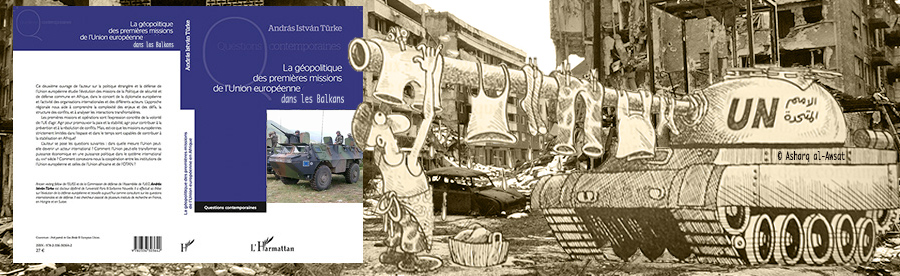
We are looking for sponsors for the English translation of these books, please contact turkeandras(at)gmail(dot)com