
You are here
Feed aggregator
FRANCE: ‘The Government Should Learn to Respect Its People, Listen to Them and Consult Them’
By CIVICUS
Nov 11 2026 (IPS)
CIVICUS discusses France’s student protest movement with Aminata and Mariam Touré, two sisters involved in the protests. Aminata is a member of the Popular Youth Front (Front de la Jeunesse Populaire), a collective of young people from working-class neighbourhoods.
Aminata and Mariam Touré
Weeks of protests led by secondary school students have swept France, triggered by underfunded public services and limited opportunities. The wave forms part of a broader global series of recent protests, often led by members of Gen Z, sparked by everyday economic concerns and a rejection of the political establishment. On 17 October, some 550,000 people protested, according to official figures, but the day descended into the worst violence seen in years. Human rights groups have also documented extensive police brutality, including against children.Why did you decide to take action?
In our secondary schools, we have holes in the walls, missing chairs, toilets without doors, overcrowded classrooms and absent teachers. Students completing secondary education also face constant pressure from Parcoursup, the national higher education admissions platform.
During the last heatwave, in Saint-Denis, in the northern suburbs of Paris, pupils fainted during their exams because there was no air conditioning and it was too hot in the exam halls. Pupils who were ill were forced to attend lessons, as these were the only days when teachers were present. With no school nurses on hand, they were unaware they were contagious and passed viruses on to each other.
These catastrophic situations only affect poor regions, rural areas and France’s overseas territories, which are even poorer. You never hear about this in central Paris, where the government concentrates its budget. A parliamentary report has shown that the state spends less per pupil in Seine-Saint-Denis than elsewhere. The result is that every child there loses, on average, the equivalent of a whole year’s schooling over the course of their education. For the start of the 2024 school year, the Seine-Saint-Denis inter-union group estimated there was a shortfall of 5,000 teachers, 2,200 support staff for pupils with disabilities and 175 senior education advisers. This is effectively a two-tier education system.
We’ve been raising these issues with our head teachers, but the government is doing nothing, apart from passing pointless laws. Blocking access to our schools was the only way to make ourselves heard. Thanks to that, we’re now the focus of national and global attention.
How did the movement spread?
The blockades began as early as 31 August in overseas territories. It’s just that, due to media censorship, we always find out too late. The movement then spread to Créteil, in the Paris suburbs, and then to other working-class areas of the Île-de-France region, notably Essonne, Hauts-de-Seine, Seine-Saint-Denis and Val-de-Marne.
At first, everyone blockaded their own school. Then, solidarity among school pupils and support from trade unions brought us together on the streets for a common cause. School and student unions, and the General Confederation of Labour, one of France’s main trade union confederations, helped organise the protests and put forward our demands. Other movements joined us, including the gilets jaunes, the social protest movement that emerged in 2018. This solidarity proved decisive for each and every one of us.
Faced with the state’s contempt, the movement went national. Even privileged young people became aware of their educational privileges and the need to draw attention to this inhumane situation. The media have shown this. Attention paid to the blockades increased tenfold when students also blockaded elite institutions such as the University of Assas, the Catholic Institute of Paris and the Parisian secondary schools Louis-le-Grand and Montaigne.
What are your concerns about the national budget?
We are calling for more funding for education. The government is investing heavily in defence. The defence budget has risen from €32.2 billion (approx. US$34.8 billion) in 2017 to almost €54 billion (approx. US$58.3 billion) in 2026, and is set to reach €64 billion (approx. US$69.1 billion) in 2027. It will have almost doubled in a decade. But for education, the government is content with a mere increase of €200 million (approx. US$216 million) in 2026, while cutting thousands of jobs. This is not investment. It is a publicity stunt.
At the same time, the government is increasing pressure on people while easing the burden on big business. Life is becoming increasingly difficult. All the movements agree on one point: we must invest in education. However, the government continues to arm the police on a massive scale while depriving the education sector of the resources it needs to function.
How do you respond to the looting and violence of 17 October?
We are against all violence, whether it comes from the police or protesters. Looting is regrettable, but it is even more regrettable that greater importance is attached to insured shops than to people who lose a limb or the use of a sense. As a citizen, when I see a young person who has looted a shop receiving a harsher sentence than a man convicted of raping his daughter, my anger redoubles.
The state’s response is so violent that it unfortunately drives some people to loot even more, as this is the only time when anyone looks at you or listens to you. But these excesses backfire on us. The media use them to stifle our demands, which diverts attention from our struggles and weakens the movement.
The movement is torn between those who seem to want revolution and those who want peace, but one cannot exist without the other. Our history books teach us that all France’s great advances have stemmed from revolts, destruction and riots. We don’t find these tools in some shadowy online network or from belligerent leaders. We find them in our textbooks. Nevertheless, like the majority of protesters, we will continue to mobilise peacefully until the government listens to us.
How do you view the police response?
It’s a disgrace. We feel as though we’re at war. Police officers hit, shove, insult and threaten us. One slogan has appeared on several placards, referring to the police’s riot units: ‘We send out SOS signals, we get the CRS instead’. That’s where we’re at. Trust in the authorities was never as low as it has been since the protests began.
These aren’t isolated incidents. It’s a doctrine. Since the gilets jaunes protests, the French approach to policing has been documented as one of Europe’s most brutal. Activist groups have recorded around 20 protesters who have lost an eye and several who have lost a hand, and in Marseille, a local, Zineb Redouane, died after being hit by a teargas canister.
Violence isn’t limited to blows with batons. On 17 October, I was on my period, and I was doused with teargas for no reason, while my friends and I were helping unprotected people, many of them tourists, with saline solution and milk. The next day, I felt excruciating pain in my stomach. I then discovered that many women exposed to teargas report menstrual cycle disturbances.
We are living in an authoritarian state, where violence reigns and the social contract has been broken. The most severe violence is that perpetrated by the state, because it’s supposed to protect us and be legitimate. Yet it maims us without a shred of empathy.
How do you view the president’s reaction?
President Emmanuel Macron’s speech following the protests was shameful, despicable and deeply disrespectful. When he demands we choose sides, then singles out the left as responsible, he shows that he’s not listening to us. Asking us to choose sides ignores the fact that we don’t want to be on his side. Pointing the finger at so-called culprits shows that he fails to grasp the extent of the damage he has caused and continues to cause.
In 2017, Macron was elected by claiming to speak for the people. Two years later, he introduced a series of measures that harmed workers. We see this even in housing policy. Cuts are being made to housing for poor people while multinationals get richer. This is a political choice.
The government should learn to respect its people, listen to them and consult them. We expect it to take action to improve conditions in secondary schools and for our views to be taken into account, because it’s our future’ at stake.
What impact do you hope to have on the 2027 presidential election?
We hope the candidates will talk more about the problems facing young people and propose tangible solutions. We want to show that secondary school pupils, too, can make their voices heard and that they must not be ignored simply because they are young. I hope all French people will be taken into account in the debates, and that we will stop talking about Islam and migrants and focus more on precarious living conditions, dignity and security. I won’t be able to vote, as I’ll still be 17. It will also be a chance to see whether those who do vote realise that their voice matters, both for them and for us.
In 2024, Macron dissolved the National Assembly following the victory of the far-right National Rally in the European elections. Then, even though the left came out on top in the snap general election, he appointed a right-wing government.
In the wake of the dissolution, we formed the Popular Youth Front, a collective rooted in working-class neighbourhoods, to put voting back at the heart of people’s concerns, as abstention rates are extremely high in those neighbourhoods. Our open letter was signed by over 6,000 young people from working-class neighbourhoods and rural areas. But it’s clear we must fight both against the far right, which is not yet in power, and against the government.
What the world sees as a spontaneous revolt by Gen Z is anything but spontaneous. These are exactly the demands we were putting forward in working-class neighbourhoods two years ago. This uprising is the predictable result of a slow, bipartisan abandonment of working-class and racialised young people. This abandonment is not the work of the far right that everyone fears, but of the centre that claims to be blocking its advance. The proof lies in its response. A government that responds to children with teargas and calls this ‘urban violence’ has already adopted the authoritarian reflex it claims to be protecting our country against.
CIVICUS interviews a wide range of civil society activists, experts and leaders to gather diverse perspectives on civil society action and current issues for publication on its CIVICUS Lens platform. The views expressed in interviews are the interviewees’ and do not necessarily reflect those of CIVICUS. Publication does not imply endorsement of interviewees or the organisations they represent.
One of those featured and photographed in this article is a minor. She appears with her parents’ consent, which was obtained in writing prior to the interview. Her name and all details that could identify her are included with her permission, as reconfirmed at every stage of the publication process.
GET IN TOUCH
Instagram
Mariam Touré/Instagram
SEE ALSO
Gen Z protests: new resistance rises CIVICUS | State of Civil Society Report 2026
France’s student protests: a new generation demands respect CIVICUS Lens 23.Oct.2026
India’s young people find their voice CIVICUS Lens 07.Aug.2026
Categories: Africa
L’acteur Jean Gabin va donner son nom à la flottille de réserve de la Force maritime des fusiliers marins et commandos
Cavalier indiscipliné dans les Gaietés de l’escadron [1932], inoubliable lieutenant aviateur Maréchal, au côté du non moins inoubliable capitaine de Boëldieu, incarné par Pierre Fresnay, dans la Grande illusion [1937], soldat en rupture de ban dans le Quai des brumes [1938], Jean Moncorgé, alias Jean Gabin, refusa d’interpréter des rôles de militaires après la Seconde...
Cet article L’acteur Jean Gabin va donner son nom à la flottille de réserve de la Force maritime des fusiliers marins et commandos est apparu en premier sur Zone Militaire.
Categories: Défense
La France célèbre le 108e anniversaire de l'Armistice du 11 novembre 1918
Une circulaire parue début juillet instaure une cérémonie annuelle "d'hommage à tous les 'Morts pour la France'" pour les élèves du CM1 à la terminale autour du 11-Novembre, à laquelle des élus ou des militaires pourraient participer. Dans la Loire, les collégiens se sont préparés à cet hommage. Reportage.
Categories: France
Blanchiment d’argent : la vente de métaux précieux aux personnalités politiques soumise à autorisation
Les commerçants de pierres précieuses et de métaux précieux en Algérie doivent redoubler de vigilance avant d’établir une relation commerciale avec certains clients. La Direction […]
L’article Blanchiment d’argent : la vente de métaux précieux aux personnalités politiques soumise à autorisation est apparu en premier sur .
Categories: Afrique
REPORT ‘Towards an EU strategy to protect and strengthen the international justice system and its institutions, mechanisms and partners’ - A10-0281/2026
REPORT ‘Towards an EU strategy to protect and strengthen the international justice system and its institutions, mechanisms and partners’
Committee on Foreign Affairs
Mounir Satouri
Source : © European Union, 2026 - EP
Categories: Europäische Union
REPORT ‘Towards an EU strategy to protect and strengthen the international justice system and its institutions, mechanisms and partners’ - A10-0281/2026
REPORT ‘Towards an EU strategy to protect and strengthen the international justice system and its institutions, mechanisms and partners’
Committee on Foreign Affairs
Mounir Satouri
Source : © European Union, 2026 - EP
Categories: European Union
REPORT on EU-Syria political relations - A10-0278/2026
REPORT on EU-Syria political relations
Committee on Foreign Affairs
Nathalie Loiseau
Source : © European Union, 2026 - EP
Categories: Europäische Union
REPORT on EU-Syria political relations - A10-0278/2026
REPORT on EU-Syria political relations
Committee on Foreign Affairs
Nathalie Loiseau
Source : © European Union, 2026 - EP
Categories: European Union
Meeting du CNCC : Le Manifeste Génération Togo accuse les forces de l’ordre
Les regroupements signataires du « Manifeste Génération Togo » montent au créneau après les incidents survenus le 8 novembre 2026 à Tsévié, en marge du meeting du Cadre national de concertation pour le changement (CNCC). Dans un communiqué conjoint publié le 10 novembre à Lomé, ils condamnent les entraves à la mobilisation des citoyens et les arrestations qu’ils qualifient d’arbitraires. Ils appellent également les Togolais à observer une cessation de toute activité le 20 novembre prochain, dans le cadre de la « Journée patriotique d’avertissement
COMMUNIQUE CONJOINT – LOME 10 NOVEMBRE 2026 – DIFFUSION IMMEDIATE
Halte à la dérive des forces de l’ordre : Ça suffit !
Le dimanche 08 novembre 2026, après avoir été contraint à deux reprises par des tracasseries policières et administratives de reporter leur meeting prévu à Tsévié, le Cadre National de Concertation pour le Changement (CNCC) a pu avoir le champ libre de le tenir.
Mais, quelle n’a été notre surprise de constater que des éléments des forces de l’ordre, on ne sait sous quel ordre, ont bloqué des centaines de citoyens voulant se rendre à ce meeting. Les Leaders du CNCC eux-mêmes n’ont pas échappé à cette pratique malsaine, causant ainsi des tensions. Une situation qui n’a pas dégénéré grâce à la vigilance des dirigeants du CNCC. On note quand même plusieurs arrestations arbitraires, la plupart ayant été libérée peu de temps après.
Les regroupements porteurs du « Manifeste Génération Togo », en solidarité avec le CNCC, condamnent avec la dernière vigueur ces actes barbares, commis par des personnes qui ont en principe pour mission, l’ordre et la protection des citoyens.
Les porteurs du « Manifeste Génération Togo » mettent en garde les forces de l’ordre, zélés du pouvoir putschiste, qui se livrent à cette manœuvre dangereuse susceptible de causer une implosion de la situation socio-politique déjà très fragile.
Les porteurs du « Manifeste Génération Togo » soulignent qu’au moment même où les forces de l’ordre commettaient cette nouvelle forfaiture, le régime togolais est mis au banc des accusés par le Comité des Nations Unies pour l’élimination de la discrimination à l’égard des femmes (CEDEF) qui ; « s’est dit vivement préoccupé par le rétrécissement de l’espace civique au Togo, la répression des manifestations pacifiques ainsi que par des détentions arbitraires… », et demande : « de mettre fin aux arrestations arbitraires et de permettre aux citoyens d’exercer pleinement leurs libertés d’expression, de réunion et d’association. »
Dans ce contexte, selon l’article 150 de la Constitution, aucune frange de la population, aucun syndicat, aucune organisation de la société civile, aucun parti politique ne doit plus se soumettre au dictat d’un pouvoir illégal et illégitime relativement aux manifestations publiques.
Nous demandons à tous les Togolais de se mobiliser pour mettre fin à cette dictature installée sur une période qui culmine à soixante (60) en janvier 2027.
Dans cette perspective, ensemble, respectons le mot d’ordre de la « Journée Patriotique d’Avertissement » du 20 novembre 2026 en cessant toute activité.
Pour DMK – ORIGINALE Dynamique Monseigneur Kpodzro
Thomas Kokou NSOUKPOE Premier Vice-Président
DMP, Dynamique pour la Majorité du Peuple
Sambiri TARGONE Coordonnateur
LDP, Lumière pour le Développement dans la Paix Tchagnaou OURO-AKPO Président
« Touche Pas A Ma Constitution »
Nathaniel OLYMPIO Premier Porte-Parole
Kafui Adjamagbo Johnson
Togoactualité
The post Meeting du CNCC : Le Manifeste Génération Togo accuse les forces de l’ordre appeared first on Togo Actualite - Premier site d'information du Togo.
Categories: Afrique
How New Delhi Sees the Blue Tsunami
A Democratic Congress could help get U.S.-India ties back on track, but Indian officials are likely cautious.
Categories: Diplomacy & Crisis News
Au Mali, le difficile accueil des orpailleurs expulsés de Guinée
À Bamako, l’accueil des orpailleurs expulsés de Guinée est un véritable défi logistique. Les autorités, appuyés par les associations communautaires, ont en effet dû s’organiser dans l’urgence. Pour éviter de saturer les lieux d’hébergements au sein du quartier Ouezzindougou, des convois sont organisés, notamment pour le Burkina Faso.
Categories: Afrique
Université de Lomé : « Un étudiant, un métier » lancé dès la rentrée 2026-2027
The post Université de Lomé : « Un étudiant, un métier » lancé dès la rentrée 2026-2027 appeared first on Togo Actualite - Premier site d'information du Togo.
Categories: Afrique
Commerces fermés à Mambasa après le meurtre d’une vendeuse
Les activités commerciales sont paralysées depuis ce mercredi matin 11 novembre à Mambasa-centre, chef-lieu du territoire de Mambasa, situé à environ 165 kilomètres au sud-ouest de Bunia (Ituri). Des jeunes ont érigé des barricades et brûlé des pneus sur plusieurs artères pour protester contre le meurtre d’une commerçante survenu mardi soir et dénoncer la recrudescence de l’insécurité dans cette agglomération.
Categories: Afrique
11-Novembre : ravivage de la flamme sur la tombe du soldat inconnu par Emmanuel Macron
Le président français Emmanuel Macron a procédé ce mercredi au ravivage de la flamme sur la tombe du soldat inconnu à l'occasion du 108e anniversaire de l’Armistice du 11 novembre 1918.
Categories: France
Christophe Gleizes, journaliste détenu en Algérie depuis cinq cents jours : RSF organise un match solidaire pour appeler à sa libération
Des personnalités du sport, des médias et de la culture s’unissent lors d’un match inédit pour soutenir Christophe Gleizes, unique journaliste français détenu à l’étranger.
Categories: Afrique
Togo : La Diaspora Togolaise en Allemagne (DTA) appelle à une manifestation pacifique le 13 novembre 2026 à Berlin
COMMUNIQUÉ DE PRESSE
DTA Togo Deutschland
Berlin, le 10 novembre 2026
Manifestation pacifique à Berlin, le 13 novembre 2026
Pour un Togo libre, démocratique et juste
La diaspora togolaise en Allemagne, réunie au sein de DTA Togo Deutschland, appelle à une manifestation pacifique à Berlin, le *vendredi 13 novembre 2026*, pour dénoncer la situation politique et la situation des droits humains au Togo, et pour interpeller les autorités allemandes et européennes.
Nos revendications:
– TOGO LIBRE ! / FREIES TOGO !
– Libérez les prisonniers politiques !
– Stop à la tyrannie ! / Stoppt die Tyrannei !
– Démocratie pour le Togo ! / Demokratie für Togo !
– Justice pour le Togo ! / Gerechtigkeit für Togo !
– Droits humains pour tous ! / Menschenrechte für alle !
– Non à la 5ème République ! / Nein zur 5. Republik !
– L’argent du contribuable ne doit pas servir à soutenir la dictature au Togo ! / Steuergelder dürfen nicht die Diktatur in Togo unterstützen !
Nous demandons que la coopération allemande et européenne avec le Togo soit conditionnée au respect de la démocratie, de l’État de droit, de la liberté d’expression, de la liberté de manifester et à la libération des prisonniers politiques.
APPEL À LA MOBILISATION:
Nous lançons un appel pressant à tous les Togolais vivant en Allemagne et préoccupés par la situation de notre pays: faites l’effort de venir à Berlin le 13 novembre 2026.
Le Togo a besoin de nous. Chacun de nous compte. Votre présence est un acte de courage, de solidarité et de responsabilité envers notre peuple. Ne restons pas spectateurs. Mobilisons-nous, ensemble et pacifiquement, pour faire entendre la voix du Togo.
Cette manifestation est également ouverte à tous les autres Africains vivant en Allemagne. Nous les invitons à venir manifester leur solidarité avec le peuple togolais. La lutte pour la démocratie, la justice et les droits humains au Togo est aussi la lutte de toute l’Afrique. Votre solidarité compte et nous honore.
Elle est aussi ouverte aux Allemands, aux associations, aux défenseurs des droits humains, aux journalistes et à tous les citoyens solidaires. Elle se veut *pacifique et non violente.
Par ailleurs, la DTA a adressé des demandes d’audience auprès des autorités compétentes allemandes pour des échanges sur la situation politique de notre pays, le Togo. Ces demandes ont été acceptées et des rencontres sont programmées dans les prochaines semaines. Un compte rendu de ces échanges vous sera communiqué ultérieurement.
Infos pratiques:
– Date: Vendredi 13 novembre 2026
– Lieu de rassemblement: Brandburger Tor
– Heure: À 13 H
– Organisateur: DTA Togo Deutschland
Contact presse:
DTA Togo Deutschland
Tél.: +49 1520 2037560
À propos de DTA Togo Deutschland:DTA Togo Deutschland est une association de la diaspora togolaise en Allemagne qui milite pacifiquement pour la démocratie, la justice et les droits humains au Togo
The post Togo : La Diaspora Togolaise en Allemagne (DTA) appelle à une manifestation pacifique le 13 novembre 2026 à Berlin appeared first on Togo Actualite - Premier site d'information du Togo.
Categories: Afrique
From Nuclear Weapons to Artificial Intelligence, a New Test of Humanity’s Restraint
Hiroshima atomic-bomb survivor Katsuko Tanaka, center-left, joins nuclear-disarmament advocates and experts at the “Nuclear Between Disarmament and Proliferation” forum during Sant’Egidio’s International Meeting for Peace in Assisi, Italy, Oct. 26, 2026. Credit: Community of Sant’Egidio
By Katsuhiro Asagiri
ASSISI, Italy, Nov 11 2026 (IPS)
Eight decades after atomic bombs destroyed Hiroshima and Nagasaki, the world is confronting a new and potentially dangerous question: What happens when decisions involving human life increasingly pass from people to machines?
Community of Sant’Edigio
That concern ran through discussions at an international peace gathering in Assisi, where religious leaders, nuclear disarmament campaigners and technology specialists examined the risks of nuclear weapons and artificial intelligence — two very different technologies united by the possibility of catastrophic harm.The meeting, organized by the Community of Sant’Egidio from Oct. 25 to 27, marked 40 years since Pope John Paul II brought representatives of the world’s major religions to Assisi to pray for peace.
This year’s theme, “Unarmed and Disarming Peace,” carried particular urgency. Nuclear arms control has weakened, military spending has reached record levels, and artificial intelligence is rapidly entering defense systems whose consequences remain difficult to predict.
The question was no longer simply whether humanity possessed the means to destroy itself. It was whether governments and societies retained the judgment to prevent those means from being used.
Katsuko Tanaka, Hibakusha from Hiroshima (Left). Credit: Beppe Raso/ Soka Gakkai
The Warning From HiroshimaThe human consequences of nuclear warfare formed the moral foundation of a forum devoted to disarmament and proliferation.
Katsuko Tanaka, also known as Toshiko Tanaka, a Hiroshima atomic bomb survivor, recalled the bombing of Aug. 6, 1945, when she was six years old.
Her account recalled a catastrophe that killed indiscriminately and left survivors carrying physical and psychological wounds for decades.
Archbishop Peter Michiaki Nakamura of Nagasaki, in his published remarks, drew on the legacy of Takashi Nagai, the physician and atomic bomb survivor who devoted his later life to peace.
Together, their perspectives challenged the language of nuclear deterrence, which measures security in terms of military capabilities rather than the lives potentially lost.
Susi Snyder, the Director of Programmes at ICAN. Credit: Community of Sant’Egidio / Assisi 2026
Susi Snyder of the International Campaign to Abolish Nuclear Weapons, or ICAN, addressed the growing danger posed by the modernization of nuclear arsenals and the erosion of arms control.The expiration of the New START treaty between the United States and Russia in February, followed by the failure of the 2026 Nuclear Non-Proliferation Treaty Review Conference to reach consensus, has reinforced concerns about the future of nuclear restraint.
Attention is now turning to the first Review Conference of the Treaty on the Prohibition of Nuclear Weapons, scheduled to begin in late November.
But disarmament advocates face a persistent obstacle: The governments possessing nuclear weapons largely remain outside the treaty.
Teaching a Generation Without Memories of War
Credit: Simone Giara per Senzatomica
For the Italian Soka Gakkai, a Buddhist organization engaged in nuclear abolition campaigns, education has become an essential part of the response.Alessja Trama, representing the Be The Hope Foundation, an organization affiliated with the Italian Soka Gakkai, described in her prepared remarks the work of Senzatomica, an initiative that has organized exhibitions and educational activities on nuclear weapons in communities across Italy.
The campaign traces its inspiration to a 1957 declaration by Josei Toda, the second president of the Soka Gakkai, calling for the abolition of nuclear weapons.
Its premise is that remembering Hiroshima and Nagasaki must lead to public responsibility, particularly among younger generations who have no personal connection to the war.
Yet even as campaigners seek to reduce the threat from existing weapons, advances in artificial intelligence are transforming the nature of military power.
When Human Judgment Becomes Optional
At a separate forum titled “Humanity in the Age of Technology,” Archbishop Vincenzo Paglia warned that technological capabilities were advancing faster than the institutions meant to govern them.
Tiziana Catarci, an Italian artificial intelligence researcher, raised a critical distinction: placing a human in a decision-making process does not necessarily mean that person exercises meaningful control.
An operator may formally approve a machine-generated recommendation without fully understanding how it was produced or being able to challenge it.
Embedded gallery image from the Soka Gakkai Italy article ‘Ad Assisi la speranza come scelta di pace: la Soka Gakkai ai forum sul nucleare e sulla tecnologia’. Credit: Beppe Raso
In military operations, that gap could become deadly.
Catarci called for stronger oversight of AI systems and the prohibition of autonomous weapons capable of making lethal decisions without meaningful human control.
Embedded gallery image from the Soka Gakkai Italy article ‘Ad Assisi la speranza come scelta di pace: la Soka Gakkai ai forum sul nucleare e sulla tecnologia’. Credit: Beppe Raso
Yoshiyuki Nagaoka, executive director of the Office of Public Affairs of Soka Gakkai, approached the problem through Buddhist teachings on the dignity of life.Nagaoka noted that AI is increasingly being embraced as a source of advice in everyday life in Japan, with some people turning to it for guidance when making deeply personal decisions about their lives.
One example he cited was the case of an elderly woman who turned to generative AI for advice about the medical treatment of her terminally ill husband.
For Nagaoka, the issue was not whether AI could provide useful information. It was whether reliance on such systems might gradually weaken the human willingness to make difficult moral judgments.
He warned particularly against delegating decisions about killing to autonomous weapons, advocating international rules to prohibit systems that independently select and attack human targets.
His argument extended beyond warfare to healthcare, where statistical predictions cannot replace compassion, personal choice and professional responsibility.
A Technology That Can Also Help
Other participants cautioned against viewing artificial intelligence solely as a threat.
Matt Vasey of the Gates Foundation argued that AI could improve access to healthcare, education and agricultural knowledge, especially in communities historically neglected by technological development.
But he also warned that people could voluntarily surrender moral responsibility to systems designed to make decisions easier.
Cisco executive Gianpaolo Barozzi emphasized the need to redesign work around human capabilities, while Rabbi Noam Marans of the American Jewish Committee distinguished the accumulation of information from the exercise of wisdom.
The speakers offered no single regulatory blueprint. They nevertheless returned repeatedly to the need for accountability, transparency and human judgment.
The gathering’s closing Peace Appeal connected these concerns to a broader agenda, urging that resources devoted to weapons be redirected toward food, water, education, healthcare and decent work.
It also identified nuclear threats, rearmament and artificial intelligence as challenges requiring international cooperation.
Closing ceremony. Credit: Community of Sant’Egidio / Assisi 2026
The message underscored a growing dilemma.
Humanity has developed technologies of extraordinary power. Yet the institutions and moral commitments needed to restrain their destructive uses have not necessarily kept pace.
From Hiroshima’s surviving witnesses to researchers confronting autonomous weapons, the warning emerging from Assisi was that security cannot be measured simply by what humanity is capable of building.
It must also be measured by what humanity is prepared to refuse.
This article is brought to you by INPS Japan in collaboration with Soka Gakkai International in consultative status with UN ECOSOC.
IPS UN Bureau
Excerpt:
At an interfaith gathering in Assisi, nuclear survivors, scientists and religious leaders confronted a troubling question: Can humanity control the destructive powers it continues to create?
Categories: Africa
LOTO STAR : les résultats du tirage de 11 H
LES RÉSULTATS LOTO STAR SONT LÀ !
TIRAGE N°135/26
Mercredi 11 Novembre 2026 (11H)
39 • 53 • 55 • 79 • 84

Félicitations aux heureux gagnants !
Pas encore gagné ? Gardez le sourire !
Rendez-vous au prochain tirage de 14H pour une nouvelle chance.
Jouez dans les centres de jeux ou en ligne : Tapez 590# ou lnbloto.bj
Jouez avec modération et responsabilité. Le jeu doit rester un plaisir.
A TOI DE JOUER #Akaxòa
#LNBSA #XòGbɔnAlɔkpaVo #JeuResponsable #LaChanceAvecModération
Categories: Afrique, European Union
Pages



© 2012-2018 Europa Varietas Foundation © 2015-2018 Europa Varietas Association
www.europavarietas.org | info(@)europavarietas(dot)org | Switzerland


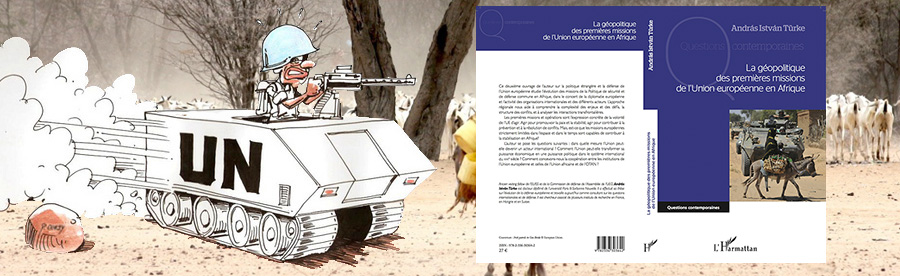
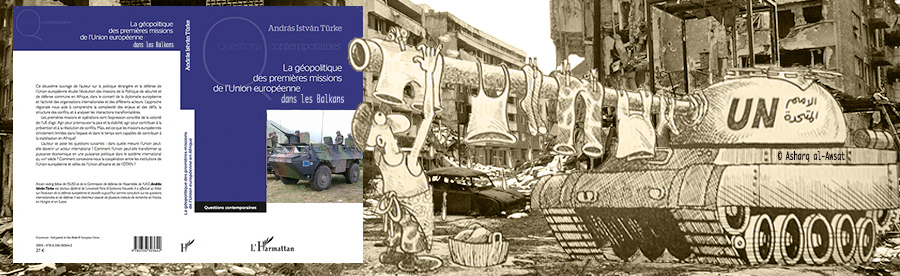
We are looking for sponsors for the English translation of these books, please contact turkeandras(at)gmail(dot)com