
Vous êtes ici
Agrégateur de flux
Les États-Unis réaffirment leur soutien au Bénin
À l'occasion de la célébration du 66ᵉ anniversaire de l'indépendance du Bénin, les États-Unis ont adressé leurs félicitations au peuple béninois. Dans une déclaration rendue publique, le Secrétaire d'État américain Marco Rubio a salué le parcours du Bénin en tant que nation souveraine et réaffirmé l'engagement de Washington à approfondir la coopération bilatérale.
« Les États-Unis sont fiers de s'associer au peuple béninois à l'occasion de la célébration des 66 années d'existence du Bénin en tant que nation souveraine », a déclaré Marco Rubio. Pour le chef de la diplomatie américaine, cet anniversaire constitue « une étape importante qui témoigne de sa résilience et de la force durable de son esprit national ».
Le Secrétaire d'État américain a également formulé des vœux de réussite au Bénin dans cette nouvelle phase politique. « Alors que votre pays poursuit sa marche en avant sous une nouvelle direction présidentielle, nous lui adressons nos vœux les plus sincères pour une année fructueuse et couronnée de succès », a-t-il indiqué.
Au-delà des félicitations, Washington entend consolider les relations avec Cotonou. « Nous réaffirmons avec fierté la richesse des relations qui unissent nos gouvernements et nos peuples », a souligné Marco Rubio.
Le partenariat américano-béninois devrait ainsi continuer à s'articuler autour de plusieurs domaines d'intérêt commun, notamment les opportunités économiques, la stabilité et la sécurité. « Nous demeurons résolus à renforcer davantage notre partenariat et à œuvrer côte à côte à la réalisation de nos ambitions communes », a précisé le Secrétaire d'État américain. Marco Rubio a appelé à poursuivre cette dynamique de coopération.
Catégories: Afrique
Les actes de résistance aux équipes de riposte contre Ebola se multiplient à Butembo et Beni
Alors que l’épidémie d’Ebola continue de progresser au Nord-Kivu, les équipes de riposte font face à une recrudescence des actes de résistance dans les villes de Butembo et Beni. Refus d’évacuation des patients, opposition aux enterrements sécurisés et attaques contre des structures sanitaires compliquent les efforts de contrôle de la maladie, selon plusieurs sources concordantes.
Catégories: Afrique
Pourquoi une guerre limitée contre les États-Unis pourrait mieux convenir à l'Iran que la paix
L'Iran pourrait penser qu'il est en mesure de gérer ce conflit avec suffisamment de prudence pour maintenir la pression sur les États-Unis tout en évitant une guerre totale.
Catégories: Afrique, European Union
Incendies en Grèce: une accalmie du vent laisse espérer une amélioration dans la région d'Athènes
En Grèce, depuis quatre jours un gigantesque incendie brûle au nord-ouest d’Athènes. Ce lundi 3 août, le feu est encore intense à une quarantaine de kilomètres de la capitale et, au total, une quinzaine de localités ont été évacuées. Ce week-end, les pompiers éprouvaient les plus grandes difficultés à contrôler les flammes, à cause des vents violents qui soufflaient à plus de 100 km/h. Aujourd’hui, grâce à une accalmie, les appareils bombardiers d’eau peuvent fonctionner plus normalement.
Catégories: Union européenne
Dominique Reynié : « L’été 2026 aura montré que l’écologisme est devenu l’ennemi de l’écologie »
ENTRETIEN - La catastrophe que nous vivons est en partie le résultat de l’influence pernicieuse de l’écologisme sur l’action publique, estime le directeur de la Fondation pour l’innovation politique.
Catégories: France
Accepting What It Cannot Control, CARICOM Focuses on What It Can
Dominica's geothermal power plant. As Caribbean countries seek to reduce their dependence on imported fossil fuels, renewable energy remains a key pillar of the regional resilience agenda advanced by CARICOM leaders. Credit: Alison Kentish/IPS
By Alison Kentish
GROS ISLET, Saint Lucia , Aug 3 2026 (IPS)
From wars that drive up fuel prices to supply chain disruptions, inflation and increasingly frequent climate disasters, Caribbean leaders say many of the forces shaping the region’s future lie beyond their control.
Their response, however, is not resignation.
Instead, leaders of the Caribbean Community (CARICOM), the region’s largest economic grouping, are pursuing a strategy built on strengthening the systems they believe they can influence, hoping to make one of the world’s most climate-vulnerable regions more resilient to external shocks. These include food and energy security, transportation, healthcare, artificial intelligence and regional trade.
At their recent summit in Saint Lucia, the leaders argued that CARICOM must be judged less by declarations than by whether regional cooperation improves people’s daily lives.
“Our discussions have been guided by one central objective, ensuring that CARICOM delivers results that people can see and feel in their everyday lives,” CARICOM Chairman and Saint Lucia Prime Minister Philip J. Pierre said as he outlined the meeting’s outcomes.
“Heads of government focused on the issues that matter most to the people of the region.”
Those priorities included the rising cost of living, food security, affordable transportation, disaster resilience and the challenge of building stronger economies in an uncertain global environment.
Leaders acknowledged that inflation in food, fuel, freight and electricity has largely been driven by global conflicts, supply chain disruptions and commodity price shocks, which small island economies have little ability to influence. While several governments have introduced temporary measures to cushion households, they argued that lasting relief will require deeper regional cooperation on transportation, consumer protection and trade.
“We will work together,” said Barbados Prime Minister Mia Amor Mottley, who leads CARICOM’s work on the Caribbean Single Market and Economy. “None of us is omniscient, none of us has all the answers, and none of us are omnipotent as well.”
One of the summit’s most tangible initiatives was renewed work toward an affordable intra-regional ferry service, long viewed as critical to reducing freight costs, improving travel and strengthening food security. Leaders said the proposal would begin with a proof of concept using existing ferry capacity while governments harmonise regulations governing licensing, insurance and vehicle movement across borders.
The initiative complements CARICOM’s “25 by 2025 Plus Five” programme, which aims to reduce the region’s food import bill by expanding agricultural production and strengthening regional supply chains. Leaders argued that producing and transporting more food within the Caribbean would make the region less vulnerable to global disruptions.
Energy security emerged as another defining theme.
Prime Minister Terrance Drew of St Kitts and Nevis said that the Caribbean’s greatest vulnerability is not a lack of energy resources but its continued dependence on imported fossil fuels.
“We don’t have an energy issue,” Drew said. “We have an energy-harnessing issue.”
Pointing to the region’s abundant solar, geothermal, wind and wave resources, Drew said renewable energy offers perhaps the greatest long-term opportunity to stabilise Caribbean economies, reduce electricity costs and improve living standards.
“There’s nothing that can really stabilise our economy, or transform our economy, or deal with this constant up and down, like stabilising our energy sources,” he said.
Recognising that technological change will also reshape the region’s future, CARICOM agreed to establish a regional Blue Ribbon Commission on Artificial Intelligence. Leaders said the commission will develop regional guidance on AI, helping member states capitalise on its benefits while managing risks around jobs, privacy and ethics.
Climate resilience also remained central to the discussions.
Leaders reaffirmed their commitment to limiting global warming to 1.5 degrees Celsius while continuing to advocate internationally for the special circumstances of Small Island Developing States. They also advanced work on a regional insurance and reinsurance strategy aimed at improving financial protection for governments, businesses and households, as climate-related disasters become more frequent and more costly.
Historical justice remained firmly on the regional agenda. Leaders endorsed renewed efforts to advance CARICOM’s Ten-Point Plan for Reparatory Justice through closer engagement with the African Union, upcoming Commonwealth meetings and other international forums.
The agenda set in Gros Islet, Saint Lucia, has effectively set CARICOM’s agenda for the months ahead. From advancing ferry connectivity and renewable energy to strengthening food security, disaster resilience and artificial intelligence governance, the challenge now is implementation.
For Caribbean citizens, the measure of success will not be the number of declarations adopted but whether regional cooperation delivers tangible improvements in everyday life.
IPS UN Bureau Report
Follow @IPSNewsUNBureau
!function(d,s,id){var js,fjs=d.getElementsByTagName(s)[0],p=/^http:/.test(d.location)?'http':'https';if(!d.getElementById(id)){js=d.createElement(s);js.id=id;js.src=p+'://platform.twitter.com/widgets.js';fjs.parentNode.insertBefore(js,fjs);}}(document, 'script', 'twitter-wjs');
Related Articles
- CARICOM Leaders Gather in Saint Lucia as Caribbean Confronts Mounting Global, Regional Challenges
- UN Weather Agency Warns of Escalating Climate Extremes Across Caribbean and Latin America
Excerpt:
Unable to influence wars, global fuel prices or supply chain disruptions, Caribbean leaders are focusing on strengthening the systems that will make the region more resilient.
Catégories: Africa
So schadet der Börsenboom der Demokratie
Von hohen Aktienkursen profitieren Reiche besonders stark. Ärmere hingegen werden durch steigende Preise und Mieten zunehmend abgehängt. Das ist politisch gefährlich., Als Elon Musk Anfang Juni 2026 mit dem geplanten Börsengang von SpaceX offiziell zum ersten Billionär der Menschheitsgeschichte aufstieg, war das Medienecho gewaltig. Kaum Aufmerksamkeit hingegen erhielt die Tatsache, dass dies kein Ausreißer, sondern Symptom einer strukturellen Verschiebung ist, ...
Catégories: Diplomacy & Defense Think Tank News
Who picks up the tab for AI’s unbridled genius?
By Daud Khan and Thomas McMahon
ROME / RICCIONE, Italy, Aug 3 2026 (IPS)
For the last few years, Artificial intelligence has been making increasingly intrusive demands for our attention.
It burst onto the scene like a child prodigy, enthralling us with feats of brilliance. With consummate ease, it removed drudgery from our tasks and began helping us achieve our personal and workplace objectives.
Daud Khan
But AI has now grown into an unruly adolescent. It is disrupting how we work and think; it is demanding constant attention; and it is distracting us from other important activities and tasks.As is the case with adolescents, there have been calls to set rules and regulations on AI, applying appropriate limits on what AI can and cannot do. The aim being to allow us time to deal with its immediate impacts on, for example, the jobs market, on media and communication, and on its military use.
But would government imposed regulations solve the problem? The answer is no for several reasons.
Firstly, there is the siren call of easier access to vast stores of knowledge, top quality writing skills and polished images and infographics. It is hard to resist the temptation to delegate boring tasks to AI, such as drafting emails that respond to routine messages. From there it is a slippery slope towards AI writing our university or job applications, office memos, or manuals and instructional content. However, these are tasks that define who we are and how others perceive us. And this reliance on AI kills creativity, individuality and human relations – there is no longer a turn of phrase or a spelling mistake that makes the message special.
Thomas McMahon
Just ask yourself: would you rather get a handwritten note of appreciation from someone who works for you or who you supervise, where some words are illegible and the paper is smudged; or an email with perfect grammar that you know they are not capable of authoring?Secondly, AI Psychosis is becoming a pervasive disruptor of social relations. AI models are purposely designed for “engagement farming” – a fancy term for hooking people into an ever-increasing reliance on these services. It achieves this through sycophantic responses that feed one’s ego or anxieties, releasing endorphins and creating a craving for more.
We can now access gratifying, yet wholly synthetic, social interactions at our fingertips via chatbots. Consequently, we risk crafting individualised reality bubbles that are unchecked by the social norms we experience in the real world. Will it become easier and more pleasurable to interact with an intelligent machine to fulfill our need to talk, to discuss books, or for emotional engagement without fear of rejection – at any time of day or night?
Thirdly, if we allow machines to shape our thoughts and emotions, we risk destroying diversity of opinion, crushing creativity and resulting in a unified, monolithic narrative that is controlled by the megacorporations providing these AI services.
Pope Leo XIV expressed this concern in his recent encyclical where he warned of “the idolatry of profit that sacrifices the weak, a uniformity that neutralizes differences, and the pretense that a single language — even a digital one — can translate everything, including the mystery of the person, into data and performance”.
Lastly, it is essential to consider how the mismanagement of AI has the potential to drive a further wedge between rich and poor populations. The Pope cautions us of being misled by “a technology that promises to free us from all weakness, and models of wellbeing that leave behind entire populations”.
Increased focus is being placed on the impact of data centers within local communities, given their inordinate usage of electricity and water and the constant noise pollution these facilities generate. At full capacity, processing a daily 10 billion Gigabytes of data, a 100 MW data center consumes up to 2.4 million KWh of electricity and 2 million litres of water per day – more than a small city.
The human brain can process 74 Gigabytes of data while sipping a tiny 0.3 KWh of electricity (260 calories or 12% of total daily energy intake). Our bodies require a daily ration of 2.5 litres of water to function normally. Contrast this with preparing a 100-word email using ChatGPT, where each prompt-and-response interaction consumes the water in a standard 500 ml bottle. Even from a strictly environmentally-conscious viewpoint, surely it would be better to use our brains for this instead?
However, whatever our concerns, the genie is out of the bottle and there is no going back – we must learn to use AI properly. We need to better understand its limitations and where it delivers greatest impact, given the resources required.
AI should not be seen as a substitute for human expertise but instead complementary to it. Indeed, the more expertise one has in any given field, the more valuable a contribution AI makes. Experts can better formulate more pertinent questions and redirect the conversation should the AI meander off course. Experts also detect errors more easily in what may appear to be perfectly valid responses.
It is essential that we encourage people, particularly our young people, to continue learning and perfecting their chosen crafts, ignoring the wild marketing claims that various professions have been largely solved by AI already. The more knowledge and expertise the younger generation can build, the more judiciously and selectively they can deploy AI in their work and for society’s future benefit.
Daud Khan is a retired UN staff based in Rome. He has degrees in economics from LSE and Oxford, where he was a Rhodes Scholar; and a degree in Environmental Management from Imperial College London.
Thomas McMahon is a Data Engineer who specialises in developing bespoke AI systems for UN agencies.
IPS UN Bureau
Follow @IPSNewsUNBureau
!function(d,s,id){var js,fjs=d.getElementsByTagName(s)[0],p=/^http:/.test(d.location)?'http':'https';if(!d.getElementById(id)){js=d.createElement(s);js.id=id;js.src=p+'://platform.twitter.com/widgets.js';fjs.parentNode.insertBefore(js,fjs);}}(document, 'script', 'twitter-wjs');
Catégories: Africa
Myanmar’s Depleted Oil Pipeline
A cross-border energy project deals with the impact of two conflicts.
Catégories: Diplomacy & Crisis News
La société civile réclame une enquête et la réhabilitation de la prison après l’évasion de 50 détenus à Luebo au Kasaï
La Nouvelle Société Civile Congolaise (NSCC) du territoire de Luebo, dans la province du Kasaï, alerte sur les risques sécuritaires liés à l’évasion d’une cinquantaine de détenus survenue dans la nuit de jeudi à vendredi dernier à la prison centrale de Luebo.
Catégories: Afrique
Semenyo hails Maresca style of play as 'music to my ears'
Manchester City forward Antoine Semenyo hails new manager Enzo Maresca's style of play as "music to my ears" after showcasing early signs of his role under the Italian.
Catégories: Africa
Exode des habitants du Grand Kasaï et du Grand Bandundu vers le Grand Katanga
Plusieurs habitants du Grand Kasaï et du Grand Bandundu quittent leurs provinces pour Lubumbashi, dans le Haut-Katanga ou Kolwezi dans le Lualaba. Réunification familiale, recherche du bien-être ou poursuite des études : les motivations divergent. Mais les conditions de voyage restent difficiles, selon plusieurs témoignages.
Catégories: Afrique
Rohingya Repatriation: A Roadmap Without a Road
Rohingya refugees cross the Naf River on a makeshift raft while fleeing violence in Myanmar, on their way to Bangladesh. Credit: UNICEF/Mackenzie Knowles-Coursin
By Mohammad Zaman
VANCOUVER B.C., Canada, Aug 3 2026 (IPS)
The Rohingya crisis remains one of the most enduring humanitarian and political failures in South and Southeast Asia. Since the 2017 mass expulsion from Myanmar’s Rakhine State, Bangladesh has hosted more than one million refugees in Cox’s Bazar and Bhasan Char, while Myanmar has failed to create conditions for safe return. What began as an emergency response has hardened into protracted displacement marked by statelessness, insecurity, aid dependency, and diplomatic fatigue. Repatriation is repeatedly presented as the preferred durable solution, yet every major attempt has failed because the core political question remains unresolved: the Rohingya cannot safely return to a state that denies them citizenship, protection, and equal belonging.
In 2017, only months after the largest influx, Bangladesh and Myanmar signed a bilateral Memorandum of Arrangement. It promised a time-bound repatriation process, but it was non-binding, weakly enforced, and silent on the guarantees most essential to return: citizenship, freedom of movement, property restitution, and independent monitoring inside Rakhine. Bangladesh, facing demographic, environmental, and political pressure, needed a pathway to reduce the burden of hosting refugees. Myanmar, by contrast, had incentives to delay, control, and symbolically manage the process without addressing the legal and security conditions that caused the exodus.
Three major repatriation efforts since 2017 reveal the same pattern. Attempts in 2018 and 2019 collapsed because refugees refused to return without credible guarantees of safety, citizenship, and dignity. A China-facilitated initiative in 2023 proposed a pilot return of several thousand people and arranged verification visits by Rohingya representatives to Rakhine. It also stalled. Cyclone damage, renewed fighting, and widening armed conflict made even limited returns impractical. More importantly, refugees remained unconvinced. Their reluctance was not resistance to return; it was a rational response to risk. Returning to fenced villages, transit camps, or controlled areas without rights would merely convert exile in Bangladesh into containment in Myanmar.
Dr Mohammad Zaman
These failures expose the central flaw in the repatriation agenda: it has prioritized the movement of people over the creation of a solution. Success cannot be measured by border crossings alone, but by whether returnees can live safely as citizens with restored rights, homes, livelihoods, and community security. For the Rohingya, Myanmar’s 1982 citizenship framework, restrictions on movement, communal segregation, and discriminatory administration remain decisive barriers. The 2021 military coup further weakened prospects for accountability and reform. Since then, Myanmar has fragmented into multiple conflict zones, and Rakhine has become a battlefield involving the military, the Arakan Army, and other armed actors. Bangladesh is therefore no longer dealing only with a reluctant state authority; it must navigate a shifting territorial reality in which non-state actors control or contest areas central to any return.The political problem is both domestic and regional. Domestically, Myanmar’s state-building project has excluded the Rohingya by portraying them as outsiders rather than citizens. Without recognition of Rohingya identity and legal status, administrative repatriation will remain cosmetic. Regionally, the crisis is shaped by strategic interests. China has mediated because stability in Myanmar affects its investments and influence, but its diplomacy has emphasized state-to-state negotiation more than rights-based accountability. India has balanced humanitarian concern with security and geopolitical interests, while ASEAN has struggled to move beyond cautious consensus and non-interference. Western governments have condemned atrocities and supported accountability efforts, but sanctions and legal cases have not changed conditions on the ground. The result is a fragmented diplomatic landscape in which no actor has combined sufficient leverage, consistency, and political will to compel Myanmar toward a rights-based solution.
Bangladesh’s position is increasingly difficult. Its initial humanitarian generosity has become a long-term national burden. The camps place pressure on land, forests, water, public services, and local labour markets. Security concerns have grown as trafficking, armed activity, and criminal networks exploit a population with limited mobility, education, and livelihood opportunities. Declining humanitarian funding has deepened frustration: reduced food rations, health services, and education increase despair and encourage dangerous onward movement by sea to Indonesia, Malaysia, and Thailand, where conditions are often insecure. Yet Bangladesh’s legitimate burden cannot justify premature repatriation. Any return must be voluntary, safe, rights-based, and dignified.
A critical analysis must also recognize the limits of humanitarianism. Aid keeps people alive, but it cannot resolve statelessness or political exclusion. The international response has often separated relief, justice, and diplomacy into disconnected tracks: humanitarian agencies sustain survival in Bangladesh; lawyers pursue accountability; diplomats negotiate repatriation frameworks; and development actors support host communities. Each track is necessary, but together they have not formed a coherent strategy. The Rohingya have too often been treated as beneficiaries rather than political stakeholders. A durable solution requires their participation in defining return conditions, monitoring mechanisms, citizenship pathways, education policy, and community security arrangements. The newly formed Rohingya Repatriation Committee has to address all of the above in finding a sustainable solution.
The road ahead must be realistic rather than rhetorical. Repatriation should remain the long-term objective, but only when it is safe, voluntary, dignified, and sustainable. This requires verifiable changes inside Rakhine: citizenship or a credible pathway to citizenship, freedom of movement, access to services, restoration or compensation for property, and protection from military, police, and armed-group abuse. Any future framework must include independent international monitoring with meaningful access to return areas. Diplomacy must also adapt to Myanmar’s altered conflict map by engaging relevant actors without legitimizing abuses or abandoning principles. Bangladesh will need pragmatic but principled engagement with the junta, the Arakan Army, regional powers, and international organizations.
Meanwhile, the camps in Bangladesh cannot remain waiting rooms for an indefinitely delayed return. Refugees need education, skills training, legal protection, and limited livelihood opportunities to prevent social deterioration and prepare for eventual reconstruction in Rakhine. These measures should not be framed as local integration against Bangladesh’s wishes, but as human-capital preservation and crisis management. International burden-sharing must become concrete: donors should sustain aid, expand resettlement for vulnerable cases, support host communities, and coordinate pressure on Myanmar. Accountability mechanisms should continue because impunity is one reason repatriation remains unsafe.
Ultimately, the Rohingya repatriation crisis is not a logistical failure but a political one. Buses, refugee lists, reception centres, and pilot projects cannot substitute for rights, security, and recognition. Bangladesh seeks relief, Myanmar seeks control, regional powers seek stability, and donors seek a manageable humanitarian file. The Rohingya seek what repatriation is supposed to mean: return to their homeland as citizens with dignity. Until diplomacy is anchored in that principle, repatriation attempts will continue to produce announcements without arrivals, agreements without trust, and roadmaps without roads. The way forward requires pressure, patience, and a shift from counting potential returnees to building the conditions under which return becomes a restoration of justice rather than an act of desperation.
Dr. Mohammad Zaman is an internationally recognized expert in resettlement and development. He has contributed many op-eds on the Rohingya crisis. Dr. Zaman’s recent edited book (co-editors Robert Anderson and Kawser Ahmed) is titled Rohingya Stories: History and Geopolitics in a Multipolar World (Springer, 2025).
IPS UN Bureau
Follow @IPSNewsUNBureau
!function(d,s,id){var js,fjs=d.getElementsByTagName(s)[0],p=/^http:/.test(d.location)?'http':'https';if(!d.getElementById(id)){js=d.createElement(s);js.id=id;js.src=p+'://platform.twitter.com/widgets.js';fjs.parentNode.insertBefore(js,fjs);}}(document, 'script', 'twitter-wjs');
Catégories: Africa
Myanmar Leader Criticizes Five-Point Consensus, Accuses ASEAN of ‘Discrimination’
Marking his 100th day as president, Min Aung Hlaing told parliament that his administration would pursue its own “solution” to the country’s conflict.
Catégories: Diplomacy & Crisis News
Special Treatment for Cuban Refugees Is No More
The Trump administration has rendered them as vulnerable to removal as other immigrants.
Catégories: Diplomacy & Crisis News
The Cure for Russia’s Labor Shortage Is Worse Than the Disease
What happens when a demographic crisis meets an ever-expanding military-industrial complex?
Catégories: Diplomacy & Crisis News
China’s Quiet Quest to Dominate Latin America
Small projects, big influence.
Catégories: Diplomacy & Crisis News
The Looming Nuclear Crisis in the Gulf
Overcoming the enrichment dilemma in the Saudi deal.
Catégories: Diplomacy & Crisis News
Une frappe de drone fait au moins 35 morts dans le Darfour au Soudan, selon Emergency Lawyers
Selon l'ONG Emergency Lawyers, une frappe a visé le tribunal du village de Garra al-Zawaya, dans l'État du Darfour du Nord, au Soudan, dimanche, où des civils "étaient réunis". Elle fait état d'au moins 35 personnes tuées. Le gouvernement autoproclamé des Forces de soutien rapide a condamné cette attaque, la qualifiant de "crime horrible".
Catégories: Afrique
Anwar Ibrahim’s Coalition Suffers Another State-level Electoral Defeat
In Negeri Sembilan, the Pakatan Harapan coalition was washed away by a wave of Malay unity that could determine the outcome of the next general election.
Catégories: Diplomacy & Crisis News
Pages



© 2012-2018 Europa Varietas Foundation © 2015-2018 Europa Varietas Association
www.europavarietas.org | info(@)europavarietas(dot)org | Switzerland


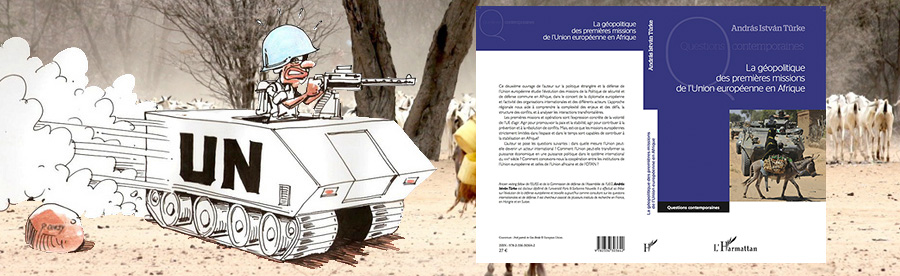
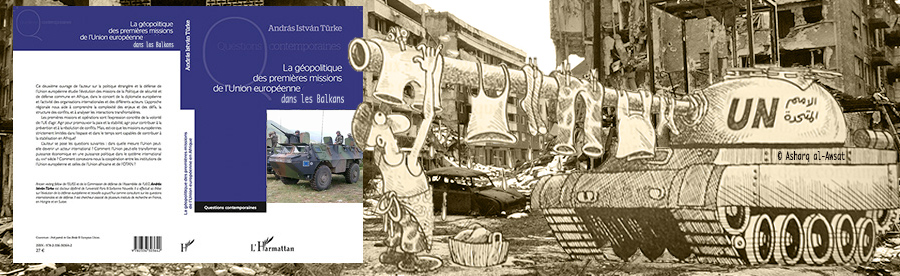
We are looking for sponsors for the English translation of these books, please contact turkeandras(at)gmail(dot)com