
Vous êtes ici
Agrégateur de flux
Salaires et carrières harmonisés pour les agents contractuels de la santé
Les Agents contractuels de droit public de la santé de la première promotion de 2025 bénéficient désormais d'un cadre harmonisé pour la gestion de leur carrière et de leur rémunération. Le dispositif est fixé par une circulaire en date du 23 juillet 2026, signée par le ministre délégué chargé du Budget et de la Fonction publique, Rodrigue Chaou.
Le gouvernement béninois uniformise les pratiques de gestion administrative et financière des Agents contractuels de droit public de la santé recrutés il y a six mois. Le cadre fixé est applicable dans les 77 communes du Bénin.
Parmi les principales mesures, les salaires devront être payés au plus tard le 20 de chaque mois, selon le même calendrier que celui des fonctionnaires de l'État. Le texte interdit également aux collectivités d'exiger des pièces non prévues par le manuel de procédure pour le paiement des rémunérations.
La circulaire renforce aussi la protection sociale des agents. Les mairies sont invitées à délivrer avec diligence les documents nécessaires à leur prise en charge sanitaire. Les Secrétaires exécutifs, en collaboration avec les Contrôleurs financiers et les Trésoriers communaux, sont chargés d'achever l'affiliation de tous les agents à la Caisse nationale de sécurité sociale (CNSS).
L'objectif de ce transfert progressif de la gestion administrative et financière des personnels de santé vers les communes est d'assurer une meilleure prévisibilité des carrières et de renforcer la sécurité des agents. Cette réforme devrait, à terme, être étendue à d'autres secteurs, notamment celui de l'éducation.
Catégories: Afrique
Navy to Reclassify Virginia Payload Module-equipped SSNs to SSGNs, Unleashing Next-Generation Strike Power
Today, the Department of the Navy announced a decisive step to sharpen its competitive edge, reclassifying nineteen planned Virginia Class submarines equipped with the Virginia Payload Module (VPM) as guided missile submarines (SSGN). This pivotal shift clearly differentiates these advanced platforms from traditional Virginia Class fast attack submarines (SSNs), signaling a leap forward in undersea warfighting capability, lethal combat power, and global deterrence.
Catégories: Defence`s Feeds
Five oil refineries, fighter jets, aircraft plant, radar stations and ammunition depots: results of previous week's SSU special operation
No description
Catégories: Defence`s Feeds
Commander's East Africa trip includes logistics conference, meetings with Kenyan and Somali leadership
AFRICOM Commander Gen. Dagvin Anderson conducted a regional visit to Ethiopia, Kenya and Somalia, July 26-30, 2026.
Catégories: Defence`s Feeds
Data on interceptions of aircraft completed near the Baltic States' borders on July 27 - August 2, 2026
No description
Catégories: Defence`s Feeds
Nabil Fahmy calls for Israel to be held accountable for its brutal and unlawful actions in Gaza and the West Bank
Mr. Nabil Fahmy, Secretary-General of the League of Arab States, strongly condemned the brutal Israeli attacks on the Gaza Strip, which targeted tents sheltering displaced persons and residential apartments, resulting in dozens of deaths and injuries.
Catégories: Defence`s Feeds
Official Chinese media releases rare footage of multiple DF-17 hypersonic missiles in formation, signaling full combat readiness: expert
Footage released by state media on Monday showed a rare scene of at least six DF-17 hypersonic missile launch vehicles of the Chinese People's Liberation Army (PLA) Rocket Force appearing together in a single frame.
Catégories: Defence`s Feeds
La fête du Trône célébrée à Ouagadougou : Promouvoir un partenariat ambitieux, équilibré et durable
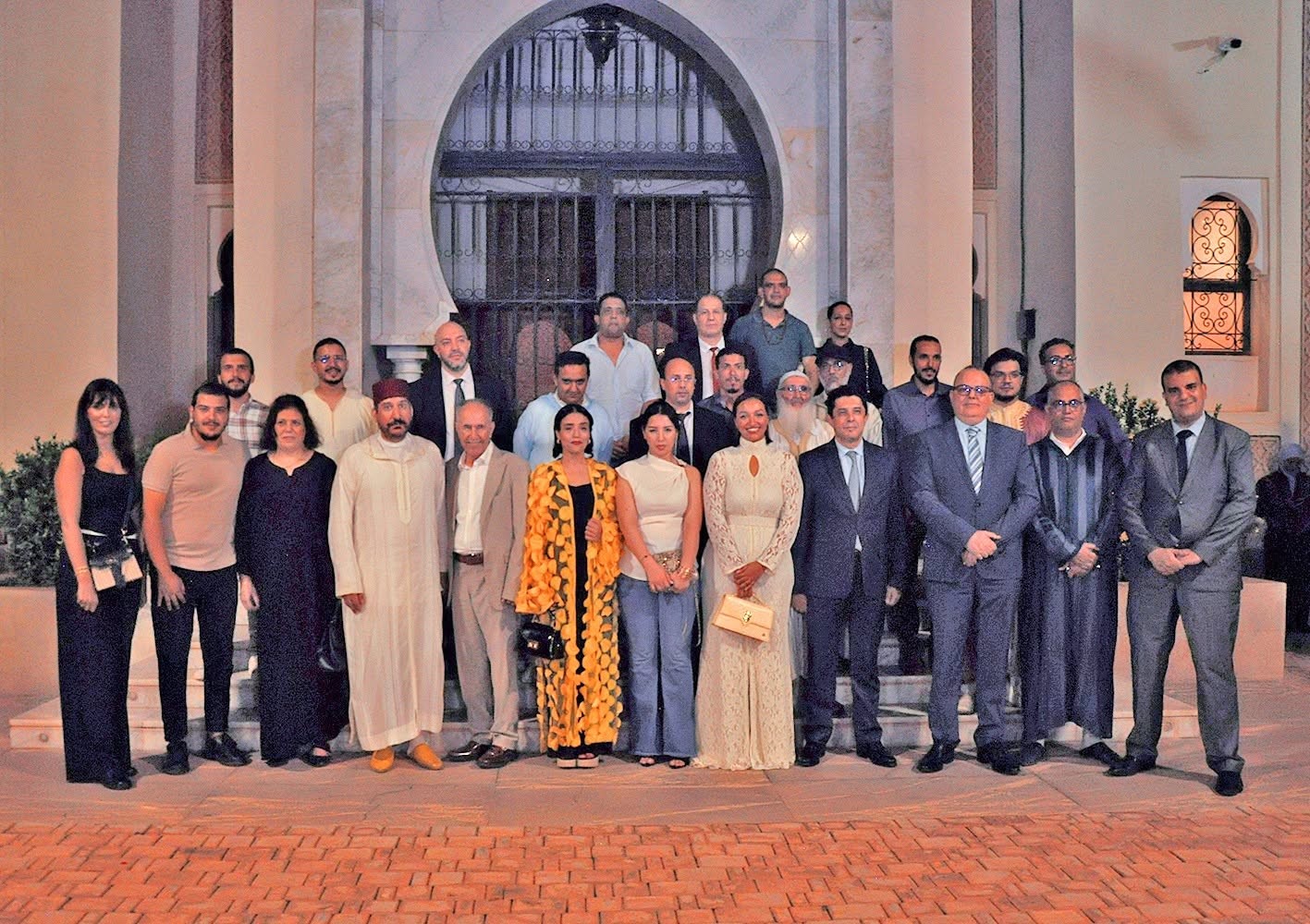
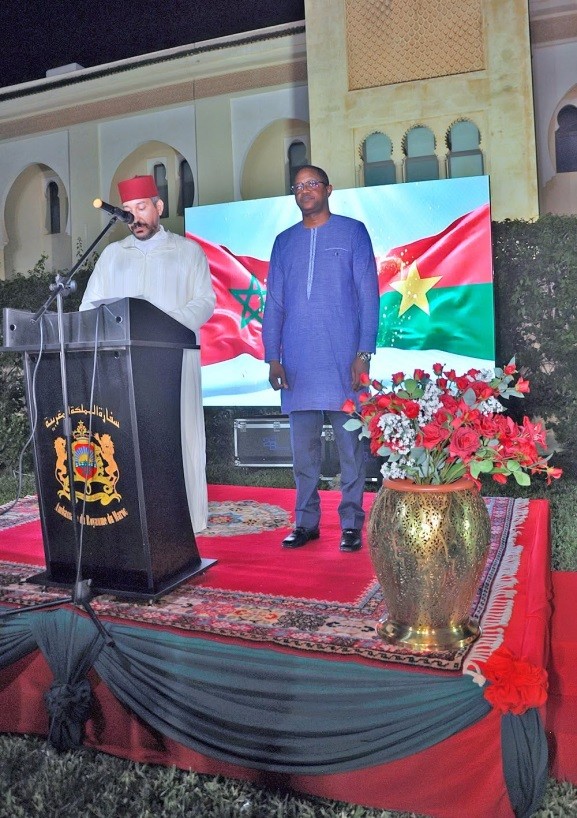
Le 27ᵉ anniversaire de la fête du Trône a été commémoré à Ouagadougou, à travers une réception officielle organisée, le jeudi 30 juillet 2026, à la résidence de l'ambassadeur du Maroc au Burkina Faso, Youssef Slaoui. C'était en présence du ministre burkinabè des Affaires étrangères, Karamoko Jean Marie Traoré, du ministre de la Guerre et de la Défense patriotique, de plusieurs chefs de missions diplomatiques accrédités au Burkina, de chefs d'organisations interafricaines et internationales, de personnalités administratives, militaires, coutumières et religieuses, ainsi que de nombreux sympathisants du Maroc et bien sûr de la communauté marocaine résidant au Burkina Faso.
Cette fête à la marocaine, avec au menu pour les convives le célèbre couscous bien assaisonné et les succulents gâteaux, marque le 27ᵉ anniversaire de l'accession de Sa Majesté le Roi Mohammed VI au trône.
Dans son allocution, l'ambassadeur du Royaume du Maroc, Youssef Slaoui, après avoir souhaité la bienvenue à ses invités de différents rangs, qualités et grades, a mis en avant les avancées enregistrées sous le règne du souverain marocain, faisant du Maroc « un moteur économique en pleine mutation », et réaffirmé la volonté de son pays de renforcer la coopération bilatérale avec le Burkina Faso. Fort des acquis du Maroc en termes « de potentiel de transformation économique majeur, de réformes audacieuses, d'investissements stratégiques et de détermination constante à renforcer la compétitivité de son économie », ce pays entend toujours œuvrer en faveur « d'un partenariat de référence et d'une coopération mutuellement bénéfique et solidaire » avec le Burkina Faso.
Selon l'ambassadeur Youssef Slaoui, pour ne prendre que l'année 2025, le partenariat entre le Royaume du Maroc et le Burkina Faso « a tenu toutes ses promesses avec l'organisation à Ouagadougou, le 10 décembre 2026, de la 5ᵉ session de la commission mixte de coopération, co-présidée par les chefs de diplomatie des deux pays. » Cette rencontre biennale a permis de raffermir « des coopérations sectorielles et de conclure des instruments juridiques portés par la vision commune des deux pays frères. »
Parmi les domaines couverts par cette coopération « basée sur l'échange d'expertise et le partage de compétences, il y a notamment la défense/sécurité, la protection civile, la formation professionnelle, l'agriculture, le commerce, la jeunesse, les infrastructures routières, la sécurité routière, la douane, l'urbanisme et l'habitat et la reconnaissance réciproque des permis de conduire nationaux des deux pays. »
À l'actif également de cette coopération, « le déploiement de plusieurs délégations dans les deux sens, à l'instar de la mission économique B2B effectuée par la Confédération marocaine des exportateurs (ASMEX) et de la Foire commerciale marocaine au SIAO ainsi que la participation des professionnels marocains à la 3ᵉ édition de Pharma Expo, pour ne citer que ces exemples. »
Concernant l'axe de Coopération Scientifique et Technique, « pour l'année académique 2026/2027, le quota officiel des bourses d'études marocaines est porté au nombre de 250, réparti entre les formations universitaires et professionnelles orientées vers les matières techniques, d'ingénierie, la spécialisation médicale, les sciences juridiques et économiques, répondant ainsi aux besoins du tissu socio-économique du Burkina Faso, avec un quota spécial dédié aux pupilles de la Nation. »
Dans le sens Burkina Faso en direction du Maroc, la période considérée a été marquée par « la densité des échanges de visites comme la délégation qui a pris part à la 4ᵉ édition de GITEX Africa-Morocco sur la transformation digitale et la visite de travail dans plusieurs villes marocaines pour le compte de l'Agence Faso Mêbo ».
Pour le ministre burkinabè des Affaires étrangères, Karamoko Jean-Marie Traoré, qui a salué à sa juste valeur la solidité du partenariat entre les deux pays, « les opérateurs économiques du Maroc sont invités à investir davantage au Burkina Faso. J'adresse donc un message de confiance aux opérateurs économiques, aux institutions financières, aux universités, aux centres de recherche et aux investisseurs marocains. Le Burkina Faso est prêt à accueillir des partenariats ambitieux, équilibrés et durables », conformément à l'esprit de la Révolution progressiste populaire (RPP).
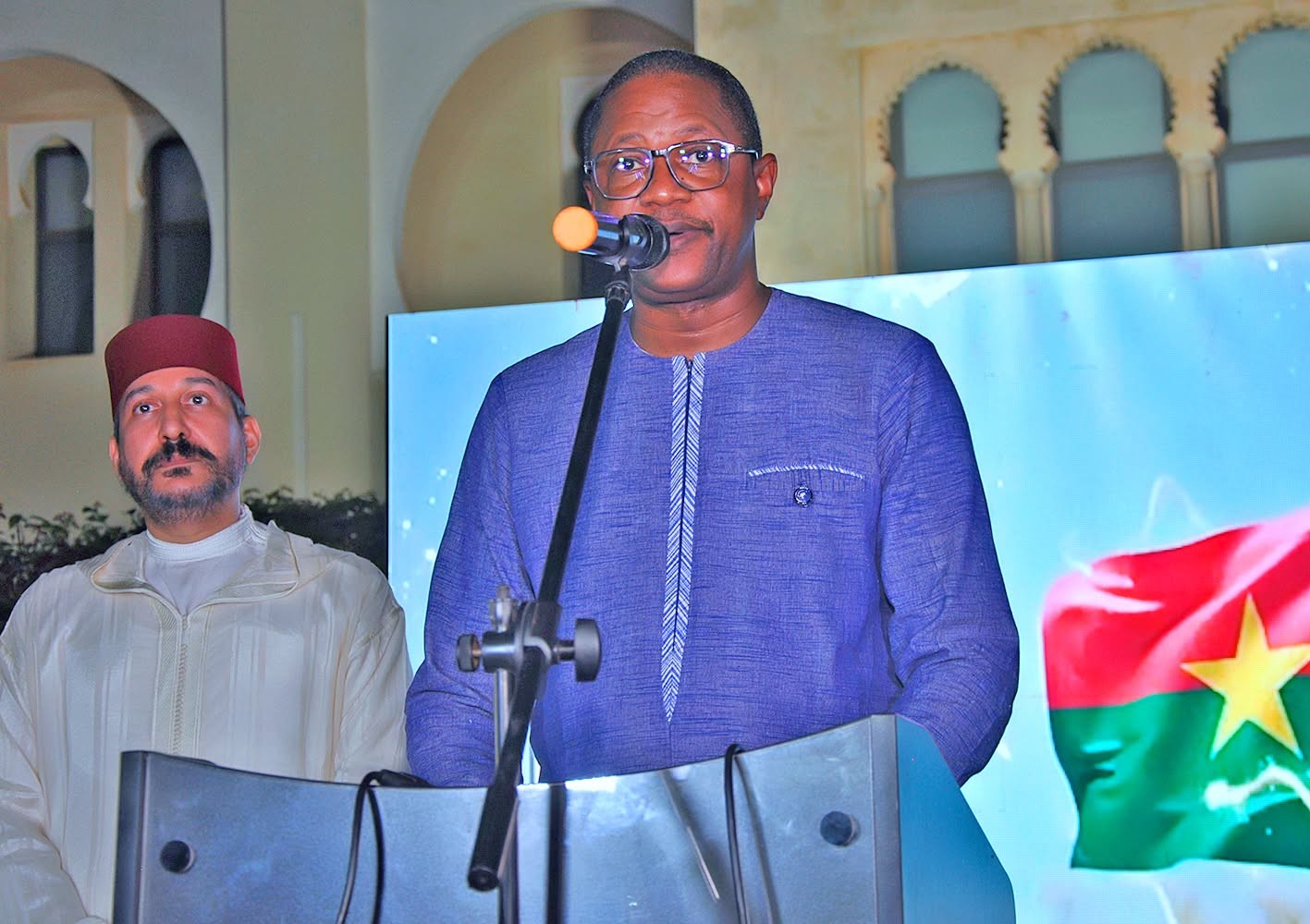
Pour conclure son intervention, le ministre Karamoko Jean-Marie Traoré a réitéré qu'« entre le Burkina Faso et le Royaume du Maroc, l'amitié est une réalité vécue. Elle se manifeste par la constance du dialogue politique, la confiance entre nos dirigeants, la solidarité entre nos peuples et, surtout, par les résultats concrets que cette coopération apporte à nos populations respectives. »
La cérémonie commémorative de la fête du Trône à Ouagadougou, qui a réuni un beau monde, autour de l'ambassadeur Youssef Slaoui et du ministre burkinabè Karamoko Jean Marie Traoré, s'est clôturée par la coupure du gâteau d'anniversaire, « un geste symbolique pour marquer les excellentes relations d'amitié et de coopération entre les deux pays », suivie d'un cocktail offert par la représentation diplomatique du Maroc.
Sita TARBAGDO (collaborateur)
Catégories: Afrique
Is Islamic Extremism Taking Over Bangladesh?
Two years after Sheikh Hasina's ouster, what is the role of Islamist movements in Bangladesh?
Catégories: Diplomacy & Crisis News
« Nous allons partir du Vodun pour aller vers le développement » (Prof. Mahougnon Kakpo)
Le Bénin entend faire du Vodun un levier de développement économique à travers le tourisme religieux. Dans cette dynamique, les Vodun Days, l'un des grands rendez-vous de valorisation de ce patrimoine, pourraient passer de trois jours à une semaine lors des prochaines éditions, afin d'accroître les retombées économiques et touristiques de l'événement.
« Dans le concept des nations aujourd'hui, ce que nous avons à apporter de fondamental et d'exceptionnel, c'est le Vodun. Nous allons donc partir du Vodun pour aller vers le développement », a déclaré le Professeur Mahougnon Kakpo, lors de la 2ᵉ édition du Forum Diaspora Connect, ce jeudi 21 juillet 2026 à Cotonou.
Selon le président du Comité des Rites Vodun, le tourisme religieux est une activité économique, culturelle qui génère beaucoup de ressources. Il cite en exemple l'Arabie Saoudite, l'Italie, la France qui tirent d'importants bénéfices de la fréquentation de sites et événements religieux.
Au Bénin, cette orientation se traduit déjà par plusieurs initiatives, notamment la Route des Couvents Vodun, le projet du Musée international du Vodun à Porto-Novo, le Musée d'art contemporain de Cotonou, ainsi que des événements comme les Vodun Days et le Festival des Masques.
Évoquant les Vodun Days, le président du Comité des Rites Vodun a précisé que l'objectif est d'aller au-delà du format actuel. « Au lieu de rester sur trois jours, on est en train de l'étendre sur une semaine d'abord. Donc la prochaine édition, ce ne sera plus trois jours, ce sera sur une semaine », a-t-il annoncé.
Cette évolution vise à mieux valoriser les infrastructures développées autour de l'événement et à favoriser l'activité des différents acteurs économiques. « Lorsque vous êtes dans trois jours, il y a des infrastructures qui sont construites, qui sont inexploitées. À la longue, il faudra trouver un autre moyen pour que ces infrastructures hôtelières, routières (...) génèrent le commerce du service », a-t-il indiqué.
Pour Mahougnon Kakpo, cette stratégie doit également intégrer le tourisme mémoriel et le tourisme diasporique afin de créer une dynamique permanente. « Le tourisme religieux sera accompagné, s'il ne l'est pas déjà, par le tourisme mémoriel et le tourisme diasporique », a-t-il affirmé. Cette approche permet de renforcer l'attractivité du pays tout en créant des opportunités d'emploi, notamment pour les jeunes.
« Les emplois qui sont générés par le tourisme religieux, le tourisme mémoriel, le tourisme diasporique, sont des emplois où on ne demande pas forcément un diplôme avant de faire », a-t-il souligné.
À travers la valorisation du Vodun, le Bénin ambitionne ainsi de transformer son patrimoine culturel et spirituel en un moteur de croissance économique.
Catégories: Afrique
Un voleur de moto arrêté quelques heures après son forfait
A peine alertée du vol d'une motocyclette, la Police républicaine a lancé une opération de recherche qui a permis l'interpellation rapide d'un suspect à Koudjinako, dans l'arrondissement de Colli. Un complice présumé est toujours recherché.
La Police républicaine a procédé, samedi 1er août 2026, à l'interpellation d'un homme soupçonné d'avoir participé au vol d'une motocyclette de marque Haojue 115 dans la commune de Toffo.
Les faits se sont déroulés vers 5 heures du matin. La victime, un pâtissier résidant à Houègbo, a signalé au commissariat de l'arrondissement le vol de son engin.
Dès la réception de la plainte, les policiers ont déployé un dispositif de recherche et de bouclage, notamment dans le quartier Koudjinako, situé dans l'arrondissement de Colli.
Les équipes, réparties en plusieurs groupes, ont mené des fouilles qui ont conduit à l'interpellation d'un individu dans les environs du lieu des faits, peu après le vol.
Au cours de son audition, le suspect, présenté comme résident de Sékou, a reconnu son implication dans l'affaire. Il a également livré l'identité d'un complice présumé, déjà connu des services de police.
Une enquête est ouverte.
M. M.
Catégories: Afrique
Pakistan Wields Iron Fist Against Protesters in Pakistan-administered Jammu and Kashmir
Last week, Pakistani Defense Minister Khwaja Asif described protesters “as enemies like India."
Catégories: Diplomacy & Crisis News
Au moins cinq morts et deux disparus en six jours dans des attaques armées à Rutshuru
Au moins cinq personnes ont été tuées, une autre blessée et deux autres restent portées disparues au cours des six derniers jours dans le nord de la chefferie de Bwito, en territoire de Rutshuru, dans la province du Nord-Kivu. Cette recrudescence des incidents sécuritaires dans le nord de la chefferie de Bwito inquiète les habitants de Kibirizi et des localités voisines, où des civils ont été tués, blessés ou enlevés.
Catégories: Afrique
Europe’s Dangerous Hesitation on Its Own Air Defense
Russia’s ballistic missile attacks on Ukraine pose an urgent question for NATO leaders.
Catégories: Diplomacy & Crisis News
Framing Corruption in the European Parliament: Shifting Narratives after the War in Ukraine
On 9 December 2022, Europe was shaken by images of cash-filled suitcases and the arrests of European Parliament Vice-President Eva Kaili and former MEP Antonio Panzeri. Quickly dubbed “Qatargate,” the operation exposed a cash-for-influence scheme, in which the governments of Qatar and Morocco allegedly bribed European co-legislators to promote their interests within the European Parliament (EP), including shielding Qatar from criticism over human rights violations in the run-up to the FIFA World Cup. Three years later, Belgian police again raided multiple locations in Brussels over suspicions that Chinese telecommunications giant Huawei had bribed European lawmakers with cash gifts and luxury trips (Freund, 2025).
These cases were not simply individual anomalies or exceptions. They revealed an underlying systemic problem: the vulnerability of European financial and political systems to infiltration by foreign actors seeking to bypass democratic processes in order to advance their interests, a phenomenon increasingly described as strategic corruption. While these vulnerabilities had long existed, they were arguably overlooked until Russia’s full-scale invasion of Ukraine exposed how weak and uneven anti-corruption laws across the EU Member States could be exploited by foreign actors to expand their influence within EU borders. This article thus investigates how the public narrative of Members of the European Parliament (MEP) on corruption have shifted following the war in Ukraine.
European policymakers have long recognized corruption as a European policy problem. Yet, they diverged on the appropriate course of action. While Member States envisioned limited integration in areas with clear cross-border implications, where cooperation was perceived to serve their common interests, supranational institutions like the EP advocated deeper integration, ranging from broad criminal law harmonization to European enforcement mechanisms.
As criminal law has traditionally been regarded as a matter of national sovereignty, the introduction of supranational tools against corruption in Member States has been challenging. Despite having limited impact on the outcome, the EP often pushed the Commission and the Council to introduce ambitious tools to curb Europe’s corruption problem. However, advocated tools have often lost their teeth during negotiations due to persistent dissensus on where should power lie in anti-corruption governance.
MEPs’ discursive strategies in pushing for more assertive EU action have primarily rested on underlining the cross-border implications of corruption, that corruption wastes common budget, undermines liberal democratic values, and threatens the internal security. With the war in Ukraine, the nature of security threats and its relation to corruption have changed in broadly four ways.
First, the referent actors shifted from non-state to state actors. Until 2022, when linking corruption to security, MEPs primarily focused on organized crime groups, such as the mafia, human and drug trafficking networks, and terrorist organizations, and the ways in which they used corruption to finance their operations. After the war, the responsible actors shifted to foreign governments, particularly to Russia, pursuing strategic objectives through the corruption of European politicians. The threat was no longer covert criminal networks but with visible state-linked actors who exert influence within the EU through oftentimes legal ways such as investing in real estate to obtain EU citizenship or by hiring European policymakers to major Russian companies.
Second, such security considerations became a legitimization strategy employed by MEPs to advance robust EU tools against corruption. The analysis of MEP speeches of the last decade shows a visible increase in MEPs’ resort to the war as a way to push through previously failed anti-corruption measures, such as ban on citizenship by investment schemes or the long awaited Anti-corruption Directive. As Renew MEP García Hermida-Van Der Walle put forward: “There will be no more rolling out the red carpet for Putin’s cronies and other corrupt people trying to access the EU to launder their money… We can ban all sorts of golden passport schemes forever within the European Union. And, maybe more importantly – also for the long term – I’m asking the Council, the Member States, to please, please, please allow us to have an anti-corruption directive in the European Union with real teeth.”
Third, security threats have started to be combined with democratic considerations. Previously, organized groups only threatened the physical security of the Union by engaging in criminal activities often sustained by corruption. Now, corrupt actors also threaten democratic decision-making in the EU often by channelling resources to pro-Russia media outlets in the EU. In this way, foreign influence was portrayed as capable of undermining democratic institutions and political decision-making.
Lastly, foreign influence and concerns for strategic corruption have started to be utilized by not only-pro EU political groups but also Eurosceptic MEPs. While the former used these threats to justify stronger supranational tools, the latter used it for opposite means: less EU intervention. They argued that current problems were because of the EU’s interventionist policies that created bureaucratic burdens and regulatory complexity that facilitated corruption.
They also criticized what they perceived as the EU’s “hypocritical” approach to corruption, arguing that it selectively targeted conservative governments while overlooking how EU-funded NGOs or liberal policymakers can also become targets of strategic corruption.
In sum, geopolitical developments not only affect the Union’s security architecture but also its anti-corruption policies. This article thus demonstrated how corruption is politically framed and debated in the European public sphere in an era of growing geopolitical instability. Understanding the evolving relationship between corruption and security in this context enables policymakers not only to develop more nuanced policy instruments that respond to emerging realities, but also to recognize how security-related corruption narratives can be mobilized to advance pro as well as anti-EU positions and to respond to the variety of arguments more effectively.
The post Framing Corruption in the European Parliament: Shifting Narratives after the War in Ukraine appeared first on Ideas on Europe.
Catégories: European Union
Female Genital Mutilation: Winning the Argument, Losing the Funding
Anti-FGM activists protests outside the National Assembly in Banjul, The Gambia, on 18 March 2024, as lawmakers discuss a bill seeking to lift the ban on FGM. Credit: by Muhamadou Bittaye/AFP
By Inés M. Pousadela
MONTEVIDEO, Uruguay, Aug 3 2026 (IPS)
Last August, a one-month-old girl in The Gambia bled to death after being subjected to female genital mutilation (FGM), a practice that had been illegal in the country since 2015. FGM is a human rights violation, whatever the appeals to faith or tradition made in its defence, but now the Gambian Supreme Court is being asked to strike the country’s ban down. This is the second attempt in two years to make FGM legal again.
Civil society stopped it the first time. When a repeal bill reached the National Assembly in 2024, the Network Against Gender-Based Violence brought survivors to testify, lobbied legislators, ran radio programmes and obtained a ruling from Cairo’s Al-Azhar University saying that FGM is not required under Islam. The bill fell in July 2024.
The ongoing fight in The Gambia is a measure of how fragile advances in the recognition of rights are. FGM is in retreat across most of the countries where it is practised, the result of decades of campaigning by survivors and community organisations. But holding that ground is becoming harder, as the money supporting those campaigns dries up and a resurgent anti-rights movement works to recast FGM as a traditional practice under foreign attack.
A practice in retreat
Over 230 million girls and women alive today have undergone FGM, with an additional four million cut every year. But the direction of travel has changed. A 2024 UNICEF report found that half of the decline in prevalence over the past 30 years has come in the last decade, with rates among adolescent girls halved or cut by 30-plus percentage points in countries including Ethiopia, Kenya and Sierra Leone. Attitudes have shifted too. Around 400 million people in practising countries, two-thirds of the population, now say they want FGM to end.
That change has a clear source. The Joint Programme run by UNICEF and the UN Population Fund found that the sharpest reductions come where communities are supported to deliberate and then commit, publicly and collectively, to abandoning the practice. The UN channels funding and provides coordination, but the dialogues, declarations and door-to-door persuasion are the work of community activists, national organisations and survivor networks. Thanks to these civil society efforts, in 2025 alone, over 7.5 million people took part in community dialogues and over 190,000 religious leaders and community influencers publicly denounced FGM.
The tools that work
Where campaigners have targeted the religious justifications that sustain FGM, results have followed. In 2025, Islamic scholars in Djibouti, Eritrea and Somalia issued a joint ruling saying that nothing in the faith requires FGM. Litigation has proved another powerful tool. In July 2025, the Court of Justice of the Economic Community of West African States found Sierra Leone in breach of its international obligations for failing to criminalise FGM, and said that, when intentionally inflicted, the practice meets the threshold of torture. In India, the Supreme Court has begun hearing whether cutting among the Dawoodi Bohra community should lose constitutional protection as an essential religious practice. And this June, Colombia became the first country in Latin America to ban FGM, driven by Emberá Indigenous women campaigning against a practice carried out in their own community.
Prohibition is now the norm rather than the exception, with Djibouti and Guinea writing bans into their constitutions in 2025. But laws alone don’t necessarily change what happens on the ground, and enforcement remains thin. Arrests and prosecutions rose sharply in 2025, yet there were still only 711 FGM court cases all year. In The Gambia, the fine imposed on the country’s first convicted cutters was paid by a prominent imam, an act that helped galvanise the campaign seeking to repeal the ban.
The movement’s defunding
The tactics that drove three decades of progress are now being starved of funding, with budget cuts falling hardest on the survivor-led and grassroots groups that are most effective but always face the toughest struggles for support. Funding for the Joint Programme fell from US$29.6 million in 2024 to US$16.3 million in 2025. The dismantling of USAID removed the largest single source of civil society funding worldwide, and total US foreign aid halved in a year. The UK, once the biggest funder of FGM prevention, is winding down its flagship programme with no replacement, so it can spend more on weapons.
The economics make no sense, because every dollar invested in prevention brings a tenfold return. The Joint Programme estimates that treating the health consequences of FGM currently costs US$1.4 billion a year. Politics, though, is playing a big part. In global north countries, political shifts are driving the withdrawal of aid, and far-right parties invoke FGM to stigmatise migrant communities while also opposing the gender justice policies that would make a difference. In practising countries, prohibition is increasingly recast as a foreign imposition on culture and faith. What unites these arguments is a shared sleight of hand that treats FGM as a question of cultural identity rather than a violation of fundamental human rights.
Elimination by 2030, the target that states set when they agreed the Sustainable Development Goals in 2015, is already out of reach. But the evidence on what works is not in dispute, and it points towards communities and grassroots movements. The question is whether governments that claim to value human rights will keep supporting those delivering progress, or let a generation of girls pay the price of retreat.
Inés M. Pousadela is CIVICUS Head of Research and Analysis, co-director and writer for CIVICUS Lens and co-author of the State of Civil Society Report. She is also a Professor of Comparative Politics at Universidad ORT Uruguay.
For interviews or more information, please contact research@civicus.org
Follow @IPSNewsUNBureau
!function(d,s,id){var js,fjs=d.getElementsByTagName(s)[0],p=/^http:/.test(d.location)?'http':'https';if(!d.getElementById(id)){js=d.createElement(s);js.id=id;js.src=p+'://platform.twitter.com/widgets.js';fjs.parentNode.insertBefore(js,fjs);}}(document, 'script', 'twitter-wjs');
Catégories: Africa
Ex-refugee's 'full circle' Commonwealth Games win
Cyrille Tchatchet II is "very proud and honoured" to represent England and take home a silver medal.
Catégories: Africa
Burkina : Les horaires de travail des 4 et 5 août 2026 réaménagés, de 7h30 à 14h
Conformément aux nouvelles dispositions légales en vigueur depuis janvier 2026, les dates des 4 et 5 août sont désormais des journées de commémoration et de recueillement seront des journées de travail continu.
Ainsi, le ministère des serviteurs du peuple informe les travailleurs et employeurs du public et du privé que les horaires de travail des 4 et 5 août 2026 sont réaménagés de 7h30 à 14h sur l'ensemble du territoire national.
Pour mémoire, le 4 août 1983 correspond à l'avènement de la Révolution démocratique et populaire (RDP) et le 5 août 1960 marque l'accession de la Haute-Volta (Burkina Faso) à la souveraineté internationale.
Lefaso.net
Catégories: Afrique
GENOCOST : à Uvira, les survivants des violences attribuées au M23 réclament justice et réparation
Lors de la commémoration de la Journée nationale du GENOCOST ( génocide pour des gains économiques ) dimanche 2 août au Sud-Kivu, des victimes de la récente occupation d’Uvira par la coalition RDF/AFC-M23 ont témoigné des exactions subies et appelé à la vérité sur les crimes commis et à la justice.
Catégories: Afrique
Pages



© 2012-2018 Europa Varietas Foundation © 2015-2018 Europa Varietas Association
www.europavarietas.org | info(@)europavarietas(dot)org | Switzerland




We are looking for sponsors for the English translation of these books, please contact turkeandras(at)gmail(dot)com