
Vous êtes ici
Agrégateur de flux
America Can’t Racially Profile Its Way to AI Supremacy
U.S. public discourse is threatening to make the country even more vulnerable to foreign threats.
Catégories: Diplomacy & Crisis News
«C'est un jour historique»: en Serbie, le mouvement des étudiants fait son entrée au Parlement
Ce mardi 17 novembre marque la première session du Parlement nouvellement élu en Serbie, qui consacre la victoire de la liste étudiante après deux ans de manifestations anticorruption.
Catégories: Union européenne
Budget 2027 : les députés examinent les prévisions de recettes et de dépenses du gouvernement
L’examen du projet de budget 2027 s’est poursuivi ce lundi à l’Assemblée nationale. Évalué à plus de 24 milliards de dollars, ce texte fait l’objet d’une analyse approfondie par la commission économique, financière et de contrôle budgétaire (Écofin), qui passe notamment au crible les prévisions de recettes et de dépenses du gouvernement.
Catégories: Afrique
L’effondrement du pont sur la rivière Lowale coupe la circulation entre trois territoires du Sankuru
La circulation est interrompue depuis dimanche 15 novembre entre les territoires de Lodja, Lomela et Kole, dans la province du Sankuru, à la suite de l’effondrement du pont sur la rivière Lowale. Privés de cet ouvrage construit en 2019, les usagers doivent désormais traverser la rivière en pirogue, une solution qui inquiète les habitants en raison des risques d’accidents et des difficultés d’approvisionnement.
Catégories: Afrique
Low-emission hydrogen in Uruguay and Argentina: policy making under conditions of high technological and systemic uncertainty - Final Report
This report analyses how Argentina and Uruguay are navigating the early stages of developing a low-emission hydrogen (LEH2) economy under conditions of high technological, economic and political uncertainty. Based on extensive fieldwork conducted in early 2024 – including 75 expert interviews and a focus group – the study examines stakeholder perceptions, national strategies, governance challenges and opportunities for value creation in both countries. The research “focuses on the question of how the main actors and stakeholders in the hydrogen economy perceive the uncertainties related to it” and how policy and international cooperation can support constructive action. As the landscape for the international roll-out of hydrogen has changed significantly – with support measures also being adapted – it is important to better understand how stakeholders in the Global South view their prospects and what concerns they have. This study can make an important contribution in this regard. The interviews were prepared, conducted and analysed by a trilateral research team. The three institutional partners were the Universidad Nacional de Quilmes in Argentina, Universidad de la República in Uruguay and the German Institute of Development and Sustainability (IDOS). Senior researchers from Universidad Nacional de Quilmes and IDOS led the project, and the core research team comprised junior researchers from the partner institutions. The partners jointly designed the research project, arranged and conducted the interviews, and evaluated the findings and developed policy recommendations. Globally, hydrogen demand is rising, yet the ramp-up of LEH2 remains slow. Only 1% of global hydrogen is currently low-emission, and “the overall proportion of projects with final investment decision reached not more than 7%” of the expected production volumes by 2023. Persistently high producer prices and complex regulations (mainly at the level of the European Union) are seen as major obstacles to accelerating the roll-out of the hydrogen economy. This could change as a result of new technologies and regulatory reforms, but it is still unclear whether and when this will happen. Both Argentina and Uruguay therefore face a shifting environment: uncertain international markets, evolving certification rules and volatile investment conditions.
Argentina possesses substantial natural resources and industrial capabilities – excellent wind and solar resources for green hydrogen, major gas reserves for blue hydrogen and an established nuclear sector that could support pink hydrogen production. Its 2023 National Hydrogen Strategy envisioned integrated value chains, export markets and up to 82,000 jobs by 2050. However, the political shift in 2023 introduced institutional instability. The new government prioritises deregulation and an investment regime that offers incentives “without conditionality” and removes local content requirements. Stakeholders highlighted macro-economic volatility, grid bottlenecks and social and environmental concerns – especially water scarcity and community acceptance in Patagonia – as major barriers.
Uruguay, by contrast, benefits from long-term political consensus and a highly successful renewable energy transition, with renewables accounting for 98% of electricity generation. Its Green Hydrogen Roadmap (2022) outlines phased development towards 2040, supported by pilot projects such as H24U and Kahirós. Uruguay’s competitive advantages include strong institutions, highly complementary wind and solar resources and port access. Yet large-scale projects face increasing scrutiny: Environmental authorities have delayed major proposals (e.g. Enertrag’s Tambores project) due to concerns over water use, biodiversity and social licence. In both countries, stakeholders saw export demand – especially from Europe and Asia – as the primary driver of low-emission hydrogen development. Domestic markets remain small but relevant for learning and early deployment. Opportunities for local value creation exist in engineering services; renewable energy infrastructure; carbon capture, utilisation and storage; and niche eletrolyser development, but require targeted industrial policy and investment in research and development. The report concludes that the slowdown in global hydrogen development demands realistic, “no-regret” strategies: strengthening research cooperation, developing small-scale pilot projects for domestic markets, improving environmental governance and enhancing regional collaboration (e.g. through CertHiLAC, the Clean Hydrogen and Low Emissions Certification System in Latin America and the Caribbean, the emerging Latin American certification scheme). Transparent communication, early community engagement and co-benefits for local populations are essential to avoid stranded assets and secure social legitimacy for the hydrogen transition. While this conclusion is valid for many interventions supporting the sustainability transition, it is particularly relevant to the scale-up of hydrogen production, as unrealistically high expectations have long been promoted, including by Germany as a potential buyer in its engagement with potential exporters such as Argentina and Uruguay.
Verónica Robert is a senior researcher at CONICET and a professor at the National University of San Martín (UNSAM) in Buenos Aires, Argentina.
Paula Prados is a professor and senior researcher at the National University of San Martín, and a specialist in Knowledge and Innovation Economy.
Guido Bambini and Guido Perrone are researchers at the Universidad Nacional de Quilmes, Argentina. Fernanda Muniz is affiliated with the Universidad de la República, Uruguay.
Aaron Haas, Rebecca Rohe and Paulina Wende were postgraduate research fellows in the 59th Postgraduate Programme for Sustainability Cooperation at IDOS.
Catégories: Diplomacy & Defense Think Tank News
China calls for progress on inclusive governance in Syria
China's Permanent Representative to the United Nations Fu Cong on Monday called for advancing an inclusive governance process in Syria.
Catégories: Defence`s Feeds
Army spokesperson: Strait of Hormuz will only be reopened by accepting Iran's conditions
Iranian Army spokesperson Brigadier General Mohammad Akraminia, while emphasizing the complete dominance of the armed forces over the Strait of Hormuz, says that the reopening of this strategic waterway is only possible with the acceptance of the Islamic Republic of Iran's conditions by the United States, and any renewed aggression by the enemy will be met with an immediate, crushing response that goes beyond the geographical borders of the region.
Catégories: Defence`s Feeds
Iran's UN envoy slams 'blatant double standards' as West stays silent on US-Israeli aggression against peaceful nuclear sites
Gholamhossein Darzi says the West's "blatant double standards" seriously undermine the credibility of the conference and the principles it is mandated to uphold.
Catégories: Defence`s Feeds
Jo Yong Won Meets Speaker of Russia's State Duma
The information office of the State Duma of Russia reported that Jo Yong Won, member of the Presidium of the Political Bureau and secretary of the Central Committee of the Workers' Party of Korea, on a visit to Russia, met with Viacheslav Volodin, speaker of the State Duma of Russia, according to TASS on November 16.
Catégories: Defence`s Feeds
Secretary of WPK Central Committee Meets President of United Russia Party
Jo Yong Won, member of the Presidium of the Political Bureau and secretary of the Central Committee of the Workers' Party of Korea, on a visit to the Russian Federation, met Dmitri Medvedev, vice-chairman of the Security Council of the Russian Federation and president of the United Russia Party, at the general meeting of the "'For Freedom of Nations!' Movement, forum of supporters of the struggle against modern-day neo-colonialist acts", according to TASS on November 16.
Catégories: Defence`s Feeds
Jo Yong Won Makes Speech at General Meeting in Russia
According to TASS, there took place a general meeting of the "'For Freedom of Nations!' Movement, forum of supporters of the struggle against modern-day neo-colonialist acts" in Moscow on November 16.
Catégories: Defence`s Feeds
Full Text: Remarks by Chinese Premier Li Qiang at the 29th China-ASEAN Summit
Chinese Premier Li Qiang on Monday delivered a speech at the 29th China-ASEAN Summit.
Catégories: Defence`s Feeds
Chinese Defense Minister visits Italy
Chinese Defense Minister Admiral Dong Jun visited Italy upon the invitation of Italian Defense Minister Guido Crosetto on November 16, 2026.
Catégories: Defence`s Feeds
Project of Concern Summit for Offshore Patrol Vessels
Defence convened a Project of Concern Summit in Canberra this week in relation to the Arafura class Offshore Patrol Vessels.
Catégories: Defence`s Feeds
New Army chopper already 'baring its teeth'
Army's battlefield attack helicopter fleet continues to expand with the delivery of the seventh and eighth AH-64E Apaches.
Catégories: Defence`s Feeds
Disparities in Birth and Death
Although birth and death are universal human experiences, their patterns reflect significant disparities within and across countries and between privileged and marginalized groups. Credit: Ernest Ankomah/IPS
By Joseph Chamie
PORTLAND, USA, Nov 17 2026 (IPS)
“Thou know’st ’tis common; all that lives must die, passing through nature to eternity.”(Hamlet)
Although birth and death are universal human experiences, their timing and circumstances vary considerably within and across countries, contributing to significant differences in population growth rates. These differences also reflect profound disparities between privileged and marginalized populations.
In 2026, an estimated 133 million people worldwide are expected to be born, while approximately 64 million are expected to die. These births and deaths, however, are distributed unevenly across countries and populations.
Approximately 63% of births are expected to occur in the less developed countries, excluding the least developed; 28% in the least developed countries; and 9% in the more developed countries.
Approximately 110 countries have fertility rates below the replacement level of 2.1 births per woman. These countries include Italy, Japan, and Spain, where fertility rates are about 1.2 births per woman. In contrast, some of the world’s highest fertility rates are found in less developed countries, including Chad, the Democratic Republic of the Congo, and Somalia, where rates approach 6 births per woman (Figure 1).
Source: United Nations.
Like births, deaths are distributed unequally across countries. Premature deaths are concentrated in low-income regions, largely because of poverty, limited access to healthcare, and civil conflict. Consequently, some people in the world die at relatively young ages, while others live considerably longer.
Differences in mortality risks are evident from the first year of life. Finland, Iceland, and Japan, for example, have some of the world’s lowest infant mortality rates, with fewer than 2 deaths per 1,000 live births. In contrast, Niger, Nigeria, and Somalia have some of the highest rates, exceeding 62 infant deaths per 1,000 live births. Infants in these countries therefore face mortality risks more than 30 times higher than those in countries with the lowest mortality rates (Figure 2).
Source: United Nations.
These disparities in infant mortality are also reflected in maternal mortality. In 2023, some of the highest maternal mortality rates were recorded in African countries, including Chad, Nigeria, and South Sudan, where rates exceeded 1,000 maternal deaths per 100,000 live births. By contrast, countries such as Iceland, Norway, and Poland recorded fewer than 3 maternal deaths per 100,000 live births.
Differences in mortality risks are evident from the first year of life. Finland, Iceland, and Japan, for example, have some of the world’s lowest infant mortality rates, with fewer than 2 deaths per 1,000 live births. In contrast, Niger, Nigeria, and Somalia have some of the highest rates, exceeding 62 infant deaths per 1,000 live births
Life expectancy at birth likewise reveals substantial disparities in mortality across countries. In 2025, some of the lowest life expectancies at birth, at approximately 55 years, were reported in African countries, including Chad, Nigeria, and South Sudan. By contrast, Japan, the Republic of Korea, and Switzerland had life expectancies at birth of approximately 85 years, about 30 years longer than those in countries with the lowest life expectancies.
Mortality disparities persist into older ages, as reflected in life expectancy at age 65. In 2025, for example, people aged 65 in Chad, Nigeria, and Togo could expect to live about 12 more years, compared with approximately 23 additional years in Australia, France, and Japan.
Life expectancy also varies considerably by income and education. Working-class individuals and those with less education generally have shorter life expectancies than their wealthier and more highly educated counterparts. Higher educational attainment is also associated with higher incomes, healthier lifestyles, better access to health care, and longer life spans.
Beyond deaths resulting from illness, disease, accidents, violence, and armed conflicts, voluntary medically assisted death is becoming an increasingly prominent global issue.
Medically assisted death, also known as death with dignity, voluntary assisted dying, or medical aid in dying (MAID), is the subject of growing debate in many countries. It can take two main forms: assisted suicide, in which individuals take prescribed life-ending medication themselves, and voluntary euthanasia, in which a medical professional administers the medication.
An important demographic consequence of disparities in birth and death across countries is the substantial variation in the levels of natural population change, defined as the difference between births minus deaths.
Many African countries, for example, have relatively high rates of natural increase. Rates exceed 30 per 1,000 population in the Central African Republic, Chad, the Democratic Republic of the Congo, Niger, and Somalia. In contrast, rates of natural change are negative in many countries, including China, Germany, the Russian Federation, Italy, and Japan (Figure 3).
Source: United Nations.
In sum, although birth and death are universal human experiences, their patterns reflect significant disparities within and across countries and between privileged and marginalized groups.
High fertility and premature mortality are concentrated largely in less developed countries, particularly the least developed, while longer life expectancy and low fertility are more common in more developed countries. Similarly, high rates of population growth prevail in many less developed countries, especially in Africa, while low or negative rates of population growth are occurring in a growing number of countries.
These demographic disparities in birth, death, and population growth are having significant economic, social, and political consequences worldwide.
Joseph Chamie is a consulting demographer, a former director of the United Nations Population Division, and author of many publications on population issues.
Catégories: Africa
Artillerie : La Bulgarie confirme son intention d’acquérir 57 CAESAr auprès de la France
En mars 2025, répondant à une question posée par un parlementaire, Atanas Zapryanov, alors ministre bulgare de la Défense, avait indiqué que Sofia envisageait de rejoindre le programme d’acquisition conjointe de CAESAr [Camions équipés d’un système d’artillerie] proposé par la France et éligible à un possible financement de l’initiative européenne EDIRPA [European Defence Industry Reinforcement...
Cet article Artillerie : La Bulgarie confirme son intention d’acquérir 57 CAESAr auprès de la France est apparu en premier sur Zone Militaire.
Catégories: Défense
Pages


© 2012-2018 Europa Varietas Foundation © 2015-2018 Europa Varietas Association
www.europavarietas.org | info(@)europavarietas(dot)org | Switzerland
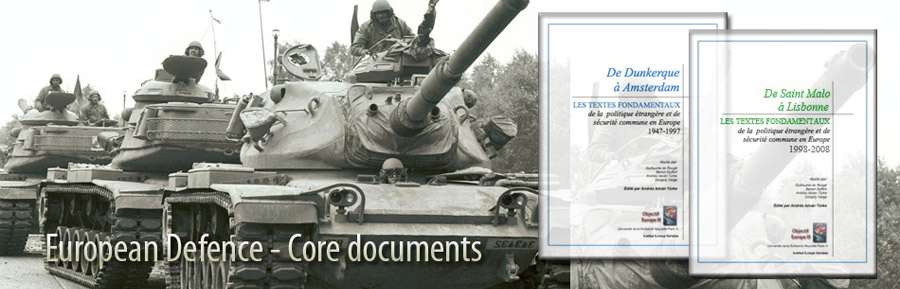
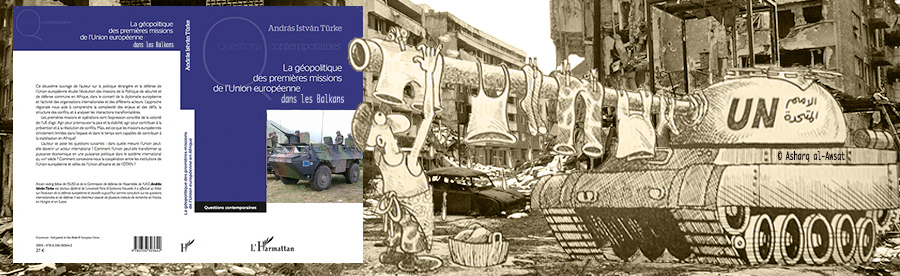
We are looking for sponsors for the English translation of these books, please contact turkeandras(at)gmail(dot)com