
Vous êtes ici
Agrégateur de flux
Iran strikes put Mediterranean back in EU threat focus
So far, EU defence projects remain more buzzwords than action
Catégories: Europäische Union, European Union
Commission eyes tougher rules for older data centres
Incoming tech sovereignty package could also set minimum performance standards for new data centres by 2030, per a draft strategy obtained by Euractiv
Catégories: Europäische Union, European Union
Die Polizei muss künftig die Nationalität von Straftätern offenlegen
Das Parlament beendet eine Debatte, die fast zwanzig Jahre dauerte –doch es gibt immer noch eine Unsicherheit.
Catégories: Afrique, Swiss News
OPINION on the proposal for a Council regulation laying down the Multiannual Financial Framework for the years 2028 to 2034 - PE781.487v02-00
OPINION on the proposal for a Council regulation laying down the Multiannual Financial Framework for the years 2028 to 2034
Committee on Foreign Affairs
Dan Barna
Source : © European Union, 2026 - EP
Committee on Foreign Affairs
Dan Barna
Source : © European Union, 2026 - EP
Catégories: Europäische Union
OPINION on the proposal for a Council regulation laying down the Multiannual Financial Framework for the years 2028 to 2034 - PE781.487v02-00
OPINION on the proposal for a Council regulation laying down the Multiannual Financial Framework for the years 2028 to 2034
Committee on Foreign Affairs
Dan Barna
Source : © European Union, 2026 - EP
Committee on Foreign Affairs
Dan Barna
Source : © European Union, 2026 - EP
Catégories: Central Europe, European Union
Why the US Strikes on Iran Won’t Derail the Trump-Xi Summit
The institutional machinery driving the Beijing summit is already too far advanced to reverse, and the Iran crisis has made holding it more urgent, not less.
Catégories: Afrique, Diplomacy & Crisis News
Peace Operations and Peacebuilding: Supporting Effective UN Transitions for Sustaining Peace
Event Video
Photos
Photos


jQuery(document).ready(function($){$("#isloaderfor-festup").fadeOut(300, function () { $(".pagwrap-festup").fadeIn(300);});});
IPI, together with the Permanent Mission of Japan to the United Nations, co-hosted a public discussion on “Peace Operations and Peacebuilding: Supporting Effective UN Transitions for Sustaining Peace” on March 3rd.
Mission transitions represent an important opportunity for the UN to reconfigure its presence and strategy to support peacebuilding objectives, as articulated in Resolution 2594, adopted unanimously in 2021. Well-planned and integrated transition processes that place peacebuilding at the center require strong coordination and coherence between host governments, missions, resident coordinators, country teams, and civil society. In addition, both the UN Peacebuilding Commission (PBC) and the Peacebuilding Fund (PBF) can play valuable roles in supporting national and inclusive ownership in transition processes. To that end, the twin resolutions adopted in November 2025 on the review of the UN Peacebuilding Architecture encourage the secretary-general to consider how the PBF can further enhance its support to countries undergoing transitions from peace operations and to strengthen cooperation between the Security Council and the PBC on transition processes.
Over the past two decades, the Secretariat has developed policies and guidance aimed at promoting more effective transitions that support peacebuilding objectives. However, many transitions take place amid political and security challenges that make it difficult to implement the good practices outlined in the guidance. Against this backdrop, IPI and the Permanent Mission of Japan to the UN hosted a panel discussion on how peacebuilding gains can be sustained during and after mission transitions.
Overall, the discussion identified ways to strengthen coordination and coherence between partners on transition processes, both within and outside the UN, to bridge gaps between humanitarian, development, and peace activities. Panelists also explored opportunities to enhance the roles of the PBC and the PBF in supporting effective UN transitions.
Several speakers discussed the critical importance of ensuring that peacebuilding processes are inclusive, consultative, and nationally owned. Noting the ambiguity of the term “national ownership,” one speaker shared their view of the essential elements that constitute nationally owned peacebuilding, highlighting the centrality of a social contract that narrows the gap between legitimacy and legality, strong national capacity, a locally determined definition of a successful peace process, and financial resources, including national resource mobilization. Others echoed this point, underscoring the importance of integrating lived experiences in decision-making and recognizing that institutional reforms alone cannot sustain peace.
During the discussion, speakers also addressed the UN’s capacity to support transitions. In a context of limited resources, speakers emphasized the need to enhance planning and coordination to more effectively sustain peacebuilding gains during and after UN mission transitions. Many highlighted the role of UN agencies, funds, and programs, which often leverage greater in-country capacity to support peacebuilding efforts before, during, and after transitions. There was also broad consensus on the importance of leveraging the UN peacebuilding architecture, namely the Peacebuilding Commission (PBC), Peacebuilding Fund, and Peacebuilding and Peace Support Office. Encouraging the PBC to hold more regular dialogue on transition contexts, speakers and participants stressed the need to integrate the peacebuilding architecture into UN mission mandates from their inception. While pointing to these different UN instruments, some highlighted the need to develop a common operational framework to advance work on the ground in a coherent manner.
Welcoming Remarks:
Jenna Russo, Director of Research and Head of the Brian Urquhart Center for Peace Operations and Peacebuilding, International Peace Institute
Opening Remarks:
H.E. Yamazaki Kazuyuki, Permanent Representative of Japan to the UN
Panelists:
Adedeji Ebo, Director and Deputy to the High Representative, UN Office for Disarmament Affairs
Turhan Saleh, Deputy Director, Crisis Bureau, UN Development Programme
Robert Pulver, Chief, Justice and Corrections Service Branch, UN Peacebuilding and Peace Support Office
Ai Kihara-Hunt, Professor at the Graduate Program on Human Security and Deputy Director of the Research Center for Sustainable Peace, University of Tokyo (VTC)
Cedric de Coning, Research Professor, Norwegian Institute of International Affairs (VTC)
Moderator:
Lauren McGowan, Policy Analyst, International Peace Institute
The post Peace Operations and Peacebuilding: Supporting Effective UN Transitions for Sustaining Peace appeared first on International Peace Institute.
Catégories: Diplomacy & Defense Think Tank News
A Madagascar, l’élection présidentielle fixée à novembre 2027 au plus tard
Le président de transition malgache, Michaël Randrianirina, a remis, le 28 février, à la Communauté de développement d’Afrique australe, un « programme de la refondation » devant aboutir à la « rédaction de la Constitution de la Vᵉ République ».
Catégories: Afrique, Európai Unió : hírek magyarul
Wie viel Geld erhalten die Opfer der Brandkatastrophe? Acht Antworten zur grossen Crans-Montana-Debatte im Ständerat
Am Mittwoch behandelt die kleine Kammer das dringliche Bundesgesetz über die Unterstützung der Opfer des Brandes: Der Bund soll den Betroffenen einen Beitrag von 50 000 Franken gewähren. Ein Überblick.
Catégories: Afrique, Swiss News
Fureur épique : Plusieurs navires iraniens, dont un porte-drones, ont été mis hors de combat dans le golfe d’Oman
Récemment, l’Iran disposait d’environ 155 navires, en comptant ceux de la composante navale du Corps des gardiens de la révolution [IRGC], pour la plupart affectés à des bases navales donnant sur le golfe d’Oman, la plus importante étant celle de Bandar Abbas. Évidemment, compte tenu des menaces de Téhéran de bloquer le détroit d’Ormuz, par...
Cet article Fureur épique : Plusieurs navires iraniens, dont un porte-drones, ont été mis hors de combat dans le golfe d’Oman est apparu en premier sur Zone Militaire.
«Pädokriminelle Inhalte fluten das Netz»: Unternehmer Guido Fluri will Elon Musk und Co. strenger kontrollieren
Die «Internetinitiative» soll die Grundrechte der Schweizer Bevölkerung schützen.
Catégories: Afrique, Swiss News
Les droits de l’enfant : comment en faire une priorité de l’aide internationale dans un contexte de baisse des financements ?
Dans un contexte de recomposition des équilibres géopolitiques et de priorisation accrue des dépenses sécuritaires et militaires, comment l’UNICEF analyse-t-il la marginalisation progressive des droits de l’enfant dans les stratégies d’aide internationale des États donateurs ? Face à l’émergence de nouveaux acteurs influents de l’aide (pays du Sud, puissances régionales, financements conditionnés), comment l’UNICEF préserve-t-il l’universalité et l’indivisibilité des droits de l’enfant, sans les subordonner à des intérêts géopolitiques ou diplomatiques ? Un an après les coupes de l’Agence des États-Unis pour le développement international (USAID) et la baisse significative des financements européens, comment l’UNICEF adapte-t-il sa stratégie pour continuer à défendre les droits de l’enfant sans sacrifier les programmes essentiels ? Face à la concurrence accrue entre crises humanitaires, comment l’UNICEF hiérarchise-t-il ses interventions tout en garantissant le respect des droits fondamentaux des enfants, notamment dans les pays les plus fragiles ? Enfin, quel rôle peuvent jouer la société civile, le secteur privé et les citoyens pour compenser la baisse des financements publics et contribuer à remettre les droits de l’enfant au cœur de l’agenda international ?
Entretien avec Aïda Ndiaye, chargée plaidoyer et programmes internationaux à UNICEF France.
À téléchargerL’article Les droits de l’enfant : comment en faire une priorité de l’aide internationale dans un contexte de baisse des financements ? est apparu en premier sur IRIS.
Catégories: Central Europe, Diplomacy & Defense Think Tank News
Greens want buy European rules extended to private sector
The forthcoming Industrial Accelerator Act proposal is expected to target public procurements and state aid
Catégories: Europäische Union, European Union
La colère rurale couve au Maroc
Partenaire choyé de l'Union européenne, le royaume a connu plusieurs contestations au cours des dernières années, dont celle de la « Gen Z 212 », sigle choisi par la jeunesse en révolte contre les inégalités et la corruption. Les revendications qu'elle formule font écho à celles des travailleurs (…)
/ Maroc, Agriculture, Mouvement de contestation
Catégories: Diplomacy & Crisis News, Európai Unió : hírek magyarul
What Europe can learn from the first days of war in the Middle East
Four battlefield lessons Europe cannot afford to ignore
Catégories: Europäische Union, European Union
Das linke Dilemma – warum die SP zögert, das Sparpaket frontal anzugreifen
Mit neun verschiedenen Anträgen wollten SP und Grüne am Dienstag im Nationalrat das grosse Finanzpaket zurückweisen. Nun planen die Grünen bereits das Referendum. Die SP laviert.
Catégories: Afrique, Swiss News
A Middle Powers Club Would Make the World More Dangerous
Mark Carney’s tour of the Indo-Pacific this week is a rousing show of defiance, but it may have unintended effects.
Anglican divisions deepen as rebel clerics pick rival to first female leader
Conservative clerics are meeting in Nigeria to choose a rival to the first female Archbishop of Canterbury.
A Rutshuru, l'ONG APCD alerte sur l’ignorance des jeunes face au VIH et appelle à une riposte urgente
L’organisation Actions pour la protection civile et le développement (APCD) tire la sonnette d’alarme sur la situation qu’elle qualifie de préoccupante du VIH/Sida dans le territoire de Rutshuru, au Nord-Kivu. D’après les données compilées par l’APCD, près de 1 000 cas de décès liés au VIH ont été enregistrés en l’espace de sept mois, entre février et août 2025, dans le territoire de Rutshuru.
Catégories: Afrique, European Union
Peru and the Limits of Alarmism About Chinese Investment
Legal, political, and sovereign constraints make the militarization of the Chinese-operated Port of Chancay far less plausible than critics suggest.
Pages


© 2012-2018 Europa Varietas Foundation © 2015-2018 Europa Varietas Association
www.europavarietas.org | info(@)europavarietas(dot)org | Switzerland
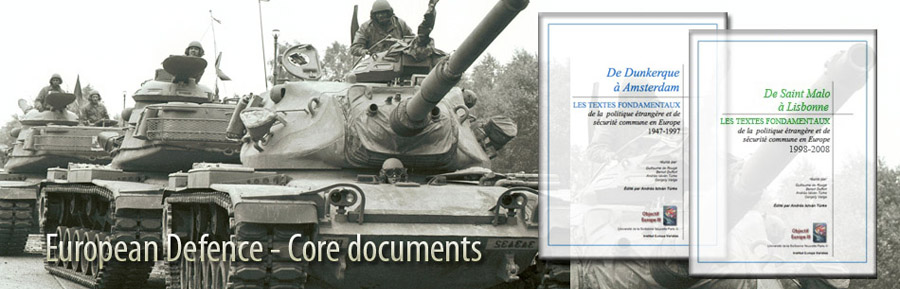
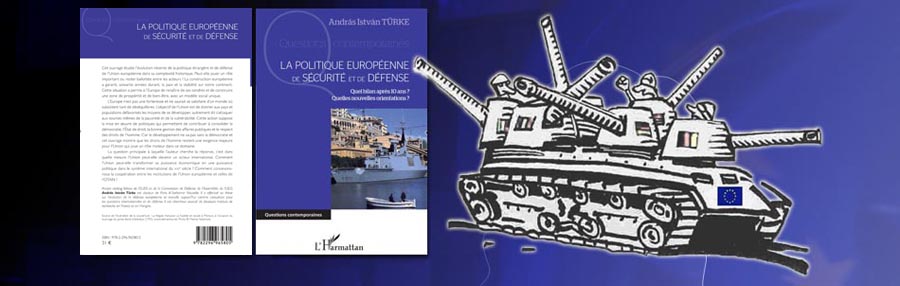
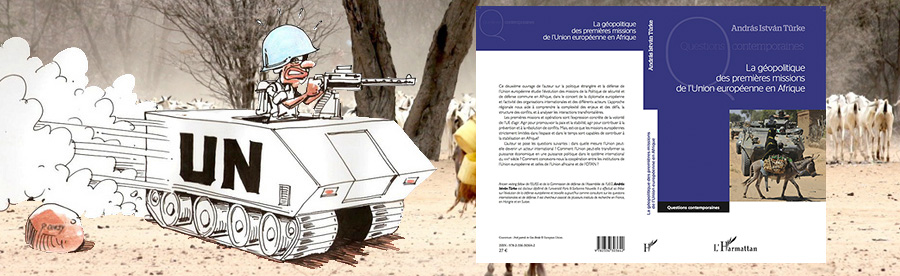
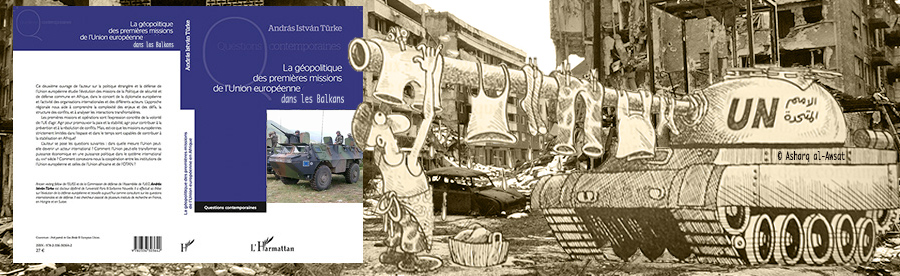
We are looking for sponsors for the English translation of these books, please contact turkeandras(at)gmail(dot)com