
Vous êtes ici
Europäische Union
Ebola en RD Congo : la riposte s'organise à Bunia pour limiter la propagation
En RD Congo, l'épidémie d'Ebola continue de se propager dans la province de l'Ituri. Le dernier bilan du ministère congolais de la Santé fait état de 689 cas confirmés et de 139 décès. À Bunia, l'équipe de riposte tente de tracer les cas contacts pour limiter la propagation du virus.
Catégories: Afrique, Europäische Union
Coupe du monde 2026 : l'Afrique peut-elle enfin atteindre une finale ?
Dix équipes africaines participent à la Coupe du monde 2026, un record historique. Après la demi-finale du Maroc au Qatar en 2022, les ambitions du continent ont changé. L'Afrique peut-elle désormais viser une finale ou même un titre mondial ? Quels sont les enjeux sportifs, économiques et symboliques de ce Mondial organisé en Amérique du Nord ? Fatimata Wane reçoit le journaliste sportif Mansour Loum dans le Focus du Journal de l'Afrique.
Catégories: Afrique, Europäische Union
L'épidémie d'Ebola en RD Congo s'étend à de nouvelles zones, 676 cas confirmés
En un mois, la République démocratique du Congo, épicentre de l'épidémie d’Ebola, compte 676 cas confirmés, dont 136 décès. L'épidémie continue de s'étendre, a averti vendredi l'Organisation mondiale de la santé. Notre invité, Eugide Lalé Mbunda, directeur RDC pour Premiere Urgence Internationale, revient de mission dans les régions les plus touchées, dans l'est du pays.
Catégories: Afrique, Europäische Union
Élections générales en Guinée : plusieurs partis politiques rejettent les résultats provisoires
En Guinée, plusieurs partis politiques rejettent les résultats provisoires du double scrutin législatif et communal du 31 mai dernier. Ces formations politiques face à la presse ce matin, dénoncent de nombreuses irrégularités et accusent les autorités électorales d’avoir favorisé la mouvance présidentielle. Des résultats provisoires qui donne le mouvement du Président Mamadi Doumbouya largement victorieux.
Catégories: Afrique, Europäische Union
RD Congo : Fayulu et Sesanga blessés après un sit-in contre la réforme constitutionnelle
La tension monte en République démocratique du Congo. Plusieurs opposants ont été blessés à Kinshasa lors d'une manifestation contre le projet de réforme constitutionnelle porté par la majorité présidentielle. L'opposition accuse le président Félix Tshisekedi de vouloir ouvrir la voie à un troisième mandat malgré les dispositions actuelles de la Constitution. Les précisions avec notre correspondante à Kinshasa, Aurélie Bazzara-Kibangula.
Catégories: Afrique, Europäische Union
Mondial 2026 : le retour des « Zmajevi » fait vibrer les Balkans
Pour son retour en Coupe du monde après douze ans d'absence, la Bosnie-Herzégovine a tenu en échec le Canada (1-1) à Toronto. Ce premier match des « Zmajevi » a déclenché un élan d'enthousiasme dans tout le pays et suscité de nombreuses réactions à travers les Balkans.
- Le fil de l'Info / Courrier des Balkans, Bosnie-Herzégovine, Sports, Relations régionales
Catégories: Balkans Occidentaux, Europäische Union
Albanie : qui se cache derrière les projets de Jared Kushner et d'Ivanka Trump ?
Jared Kushner et Ivanka Trump n'apparaissent pas parmi les actionnaires officiels des projets touristiques de Zvërnec et de l'île de Sazan. Ils semblent jouer davantage un rôle de promoteurs que d'investisseurs, mais de nouvelles enquêtes soulèvent des questions sur l'origine des financements.
- Articles / Courrier des Balkans, PS Albanie, Albanie, Economie, Environnement
Catégories: Balkans Occidentaux, Europäische Union
Migrants expulsés des États-Unis vers des pays tiers : un premier avion atterrit en Centrafrique
Dans le cadre d'un dispositif controversé d'envoi de migrants en situation irrégulière des États-Unis vers des pays tiers, un premier avion américain est arrivé vendredi en Centrafrique avec à son bord des ressortissants iraniens, afghans, turcs et géorgiens.
Catégories: Afrique, Europäische Union
RD Congo : Martin Fayulu blessé dans des affrontements au sit-in contre la réforme constitutionnelle
En RD Congo, l'opposition poursuit sa mobilisation contre le projet de changement de la Constitution porté par la majorité au pouvoir. Elle accuse le président Félix Tshisekedi de vouloir se maintenir au pouvoir au-delà de son second mandat qui expire en 2028. L'opposition a appelé ses militants a tenir un sit-in dans la capitale, Kinshasa... une mobilisation dispersée par les forces de l'ordre.
Catégories: Afrique, Europäische Union
A-10s Return From Operation Epic Fury With Nose Art, Bomb Markings And Iranian Vessel Kill Markings
The bomb markings on the returning A-10 Thunderbolt II jets hint at the variety of weapons the Warthogs used against Iran, while the kill marks offer clues about some of the targets they hit.
On Jun. 12, 2026, 11 A-10C Thunderbolt II aircraft, belonging to the 75th Fighter Squadron of the 23rd Wing, from Moody Air Force Base, Georgia, arrived at RAF Lakenheath, UK, from Aviano Air Base, Italy, on their way back to the U.S. following their deployment to the CENTCOM AOR (Area Of Responsibility). During the deployment, they took part in Operation Epic Fury and also carried out missions over Iraq and Syria.
The Warthogs (as the A-10s are nicknamed) arrived in the UK split into four cells:
TABOR 11-13:
80-0175/FT “King Dedede”
79-0157/FT “Fox”
78-0649/FT “Reaper”
TABOR 14-16:
78-0613/FT “Diddy Kong”
80-0243/FT “Samus”
78-0583/FT “Sephiroth”
Tabor 21-23
80-0188/FT “Macho Man”
79-0095/FT “Lil Mac”
80-0273/FT “Kirby”
Tabor 24-25
81-0988/FT “Ridley”
78-0586/FT “Doc Holiday”
As per tradition, during their stay at Muwaffaq Salti Air Base in Jordan, the Warthogs received nose art along with bomb markings. For what deals the nicknames, based on the photos taken by our contributor and friend Stewart Jack, most appear to follow a Nintendo/Super Smash Bros. theme we had already identified from photos released by CENTCOM, with references including King Dedede, Fox, Diddy Kong, Samus, Sephiroth, Little Mac, Kirby and Ridley. Macho Man, Reaper” and Doc Holiday seem to be possible outliers from the video-games theme.
King Dedede | Source: Stewart Jack Doc Holliday (All images, credit: Stewart Jack, unless otherwise stated) | Source: Stewart Jack Macho Man | Source: Stewart Jack Lil Mac | Source: Stewart Jack Sephiroth | Source: Stewart Jack Fox | Source: Stewart Jack Reaper | Source: Stewart Jack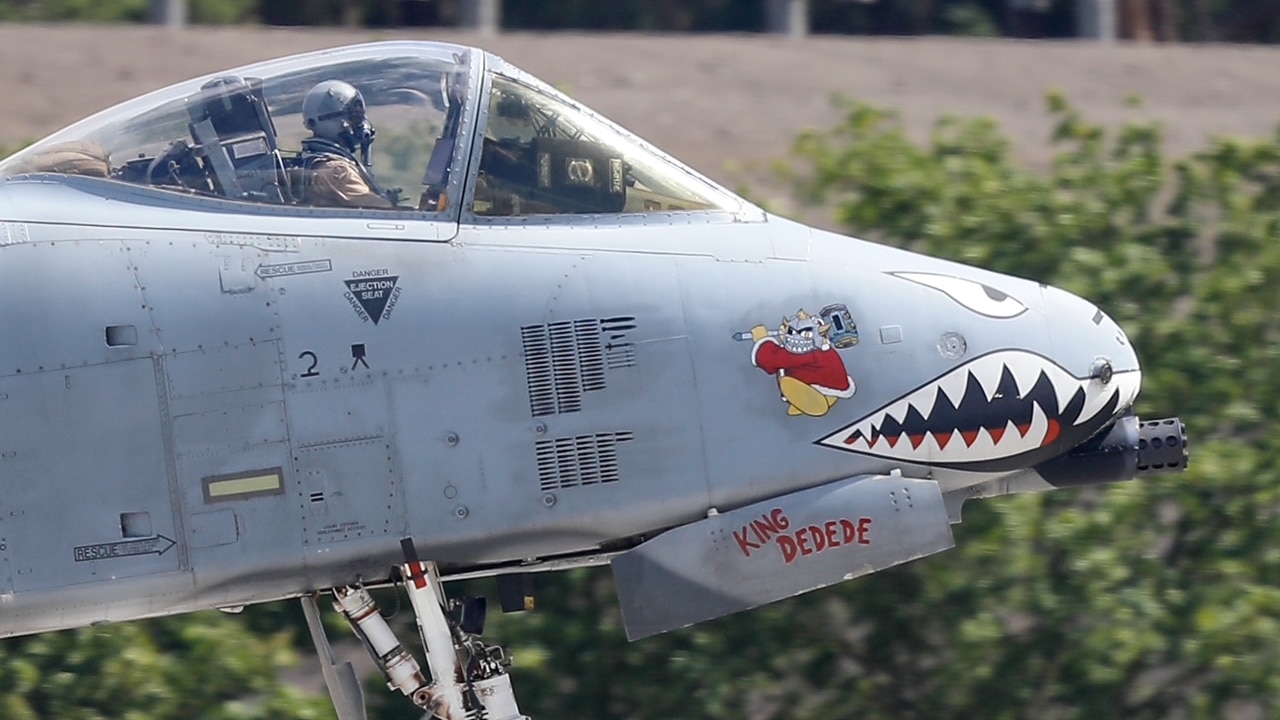
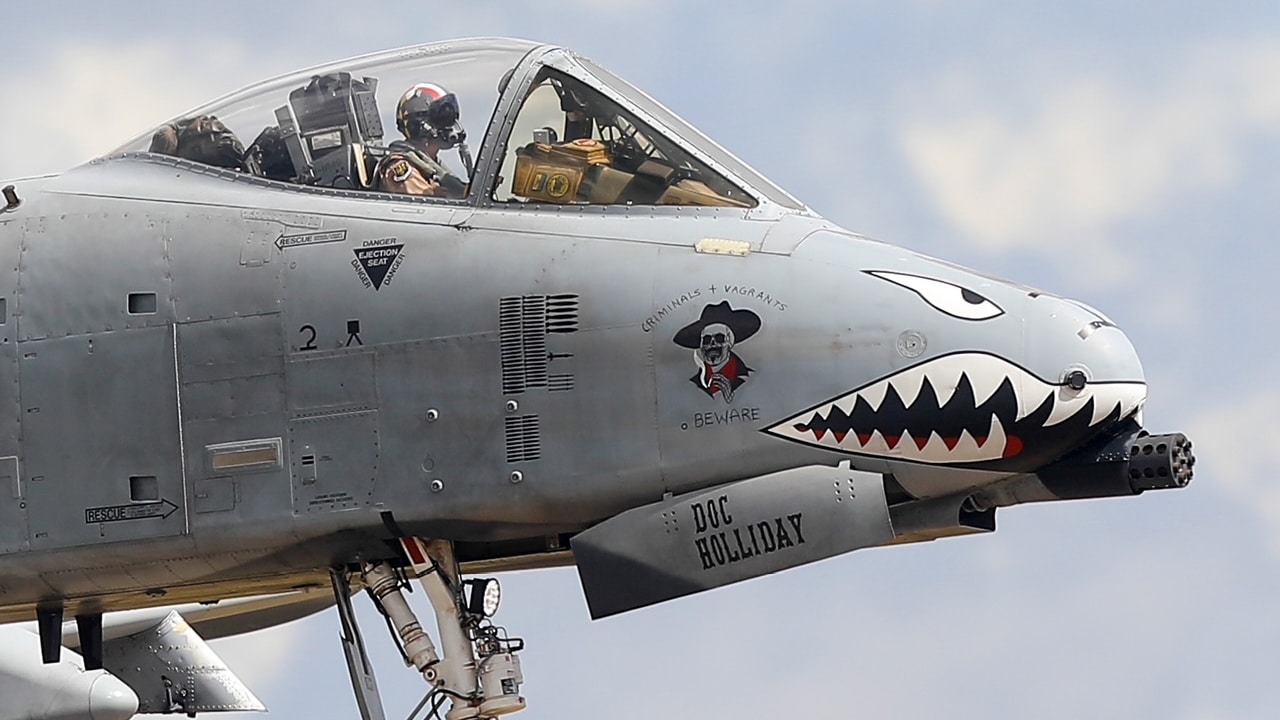
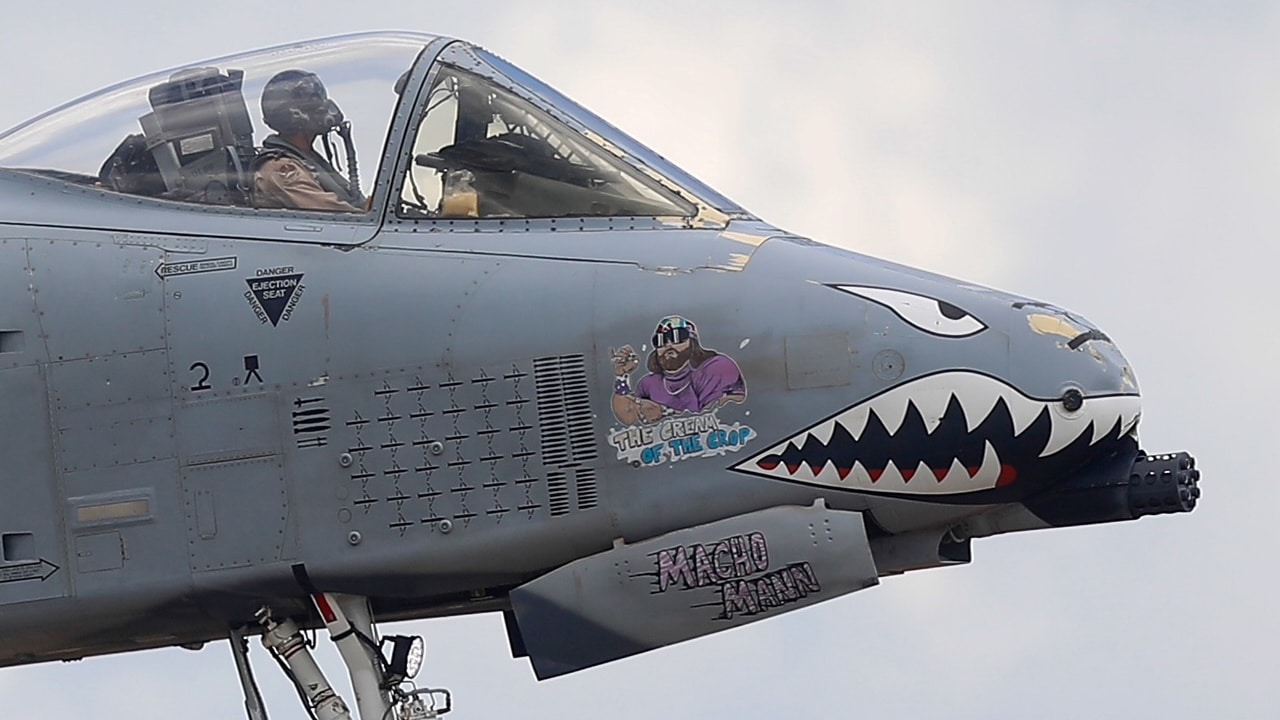
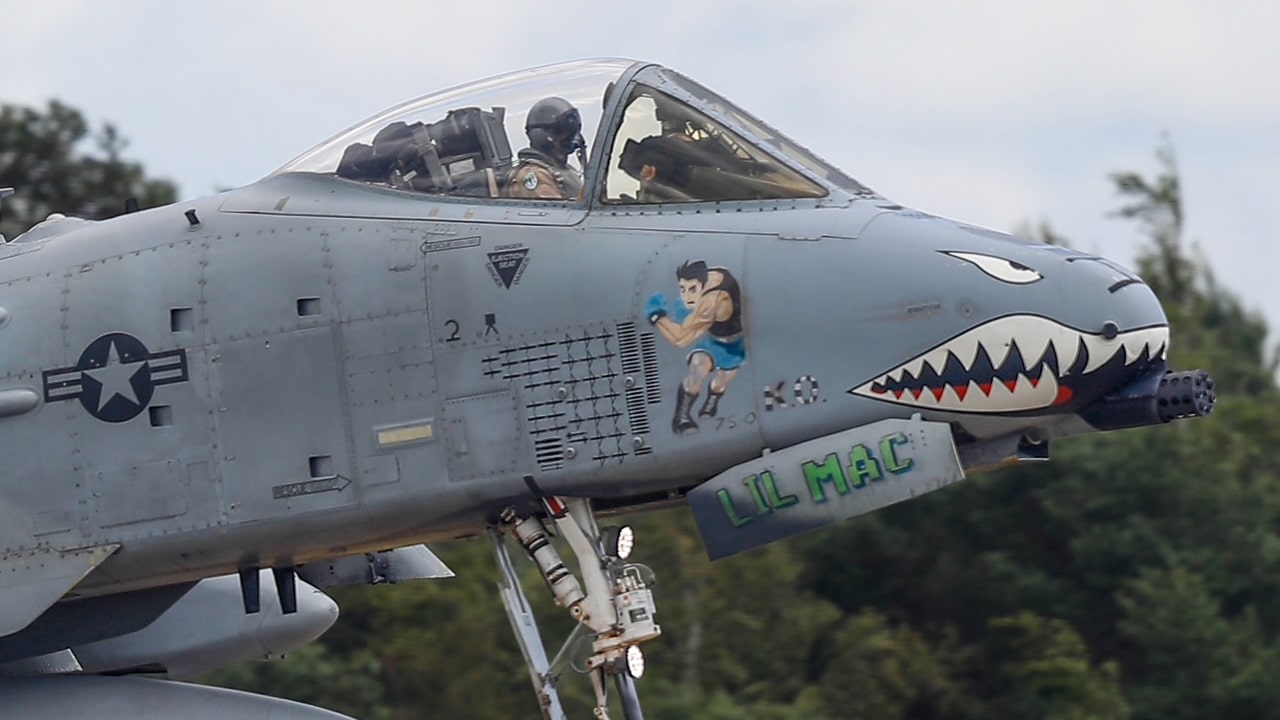
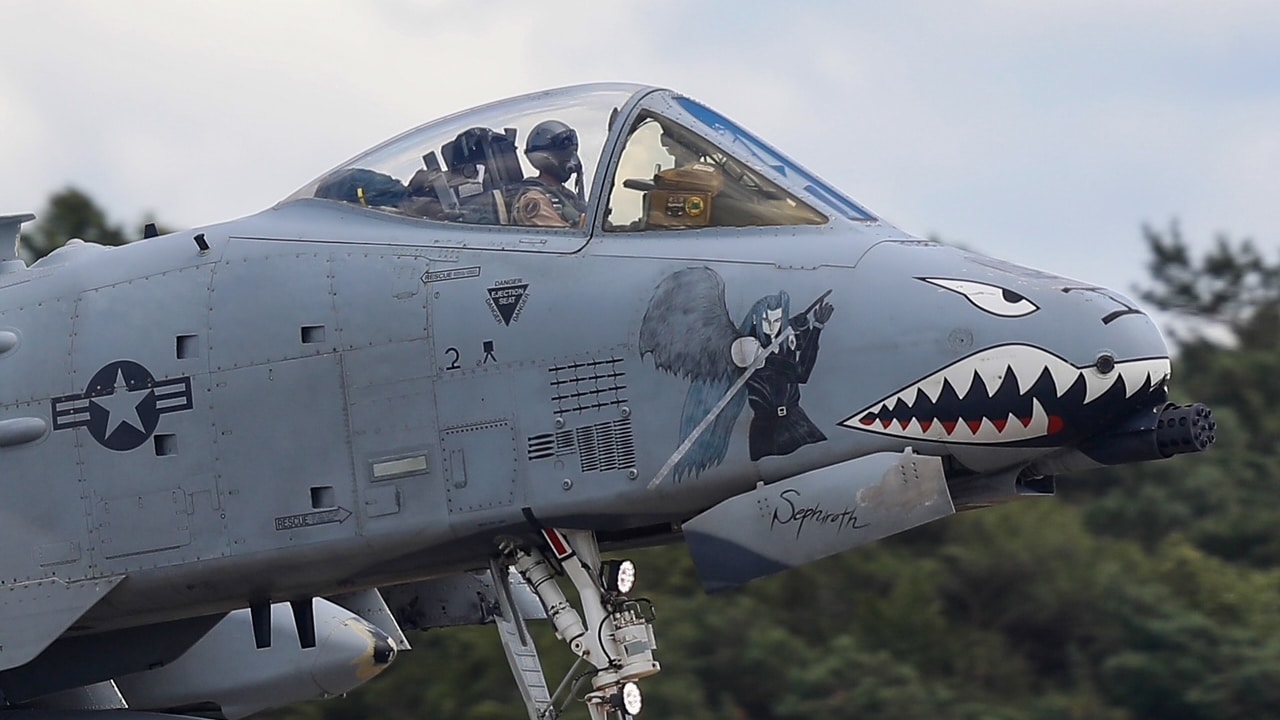
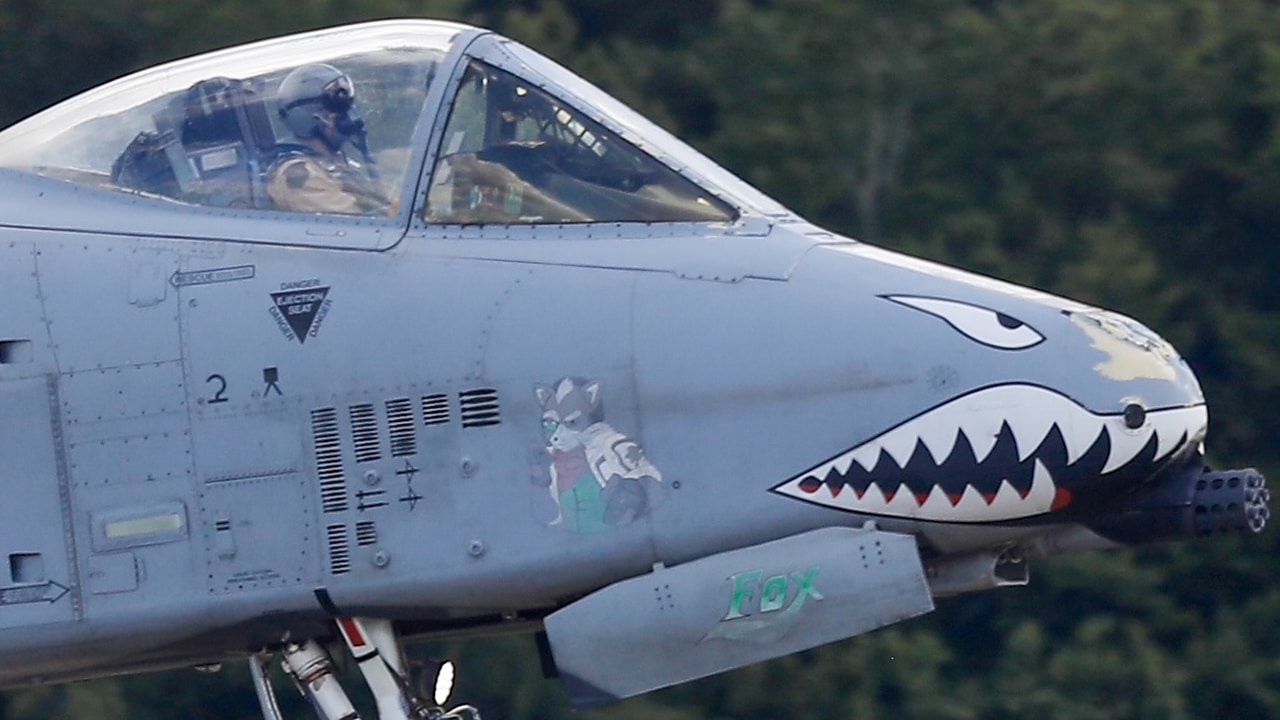
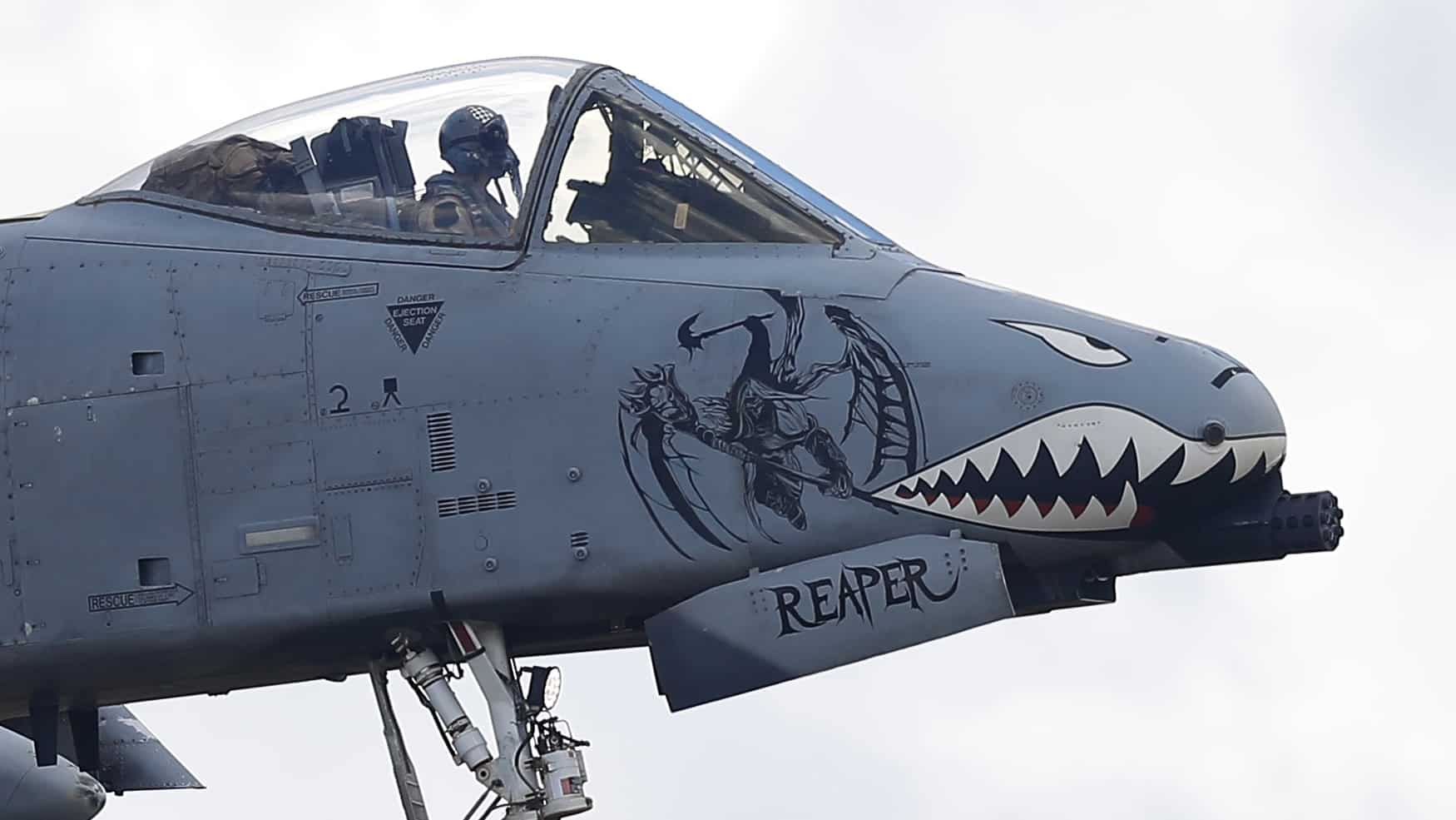
One notable missing A-10C is the one nicknamed “Toad” (#78-0614), that was depicted in the official Operation Epic Fury imagery in March. Its fate is currently unknown so we can’t rule out it is the Thunderbolt II aircraft lost during the air war in Iran..
A-10C “Toad” (Image credit: USAF) | Source: U.S. Air Force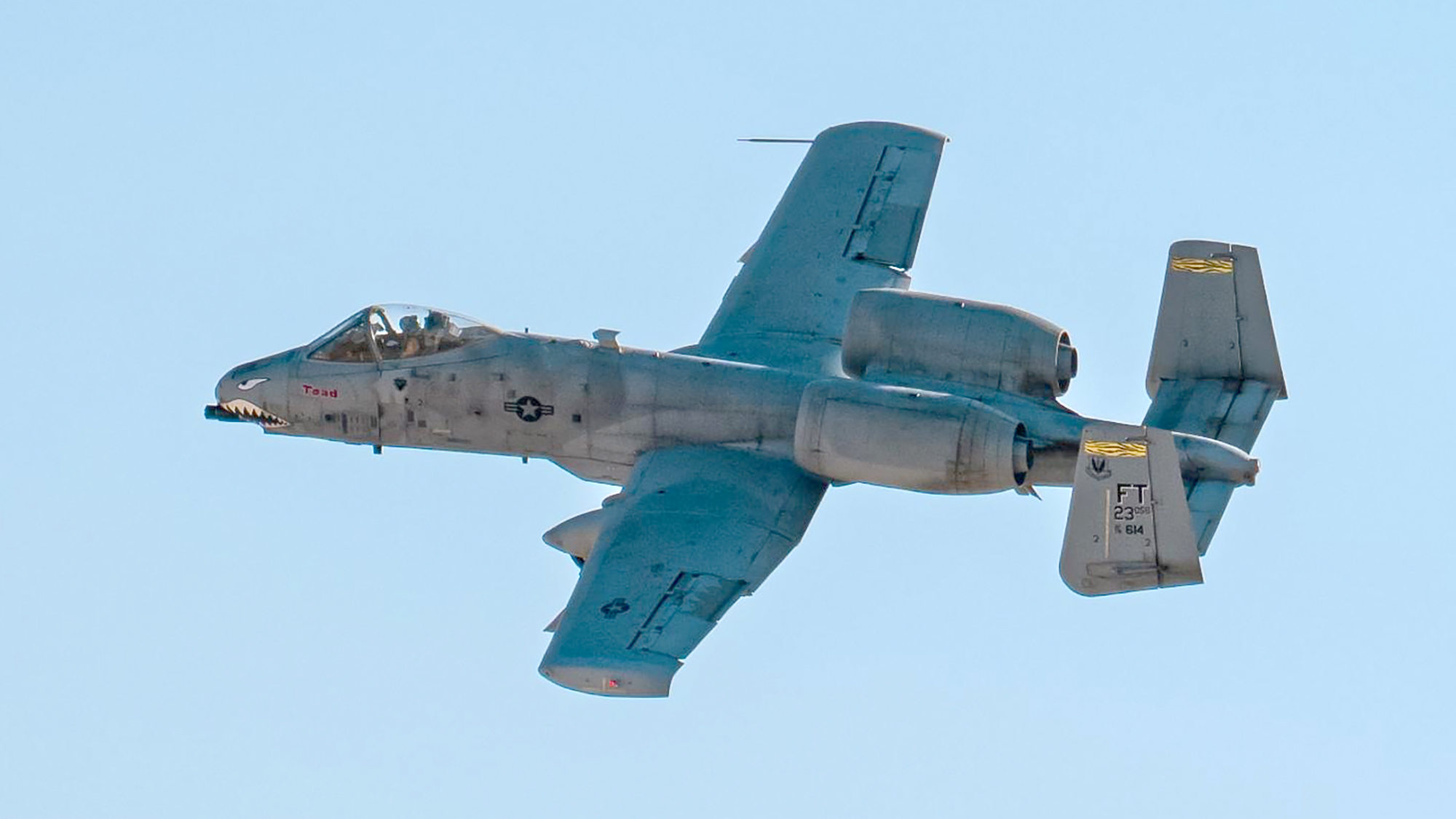
The bomb silhouettes offer a glimpse at the wide variety of weapons the A-10s expended in theater. Although some markings are not completely identifiable, overall, the aircraft show what appear to be 2,000-lb GBU-31(V)1/B bombs, mid-sized GBU-38/54 JDAMs (Joint Direct Attack Munitions) or Laser-JDAMs, AGM-65 Maverick air-to-surface guided missiles, Advanced Precision Kill Weapon System II (APKWS II) guidance kit-equipped Hydra 70 rockets, along with plenty of 30-mm rounds fired by the A-10’s trademark GAU-8 Avenger hydraulically driven seven-barrel Gatling-type gun.
Diddy Kong with several SDBs and MALD markings | Source: Stewart Jack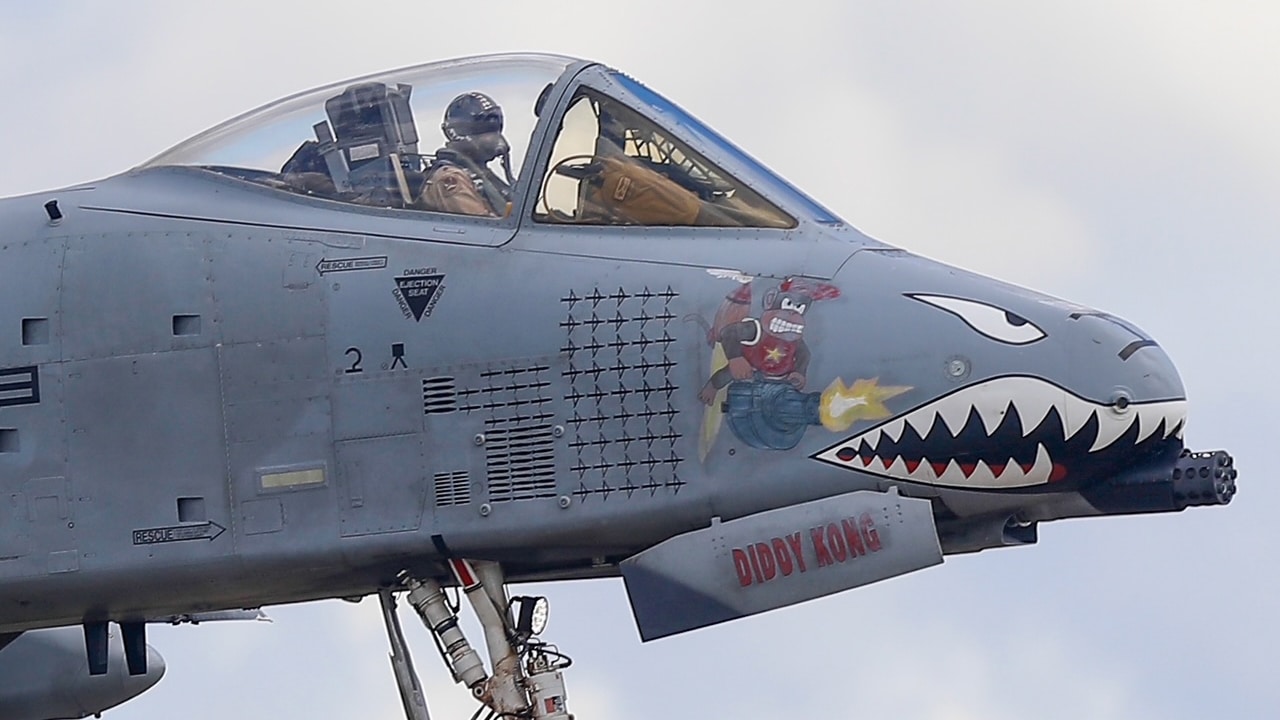
Interestingly, there are several marking that appear to depict MALDs (Miniature Air Launched Decoys). “MALDs are designed to mimic other aircraft, making them invaluable assets in diverting enemy fire away from pilots,” says Moody AFB website in an article dating back to 2024, when training with MALDs was being incorporated. “When MALDs are fired they deceive defense systems and enemy cruise missiles giving the illusion the decoy is an aircraft. MALDs can mimic the signal of various aircraft such as F-16s, B-52s, and F-35s”
U.S. Air Force Airman 1st Class Kyler Stenke, 74th Fighter Generation Squadron load crew member, tightens bolts to secure a Miniature Air-Launched Decoy onto an A-10C Thunderbolt II at Moody Air Force Base, Georgia, Feb. 14, 2024. (U.S. Air Force photo by Airman 1st Class Sir Wyrick) | Source: U.S. Air Force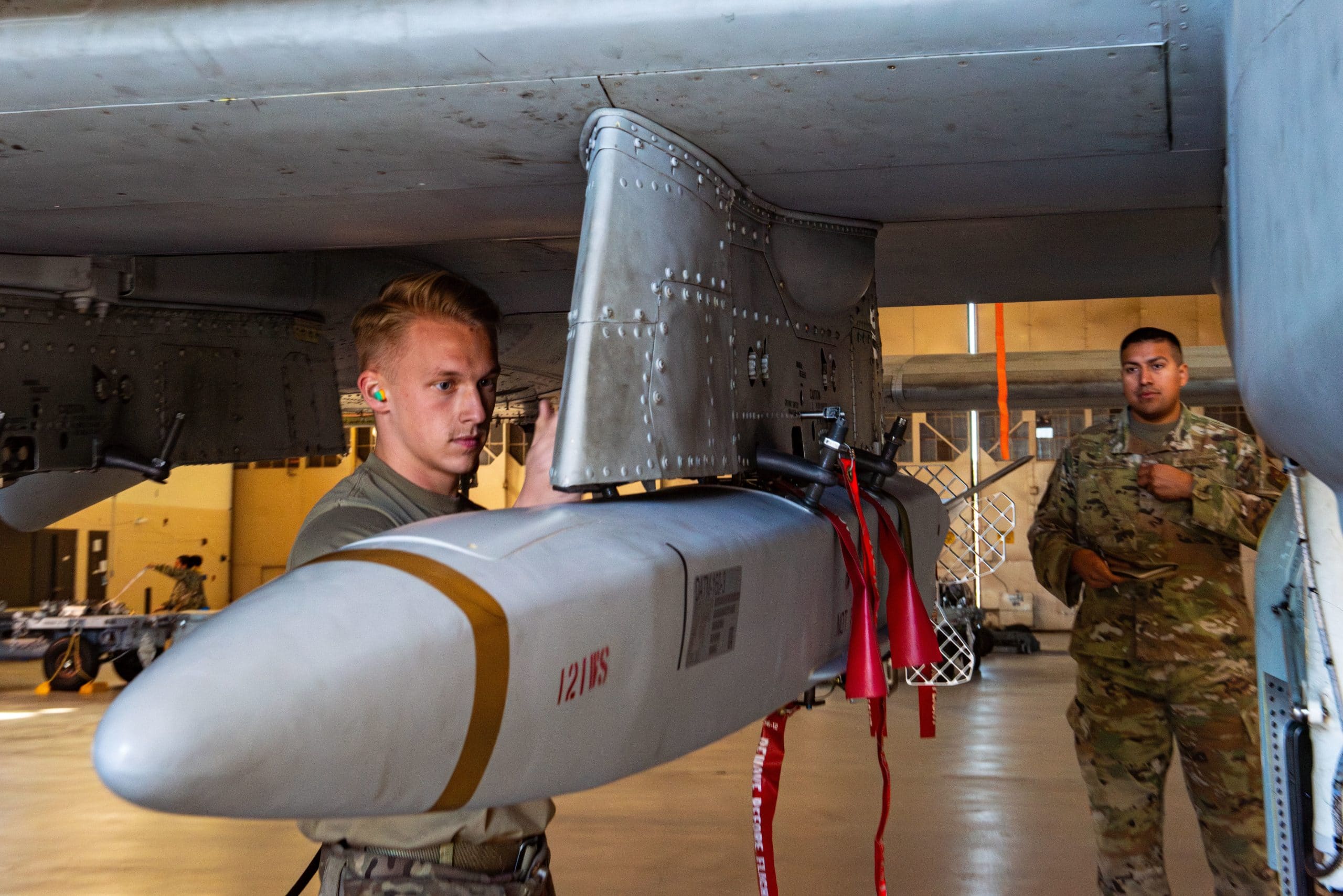
But, probably, the most interesting things are the two kills markings of two Iranian vessels sported by “Samus”. In fact, along with the traditional CAS (Close Air Support) role, the A-10s have flown the maritime strike mission in support of Operation Epic Fury.
Samus | Source: Stewart Jack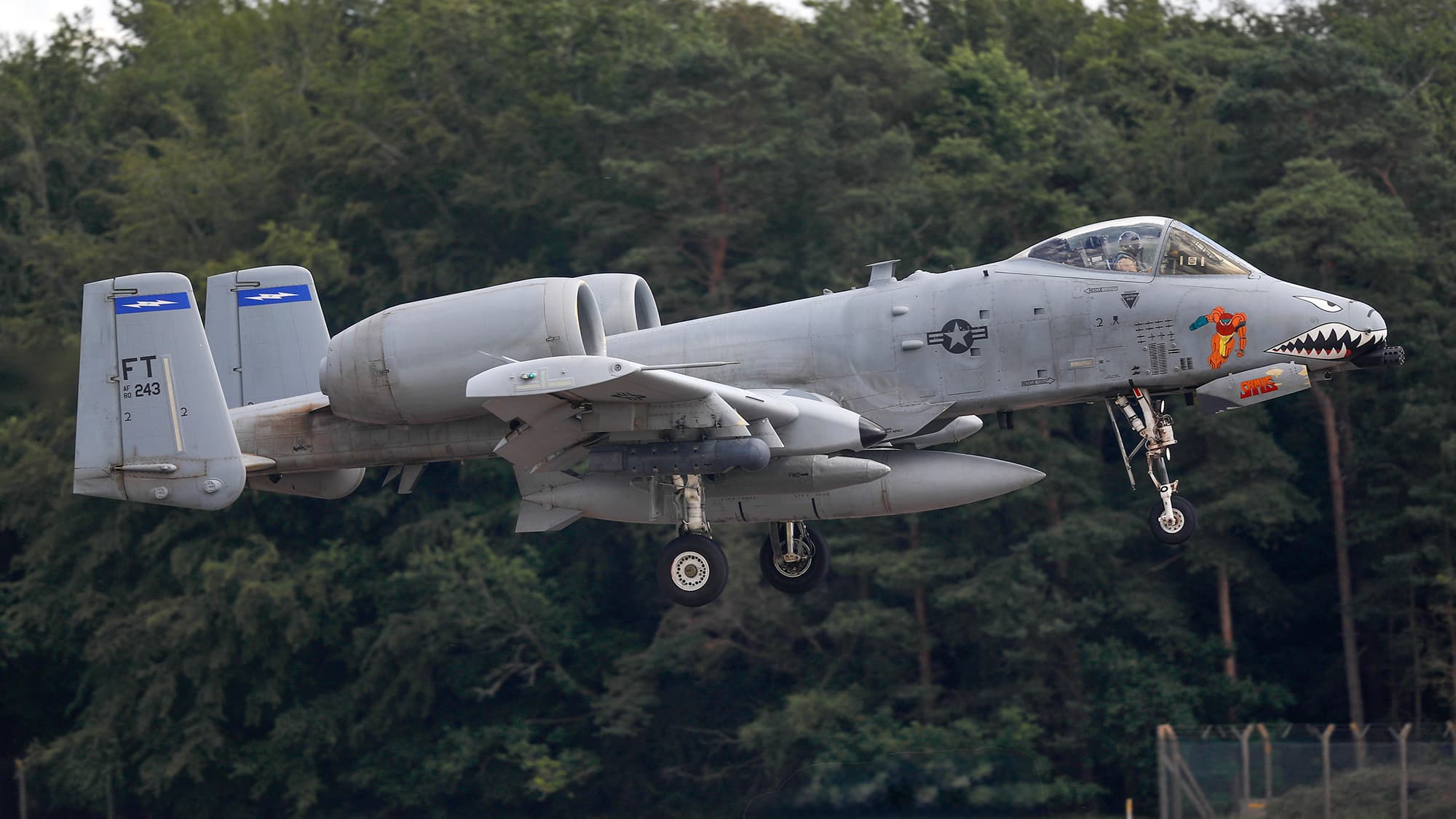
This is an excerpt of what we wrote in a previous story that you can find here.
The shift to the maritime domain, whether from Jordan or another forward operating base in the region, makes a lot of sense, considering the type has regularly taken part in U.S. submarine escort and live-fire exercises in recent years. Moreover, the U.S. Air Force had released images of its A-10s deployed to the region escorting U.S. warships in the 5th Fleet Area of Operations last month.
In 2024, we reported about Warthogs practicing overwatch of a U.S. nuclear submarine during one of the most vulnerable phases of its navigation through the Strait of San Juan de Fuca, on the Pacific Northwest coast, between the state of Washington and Vancouver Island, British Columbia, Canada.
Few months later, a formation of six A-10Cs, assigned to Moody Air Force Base, escorted an Ohio-class ballistic missile submarine, the USS Wyoming (SSBN 742). The aircraft, were also involved in a live fire exercise with their GAU-8 30 mm gun and 70 mm rockets.
Born as a pure Close Air Support and anti-tank platform, the A-10 has rarely been employed in the maritime domain until roughly 15 years ago. In 2011, during Operation Unified Protector, when an A-10 and a P-3C Orion engaged together a patrol boat and several small attack craft in the port of Misrata, Libya.
More recently, following the renewed attention towards these types of asymmetric threats caused by the attacks in the Red Sea or the skirmishes between the Ukrainian USVs (Unmanned Surface Vehicles) and the Russian Navy in the Black Sea, the type has been used to target swarms of boats and strike small vessels in several training scenarios.
In the 2020s, the Warthog took part in multiple Maritime Surface Warfare exercises and conducted unit defense training. One of the exercises saw, in Sept. 2023, two A-10s engage simulated surface threats in the Gulf of Oman with the Arleigh Burke-class guided-missile destroyer USS Stethem.
High Value Targets, like U.S. warships and civilian ships and tankers could be attacked and overwhelmed by coordinated swarms of USVs, challenging the traditional naval defense strategies. The A-10’s maneuverability at low airspeeds and altitude, flexible armament, highly accurate weapons-delivery capabilities, and extended loiter time are all key attributes that make it highly effective at against fast naval targets in the Persian Gulf and beyond.
Another interesting marking is the F-15E tail with the text “So others may live” painted on “Ridley,” that might suggest the aircraft was involved in the recovery operation of DUDE 44, the Strike Eagle shot down over Iran.
Ridley | Source: Stewart Jack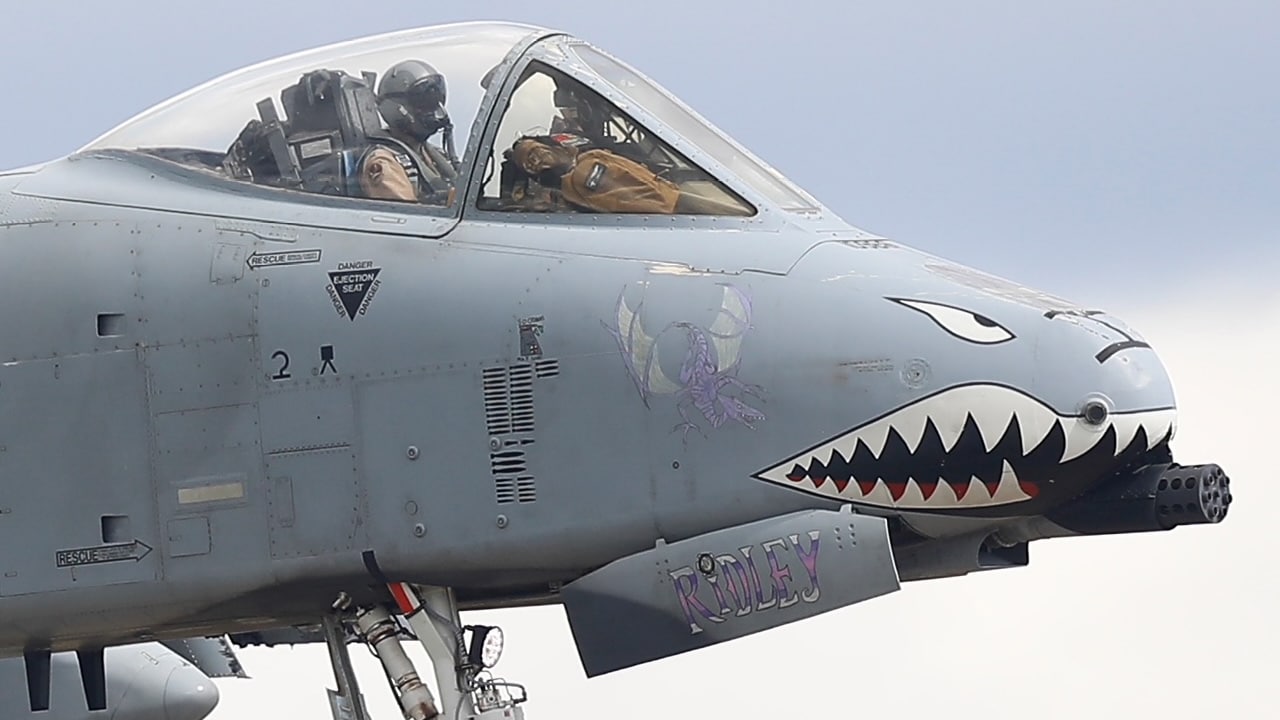
Another marking that might be worth investigating is the one sported by “Kirby”: a pickup truck, possibly a “technical,” with an explosion or mushroom cloud rising from it….
Kirby | Source: Stewart Jack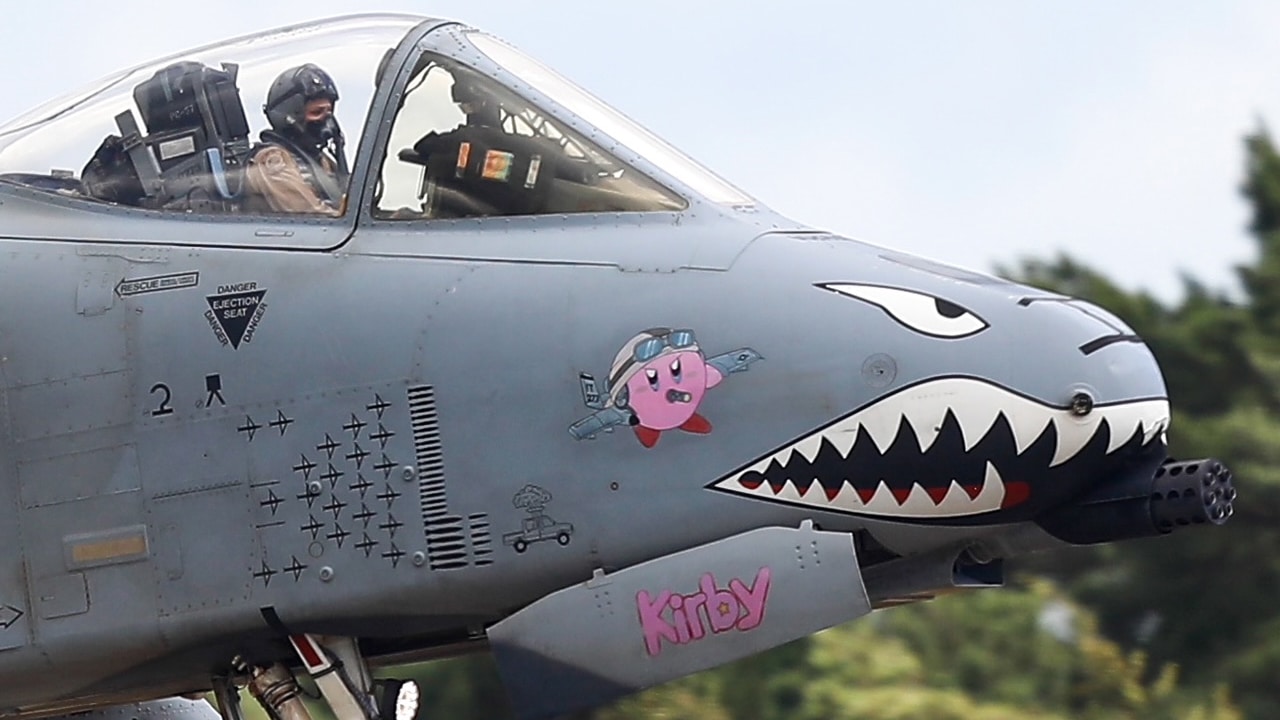
Catégories: Defence`s Feeds, Europäische Union
RD Congo : Fayulu et Sesanga blessés, l'opposition dénonce une dérive du pouvoir
La tension monte en République démocratique du Congo. Plusieurs opposants ont été blessés à Kinshasa lors d'une manifestation contre le projet de réforme constitutionnelle porté par la majorité présidentielle. L'opposition accuse le président Félix Tshisekedi de vouloir ouvrir la voie à un troisième mandat malgré les dispositions actuelles de la Constitution.
Patrick Mbamu, secrétaire exécutif de l'ECiDé France, le parti de Martin Fayulu, est l'invité du Journal de l'Afrique. Il revient sur les violences qui ont émaillé le rassemblement, les accusations visant les forces de l'ordre et les craintes de l'opposition face à ce projet de réforme.
Catégories: Afrique, Europäische Union
Boeing Will Not Bid For U.S. Navy’s New Trainer Jet
Boeing determined the T-7A does not meet the U.S. Navy’s Undergraduate Jet Training System requirements and thus decided to not bid for the T-45’s replacement.
In a surprise move, Boeing has decided to not take part in the competition that will select the successor of the T-45 Goshawk. The company said in a short statement on June 12, 2026, that its T-7 Red Hawk does not meet the requirements of Undergraduate Jet Training System (UJTS), leading to the decision.
Here is the full statement:
“Boeing is focused on meeting our commitments, and we bid for programs where we believe we can provide the right solution tailored to our customers’ needs and requirements. After careful evaluation, we have determined the T-7A does not meet the U.S. Navy’s Undergraduate Jet Training System requirements. We have therefore informed the Navy that we will not bid on the current RFP. We remain committed to delivering the T-7A as a modern, growth-oriented training solution for 4th, 5th and 6th generation pilots as requirements evolve. We look forward to providing and sustaining both current and future capabilities for the Navy.”
The company did not disclose which requirements were not met. However, Aviation Week and Breaking Defense reported that, according to a company spokesperson, the T-7’s F404 engine would need long-cycle development to meet UJTS engine qualification requirements, which would hamper Boeing’s ability to quickly reach initial operational capability.
It should be noted that the Navy knows well that engine, as it is the same that powers the F/A-18 Hornet and served as the base for the F414 engine that powers the F/A-18E/F Super Hornet. Boeing is now the second company to leave the UJTS competition.
A T-45C Goshawk training aircraft from Training Squadron (VT) 9 performs a touch-and-go on the flight deck of the Nimitz-class aircraft carrier USS Dwight D. Eisenhower (CVN 69) (IKE). | Source: U.S. Navy photo by Mass Communication Specialist Seaman Apprentice Theodore Morrison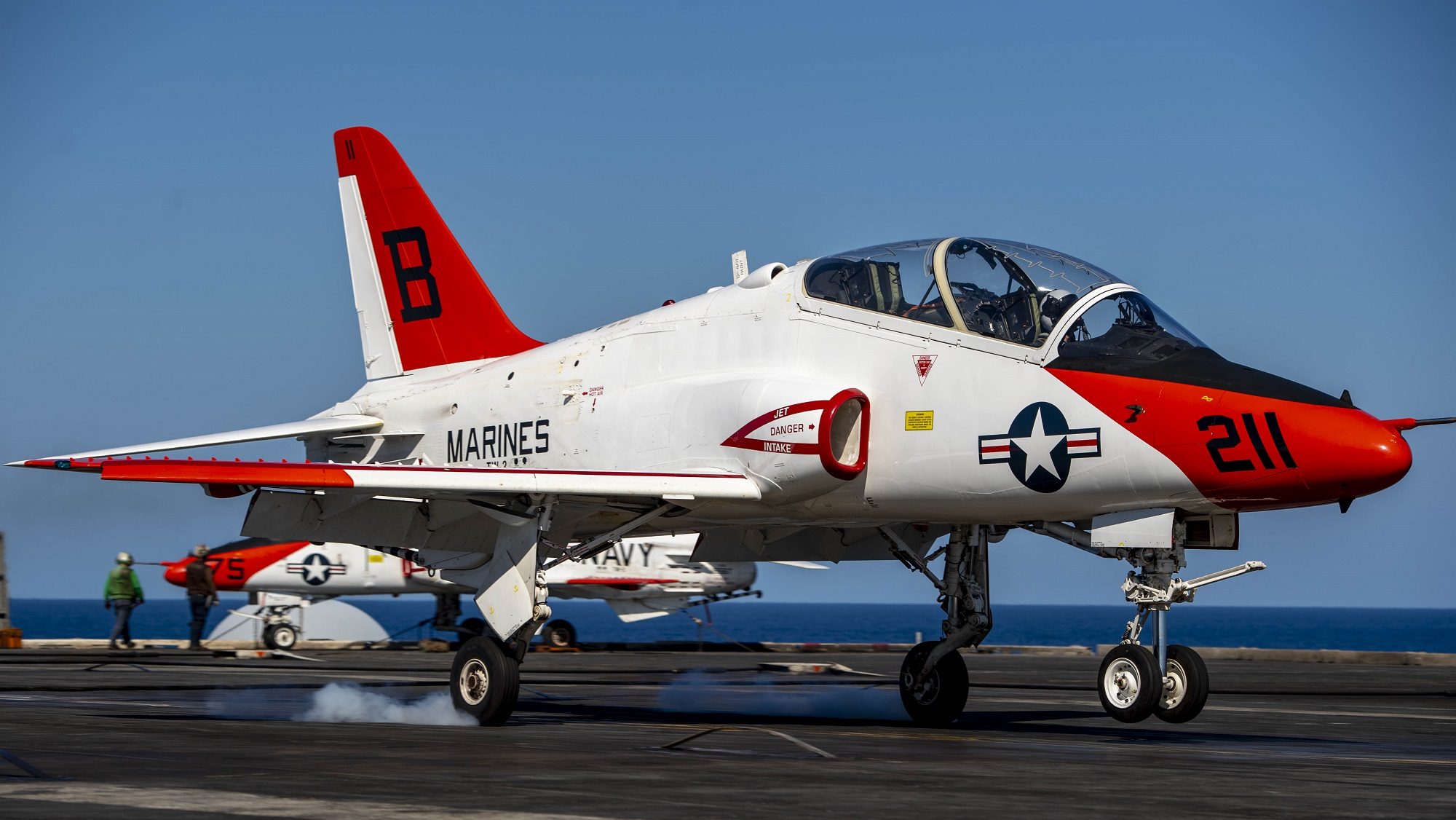
In fact, in March 2026, Lockheed Martin notified the U.S. Navy the decision to not pursue the bid after it determined the TF-50N “would not be the best solution for this program due to the required level of U.S. content and other reasons.” Notably, the TF-50N uses the same F404 engine.
This now leaves only SNC and Beechcraft in the competition. SNC is offering its Freedom trainer with Northrop Grumman and General Atomics, while Beechcraft is offering the M-346 through a partnership of parent company Textron Aviation Defense and Leonardo.
SNC’s proposal is described as a clean-sheet design also able to conduct carrier operations, although it is still on the drawing board. On the other hand, the M-346N is a variant of the M-346 trainer that has been flying operationally since 2015 for over 100,000 flight hours.
The Navy released the long-waited Request for Proposal (RFP) in March 2026. The RFP confirmed once again that the service does not plan for the new trainer jet to land on aircraft carriers or to conduct Field Carrier Landing Practice (FCLP) to touch down.
The T-7A Red Hawk lands for the first time at Joint Base San Antonio-Randolph, Texas, Dec. 5, 2025. | Source: U.S. Air Force photo by Benjamin Faske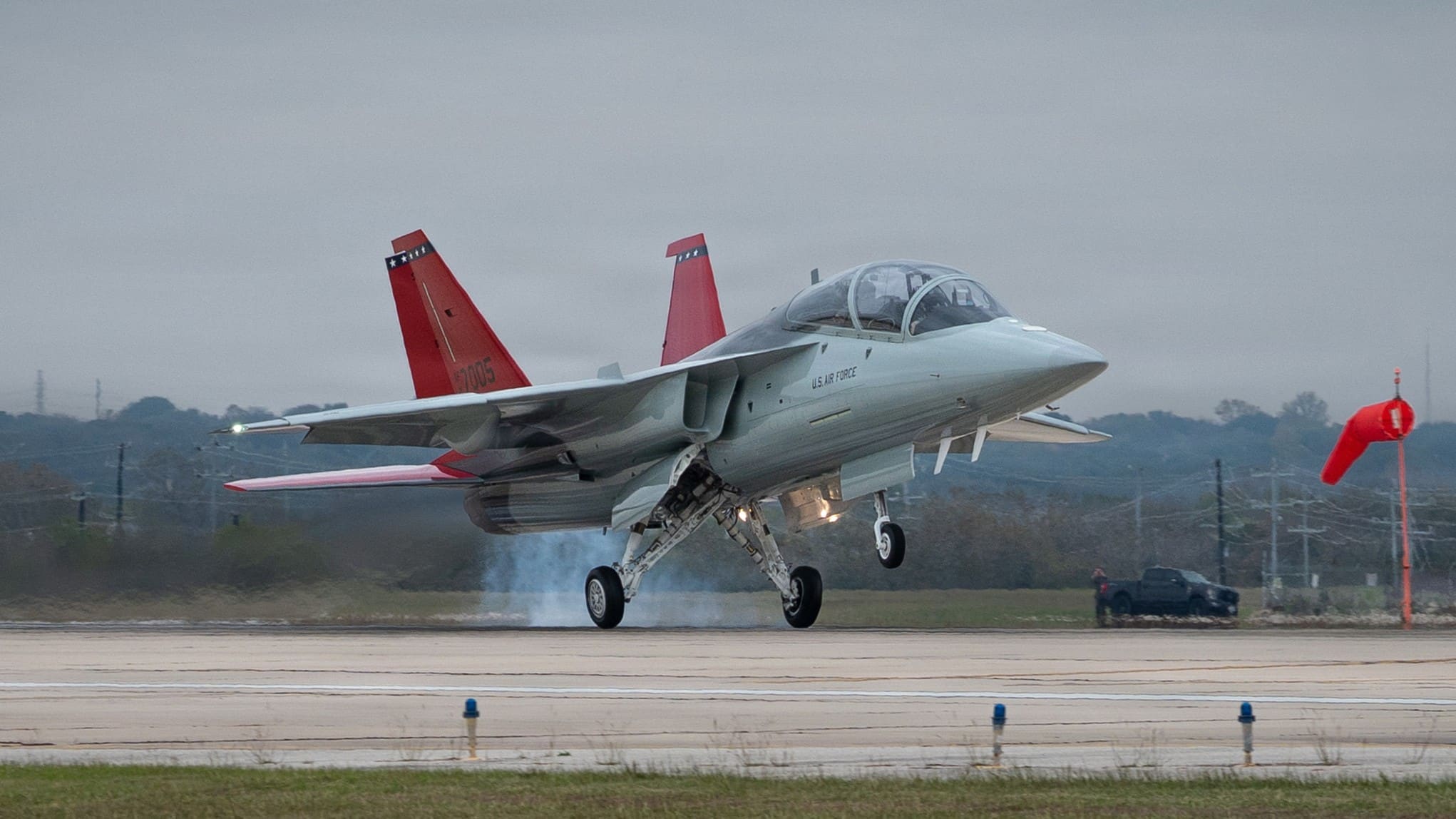
Later on, in May 2026, the Navy raised the cost ceiling for the Engineering and Manufacturing Development phase by about $1 billion. The decision was based on feedback received after the release of the RFP, according to statements.
The RFPThe U.S. Navy has released on Mar. 26, 2026, the final Request for Proposals (RFP) for the Undergraduate Jet Training System (UJTS) program, which will replace the aging T-45 Goshawk trainer fielded in 1991. The service is looking to acquire a new aircraft on an “accelerated procured timeline” as it keeps facing problems with the T-45.
The RFP covers the Engineering, Manufacturing, and Development (EMD) phase, as well as the procurement of the first lot of Low-Rate Initial Production (LRIP) aircraft, Ground-Based Training Systems (GBTS) and Interim Contractor Logistic Services (I-CLS). The contract’s award is expected in March 2027.
An estimated fielding schedule attached to the RFP confirms that the service intends to procure 216 aircraft, with the first lot of seven LRIP aircraft to be delivered in 2032. The production would then increase to 12 aircraft in 2023 and 20 in 2034, before a full-rate production of 25 aircraft per year from 2035.
The M-346N on the ground at the Beech Factory Airport in Wichita, Kansas. | Source: Textron Aviation Defense/Greg L. Davis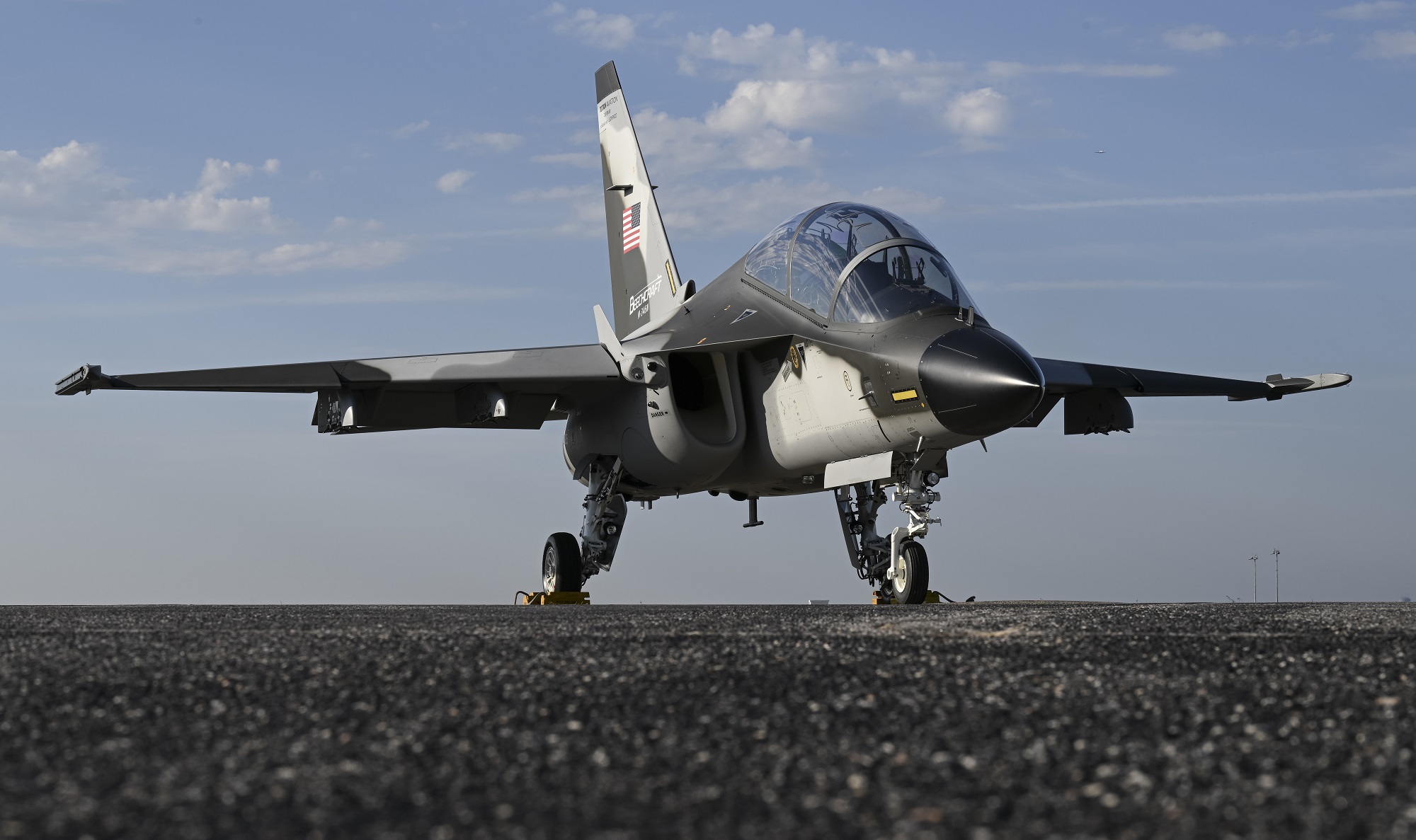
These aircraft will be divided among three locations, with Naval Air Station (NAS) Meridian, Mississippi, receiving 95 aircraft starting in 2033, NAS Kingsville, Texas, receiving 95 aircraft from 2039, and the remaining 26 aircraft going to NAS Pensacola, Florida, from 2042.
The cost will be also an important part of the selection process. Key parameters in the cost evaluation will consider if the price is reasonable and realistic, said the service.
The new aircraft will notably be used in a much different way compared to the T-45, which has been used to train future naval aviators to land on aircraft carriers. In fact, the Navy said “the UJTS air vehicle will only be required to conduct Field Carrier Landing Practice (FCLP) to wave off.”
As we previously reported, a good portion of the training command’s syllabus is centered around the FCLP, which allows new pilots to train on land bases for the entire approach and landing maneuver as performed on the aircraft carrier, just short of the arrested landing. With the new requirement, future student pilots will only perform the approach phase of the current FCLP, going around once reached the minimums, without touching down on the runway.
The Freedom trainer jet proposed for the U.S. Navy’s UJTS program. | Source: SNC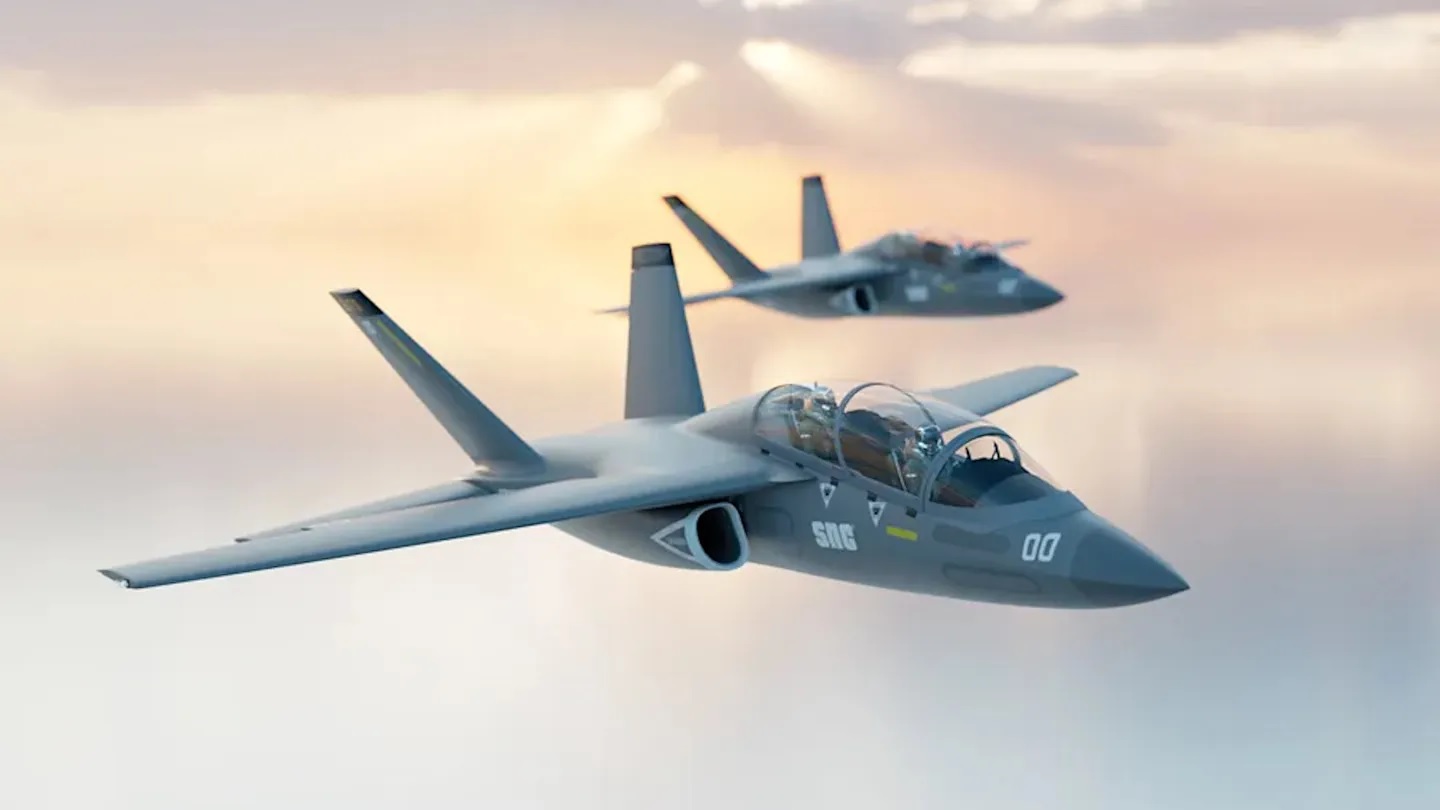
The Navy says that this decision, which sets a completely different route compared to the T-45 Goshawk and, previously, the T-2 Buckeye, is “due to advancements in operational platform landing modes and in ground-based simulation.” This means the new naval aviators will rely more on automation and perform complete FCLPs only in the flight simulator.
This has sparked controversy, as the service is now planning to move this part of the training to the Field Replacement Squadrons (FRS), where the newly appointed naval aviators transition to their assigned aircraft. That would seem counterproductive as FRSs fly much more expensive aircraft, thus increasing the cost of training.
However, this choice has also reflections on the timeline. In fact, removing the FCLP portion of the training program from UJTS allows a much quicker fielding of the new aircraft, which could now be also an already operational type.
Thus, the new trainer aircraft will not require complex and lengthy structural modifications to be adapted to the new role. Normally, an aircraft that has to trap on the carrier and launch from a catapult, or at least conduct FCLPs, has to be designed from the ground up on that premise because the structural design needs to account for very significant stresses during carrier operations.
Catégories: Defence`s Feeds, Europäische Union
BERICHT über den Bericht 2025 der Kommission über Bosnien und Herzegowina - A10-0165/2026
BERICHT über den Bericht 2025 der Kommission über Bosnien und Herzegowina
Ausschuss für auswärtige Angelegenheiten
Ondřej Kolář
Quelle : © Europäische Union, 2026 - EP
Ausschuss für auswärtige Angelegenheiten
Ondřej Kolář
Quelle : © Europäische Union, 2026 - EP
Report on the 2025 Commission report on Kosovo - A10-0166/2026
Report on the 2025 Commission report on Kosovo
Ausschuss für auswärtige Angelegenheiten
Riho Terras
Quelle : © Europäische Union, 2026 - EP
Ausschuss für auswärtige Angelegenheiten
Riho Terras
Quelle : © Europäische Union, 2026 - EP
BERICHT über den Bericht 2025 der Kommission über Nordmazedonien - A10-0162/2026
BERICHT über den Bericht 2025 der Kommission über Nordmazedonien
Ausschuss für auswärtige Angelegenheiten
Thomas Waitz
Quelle : © Europäische Union, 2026 - EP
Ausschuss für auswärtige Angelegenheiten
Thomas Waitz
Quelle : © Europäische Union, 2026 - EP
Minutes - Wednesday, 15 April 2026 - PE787.724v01-00 - Committee on Foreign Affairs
Source : © European Union, 2026 - EP
BERICHT on a European Parliament recommendation to the Council, the Commission and the Vice-President of the Commission / High Representative of the Union for Foreign Affairs and Security Policy on promoting transnational governance on water in the...
BERICHT on a European Parliament recommendation to the Council, the Commission and the Vice-President of the Commission / High Representative of the Union for Foreign Affairs and Security Policy on promoting transnational governance on water in the interests of conflict prevention and peace
Ausschuss für auswärtige Angelegenheiten
Leoluca Orlando
Quelle : © Europäische Union, 2026 - EP
Ausschuss für auswärtige Angelegenheiten
Leoluca Orlando
Quelle : © Europäische Union, 2026 - EP
Pacte sur la migration : quand l'Union européenne trahit ses valeurs fondatrices
Le nouveau pacte européen sur la migration entre en vigueur ce 12 juin. Au programme : détentions prolongées, y compris pour les mineurs étrangers non accompagnés et les familles avec mineurs.
- Articles / Migrants Balkans, Osservatorio Balcani e Caucaso, Questions européennes, Populations, minorités et migrations, Albanie, Bosnie-Herzégovine, Bulgarie, Croatie, Grèce, Kosovo, Macédoine du Nord, Moldavie, Monténégro, Roumanie, Serbie, Slovénie, Turquie, Gratuit
Catégories: Balkans Occidentaux, Europäische Union
Pacte sur la migration : quand l'Union européenne trahit ses valeurs fondatrices
Le nouveau pacte européen sur la migration entre en vigueur ce 12 juin. Au programme : détentions prolongées, y compris pour les mineurs étrangers non accompagnés et les familles avec mineurs.
- Articles / Migrants Balkans, Osservatorio Balcani e Caucaso, Questions européennes, Populations, minorités et migrations, Albanie, Bosnie-Herzégovine, Bulgarie, Croatie, Grèce, Kosovo, Macédoine du Nord, Moldavie, Monténégro, Roumanie, Serbie, Slovénie, Turquie, Gratuit
Catégories: Balkans Occidentaux, Europäische Union
Pacte sur la migration : quand l'Union européenne trahit ses valeurs fondatrices
Le nouveau pacte européen sur la migration entre en vigueur ce 12 juin. Au programme : détentions prolongées, y compris pour les mineurs étrangers non accompagnés et les familles avec mineurs.
- Articles / Migrants Balkans, Osservatorio Balcani e Caucaso, Questions européennes, Populations, minorités et migrations, Albanie, Bosnie-Herzégovine, Bulgarie, Croatie, Grèce, Kosovo, Macédoine du Nord, Moldavie, Monténégro, Roumanie, Serbie, Slovénie, Turquie, Gratuit
Catégories: Balkans Occidentaux, Europäische Union
Pages



© 2012-2018 Europa Varietas Foundation © 2015-2018 Europa Varietas Association
www.europavarietas.org | info(@)europavarietas(dot)org | Switzerland




We are looking for sponsors for the English translation of these books, please contact turkeandras(at)gmail(dot)com