
You are here
European Union
Introduction: development cooperation in the post-post–Cold War era
A little more than a year into the Trump 2.0 era, it has become apparent that the “post–Cold War” international order is in its death throes. For three decades, global affairs have been shaped by a system dominated by the United States as the world’s only genuinely global power. American power was embedded in a “rules-based” international order founded on respect for national sovereignty and territorial integrity, alongside liberal-democratic norms such as “free” global economic exchange and institutionalised governance. Led by the United States and its Western allies, this order was considered by some in the early 1990s to be the “end of history”, a supposedly final stage in human ideological, political and economic evolution (Fukuyama, 1989). While the order was never without its practical and moral failings, and although many countries did not benefit from its protection, it was widely considered an improvement over past systems for organising international interdependence. Today, however, the liberal internationalist project faces a profound crisis and is being challenged by geopolitical competition and a hollowing out from within (Ikenberry, 2024).
How does the “Shadow Economy” operate in Egypt’s manufacturing sector? (in Arabic)
Caught between weak employment opportunities and widespread informal employment, Egypt’s manufacturing sector faces a dual challenge. Existing incentives in the labour market encourage both firms and workers to engage in informal employment arrangements. Firms benefit from lower labour costs and greater flexibility, while workers often seek higher take-home pay, driven by limited confidence in the benefits associated with formal employment. Many workers perceive tax and social insurance deductions as offering few tangible benefits or effective safety nets that would compensate for the reduction in current income. At the same time, policies aimed at promoting formal job creation that rely exclusively on stricter enforcement may backfire by increasing hiring costs, thereby creating an additional obstacle for job creation as well as for policymakers.
Germany’s development cooperation reform in perspective
The changing global order is reshaping the domestic politics of foreign aid. As many OECD governments shift their focus towards defence spending and narrower national interests, contributions to global public goods and development are declining. Development budgets, in particular, are traditionally among the first casualties of public spending cuts. Germany is no exception. Its core development budget has fallen from €12.4 billion in 2021 to €9.9 billion in 2026 – a decline of around 20 per cent. This decrease is driven by overall pressure on public spending and a decisive shift towards defence. A recent study projects a contested but illustrative estimate, suggesting that aid cuts could lead to an additional 9.4 million deaths by 2030 (da Silva et al., 2026). In January 2026, Germany’s Federal Ministry for Economic Cooperation and Development (BMZ) presented a reform strategy that directly addresses these pressures. The strategy advocates a shift towards a more targeted approach, shaped in part by these budget cuts. However, it also addresses long-standing reform needs that predate them. Three aspects are particularly noteworthy: a clear focus on least developed countries (LDCs), where aid can have relatively high impact; explicit thematic prioritisation that recognises over-fragmentation as a key problem; and a stronger commitment to evidence and results, anchored in the statement that “effectiveness and evidence are central principles for steering German development cooperation” (BMZ, 2026). Possible concrete steps towards achieving these goals can be found in a joint CGD–IDOS policy paper on prioritisation (Hughes, Janus, Mitchell, & Röthel, 2025). However, questions remain about the strategy, most notably the apparent tensions between the focus on LDCs and ambitions to promote German business interests, the vague implementation plans and the fundamental question of political viability: Can these reforms generate meaningful change within the German development cooperation system and its wider political authorising environment?
Iran Is the Test China Didn’t Ask For
How China handles this conflict will reveal more about its actual power – and its vulnerabilities – than any trade deal announced in Beijing.
Categories: Diplomacy & Crisis News, European Union
Italy backs Latvia’s ex-defence chief after drone crashes expose Europe’s air defence gaps
Sprūds stepped down on Sunday evening after two foreign drones crashed in Latvia last week
Categories: Afrique, European Union
Brussels hands €4 billion to industry ahead of carbon pricing overhaul
Companies set to receive millions more free CO2 allowances out than previously planned
Categories: Afrique, European Union
Putin tests Berlin with toxic Schröder mediation proposal
SPD and CDU figures split over renewed engagement with Moscow
Categories: Afrique, European Union
Health advocates slam Cyprus’s concessions in EU tobacco tax talks
“Lower rates, slower indexation, and longer transition periods compound one another", the groups warn
Categories: Afrique, European Union
Critical Medicines Act talks intensify, EU’s drug security push faces pricing reality [Advocacy Lab]
Concerns raised at Euractiv’s health policy conference are now at the centre of the CMA talks, while Athens is requesting more flexibility in EU preference modules
Categories: Afrique, European Union
EU ambassador says ‘We can’t leverage Israel with trade sanctions’
Ministers are set to agree on fresh sanctions against violent West Bank settlers on Monday
OPINION on the proposal for a Council Directive amending Directive (EU) 2015/637 on the coordination and cooperation measures to facilitate consular protection for unrepresented citizens of the Union in third countries and Directive (EU) 2019/997...
OPINION on the proposal for a Council Directive amending Directive (EU) 2015/637 on the coordination and cooperation measures to facilitate consular protection for unrepresented citizens of the Union in third countries and Directive (EU) 2019/997 establishing an EU Emergency Travel Document
Committee on Foreign Affairs
Nacho Sánchez Amor
Source : © European Union, 2026 - EP
Committee on Foreign Affairs
Nacho Sánchez Amor
Source : © European Union, 2026 - EP
Categories: European Union, France
It’s time to admit that a strong Ukraine is a strong Europe
Ukraine is not a burden on our resources; it is essential to Europe’s security, strength, and future
Categories: Afrique, European Union
MISSION REPORT following the mission to the Republic of Korea and Japan from 30 March to 2 April 2026 - PE786.952v01-00
MISSION REPORT following the mission to the Republic of Korea and Japan from 30 March to 2 April 2026
Committee on Foreign Affairs
Source : © European Union, 2026 - EP
Committee on Foreign Affairs
Source : © European Union, 2026 - EP
Categories: European Union, France
Health and wellbeing in the age of artificial intelligence
Written by Laurence Amand-Eeckhout.
The integration of artificial intelligence into healthcare and daily life could deeply impact people’s health and wellbeing, bringing health benefits but also introducing new challenges. Artificial intelligence (AI) has transformed healthcare by supporting clinicians in improving diagnostics, predicting health risks, and personalising treatments in fields such as radiology, oncology, cardiology, and rare diseases, and streamlining hospital management. It offers opportunities to make healthcare more effective, accessible for all, with better outcomes for patients and national health systems. It also supports pharmaceutical development. Beyond clinical settings, citizens use AI chatbots to obtain health information and wellness advice, although this carries risks of misinformation and over-reliance. While AI offers benefits for vulnerable groups, it also carries age-specific risks that require careful attention. For older adults, AI offers remote monitoring, assistive technologies, and companionship tools, but risks replacing rather than complementing human interaction. Young people and children using AI face serious risks including exposure to harmful content, emotional dependency, privacy violations, and reduced critical thinking. Across all age groups, excessive or poorly designed AI use is linked to anxiety, sleep disorders, sedentarism and social withdrawal. Use of AI companions can backfire, deepening isolation or even triggering mental health crises in vulnerable users. The EU AI Act and sector-specific legislation aim to govern these risks while fostering innovation. Realising AI’s health benefits ultimately requires robust human oversight, strong safeguards, and digital skills, with a commitment to keeping human connection and care at the centre, as AI cannot replace face-to-face contact and community structures.
Read the complete briefing on ‘Health and wellbeing in the age of artificial intelligence‘ in the Think Tank pages of the European Parliament.
Categories: Africa, European Union
Pages


© 2012-2018 Europa Varietas Foundation © 2015-2018 Europa Varietas Association
www.europavarietas.org | info(@)europavarietas(dot)org | Switzerland
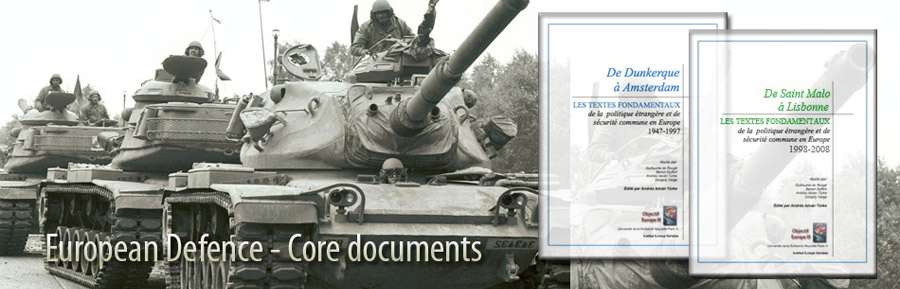
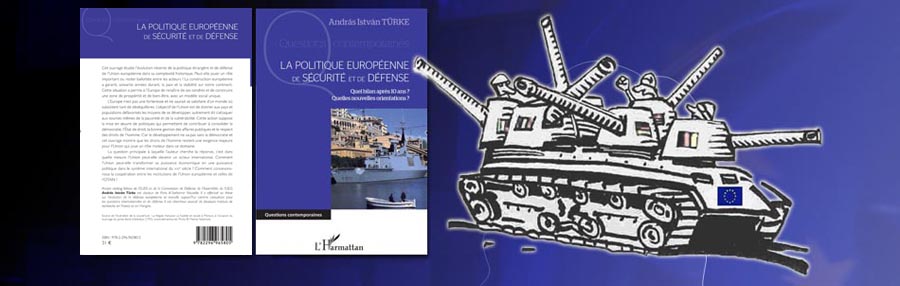
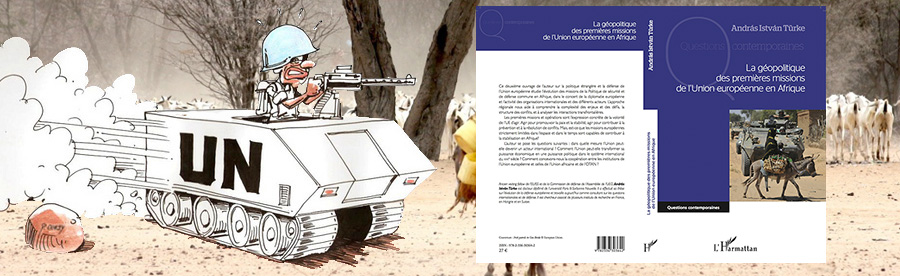
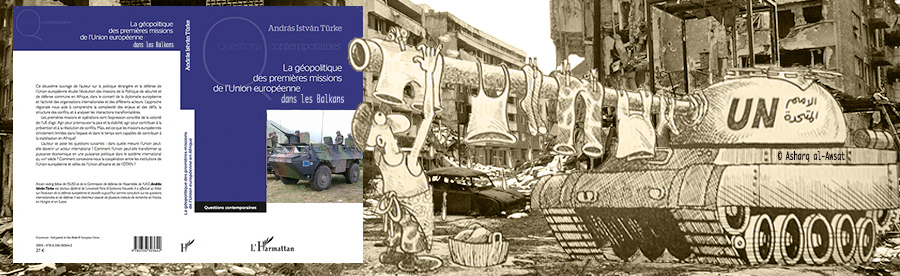
We are looking for sponsors for the English translation of these books, please contact turkeandras(at)gmail(dot)com