
You are here
European Peace Institute / News

The International Peace Institute is an independent, non-profit organization working to advance solutions for a peaceful planet.
Updated: 20 hours 49 min ago
9th Annual Women, Peace and Leadership Symposium
During UN General Assembly High-Level Week, IPI convened the 9th Annual Women, Peace and Leadership Symposium, co-hosted by the Permanent Mission of Spain to the United Nations, the Permanent Mission, of Portugal to the United Nations, the Federal Republic of Somalia, the Republic of Mozambique, the Permanent Mission of Ireland to the United Nations, the Permanent Mission of Denmark to the United Nations, and Global Affairs Canada, and in partnership with Our Secure Future, the Nobel Women’s Initiative, and The Elders. The WPL Symposium brought together policymakers, practitioners, and advocates to examine how the WPS agenda can continue to move forward in an increasingly challenging geopolitical environment.
H.E. José Manuel Albares, Minister for Foreign Affairs, European Union and Cooperation, Kingdom of Spain and H.E. Lucrecia Peinado, First Lady of the Republic of Guatemala, provided opening remarks. The panel was moderated by IPI’s President and CEO, Zeid Ra’ad Al Hussein. Panelists included H.E. Mary Robinson, Former President of Ireland and Representative from The Elders; Ana Isabel Xavier, Secretary of State for Foreign Affairs and Cooperation of Portugal; Sahana Dharmapuri, Vice President of Our Secure Future and Vice President of the PAX sapiens Foundation; Negina Yari, Founder and Executive Director of Window for Hope (Afghanistan) and Representative from the Nobel Women’s Initiative; and Sarah Hendriks, Director of the Policy, Programme and Intergovernmental Division, UN Women. Following the panel, H.E. Katsuhiko Takahashi, Ambassador for Women, Peace and Security for Japan; Karen Grønlund Rogne, Director for Multilateral Cooperation and Policy, Denmark; Kaavya Asoka, Executive Director of the NGO Working Group on WPS; and Irene Fellin, NATO Secretary General’s Special Representative for WPS, provided interventions from the floor. To conclude the event, H.E. Michael Gort, Deputy Permanent Representative of Canada to the United Nations and Phoebe Donnelly, Senior Fellow and Head of WPS, IPI provided closing remarks.
Zeid Al Hussein described the current moment as an “upside-down world” in which conflicts are multiplying, women’s participation in peace processes is shrinking, and funding for women’s organizations is dire. While the data is sobering, speakers highlighted that it is more important than ever to continue pushing forward by increasing coordination and supporting local ownership.
Key themes which emerged from the discussion:
- The pushback against women’s rights and gender equality is organized and well financed – The backlash is coordinated and increasingly cross-border, and therefore, the response from WPS advocates should be equally coordinated.
- Local ownership is non-negotiable – peace cannot only be driven from the top down. It is essential to prioritize, support, and fund grassroots women and civil society actors who are the key drivers of peace.
- Women’s participation in peace negotiations is falling – Across 55 peace negotiations tracked in the latest UN data, only 5% of participants were women, down from 7% the year before. None of the 13 ceasefires agreed last year named sexual violence as a prohibited act, and none had a substantive reference to women.
- The international community should stand together with the women and girls of Afghanistan – Negina Yari described the systematic exclusion of Afghan women and girls to be gender apartheid and called for it to be established as a crime under international law. Many speakers emphasized the grave situation in Afghanistan and called for solidarity within the international community to stand with Afghan women and girls so that the Taliban’s actions do not become normalized.
- The next Secretary General of the UN should be a woman – Many speakers declared that after 80 years, it is past time for the UN to have a woman in the highest position of leadership. Furthermore, it is crucial that the next SG be a champion of human rights and gender equality.
Sarah Hendriks reminded us that though the most recent data paints a picture which is sobering, it is not one without hope. Similarly, H.E. Robinson described herself as a “prisoner of hope,” reaffirming the central message of the conversation: now is not the time to retreat. Sustaining the WPS agenda will require not only defending past achievements but also building new alliances and approaches capable of responding to today’s political realities.
The post 9th Annual Women, Peace and Leadership Symposium appeared first on International Peace Institute.
Categories: Afrique, Diplomacy & Defense Think Tank News
Synergies and Challenges in Financing Adaptation, Sustainable Development, and Loss and Damage
Adapting to climate impacts is more critical than ever. Average global temperatures surpassed the 1.5°C threshold in 2024, and the ten worst climate-related disasters of 2025 caused over $120 billion in insured losses alone. Yet just as adaptation becomes more urgent, climate has slipped down the global agenda, leaving the developing countries most exposed to climate impacts—and least responsible for them—to adapt with shrinking international support.
This issue brief gives an overview of the history and current state of adaptation finance and examines how it overlaps with development finance and with loss and damage. It sets the goals agreed at COP29 and COP30 against estimated adaptation needs of $310 to $365 billion per year by 2035 and explains why, for many small island developing states and least developed countries, the form finance takes—grant-based and directly accessible—matters as much as the amount.
The brief argues that adaptation, sustainable development, and loss and damage should complement one another rather than compete for scarce, siloed funding. It makes the case for strict criteria on what counts as climate finance rather than the automatic separation of climate and development projects, and for multilateral climate finance to grow, grant-based funding to expand, and climate resilience to be mainstreamed across all development efforts. This will ensure the international system is ready to deliver when political will to tackle climate change returns.
The post Synergies and Challenges in Financing Adaptation, Sustainable Development, and Loss and Damage appeared first on International Peace Institute.
Categories: Diplomacy & Defense Think Tank News, Union européenne
Diversification without Coordination: The Scope for a Collective African Voice in BRICS
Africa’s presence within BRICS has expanded significantly. South Africa, Egypt, and Ethiopia are now full members, while Nigeria and Uganda participate as partner countries. Yet despite this growing representation, there is no mechanism for African states to coordinate their positions within the grouping, raising questions about whether a larger footprint has translated into greater collective influence.
This issue brief examines how African states are engaging BRICS as part of broader strategies of diversification rather than alignment. It explores the distinct priorities driving South Africa, Egypt, and Ethiopia’s participation, the relationship between BRICS and other multilateral forums such as the African Union and G20, and the opportunities and constraints for developing a more coordinated African voice within the bloc.
The brief argues that while African states share an interest in advancing reforms to global governance and international finance, coordination within BRICS remains limited by differing national priorities and the absence of institutional mechanisms. Rather than viewing BRICS as a standalone platform, it suggests that African governments may derive greater value by integrating BRICS into a broader multilateral strategy while strengthening cooperation where interests converge.
The post Diversification without Coordination: The Scope for a Collective African Voice in BRICS appeared first on International Peace Institute.
Categories: Diplomacy & Defense Think Tank News, Swiss News
What MINUSMA Teaches Us about the Future of UN Peacekeeping
Event Video
Regarder en français Photos
Regarder en français Photos


jQuery(document).ready(function($){$("#isloaderfor-qdapmh").fadeOut(300, function () { $(".pagwrap-qdapmh").fadeIn(300);});});
In partnership with the Permanent Mission of the Kingdom of the Netherlands and the Division of Policy, Evaluation and Training (DPET) of the UN Department of Peace Operations (DPO), IPI cohosted a hybrid public policy forum on “What MINUSMA Teaches Us about the Future of UN Peacekeeping” on July 13th.
DPO recently launched the lessons learned report “MINUSMA: A Peace That Was Not Enough,” which examines the decade-long deployment of the United Nations Multidimensional Integrated Stabilization Mission in Mali (MINUSMA), which concluded its withdrawal in late 2023. The report identifies implications that extend beyond Mali and are directly relevant to the future of UN peacekeeping. It also points to the limits of UN peacekeeping in the absence of a stable peace and underscores the importance of carefully managing UN transitions.
The event facilitated a focused, policy-oriented discussion on how lessons from MINUSMA can inform more effective, adaptable, and context-sensitive UN peacekeeping. Speakers shared reflections from the Malian, regional, and UN perspectives regarding the operational and political challenges facing international engagement.
Key takeaways from the event include the need to:
- Expand the UN toolbox to contextualize missions to individual situations;
- Center national ownership, including in driving the political process;
- Manage expectations in contexts of asymmetric warfare and;
- Carefully delineate roles and responsibilities when parallel forces are present.
Opening Remarks:
Zeid Ra’ad Al Hussein, President and Chief Executive Officer, International Peace Institute
Speakers:
David Haeri, Director, UN DPET, DPO
H.E. Issa Konfourou, Permanent Representative of the Republic of Mali to the UN
Mahamat Saleh Annadif, Former SRSG and Head of MINUSMA, Member of the African Union High-Level Panel of Eminent Experts (virtual)
Emma Birikorang, Director of Research, Kofi Annan International Peacekeeping Training Centre (KAIPTC) (virtual)
Closing Remarks:
Ed Caelen, Military Advisor, Permanent Mission of the Kingdom of the Netherlands to the UN
Moderator:
Jenna Russo, Director of Research and Head of the Brian Urquhart Center for Peace Operations and Peacebuilding, International Peace Institute
The post What MINUSMA Teaches Us about the Future of UN Peacekeeping appeared first on International Peace Institute.
Categories: Diplomacy & Defense Think Tank News, Swiss News
How UN Peacekeeping Operations Are Adapting to Contingency Measures
The UN’s ongoing liquidity crisis has forced peacekeeping operations to implement contingency measures that have significantly reduced personnel, patrols, mission footprints, and programmatic activities. As missions adapt to these constraints, they face difficult trade-offs in maintaining mandate delivery while responding to increasingly complex security environments.
In this context, the International Peace Institute (IPI), in partnership with the permanent missions of Denmark, Germany, the Netherlands, and Pakistan to the United Nations, convened a workshop to examine how UN peacekeeping operations are adapting to contingency measures. The discussion brought together member-state representatives and UN officials from headquarters and the field to assess the operational implications of the cuts and identify lessons for the future of peacekeeping.
Key themes from the discussion included the growing reliance on mobile operational approaches, the impact of reduced mission presence on the protection of civilians and community engagement, increasing risks to peacekeeper safety and security, the opportunities and limits of digital technologies, the importance of strategic communication with host states and local communities, and the critical role of partnerships in sustaining mandate implementation amid resource constraints.
The post How UN Peacekeeping Operations Are Adapting to Contingency Measures appeared first on International Peace Institute.
Categories: Diplomacy & Defense Think Tank News, European Union
Gender Responsiveness and Women’s Participation in UN Peace Operations: New Research and Policy Implications
Event Video
Photos
Photos


jQuery(document).ready(function($){$("#isloaderfor-kpumti").fadeOut(300, function () { $(".pagwrap-kpumti").fadeIn(300);});});
In partnership with the Elsie Initiative for Women in Peace Operations, IPI cohosted a public policy forum on “Gender Responsiveness and Women’s Participation in UN Peace Operations: New Research and Policy Implications” on June 30th.
Since 2019, IPI has analyzed and evaluated the challenges and successes in advancing uniformed women’s meaningful participation in peacekeeping operations as part of its partnership with the Government of Canada’s Elsie Initiative for Women in Peace Operations. The most recent phase of IPI’s research has covered topics including gender bias within peacekeeping operations, taboos and stigmas faced by uniformed women, the role of military gender advisers, and how to deliver on gender responsiveness. As the culmination of this phase of the research partnership, IPI will launch four reports on these aspects of uniformed women’s participation in peacekeeping operations.
Speakers presented key findings from this research and steps for ensuring the meaningful participation of uniformed women in peacekeeping operations. The policy forum provided a dedicated space for building momentum on these topics as we reflect on past successes and challenges and look to the future of UN peacekeeping operations.
Opening Remarks:
Isaac Caverhill, Second Secretary, Permanent Mission of Canada to the United Nations
Speakers:
Vandana Sharma, Co-Founder, Equality Insights Lab
Anna Mensah Medi, Senior Lecturer at the Faculty of Academic Affairs and Research (FAAR), Kofi Annan International Peacekeeping Training Centre (KAIPTC)
Emmaculate Asige Liaga, Researcher in the Training for Peace (TFP) Project, Institute for Security Studies (ISS) (virtual)
Angela Fitzsimons, Counsellor, Military Adviser and Police Adviser, Permanent Mission of New Zealand to the United Nations
Closing Remarks:
Pamela Bradshaw, Defence Attaché and Military Advisor, Permanent Mission of Australia to the United Nations
Moderator:
Phoebe Donnelly, Senior Fellow and Head of WPS Program, International Peace Institute
The post Gender Responsiveness and Women’s Participation in UN Peace Operations: New Research and Policy Implications appeared first on International Peace Institute.
Categories: Diplomacy & Defense Think Tank News, Swiss News
Seven Shadows: A Ground-Level View of Gender Bias in UN Peacekeeping Operations
Despite progress in increasing the participation of women in UN peacekeeping operations, gender bias continues to shape the experiences of peacekeepers in ways that can affect both inclusion and operational effectiveness.
This policy paper examines how gender bias manifests itself across seven dimensions of peacekeeping work: day-to-day operations, field deployments, organizational processes, professional development, engagement with host populations, data and assessments, and communications. Drawing on focus groups and interviews with personnel from the UN Peacekeeping Force in Cyprus (UNFICYP), as well as a cross-mission survey, the paper highlights how informal norms and structural barriers continue to shape women’s experiences in mission environments.
The paper argues that addressing gender bias requires moving beyond representation targets to examine the systems, practices, and organizational cultures that influence how peacekeeping personnel are recruited, deployed, supported, and promoted. It offers recommendations to strengthen accountability, leadership, data collection, training, and institutional learning across UN peace operations.
The post Seven Shadows: A Ground-Level View of Gender Bias in UN Peacekeeping Operations appeared first on International Peace Institute.
Strengthening the Peace Operations–Peacebuilding Nexus: From Policy to Practice
Event Video
Photos
Photos


jQuery(document).ready(function($){$("#isloaderfor-nokmaq").fadeOut(300, function () { $(".pagwrap-nokmaq").fadeIn(300);});});
On June 23rd, IPI, in partnership with the Permanent Missions of Bangladesh, Denmark, Indonesia, Ireland, Japan, the Netherlands, Pakistan, the UN Department of Peace Operations, Peace Direct, and the Cairo International Center for Conflict Resolution, Peacekeeping, and Peacebuilding, cohosted a public policy forum on “Strengthening the Peace Operations–Peacebuilding Nexus: From Policy to Practice,” during Peacebuilding Week 2026.
Bringing together headquarters and field-level perspectives from policymakers and practitioners, the discussion examined: the contribution of peace operations to peacebuilding; missions’ support to community-centered approaches that support prevention and local-level conflict resolution led by Civil Affairs components; and how the Peacebuilding Fund and the Peacebuilding Commission can be effectively leveraged in peace operation settings to support national and local peacebuilding priorities alongside missions.
Central to the discussion was the practical contribution peace operations make to peacebuilding at the local level, and how that contribution can be maintained and strengthened during a period of financial pressure, transition, and reform. The discussion examined how to leverage the momentum of the 2025 Peacebuilding Architecture Review and the peace operations review to foster greater cohesion within the UN system and with partners, including during mission transitions and drawdowns, to maximize impact amid geopolitical turbulence, ongoing reforms, and increasingly violent contexts.
Welcome and Opening Remarks:
H.E. Fergal Mythen, Permanent Representative of Ireland to the UN
H.E. Lise Gregoire-van Haaren, Permanent Representative of the Kingdom of the Netherlands to the UN
Speakers:
David Haeri, Director, Division of Policy, Evaluation and Training, UN Department of Peace Operations
Hiroko Hirahara, Director, Civil Affairs, UNMISS, South Sudan (virtual)
Ewa Turyk-Mazurek, Civil Affairs Field Operations Manager, UNIFIL, Lebanon
Edmund Yakani, Executive Director, Community Empowerment for Progress Organization (CEPO), South Sudan (virtual)
Daniel Prins, Chief, Security Sector Reform Unit, UN Peacebuilding and Peace Support Office, Department of Political and Peacebuilding Affairs and Department of Peace Operations
Moderator:
Lauren McGowan, Policy Analyst, International Peace Institute
The post Strengthening the Peace Operations–Peacebuilding Nexus: From Policy to Practice appeared first on International Peace Institute.
The UN Mission in South Sudan in the Context of Changing Security and Regional Dynamics
South Sudan is facing a period of growing uncertainty. Rising political tensions, delays in implementation of the Revitalized Peace Agreement (R-ARCSS), spillover effects from the conflict in Sudan, and mounting economic and humanitarian pressures are testing the country’s fragile stability. At the same time, the UN Mission in South Sudan (UNMISS) is adapting to a newly renewed mandate amid funding constraints and a reduced operational footprint.
In this context, the International Peace Institute (IPI) and the Stimson Center convened a workshop to examine South Sudan’s evolving security environment, regional diplomatic efforts, and the implications of recent changes to UNMISS’s mandate. Participants discussed the role of regional actors, the future of the peace process, challenges surrounding elections and political transition, and the mission’s ability to implement its mandate under increasing operational and financial pressures.
Key themes from the discussion included the continued importance of civilian protection, the need for sustained regional and international political engagement, the risks associated with a reduced mission footprint, and the importance of maintaining community engagement and local peacebuilding efforts amid a rapidly changing political and security landscape.
The post The UN Mission in South Sudan in the Context of Changing Security and Regional Dynamics appeared first on International Peace Institute.
Local Care and Feminist Foreign Policy: Lessons Learned from Mexico City’s UTOPÍAS
As feminist foreign policies face growing political backlash around the world, questions remain about how states can ensure these policies are grounded in the lived realities of the communities they seek to serve. One way to bridge the gap between international commitments and domestic implementation is through the care economy.
This policy paper examines Mexico City’s UTOPÍAS—publicly funded community centers that provide care services, educational opportunities, cultural programming, and support for economic autonomy. Drawing on field research and interviews with policymakers, civil society representatives, and community members, the paper explores how these centers embody feminist principles through an intersectional approach to care, gender equality, and social inclusion.
The paper argues that initiatives like the UTOPÍAS demonstrate how local governments can advance transformative care policies while contributing to broader feminist foreign policy goals. It highlights the potential of municipal feminist diplomacy and city-to-city exchanges as avenues for sharing innovative approaches to care, human security, and gender equality across borders.
The post Local Care and Feminist Foreign Policy: Lessons Learned from Mexico City’s UTOPÍAS appeared first on International Peace Institute.
Categories: Afrique, Diplomacy & Defense Think Tank News
The Glass Blue Helmet: Progress and Persistent Challenges for Women Military Peacekeepers
Women’s meaningful participation in UN peacekeeping operations has advanced since 2020, but progress remains uneven and fragile. While dedicated training initiatives, peer-support structures, and women’s visibility in leadership roles have expanded, women peacekeepers continue to face structural barriers that limit their operational participation, safety, and career advancement.
This policy paper draws on interviews with eighty-five women military peacekeepers from forty-three troop-contributing countries, along with consultations with UN officials, force commanders, and mission personnel. The paper examines the gap between the UN’s commitments on women’s meaningful participation and the realities women encounter in mission environments. It highlights persistent challenges including role misalignment, harassment, exclusion from operational decision making, inadequate equipment, and weak accountability systems.
The paper argues that leadership is the decisive variable shaping women’s deployment experiences. It calls for linking training nominations to deployment commitments, tracking participation in substantive tasks rather than headcounts, embedding gender-responsive indicators in leadership evaluations, establishing confidential reporting channels outside national chains of command, and auditing equipment standards before deployment.
The post The Glass Blue Helmet: Progress and Persistent Challenges for Women Military Peacekeepers appeared first on International Peace Institute.
Categories: Diplomacy & Defense Think Tank News, Swiss News
Are Missions Delivering on Gender-Responsive Peace Operations? Lessons from South Sudan and Somalia
Gender-responsive peacekeeping operations are designed and implemented in ways that recognize gendered differences and inequalities and advance gender equality and the rights, protection, and participation of all genders as a core part of mandate delivery. Yet while normative commitments on women, peace, and security (WPS) have expanded considerably over the past two decades, these commitments have been unevenly translated into practice.
This policy paper examines how gender-responsive peacekeeping has been operationalized in the UN Mission in South Sudan (UNMISS) and the African Union missions in Somalia (AMISOM and ATMIS), with a focus on mandates, institutional design, force composition, leadership, and community engagement. It finds that gender responsiveness depends less on formal commitments than on whether missions embed gender analysis into the operational systems that shape planning, protection, and decision making.
The paper highlights how institutional placement of gender advisers, leadership support, deployment of women peacekeepers, and sustained community engagement can strengthen both mission effectiveness and legitimacy. At the same time, it underscores the persistent gap between procedural responsiveness to meet institutional requirements and transformative responsiveness that changes how missions operate and protect civilians in practice.
The post Are Missions Delivering on Gender-Responsive Peace Operations? Lessons from South Sudan and Somalia appeared first on International Peace Institute.
Categories: Diplomacy & Defense Think Tank News, Swiss News
United Nations Mission in South Sudan in the Context of Changing Security and Regional Dynamics
Photos


jQuery(document).ready(function($){$("#isloaderfor-njqugo").fadeOut(300, function () { $(".pagwrap-njqugo").fadeIn(300);});});
IPI and the Stimson Center, in partnership with the Permanent Mission of the Kingdom of the Netherlands to the UN and the Permanent Mission of Denmark to the UN, co-organized a workshop on “UNMISS in the Context of Changing Security and Regional Dynamics” on May 26th. This event is part of a series of workshops, “Missions and Mandates: Toward Adaptable, Nimble, and Effective Responses,” that aim to support the sustained engagement of UN member states on how to make peace operations mandates more adaptable.
The workshop reflected on the mandate of UNMISS, which is set for renewal on April 30, in the context of heightened political and security tensions in South Sudan, while also assessing how broader regional insecurities are shaping dynamics within the country, including the ramifications of the war in Sudan. The situation in South Sudan requires urgent action: escalating violence across multiple states, political detentions in breach of the peace agreement, and a humanitarian crisis worsened by the war in Sudan. More than 1.3 million people have crossed into South Sudan from Sudan since 2023. Over half the country’s population faces food insecurity.
Under the Chatham House Rule, today’s conversation brought together UN and AU representatives as well as, Member States, and independent experts to address critical questions concerning the practical implications of the renewed mandate and the ways in which regional dynamics shape the prospects for stability in South Sudan.
The post United Nations Mission in South Sudan in the Context of Changing Security and Regional Dynamics appeared first on International Peace Institute.
Categories: Diplomacy & Defense Think Tank News, Swiss News
Keeping Protection in Focus: Emerging Research on Protection and Peace Operations
Photos


jQuery(document).ready(function($){$("#isloaderfor-hnrbdz").fadeOut(300, function () { $(".pagwrap-hnrbdz").fadeIn(300);});});
IPI, in partnership with the United Nations Department of Peace Operations, McGill University’s Max Bell School of Public Policy, the Folke Bernadotte Academy (FBA), the Challenges Forum for Peace Operations, and the Permanent Missions of Canada and the Kingdom of the Netherlands to the United Nations, co-hosted a closed-door hybrid workshop, “Keeping Protection in Focus: Emerging Research on Protection and Peace Operations,” on May 22nd.
Over more than two and a half decades, there has been significant normative and operational progress in protecting civilians through UN peace operations. There is a wide range of policies, guidance, and good practice to support mandate implementation, as well as a rich body of evidence indicating the effectiveness that peace operations can have in preventing and responding to violence against civilians. At the same time, changes and uncertainty in the global peace and security landscape are challenging the nature of collective security more broadly, with implications for UN peace operations and their ability to protect civilians. Against this backdrop, and amidst an ongoing review on the future of all forms of peace operations, prior assumptions and approaches need to be tested to ensure their continued applicability, and new ways of working need to be considered.
This interactive workshop will present the findings of a series of policy briefs published by IPI, covering a diverse range of issues on how to strengthen protection by UN and UN-supported peace operations. This workshop will feature presentations by some of the authors and an interactive exchange with respondents. Participants for the event will be member state delegates, UN and AU officials, civil society representatives, and other scholars, researchers, and experts. The event will be hybrid and held under the Chatham House rule of non-attribution.
The post Keeping Protection in Focus: Emerging Research on Protection and Peace Operations appeared first on International Peace Institute.
Categories: Diplomacy & Defense Think Tank News, Swiss News
Peacekeeping Transitions during Crisis
UN peacekeeping transitions are increasingly unfolding under crisis conditions marked by deteriorating host-state consent, imposed timelines, and escalating insecurity. While the UN has developed more sophisticated transition frameworks over the past two decades, recent mission withdrawals have exposed significant gaps between policy guidance and operational realities.
This issue brief examines “transitions in crisis” through the cases of UNMEE in Ethiopia and Eritrea, UNAMID in Sudan, MINUSMA in Mali, and MONUSCO in the Democratic Republic of the Congo. It explores how operational obstruction, weakened political cooperation, inadequate successor arrangements, and abrupt withdrawals create acute risks for civilians, peacekeepers, and peace processes.
The findings highlight that crisis transitions require different analytical and operational approaches than standard mission drawdowns. Stronger contingency planning, earlier political engagement, more integrated protection mechanisms, and clearer responses to host-state obstruction are essential to mitigating the risks associated with abrupt or noncooperative mission withdrawals.
The post Peacekeeping Transitions during Crisis appeared first on International Peace Institute.
Strategic Communications and UN Peacekeeping Transitions
Strategic communications are critical when a peace operation is preparing to leave a country. Effective communication can help manage expectations, counter misinformation and disinformation, preserve trust, and facilitate handover processes. Failure to communicate effectively can leave civilians feeling abandoned, fuel false narratives, and complicate mission withdrawals and transitions.
This issue brief examines lessons related to strategic communications during recent peacekeeping transitions, including in Mali and the Democratic Republic of the Congo. It explores how missions have approached external messaging with local populations and host-state governments, internal communication with mission staff, coordination with national and UN actors, and the transition or closure of UN radio stations.
The findings highlight that communications planning must be integrated into transition processes from the outset and supported at the leadership level. Maintaining communications capacity through and beyond mission drawdowns, strengthening joint messaging with UN and national actors, and developing sustainable approaches to UN radio are essential to effective transitions. At the same time, the brief underscores that even well-executed communications cannot compensate for deteriorating security conditions or political realities on the ground.
The post Strategic Communications and UN Peacekeeping Transitions appeared first on International Peace Institute.
Women, Peace, and Security and UN Peacekeeping Transitions
UN peacekeeping missions have played an important role in advancing the women, peace, and security (WPS) agenda, including by supporting women’s participation, strengthening gender-responsive institutions, and expanding protection mechanisms. Yet these gains often become vulnerable during mission transitions and withdrawals.
This issue brief examines how peacekeeping transitions have affected WPS gains in the Democratic Republic of the Congo, Liberia, and Mali. It explores how missions have incorporated gender-responsive analysis, gender benchmarks, technical expertise, and coordination with civil society into transition planning and implementation.
The findings highlight that sustaining WPS gains requires more systematic gender-responsive planning, stronger coordination with local actors, and continued political and financial support after mission withdrawal. Integrating gender expertise and local women-led organizations into transition processes is essential to preserving progress and reducing protection gaps.
The post Women, Peace, and Security and UN Peacekeeping Transitions appeared first on International Peace Institute.
One Year on from the Berlin Peacekeeping Ministerial: Looking to the Future of Peacekeeping
Photos


jQuery(document).ready(function($){$("#isloaderfor-efopnh").fadeOut(300, function () { $(".pagwrap-efopnh").fadeIn(300);});});
IPI, in partnership with the Permanent Mission of Germany to the United Nations, co-hosted an ambassador-level, off-the-record roundtable continuing the strategic dialogue launched at the May 2025 Berlin Peacekeeping Ministerial, where Germany brought together over 134 countries under the theme “The Future of Peacekeeping” on May 13th.
One year on, the landscape remains uncertain. A liquidity crisis continues to drive reductions in UN personnel and programming. Security Council dynamics have grown more contested. And the collective security environment increasingly involves regional bodies, ad hoc coalitions, and bilateral arrangements. The discussion focused on how the UN can best operate in this environment of fragmentation — identifying its continued comparative advantages and connecting to the Secretary-General’s forthcoming review on the future of all forms of UN peace operations under the Pact for the Future.
The conversation focused on how the UN can best operate in an environment of fragmentation and alongside multiple actors—including regional bodies, ad hoc coalitions, and bilateral security arrangements—and identified the UN’s continued comparative advantage and added value, and ways to preserve and enhance it. The discussion also connects to the forthcoming secretary-general’s review on the future of all forms of UN peace operations, called for in the Pact for the Future.
Welcome and Opening Remarks
Jenna Russo, Director of Research and Head of the Brian Urquhart Center for Peace Operations and Peacebuilding, International Peace Institute
H.E. Ricklef Beutin, Permanent Representative of Germany to the United Nations
Scene-setting
Elizabeth Spehar, Assistant Secretary-General for Peacebuilding and Peace Support, Departments of Political and Peacebuilding Affairs and Peace Operations
Daniel Forti, Head of UN Affairs, International Crisis Group
Moderator
Jenna Russo, Director of Research and Head of the Brian Urquhart Center for Peace Operations and Peacebuilding, International Peace Institute
The post One Year on from the Berlin Peacekeeping Ministerial: Looking to the Future of Peacekeeping appeared first on International Peace Institute.
Israel-Palestine Monthly Brief
Developments and Implications for Political Arrangements
Key Takeaways
April’s developments point to a growing disconnect between diplomatic frameworks and realities on the ground. The Gaza track remains stalled at a critical juncture, as the breakdown of the disarmament sequencing reveals the limits of a security-first approach that postpones governance and reconstruction. In parallel, accelerated settlement expansion and Palestinian displacement are consolidating a process of de facto annexation in the West Bank, progressively eroding the territorial basis of separation-based solutions. At the regional level, fragile ceasefires in Iran and Lebanon create only temporary stabilization while leaving the Palestine file largely untouched. Yet emerging trends in US political attitudes may signal shifts in unconditional support for Israel. Taken together, these dynamics underscore the need to reassess both the sequencing and the underlying assumptions of future political arrangements.
Main Developments
● Hamas rejected the “Board of Peace” disarmament proposal, while engaging in parallel negotiations with Fatah over the future of its weapons. Hamas’s rejection reflects a core dispute over the modality of disarmament and criticism over the absence of a political horizon. Parallel talks with Fatah mark the most consequential intra-Palestinian alignment since 2017 (Al Manassa; FDD; Haaretz; Al Jazeera).
● Humanitarian assessments gave the Gaza ceasefire a failing grade at the six-month mark. Over 780 Palestinians have been killed since the ceasefire began; no reconstruction has started; and the volume of goods entering Gaza in the first two weeks of March was down by about 80% compared to prewar levels (Oxfam; Save the Children; Refugees International).
● The Israel–Hizballah truce remains under strain amid mutual claims of violations. The ceasefire was part of the broader US–Iran truce, reinforcing the interconnectedness of regional fronts. In parallel, direct talks between Israel and Lebanon in Washington, the first since the early 1980s, have generated cautious hope. Meanwhile, Israel established a 10-kilometer military “Yellow Line” inside southern Lebanon, barring residents from returning to dozens of towns. (Al Jazeera; NPR; Washington Post).
● The Israeli government reportedly approved 34 settlements across the West Bank. The approvals include 10 existing outposts that would be legalized and 24 entirely new settlements, all in Area C. These add to another 68 new settlements authorized since the establishment of the current government, marking an 80% increase in the overall number of official settlements (CNN; Times of Israel; Democracy Now!, PeaceNow).
● Over 2,500 Palestinians were forcibly displaced in Area C of the West Bank and East Jerusalem since the start of 2026, the majority due to state-backed settler violence. At least nine Palestinians have been killed and approximately 360 injured by Israeli settlers since January. Settler violence accounted for 75% of all recorded displacement. The remainder of displacements were due to demolitions and evictions by Israeli authorities citing lack of building permits or ownership title (OCHA; OHCHR; Save the Children).
● A large majority of US Senate Democrats backed resolutions to block arms sales to Israel in a historic vote signaling a deepening political shift. Though the bills were ultimately rejected, this vote echoes a survey showing 60% of US adults hold an unfavorable view of Israel, up 7 percentage points from last year and nearly 20 since 2022 (The Intercept; Al Jazeera; Pew Research Center).
Structural Dynamics
The disarmament impasse and the collapse of the sequencing logic: The Gaza peace plan rested on a clear sequence (ceasefire, disarmament, transitional governance, reconstruction, and political handover), but Hamas’s formal rejection of the disarmament framework breaks this sequence at a critical juncture. So far, the international community has not provided the resources to disarm Hamas by force, and without disarmament Israel will not permit reconstruction to start. A Hamas–Fatah understanding on the weapons file and governance in Gaza may offer an alternative pathway based on Palestinian consensus rather than external imposition, but its adoption remains uncertain. The current deadlock highlights a central lesson for peace prospects: sequencing cannot substitute for a credible and agreed upon political horizon, and disarmament is unlikely to be sustainable without it.
Acceleration in the violent transformation of the West Bank’s geographic and demographic reality: The rapid expansion of settlements, alongside the gradual erosion of Palestinian presence in Area C and parts of East Jerusalem, reflects a cumulative process of territorial restructuring. Combined with ongoing land registration, infrastructure development, and the transfer of administrative authority from military to civilian hands, recent developments are further entrenching the de facto annexation of large swathes of the West Bank.
Ceasefire fragility and the limits of regional de-escalation: The Iran and Lebanon ceasefires are significant diplomatic achievements, but their relevance to the Palestine file should not be overstated. Both agreements remain fragile and contested. Crucially, the Palestine question was not part of these frameworks, with no political or diplomatic linkage that would translate regional calm into progress on the ground. These fragile ceasefires risk diverting international attention away from the Palestinian issue while enabling Israel to reallocate resources toward the West Bank and Gaza in ways that may further undermine stabilization efforts.
Shifting US political constraints and potential openings: The strong Democratic support in the United States Senate for restricting military aid to Israel, even if ultimately unsuccessful, reflects a deeper reconfiguration in US domestic politics. Coupled with a marked deterioration in public opinion, these trends point to a gradual erosion of the bipartisan consensus regarding unconditional US support for Israel. While this shift remains partial and contested, it introduces new political constraints on current and future administrations and expands the range of policy options in Washington. This could include greater US willingness to condition support or apply pressure, including by linking security assistance to Israel to political progress. In such a scenario, Israel may face more assertive US demands for meaningful negotiations with the Palestinians, reopening diplomatic pathways that have been largely dormant.
Recommendations
The Board of Peace, in coordination with regional and international actors, should:
1. Reframe the disarmament–governance relationship: The current sequencing of disarmament first, governance and reconstruction second has been rejected and is unlikely to succeed through pressure alone. Instead, disarmament should be embedded within a framework of mutual and parallel progress contingent on credible governance, permitting the National Committee for the Administration of Gaza (NCAG) to enter and operate in Gaza, initiating visible reconstruction, and establishing security arrangements that give all parties a stake in compliance.
2. Respond to settlement approvals and state-backed settler violence with concrete consequences, beyond routine expressions of concern: The United States, as the principal broker of the Gaza peace plan and Israel’s main ally, has a particular responsibility to ensure that Israeli actions do not undermine peace prospects.
3. Use the regional ceasefire window to re-anchor the Palestine file in diplomatic frameworks: The coming weeks offer a narrow opportunity to re-engage key actors, including Türkiye, Egypt, Saudi Arabia, and European partners, on the Palestine dimension of regional stability. Linking regional de-escalation to concrete steps on the governance of Gaza, restraints on West Bank settlements, and humanitarian access would signal that the Palestine question is not a residual issue but a central condition of sustainable regional order.
Indicators to Watch
- Board of Peace’s response to Hamas’s disarmament rejection: whether the framework is revised, abandoned, or enforced through alternative mechanisms.
- Durability of the extended Iran ceasefire and outcome of the London military planning conference on Hormuz.
- International response to settlement approvals: whether it triggers concrete diplomatic consequences or is absorbed into routine statements.
- NCAG access to Gaza: any movement toward permitting committee members to enter and begin operations.
- Palestinian local election outcomes on April 25: turnout, factional participation, and impact on the credibility of reforms to the PA.
- Humanitarian access trends in Gaza: crossing operations, NGO registration dispute status, and whether the aid delivery decline is reversed.
Download Brief ↓
This document was prepared by IPI Consultant Jaser Abu Mousa with editorial support from IPI. The statements made and views expressed are solely the responsibility of the author and do not represent those of IPI.
The post Israel-Palestine Monthly Brief appeared first on International Peace Institute.
Categories: Diplomacy & Defense Think Tank News, Swiss News
Roundtable with Troop and Police Contributing Countries on Responding to Evolving Threats to Peacekeepers’ Safety and Security
Photos


jQuery(document).ready(function($){$("#isloaderfor-yjodob").fadeOut(300, function () { $(".pagwrap-yjodob").fadeIn(300);});});
Peacekeeping missions today operate in increasingly complex and volatile environments often characterized by fragile political processes, asymmetric warfare by non-state armed groups, transnational criminal networks, rapid technological changes, and the growing impacts of climate-related vulnerability. These evolving dynamics have heightened the risks faced by both civilians and peacekeepers, reinforcing the central importance of protection of civilians (POC) and the safety and security of personnel.
In this context, IPI convened T/PCCs for the first in a series of informal discussions on the future of peace operations on April 30th. This initial meeting explored T/PCCs’ perspectives on emerging threats to civilians and peacekeepers, as well as the measures, processes, and capabilities required to enable peacekeepers to deliver on their mandates. Drawing on the operational experience of T/PCCs, the discussion generated practical insights into how peacekeepers’ capabilities can be better aligned with evolving conditions on the ground and changing political and financial contexts to ensure their safety and security. It also considered the policy responses required from the UN.
Welcoming Remarks
Jenna Russo, IPI Director of Research and Head of the Brian Urquhart Center for Peace Operations and Peacebuilding
Lieutenant-Colonel Royal Marines Jonas van Hooren, Permanent Mission of the Kingdom of the Netherlands to the UN
Opening Remarks
Lieutenant-General Mohan Subramanian, Director of the Office for Peacekeeping Strategic Partnership, DPO
Moderator
Bitania Tadesse, Policy Specialist for Africa, IPI
The post Roundtable with Troop and Police Contributing Countries on Responding to Evolving Threats to Peacekeepers’ Safety and Security appeared first on International Peace Institute.
Categories: Diplomacy & Defense Think Tank News, European Union
Pages
the old site is here


© 2012-2015 Europa Varietas Foundation © 2015-2020 Europa Varietas Association
www.europavarietas.org | info(@)europavarietas(dot)org | Switzerland
This is a GDPR ready site
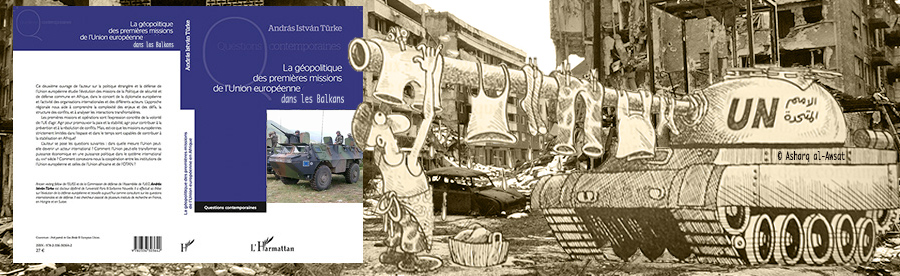
We are looking for sponsors for the English translation of these books, please contact turkeandras(at)gmail(dot)com