
You are here
Határon túli magyar portálok összesített hírei
Trump’s “Comprehensive” Gaza Peace Plan a Cover for Genocide
By Anis Chowdhury
SYDNEY, Sep 8 2026 (IPS)
It is nearly a year since the UN Security Council (UNSC) adopted Resolution 2803 on 17 November, 2025, endorsing President Trump’s 20-point framework ostensibly designed to end the war in Gaza and create a roadmap for long-term stability. It is not clear what progress has been made. In August 2026 The Jerusalem Post reported “the IDF continues almost daily strikes in Gaza”, killing more than 1,200 Palestinians since the US-brokered ceasefire deal came into effect, seizing more territory, and continuing to restrict the movement of people and goods into and out of Gaza. Nickolay Mladenov, the UN High Representative on the Board of Peace, wrote in early August 2026 that “two days of strikes across Gaza have killed civilians and destroyed medical supplies that people depend on”. Ironically, this genocidal strike happened only a few days after a US-brokered Hamas disarmament deal, which Trump called, “a monumental step” towards peace and security.
Anis Chowdhury
Genocide unabatedIn May 2026 the Board of Peace claimed in its report to the Security Council that the conditions for Palestinians in Gaza have improved. However, the claim contradicts the findings of the UN Commission of Inquiry, headed by Justice Muralidhar, that “Israeli authorities and security forces have deliberately targeted Palestinian children, resulting in genocide and atrocity crimes in the Gaza Strip and war crimes in the West Bank”.
Earlier in a Conference Room Paper published in September 2025, the Commission established that the Israeli authorities and security forces had committed and were continuing to commit genocidal acts with the specific intent to destroy, in whole or in part, the Palestinian group in Gaza. This is despite the International Court of Justice issuing three binding orders for provisional measures, detailing the catastrophic conditions in Gaza and risks of irreparable prejudice to the rights of the Palestinian group.
Echoing the Commission, speakers at the UNSC on 28 August 2026 warned that Gaza is at a total breaking point, under constant attack with 2 million people still trapped, despite the Trump-negotiated October 2025 ceasefire and the Board’s new peace plan. Athena Rayburn, Executive Director of the Association of International Development Agencies said, “success must be measured by whether the Board of Peace, international stabilization force and National Committee for the Administration of Gaza provide immediate protection for civilians; and in the long term, whether they move Gaza towards the required legal endpoint: The end of Israel’s unlawful presence and realization of the Palestinian people’s right to self-determination”.
Exclusionary Board of (un)Peace
Following the UNSC endorsement, Trump launched “Board of Peace” on the sidelines of the World Economic Forum on 22 January 2026. Trump, the self-assumed Chair of the Board, believed, “This Board has the chance to be one of the most consequential bodies ever created … to end decades of suffering, stop generations of hatred and bloodshed, and forge a beautiful, everlasting, and glorious peace for that region”.
However, many, including senior US lawmakers, view the Board as Trump’s attempt to undermine the United Nations, which he has repeatedly criticised. The Board’s charter makes no reference to either Gaza or the UN even though the original UN mandate for the Board called for it to focus on Gaza’s reconstruction and to aid the 2.2 million Palestinians forcibly displaced by Israeli forces. Instead, according to its charter, the Board would “secure enduring peace in areas affected or threatened by conflict”. The Board’s charter also envisions that it will endure beyond the end of 2027 – the expiry date of the UNSC’s endorsement – as will Trump’s stewardship over it
While Trump could potentially chair the Board for life, its membership is solely by Trump’s invitation and requiring at least US$1bn contribution. Palestine is not a member, but Israel and its prime minister Benjamin Netanyahu – who faces an International Criminal Court (ICC) arrest warrant over alleged war crimes in Gaza – are part of the board. Furthermore, a member of the Trump-appointed Executive Board is also Israel’s appointed representative in the US-led Civil Military Coordination Center tasked with humanitarian relief in Gaza.
Palestinians have been assigned to its lower-tier technocratic committee, while former UK prime minister and “war-criminal”, Tony Blair, Trump’s son-in-law, Jared Kushner, and Trump’s long-time friend and real estate investor, Steve Witkoff, sit on the executive board along with US Secretary of State, Marco Rubio.
How can a so-called Peace Board so intertwined with the genocidal entities be entrusted to alleviate Palestinian suffering? Is it a surprise that the air strikes and other attacks on civilian areas in Gaza have intensified even damaging UN facilities? On 25 August 2026 Israeli forces forcibly entered UNRWA’s Kalandia Training Centre in East Jerusalem and unlawfully seized it, ignoring the fact that it is an inviolable UN premise immune from any form of interference.
Unaccountable and whimsical
Meanwhile, Marco Rubio disclosed during his testimony before the Senate Foreign Relations Committee recently that the Trump administration had decided to transform the Board of Peace from a public international organization made up of member states (akin to the United Nations) into an international nongovernmental organization (INGO). He gave no indication as to how and when that decision was made, violating UNSC resolution 2803 which warranted that the Board would have international legal personality and be subject to international law as a multilateral organisation.
Transforming the Board into an INGO may better conform to the Board’s exclusionary structure, which gives Trump ultimate decision-making authority, including over financial matters. Rubio explicitly said during his testimony that the US Congress can have oversight only on the money that the US puts in while he was vague about the fiduciary arrangement of the Board’s finance. In the meantime, investigative journalism uncovered serious financial irregularities, opacity and conflict of interest involving Kushner, Witkoff and some prominent Israeli entities.
Alarmingly, making the Board an INGO removes member states’ power to steer the Board and to mitigate the Trump administration’s worst impulses. Trump’s inner circle will continue to call the shots, with Kushner saying the Board will be run “like we do [it] in the private sector”, while the Board is being directed by figures on the Israeli and US political right.
UNSC must disendorse (un)Peace Board
The members of the UNSC voted in favour of endorsing Trump’s Comprehensive Plan to End the Gaza Conflict and the Board of Peace as a pragmatic step despite some trepidation due to the plan’s vague terms and lack of a timetable associated with its phases that would culminate in a political horizon for Palestinians. They hoped that Trump, given his relationship with Netanyahu – an alleged war-criminal – would be able to stop him from committing genocide of the Palestinians.
But Trump continues to condone Israel’s ceasefire violations as intensified Israeli attacks kill thousands of innocent Palestinians. Trump and his so-called Board of Peace failed to condemn Israeli National Security Minister Itamar Ben-Gvir who openly called for killing “30 to 40” Palestinians in Gaza nightly. Nor have they condemned Chief Sephardic Rabbi David Yosef who asserted, “there is no such thing as a Palestinian people” and Palestinians have “no rights”, despite a global outcry.
Meanwhile Trump’s Board of Peace dismissed pragmatic approaches to Hamas’ disarmament. Instead, it has promoted ideas of a hyper-developed “new Gaza” paying little heed to Palestinians’ wishes or to their history. These neo-colonial plans undermine any real prospect of self-determination.
In light of the Trump plan’s manifest failures and the Peace Board’s violations of UNSC mandate, including its financial impropriety, UNSC members should urgently force a vote calling for the withdrawal of the Council’s endorsement. Failing to do so would allow Trump and Israel to use the alleged comprehensive peace plan to provide a cover for Israel’s genocide, while the self-styled Board of Peace undermines the United Nations.
Anis Chowdhury, Emeritus Professor, Western Sydney University (Australia). He held senior UN positions in Bangkok and New York and served as Special Assistant to the Chief Advisor for Finance (with the status and rank of State Minister) in the Professor Yunus-led Interim Government. E-mail: anis.z.chowdhury@gmail.com; a.chowdhury@westernsydney.edu.au
IPS UN Bureau
Related Articles
Categories: Africa, Határon túli magyar portálok összesített hírei
Study - Beyond declarations: Evaluating CFSP alignment methodologies in Türkiye, the Western Balkans and Accession Trio countries - PE 783.626 - Committee on Foreign Affairs
Alignment with the European Union’s (EU) Common Foreign and Security Policy has become a central benchmark of enlargement countries’ strategic orientation and a key indicator of the enlargement process’s credibility. Under Chapter 31 and relevant association agreements, candidates are expected to align their foreign, security and defence policies progressively with those of the EU prior to accession. This requirement has gained renewed political importance following Russia’s invasion of Ukraine, which has heightened the role of sanctions, geopolitical positioning and foreign policy coherence within enlargement. However, past experience shows that formal pre-accession alignment does not always translate into post-accession cohesion, particularly where candidate countries maintain external dependencies or pursue hedging strategies. Current EU monitoring relies heavily on quantitative indicators, such as declaration alignment rates, which often fail to capture implementation and political intent. This study evaluates the existing methodology (2020–2025) and proposes a revised framework combining quantitative and qualitative indicators to provide a more accurate and policy-relevant assessment of Common Foreign and Security Policy alignment.
Source : © European Union, 2026 - EP
Source : © European Union, 2026 - EP
UNGA 81: A United Nations at a Turning Point
The Fourth International Conference on Financing for Development (FfD4), Sevilla, 2025. Credit: Forus
By Justina Kaluinaitė
NEW YORK, Sep 7 2026 (IPS)
The 81st session of the UN General Assembly (UNGA81) opens tomorrow at a particularly important moment for multilateralism. The UN80 reform initiative has entered what the Secretary-General describes as a decisive phase. Member States are selecting the next Secretary-General. The 2030 Agenda is entering its final four years, while conversations about what should follow it are beginning.
These discussions are often treated separately, but they are connected: will the next phase of multilateralism ensure the UN listens to communities and improve accountability? Will it reduce inequality, bring decisions and resources closer to communities and strengthen human rights?
We believe it must. Hence, trust, transformation and delivery are at the heart of the choices ahead. Defending multilateralism, however, does not mean resisting reform. It means strengthening its capacity to fulfil the purpose for which it exists: to advance peace, sustainable development and human rights.
“As we seek reform, we are acutely aware that the system has been built over decades and that many of us may unintentionally continue to reproduce it. We therefore propose to use a simple three-world framing: the world we have, the world we dream of, and the world we can change. In doing so, our message is: shifting the power is not an optional, technical adjustment; it is an absolute political and institutional necessity,” says Dr. Moses Isooba, Executive Director of the Uganda National NGO Forum (UNNGOF) and Forus Co-Chair.
Reform can bring the UN closer to people
UN80 represents a genuine opportunity: not to reduce the ambition of the United Nations, but to strengthen its ability to deliver. There are encouraging foundations to build on. Member States have agreed that mandate reform should focus on impact, preserve the balance between peace and security, human rights and development, strengthen accountability and evidence-based decision-making, and ensure that mandates are timely, coherent and adequately resourced.
Particularly important will be what reform means at the country and regional levels. For many civil society organisations, particularly in places where civic freedoms are under pressure, the United Nations is far from abstract. International norms can provide protection and legitimacy. UN mechanisms can create avenues for accountability. Multilateral spaces can enable local and national concerns to reach decision-makers when other channels are closed.
Current proposals envisage more coherent, responsive and contextualised UN country presences and stronger coordination through the Resident Coordinator system. This could enhance access to expertise across development, human rights, humanitarian action, peace and prevention from across the UN. The ambition is to make support more responsive to national priorities and needs rather than allowing institutional structures alone to determine how the system operates.
But country-centred should not mean government-only.
Understanding national priorities also requires listening to the people who experience policies and programmes in practice. Communities, civil society organisations, local authorities and social movements often see emerging challenges before institutions do. They also hold knowledge about what works, what does not and where international commitments are failing to reach people.
National NGO platforms and regional coalitions can play a particularly useful and strategic role. By bringing diverse civil society organisations together, they help connect community experience with national policy debates and link national and regional perspectives with global institutions — an approach which should be encouraged in the reform.
The same applies to accountability. Stronger mandate review and better use of evidence can help create a clearer line between what Member States agree, what institutions implement, what resources are used and what changes as a result. That is welcome. But measuring impact should also draw on the experience of those whom policies and programmes are intended to serve.
Ahead of the last UN General Assembly, Forus proposed three simple questions for assessing UN reform:
- 1. Does it reduce inequalities in who benefits and who is protected?
2. Does it bring decisions, resources and accountability closer to communities?
3. And does it strengthen rights, including human rights, gender equality and protection?
“UN reform will only be meaningful if it closes the distance between global institutions and the people they are meant to serve. For communities across Asia, this means stronger civic space, genuine participation in decision-making, and a multilateral system that is accountable not only to governments, but also to people whose rights, livelihoods and futures are shaped by its decisions. As we approach the final years of Agenda 2030, civil society must be recognised as an equal partner in shaping both delivery today and the global development framework that comes next,” says Zia ur Rehman, Secretary General, Asia Development Alliance (ADA).
Agenda 2030 and beyond
The same people-centred approach is needed as the international community enters the final years of Agenda 2030.
The Sustainable Development Goals have driven important progress, helped establish a shared global language for sustainable development and created a framework through which governments, civil society and other actors can hold ambition in common.
But implementation remains far from the level required. Of the 139 targets for which sufficient trend data are available, only 15 per cent are currently on track, according to the UN SDG Report 2026.
The response should not be to conclude that the SDGs themselves have failed. It should be to ask, with greater honesty and urgency, how can we accelerate what remains unfinished, and use what we have learned to shape what comes next.
Financing gaps, conflict, growing debt burdens, widening inequalities, weakened international cooperation and shrinking civic space all affect the ability of countries and communities to deliver sustainable development.
Earlier this year, Forus launched its Post-2030 Vision, built around reversing this trend: protecting the universal and rights-based promise of the SDGs while addressing the weaknesses that have constrained their implementation; particularly around financing, accountability, localisation and meaningful civil society participation.
The challenge is to understand what must be defended, what needs to be demanded, and what must be declined as international cooperation evolves.
That means matching ambition with the conditions required to translate commitments into reality: adequate and predictable financing, stronger accountability, inclusive decision-making and closer connections between global commitments and national and community-level implementation.
It also means recognising civic space and local leadership as part of the enabling environment for sustainable development. Communities and local actors need the resources, recognition and opportunity to contribute to the decisions that shape implementation, while civil society must be able to organise, participate and hold institutions accountable safely.
That requires renewed effort now while discussions about what comes after 2030 are beginning to emerge. This period offers an important opportunity to learn from implementation experience before positions become fixed and to involve civil society, communities and national and regional actors from the outset. As always, the process matters as much as the eventual framework. Decisions about participation, accountability and financing should not be settled first and opened to civil society afterwards.
Leadership for an evolving United Nations
The selection of the next United Nations Secretary-General is another important part of this moment. The next Secretary-General will inherit an institution under intense political and financial pressure. They will oversee the next phase of UN80, the final years of Agenda 2030 and a period in which the future development architecture will increasingly be contested. The next Secretary-General must have the independence, integrity and political courage to defend the UN’s purpose when powerful actors would prefer it not to.
Member States should therefore ask a more consequential question: Who is prepared to lead the UN according to its Charter when doing so is politically difficult?
That means leadership capable of defending international law consistently, without double standards. Leadership prepared to use the UN’s political and preventive tools rather than simply responding after crises escalate. Leadership that understands that peace and security, human rights and sustainable development cannot be traded against one another.
It also means a Secretary-General prepared to defend civic space and engage civil society not as an audience, but as an independent source of evidence, accountability and political legitimacy.
The selection process itself must reflect those principles. Forus has called for greater transparency and inclusion and for Member States to strongly consider qualified women candidates. Eight decades without a woman Secretary-General should itself provoke questions about representation within an institution committed to gender equality.
From global commitments to change where people live
As UNGA81 approaches, meaningful participation requires early access to information, inclusive and multilingual channels, and opportunities to engage beyond the ability to travel or navigate complex processes. It must also be safe, particularly as civil society actors face growing restrictions, intimidation and reprisals in many countries. And participation must have purpose: institutions should show how civil society’s evidence, experience and proposals have shaped their decisions.
The UN Charter begins with three enduring words: “We, the peoples.” As the United Nations reforms, chooses its next leadership and looks towards the future of sustainable development, we should go back to those words.
Does international cooperation reach people where they live? Does the UN listen and empower those closest to the challenges it seeks to address? Does it protect their rights and dignity? Can communities and civil society meaningfully contribute to the decisions that affect them? And do global commitments translate into tangible improvements in people’s lives?
UNGA81 offers an opportunity to bring the United Nations closer to that promise: closer to communities, more connected to civil society, and better equipped to deliver for the people it was created to serve.
Justina Kaluinaitė is Forus Chair
IPS UN Bureau
Categories: Africa, Határon túli magyar portálok összesített hírei
Tanzanian President Samia's husband dies in hospital
Hafidh Ameir Hassan kept a low profile and was rarely seen in public with the president.
Categories: Africa, Határon túli magyar portálok összesített hírei
Wolves sign Burkina Faso winger Traore
Wolves sign former Sunderland and Aston Villa winger Bertrand Traore on a one-year deal.
Categories: Africa, Határon túli magyar portálok összesített hírei
« Honorer les morts sans sacrifier les vivants »
Face aux dépenses faramineuses auxquelles les familles sont confrontées après le décès d'un membre, l'évêque de Kandi, Clet Fèliho, exhorte à un encadrement du rite funéraire au Bénin. Le prélat a adressé à cet effet une correspondance au président de l'Assemblée nationale, Joseph Djogbénou.
« Honorer les morts sans sacrifier els vivants », c'est l'objet d'une lettre adressée au président de l'Assemblée nationale, Joseph Djogbénou. La correspondance en date du 2 août 2026, et signée de Clet Fèliho, évêque de Kandi, a été lue ce lundi 7 septembre 2026, lors de la session extraordinaire de l'Assemblée nationale.
Dans ce courrier, le prélat a déploré les « exigences financières, matérielles, coutumières, parfois insupportables » auxquelles les veuves, des orphelins, des filles et fils sont soumis « au nom de la tradition ». Il estime que les contributions imposées, les dépenses ostentatoires, les cérémonies interminables et les multiples prélèvements finissent par « transformer le deuil en une épreuve économique et sociale ».
Quand le deuil devient une dette
Dans plusieurs communautés, la pression sociale pousse les familles à organiser des funérailles au-delà de leurs moyens. Il faut parfois « faire comme les autres », préserver l'honneur de la famille ou éviter les critiques de l'entourage. Ce qui conduit à des dettes. L'évêque dans sa note, regrette qu'au lieu de consoler les familles, on les accable, au lieu de partager leurs peines, on aggrave leurs souffrances.
Un débat national devenu nécessaire
Face à cette réalité, un débat national sur les pratiques funéraires apparaît nécessaire. Les pouvoirs publics ont leur rôle à jouer, mais ils ne peuvent agir seuls. Les chefs traditionnels, les responsables religieux, les élus locaux, les associations, les familles et l'ensemble des acteurs de la société doivent être associés à cette réflexion.
Selon Clet Fèliho, reformer les funérailles, ce n'est pas combattre la tradition. « C'est sauver la famille, préserver la jeunesse et préparer un avenir où nos coutumes demeurent des sources de vie plutôt que des causes de pauvreté et de division. Voilà le cri de cœur que j'adresse à tous les garants de la paix dans notre société », a-t-il souligné mettant l'accent sur la nécessité d'agir pour préserver la cohésion sociale et l'unité de la famille.
F. A. A.
Categories: Afrique, Határon túli magyar portálok összesített hírei
Les députés en session extraordinaire ce lundi
Les députés de la 10e législature sont convoqués, ce lundi 7 septembre 2026, au siège de l'Assemblée nationale, à Porto-Novo pour l'ouverture d'une session extraordinaire. Les travaux porteront sur l'examen et l'adoption du budget de l'institution pour l'exercice 2027.
Les députés en session extraordinaire ce lundi 7 septembre 2026. Selon un communiqué signé le 2 septembre par le président de l'Assemblée nationale, Joseph Djogbénou, l'essentiel des travaux portera sur l'examen et l'adoption du budget de l'institution pour l'exercice 2027.
Sous réserve de l'atteinte du quorum, les parlementaires devront également procéder à l'ouverture officielle de la session, conformément au Règlement intérieur de l'institution. Cette étape vise à préparer les prochaines échéances budgétaires, notamment l'examen du projet de budget général de l'État, gestion 2027.
F. A. A.
Categories: Afrique, Határon túli magyar portálok összesített hírei
Trois présumés voleurs de bétail interpellés, deux autres recherchés
La Police républicaine a interpellé en fin de semaine écoulée, trois présumés membres d'un réseau spécialisé dans le vol de bétail dans la commune de Tchaourou, département du Borgou. Deux autres personnes, soupçonnées d'être impliquées dans le réseau, sont actuellement recherchées.
Des membres d'un réseau de vol de bétail aux mains de la Police. L'opération ayant conduit à leur interpellation a débuté dans l'après-midi du vendredi 4 septembre 2026. Vers 15 heures, un individu soupçonné d'avoir volé deux bœufs a été conduit au commissariat de l'arrondissement de Tchaourou. Les animaux auraient été dérobés au préjudice d'un habitant de la localité.
Au cours de son interrogatoire, le suspect a reconnu les faits qui lui sont reprochés et fourni aux enquêteurs des informations sur trois de ses présumés complices. Les investigations engagées à la suite de ces déclarations ont permis l'interpeller deux autres suspects.
Ces derniers auraient reconnu leur implication et déclaré appartenir à une bande organisée opérant dans plusieurs arrondissements de la commune de Tchaourou. Ils ont également mis en cause un autre individu, présenté comme le présumé receleur du réseau.
À ce jour, trois présumés auteurs de vols de bétail sont détenus au commissariat de Police et devront être présentés au procureur de la République ce mardi 8 septembre 2026.
Le quatrième membre présumé de la bande ainsi que le receleur présumé font l'objet de recherches.
F. A. A.
Categories: Afrique, Határon túli magyar portálok összesített hírei
The wedding photographer of Darfur: Finding love in Sudan's war
Having fled Sudan's besieged city of el-Fasher, a photographer turn his lens on more positive aspects of life.
Categories: Africa, Határon túli magyar portálok összesített hírei
Nigerian academic on rags to riches: 'Nothing good was supposed to come out of me'
David Etor grew up in poverty in Nigeria, but now teaches engineering at the University of Bristol
Categories: Africa, Határon túli magyar portálok összesített hírei
When Man City call you don't say no - Ndiaye
New £60m Manchester City signing Iliman Ndiaye says playing in the Champions League is where he belongs.
Categories: Africa, Határon túli magyar portálok összesített hírei
«Es sieht nicht gut aus»: Ledermann spricht nach Kilchberger-Schock
Michael Ledermann prägte den Kilchberger Schwinget mit. Dem Berner droht nun aber eine monatelange Pause.
Categories: Határon túli magyar portálok összesített hírei, Swiss News
Geprägt von schweren Schicksalsschlägen: Das wurde aus Grit Boettcher
Grit Boettcher brachte das TV-Publikum zum Lachen. Privat durchlitt sie jedoch viel Leid: acht Fehlgeburten und den Tod ihrer grossen Liebe.
Categories: Határon túli magyar portálok összesített hírei, Swiss News
Importzölle und Kaufverhalten: Die Forderungen der Ernährungs-Initiative scheitern auf dem Teller
In der Tiefenmühle im Thurgau werden Hanfsamen, Kürbiskerne oder Linsen aufbereitet. So wie es die Ernährungs-Initiative verlangt. Laut den Landwirten scheitert der Ausbau der Pflanzenbetriebe jedoch auch am Konsumenten.
Categories: Határon túli magyar portálok összesített hírei, Swiss News
What different world maps get right - and what they get wrong
As the UN adopts a new world map to reflect Africa's true size, let's take a closer look at what different maps get right and wrong.
Categories: Africa, Határon túli magyar portálok összesített hírei
What different world maps get right - and what they get wrong
As the UN adopts a new world map to reflect Africa's true size, let's take a closer look at what different maps get right and wrong.
Categories: Africa, Határon túli magyar portálok összesített hírei
Abschied von «Immer wieder sonntags»: Stefan Mross sagt TV-Show unter Tränen Adieu
Der SWR beendet nach 31 Jahren «Immer wieder sonntags». Stefan Mross führte am Sonntag zum letzten Mal durch die Show im Europa-Park Rust – und verabschiedete sich sichtlich gerührt.
Categories: Határon túli magyar portálok összesített hírei, Swiss News
Über sechs Jahre lang: Zürcher Arzt missbrauchte Patientinnen unter Betäubung
Ein österreichischer Gastroenterologe in Zürich steht im Verdacht, Frauen unter Narkose missbraucht und gefilmt zu haben. Trotz früher Hinweise blieb er jahrelang unbehelligt.
Categories: Határon túli magyar portálok összesített hírei, Swiss News
Ist der Deutsche der Nächste, der aus dem Team fliegt?: FCZ-Trainer Koller mit harten Worten an Routinier Hack
Schwierige Tage für die erfahrenen FCZ-Ausländer: Der Vertrag mit Perea ist aufgelöst. Nach dem 2:2 gegen GC analysiert Trainer Koller Abwehrspieler Hack in Grund und Boden. Und Stürmer Kény kommt nur von der Bank.
Categories: Határon túli magyar portálok összesített hírei, Swiss News
Panne bei Keller-Sutter: Bund stellt FDP-Caroni an den Pranger
Erst der Dämpfer im Ständerat, dann ein Malheur mit dem geschwärzten Namen: Die Finanzministerin gibt sich im Streit um die UBS-Kapitalregeln noch lange nicht geschlagen.
Categories: Határon túli magyar portálok összesített hírei, Swiss News
Pages
the old site is here


© 2012-2015 Europa Varietas Foundation © 2015-2020 Europa Varietas Association
www.europavarietas.org | info(@)europavarietas(dot)org | Switzerland
This is a GDPR ready site
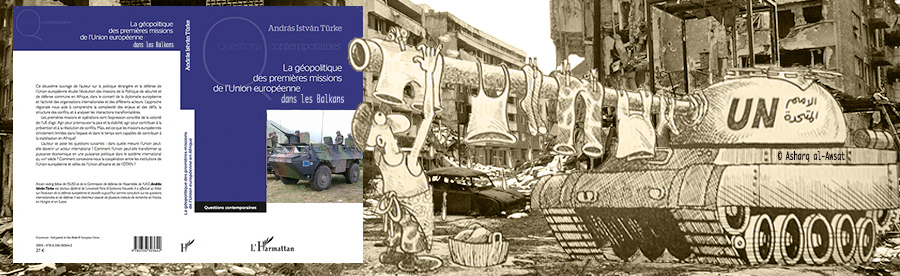
We are looking for sponsors for the English translation of these books, please contact turkeandras(at)gmail(dot)com