
You are here
Feed aggregator
«Il n’y a pas de vacances pour ceux qui veulent sauver leur peau» : le vrai-faux été des députés, avant le budget et les législatives de 2027
DÉCRYPTAGE - La session extraordinaire s’est terminée il y a un peu plus d’une semaine pour les députés, qui ont retrouvé leurs circonscriptions et ne comptent pas rester inactifs cet été malgré une déconnexion assumée par certains.
Categories: France
La France n’a pas refusé de faire appel à un bombardier d’eau russe par russophobie
Alors que la flotte de Canadairs française connaît des problèmes d’indisponibilité, de nombreux internautes affirment qu’Emmanuel Macron aurait refusé d’employer un bombardier d’eau russe, le Beriev Be-200, pour des raisons idéologiques. C’est inexact : l'appareil a été rejeté car il ne correspondait pas aux besoins de la Sécurité civile.
Categories: France
Les 10 meilleures villes au monde où il fait bon vivre en 2026
Le magazine The Economist analyse différents facteurs dans les villes, notamment la stabilité, la santé, la culture, l'environnement, l'éducation et les infrastructures, avant d'établir le classement qu'il attribuera à chaque ville.
Categories: Afrique
Redesigning International Order for a G-Minus World
This is the age of hyper-multipolarity, where every plausible steering group is missing something essential.
Categories: Diplomacy & Crisis News
North Korea Needs China and Russia – But Doesn’t Want Its People Admiring Them
Pyongyang’s strict ideological controls apply to perceptions of its allies as well as to “hostile states” like the United States.
Categories: Diplomacy & Crisis News
"Pas d'atteinte à la liberté d'expression" : Nuñez répond à la polémique Xenia Fedorova
L'arrêté d'expulsion visant la chroniqueuse prorusse Xenia Fedorova, accusée d'être la voix du Kremlin dans des médias français, n'est "pas une atteinte à la liberté d'expression", a affirmé jeudi le ministre de l'Intérieur français Laurent Nuñez. Une partie du Rassemblement national a salué la lutte contre l'ingérence russe tout en dénonçant un "deux poids deux mesures", d'autres élus et figures du camp ont eux dénoncé une censure politique.
Categories: France
Géopolitique des hôtels de luxe
La « révolution des flamants roses » agite l'Albanie. Chaque jour, des manifestants défilent contre un projet d'hôtellerie haut de gamme néfaste pour l'environnement. À la manœuvre, des investisseurs syro-qataris qui conduisent d'autres opérations semblables, notamment dans l'océan Indien. Car (…)
/ Qatar, Tourisme, Golfe, Environnement, Géopolitique
Categories: Diplomacy & Crisis News
Guinée : les victimes du massacre de Zogota optimistes après la décision française
À Zogota, en Guinée, où vivent toujours de nombreuses familles des victimes, cette décision est accueillie avec prudence mais aussi avec espoir.
Categories: Afrique, European Union
Why Did China Test a Submarine-launched Ballistic Missile?
July 6 was the first time that China has launched a submarine-launched ballistic missile into international waters.
Categories: Diplomacy & Crisis News
Boxer's Commonwealth Games racism claim rejected
Claims made by boxer Aziz Abdul that racism was behind his disqualification at the Commonwealth Games are rejected.
Categories: Africa
Rangers move a 'dream come true' for South Africa's Makhanya
South Africa defender Olwethu Makhanya becomes Rangers' eighth summer signing, joining for an undisclosed fee from Philadelphia Union.
Categories: Africa
Generations at the Crossroads The EU Strategy on Intergenerational Fairness: Implications for Greece
In March 2026, the European Union adopted its first-ever Strategy on Intergenerational Fairness, placing the balance of interests between present and future generations at the centre of EU policy and law-making. The Strategy is a soft-law framework—it sets direction, vocabulary and a measurement architecture, rather than binding obligations—and its real value will therefore be determined at Member State level. This policy brief argues that Greece is one of the EU’s clearest test cases for the Strategy. The convergence of demographic decline, persistent youth insecurity, a structural housing crisis, large-scale emigration and a pension system in transition has placed a disproportionate share of the costs of the past fifteen years on the young, fraying the implicit contract between generations. Drawing on EU and Greek data and on the emerging international literature on intergenerational governance, the brief sets out what a coherent Greek response would require: translating the European framework into a National Plan for Intergenerational Renewal with measurable targets, an intergenerational impact test, a standing institutional anchor and transparent monitoring. Greece’s Council of the EU Presidency in the second half of 2027 offers a natural and consequential moment to begin.
Read here in pdf the Policy paper by Katerina Eirini Lambrinou, Research Associate, ELIAMEP; Member of the Network of Institutions and Leaders for Future Generations (NiFG).
.
Categories: Diplomacy & Defense Think Tank News
A harmadik angol–holland háború 05.
A texeli ütközet végett vetett azoknak a reményeknek, hogy az angol–francia haderő majd a tenger felől támadva számolja fel Hollandia ellenállását. A szárazföld felől ugyanekkor a hollandok által elárasztott földek állták útját a francia hadseregnek, mely képtelen volt tovább nyomulni az ország belseje felé. Patthelyzet alakult ki, ami mindenképpen a franciák számára volt előnytelenebb. Hollandia térdre kényszerítése egyre inkább lehetetlen vállalkozásnak tűnt, és XIV. Lajos figyelme kezdett Spanyol-Németalföld felé irányulni, melynek meghódítása amúgy is régi vágya volt. A háború előtt a semlegességért cserébe ugyan ígéretet tett a spanyol és az osztrák uralkodónak, hogy tiszteletben tartja érdekeiket, és a francia csapatok nem lépnek a szóban forgó területekre, de az ilyesfajta ígéreteket Lajos mindig hajlamos volt nagyon rugalmasan kezelni. Maastricht elfoglalásával a franciák teljesen elszigetelték Spanyol-Németalföldet, melyet Lajos csapatai ekkorra már minden irányból körülzártak.
Az események ilyen alakulása határozottan ellentétes volt mind a spanyol, mind pedig az osztrák Habsburgok érdekeivel, akik augusztus végén szövetségre léptek a texeli csata után egyre inkább nyerő helyzetbe kerülni látszó Hollandiával. Lipót császár távozásra szólította fel a bécsi francia nagykövetet, ami a gyakorlatban a hadüzenettel volt egyenlő. A háború menete láthatóan fordulatot vett, és ennek hatására az addig a franciákat támogató német fejedelemségek is változtattak politikai irányvonalukon, s Bajorország, Hannover, és Württemberg kivételével egy éven belül valamennyien aktív vagy passzív támogatói lettek a franciaellenes koalíciónak.
Categories: Biztonságpolitika
Europe’s China Strategy Is Ready for a Refresh
EU leaders have an opportunity to stop treating repression as a side issue and instead make human rights more central to their engagement with China.
Categories: Diplomacy & Crisis News
Regular Press Conference of the Ministry of National Defense on July 30, 2026
No description
Categories: Defence`s Feeds
Cuba's Permanent Representative addresses the Assembly of the International Seabed Authority
The Permanent Representative of Cuba to the International Seabed Authority (ISA), Ambassador Tania López Larroque, addressed the 31st Session of the Assembly of this international body on the morning of 28 July.
Categories: Defence`s Feeds
Resilience at the Heart of Australia-Singapore Ties
At the 15th Singapore-Australia Joint Ministerial Committee this week, the two sides emphasized resilience across sectors, from defense to trade.
Categories: Diplomacy & Crisis News
Dual Crises in Eastern DRC as Ebola Surges and Hunger Deepens
By Shuli Wong
UNITED NATIONS, Jul 30 2026 (IPS)
The Democratic Republic of Congo (DRC) is battling the fastest-growing Ebola outbreak on record, with United Nations officials warning that hunger is actively undermining efforts to contain the spread.
“Ebola feeds on delay, fear and hunger,” said Carl Skau, acting director of the World Food Programme (WFP) on Wednesday, July 29.
The current outbreak, declared on May 15th and caused by the Bundibugyo species of Ebola, is the third largest outbreak ever recorded, said Dr. Chikwe Ihekweazu, Executive Director of the World Health Organization’s (WHO) Health Emergencies Programme. The outbreak in the DRC is reaching unprecedented levels, Dr. Ihekweazu noted. “Over the last few days, we’ve seen some of the highest numbers of new infections in a single day.”
As of July 29th, the DRC outbreak has reached over 3,200 cases, with the virus spreading to 48 health zones across five provinces in eastern DRC. Unfortunately, WHO’s modeling has indicated that the true scale of the outbreak could be two to four times higher than the reported cases. Furthermore, 80 percent of new cases are coming from unknown chains of transmission, and many newly reported deaths are from people who never reached a health care facility or received care.
Julien Harneis, the UN’s Senior Ebola Coordinator, discussed how a critical driver for Ebola transmission is the fact that people are dying in their communities rather than in the care of a hospital or treatment center.
“Roughly 60 percent of deaths are occurring in the community, at the point when viral load — and risk to caregivers — is highest,” said Mr. Harneis.
WHO officials have mirrored this concern, calling deaths that occur outside of health facilities “the most alarming finding.” While there is no approved treatment for the Bundibugyo species of Ebola, the chances of survival are significantly higher with early supportive care.
On top of the outbreak is a severe hunger crisis that is exacerbating the impact and spread of Ebola. Across eastern DRC, nearly 10 million people are facing crisis- or emergency-level hunger. Ituri, the epicenter of the outbreak, is also the DRC’s most severe hunger hotspot, with 1.9 million people at crisis levels of food insecurity or worse. Mr. Skau emphasized how “food assistance is frontline Ebola containment. It helps families stay home, supports safe isolation, builds trust with communities and keeps health teams moving.”
The WFP has already delivered more than 160,000 hot meals to patients and frontline workers across 17 treatment and isolation centers. Dry food rations have been provided to 23,000 people, including 14,000 under quarantine, and an additional 36,000 people in Ebola-affected zones have been provided general food assistance. While discussing WFP’s work, Mr. Skau stressed how food logistics support is central to containing the outbreak. “You cannot force people to choose between hunger and health,” he said.
However, funding to tackle the interconnected hunger and Ebola crisis remains critically underfunded. WFP needs USD 293.6 million over the next six months to sustain all operations in DRC, including $76 million for the regional Ebola responses and $50 million for food and nutrition assistance.
“$76 million is the ask and that’s frankly just peanuts, if you look at the bigger scheme of things,” said Mr. Skau. Furthermore, while WFP’s logistics have been somewhat funded, the food element has received no funding. Mr. Skau emphasized, “if you want to be effective, you need to have an all rounded response. It’s not only the health response that is needed to be able to contain that.” Mr. Harneis added that in addition to the food assistance needed, the broader $1 billion Humanitarian Needs and Response Plan is only 45 percent funded.
WHO and WFP officials are urging the international community not to lose focus, as Dr. Ihekweazu warned: “now is not the time to drop the ball.” Mr. Harneis and Mr. Skau called for further action and to “scale up the Ebola response, three, four, five times of what we are doing now.”
Mr. Skau linked the urgent funding need to a broader appeal for political attention, describing the DRC as “exhausted from years of conflict, from repeated displacement, from crisis after crisis after crisis.” He argued that ending the outbreak will require more than just medical and food assistance: “We need peace, we need security…for all of this, we need funding…the funding that is coming here is far from enough and we need political attention.” In the weeks ahead, a rapid increase in funding and political will is needed to change the outbreak’s trajectory.
IPS UN Bureau Report
Follow @IPSNewsUNBureau
!function(d,s,id){var js,fjs=d.getElementsByTagName(s)[0],p=/^http:/.test(d.location)?'http':'https';if(!d.getElementById(id)){js=d.createElement(s);js.id=id;js.src=p+'://platform.twitter.com/widgets.js';fjs.parentNode.insertBefore(js,fjs);}}(document, 'script', 'twitter-wjs');
Categories: Africa
Iran and the United States are once again at the center of global security. Is this just another crisis, or is it the beginning of a new geopolitical era in the Middle East? – ELIAMEP experts’ views
ELIAMEP’s analysts assess the latest developments and examine possible scenarios for the future of Iran–US relations, as well as their implications for the Middle East and international security.
Read it here (in Greek).
Categories: Diplomacy & Defense Think Tank News, Nyugat-Balkán
Mégafeu en Gironde : les stigmates de l'incendie
Le mégafeu qui frappe la Gironde depuis huit jours a laissé sur sur son chemin destruction et impuissance. Quelques gouttes de pluie et des températures plus clémentes ont redonné espoirs aux pompiers : ils considèrent le feu "toujours stabilisé" mais restent prudents.
Notre envoyée spéciale, Éléonore Gogé, s'est rendue à Lège-Cap Ferret, où des dizaines de maisons sont calcinées.
Categories: France
Pages


© 2012-2018 Europa Varietas Foundation © 2015-2018 Europa Varietas Association
www.europavarietas.org | info(@)europavarietas(dot)org | Switzerland
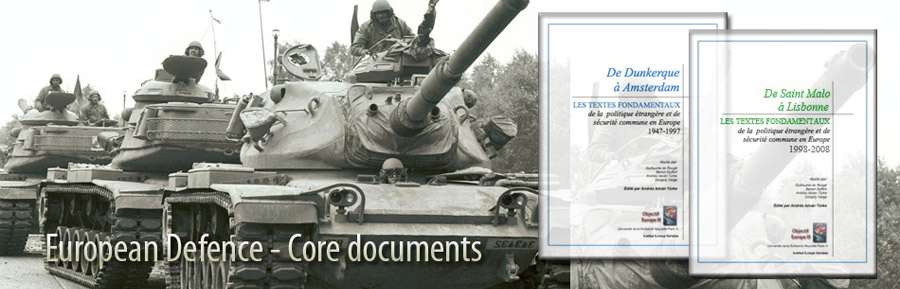
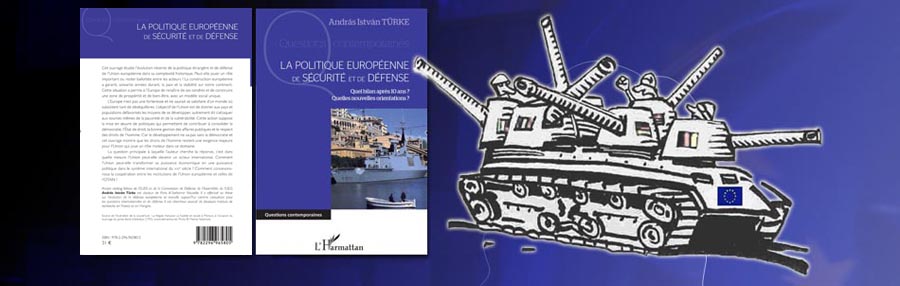
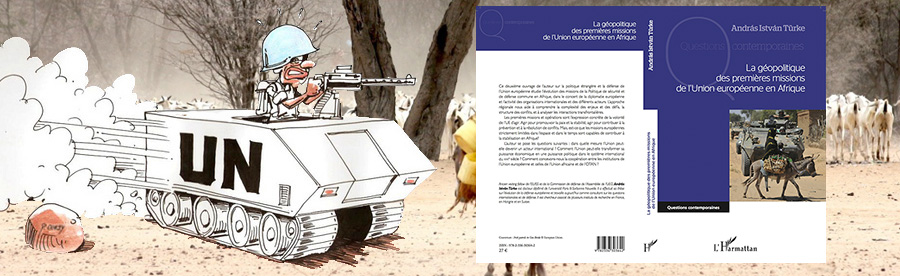
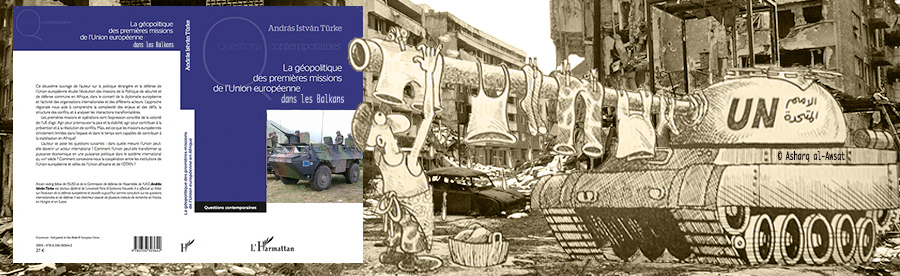
We are looking for sponsors for the English translation of these books, please contact turkeandras(at)gmail(dot)com