
You are here
Feed aggregator
Interdiction des rassemblements à Kinshasa en raison d'Ebola au pays: l’opposition dénonce une décision « politiquement motivée »
La décision de l’Intérieur interdisant les manifestations publiques à Kinshasa continue de susciter de vives réactions au sein de l’opposition. La coalition C64 a dénoncé, dimanche 28 juin, une mesure qu’elle juge « anticonstitutionnelle » et annonce le maintien de sa marche prévue le 8 juillet prochain.
Categories: Afrique
Congo Nouveau : « Interdiction des rassemblements de masse pour raison d’Ebola : le pouvoir de Tshisekedi vise-t-il la marche du 8 juillet de la C64 ? »
Revue de presse de ce lundi 29 juin 2028
Les médias commentent ce lundi matin la mesure prise par le gouvernement interdisant les rassemblements populaires dans les provinces de Kinshasa, de la Tshopo, du Haut-Uélé et du Bas-Uélé, officiellement pour endiguer la propagation du virus Ebola.
Categories: Afrique
Cuba’s Last Hand
Picture alliance / Anadolu | Magdalena Chodownik Source: International Politics and Society, Berlin
By Sandra Weiss
MEXICO CITY, Jun 29 2026 (IPS)
Ever since the Berlin Wall fell 37 years ago and the communist Eastern Bloc collapsed, Cuba has been debating economic reforms to its socialist system. Essentially, the discussion always revolves around the same issues: less state planning, more personal responsibility. In other words, a strong dose of capitalism as an antidote to inefficient and corrupt state bureaucracy.
Little has happened since then. Phases of liberalisation and opening up have been followed by phases of tightening and control. Time and again, hardliners within the party, the military and the bureaucracy have put the brakes on. The reason — the reforms fuelled inequality and resentment towards the newly wealthy privileged class. Underlying this was, above all, the fear of losing power and control, and of infiltration by the class enemy, or, in the Cuban interpretation, US imperialism.
Throwing money down a bottomless pit
Suddenly, things moved very quickly. Last week, the parliament – which had been convened in haste and with a rather incomplete quorum, as many MPs were unable to travel to Havana due to the petrol shortage – passed a 176-point reform programme which observers have described as ‘historic’ given its far-reaching implications. In the process, some of the ‘sacred cows’ of the socialist state economy are being brought down. For instance, there will be no more blanket subsidies in the future, instead, support will be targeted solely at the socially disadvantaged. This spells the end of the ‘Libreta’, the state food ration card that has granted the population access to virtually free food and hygiene products for over half a century, even though, in the face of the economic crisis, it had recently become little more than a piece of waste paper.
The second taboo to be broken is decentralisation. From now on, state-owned enterprises and provinces are to be less dependent on the central government in Havana and will be allowed to make their own decisions on staffing and wages. The absurd extremes to which this centralisation had led were captured by directors Juan Carlos Tabio and Tomás Gutiérrez Alea in their 1995 classic Guantanamera, in which a corpse had to be transported from Santiago de Cuba to Havana for burial – that is, all the way across the island, in a battle against bureaucracy.
Cuban exiles are permitted to invest directly on the island.
Private companies are finally to be permitted to operate in the agricultural sector; until now, only cooperatives had been authorised. Agriculture on the Caribbean island, once renowned for its sugar production, is now almost completely in ruins: millions of hectares of arable land lie fallow due to a lack of machinery, fertilisers, technology and labour. Cuba imports the majority of its food. Much of this comes from China, Turkey or Arab countries, but also from the neighbouring US – despite the embargoes. Private investment is now also permitted in the energy sector. The reforms will also allow individuals to own more than one private company in the future.
However, the liberalisation also targets trade, foreign investment and integration into the global economy. For example, private banks and financial institutions are to be authorised to operate in the microcredit sector. Numerous restrictions on foreign exchange transactions are being lifted. Consequently, businesses and private individuals may now open and operate foreign exchange accounts without prior authorisation. Foreign firms are permitted to select their own staff and are no longer required to go through state employment agencies. Furthermore, they are no longer obliged to enter into joint venture agreements with the state. Cuban exiles are permitted to invest directly on the island. This is intended to attract foreign investors and fresh capital.
Months ago, US Secretary of State Marco Rubio had already stated that political reforms and a change in the leadership were needed – but Havana categorically rejects this.
Almost all of these reforms have been under discussion for years. Even Vietnam and China have repeatedly urged the Cuban leadership to move in this direction, because, despite their historical ties, geopolitical interests and ideological affinities, they were tired of throwing money down a bottomless pit. Fifteen years ago, whilst the island was still receiving oil in abundance from its brother nation Venezuela and the then US President Barack Obama was reaching out to the island, the circumstances would have been ideal for such a transformation.
Now, beneath the sword of Damocles of the oil embargo and the threat of US intervention, it is actually already too late: the coffers are empty, legitimacy among the population has been squandered, and the reforms can only take effect if the US plays its part, lifts its sanctions against Cuba and supports the country’s integration into the global economy. However, that is out of the question at present. The US government holds the upper hand geopolitically and wants more. Months ago, US Secretary of State Marco Rubio had already stated that political reforms and a change in the leadership were needed – but Havana categorically rejects this.
The potential of democratization
The Speaker of the Cuban Parliament, José Luis Toledo, made it clear when the package was passed that ‘the reforms do not mean abandoning the state’s social role’. Washington’s reaction was correspondingly cool: the US State Department described the economic reforms as modest, too late and ‘superficial smoke signals’. This is a typical strategy to create the illusion of change, only to quickly reverse the reforms as soon as the regime’s control is threatened.
The strategies of either side are clear. Cuba is playing for time and hoping that Trump will lose the mid-term elections in the autumn, thereby losing his interest in Cuba and the backing for his stranglehold tactics. Washington will probably let Havana continue to squirm for the time being and wait to see whether words are followed by deeds – and how quickly. Meanwhile, political pressure is likely to continue to mount during the secret talks. Military intervention is not yet off the table either. This game of poker is ultimately about one thing: who dictates the terms for Cuba’s transformation.
The EU has, in fact, sidelined itself when it comes to Cuba.
So far, the Cuban people have had little say in the matter. Although protests against power cuts, water shortages and food shortages are a daily occurrence, they are swiftly and brutally suppressed. Unlike in Venezuela, there is no organised opposition on the island with charismatic leaders, a clearly defined political programme and broad support. This currently plays into the hands of the ruling elite. But this need not remain the case in the long term, especially if the reforms take hold and more and more people become independent of the state.
Transition processes in Eastern Europe have shown that civil society actors (and, unfortunately, organised crime too) know how to capitalise on the turmoil of such periods of upheaval. However, this could lead to all sorts of outcomes: permanent instability, a mafia-style oligarchic regime, or democratic structures. For the latter to emerge, however, the process – and above all the regime in Havana – would require discreet international support; at present, this seems conceivable only through countries such as Mexico and Brazil, with the backing of the UN or the Vatican.
Neither Latin America as a whole nor the EU currently has any relevant supranational structures with appropriate leaders. Quite the contrary. The EU has, in fact, sidelined itself when it comes to Cuba. Firstly, Trump’s sanctions forced most European companies to abandon their investments in and business dealings with Cuba, without Brussels doing anything to oppose this. And a few days ago, the European Parliament – with a majority of right-wing and conservative MEPs – called for sanctions against Cuba’s President Miguel Díaz-Canel and for an end to cooperation with Cuba – in other words, entirely in line with Trump’s thinking and spirit, without so much as a hint of independent ideas to defend European interests. Another small step towards geopolitical and geo-economic irrelevance.
Sandra Weiss is a political scientist and a former diplomat. A freelance journalist, Sandra writes articles about Latin America for several German newspapers, among others Die Zeit and Die Welt.
Source: International Politics and Society, published by the Global and European Policy Unit of the Friedrich-Ebert-Stiftung, Hiroshimastrasse 28, D-10785 Berlin.
Excerpt:
This game of poker is ultimately about one thing — who dictates the terms for the country’s transformation.
Categories: Africa
Iran-Krieg: Angriffe, um eigene Ziele in den Verhandlungen durchzusetzen
Categories: Diplomacy & Defense Think Tank News
The Silent Metamorphosis
With elections likely to be held in August, the young people in Haiti are moving ahead, creating opportunities in music and digitalization and agricultural cooperatives, which are reinventing food self-sufficiency. Credit: Shutterstock
By Xavier Michon
PORT-AU-PRINCE, Haiti, Jun 29 2026 (IPS)
There is a question that is never asked plainly enough in reports on Haiti: why, despite decades of analysis, billions in international aid, and an abundance of national strategies, does the potential of Haitian youth remain so consistently underutilized? This report, The Silent Transformation, is an attempt at an honest answer.
And that answer begins with an admission: for too long, we have viewed this generation as a problem to manage rather than a solution to mobilize.
Haiti is one of the youngest countries in the Western Hemisphere. More than one in two Haitians is under the age of 25. This reality should be at the heart of every policy decision, every investment strategy, every dialogue with international partners. It is not yet. And it is precisely to change this that this report exists.
We are at a turning point unlike any in the country’s recent history. For the first time since 2016, general elections are on the horizon. What may appear as an institutional milestone is, in fact, a deeply human one: an entire generation is preparing to vote for the first time. Citizens who were between 8 and 17 years old during the last general election. Since then, they have built businesses, lived through an earthquake, a pandemic, a presidential assassination and an unprecedented security crisis—and at no point during all of this were they consulted about the future of their own country.
Ten years without elections. Ten years of shaping their own lives without their institutions recognizing them as full actors. This paradox lies at the heart of this report.
Because this generation has not waited for permission to begin its transformation. It has done so on its own, in adversity, with whatever tools were within reach. And this is where the central thesis of this document lies: Haitian youth are not waiting for development. They are already producing it.
Mannitòks are inventing fintech without waiting for banks to modernize. Agricultural cooperatives are reinventing food self-sufficiency in secure areas. Coding clubs in Cap-Haïtien and Carrefour are training the next generation of developers without formal computer science schools. Designers in Pétion-Ville, musicians exporting kompa and Kreyòl rap to global platforms, DJs connecting Port-au-Prince to the diaspora, and artisans in Noailles are sustaining a cultural economy still absent from official economic radars.
These are not isolated success stories. They are signs of a structural transformation unfolding before our eyes—quietly, because we have not yet learned how to see it with the right tools.
This report is an attempt to develop those tools. It documents, analyzes, and recommends. But it also does something rarer in development literature: it shifts the perspective. It starts from the creative genius of Haitian youth and works upward toward public policy, rather than moving from policy down to beneficiaries.
This inversion is not rhetorical—it is methodological. And it changes what we see.
What it reveals is demanding for all of us. It shows that the main barrier to youth development in Haiti is not a lack of potential, but a lack of recognition of that potential. It shows that the most effective policies will not be those designed for young people, but those designed with them. And it shows, finally, that the international community—including UNDP—must embrace a new kind of humility: sometimes, to support means to step back, to remove obstacles rather than impose solutions.
UNDP supports these dynamics: we promote digital skills, access to finance and innovation ecosystems. Our initiatives—from supporting Fab Labs to advancing regulatory reforms—aim to create an environment in which youth-led enterprises can thrive. But we also know that our most valuable role is the one we build on the ground, alongside those who are already taking action. This report calls on us to listen as much as we act.
I warmly thank Group Croissance and CEDEL Haiti, whose field expertise and unwavering commitment have shaped every page of this document. Above all, I thank the young Haitians who shared their experiences, their vision and their clarity—because this is their report before it is ours.
To them, I want to say this: your determination is not only your strength—it is, objectively, the most valuable resource Haiti possesses. The upcoming election will be your first meeting with the ballot box. It will not be your last. And if this report helps ensure that this moment lives up to what you have already built without itin adversity, without permission, with unwavering ambition, then it will have achieved its essential purpose.
None of this happens in isolation. Canada has been a trusted partner in Haiti’s development journey, and its continued support for initiatives that invest in people, ideas and long-term possibilities reflects exactly the kind of partnership Haiti needs. To the Government of Canada and Global Affairs Canada: thank you. Your commitment to a Haiti defined by its potential—not only its challenges—helps make initiatives like this one possible.
The path ahead requires courage, collaboration and clear-eyed reflection on what has not worked—but above all, renewed faith in what is possible. Because while the past teaches us caution, it is the future this generation is already shaping that must guide our choices.
Let us take this path together—by letting you show the way.
XAVIER MICHON IS Resident Representative, UNDP Haiti
Source: UNDP
IPS UN Bureau
Follow @IPSNewsUNBureau
!function(d,s,id){var js,fjs=d.getElementsByTagName(s)[0],p=/^http:/.test(d.location)?'http':'https';if(!d.getElementById(id)){js=d.createElement(s);js.id=id;js.src=p+'://platform.twitter.com/widgets.js';fjs.parentNode.insertBefore(js,fjs);}}(document, 'script', 'twitter-wjs');
Excerpt:
Haitian youth are quietly reinventing their country’s future.
Categories: Africa
Ebola : interdiction des rassemblements publics à Kinshasa, Tshopo, Bas-Uele et Haut-Uele
Le gouvernement interdit tous les rassemblements publics dans la ville-province de Kinshasa ainsi que dans les provinces de la Tshopo, du Haut-Uele et du Bas-Uele. Cette mesure vise à limiter la propagation du virus Ebola, selon un télégramme officiel du ministère de l’Intérieur.
Categories: Afrique
France/United States : FBI, Homeland Security pressure Europe over immigration
Melissa K.R., an attaché from the investigative branch of the US Department of Homeland Security (DHS) has become a familiar name across the different French police immigration control bodies. Having arrived a few months ago at the US embassy in [...]
Categories: Defence`s Feeds
Belgium/France/United States : US anti-narco taskforces, Belgian intel coordination, CNCTR and third-party service
US – Congressional scrutiny of Trump's anti-drug task forcesA report by the Congressional Research Service has found that the network [...]
Categories: Defence`s Feeds
France/Ukraine : Ukraine's Azov welcomed at Eurosatory despite ideological baggage
The 1st Azov Corps was welcomed with great fanfare at one of Europe's largest land defence and security trade fairs, [...]
Categories: Defence`s Feeds
France/Ukraine : EOS Technologie behind Paris's covert operations in Ukraine
The company EOS Technologie, based near Grenoble in southeastern France, is making inroads in Ukraine. Working in close collaboration with [...]
Categories: Defence`s Feeds
Europe Goes Its Own Way
Drifting from America, the continent Is rearming and reordering itself.
Categories: Diplomacy & Crisis News
VIDEO «NZZ STANDPUNKTE» - Nach der 10-Millionen-Initiative ist vor den neuen EU-Verträgen: «Wir sind in so vielen Bereichen den EU-Staaten überlegen», sagt Thomas Aeschi
Auf Abstand zur EU bleiben und sich generell von internationalen Bündnissen fernhalten: Das hält der SVP-Nationalrat Thomas Aeschi auch in einer sich rasant wandelnden Welt für ratsam.
Categories: Swiss News
Bangkok’s Voters Hand Chadchart Second Term as Governor By Decisive Margin
Chadchart Sittipunt, an independent, has replicated the landslide victory that delivered him to the governor's office in 2022.
Categories: Diplomacy & Crisis News
Why Pakistan Struggles With Violence Against Women
There are no official statistics on acid attacks on women in Pakistan. But an estimated 200 cases are reported each year.
Categories: Diplomacy & Crisis News
Indonesia Says Tech Firms Have Wiped 4.7M Child Accounts Since Govt Ban
Jakarta is one of a growing cohort of nations seeking to safeguard under-16s from cyberbullying, online fraud, and pornography.
Categories: Diplomacy & Crisis News
Study - Mapping peacetime reconstruction needs of Ukraine - PE 783.617 - Committee on Foreign Affairs
By early 2026, Russia’s full-scale invasion of Ukraine had entered its fifth year with no end in sight and an assessed reconstruction and recovery cost approaching EUR 507 billion over ten years, according to the Fifth Rapid Damage and Needs Assessment published in February 2026. This paper maps Ukraine’s reconstruction and recovery needs across a spectrum from active conflict to long-term managed insecurity. Three findings run through the analysis. Firstly, current donor frameworks persistently conflate reconstruction necessities – rubble clearance, coal mine dewatering and environmental remediation – with commercially investable sectors, leaving the physical preconditions for everything else chronically underfunded while channelling finance toward showcase projects. Secondly, Ukraine’s demographic outlook – falling refugee return intentions together with a mobilised and wounded workforce – is the overriding planning constraint: infrastructure scaled for a population that does not return is stranded public expenditure. Thirdly, reconstruction and Ukraine's European Union accession pathway are formally aligned but operationally separated: nobody on either the European Union or Ukrainian side currently has authority to ensure that investment decisions made today meet the standards Ukraine will be required to apply upon accession. The study closes with recommendations addressed to the European Parliament.
Source : © European Union, 2026 - EP
Source : © European Union, 2026 - EP
Categories: Europäische Union
Study - A new EU approach to the Sahel region - PE 783.618 - Committee on Foreign Affairs
This paper analyses the European Union’s (EU) evolving engagement with the Sahel region, with particular attention to the Alliance of Sahelian States – Mali, Burkina Faso and Niger. Drawing on interviews with EU officials and external experts, as well as academic and policy literature, this paper examines three interrelated dimensions. Firstly, it reviews the EU’s past approaches to the region since 2011, highlighting how shifting strategic logics, strong Member State influence and limited responsiveness to local political dynamics have shaped EU engagement. Secondly, it assesses the current political and security context in the Sahel. This is characterised by military rule, worsening jihadist violence and a strategic realignment towards non-Western partners, such as Russia, Türkiye and Gulf states, all aspects which influenced the partial rupture with the EU. Finally, it analyses the EU’s recently adopted renewed approach to the Sahel and the challenges of re-engaging in a volatile and competitive geopolitical environment. The paper concludes with policy options for a more pragmatic and differentiated EU engagement in the region, emphasising the need for flexible policies, connecting with the populations and lowered ambitions.
Source : © European Union, 2026 - EP
Source : © European Union, 2026 - EP
Categories: Europäische Union
Study - Mapping peacetime reconstruction needs of Ukraine - PE 783.617 - Committee on Foreign Affairs
By early 2026, Russia’s full-scale invasion of Ukraine had entered its fifth year with no end in sight and an assessed reconstruction and recovery cost approaching EUR 507 billion over ten years, according to the Fifth Rapid Damage and Needs Assessment published in February 2026. This paper maps Ukraine’s reconstruction and recovery needs across a spectrum from active conflict to long-term managed insecurity. Three findings run through the analysis. Firstly, current donor frameworks persistently conflate reconstruction necessities – rubble clearance, coal mine dewatering and environmental remediation – with commercially investable sectors, leaving the physical preconditions for everything else chronically underfunded while channelling finance toward showcase projects. Secondly, Ukraine’s demographic outlook – falling refugee return intentions together with a mobilised and wounded workforce – is the overriding planning constraint: infrastructure scaled for a population that does not return is stranded public expenditure. Thirdly, reconstruction and Ukraine's European Union accession pathway are formally aligned but operationally separated: nobody on either the European Union or Ukrainian side currently has authority to ensure that investment decisions made today meet the standards Ukraine will be required to apply upon accession. The study closes with recommendations addressed to the European Parliament.
Source : © European Union, 2026 - EP
Source : © European Union, 2026 - EP
Categories: European Union
Study - A new EU approach to the Sahel region - PE 783.618 - Committee on Foreign Affairs
This paper analyses the European Union’s (EU) evolving engagement with the Sahel region, with particular attention to the Alliance of Sahelian States – Mali, Burkina Faso and Niger. Drawing on interviews with EU officials and external experts, as well as academic and policy literature, this paper examines three interrelated dimensions. Firstly, it reviews the EU’s past approaches to the region since 2011, highlighting how shifting strategic logics, strong Member State influence and limited responsiveness to local political dynamics have shaped EU engagement. Secondly, it assesses the current political and security context in the Sahel. This is characterised by military rule, worsening jihadist violence and a strategic realignment towards non-Western partners, such as Russia, Türkiye and Gulf states, all aspects which influenced the partial rupture with the EU. Finally, it analyses the EU’s recently adopted renewed approach to the Sahel and the challenges of re-engaging in a volatile and competitive geopolitical environment. The paper concludes with policy options for a more pragmatic and differentiated EU engagement in the region, emphasising the need for flexible policies, connecting with the populations and lowered ambitions.
Source : © European Union, 2026 - EP
Source : © European Union, 2026 - EP
Categories: European Union
Conspiracy or chaos? Algeria & Austria defend 'unexpected' draw
The 'Disgrace of Gijon' - an infamous match at the 1982 World Cup in Spain - has followed Austria and Algeria for 44 years. Did history repeat itself in Algeria's 3-3 draw with Austria on Sunday?
Categories: Africa
Pages


© 2012-2018 Europa Varietas Foundation © 2015-2018 Europa Varietas Association
www.europavarietas.org | info(@)europavarietas(dot)org | Switzerland
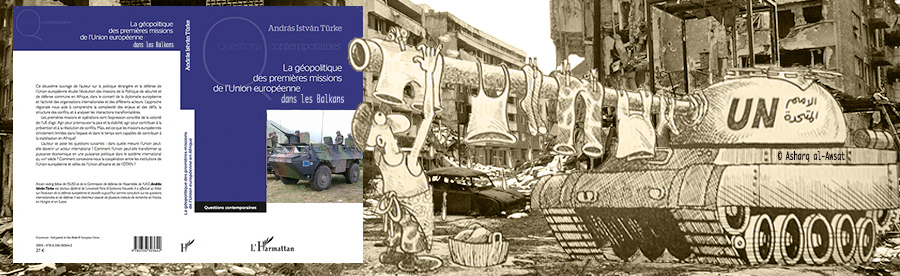
We are looking for sponsors for the English translation of these books, please contact turkeandras(at)gmail(dot)com