
Vous êtes ici
Agrégateur de flux
Rustam Emomali Awarded Order for ‘Selfless Service’ by Uzbek President
Emomali is chair of Tajikistan’s National Assembly, the appointed mayor of Dushanbe, and, oh yes, son of President Emomali Rahmon.
Catégories: Diplomacy & Crisis News
REPORT From prototypes to capabilities – enabling new defence actors to scale up - A10-0268/2026
REPORT From prototypes to capabilities – enabling new defence actors to scale up
Committee on Security and Defence
Mārtiņš Staķis
Source : © European Union, 2026 - EP
Committee on Security and Defence
Mārtiņš Staķis
Source : © European Union, 2026 - EP
Catégories: Defence`s Feeds, European Union
The US Midterm Elections: Views From China
Most Chinese analysts don’t expect a sea change in U.S. foreign policy, but there are some implications for China to consider.
Catégories: Diplomacy & Crisis News
Press release - MEPs to host parliamentarians from Africa, Caribbean and Pacific
Next week about 160 parliamentarians from the African, Caribbean and Pacific states and MEPs will meet in the European Parliament to discuss global challenges.
Source : © European Union, 2026 - EP
Source : © European Union, 2026 - EP
Catégories: Europäische Union
Press release - MEPs to host parliamentarians from Africa, Caribbean and Pacific
Next week about 160 parliamentarians from the African, Caribbean and Pacific states and MEPs will meet in the European Parliament to discuss global challenges.
Source : © European Union, 2026 - EP
Source : © European Union, 2026 - EP
Catégories: Európai Unió : hírek magyarul
Press release - MEPs to host parliamentarians from Africa, Caribbean and Pacific
Next week about 160 parliamentarians from the African, Caribbean and Pacific states and MEPs will meet in the European Parliament to discuss global challenges.
Source : © European Union, 2026 - EP
Source : © European Union, 2026 - EP
Catégories: European Union
Les jeunes politiciens d'origine africaine qui marquent l'histoire des élections de mi-mandat aux États-Unis
Pour certains jeunes Africains, ces victoires offrent un aperçu de ce qu'une nouvelle génération d'électeurs pourrait accomplir dans leur pays.
Catégories: Afrique
African youth and the future of democracy: how social media and cohort size shape political participation
Despite their demographic size and growing political influence, African youth remain understudied in research on political participation. This article examines how two structural shifts, youth cohort size and social media use, independently and jointly shape electoral and protest behaviour across 40 African countries. Using Afrobarometer data (2016–2023) and complementary contextual datasets, we find that individual socio-economic factors remain the strongest predictors of participation, but demographic structure and digital engagement also matter. Larger youth cohorts are associated with a greater likelihood of voting. Social media use is connected with increases in protest participation while reducing the likelihood of voting, and its interaction with youth cohort size shapes both behaviours in important, non-linear ways. These findings challenge assumptions that youthful populations inherently drive unrest and show that digital mobilisation is strongly conditioned by the demographic context. Our study has significant implications for democratic legitimacy and youth inclusion in Africa’s rapidly changing political environments.
Catégories: Diplomacy & Defense Think Tank News
Historic Low Fertility Rate in the United States
As is the case in many other countries, the low fertility rate in the United States reflects a combination of economic, social, and cultural factors. Credit: Shutterstock
By Joseph Chamie
PORTLAND, USA, Nov 5 2026 (IPS)
Approximately 110 countries, including the United States, have fertility rates below the replacement level of 2.1 births per woman.
In 2025, the U.S. fertility rate fell to a historic low of approximately 1.6 births per woman, extending a long-term downward trend that began in 2007 when the rate was still well above the replacement level of 2.1 births per woman (Figure 1).
Source: U.S. National Vital Statistics Report.
The decline in U.S. fertility to well below the replacement level has raised serious concerns among government officials, economic advisors, and business leaders. It has prompted two key questions: What is causing the low fertility rate in the United States, and what can be done to increase fertility?
As is the case in many other countries, the low fertility rate in the United States reflects a combination of economic, social, and cultural factors. These include rising living costs, financial uncertainty, declining marriage rates, greater control over pregnancy, a shortage of suitable partners for starting families, delayed childbearing, increasing childlessness, and fewer teenage pregnancies.
The historic low fertility rate in the United States of approximately 1.6 births per woman is unlikely to return to the replacement level of about 2.1 births per woman any time soon. As deaths are expected to outnumber births around 2040, immigration will play an increasingly important role in shaping the country’s demographic future. Without immigration, the U.S. population could experience a substantial decline by the end of the century
Given the strength and complexity of these factors, the U.S. fertility rate is unlikely to return to the replacement level of about 2.1 births per woman anytime soon.
Another contributing factor to the low fertility level is the high cost and limited availability of child care, which often makes it difficult for many parents to balance work and family responsibilities. In 2023, two-thirds of U.S. parents with young children spent at least 20% of their household income on child care.
The decline in teenage childbearing has also contributed to lower fertility. Since 1991, the teenage fertility rate has declined by 81 percent, reflecting factors that include improved access to long-acting, reversible contraception and expanded public health education. Whereas in 1991 teenage childbearing accounted for 13% of U.S. births, by 2025 the proportion had declined to approximately 3%.
Another possible factor is the widening educational and social gap between young U.S. men and women. Boys are falling behind girls in educational achievement and some measures of the transition to adulthood. For example, approximately 47% of U.S. women ages 25 to 34 have a bachelor’s degree, compared with 37% of U.S. men. These differences may affect relationship formation, making it more difficult for some women to find compatible partners and potentially delaying marriage and childbearing.
As young women surpass men in educational attainment in the U.S., some report difficulty finding partners with similar educational backgrounds and values. Other concerns include emotional compatibility, a limited pool of similarly educated men, and a dating culture that places less emphasis on long-term commitment.
Greater financial independence has also given women more freedom to decide whether and when to marry and have children. At the same time, some men struggle to establish careers and achieve financial stability, potentially creating mismatched expectations among prospective partners. Many women are also prioritizing education and careers and are less willing to enter relationships they do not consider suitable for long-term partnership and parenthood.
Women in the United States are also having children later in life. In 2023, the average age at which women had their first child reached a record high of nearly 28 years, reflecting a steady multi-decade climb from 22 years in 1960.
This shift reflects several factors, including higher educational attainment, career development, and greater access to contraception. First births among women aged 35 and older have increased, while births to women under 25 have declined, reflecting a growing tendency to delay motherhood.
Childlessness among U.S. women has increased across nearly all reproductive age groups, particularly among women in their 20s and early 30s. Approximately 40% of 30-year-old women in the United States are now childless, compared with around 18% in 1976 (Figure 2).
Source: U.S. Census Bureau.
The current U.S. administration’s efforts to raise the country’s low fertility rate are unlikely to reverse the downward trend. Relatively small financial incentives alone are unlikely to overcome the broader economic, social, and personal factors influencing decisions about childbearing.
The administration’s efforts are modest compared with the pronatalist programs adopted by many other low-fertility countries, which have had limited success in raising birth rates. Moreover, the underlying factors keeping U.S. fertility well below the replacement level are unlikely to be adequately addressed by the country’s current administration and will probably persist for years to come.
With fertility remaining low, deaths in the United States are projected to outnumber births around 2040, with the gap widening thereafter. By 2080, the Census Bureau projects that annual deaths will exceed births by approximately one million (Figure 3).
Source: U.S. Census Bureau.
Immigration, however, is expected to sustain population growth, bringing the U.S. population to nearly 370 million by 2080. Without immigration, the Census Bureau projects that the country’s current population of 343 million would begin declining in about 15 years and fall to roughly 226 million by 2100.
In conclusion, the historic low fertility rate in the United States of approximately 1.6 births per woman is unlikely to return to the replacement level of about 2.1 births per woman any time soon. As deaths are expected to outnumber births around 2040, immigration will play an increasingly important role in shaping the country’s demographic future. Without immigration, the U.S. population could experience a substantial decline by the end of the century.
Joseph Chamie is a U.S. consulting demographer, a former director of the United Nations Population Division, and the author of numerous publications on population issues.
Catégories: Africa
What China’s Half-Empty 5th Plenum Says About Its Next Leaders
Empty seats and back-row observers at the Communist Party’s latest plenum hint at how Xi will remake the elite in 2027.
Catégories: Diplomacy & Crisis News
What Bangladeshi Prime Minister Tarique Rahman Brought Home From Japan
For Bangladesh, closer ties with Japan mean another source of funding and technology for its industries, as well as more support for maritime patrols.
Catégories: Diplomacy & Crisis News
Weitergabe des Tankrabatts bei Benzin nach wie vor nur bei rund 60 Prozent
Fünf Wochen nach Einführung des Tankrabatts zeigt der Tankrabatt-Monitor des DIW Berlin weiterhin eine nur teilweise Weitergabe der Steuersenkung an die Verbraucher*innen. Täglich verfolgt der Monitor die Entwicklung der Kraftstoffpreise in Deutschland und Frankreich., „Bei Benzin kommen weiterhin rund 61 bis 64 Prozent des Tankrabatts an den Tankstellen an, wenn man den 30. September, den letzten Tag vor dem Tankrabatt, als Referenzpunkt zugrunde legt. Das entspricht etwa zehn bis elf Cent der Steuersenkung von 16,7 Cent pro Liter. Nimmt man einen früheren ...
Catégories: Diplomacy & Defense Think Tank News
Vidéo d'une réunion d'une commission - Jeudi 5 novembre 2026 - 10:30 - Sous-commission "Droits de l'homme"
Durée de la vidéo : 120'
Clause de non-responsabilité : L'interprétation des débats facilite la communication mais ne constitue en aucun cas un enregistrement authentifié des débats. Seuls le discours original ou la traduction écrite révisée du discours original peuvent être considérés authentiques.
Source : © Union européenne, 2026 - PE
Catégories: Union européenne
Owono left out of Eq Guinea squad after death of De Miguel
Goalkeeper Jesus Owono will miss Equatorial Guinea's Afcon 2027 qualifiers after asking to be left out of the squad following the death of Tenerife forward Jesus de Miguel.
Catégories: Africa
ÄNDERUNGSANTRÄGE 301 - 600 - Entwurf eines Berichts Menschenrechte und Demokratie in der Welt und die Politik der Europäischen Union in diesem Bereich – Jahresbericht 2026 - PE797.438v01-00
ÄNDERUNGSANTRÄGE 301 - 600 - Entwurf eines Berichts Menschenrechte und Demokratie in der Welt und die Politik der Europäischen Union in diesem Bereich – Jahresbericht 2026
Ausschuss für auswärtige Angelegenheiten
Isabel Wiseler-Lima
Quelle : © Europäische Union, 2026 - EP
Ausschuss für auswärtige Angelegenheiten
Isabel Wiseler-Lima
Quelle : © Europäische Union, 2026 - EP
Catégories: Europäische Union
Politologe Overhaus zu US-Midterms: "Trump bleibt für jede Überraschung gut"
Mit Blick auf die transatlantischen Beziehungen sei das Wahlergebnis positiv zu bewerten. Doch die Außenpolitik werde weiter im Weißen Haus gemacht, so Marco Overhaus von der SWP.
Catégories: Diplomacy & Defense Think Tank News
Vidéo d'une réunion d'une commission - Jeudi 5 novembre 2026 - 09:15 - Sous-commission "Droits de l'homme"
Durée de la vidéo : 75'
Clause de non-responsabilité : L'interprétation des débats facilite la communication mais ne constitue en aucun cas un enregistrement authentifié des débats. Seuls le discours original ou la traduction écrite révisée du discours original peuvent être considérés authentiques.
Source : © Union européenne, 2026 - PE
Catégories: Union européenne
Pages



© 2012-2018 Europa Varietas Foundation © 2015-2018 Europa Varietas Association
www.europavarietas.org | info(@)europavarietas(dot)org | Switzerland


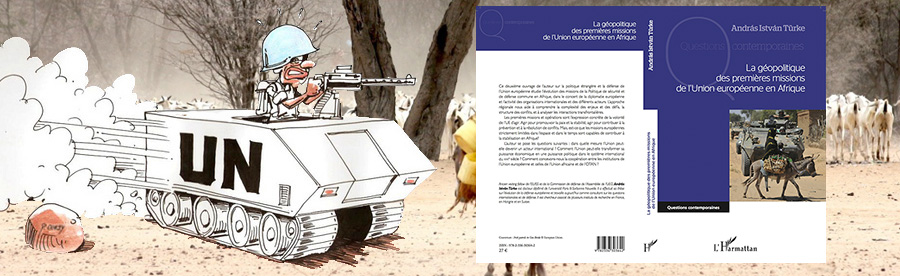

We are looking for sponsors for the English translation of these books, please contact turkeandras(at)gmail(dot)com