
You are here
Feed aggregator
Could Trump Sleepwalk Into a War Over Taiwan?
The administration's new National Security Strategy has pushed the U.S. policy toward the island in a decidedly dangerous direction.
Categories: Diplomacy & Crisis News
ICJ Begins Proceedings for Rohingya Genocide Allegations Case Against Myanmar
The International Court of Justice holds public hearings on the merits of the case concerning Application of the Convention on the Prevention and Punishment of the Crime of Genocide (The Gambia v. Myanmar: 11 States intervening) at the Peace Palace in The Hague. Credit: UN Web TV
By Oritro Karim
UNITED NATIONS, Jan 15 2026 (IPS)
On January 12, the International Court of Justice (ICJ), opened landmark hearings in a case brought by the Republic of The Gambia, alleging that Myanmar’s military committed acts of brutal genocide against the Rohingya minority during its 2017 crackdown. Described by the United Nations (UN) as a case “years in the making,” the ICJ will spend the next three weeks reviewing evidence and testimony from both sides to determine whether the Myanmar military violated the Genocide Convention.
This case marks the first genocide case fully undertaken by the ICJ in over a decade, filed by The Gambia in 2019, two years after the Myanmar military’s 2017 crackdown —which resulted in thousands of deaths and mass displacement. UN experts note that the outcome of this case could have implications far beyond Myanmar, potentially shaping other international legal proceedings such as South Africa’s petition accusing Israel of genocide in the Gaza Strip, and helping to define standards of evidence for genocide in contexts like Darfur in Sudan and Tigray in Ethiopia.
“The case is likely to set critical precedents for how genocide is defined and how it can be proven, and how violations can be remedied,” Nicholas Koumjian, head of the UN’s Independent Investigative Mechanism for Myanmar, told reporters.
Since 2017, Rohingya survivors have described the brutality of the Myanmar military’s attacks and their enduring impacts, recounting widespread instances of rape, arson, and mass killings. The violence displaced more than 750,000 people to neighboring Bangladesh, where resources are scarce and refugees continue to face discrimination and long-term psychological trauma.
Shortly after the 2017 crackdown, Zeid Ra’ad al-Hussein, the then UN High Commissioner for Human Rights, described the Myanmar military’s operations as a “textbook example of ethnic cleansing”. A 2018 UN fact-finding mission concluded that the military’s operations included “genocidal acts”. Myanmar authorities rejected these characterizations, claiming the crackdown was a response to Rohingya armed groups.
On January 12, The Gambia’s Justice Minister Dawda Jallow told the ICJ that after reviewing “credible reports of the most brutal and vicious violations imaginably inflicted upon a vulnerable group”, Gambia officials concluded that the Myanmar military deliberately targeted the Rohingya minority in an attempt to “destroy the community”.
“It is not about esoteric issues of international law. It is about real people, real stories, and a real group of human beings—the Rohingya of Myanmar,” Jallow told ICJ judges. He added that the Rohingya have endured decades of “appalling persecution and years of dehumanizing propaganda,” aimed at effectively erasing their existence in Myanmar.
On January 14, Myanmar’s Foreign Ministry issued a statement rejecting The Gambia’s allegations of genocide as “flawed and unfounded in fact and law,” claiming they rely on biased reports and “unreliable evidence.” The statement notably avoided the term Rohingya, referring instead to the community as “persons from Rakhine State.” It also asserted that Myanmar is cooperating with the ICJ proceedings in “good faith”, framing this as a demonstration of its respect for international law.
Lawyers for Myanmar are expected to begin presenting their arguments to the ICJ on January 16. UN officials note that after three weeks of testimony, a final ICJ ruling could take months or even years, and would be legally binding. If Myanmar were to be found guilty of genocide, such a ruling would place state responsibility on Myanmar, designating it as a “pariah state” and severely damaging its international standing.
Such a ruling could compel the UN Security Council to take more forceful peacekeeping measures and could trigger obligations under the Genocide Convention (of which Myanmar is a state party), to prevent further atrocities, punish perpetrators, and provide reparations to victims, which may include enabling conditions for a safe, dignified, and voluntary return. Even as the case proceeds, the ICJ’s existing provisional measures already require Myanmar to protect the Rohingya community and preserve evidence, though enforcement depends on Myanmar’s compliance.
“Seeing Gambia’s landmark case against Myanmar finally enter the merits phase delivers renewed hope to Rohingya that our decades-long suffering may finally end,” said Wai Wai Nu, founder and executive director of the Women’s Peace Network, a human rights group advocating for marginalized communities in Myanmar. “Amid ongoing violations against the Rohingya, the world must stand firm in the pursuit of justice and a path toward ending impunity in Myanmar and restoring our rights.”
As legal proceedings continue, Rohingya refugees in Bangladesh and displaced communities in Myanmar’s Rakhine State are confronting an escalating humanitarian crisis in 2026, marked by severe shortages of essential services and heightened protection risks. According to figures from the United Nations High Commissioner for Refugees (UNHCR), over one million Rohingya refugees who fled violence in Myanmar are now living in Bangladesh’s Cox’s Bazar settlement, one of the largest refugee camps in the world.
Recent humanitarian updates from UNHCR show that Rohingya refugees in Bangladesh continue to live in severely overcrowded shelters with limited access to food, healthcare, education, clean water, and sanitation. Livelihood opportunities remain sharply restricted, as Rohingya refugees are considered stateless. Shelter for newly arrived refugees is increasingly scarce and conditions continue to deteriorate as funding cuts hinder UNHCR’s ability to adequately support affected communities.
Meanwhile, Rohingya civilians who remain in Myanmar’s Rakhine State continue to endure entrenched discrimination, severe movement restrictions, persistent insecurity, and shrinking humanitarian access as clashes between armed groups and the military intensify. Humanitarian experts and civil society leaders underscored the significance of the ICJ case, noting that a ruling in favor of The Gambia could mark a critical step toward justice and long-term recovery for the Rohingya community.
“I hope the ICJ will bring some solace to the deep wounds we are still carrying,” said Mohammad Sayed Ullah, a member of the United Council of Rohingya (UCR), a civil society organization formed in Cox’s Bazar, Bangladesh, that advocates for the rights of Rohingya refugees. “The perpetrators must be held accountable and punished. The sooner and fairer the trial is, the better the outcome will be. Only then can the repatriation process truly begin.”
IPS UN Bureau Report
Follow @IPSNewsUNBureau
!function(d,s,id){var js,fjs=d.getElementsByTagName(s)[0],p=/^http:/.test(d.location)?'http':'https';if(!d.getElementById(id)){js=d.createElement(s);js.id=id;js.src=p+'://platform.twitter.com/widgets.js';fjs.parentNode.insertBefore(js,fjs);}}(document, 'script', 'twitter-wjs');
Categories: Africa
Budget : le gouvernement annule les débats jusqu'à mardi, vers un 49.3 ou une ordonnance
Face aux blocages sur le projet de loi de finances à l'Assemblée nationale, le gouvernement juge désormais "impossible" son adoption par un vote et reconnaît qu'il devrait user du 49.3 ou d'une ordonnance budgétaire pour doter la France d'un budget en 2026.
Categories: France
Australia Is Betting on a New ‘Strategic Reserve’ to Loosen China’s Grip on Critical Minerals
Australia unveiled its plan for a critical mineral reserve ahead of a G-7 plus meeting.
Categories: Diplomacy & Crisis News
Russia’s Post-Imperial Anxiety and the Rhetoric of Control in Central Asia
The pro-Kremlin TV commentator Vladimir Solovyov's latest remarks framing Central Asia as Russia’s “sphere of interest” and calling the region “our Asia” sparked a strong public response.
Categories: Diplomacy & Crisis News
The European Democracy Shield: An overview
Written by Naja Bentzen.
European Commission proposalOn 12 November 2025, the Commission and the High Representative published a joint communication on the ‘European Democratic Shield: Empowering Strong and Resilient Democracies’ (EDS), in line with the July 2024 political guidelines. The EDS aims to protect democracy against increasingly complex threats, including ‘interference and distortions in the information space’ as well as hybrid threats, aimed at impacting elections and eroding trust in democratic processes.
In parallel and linked to the EDS, the Commission also launched a strategy for civil society. Actions, to be rolled out by 2027, fall under four key pillars:
- a new European Centre for Democratic Resilience;
- safeguarding the integrity of the information space;
- strengthening our institutions, fair and free elections, and free and independent media;
- boosting societal resilience and citizens’ engagement.
The EDS further builds on the EU’s whole-of-society approach, including its evolving regulatory framework to threats against democracy. A key dimension is digital regulation, including the Digital Services Act (DSA) and the Artificial Intelligence Act. The 2023 defence of democracy package, the regulation on transparency and targeting of political advertising (TTPA), the European Media Freedom Act (EMFA) and the Audiovisual Media Services Directive (AVMSD) are other core pieces of legislation. The framework for restrictive measures in view of Russia’s destabilising actions was broadened in May 2025 to enable the suspension of Kremlin-controlled broadcasters. Other steps include the EU’s hybrid toolbox and FIMI toolbox. In May 2025, the Commission announced €5 million in funding for a European network of fact-checkers, expanding work by the European Digital Media Observatory (EDMO) and the European Fact-Checking Standards Network (EFCSN). As part of the new multiannual financial framework (MFF), the Commission proposes a number of programmes to support the EDS. AgoraEU aims to promote shared values, including democracy, and support the European audiovisual and creative sectors, media freedom and civil society. Other programmes include Horizon Europe, Erasmus+ and the Global Europe Instrument, and possibly defence spending.
A new European Centre for Democratic ResilienceThe proposed European Centre for Democratic Resilience is the most visible innovation in the EDS. The Centre would bring together expertise and capacities across Member States, EU candidate countries and potential candidates, and EU institutions, bodies, offices and agencies, including the European External Action Service (EEAS). The Centre would be developed progressively, based on Member States’ voluntary participation, and their input and needs for support and cooperation. In coordination with the EEAS-led Rapid Alert System, the Centre will link existing networks and structures. It will host a stakeholder platform for dialogue with civil society, researchers and academia, media providers, and a new European network of fact-checkers. The Centre would support operational cooperation to counter common threats, particularly FIMI and disinformation, and aim to increase situational awareness and the capacity to detect and anticipate threats, develop a strong early warning system and support rapid response capacity.
Safeguarding the integrity of the information spaceProposed actions to support information integrity complement the existing measures listed above, with implementation and enforcement of the digital legislation as key priorities. Together with the European Board for Digital Services, the Commission will prepare a DSA incidents and crisis protocol in response to large-scale, transnational information operations. The Commission will work with signatories of the Code of Conduct on Disinformation to increase transparency of recommender systems, demonetise disinformation, and explore further measures, including improving the detection and labelling of AI-generated and manipulated content circulating on social media services. Based on the FIMI Toolbox, a Blueprint for countering FIMI and Disinformation will be prepared. The independent European network of fact-checkers will help counter online manipulation, and EDMO’s extended mandate will support situational awareness around elections or crises. A common research support framework will enhance monitoring of information manipulation and disinformation. Moreover, the European Board for Media Services will develop common criteria for media regulators to act against rogue non-EU media operators presenting risks to public security.
Stronger democratic institutions, free and fair elections and free and independent mediaIn the face of internal and external challenges and attacks on European democracies and electoral processes, a series of proposed measures include stronger cooperation with Member States under the European Cooperation Network on Elections (ECNE) to enhance electoral integrity; guidance on the use of AI in electoral processes; updating of the Digital Services Act Elections Toolkit; and setting up a voluntary EU network of influencers. A proposed new pan-European platform is to make real- time news and information from professional media outlets available to wider audiences in multiple languages. Actions to support and revitalise free, plural and independent media and journalism include reviewing the AVMSD; increasing transparency of online advertising; assessing the fitness of State aid rules for public service broadcasting in the evaluation of the 2009 broadcasting communication; reinforcing measures for the safety of journalists and combating abusive litigation (SLAPPs); and supporting quality independent media and journalism beyond EU borders. Moreover, the Commission will support common work with the Member States on the transparency and integrity of funding in politics, looking at issues of common interest such as anonymous donations and cryptocurrency.
Boosting societal resilience and citizens’ engagementActions to empower citizens and boost societal resilience include the 2026 basic skills support scheme for schools, including citizenship and digital skills; and a media resilience programme for all age groups across rural and urban areas. In addition, the communication envisages an EU democracy guide for citizens, to promote citizens’ awareness of their democratic rights, and a European Citizens’ Panel on democratic resilience. Other whole-of-society actions include a high-level event on democracy and an annual award for democratic innovation, and support for voluntary commitments by the private sector to build a business coalition for democracy. To safeguard evidence-based decision-making, the Commission will issue a recommendation on supporting scientific evidence and its use in public policymaking; enshrine the freedom of scientific research in EU law under the European Research Area Act; and assess options for setting up a European Centre of Expertise on Research Security. In addition, the Commission will explore future pathways for the EU’s tech environment, with an initial focus on future social networking/social media platforms, supporting EU digital sovereignty.
Role of the European ParliamentOver the past two legislatures, Parliament has used a mix of tools – non-legislative resolutions, hearings, and its budgetary power – to address challenges to democracies, including from information manipulation and interference. On 18 December 2024, Parliament voted to set up a special committee on the European Democracy Shield (EUDS), which was constituted on 3 February 2025. EUDS further builds on work by two previous special committees on foreign interference (INGE and ING2). In resolutions adopted in March 2022 and June 2023 respectively, Members called for the creation of a European centre for information integrity to facilitate exchange between Member States and EU institutions and agencies. This idea was further developed in the April 2025 EUDS working document. The EUDS is set to propose further solutions to protect democracy in a forthcoming own-initiative report.
Read this ‘At a Glance note’ on ‘The European Democracy Shield: An overview‘ in the Think Tank pages of the European Parliament.
Categories: European Union
BERICHT über Drohnen und neue Systeme der Kriegsführung sowie über die notwendige Anpassung der EU an die heutigen sicherheitspolitischen Herausforderungen - A10-0270/2025
BERICHT über Drohnen und neue Systeme der Kriegsführung sowie über die notwendige Anpassung der EU an die heutigen sicherheitspolitischen Herausforderungen
Ausschuss für Sicherheit und Verteidigung
Reinis Pozņaks
Quelle : © Europäische Union, 2025 - EP
Ausschuss für Sicherheit und Verteidigung
Reinis Pozņaks
Quelle : © Europäische Union, 2025 - EP
Categories: Europäische Union
Football malien : la FEMAFOOT ébranlée par une vague de démissions
Le 13 janvier, au moins dix membres du comité exécutif de la Fédération malienne de football (FEMAFOOT) ont présenté leur démission. Une pétition lancée par les supporters, exigeant le départ du bureau exécutif après l’élimination des Aigles du Mali en quart de finale de la CAN au Maroc, ainsi que d’autres sources de mécontentement, auraient précipité ces départs. Cette crise ouvre une période d’incertitude pour la gouvernance et l’avenir du football malien.
Categories: Afrique
Russia Betrays Syria, Iran, Venezuela: Why Such Claims Do Not Hold Water
Claims circulating in various media outlets that Russia has betrayed Syria, Iran, and Venezuela do not withstand serious scrutiny. They overlook both historical lessons and the evolving realities of global politics.
One-Sided 'International Duty' No Longer Works
Ideally, Russia's relations with other countries should be structured so that economic and political ties remain stable regardless of changes in government. Ideological motivations, including anti-Western solidarity, still matter, but they are no longer decisive.
Russia is moving away from the mindset that once justified the fulfillment of a one-sided "international duty,” as seen in Afghanistan and Angola. To a large extent, it was precisely the costly support of allied states during periods of falling oil revenues that exhausted the Soviet economy and contributed to its collapse. Priorities were misjudged, and debts owed by former "brotherly” capitals were almost never repaid, with rare exceptions such as India, Turkey, Jordan, and the UAE.
Categories: Russia & CIS
European Parliament Plenary Session January 2026
Written by Clare Ferguson with Sara Raja.
The 28th regime is a proposed EU-level legal framework that would allow innovative companies to operate across the EU under a single set of rules. Companies would not have to deal with differing regulations across Member States, which would help boost the single market. On Monday, Parliament is set to debate a legislative-initiative report on the 28th regime from the Committee on Legal Affairs (JURI). The report suggests national limited liability companies be able to register as ‘Societas Europaea Unificata’ (S.EU), which would be automatically recognised in all Member States. It recommends a harmonised EU legal framework for corporate law to align national rules across all Member States, while ensuring safeguards for national laws to avoid undermining labour and social laws. It proposes a common digital direct entry point allowing entrepreneurs to establish companies within 48 hours, and harmonised rules on employee financial participation schemes.
On Monday, Parliament is expected to debate a legislative-initiative report from the Committee on Employment and Social Affairs (EMPL) proposing a new directive to protect workers who may become unemployed in the move towards a greener and more digital society. The report calls on the European Commission to create a comprehensive framework to ensure EU countries create jobs in regions where jobs are most likely to disappear. This framework should ensure the development of viable economic alternatives and attract the necessary investment. The report also calls to set certain workplace conditions, including the right to training during working hours, health and safety measures, the right to worker consultation and collective bargaining and stronger protections against unfair dismissal. It also calls for increased support for a just transition in the 2028-2034 multiannual financial framework (MFF). Lastly, the proposed directive would require Member States to develop national strategies and business support programmes for small and medium-sized businesses.
Critical medicine shortages and the EU’s growing reliance on external suppliers for critical ingredients pose a threat to EU public health. The proposed ‘critical medicines act’ aims to improve the availability and security of supply of critical medicines in the EU by decreasing dependency on single suppliers and non-EU countries, such as India and China, and improving pharmaceutical manufacturing in the EU. On Monday, Members are scheduled to debate a report from the Committee on Public Health (SANT) regarding the proposed regulation, and set Parliament’s position for trilogue negotiations. The report expands the definition of a ‘strategic project’ to improve EU manufacturing capacity and calls for the creation of a critical medicines security fund within the 2028-2034 MFF and an EU coordination mechanism for national stockpiles and contingency stocks of critical medicines.
Proposed reform of EU air passenger rights to address issues such as delays, cancellations, weak enforcement and unclear rules had been stalled in the Council for over a decade due to disagreements on compensation, extraordinary circumstances and enforcement. Members are now scheduled to consider the reform on Tuesday with a debate on the recommendation from the Committee on Transport and Tourism (TRAN) on second reading. The report rejects the Council’s position in favour of higher delay thresholds and reduced compensation, and supports distance-based compensation of €300-€600, a closed list of exemptions, and stronger passenger protections, such as free hand luggage, bans on unfair fees and longer claim deadlines.
On Tuesday, Members are scheduled to consider the 2025 annual implementation reports on common security and defence policy from the Committee on Security and Defence (SEDE) and on common foreign and security policy from the Committee on Foreign Affairs (AFET). Both reports identify Russia’s war against Ukraine as a primary threat to the EU and Member States, and call for stronger support for Ukraine to protect European security. They both acknowledge the importance of EU relations with the United States in securing peace in Ukraine, with the SEDE report noting the risks of isolationist US foreign policy and expressing concern at the US government’s threats against Greenland’s sovereignty. The AFET report highlights the current global geopolitical instability and accelerated erosion of democratic norms, stating that the EU’s credibility depends on its ability to act coherently and decisively. It calls for a gradual transition to qualified majority voting for common foreign and security policy decisions without military or defence implications, while encouraging greater use of constructive abstention.
On Tuesday, Members are set to consider a resolution on the AFET committee’s annual report on human rights and democracy in the world. The report aims at informing a post-2027 EU action plan for human rights and democracy, and reiterates Parliament’s call for a stronger plan based on a full review of the current framework, with clear benchmarks, indicators and timelines. It highlights growing threats to human rights and the international system, proposes improvements to EU tools such as human rights dialogues, support for human rights defenders, conditionality in EU trade and international agreements and human rights sanctions. It also stresses the need for earmarked funding for human rights and democracy support in the next MFF, notably through the proposed Global Europe instrument.
The EU is facing a rising drone threat linked to Russian provocations and is boosting drone and counter-drone capabilities. On Thursday, Parliament is scheduled to debate an own-initiative report from the Committee on Security and Defence (SEDE) setting out a comprehensive strategy to prepare the EU for drone-enabled conflict, calling for the rapid integration of drone and counter-drone capabilities across EU defence planning and stronger protection of civilian infrastructure. It stresses the need to build a robust, autonomous European drone industry, reduce reliance on non-EU suppliers and shift from a primarily regulatory approach to a security model focused on operational capabilities and strategic autonomy.
Quick links to all our publications for this plenary session:- Outcome of the European Council of 17-18 December 2015: Post-European Council Briefing
- The Parliament of Cyprus and EU affairs
- Priority dossiers under the Cyprus EU Council Presidency
- 40th anniversary of Spain’s EU accession
- 40th anniversary of Portugal’s EU accession
- The 28th regime: A new legal framework for innovative companies
- Just transition directive in the world of work: Creating jobs and revitalising local economies
- Proposal for a critical medicines act: Addressing shortages, building a more resilient supply chain
- Air passenger rights
- Implementation of the common security and defence policy – Annual report 2025
- Implementation of the common foreign and security policy – Annual report 2025
- Human rights and democracy in the world: Annual report 2025
- Drones and new systems of warfare: Adapting the EU to today’s security challenges
Categories: European Union
Aspiring Political Parties in Kazakhstan Continue to Meet With Rejection
Despite presidential pledges to expand opportunities for the development of parties, Kazakhs seeking to register new political parties are more often than not rejected, repeatedly.
Categories: Diplomacy & Crisis News
Press release - EU budget 2028–2034: debate on National and Regional Partnership Plans model
On Monday 19 January, MEPs and Commissioners will discuss proposals for grouping together different EU funds in the next multiannual budget.
Committee on Agriculture and Rural Development
Committee on Budgets
Committee on Regional Development
Source : © European Union, 2026 - EP
Committee on Agriculture and Rural Development
Committee on Budgets
Committee on Regional Development
Source : © European Union, 2026 - EP
Categories: European Union
South Korea’s Delicate Balancing Act Amid China-Japan Discord
As frictions mount with each other, both Beijing and Tokyo are courting Seoul.
Categories: Diplomacy & Crisis News
Will President Trump Reassert the Technological Dominance of American Capitalism Back in the Club—Possibly Proclaiming Pax Silica at Davos 2026?
At the edge of Davos, the 19th-century church-turned-‘USA House’ seems to be the architectural epitome of Weberian ethics and American techno-capitalism (Source: Financial Times)
The White House’s confirmation that President Donald J. Trump will attend the World Economic Forum in Davos in 2026 instantly reframed the meeting’s stakes. Davos has long been caricatured as a champagne-soaked conclave of globalist elites—precisely the kind of venue Trump once mocked. Yet his return is neither ironic nor accidental. According to the Observer, Trump now openly eyes a “U.S. conquest of Davos,” using the forum to sell American capitalism back to the very elites who once dismissed it as politically toxic.
This is not Trump’s first Davos gambit. In a virtual 2025 address to the World Economic Forum, Trump delivered a blunt carrot‑and‑stick message to global business leaders: bring production and investment to American soil or face tariffs on goods sold into the U.S. market. He promised lower corporate taxes and regulatory certainty for companies that manufacture in the United States, while warning that those that did not would “very simply… have to pay a tariff” on their exports—potentially generating hundreds of billions of dollars to strengthen the U.S. economy and reduce debt.
Davos 2026, however, will be about more than tariffs. Backed by corporate heavyweights such as Microsoft and McKinsey—each reportedly pledging up to $1 million to support the US Davos hub—the United States is set to stage a precise and confident showcase of its economic and technological clout. Most events will unfold in a 19th‑century English church just outside the forum’s security perimeter, reimagined as “USA House” and adorned with imagery celebrating the 250th anniversary of the Declaration of Independence. Its chosen themes—“peace through strength,” “digital assets & economic resilience,” and “faith‑based initiatives”—reflect a blend of economic patriotism and techno‑pragmatism, crafted to underline America’s central role in shaping the twenty‑first‑century order. Within this carefully choreographed setting, Trump’s appearance could fuse a revived American capitalist narrative with an emerging club-based techno‑geopolitical initiative called Pax Silica—turning Davos into a stage for a new convergence of power, capital, and innovation.
(Source: US Department of State)
What Is Pax Silica?
Formally launched by the U.S. State Department on December 12, 2025, through the adoption of the Pax Silica Declaration, the initiative brings together a core group of U.S. allies and trusted partners—including the United Kingdom, Singapore, Israel, and the Netherlands—around a shared set of mission values: securing supply chains, protecting sensitive technologies, and building collective resilience against coercive or non-market practices. Pax Silica builds directly on earlier U.S. industrial policy, most notably the Creating Helpful Incentives to Produce Semiconductors(CHIPS) and Science Act of 2022, while extending those domestic commitments into a coordinated diplomatic framework. By embedding industrial policy within alliance coordination, it seeks to align private capital, public regulation, and strategic planning across borders, transforming what were once national initiatives into a shared geopolitical architecture.
Within Pax Silica, participation is not defined by ideological alignment, but by adherence to common standards governing compute infrastructure, semiconductor manufacturing, energy reliability, and critical minerals sourcing. In this regulatory- and incentive-based sense, the framework operates as a selective coordination mechanism, privileging those both willing and able to meet its governance and security thresholds. From this politico-economically selective base, Pax Silica articulates ambitions that extend beyond immediate supply-chain risk mitigation. As artificial intelligence consolidates its role as a general-purpose technology, the framework treats sustained control over the full technology stack—not only algorithms, but hardware, energy, and upstream inputs—as the foundation of future economic power. Its enduring objective is therefore neither wholesale decoupling nor indiscriminate reshoring, but a rules-based reordering of global production that channels investment, innovation, and growth through trusted networks capable of sustaining competitiveness and security over time.
The implications for Davos 2026 follow naturally. Pax Silica’s appeal lies in its club-based logic: privileged access to advanced innovation ecosystems, capital markets, and technology platforms for those inside the framework, paired with rising frictions and exclusion risks for those outside it. In this light, the initiative functions less as a formal alliance than as the organizing backdrop for debates over tariffs, reshoring, and AI leadership—precisely the terrain on which Trump’s return to Davos is likely to unfold.
Could Davos 2026 Herald the New Start of Trumpian Expansionary(Scalable) Club Diplomacy?
Davos 2026 convenes under the banner of “A Spirit of Dialogue,” yet its underlying imperative is sharply pragmatic: sustaining growth and trust as compute capacity and strategic supply chains increasingly function as instruments of state power. Within this environment, Pax Silica may emerge not merely as a discrete policy agenda, but as the principal institutional lens through which the global tech‑industrial divide is interpreted. By lowering coordination costs and harmonizing standards, its club‑based logic aims to expand participation over time—quietly furnishing a strategic framework that could, in turn, shape the context of Trump’s return.
As AI shifts from experimentation to scaled deployment, decisions involving compute capacity, data‑center siting, and energy infrastructure now dictate both national competitiveness and corporate valuation. Consequently, at Davos 2026, AI represents the central axis along which growth, capital allocation, and strategic dependence converge—precisely the set of issues poised to dominate the discussions among executives, investors, and policymakers.
For Trump, AI thus constitutes the most pragmatic policy lever. When filtered through Pax Silica’s logic of scalability, strategic leverage concentrates upstream—across compute, platforms, energy, and ecosystem governance—the very domains Pax Silica seeks to standardize among trusted networks. Given U.S. primacy in frontier models and cloud infrastructure, the Trumpian approach is likely to be integrative rather than coercive: aligning AI investment, infrastructure build‑out, and regulatory expectations within a shared framework that broadens participation while anchoring it in U.S.‑centered technological norms.
Under these conditions—and driven by the urgency of scaling AI governance among like‑minded partners—Davos 2026, when accompanied by Pax Silica‑themed events, is poised to act less as a forum for persuasion than one for consolidation. Within this elite nexus, asymmetric technological advantages can be translated into durable commitments—joint ventures, shared infrastructures, and long‑term partnerships—rooted in an American‑centered AI stack. Ultimately, Trump’s presence would amplify this dynamic, positioning Pax Silica as an emergent paradigm through which technological preeminence matures into enduring economic cohesion.
Categories: Diplomacy & Crisis News
Press release - Press briefing on next week’s plenary session
Spokespersons for Parliament and for the political groups will hold a briefing on the 19 - 22 January plenary session, on Friday at 11.00 in Parliament’s Anna Politkovskaya press room.
Source : © European Union, 2026 - EP
Source : © European Union, 2026 - EP
Categories: European Union
Eto'o handed ban and fine for misconduct at Afcon
Former Cameroon star Samuel Eto'o is handed a four-match ban and fined $20,000 after being found guilty of misconduct by the Confederation of African Football.
Categories: Africa
When Code Has a Passport: How the China-US AI War Sparked a New Regulatory Tug-of-War
Manus tried to reframe its identity through “Singapore washing” – but as algorithms transform into key national assets, such maneuvers no longer work.
Categories: Diplomacy & Crisis News
Morocco set for derby with Algeria in Wafcon 2026 group
Morocco are handed a North African derby with Algeria and holders Nigeria will face Zambia in the group stage at the 2026 Women's Africa Cup of Nations.
Categories: Africa
From Patron to Primary Victim: Pakistan and the Security Fallout of Taliban Governance
Islamabad is no longer content to rely on diplomacy alone to safeguard its security interests.
Categories: Diplomacy & Crisis News
Pages


© 2012-2018 Europa Varietas Foundation © 2015-2018 Europa Varietas Association
www.europavarietas.org | info(@)europavarietas(dot)org | Switzerland

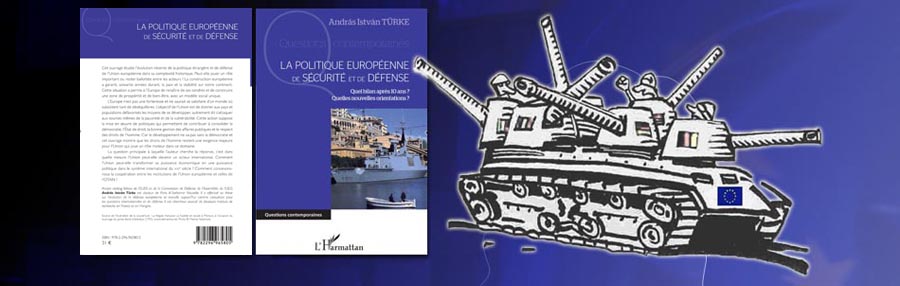
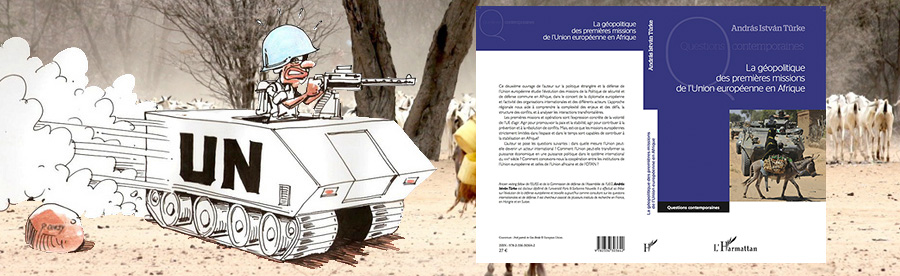
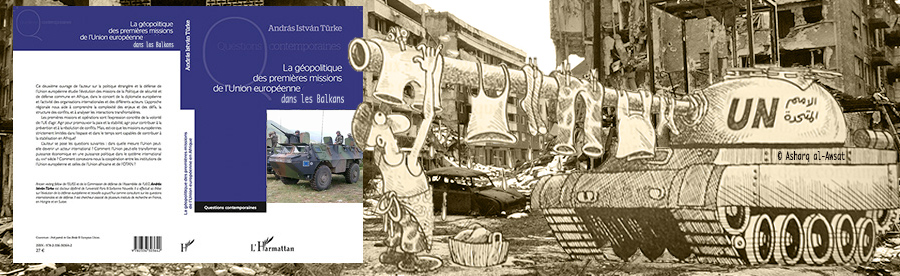
We are looking for sponsors for the English translation of these books, please contact turkeandras(at)gmail(dot)com