
You are here
Feed aggregator
« Ça n'a pas l'air africain » : remettre en question les stéréotypes à la Tate Modern
« Il existe une idée fausse selon laquelle l'art africain se résume uniquement aux masques ou aux sculptures », explique Nadia Denton.
Categories: Afrique
U.S. Navy Takes Delivery of the 350th MH-60R Seahawk
Lockheed Martin, parent of Sikorsky, marked the milestone with a ceremony as the aircraft, also known as the ‘Romeo’, was handed over to Helicopter Maritime Strike Squadron 41 (HSM-41). Twenty years after entering initial service with the U.S. Navy, the MH-60R ‘Romeo’ – the latest and current generation of the Seahawk family – has surpassed […]
Categories: Defence`s Feeds
A Blueprint for Cambodia-Thailand Peace: A Thai Perspective
A Thai scholar offers recommendation on how to build a lasting peace between Cambodia and Thailand.
Categories: Diplomacy & Crisis News
Von der Leyen urges EPP to rally support for EU-Mercosur trade deal
'If Mercosur fails, we can forget the European Union as a global player,' Commission president told her party's MEPs
Categories: European Union
Brussels refuses to confirm Greenland covered by EU defence clause as Trump escalates threats
Defence Commissioner Andrius Kubilius recently said Article 42.7 of the EU Treaty would “definitely” apply if the US invaded the mineral-rich Danish territory
Categories: European Union
Marché laitier : après Baladna, un géant russe vient investir en Algérie
Au cœur d’un marché laitier en pleine mutation, l’Algérie attire désormais l’attention d’un nouvel acteur international, le groupe russe EkoNiva. Début de semaine, une délégation […]
L’article Marché laitier : après Baladna, un géant russe vient investir en Algérie est apparu en premier sur .
Categories: Afrique
Gaza: Physicians Call For Unimpeded Aid To Restore Reproductive Healthcare
Cardiologist Dr. Marwan Sultan, then Director of the Indonesian Hospital in north Gaza, in February 2025 showing damage to hospital equipment following an Israeli attack on the facility a few months prior. In July 2025, Dr. Sultan was killed in an Israeli strike on the apartment where he was sheltering with his family. Credit: PHR/GHRC
By Ed Holt
BRATISLAVA, Jan 14 2026 (IPS)
Israel must lift all restrictions on medicine, food and aid coming into Gaza, rights groups have demanded, as two reports released today (Jan 14) document how maternal and reproductive healthcare have been all but destroyed in the country.
In two separate reports released jointly, Physicians for Human Rights (with the Global Human Rights Clinic at the University of Chicago Law School) and Physicians for Human Rights–Israel (PHR-I) show how the war in Gaza has led to rising maternal and neonatal mortality, births under dangerous conditions, and the systematic destruction of health services for women in Gaza.
The reports from the two groups, which are independent organizations, provide both detailed clinical analysis of the collapse of Gaza’s health system and its medical consequences as well as firsthand testimonies from clinicians and pregnant and breastfeeding women in Gaza forced to live and care for their newborns in extreme conditions.
And the organizations say that with conditions improving only marginally for many women despite the current ceasefire, Israel must roll back restrictions placed on aid and immediately help ensure people in Gaza get access to the healthcare they need.
“Israel’s destruction of Gaza’s health infrastructure, combined with untreated malnutrition resulting from restrictions on food and medical supplies, including baby formula, has created an environment in which the fundamental biological processes of reproduction and survival have been systematically destroyed, resulting in known and foreseeable harm, pain, suffering, and death,” Sam Zarifi, Physicians for Human Rights (PHR) Executive Director, said.
“Israel must immediately allow food and essential medical material to enter Gaza with a proper medical plan for helping the besieged population,” he added.
Israeli military operations following Hamas’s attack on Israel on October 7, 2023, have left massive destruction across Gaza, including to healthcare facilities. According to UNICEF, 94 percent of hospitals have been damaged or destroyed.
Destroyed incubators and equipment at the Kamal Adwan Hospital Neonatal Intensive Care Unit in north Gaza, following the targeting and raid of the facility by the Israeli forces in December 2024. Credit: PHR/GHRC
Maternal and reproductive healthcare has suffered. Before the war, Gaza had eight neonatal intensive care units with 178 incubators. Today, the number of incubators has dropped by 70 percent. In the north, there were 105 incubators across three NICUs, now there are barely any functional units remaining, UNICEF told IPS.
It says that the numbers of low birth weight babies have nearly tripled compared to pre-war levels and the number of first-day deaths of babies increased by 75 percent.
The PHR and PHR-I reports paint a similar picture.
The PHR report, which focuses on the period between January 2025 and October 2025 when a ceasefire was agreed, details how between May and June last year, the Palestinian Ministry of Health reported a 41 percent decrease in the birth rate in Gaza compared to the same time period in 2022; there was a significant increase in miscarriages that affected more than 2,600 women, and 220 pregnancy-related deaths that occurred before delivery.
The ministry also reported a sharp increase in premature births and low birth weight cases; over 1,460 babies were reported to be born prematurely, while more than 2,500 were admitted to neonatal intensive care. Newborn deaths also increased, with at least 21 babies reported to have died on their first day of life.
Meanwhile, the PHR-I report includes personal testimonies illustrating the severe problems pregnant women and women with newborns have faced in Gaza during the war, from lacking safe routes to care and being forced to give birth in unsanitary, dangerous conditions to battling hunger and severe food shortages as they try to breastfeed their children.
One woman, Samah Muhammad Abu Mustafa, a 30-year-old mother of two from Khuza’a, Khan Youni, described how when her contractions began in the middle of the night, because there were no vehicles and very few ambulances, which are reserved for shelling or other critical emergencies, she had to walk a long distance through rain. When she eventually reached the hospital, she said it was “horrifying.”
“I swear, one woman gave birth in the corridor, and her baby died. It was very crowded, and the doctors worked nonstop. I felt as though I could give birth at any moment. After giving birth to my eldest daughter, I was told I should not deliver naturally again because my pelvis was too narrow. Despite this, the doctors said I would have to deliver naturally because a cesarean section required anesthesia, and there was not enough available. I stood for three hours until it was finally my turn, without sitting even for a moment,” she said.
But despite the October 2025 ceasefire, massive problems remain with women’s access to and the provision of, maternal and reproductive healthcare in Gaza.
“Maternal health units in Gaza are largely non-functional and face critical shortages of essential medicines, consumables, and equipment,” Lama Bakri, project coordinator in the Occupied Territories Department at PHR-I, told IPS.
“Neonatal and diagnostic equipment remains scarce or blocked, including portable incubators for premature and low-birth-weight newborns. Although some aid has entered since the ceasefire, these gaps are not being addressed at the scale required, and meaningful improvement in the immediate future remains unlikely.”
Malnutrition also remains a serious problem.
“The ceasefire has allowed us to significantly scale up our nutrition response, but we are still treating pregnant and breastfeeding women for acute malnutrition in alarmingly high numbers,” Ricardo Pires, Communication Manager, Division of Global Communications & Advocacy at UNICEF, told IPS.
He said that between July and September 2025 about 38 percent of pregnant women screened were diagnosed with acute malnutrition.
“In October alone, we admitted 8,300 pregnant and breastfeeding women for treatment, about 270 a day, in a place where there was no discernible malnutrition among this group before October 2023,” he added.
UNICEF has documented almost 6,800 children admitted for acute malnutrition treatment in November 2025 compared to 4,700 cases in November 2024. So far, the number of admitted cases more than doubled in 2025 compared to 2024: almost 89,000 admissions of children to date in 2025, compared to 40,000 cases in 2024, and almost none before 2023.
“What we’re seeing is that no child meets minimum dietary diversity standards, and two-thirds of children are surviving on just two food groups or less. Around 90 percent of caregivers reported their children had been sick in the previous two weeks, which compounds the malnutrition crisis,” Pires said.
And there are fears for the longer-term demographic future of Gaza given the damage to maternal and reproductive healthcare.
“For Gaza’s demographic future, the implications are serious. Even with reconstruction, we will be dealing with a generation of children who were scarred before they took their first breath, children who may face lifelong health complications, developmental challenges, and the effects of stunting. The rebuilding must start now, but we should be clear-eyed: the damage to maternal and newborn health will echo for years, potentially decades,” said Pires.
But others say that with cooperation between international actors and the right political will, the situation need not remain so dire.
“To rehabilitate the population after everything that has happened is going to be a real issue, [but] now there is a Board of Peace, the needs of pregnant women and maternal and reproductive healthcare can be prioritized,” Zarifi told IPS.
“The capacity and the will exist among Gazans and Gazan healthcare workers to rebuild the healthcare system, including maternal and reproductive health services,” added Bakri. “The primary obstacle is not technical or professional but political: Israel’s control over Gaza’s borders and the restrictions on the entry of essential equipment, medical supplies, and reconstruction materials. With unrestricted access to what is needed to rehabilitate hospitals, rebuild destroyed units, and restock essential medicines, recovery is entirely feasible. Whether maternal and reproductive healthcare can return to pre-war levels depends on sustained international pressure to allow that access.”
Although some aid has entered since the ceasefire, these gaps are not being addressed at the scale required, and meaningful improvement in the immediate future remains unlikely.However, while both NGOs like PHR and PHR-I and others, alongside international bodies like the UN, stress that any recovery and reconstruction in Gaza requires the ceasefire to hold and consolidate, repeated violations underline its fragility, and the effect that has on women.
Meanwhile, PHR and PHR-I point out that extreme weather and ongoing Israeli restrictions on medicine and food getting to Gaza to this day continue to severely affect pregnant women, new mothers, and babies. On top of this, Israel has also announced it will bar 37 international aid groups from working in Gaza, potentially compounding the problems.
Bakri said such measures were jeopardizing what small gains had been made since the ceasefire and “raise serious concerns about whether the situation can improve.”
“Even after the ceasefire, while bombardment has decreased, the reality these women face remains catastrophic – not only for their bodies and well-being but for the survival of the entire society,” said Bakri.
Zarifi added, “We are worried that the restrictions placed by Israel on some of the major actors in the humanitarian response will hamper access to assistance for those that need it. We have raised questions with the Israeli government as to why specific medicines are not allowed to be brought into Gaza and they say that they are not stopping them from being brought in but they can be brought in by commercial means. That is hard for people who can barely put any money together. These medicines should definitely be coming in through humanitarian channels.”
He also highlighted how important the issue of accountability is in ensuring any progress is made in rebuilding healthcare in Gaza and also limiting the probability of similar devastation in the future.
Both reports concluded that the harms caused by Israeli attacks are not isolated incidents but part of an ongoing pattern of systematic damage to the health of women and their children in Gaza, amounting to reproductive violence.
Israel has denied this and said that attacks on hospitals in Gaza have been because the medical facilities are being used by Hamas, and it has maintained that its forces adhere to international law.
While under international law healthcare facilities have special protection even in war, and attacks on them are prohibited, that protection is lost if they are deemed to fulfill criteria to be considered military objectives, such as housing militaries and arms.
However, any attack on them must still comply with the fundamental principles of distinction, proportionality and precautions in attack and failure to respect any of these principles constitutes a breach of international humanitarian law, according to the UN.
“These attacks are part of a deliberate policy designed to create a domino effect of suffering. From starvation and militarized aid distribution by the GHF, to lack of access to clean water, repeated displacement orders, living in shelters under continuous bombardment, and exposure to infections, disease, and harsh weather, the attacks on maternal and reproductive healthcare are another piece of this puzzle. Together, these conditions were created to systematically destroy the fabric of life in Gaza and reduce the population’s ability to survive,” said Bakri.
“The Israeli government has justified attacks on healthcare facilities by saying this was a problem caused by Hamas. We haven’t had an indication of this but it might be true. But in any case there has to be an investigation of these incidents and we hope the Israeli government will carry out such an investigation,” said Zarifi.
“But what is really alarming to us is that the norms prohibiting attacks on healthcare have been repeatedly violated, and there are also laws governing the protection of women and children that appear to have been violated. The only thing that makes these norms work is accountability. There has to be accountability for what happened, as it is the only way we can ensure that what has happened won’t happen in other conflicts. Impunity is watched by other actors around the world,” he added.
IPS UN Bureau Report
Follow @IPSNewsUNBureau
!function(d,s,id){var js,fjs=d.getElementsByTagName(s)[0],p=/^http:/.test(d.location)?'http':'https';if(!d.getElementById(id)){js=d.createElement(s);js.id=id;js.src=p+'://platform.twitter.com/widgets.js';fjs.parentNode.insertBefore(js,fjs);}}(document, 'script', 'twitter-wjs');
Categories: Africa
South Korean Special Prosecutor Seeks Death Penalty for Yoon Suk-yeol
More than a year after his illegitimate declaration of martial law, the former president is now facing a death sentence for insurrection.
Categories: Diplomacy & Crisis News
LIVE-TICKER - Crans-Montana: Walliser Staatsrat gewährt allen Opfern der Brandkatastrophe eine Soforthilfe +++ Jessica Moretti muss sich täglich bei der Polizei melden
In der Bar «Le Constellation» im Walliser Skiort Crans-Montana ist es in der Neujahrsnacht zu einem verheerenden Brand gekommen. 40 Personen kamen ums Leben.
Categories: Swiss News
EXCLUSIVE: EU to become ‘military powerhouse,’ von der Leyen told MEPs
The Commission president told her centre-right allies that the EU will have its own security strategy this year
Categories: European Union
Le Maroc élu à la présidence du Forum nord-africain de l'Internet
Le Maroc renforce sa visibilité sur la scène numérique régionale et internationale. Un expert marocain prend la présidence du Forum de la Gouvernance de l'Internet d'Afrique du Nord (NAIGF).
L'expert marocain Abdessamad Moutei a été élu président du Forum de la Gouvernance de l'Internet d'Afrique du Nord (NAIGF), à l'issue de la réunion du comité consultatif de l'organisation, tenue en ligne mardi 13 janvier 2026.
Cette élection, acquise à l'unanimité des membres du comité, consacre « la reconnaissance d'une longue expérience dans le domaine des politiques numériques et de la gouvernance de l'Internet », selon le communiqué publié à cette occasion. Elle illustre également « le rôle moteur que joue le Maroc dans le développement de l'écosystème numérique en Afrique du Nord ».
Le NAIGF, qui opère sous l'égide du Forum sur la Gouvernance de l'Internet des Nations unies (IGF), constitue une plateforme régionale clé pour la concertation autour des politiques publiques liées au numérique. Il vise notamment à formuler une vision commune des pays nord-africains sur les enjeux stratégiques de l'Internet, à renforcer la coopération entre gouvernements, secteur privé et société civile, et à relever les défis liés à la cybersécurité, à la fracture numérique et à l'intelligence artificielle.
Professeur de l'enseignement supérieur et directeur adjoint chargé de la formation continue et des stages à l'Institut supérieur de l'information et de la communication (ISIC), Abdessamad Moutei a affirmé que son mandat sera placé sous le signe d'un agenda ambitieux. Il entend œuvrer pour « une intégration plus forte des pays d'Afrique du Nord dans l'économie numérique mondiale », tout en insistant sur « la nécessité de protéger la souveraineté numérique de la région ».
« Notre priorité sera de développer une infrastructure numérique sécurisée et inclusive, au service de tous », a-t-il déclaré, soulignant l'importance d'une approche équilibrée entre ouverture technologique et maîtrise des enjeux.

Cette nouvelle gouvernance du NAIGF s'inscrit par ailleurs dans une dynamique régionale renforcée. L'Égypte a été désignée vice-présidente du Forum, représentée par l'expert Shedy Hamed, traduisant « une volonté de collaboration étroite entre les puissances numériques de la région afin de porter une voix unifiée sur les scènes continentale et internationale ».
Le Forum d'Afrique du Nord sur la Gouvernance de l'Internet fait le lien entre les initiatives nationales, le Forum africain et le Forum mondial des Nations unies, consolidant ainsi la participation de la région aux débats globaux sur l'avenir du numérique.
Categories: Afrique
The Big Question for India’s Budget in 2026
In 2025, India mastered economic stability, but the transition from a $4 trillion to a $5 trillion economy will not be determined by how well risks are contained.
Categories: Diplomacy & Crisis News
Burkina Faso : La Douane saisit une importante quantité de produits illicites grâce à trois opérations d'envergure
La Douane resserre l'étau sur les trafics et affirme la souveraineté de l'État sur tout le territoire. À travers trois opérations majeures menées récemment dans les régions du Goulmou (anciennement appelée Est), celle du Kadiogo anciennement appelée Centre), et celle du Nando (anciennement appelée Centre-ouest), l'administration douanière burkinabè a frappé au cœur des circuits illicites.
Dans le Nando, précisément à Koudougou, la Brigade mobile des Douanes a conduit une vaste opération de ratissage ayant abouti à la saisie de 1 000 cartouches de cigarettes de contrebande, 72 boîtes d'herbicides non homologués et 33 sacs de détergents.
Dans le Goulmou, sur les zones frontalières, les agents de la Direction de la surveillance du territoire (DST) ont intercepté un minibus transportant clandestinement des bidons d'huile alimentaire, sans aucun document régulier d'importation.
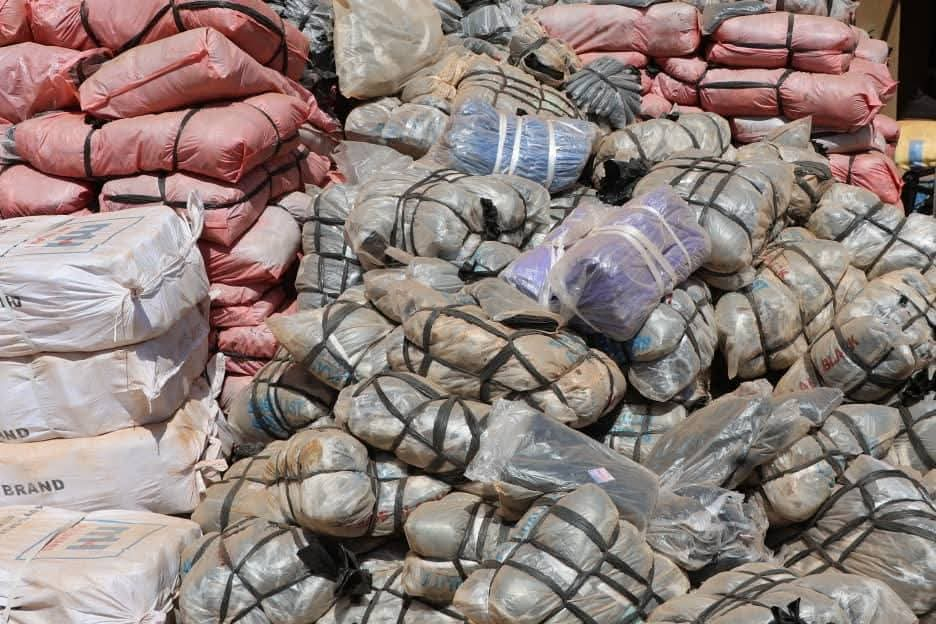
Enfin, sur l'axe Ouagadougou–Léo, l'Unité mobile d'Intervention (UMI) a neutralisé plus de 20 tonnes de sachets plastiques prohibés, destinés à une mise en circulation illégale. Saluant la détermination des agents, le directeur général des Douanes, l'Inspecteur divisionnaire Yves Kafando, a rappelé que la lutte contre la fraude repose aussi sur la vigilance citoyenne et le respect strict des normes.
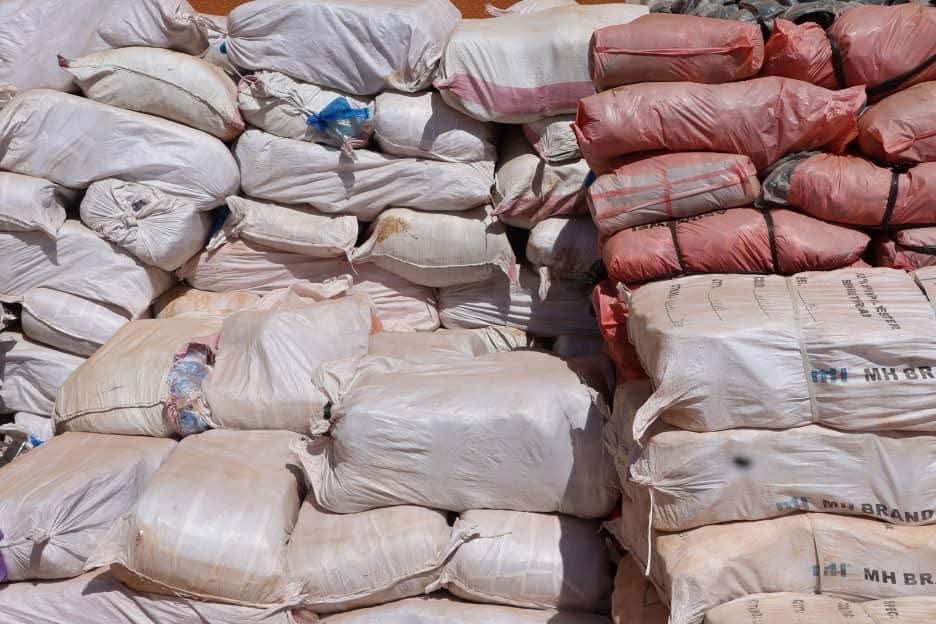
Au-delà des volumes saisis, cette intervention met en lumière les risques multiples liés à l'économie grise, à savoir le manque à gagner fiscal, la menace pour la santé publique, l'atteinte à l'environnement et la concurrence déloyale au détriment des circuits formels.
À travers ces actions coordonnées, la Douane confirme son rôle central, celui de protéger l'économie nationale, la santé des populations, l'environnement, et plus largement, l'autorité de l'État sur l'ensemble du territoire.
Lefaso.net
Categories: Afrique
Ryanair threatens flight cuts over Belgian passenger taxes and ETS
'Europe needs to get more competitive,' Ryanair CEO O'Leary says
Categories: European Union
Procès en appel des assistants parlementaires du FN : Marine Le Pen change sa stratégie de défense
Après avoir crié son innocence au procès politique, Marine Le Pen semble avoir amorcé un virage stratégique dans sa défense lors du procès en appel des assistants parlementaires européens du FN. Elle espère, en reconnaissant cette fois un délit, voir sa peine réduite. Elle a été condamnée en première instance à cinq ans d'inéligibilité avec exécution immédiate ce qui l'empêche pour l'heure de se présenter à la présidentielle de 2027.
Categories: France
Why Iran’s Popular Resistance Exposes the Taliban’s Deepest Vulnerabilities
The ongoing protests in Iran have the Taliban in Afghanistan worried. In Iran’s streets, the Taliban see the seeds of their own undoing.
Categories: Diplomacy & Crisis News
Iránon a világ szeme
Az iráni tüntetéseknek már csaknem 2600 áldozata van – erősítette meg ma az Egyesült Államokban működő HRANA emberjogi szervezet hírügynöksége, ellenőrzött adatokra hivatkozva. Tegnap, több mint két héttel a tüntetések kezdete után, az iráni hatóságok először ismerték el hivatalosan, hogy a halálos áldozatok száma elérte a kétezret. Az ENSZ emberi jogi hivatala tegnap több százra […]
Articolul Iránon a világ szeme apare prima dată în Kolozsvári Rádió Románia.
Categories: Határon túli magyar portálok összesített hírei
Décès de KAFANDO Yobsamda Hélène Blandine Denise : Faire-part
« Tu lui as donné Seigneur, la grâce de vivre sur terre, maintenant qu'il est de retour à toi, accorde-lui le repos éternel et que brille sur lui la lumière de ta face »
« Je suis la résurrection et la vie : celui qui croit en moi, même s'il meurt vivra… »
NAABA Boulga II Poega de GOGO (Région du Kadiogo)
Les grandes familles KAFANDO, OUEDRAOGO à Dayoubsi et à Ouagadougou,
NAABA Yamblolbo 2 Chef de Canton de Bindé (Région du Nazinon)
Sœur Scholastique KAFANDO, Soeur de l'Immaculée Conception à Ouagadougou ;
Michel KAFANDO, Ancien Président de la Transition, Chef de l'État à Dayoubsi
Raphael KAFANDO à Dayoubsi
Les familles alliées : ILBOUDO, ZOUNGRANA, COMPAORE, KONE, KY, CONGO, TIOYE, NANA, ZERBO, KOMPAORE, KIENTEGA à Ouagadougou, Bobo Dioulasso, Dédougou
Les Sœurs, Me Flora KAFANDO, Christiane, José-Maria, Patricia, Rachel et Frère Thierry
Les Cousins, Cousines, neveux et nièces
Les enfants :
Abdoul Razack COMPAORE
Yasmine Grâce COMPAORE
Les Beaux Frères, ZERBO Souleymane, KY Maximin, ILBOUDO Mahamadi, KIENTEGA Nestor
Ont la profonde douleur de vous annoncer le décès de leur Fille, Soeur, Mère, Tante :
KAFANDO Yobsamda Hélène Blandine Denise
En service au Cabinet d'Avocats Maître KAKANDO Flora.
Décès survenu le 12 janvier 2026 à l'hopital Bogodogo.
Ils vous informent, que le programme des obsèques se déroulera comme suit :
Mardi 13 au jeudi 15 janvier 2026 :
Présentation des condoléances au Domicile de la Famille ZERBO à la Zone du Bois, derrière la Croix Rouge
Jeudi 15 janvier 2026 :
15 heures 30mn, levée du corps à la morgue de l'hôpital Bogodogo
20 heures, Veillée de prière au Domicille de la Famille ZERBO
Vendredi 16 janvier 2026
8 heures, Prière au Domicile de la Famille ZERBO, suivi de la levée du corps,
9 heures 30mn : Enterrement au Cimetière Municipal de Gounghin,
20 heures, à la Cathédrale de Ouagadougou
Samedi 17 janvier 2026
8 heures, Grande Messe à la Cathédrale de Ouagadougou
UNION DE PRIERE
Categories: Afrique
Tüntetni készülnek az egyetemisták
Tüntetést terveznek a kolozsvári egyetemisták csütörtök késő délután a Babeș–Bolyai Tudományegyetem épülete előtt. A megmozdulást a 2025-re vonatkozó ösztöndíjcsökkentések, valamint a legtöbb karon elfogadott vagy előkészítés alatt álló tandíjemelések miatti elégedetlenség váltotta ki. A Kolozsvári Hallgatói Bizottság szerint a BBTE több karának tanácsában már megszavazták a tandíjak, a felvételi díjak, valamint egyes esetekben a kreditdíjak […]
Articolul Tüntetni készülnek az egyetemisták apare prima dată în Kolozsvári Rádió Románia.
Categories: Határon túli magyar portálok összesített hírei
Pages


© 2012-2018 Europa Varietas Foundation © 2015-2018 Europa Varietas Association
www.europavarietas.org | info(@)europavarietas(dot)org | Switzerland


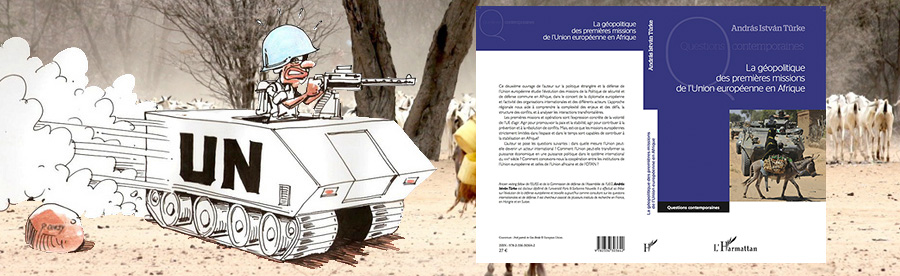
We are looking for sponsors for the English translation of these books, please contact turkeandras(at)gmail(dot)com