
You are here
Feed aggregator
Reassessing the Role of Sunlight and Ultraviolet Radiation in Public Health
This paper highlights evidence that moderate, regular sunlight supports longevity, heart and immune health, and wellbeing beyond vitamin D. ESA calls for balanced European policies that protect against overexposure while promoting sunlight as an essential health resource.
Categories: European Union
New ‘temporary’ route for Gazans fleeing embattled city, Israel says
A spokesperson for the Israeli military said the corridor would remain open for just 48 hours from midday on Wednesday
Categories: European Union
Le Gabon lance la campagne des élections locales et législatives
Au Gabon, après l’élection présidentielle du 12 avril dernier remportée haut la main par Brice Oligui Nguema, auteur du coup d’État qui a balayé le régime d’Ali Bongo, le pays organisera les 27 septembre et le 11 octobre prochain des élections législatives couplées aux locales. La campagne électorale dans la perspective de ces scrutins est ouverte depuis la nuit de mardi 16 à mercredi 17 septembre, à minuit. Le coup d’envoi de cette campagne a été officiellement donné par le ministre de l’Intérieur Hermann Immongault lors d’une conférence de presse.
Categories: Afrique, Biztonságpolitika
En Côte d’Ivoire, le parti de Laurent Gbagbo affirme qu’une trentaine de ses membres ont été arrêtés depuis août
Le climat politique est tendu avant le scrutin présidentiel du 25 octobre, notamment en raison de l’exclusion de figures de l’opposition, dont Laurent Gbagbo, à la suite de décisions de justice.
Categories: Afrique
DV Lottery 2027 : les États-Unis rendent les inscriptions payantes
Les États-Unis ont mis en place de nouveaux frais de 1 dollar pour l’inscription à la loterie de diversité. Cette règle, publiée le 16 septembre […]
L’article DV Lottery 2027 : les États-Unis rendent les inscriptions payantes est apparu en premier sur .
Categories: Afrique
Ghana's Thomas Partey denies rape charges in UK
The 32-year-old footballer was in court accused of raping two women and sexually assaulting another.
Categories: Africa
Staatsbesuch bei King Charles: Warum die Royals Trump umwerben
Categories: Diplomacy & Defense Think Tank News
Tokaïev présente la feuille de route numérique et politique du Kazakhstan
Le Kazakhstan vise une politique étrangère constructive afin de protéger ses intérêts nationaux tout en favorisant la croissance et la stabilité à long terme.
The post Tokaïev présente la feuille de route numérique et politique du Kazakhstan appeared first on Euractiv FR.
Categories: Union européenne
Suppressions de TGV Lyria: Les CFF justifient la baisse de cadence entre Lausanne et Paris
Des travaux d’entretien prévus en 2026 réduiront les liaisons TGV entre Lausanne et la capitale française. Face à l’inquiétude, les CFF assurent que l’offre restera fournie.
Categories: Swiss News
Soudan du Sud: l'accord de paix semble plus que jamais menacé après l'inculpation de Riek Machar
Au Soudan du Sud, le parti de Riek Machar, le SPLM-IO, a déclaré l’accord de paix « abrogé » après l’annonce le 11 septembre de son l’inculpation et de la suspension du vice-président. Riek Machar a été placé en résidence surveillée fin mars, accusé d’avoir planifié des attaques contre l’armée du président Salva Kiir au nord-est du pays. Il est désormais inculpé de « trahison », « meurtres », « crimes de guerre » et même de « crimes contre l’humanité ». Dans ce contexte, l’accord de paix semble plus que jamais menacé, mais le camp de Salva Kiir affirme le contraire.
Categories: Afrique
En Guinée, un référendum constitutionnel contesté par l’opposition, qui appelle au boycott
Le projet de nouvelle Loi fondamentale ouvre la voie à une candidature du chef de la junte, Mamadi Doumbouya, à une future élection présidentielle.
Categories: Afrique
Crise économique: Le Jura frappé de plein fouet par les droits de douane américains
Le ministre de l’Économie, Stéphane Theurillat, tire la sonnette d’alarme: 10% de la population active jurassienne est concernée par des demandes de chômage partiel.
Categories: Swiss News
Why did Partey play v Spurs hours before rape charge court appearance?
Former Arsenal midfielder Thomas Partey plays for Villarreal against Tottenham, a day before he is set to appear in court on rape and sexual assault charges.
Categories: Africa
VOLTAGE: Mario Draghi blasts energy sector
In today's edition: rent seeking, climate targets, Russian fossil fuels
Categories: European Union
Rapporteur | 17.09.2025
In der heutigen Ausgabe: Russland: EU-Kommissionspräsidentin Ursula von der Leyen will den Ausstieg aus der Energieabhängigkeit von Moskau beschleunigen; Parlament: Heute entscheidet das Europaparlament, ob die Immunität der italienischen Abgeordneten Ilaria Salis aufgehoben wird; Allianzen: Die Kommission plant eine neue »strategische Agenda« mit Indien.
Categories: Europäische Union
„Az a legizgibb, hogy élőben vagyunk”
Az Octavian Goga Iskola harmadik osztályosai, Manaszes Magdolna tanítónőjük kíséretében látogatta meg ma a Kolozsvári Rádiót. Mesét olvastak, bekukkintottak a stúdiókba, és néhány percre élő adásba is beültek.
Articolul „Az a legizgibb, hogy élőben vagyunk” apare prima dată în Kolozsvári Rádió Románia.
Categories: Határon túli magyar portálok összesített hírei
Tokayev legt Kasachstans digitale und politische Roadmap fest
Kasachstan strebt eine konstruktive Außenpolitik an, um nationale Interessen zu schützen und gleichzeitig Wachstum und langfristige Stabilität zu fördern.
Categories: Europäische Union
Le GIABA intensifie ses efforts dans la région ouest-africaine
En 2024, le Groupe Inter-gouvernemental d'Action contre le Blanchiment d'Argent en Afrique de l'Ouest (GIABA), a franchi un cap important dans son action régionale contre le blanchiment de capitaux et le financement du terrorisme. Malgré des avancées notables, plusieurs défis persistent dans l'espace CEDEAO.
Le Rapport Annuel 2024 du Groupe Inter-gouvernemental d'Action contre le Blanchiment d'Argent en Afrique de l'Ouest (GIABA), publié le 28 août à Dakar, met en lumière les actions menées par l'institution. Des progrès notables ont été enregistrés notamment l'achèvement du second cycle des évaluations mutuelles des Etats membres du GIABA ; la sortie du Sénégal de la liste grise du GAFI, et l'amélioration des cadres juridiques et institutionnels de plusieurs États membres. « Sur la base de leurs notes de conformité technique et d'efficacité, tous les États membres du GIABA évalués, à l'exception du Ghana et du Sénégal qui ont quitté le processus de suivi en février et en août, respectivement, restent dans le Processus de Suivi Renforcé, et soumettront leurs RdS (rapports de suivi) respectifs au GIABA aux fins d'examen et d'adoption par les réunions Plénières pertinentes en 2025 », indique le rapport.
Ces évaluations mutuelles sont essentielles à la mise en œuvre d'un dispositif robuste de LBC/FT dans un pays. Le GIABA se prépare pour le prochain Cycle des Évaluations Mutuelles qui mettra davantage l'accent sur l'efficacité des dispositifs de LBC/FT. « Les États membres sont invités à entamer les préparatifs en mettant en place des équipes d'évaluation mutuelle efficaces et dévouées à l'échelle nationale, composées de responsables possédant les connaissances requises pour le processus », souligne le rapport 2024 de la GIABA. Pour l'institution spécialisée de la CEDEAO, la formation continue de l'ensemble des parties prenantes et la sensibilisation sont primordiales. La collecte et la compilation de statistiques pertinentes en matière de LBC/FT/FP restent essentielles pour démontrer l'efficacité du dispositif.
Soutien aux Etats membres
En 2024, le GIABA a aussi fourni une assistance technique pour soutenir les États membres dans la mise en œuvre des mesures de LBC/FT. 2 607 personnes ont bénéficié de programmes d'assistance technique, avec une augmentation de 21 % de la participation féminine.
Sur le plan du plaidoyer, le GIABA a intensifié sa stratégie de communication et de sensibilisation, en multipliant les actions à l'endroit des médias, des organisations de la société civile et parties prenantes. Ces initiatives visent à vulgariser les enjeux liés au blanchiment d'argent et au financement du terrorisme, et à encourager l'adhésion de tous à cette lutte régionale.
Le rapport 2024 du GIABA mentionne des vulnérabilités persistantes dans la LBC/FT. Il s'agit entre autres de l'utilisation abusive des actifs virtuels, la faible supervision des EPNFD (Entreprises et Professions Non-Financières Désignées) et les risques accrus dans les zones frontalières peu régulées.
Sur un total de 139 activités prévues pour être réalisées au titre de l'année 2024, dans le cadre de son plan d'action stratégique 2023-2027, le GIABA a exécuté 87 d'entre elles, soit un taux de réalisation de 63 %, en hause de 7 % par rapport à l'année précédente. « Les objectifs et étapes importants fixés ont été atteints », informe le rapport annuel 2024 du GIABA.
Akpédjé Ayosso
Categories: Afrique
‘The Authoritarian Regime Uses Collective Punishment to Discourage Any Challenge to Its Authority’
By CIVICUS
Sep 17 2025 (IPS)
CIVICUS discusses the deaths of Indigenous activists in custody in Tajikistan with Khursand Khurramov, an independent journalist and political analyst.
Khursand Khurramov
Five Indigenous Pamiri activists have died in Tajikistan’s prisons in 2025, reportedly after being denied adequate medical assistance. Since 2021, around 40 Pamiris have been killed and over 200 activists arbitrarily detained. Civil society organisations condemn these deaths in custody and the state’s broader pattern of systematic repression against the Pamiri ethnic minority, who make up less than three per cent of Tajikistan’s population.What’s the background to the state’s persecution of Pamiri people?
The Pamiris are an Indigenous minority who have lived on their land for thousands of years. Throughout history, they have been part of various empires – from the Achaemenids and Alexander the Great to the Arab Caliphate and the Timurids – but have always retained de facto autonomy. At the end of the 19th century, the Pamir region was divided between the British and Russian empires, and the Pamiri people found themselves separated by the borders of modern states – Afghanistan, China, Pakistan and Tajikistan – while retaining their cultural and linguistic characteristics and, importantly, their historical attachment to their land.
In Tajikistan, the Pamiris live in an area called Gorno-Badakhshan (GBAO). The Soviet period was favourable for them in terms of demographic, economic and technological progress. The region had good transport links with Kyrgyzstan, while the road to the central regions of Tajikistan was only accessible seasonally.
Following the collapse of the Soviet Union, civil war broke out in Tajikistan in 1992. The Pamiris supported the United Tajik Opposition and became victims of mass repression. Many were murdered, with the number of victims unknown to this day. Following the war, the authorities continued to persecute former opponents, including the Pamiris, and several military operations have been carried out in the region, resulting in dozens of deaths and hundreds of arrests.
This means the Pamiri identity formed amid difficult conditions, largely in response to state pressure. Tajik authorities apparently fear recognition of Pamiri identity will lead to separatism, although there have never been any calls or demands for separatism within the Pamiri community.
It’s clear the authoritarian regime perceives Pamiri people’s desire for democratisation and freedom as a bad example for the rest of Tajikistan’s population, and it uses collective punishment to suppress any challenge to its authority.
What led to the recent wave of deaths in custody?
In November 2021, Tajikistan’s security officers carried out an operation in GBAO, in which a local resident was killed. This sparked mass protests, which in Tajikistan are prohibited by law and therefore extremely rare. Activists tried to hold those responsible to account by cooperating with law enforcement agencies. But instead of investigating, the authorities launched a large-scale crackdown on protesters, instrumentalising the law to justify violence by security forces.
In 2022, when protests flared up again, the authorities classified them as terrorist acts, allowing security forces to use firearms against protesters. As a result, around 40 people were killed. They also conducted mass arrests of activists. Some 300 people were imprisoned with sentences of over 15 years, and 11 received life sentences. Considering the entire Pamiri population is only about 220,000, these numbers represent a catastrophic scale of persecution. Prison conditions are extremely harsh, with relatives of prisoners repeatedly reporting overcrowding, lack of access to medical care and systematic psychological pressure. In 2025 alone, five men from GBAO aged between 35 and 66 have died in Tajikistan’s prisons.
How has the crackdown on civic freedoms affected GBAO?
Restrictions on civil liberties affect the whole of Tajikistan, but GBAO is subject to particularly harsh repression. In 30 years of independence, not a single independent media outlet has existed in GBAO. International media outlets such as the BBC and Radio Liberty have been unable to obtain accreditation to cover events in the region. As a result, most of what happens in GBAO remains unknown to the public, and state propaganda interprets events in a light favourable to the authorities, demonising Pamiri people in the eyes of the rest of the population.
At the national level, these restrictions take the form of a ban on political activities, a complicated procedure for registering associations and informal bans on the creation of parties and movements within the country and abroad. Any political or civic activity outside Tajikistan seems to be viewed by the authorities as a potential threat. Until 2022, Pamiris had a fairly powerful informal youth diaspora structure in Russia, but this has been effectively destroyed with its key figures arrested and returned to Tajikistan. The main reason for this was a rally they organised in November 2021 outside the Tajik embassy in Moscow.
Now even likes of social media posts by opposition groups are classified as extremism. According to the Tajikistan Prosecutor General’s Office, 1,500 people have been convicted for this, including nine journalists and bloggers. Many of them were not involved in politics at all. Their posts were exclusively about social rather than political issues.
How are Russia and other states in the region involved?
Russia and other post-Soviet states play a role in this process as political allies of the Tajik government. For Russia, the regime is an important partner in the areas of security and labour migration, so it tries to prevent the strengthening of forces that could threaten the status quo. As a result, it supports Tajikistan’s official position, including in international organisations, and often returns wanted political activists and opposition figures to Tajikistan.
Some post-Soviet states share a similar political logic, because they fear recognising ethnic or regional diversity within their borders. By supporting Tajikistan in suppressing Pamiri identity, they are consistent with their domestic policies of denying minority rights. Russia and the other member states of the Collective Security Treaty Organisation – Armenia, Belarus, Kazakhstan, Kyrgyzstan and Tajikistan – cooperate on security matters, exchanging data and coordinating operations against opposition activists, including Pamiris. This is a mutually beneficial practice that strengthens authoritarian solidarity and reduces the risks of alternative centres of political influence emerging in the region.
What role can civil society and the international community play in holding the government accountable?
In Tajikistan, civil society in the classical sense has practically ceased to exist. Even those organisations that continue to operate are forced to coordinate their activities with the government. Although on paper these organisations may address civic space or human rights issues, their activities are largely formal: they function more as a facade than a mechanism for protecting rights within an authoritarian system. Over the past decade, any human rights work has been effectively equated with political activity, which carries serious risks.
Outside Tajikistan, diaspora civil society is also underdeveloped, with no strong institutions yet in place. However, the main thing activists and the diaspora can do is to draw international attention to the problem, talking about it as often as possible in different forums and in different languages. Only then can we expect the international community to put pressure on the Tajik authorities.
Despite these efforts, the situation for Pamiri people in Tajikistan has remained virtually unchanged. Authorities continue to deny the existence of their distinct identity. In prisons, people continue to die from torture, disease and inhumane conditions, but these facts are silenced and their deaths are presented as natural deaths.
The international community must move beyond statements to tangible action by strengthening monitoring and reporting through the European Parliament, the Organization for Security and Co-operation in Europe and the United Nations. They must impose personal sanctions on officials responsible for repression and torture, and condition aid, loans and grants on Tajikistan’s compliance with human rights obligations. Support for the diaspora and independent media is also essential to provide alternative information channels and prevent the regime isolating GBAO.
GET IN TOUCH
Facebook
Twitter
LinkedIn
SEE ALSO
Tajikistan: end systematic repression of Pamiri people CIVICUS 04.Aug.2025
Tajikistan: ‘Authorities silence dissent by accusing activists of extremism, terrorism and spreading false information’ CIVICUS Lens | Interview with Leila Seiitbek 20.May.2025
Tajikistan’s crackdown on dissent: erosion of rights and civic space CIVICUS Monitor 17.Feb.2025
Follow @IPSNewsUNBureau
!function(d,s,id){var js,fjs=d.getElementsByTagName(s)[0],p=/^http:/.test(d.location)?'http':'https';if(!d.getElementById(id)){js=d.createElement(s);js.id=id;js.src=p+'://platform.twitter.com/widgets.js';fjs.parentNode.insertBefore(js,fjs);}}(document, 'script', 'twitter-wjs');
Categories: Africa
Référendum en Guinée: la campagne électorale touche à sa fin sans débats
La campagne électorale pour le référendum constitutionnel s’achève jeudi 18 septembre au soir. Ce dimanche 21 septembre, 6,7 millions d’électeurs sont appelés à se prononcer pour ou contre la nouvelle loi fondamentale. Ce référendum est une étape indispensable au retour à l'ordre constitutionnel, quatre ans après le coup d'État du général Mamadi Doumbouya contre son prédécesseur, le président Alpha Condé.
Categories: Afrique, Biztonságpolitika
Pages


© 2012-2018 Europa Varietas Foundation © 2015-2018 Europa Varietas Association
www.europavarietas.org | info(@)europavarietas(dot)org | Switzerland
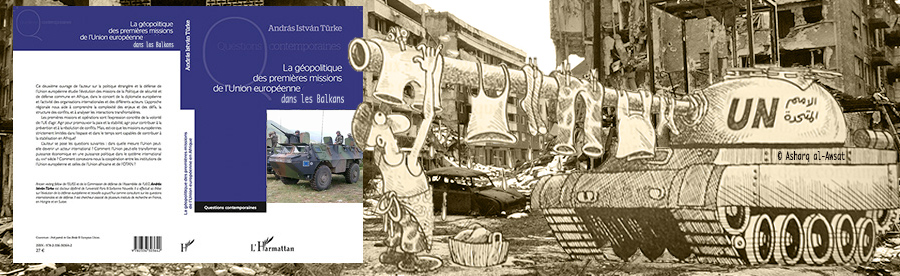
We are looking for sponsors for the English translation of these books, please contact turkeandras(at)gmail(dot)com