
You are here
Feed aggregator
Floods, Hunger and Disease Pile on Myanmar’s Civil War Misery
A street market in Yangon, Myanmar’s biggest city. Residents are anxious about high inflation and also fear recent floods will drive food prices higher. Credit: Ant/IPS
By Guy Dinmore, and a reporter in Yangon
YANGON, Myanmar, Sep 23 2026 (IPS)
Isolated and at constant war with itself, Myanmar’s humanitarian crisis is deepening as global challenges far exceed the capacity to respond of a military regime increasingly focused on its own survival.
The climate crisis, soaring commodity prices triggered by wars in Europe and the Middle East, plus worldwide cuts in donor aid are all hitting Myanmar hard. The regime’s inability to govern a fragmented and restive country with nearly four million internally displaced people has been exposed to the full since it seized power over five years ago.
Widespread floods caused by heavy monsoon rains since July have affected over 470,000 people, according to an assessment by the World Health Organization. Cases of malaria and dengue have been increasing, as well as outbreaks of cholera.
“Everyone is starving and cut off. Yes, everyone is facing food shortages,” said an activist calling himself Bruce, describing the situation in Shwebo township in the north-central Sagaing region, one of the main conflict zones and rice transshipment centres hit by floods.
Local and international aid organisations struggle to get help through conflict zones where the military is fighting a shifting array of ethnic armed organisations (EAOs) and local resistance groups while syphoning off what it can.
“Armed hostilities, movement restrictions and administrative requirements continue to block access, underscoring the need for safe, sustained and unhindered humanitarian reach to vulnerable communities,” the UN Office for Coordination of Humanitarian Affairs (OCHA) said in a July bulletin.
“Myanmar remains one of the world’s most severe humanitarian crises, with more than 16 million people in need as conflict, displacement, protection risks and access constraints intensify urgent needs nationwide,” OCHA said, noting that by end-March “humanitarian partners” had managed to reach 1.6 million people.
Floods have driven up food prices, already exacerbated by rising costs of fuel and fertilisers caused by Russia’s war on Ukraine and Iran’s blockade of the Strait of Hormuz following attacks by the US and Israel.
All sides exact a price in Myanmar, Bruce said, with cargo trucks moving north from the regime-controlled city of Mandalay to Shwebo having to pay fees at multiple military checkpoints and those run by other armed groups. Farmers in neighbouring Shan state growing rice and tomatoes are also facing “devastating losses” and being driven into deep poverty, he said.
Shwebo has experienced power blackouts of up to 20 consecutive days. As darkness falls, residents do not dare venture outside for fear of forced conscription by the regime, especially in rural areas. Households pay levies to avoid conscription, even those with only single women.
Some people are being forced into a second round of conscription as the military struggles to replenish its ranks, stretched across the country. Over 100,000 people have been conscripted, according to some estimates.
At night authorities inspect mobile phones. If they find online games, evidence of Starlink use or unauthorised communication devices then the individuals are immediately taken for military service.
Inflation and extortion reach deep into prisons too, said Bruce, a former political prisoner. Skin diseases like scabies are common, and the cost of a particular drug bought by relatives has soared more than eight times, while even traditional medicines like neem leaves have gone up fivefold.
Prison staff and those manning checkpoints even take their cuts of peanut snacks, driving up prices paid by prisoners.
The numbers displaced by conflict continue to rise. Fighting in the central Magway region in recent months has added over 200,000 more since May, according to some UN estimates. People fleeing conflict are moving to safer areas, but host communities have limited capacity to accommodate them.
U Than is a farmer in the Ayeyarwady delta and was struggling to make ends meet even before recent floods hit the major rice-growing region, destroying crops and jeopardising the next planting season. Fortunately his land has been spared destruction, but everyone is keeping a close eye on nearby levees.
“Farming has become a cycle of borrowing just to survive,” he said, complaining that the cost of fertiliser has risen five-fold and that fuel is increasingly expensive and difficult to obtain.
“We are working harder, borrowing more, and spending more, but the income from our harvest is no longer enough to cover the cost of farming or even our basic living expenses.” Families are forced to cut back their spending on health and education.
Yangon, Myanmar’s biggest city, feels somewhat insulated from the recent natural disasters and ongoing civil war. But inflation is hitting the pockets of its six million people, including city officials and their families, who squeeze more money from residents on trumped-up charges or bribes to avoid conscription.
“The junta stooges are resorting to all sorts of methods, legal or illegal, to recruit people while at the same time making money in the process,” one long-time resident told IPS.
“Life in Yangon is morphing into a new normal, with people feeling less safe about their lives as crimes are widespread. So many cases of theft and robberies go unreported or under-reported.”
A cholera outbreak in central Yangon in August, the second in two years, was blamed on poor hygiene among street vendors whose cheap food is even more attractive as inflation bites. The regime responded by shutting down their businesses in six city townships. Outbreaks have also been reported in Sittwe, one of the last regime strongholds in Rakhine State, as well as flood-affected areas.
Reports that CCTV artificial intelligence and facial scanning technology were deployed at a checkpoint in Mandalay city have raised fears that the regime is adopting widespread surveillance controls pioneered by China, its closest ally.
Min Aung Hlaing, leader of the 2021 coup, has proved resilient and uncompromising in directing a brutal retaliation against the popular resistance and was confident enough to swap his general’s uniform for a civilian suit as president after tightly orchestrated elections this year.
The Independent Investigative Mechanism for Myanmar, set up by the UN Human Rights Council, stated in its annual report that its findings “show a pattern of deliberate aerial attacks on civilians, arbitrary detentions, torture and sexual violence committed by the Myanmar military.”
The military escalated its aerial attacks and other crimes against civilians in the lead-up to the elections, and these have continued unabated, the IIMM said, listing the targeting of homes, schools, medical facilities, religious buildings and camps for internally displaced persons.
“This underscores the urgent need to hold those responsible to account,” it said. The IIMM is also investigating alleged atrocities involving armed groups opposed to the military.
For the moment, accountability seems a distant prospect, at best.
Since Min Aung Hlaing’s assumption of the presidency in April, the former general has been accepted on official visits to Belarus, Russia, Kazakhstan, India, China, Laos, Vietnam and Thailand. The Trump administration has not rolled out the red carpet but has eased sanctions against some of the regime elite and is engaging on matters of particular concern to the US, such as scam centres.
The regime’s growing de facto recognition abroad poses a further threat to the struggling efforts to exert its authority in liberated areas by the parallel National Unity Government (NUG). Established by lawmakers ousted in 2021 when Aung San Suu Kyi and other prominent leaders were jailed, the NUG managed to conclude agreements in March with several major ethnic armed organisations (EAOs) in an attempt to forge a unified political and military resistance.
Calling themselves the Steering Council for the Emergence of a Federal Democratic Union (SCEF), the alliance has stated its commitment to a negotiated political solution that would end military rule and exclude the generals from politics.
“To get there we’re pursuing all available avenues, including military means,” a senior resistance official told IPS.
However, there is scepticism that Min Aung Hlaing will deal with the new collective entity and will continue to insist on bilateral ceasefire talks with individual EAOs while refusing to recognise the NUG as an interlocutor. Several major armed groups dependant to varying degrees on neighbouring China have also kept the SCEF at arm’s length.
“Substantive negotiations between the Tatmadaw [the Myanmar military] and SCEF members are likely to prove challenging,” Morgan Michaels, a southeast Asia defence expert, wrote in a recent analysis for the International Institute of Strategic Studies.
“Meaningful progress in Myanmar – whether political, economic or humanitarian – would need to start with a broad conflict de-escalation, which at a minimum would require ceasefires between the Tatmadaw and the EAOs. Unfortunately, the path to de-escalation is likely to be long and fraught with dilemmas.”
IPS UN Bureau Report
Related Articles
Categories: Africa
What Machiavelli Would Say About Trump
The U.S. president offers a guide on how to be a very bad prince.
Categories: Diplomacy & Crisis News
La puissance américaine, l'IA et une sortie de scène : les moments clés du discours de Trump à l'ONU
Les correspondants de la BBC qui ont couvert le discours du président mardi ont analysé cinq moments clés.
Categories: Afrique
Elim. CAN 2027/ RDC – Guinée équatoriale : le flou persiste autour de la présence du public au Stade des Martyrs
Le flou demeure autour de la présence ou non du public au Stade des Martyrs à l’occasion du match entre les Léopards de la RDC et les Nzalang Nacional de la Guinée équatoriale, prévu ce jeudi 24 septembre 2026 à Kinshasa, dans le cadre de la première journée des éliminatoires de la CAN Pamoja 2027.
Categories: Afrique
Loulo-Gounkoto : plusieurs préavis de grève annoncés à partir du 28 septembre
Mali Actu - maliactu.net - Mali Actualités, Les Actus et Informations sur le Mali
Mali Actu
Loulo-Gounkoto : plusieurs préavis de grève annoncés à partir du 28 septembre
Le complexe aurifère de Loulo-Gounkoto pourrait connaître plusieurs mouvements de grève à partir du 28 septembre 2026. Des syndicats de travailleurs ont déposé des préavis…
Loulo-Gounkoto : plusieurs préavis de grève annoncés à partir du 28 septembre
Mali Actu :
Loulo-Gounkoto : plusieurs préavis de grève annoncés à partir du 28 septembre
Categories: Afrique
« Le Liberia ? J’ai d’abord pensé que c’était le nom d’un autre Etat américain » : la stupéfaction de migrants sud-américains expulsés en Afrique par Trump
Des citoyens sud-américains rencontrés par « Le Monde » disent avoir subi des violences physiques de la part des agents des services américains de l’immigration et des douanes présents à bord de l’avion qui les menaient au Liberia. Le pays s’est engagé à accueillir jusqu’à 1 200 personnes expulsées des Etats-Unis au cours des douze prochains mois.
Categories: Afrique
Unternehmen senden Signale für Absprachen in aller Öffentlichkeit – Sprachanalyse kann sie aufdecken
DIW-Studie stellt Screening-Verfahren vor, um Wettbewerbsverstöße aufzudecken – Auffällige Aussagen zu Strategie und Wettbewerb in Analystenkonferenzen werden herausgefiltert – Verwenden mehrere Wettbewerber gleichzeitig oder wiederholt dieselben auffälligen Formulierungen, ist das ein Indiz für ...
Categories: Biztonságpolitika, Diplomacy & Defense Think Tank News
Bac II 2026 : trois candidats sanctionnés et deux acteurs suspendus pour cinq ans
Trois candidats voient leur examen du Baccalauréat deuxième partie (Bac II) 2026 annulé, dont deux ne pourront se représenter qu’à partir de 2028. Dans le même temps, deux acteurs du centre d’écrit IPG La Grâce de Dieu de Tabligbo sont suspendus pour cinq ans et le centre est écarté de l’organisation du Bac II.
L’Office du baccalauréat a prononcé plusieurs sanctions disciplinaires à la suite des fraudes et irrégularités relevées au cours de la session 2026. Les décisions sont contenues dans l’arrêté n°108/2026/MEN/MD-ESR/OBAC, signé le 18 septembre 2026 par le ministre de l’Éducation nationale, Mama Omorou, et le ministre délégué chargé de l’Enseignement supérieur et de la Recherche, Prof. Gado Tchangbedji.
Ces sanctions font suite au procès-verbal du conseil de discipline de l’Office du baccalauréat en date du 14 août 2026.
Trois candidats privés de leur Bac II
La première sanction concerne Abra Edwige Azameti, candidate de la série G1, numéro de table 640, au centre d’écrit du Lycée Nyivémé. Selon l’arrêté, elle a été surprise dans la salle d’examen en possession de documents dissimulés dans son rabat. Ces documents comportaient des informations relatives à l’épreuve d’histoire-géographie alors en cours.
Son examen du Bac II 2026 est annulé.
Téyi Giovanni Lawson Avla, candidat de la série A4, numéro de table 44353, au centre d’écrit du Lycée Gbodjomé, est également sanctionné. Il a été surpris, selon l’Office du baccalauréat, en flagrant délit de détention d’un téléphone portable dissimulé dans son pantalon pendant l’épreuve d’anglais.
Son examen est annulé et il est suspendu pour l’année scolaire 2026-2027. Il ne pourra s’inscrire à l’examen du baccalauréat qu’à partir de la session 2028.
Même sanction pour Abdou-Chakou Yerima, candidat de la série D, numéro de table 29092, au centre d’écrit du CEG Agoè. Il a été surpris en flagrant délit de détention et d’utilisation d’un téléphone portable pendant l’épreuve de physique-chimie.
Son examen du Bac II 2026 est annulé et il est suspendu pour l’année scolaire 2026-2027. Il ne pourra lui aussi se présenter au baccalauréat qu’à partir de la session 2028.
Deux acteurs suspendus pour cinq ans
Les sanctions concernent également des acteurs impliqués dans l’organisation des examens.
À l’IPG La Grâce de Dieu de Tabligbo, Kokou M. Agbanator, professeur d’anglais et chef du centre d’écrit lors de l’examen anticipé de TBS, session 2026, est suspendu pendant cinq ans de toute activité du Bac II.
L’arrêté indique qu’il a été impliqué dans le traitement frauduleux des copies de TBS avec l’aide de Gbatsakpo Yakobi, informaticien dans le même établissement.
Ce dernier, recruté comme surveillant de salle lors de l’examen anticipé de TBS au même centre, est également suspendu pour cinq ans de toute activité du Baccalauréat deuxième partie. Le document officiel indique qu’il a été impliqué dans le traitement frauduleux des copies avec la complicité de Kokou M. Agbanator.
L’IPG La Grâce de Dieu également suspendu
La sanction s’étend à l’établissement. L’IPG La Grâce de Dieu de Tabligbo est suspendu de toute activité du Bac II.
L’Office du baccalauréat justifie cette mesure par le fait que le centre ne répondrait plus aux critères d’ouverture d’un centre d’écrit pour l’examen du Baccalauréat deuxième partie.
Au total, l’arrêté du 18 septembre 2026 sanctionne donc trois candidats, deux acteurs et un centre d’écrit, à la suite des irrégularités examinées par le conseil de discipline de l’Office du baccalauréat.
Togoactualité
The post Bac II 2026 : trois candidats sanctionnés et deux acteurs suspendus pour cinq ans appeared first on Togo Actualite - Premier site d'information du Togo.
Categories: Afrique
Le Gouvernement ouvre une enquête sur le meurtre du président de la cour d'appel de Lubumbashi
Le ministre de la Justice et le Conseil supérieur de la magistrature (CSM) ont condamné, ce mardi 22 septembre, le meurtre de Vincent Mwana Mulenda, président de la cour d'appel du Haut-Katanga, tué par des inconnus à son domicile de Lubumbashi dans la nuit du 20 au 21 septembre 2026.
Categories: Afrique
Nigeria: comment des responsables politiques ont «acheté un bout d'Amérique»
Dans un rapport publié mardi 22 septembre, la Plateforme de protection des lanceurs d'alerte en Afrique révèle avoir identifié 284 propriétés américaines liées à des personnalités politiques nigérianes. La plupart ont été acquises en liquide alors que les personnalités incriminées occupaient des fonctions officielles.
Categories: Afrique
CAN 2027 : le Mali et le Cap-Vert préparent leur duel à Bamako
Mali Actu - maliactu.net - Mali Actualités, Les Actus et Informations sur le Mali
Mali Actu
CAN 2027 : le Mali et le Cap-Vert préparent leur duel à Bamako
À l’approche du match Mali-Cap-Vert, les deux sélections vont effectuer leurs dernières séances officielles avant leur entrée en lice dans les éliminatoires de la CAN…
CAN 2027 : le Mali et le Cap-Vert préparent leur duel à Bamako
Mali Actu :
CAN 2027 : le Mali et le Cap-Vert préparent leur duel à Bamako
Categories: Afrique
Assemblée générale de l’ONU: dans son discours d’adieu, Antonio Guterres prône un Conseil de sécurité ouvert à l'Afrique
L’actuel secrétaire général de l’ONU, dont le mandat se termine à la fin de l’année, a prononcé son dernier discours d’ouverture de l’Assemblée générale des Nations unies, mardi 22 septembre. Une intervention dans laquelle Antonio Guterres a défendu la vision d’un monde plus égalitaire, suggérant entre autres aux dirigeants du monde entier de réformer le Conseil de sécurité pour offrir à l’Afrique une place permanente à sa table.
Categories: Afrique
Ituri : des tirs de la CRP perturbent les activités scolaires à Drodro et Largu
Les activités scolaires ont été fortement perturbées mardi 22 septembre 2026 matin dans plusieurs établissements de Drodro et Largu, dans le territoire de Djugu (Ituri). Selon des sources sécuritaires locales, des miliciens de la Convention pour la révolution populaire (CRP) ont tiré plusieurs coups de feu, provoquant la panique parmi les élèves et le personnel éducatif.
Categories: Afrique
Appel de Dakar : l’ambassadeur Boubacar Biro Diallo exhorte la diaspora malienne à miser sur le développement national
Mali Actu - maliactu.net - Mali Actualités, Les Actus et Informations sur le Mali
Mali Actu
Appel de Dakar : l’ambassadeur Boubacar Biro Diallo exhorte la diaspora malienne à miser sur le développement national
À l’occasion des célébrations de la fête de l’indépendance à Dakar, le représentant de l’État malien au Sénégal a mis en avant le rôle stratégique…
Appel de Dakar : l’ambassadeur Boubacar Biro Diallo exhorte la diaspora malienne à miser sur le développement national
Mali Actu :
Appel de Dakar : l’ambassadeur Boubacar Biro Diallo exhorte la diaspora malienne à miser sur le développement national
Categories: Afrique
Migrants expulsés par les États-Unis: en Afrique, des vies en suspens et des droits bafoués
Dernier volet de notre enquête menée avec le consortium Forbidden Stories. Après avoir révélé les dessous des accords passés par les États-Unis avec les pays qui acceptent ses expulsés, nous nous intéressons au coût humain de cette politique. Que deviennent ceux qui sont envoyés vers des pays qu’ils ne connaissent pas ? Sur le continent africain, certains sont détenus, d’autres vivent cachés ou sans statut. Et leurs avocats se retrouvent face à des batailles inédites.
Categories: Afrique
En Afrique du Sud, 11 morts dans l’attaque d’une maison à Durban ; le pays « en état de choc et de deuil »
Trois personnes ont survécu à l’attaque, dont on ignore encore le mobile. L’Afrique du Sud affiche l’un des taux d’homicides les plus élevés au monde, avec environ 60 personnes tuées chaque jour dans un pays d’environ 63 millions d’habitants.
Categories: Afrique
Évadnyitás a kolozsvári filharmóniánál – „soha többé háborút”
70. évadát nyitja meg a hétvégén (szeptember 25-én) a kolozsvári Transilvania Állami Filharmónia, és a jövő év elején Beethoven halálának 200. évfordulójára is emlékeznek. Emellett az idei, sorrendben 59. Zenei Őszről és más jelentős eseményekről is szó esett az intézmény évadnyitó sajtótájékoztatóján. Silvia Sbârciu igazgató elmondta: a nagy klasszikus hangversenyeken kívül, a közönség számíthat jazz […]
Articolul Évadnyitás a kolozsvári filharmóniánál – „soha többé háborút” apare prima dată în Kolozsvári Rádió Románia.
Categories: Határon túli magyar portálok összesített hírei
Le Phare : « Pouvoir et Opposition : de quel côté se trouve le peuple ? »
Revue de presse du mercredi 23 septembre 2026
Les journaux parus ce mercredi 23 septembre à Kinshasa consacrent leurs manchettes aux manifestations politiques sur l'ensemble du territoire national, dominées par la marche organisée par le parti au pouvoir, l'Union pour la démocratie et le progrès social (UDPS).
Categories: Afrique
What Isn’t Named Isn’t Protected and being Named Isn’t Enough
Indigenous Peoples, local communities, and Afro-descendant Peoples protest exclusion and lack of recognition at the UNCCD COP17 in Ulaanbaatar, Mongolia. Credit: Lucas Wasson for Rights and Resources Initiative
By Bayarsaikhan Namsrai, Gregoria Jimenez Amaya, Isabel Davila Pereira and Stephen Basele
ULAANBAATAR, Mongolia, Sep 23 2026 (IPS)
Rightsholders came to Ulaanbaatar from across the world, carrying declarations, demands and years of experience defending the lands on which their communities depend. Indigenous Peoples, local communities, Afro-descendant Peoples, women and youth were equally clear about what they needed from COP17. But being in the room is not the same as having power in the room.
In a year when the International Year of Rangelands and Pastoralists and the three Rio Conventions were supposed to create momentum for rights, recognition and implementation, the negotiations showed how quickly those gains can be diluted when the people concerned are not able to shape the language that governs their lands.
What happened in Ulaanbaatar should concern anyone advancing land restoration, climate resilience and biodiversity conservation. These cannot succeed while the rights of the people who govern these landscapes remain negotiable.
Ahead of COP17, the demands were clear: 2026 could not be a symbolic year. It had to be a year when secure and customary tenure for Indigenous Peoples, local communities, pastoralists, Afro-descendant Peoples, women and youth was translated into real protections and implementation across the Rio Conventions.
Pastoralists, Mobile Peoples, Indigenous Peoples, Afro-descendant Peoples and local communities are proven leaders in land stewardship, biodiversity conservation and climate resilience. Achieving global restoration goals requires recognizing their rights, knowledge and leadership.
Secure and flexible tenure and mobility rights were an urgent ask in the context of the IYRP. RRI’s legal analysis of seven countries found that only Nepal and Niger recognize pastoralists as distinct rightsholders and only Niger considers mobility as a fundamental right. Even where rights exist on paper, they routinely fail against agricultural encroachment, mining, conservation expansion and green energy projects. Tenure should not be secondary to these initiatives, but a pre-condition before any projects are attempted in community lands.
Communities requested land and customary governance rights as a formal and permanent agenda item following past land tenure decisions, with customary institutions recognized as implementing bodies rather than consulted stakeholders and Free, Prior and Informed Consent (FPIC) as a precondition for any Land Degradation Neutrality action.
Finance is not a technical question. It is a question of power. At a COP supposedly focused on implementation, it should have been a central matter that communities cannot implement priorities they did not define, using resources they do not control. Yet too much climate, biodiversity and land finance still travels through institutions far removed from the communities whose territories generate environmental benefits.
For communities, direct and flexible finance is about more than getting money to the last mile. It is about trusting organizations and customary institutions to decide what resilience, restoration and development mean in their own territories.
Rightsholders were ready to advance their distinct rights during COP17. The presence of pastoralists at COP17 was significant, but presence alone does not translate into influence. Pastoralists arrived organized, with a global declaration and clear demands, yet the experience of the negotiations showed that meaningful participation requires more than being present in the conference halls. It requires the knowledge, resources, relationships and sustained capacity to follow negotiating texts, understand procedures, build alliances and influence language as decisions are being shaped.
On Land and People Day, the Indigenous Peoples Caucus delivered the Sacred Lands Declaration directly to the UNCCD Executive Secretary, demanding recognition grounded in self-determination, a permanent seat on the Committee on Science and Technology, and a dedicated fund for Indigenous-led restoration.
The local communities caucus asked for institutional status equal to the Indigenous Peoples’, Gender and Youth Caucuses rather than as a facilitative mechanism sidelined when convenient, plus a self-determined representation model and sustained funding for its operation.
Afro-descendant Peoples asked for what the other two Rio Conventions have already conceded: to be named. Afro-descendant Peoples across Latin America and the Caribbean steward territories degraded or acutely at risk — drylands, deforested frontiers, dry forests, riverine and coastal lands. They asked the UNCCD to open an Afro-descendant desertification agenda for the first time.
Women’s demands cut across all of this. Parties have built agreed gender language across three COPs. The ask was that it hold and be implemented.
For youth, being called “the future” has become another way of postponing their participation in the present. Young rightsholders are already living the consequences of drought, shrinking mobility, changing economies and pressures on their territories. They are not waiting to inherit these challenges. What they need is more than a voice now, it is representation, resources and authority in the institutions making decisions about their future. Their minimum requests included recognition as drivers of present-day adaptation, a permanent space within UNCCD processes, culturally appropriate education, and direct financing for youth-led organizations.
How the Negotiations Went
Based on prior COP decisions, COP17 should have been the continuation of a road towards implementation. Instead, the days in Ulaanbaatar became much more focused on protecting past progress rather than operationalizing it.
The institutional failures began on day one. At the opening plenary on 17 August, only two State Parties objected to agenda items, yet no vote was held and instead the presidency provisionally adopted the agenda. Future Strategic Framework, synergies with other conventions, gender, and participation of civil society were all deferred pending consultation. The COP closed with no decision at all on civil society participation, the Riyadh mandate to bring the Indigenous Peoples’ Caucus and the Local Communities’ Caucus to full Terms of Reference under Decision 5/COP.16 was pushed to COP18, and Rio synergies were removed from all decisions. Gender never reached the negotiation floor; instead, a quiet Gender Caucus convened in Plenary as the agenda block was sustained.
Still, IYRP advocacy proved successful to some extent. Parties agreed to recognize the critical role of pastoralists as stewards of rangeland ecosystems, including the importance of transboundary mobility. However, compromise language was adopted, replacing “traditional knowledge” with “knowledge accumulated by pastoralists” in order to remove wording related to Indigenous Peoples and local communities.
This distinction matters. Pastoralist knowledge is not simply a body of information accumulated over time; it is embedded in living institutions, relationships, territories and systems of customary governance. When knowledge is separated from the peoples and institutions that hold and transmit it, it becomes a technical resource while the rights and authority of its holders remain unrecognized. Draft decisions on land tenure and sand and dust storms also advanced, but only by leaving the naming of rightsholders behind. The lack of language on Indigenous Peoples and local communities was one of the biggest gaps. Many negotiators backed Indigenous Peoples’ and local communities’ rights in plenary, but behind closed doors, agreed to language so general it protects no one in particular. Language proposed replacing references to Indigenous Peoples with “common places” or “common people.” In the land tenure text, “affected areas” was pushed toward “common areas,” a phrase with no grounding in any multilateral mechanism and no obligations attached.
This dilution of language is particularly consequential as pressure on rangelands grows from competing global agendas. Rangelands are increasingly being presented as spaces for carbon sequestration, renewable energy, conservation and large-scale restoration, often without adequately recognizing the pastoralists who already govern and steward these landscapes.
And this is where the politics of rangelands becomes unavoidable.
Rangelands are increasingly being seen as spaces for carbon, renewable energy, conservation and large-scale restoration. The danger is that landscapes already governed and stewarded by pastoralists begin to be treated as empty spaces available for solving someone else’s global environmental problem.
A green transition cannot become a new form of land dispossession.
If pastoralists are displaced in the name of renewable energy, excluded in the name of conservation, or turned into carbon credits in the name of climate action, then changing the colour of development does not change its underlying politics.
Climate, biodiversity and land restoration objectives must not be pursued by treating pastoralist territories as empty spaces or global environmental infrastructure while sidelining the people whose livelihoods, cultures and institutions are rooted in them.
The same principle applies to emerging carbon and other environmental markets. Pastoralist rangelands cannot be reduced to carbon sinks whose value is defined externally while the cumulative ecological, economic and cultural value of pastoralism remains invisible. Any financing or market mechanism operating in these territories must begin with secure tenure, meaningful participation, Free, Prior and Informed Consent (FPIC), and fair recognition of the rights and contributions of pastoralist communities.
Right through the final day, negotiators discussed whether to reference synergies among the Rio Conventions, and whether to include gender at all. These questions were either resolved by adopting ambiguous and broad language that betrays the protection from past COP decisions or by simply delaying any decisions to COP18.
Across every draft negotiating text currently available, rangelands, drought, sand and dust storms, land tenure, Afro-descendant Peoples do not appear at all. Not contested and diluted; simply absent. On the year of the three Rio Conventions, this demonstrates how UNCCD is lagging. CBD Decision 16/6 made the Convention on Biological Diversity the first Rio Convention to name them explicitly and at UNFCCC COP30 they appeared in core negotiating text. The bridge that could have carried that recognition into the UNCCD was the synergies item blocked on day one. These synergies are urgent to deal with the intersections across climate, land degradation and biodiversity conservation.
When it came to drought, the COP also fell short. Decision ICCD/COP(17)/L.15 runs to four operative paragraphs: continue discussions at COP18 with a view to adopting a decision on proactive drought management; make drought a stand-alone agenda item; ask the secretariat and Global Mechanism to keep supporting Parties; and report back. After deferring at COP16 and again here, the working group toward a binding instrument did not materialize; the next window is 2028. In the current text, Indigenous Peoples and local communities appear as people affected by drought and consulted, rather than as rightsholders.
COP17 presented an unprecedented situation in which a small number of Parties blocked key issues from meaningful consideration. There is no Land Degradation Neutrality without human rights, no resilience without gender equality, no sustainable land governance without Indigenous Peoples, Afro-descendant Peoples and local communities.
COP17 also taught us something uncomfortable about participation. It is possible to be visible everywhere at a COP and still have very little influence over what finally enters the negotiating text.
Influence requires preparation. It requires people who understand the Convention, know the procedures, follow the text, build relationships with negotiators, organize across constituencies and remain engaged long after the cameras leave. Pastoralist movements have strong knowledge of their lands and livelihoods. What they need now is equal investment in the political and technical capacity required to defend that knowledge and those rights in global decision-making spaces.
If pastoralists want to shape the next COP, they cannot only prepare declarations. They must prepare negotiators.
What Happens Next
The answer cannot be another declaration.
The remaining COPs of 2026 must turn recognition into implementation. That means three things: name the peoples whose rights are at stake; put resources directly into the hands of their organizations and institutions; and give them meaningful authority over the decisions affecting their territories.
At CBD COP17 and UNFCCC COP31, Indigenous Peoples, Afro-descendant Peoples and local communities must be recognized as rights-holders and implementing partners, not folded into generic “vulnerable groups” language. At UNCCD COP18, the gains made on pastoralists, tenure and customary governance must not be allowed to disappear into vague language.
But the responsibility does not rest with the conventions alone. Pastoralist movements must also build the capacity to influence these processes. The period between COPs must be used to coordinate positions, prepare negotiators, track decisions and negotiating texts, build alliances across the Rio Conventions and engage governments between sessions. Pastoralist organizations need investment not only to attend COPs, but to understand and shape what happens inside them.
COP18 must deliver the adoption of Terms of Reference for the Indigenous Peoples’ and Local Communities’ Caucuses, restore gender and synergies to the agenda, open an Afro-descendant desertification agenda, advance a drought decision with the communities who live its consequences first, and restore the full recognition of traditional knowledge.
Vague language does not merely fail to establish obligations. It blurs the content of rights and leaves earned recognition in a regression limbo.
Naming peoples is the beginning of recognition, not the end of it. Recognition must lead to rights, rights must be backed by institutions and finance, and those institutions must have the authority to shape the decisions that affect their territories.
The peoples who shepherd the vast majority of the world’s lands do not need another symbolic year. They need their names written into the decisions, and their voices, institutions and authority protected long after the COP is over.
Bayarsaikhan Namsrai (Steps Without Borders), Gregoria Jimenez Amaya (CITAFRO/ODECO), Isabel Davila Pereira (Rights and Resources Initiative), Stephen Basele (Pastoralist Goals Foundation)
IPS UN Bureau
Categories: Africa
Malaysia’s Top Crook Gets Leniency
Reformers who had pinned hope on Anwar to clean things up are enraged.
Categories: Diplomacy & Crisis News
Pages


© 2012-2018 Europa Varietas Foundation © 2015-2018 Europa Varietas Association
www.europavarietas.org | info(@)europavarietas(dot)org | Switzerland


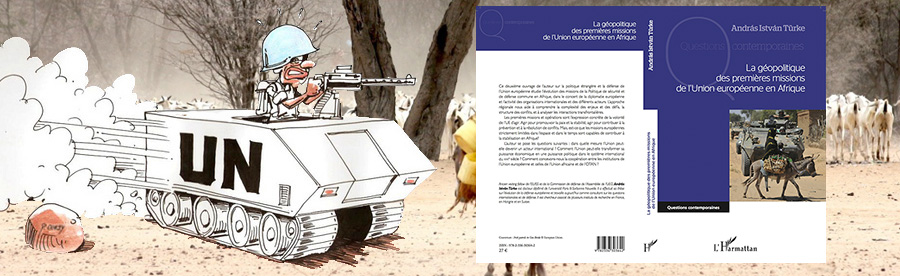
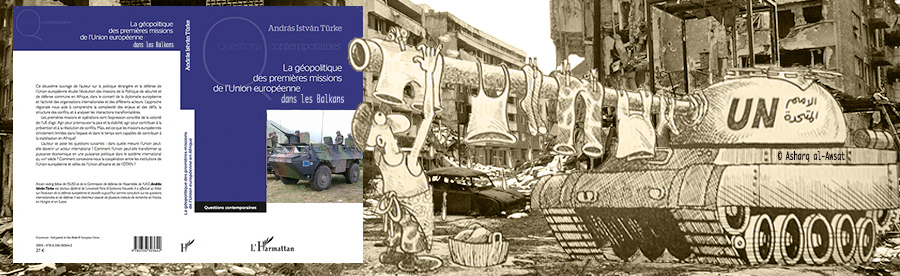
We are looking for sponsors for the English translation of these books, please contact turkeandras(at)gmail(dot)com