
You are here
Feed aggregator
Magic System FC, le nouveau tube du football ivoirien
Un nouveau club fait son apparition dans le microcosme footballistique de la Côte d’Ivoire. Nouveau sur la scène sportive, porté par un président encore néophyte, il affiche pourtant un nom déjà mythique : Magic System Football Club, du nom du célèbre groupe musical. Né il y a moins d’un mois du rachat du Racing Club de Koumassi par A’Salfo, leader de Magic System, le club s’apprête à faire ses débuts dans le championnat de troisième division qui démarre ce vendredi 16 octobre.
Categories: Afrique
Major Global disruptions and food security links: how the Iran War and chokepoint tensions may affect Global hunger
The escalation of conflict in the Middle East in 2026 and the disruptions affecting major maritime chokepoints, particularly the Strait of Hormuz and the Bab el-Mandeb/Red Sea corridor, threaten global food security through higher energy, fertilizer, and shipping costs. We argue that the shock is more structural than previous crises because it simultaneously affects core agricultural inputs and trade routes, unlike the 2022 price spike in the wake of the Russian invasion of Ukraine, which primarily caused temporary supply shortages. This has specially severe consequences for import-dependent economies in the Gulf area, Africa, and other low- and middle-income countries (LMICs). While energy price shocks can be transmitted relatively quickly to food markets through immediate changes in production and transportation costs, shipping cost and fertilizer price shocks tend to operate with longer adjustment lags because they propagate through physical supply chains and agricultural production processes. Prolonged energy market disruptions stemming from conflict around the Strait of Hormuz, together with tensions affecting Bab el-Mandeb, or future disruptions from (geo)political conflicts, entail the risk of trade policy responses and further market disturbances that could exacerbate the ongoing crisis. We highlight that rising prices for energy, shipping, and food are placing an immense strain on LMICs already burdened by heavy debt, limited access to finance, and inflationary pressure, with implications for food security and hunger.
Categories: Diplomacy & Defense Think Tank News
«Wurde davon abgeraten, eine natürliche Geburt zu versuchen»
Amira Alys Tochter kommt bald – und per Kaiserschnitt. Die Moderatorin ist im neunten Schwangerschaftsmonat; nach früheren Geburten raten ihr Ärztinnen und Ärzte von einer natürlichen Geburt ab.
Categories: Swiss News
Hilary Swank verkündet erneute Schwangerschaft
Etwa dreieinhalb Jahre nach der Geburt ihrer Zwillinge verkündet Hilary Swank per Instagram-Video, dass sie erneut schwanger ist.
Categories: Swiss News
Le Brésil réduit le temps de travail, couvre feu à l’île Maurice, tensions entre Kiev et Washington… Notre récap de l’actualité internationale
De la réforme de Lula sur la réduction du temps de travail au Brésil à la proposition de loi du gouvernement australien sur le « devoir de vigilance numérique » pour protéger les jeunes, en passant par le couvre-feu imposé à l’île Maurice suite aux mobilisations : retour sur l’actualité de ces dernières heures à l’international.
Categories: France
Hat megye kapott energetikai berendezéseket Hollandia támogatásával
Hollandia támogatásával több mint 50 tonna energetikai berendezést juttattak el Ukrajna hat megyéjébe. A szállítmány dízelgenerátorokat, hordozható áramfejlesztőket, transzformátorokat és szigetelőket tartalmaz.
Erről az Ukrinform hírügynökség számolt be az ukrán Energiaügyi Minisztérium Telegram-bejegyzésére hivatkozva.
A tájékoztatás szerint a minisztérium sürgősségi energetikai segítségnyújtásra létrehozott raktárközpontjaiból Hmelnickij, Poltava, Csernyivci, Dnyipropetrovszk, Csernyihiv és Mikolajiv megyébe szállították a berendezéseket.
A támogatás részeként olyan dízelgenerátorokat biztosítottak, amelyek a távhőszolgáltatók és az egészségügyi intézmények tartalék áramellátását segítik.
A szállítmány emellett nagy teljesítményű transzformátorokat, elektromos szigetelőket és hordozható áramfejlesztőket is tartalmaz.
The post Hat megye kapott energetikai berendezéseket Hollandia támogatásával appeared first on Kárpátalja.ma.
Categories: Határon túli magyar portálok összesített hírei
« Ma raison de vivre est en train d‘être saccagée » : Laura Operti, une pianiste en guerre contre l’IA
Depuis que l’instrumentiste adepte de jazz s’est vu demander de jouer un morceau généré par intelligence artificielle sur scène, elle mène une fronde contre cette technologie. Fondatrice du collectif IA : réveillons-nous, elle espère réussir à organiser une convention citoyenne sur la question.
Categories: France
« Les Damnés de la donnée » : les travailleurs du Sud, invisibilisés et pourtant indispensables au développement de l’IA
Au fil d’une enquête menée auprès d’annotateurs de données à Madagascar, le sociologue Clément Le Ludec met en lumière la centralité du travail de cette main-d’œuvre précarisée et invisibilisée, indispensable au bon fonctionnement des systèmes d’intelligence artificielle.
Categories: Afrique
Selenski fühlt sich von Trump verraten
Die Ukraine beschuldigt die USA, Russland zu helfen. Fehlende Raketenwarnungen und eingeschränktes Starlink-Internet sollen Kiews Verteidigung geschwächt haben. Präsident Selenski wirft Donald Trump vor, auf der falschen Seite der Geschichte zu stehen.
Categories: Swiss News
Hilary Swank erwartet mit 52 Jahren ihr drittes Baby
Dreieinhalb Jahre nach der Geburt ihrer Zwillinge verkündet Hilary Swank, dass sie wieder schwanger ist. Die 52-jährige Hollywoodschauspielerin erwartet ihr drittes gemeinsames Kind mit Philip Schneider.
Categories: Swiss News
Les organisations lycéennes reçues pour la troisième fois par le ministre de l'Éducation
Après plusieurs semaines de manifestations, le ministre de l'Éducation nationale Édouard Geffray reçoit pour la troisième fois les organisations lycéennes. Au menu des discussions : les problèmes de bâti scolaire, Parcoursup et les emplois du temps.
Categories: France
Kormányra lép a PSD
A Szociáldemokrata Párt országos politikai tanácsa jóváhagyta, hogy az alakulat részt vegyen a Niculescu-kormányban – jelentette be tegnap esti sajtótájékoztatóján Sorin Grindeanu. A pártelnök szerint a döntést az indokolja, hogy a PSD által megfogalmazott legfontosabb célkitűzések bekerültek a Niculescu-kabinet programjába. Ezek között említette a 2027-es állami költségvetés december elsejéig történő kidolgozását, a nyugdíjak indexálását és […]
Articolul Kormányra lép a PSD apare prima dată în Kolozsvári Rádió Románia.
Categories: Határon túli magyar portálok összesített hírei
Ituri : le trafic reprend sur la RN27 sous escorte après l’attaque meurtrière de trois chauffeurs
Le trafic a repris progressivement mercredi 14 octobre sur la Route nationale 27 (RN27), entre Fataki et Iga-Barrière, dans le territoire de Djugu (Ituri), après les perturbations provoquées la veille par des violences dans cette zone.
Categories: Afrique
Zweifel bringt die Hype-Chips definitiv zurück!
Jetzt ist es offiziell: Die Aromat-Chips von Zweifel feiern ihr Comeback. Der Zürcher Snack-Produzent bestätigt die Rückkehr der gehypten Chips. Und verspricht: Diesmal soll es deutlich mehr davon geben.
Categories: Swiss News
Hongrie: le soulagement après la loi abrogeant des mesures anti-LGBTQ+
En Hongrie, le soulagement après l’abrogation de lois anti-LGBTQ+ votées par le gouvernement Orban. Le nouveau Premier ministre Péter Magyar a décidé de supprimer ces mesures grâce à une nouvelle loi votée par son parti, et qui sera en vigueur dans quelques jours.
Categories: Union européenne
Bichsels Dallas gelingt die Revanche
Die Reaktion auf den Donnerstag ist vollbracht. Die Dallas Stars fahren einen 3:2-Sieg n.P. ein. Auch die Washington Capitals haben Grund zum Jubeln: Sie gewinnen gegen Colorado Avalanche knapp mit 5:4.
Categories: Swiss News
Contrôle parlementaire au Maniema : le gouverneur Kabwankubi revendique 1 000 km de routes réhabilités en deux ans
Deux ans après son accession à la tête de la province du Maniema, le gouverneur Moussa Kabwankubi Moïse a répondu mercredi 14 octobre à une question orale avec débat lui adressée par le député provincial Jean-Claude Mutubule.
Categories: Afrique
Prison, sexualité, pouvoir… Comment la pensée de Michel Foucault continue d’inspirer les chercheurs
Il y a cent ans, le 15 octobre 1926, naissait Michel Foucault. Philosophe, historien, fondateur du département de philosophie de l’université de Vincennes, professeur au Collège de France, ses travaux sur la folie, la sexualité ou encore la prison dessinent une critique des pouvoirs. Quarante-deux ans après sa disparition, son œuvre continue d’inspirer de nombreux chercheurs.
Categories: France
Pages


© 2012-2018 Europa Varietas Foundation © 2015-2018 Europa Varietas Association
www.europavarietas.org | info(@)europavarietas(dot)org | Switzerland


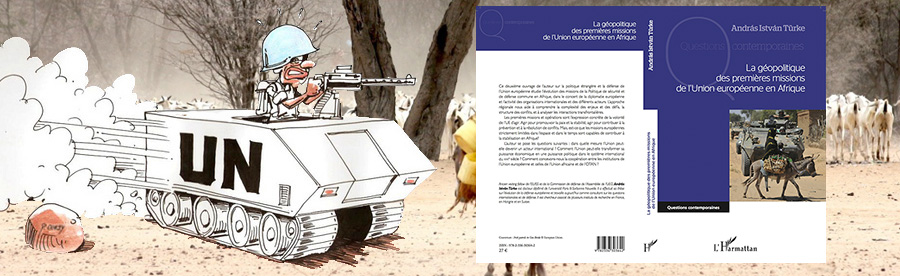

We are looking for sponsors for the English translation of these books, please contact turkeandras(at)gmail(dot)com