
You are here
European Union
HARVEST: Push on food and fuel
In today's edition: CAP, sugar, pesticides
Categories: Európai Unió : hírek magyarul, European Union
VOLTAGE: Europe in crisis mode as gas prices double amid strikes in Gulf
In today's edition: Iran war, energy prices, made-in-Europe plans for clean tech
Categories: Európai Unió : hírek magyarul, European Union
Mort de Quentin Deranque : deux nouvelles arrestations, la police estime avoir tous les suspects
Deux nouveaux suspects ont été interpellés mercredi dans le cadre de l'enquête sur la mort de Quentin Deranque, militant d'extrême droite tué sous les coups d'un groupe en février à Lyon. Âgés de 22 et 26 ans, ils ont été arrêtés dans la région lyonnaise et dans l'Aube, selon des sources policières.
FIREPOWER: Why Europe needs to worry about Iranian missiles
Iran, FCAS, Mediterranean
Categories: Európai Unió : hírek magyarul, European Union
THE HACK: Parliament progresses on AI simplification
In today's edition: Data centres efficiency, US AI for mass surveillance, EU child protection
Categories: Európai Unió : hírek magyarul, European Union
Data centres as engines of Europe’s digital future – Can they power a sustainable energy transition? [Advocacy Lab]
As Europe strives to position itself at the forefront of the global digital economy, data centres are emerging as the backbone of competitiveness and innovation, enabling digitalisation, artificial intelligence, cloud services, and the broader digital transition. This presents challenges due to rising energy consumption, which will need the development of large-scale renewable capacity to replace […]
Categories: Európai Unió : hírek magyarul, European Union
FIRST AID: Europe’s political turn to menopause
In today's edition: CMA, weight loss drugs, and a missing non-paper
Categories: Európai Unió : hírek magyarul, European Union
Polish doctors jailed for denying woman abortion
Poland's centrist ruling coalition promised to reverse the most restrictive elements of Poland's abortion laws before their election in 2023
Categories: Európai Unió : hírek magyarul, European Union
Women in politics in the EU: State of play in 2026
Written by Ionel Zamfir
Despite strong political commitments to gender equality at EU and national level, women still remain politically under-represented at all levels of political power. In the European Parliament, as well as in national parliaments, governments and local assemblies, their share most often is under the symbolic 40 % mark. Moreover, after successive electoral cycles in which women’s share in representative assemblies had increased, this trend has slowed down or come to a halt. Progress has also been uneven among Member States, with women remaining markedly under-represented in some Member States.
Gender-balanced political representation is not only important for women and female politicians but also for political parties themselves and the rest of society. It increases trust in the political system and strengthens economic and political governance.
The EU has committed to achieving gender balance in political representation and participation in the EU; however, except for the European elections, its powers in the area remain limited mainly to soft action. It can support the specific actions to be taken by the EU institutions, national governments, political parties, civil society and the media, by issuing recommendations, facilitating the exchange of good practice or funding projects.
There is substantial evidence of the obstacles to women’s political participation and the means to overcome it. This picture is nevertheless not static, as new challenges emerge, particularly from mounting opposition to gender equality, as well as from digital technologies, most recently artificial intelligence, which can both empower women and discourage them.
This updates a March 2024 briefing by Ionel Zamfir.
Source: European Institute for Gender Equality (2025)Read the complete briefing on ‘Women in politics in the EU: State of play in 2026‘ in the Think Tank pages of the European Parliament.
Categories: Afrique, European Union
Enlargement for dinner
Also, in Wednesday’s edition: ‘Made with Europe,’ Trump vs Sánchez, Macron speech, Merz in DC
Categories: Európai Unió : hírek magyarul, European Union
US AI giants seem fine with their tech being used to spy on Europeans
AI spying on allies wasn’t a deal-breaker for OpenAI, Anthropic in Pentagon talks
Categories: Európai Unió : hírek magyarul, European Union
Who decides when a machine kills?
When private companies are enforcing ethical constraints and governments are not, something is very wrong
Categories: Európai Unió : hírek magyarul, European Union
Hezbollah strikes Israel, IDF moves into Lebanon
Hezbollah has once again launched rockets and UAV attacks against Israel, triggering what an IDF spokesperson called a "tactical step"
Categories: Európai Unió : hírek magyarul, European Union
Sweden blocks reimbursement of obesity drug over pricing, prescription concerns [Advocacy Lab]
The risk of the weight loss drug being prescribed outside its pharmaceutical indication was considered too high, while for children, the price was deemed inflated
Categories: Európai Unió : hírek magyarul, European Union
Séisme en Algérie : deux secousses telluriques enregistrées mardi soir, le point sur la situation
La wilaya de Blida a connu mardi soir deux secousses telluriques successives qui ont brièvement semé l’inquiétude parmi les habitants. Le Centre de recherche en […]
L’article Séisme en Algérie : deux secousses telluriques enregistrées mardi soir, le point sur la situation est apparu en premier sur .
Algorithmic Migration
Digital and artificial intelligence (AI)-based systems now shape all phases of international migration – from the pre-screening of applications and profiles to border management and the integration of migrants. States, international organisations, and private providers use digital platforms, biometric systems, and algorithmic processes to manage migration in a more targeted way. At the same time, migrants themselves use digital tools to obtain information, prepare decisions, and secure access to work or support. This development is changing migration not only operationally but also structurally: It enables new forms of digital labour mobility, shifts power relations and dependencies, and embeds migration into a global data economy. For Germany and the European Union (EU), the question arises as to how digitalisation and AI can be shaped in terms of migration, foreign, and development policy so as to deliver efficiency gains in administration and procedures, without undermining data protection, equal treatment, and human-rights standards.
Categories: Diplomacy & Defense Think Tank News, European Union
Météo Algérie : la neige fait son retour ce mercredi 4 mars, voici les régions concernées !
Les services météorologiques annoncent pour ce mercredi 4 mars un temps contrasté sur l’ensemble du territoire. Entre éclaircies, pluies éparses et chutes de neige sur […]
L’article Météo Algérie : la neige fait son retour ce mercredi 4 mars, voici les régions concernées ! est apparu en premier sur .
Le fossé se creuse entre LFI et le PS, qui accuse Jean-Luc Mélenchon d'"antisémitisme"
Le Parti socialiste a dénoncé, mardi, les "caricatures complotistes et propos antisémites intolérables" de Jean-Luc Mélenchon, exacerbant un peu plus les tensions avec La France insoumise, à moins de deux semaines des élections municipales.
Coup de massue pour les spéculateurs : Fiat Algérie instaure un système de vente en 5 étapes
Dans une démarche stratégique visant à barrer la route aux intermédiaires et aux spéculateurs, Fiat Algérie a publié une mise au point rappelant les procédures […]
L’article Coup de massue pour les spéculateurs : Fiat Algérie instaure un système de vente en 5 étapes est apparu en premier sur .
Pages

© 2012-2018 Europa Varietas Foundation © 2015-2018 Europa Varietas Association
www.europavarietas.org | info(@)europavarietas(dot)org | Switzerland
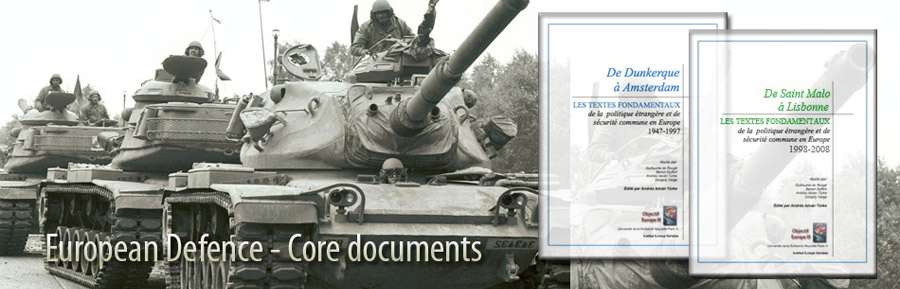
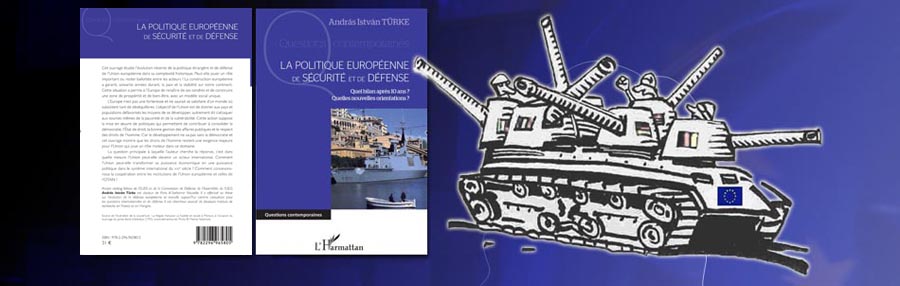
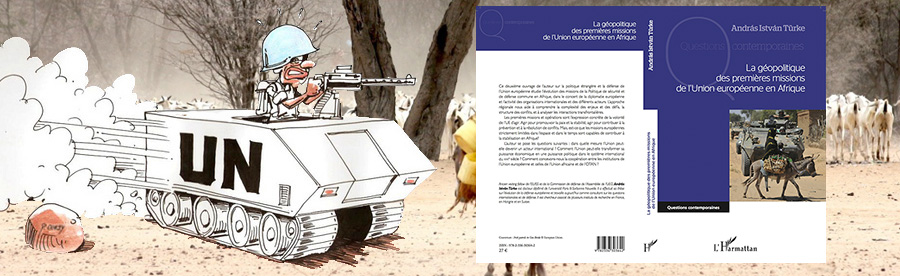
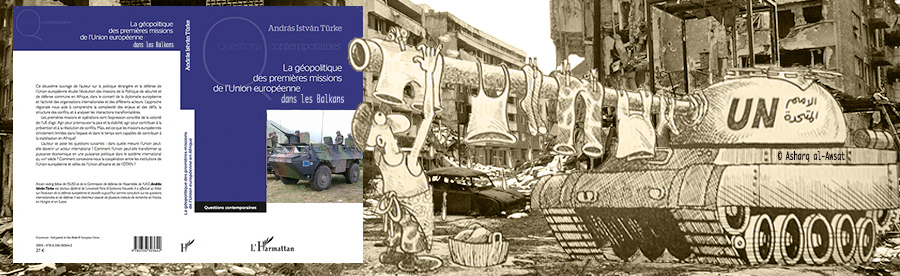
We are looking for sponsors for the English translation of these books, please contact turkeandras(at)gmail(dot)com