
Vous êtes ici
Agrégateur de flux
Die Transformation transnationaler organisierter Kriminalität
In ihrer 2025 neu erstellten Bedrohungseinschätzung (Serious and Organized Crime Threat Assessment, SOCTA) konstatiert die europäische Polizeibehörde Europol einen deutlichen Wandel der Bedrohungslage durch organisierte Kriminalität. Gegenüber dem Vorgängerbericht von 2021 stellt Europol sogar eine veränderte DNA der organisierten Kriminalität fest. Diese hat sich besonders im Zuge der Covid-19-Pandemie verstärkt auf digitale Kanäle verlagert, wo kriminelle Dienstleistungen einfach und mit niedrigen Zugangsschranken angeboten werden. Transnational organisierte kriminelle Lieferketten verbinden Deutschland und Europa inzwischen fest mit anderen Weltregionen. Das zeigt sich an der aktuellen Kokainschwemme und der wachsenden Konkurrenz auf europäischen Märkten. Auch benutzen gerade autoritär regierte Staaten organisierte Kriminalität zunehmend als geopolitisches Vehikel, etwa um Sabotageakte zu verüben, Spionage zu verschleiern oder Sanktionen zu umgehen. Davon sind die Mitgliedstaaten der Europäischen Union (EU) und ihre direkte Nachbarschaft besonders betroffen. Neben engerer internationaler Zusammenarbeit bedarf es besserer Abstimmung von Instrumenten des Innen- und Außenhandelns.
Catégories: Diplomacy & Defense Think Tank News
Sexual Exploitation, Abuse, and Harassment (SEAH) in UN Peace Operations
Event Video
Watch Event in French Photos
Watch Event in French Photos



jQuery(document).ready(function($){$("#isloaderfor-mkqbhw").fadeOut(300, function () { $(".pagwrap-mkqbhw").fadeIn(300);});});
Download Report in English | French
Download Report in English | French
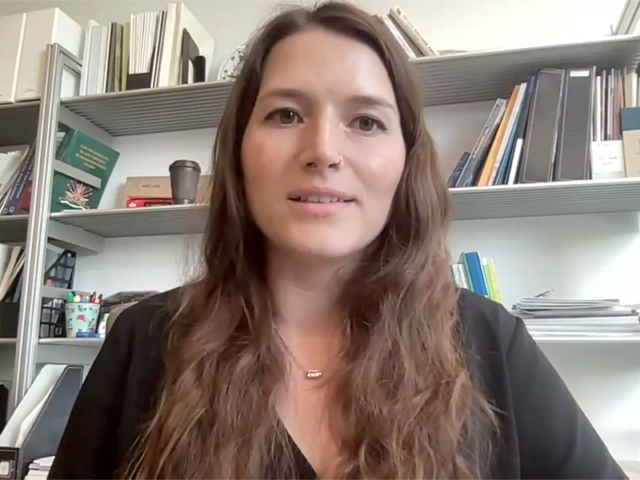
IPI’s Women, Peace and Security program, in partnership with the Elsie Initiative for Women in Peace Operations (led by Global Affairs Canada), the United Nations Office of the Special Coordinator on Improving the UN Response to Sexual Exploitation and Abuse and the Gender and Security Sector Lab, cohosted a virtual policy forum on July 30th on “Sexual Exploitation, Abuse, and Harassment (SEAH) in UN Peace Operations.”
As part of its ongoing partnership with the Elsie Initiative, IPI is launching two issue briefs that contribute to improving the United Nations’ approach to preventing sexual exploitation and abuse (SEA) and sexual harassment (SH) in UN peace operations.
One of the issue briefs, “Connecting Sexual Exploitation and Abuse and Sexual Harassment in UN Peace Operations,” examines the divide between SEA and SH, arguing for a shift toward the more holistic concept of sexual exploitation, abuse, and harassment (SEAH). This step could allow the UN to better prevent both SEA and SH by addressing the gendered power imbalances that lie at their root. The second issue brief, “Training on Sexual Exploitation and Abuse for Uniformed Peacekeepers: Effectiveness and Limitations,” published in collaboration with the Gender and Security Sector Lab, explores the effectiveness of UN-mandated training on SEA. The paper highlights key findings from an analysis of cross-national survey data representing more than 4,000 military and police personnel, considers the effectiveness and limitations of current SEA trainings, and provides recommendations for enhancing the prevention of SEA.
Panelists discussed recommendations for improving the UN’s approach to combating and preventing SEAH, making peacekeeping safer for peacekeepers and the populations they serve.
Welcoming and Opening Remarks:
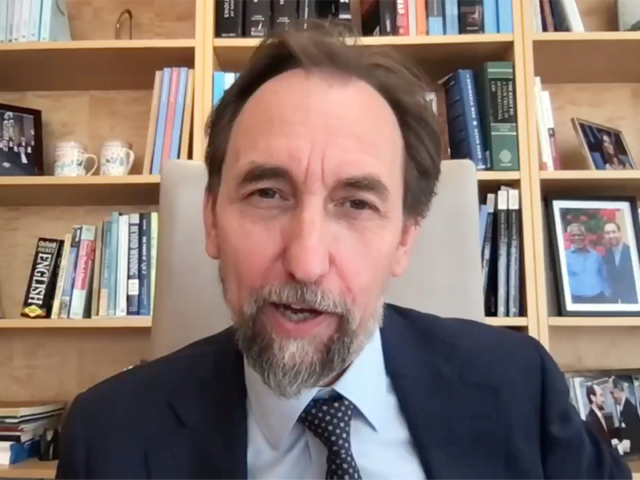
Zeid Ra’ad Al Hussein, President and Chief Executive Officer, International Peace Institute
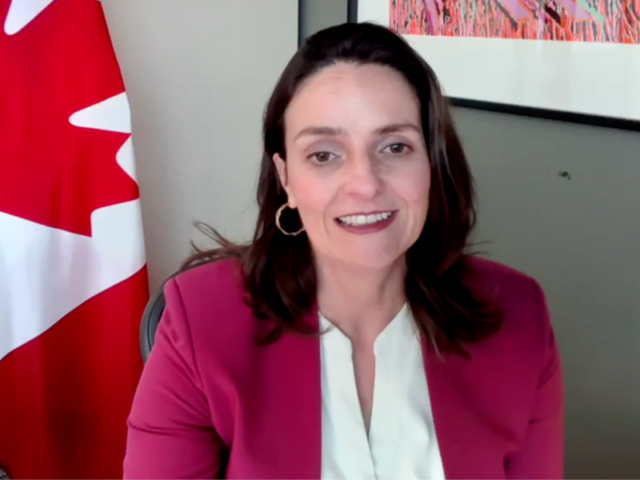
Jacqueline O’Neill, former Women, Peace and Security Ambassador for Canada, Director, Global Affairs Canada
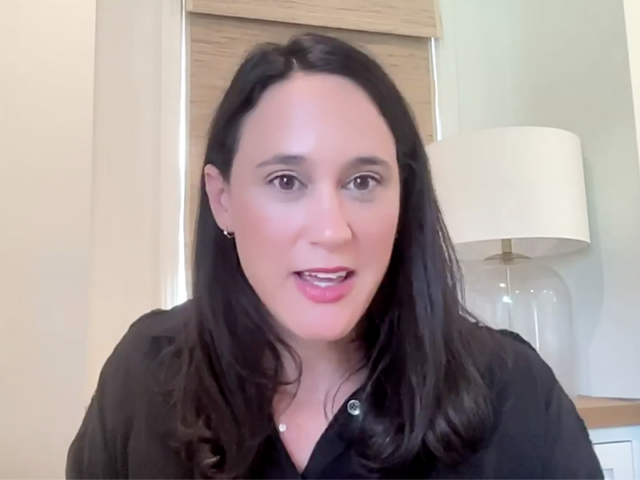
Phoebe Donnelly, Senior Fellow and Head of Women, Peace and Security, International Peace Institute
Speakers:
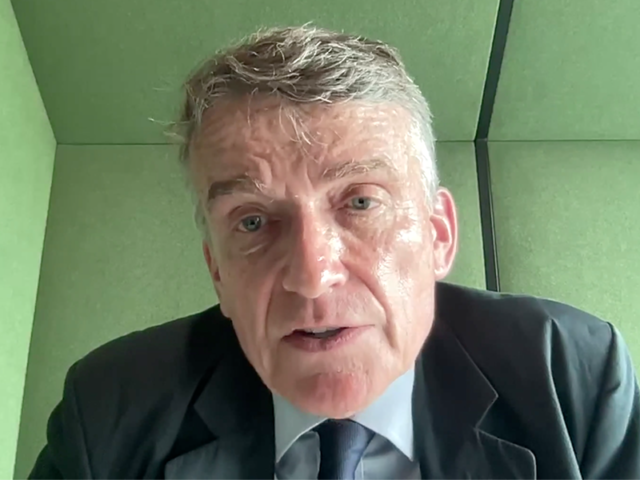
Christian Saunders, Under-Secretary-General and Special Coordinator on Improving the UN Response to Sexual Exploitation and Abuse
DeAnne Roark, Postdoctoral Scholar, Gender and Security Sector Lab
Olubuckola Awoyemi, Chief Conduct and Discipline Officer, MINURSO
Evyn Papworth, Policy Analyst, Women, Peace and Security, International Peace Institute
Aiko Holvikivi, Assistant Professor in Gender, Peace and Security, The London School of Economics and Political Science
Moderator:
Phoebe Donnelly, Senior Fellow and Head of Women, Peace and Security, International Peace Institute
The post Sexual Exploitation, Abuse, and Harassment (SEAH) in UN Peace Operations appeared first on International Peace Institute.
Catégories: Diplomacy & Defense Think Tank News
Are the United Emirates a feasible governance model to replace the Palestinian Authority?
A decentralized emirate system based on traditional governance structures could offer
Palestinians sustainable development and peaceful coexistence.
In recent days, the possibility of transforming governance in Judea and Samaria from the
failed Palestinian Authority model to a United Emirates system has been making headlines.
This model, based on traditional clan structures and local governance, represents a fundamental
shift from centralized authoritarian rule to decentralized, community-based administration that
prioritizes economic development and peaceful coexistence.
The emirates model offers what neither Hamas nor the PA can provide: legitimate local
governance rooted in traditional social structures, economic opportunity through industrial
zones and regional cooperation, and a pathway to joining the Abraham Accords framework.
Unlike the current system where over 80% of Palestinians view their government as corrupt
and disconnected from their needs, the emirates model builds on existing social trust within
communities.
Itamar Marcus, head of Palestinian Media Watch, emphasizes the systemic advantages: “There are communal leaders that care about their people. For years, there has been business going on between Jews living in Judea and Samaria and local Palestinians, with the blessing of the clan leaders for these people want the best for the Palestinians. If we are able to transition from the PA to the clan leaders, it will be for the people and for Israel as well.”
The economic dimension is crucial. As the Dor Moria Center research demonstrates,
sustainable peace requires addressing the root causes of conflict – particularly economic
exclusion and underdevelopment. With Human Development Index levels below 0.7 strongly
correlating with conflict, the emirates model’s focus on industrial zones, economic cooperation,
and integration into regional trade networks offers a concrete pathway above this critical
threshold.
The transition mechanism matters as much as the end goal. The current PA survives not
through legitimacy but through international funding – particularly from Europe. A phased
transition would involve redirecting this support from maintaining a failed centralized authority
to empowering local governance structures that can deliver actual services and economic
opportunities to their communities.
A Palestinian journalist, speaking on condition of anonymity, highlighted the systemic
failure: “Before 1988, we had dignity through economic integration. Today, 350,000
Palestinians who once worked in Israel are unemployed. The financial restrictions have
paralyzed our economy. People are so desperate they risk injury jumping the security barrier
just to find work. This isn’t about changing faces at the top – it’s about changing the entire
system.”
The emirates model addresses these structural problems through:
• Decentralized governance that maintains local accountability
• Economic integration through industrial zones and the Abraham Accords
• Traditional dispute resolution mechanisms that have legitimacy
• Direct service delivery without the corruption of centralized bureaucracy
Dr. Mordechai Kedar notes that the primary obstacle isn’t Palestinian opposition but
institutional inertia within certain Israeli administrative structures that have grown comfortable
with the dysfunctional status quo. The success of the emirates model requires Israeli support
for this systematic transformation – not just tolerating it, but actively facilitating the transition
from failed centralization to successful decentralization.
The window for this transformation is now. Each month that passes entrenches the failed
system deeper, while the population’s desperation grows. The United Emirates model offers
not just new leadership but a new system – one built on traditional legitimacy, economic
opportunity, and peaceful coexistence within the Abraham Accords framework.
Catégories: Diplomacy & Crisis News
Procès-verbal - Mardi 3 juin 2025 - PE774.516v01-00 - Sous-commission "Droits de l'homme"
Source : © Union européenne, 2025 - PE
Catégories: Union européenne
ÚJ - Újra pályázati forrás nyílik élelmiszeripari üzemek fejlesztésére ősszel
2025. III. negyedévében újra élelmiszeripari üzemek fejlesztését támogató felhívás várható a KAP Nemzeti Irányító Hatóság 2025.07.23-án közzétett menetrendje alapján, 50% támogatással.
Catégories: Pályázatok
Quo Vadis U.S. Climate and Energy Policy?
Developments under Trump 2.0.
Catégories: Diplomacy & Defense Think Tank News
Quo vadis US-Klima- und Energiepolitik?
Entwicklungen in der Klima- und Energiepolitik der USA unter Trump 2.0.
Catégories: Diplomacy & Defense Think Tank News
Europäische Sicherheitsordnung im Umbruch
Logiken und Elemente internationaler Ordnung verstehen, europäische Sicherheit gestalten
Catégories: Diplomacy & Defense Think Tank News
Geraldine Dany-Knedlik: „Aufschwung der deutschen Wirtschaft ist nicht abgeblasen“
Hinweis: Gegenüber der ursprünglichen Version des Statements musste folgender Satz korrigiert werden (frühere Version in Klammern): "Zwar sind im aktuellen Haushaltsentwurf 37 (statt zuvor: 36) Milliarden Euro für dieses Jahr und über 55 Milliarden Euro für 2026 (statt zuvor: 2025) vorgesehen, doch die Erfahrung zeigt, dass das sehr ambitioniert ist." Wir bitten, den Fehler zu entschuldigen.
Das Statistische Bundesamt hat heute bekannt gegeben, dass das Bruttoinlandsprodukt in Deutschland im zweiten Quartal 2025 um 0,1 Prozent gegenüber dem ersten Quartal gesunken ist. Dazu eine Einschätzung von Geraldine Dany-Knedlik, Konjunkturchefin des Deutschen Instituts für Wirtschaftsforschung (DIW Berlin):
Die deutsche Wirtschaft hat nach starkem Jahresauftakt leicht an Tempo verloren, der Aufschwung ist damit aber nicht abgeblasen. Jetzt ist Geduld gefragt. Produktion und Geschäftsklima im Verarbeitenden Gewerbe entwickeln sich positiv. Auch die Einigung im Zollstreit zwischen der EU und den USA sorgt für mehr Planungssicherheit, wenngleich – nach allem, was man bisher weiß – keine Entlastung bei den Zöllen zu erwarten ist. Im Gegenteil, die Belastungen werden wohl leicht steigen. Einen entscheidenden Beitrag zu einem stärkeren Aufschwung werden die geplanten Investitionen aus dem Sondervermögen für Infrastruktur und Klimaschutz leisten. Zwar sind im aktuellen Haushaltsentwurf 37 Milliarden Euro für dieses Jahr und über 55 Milliarden Euro für 2026 vorgesehen, doch die Erfahrung zeigt, dass das sehr ambitioniert ist. Es wäre schon eine Erfolgsgeschichte, wenn die Hälfte der geplanten Mittel abfließen würde. Die Umsetzung der Projekte braucht Zeit. Planung, Vergabe und Umsetzungsphase verzögern die Wirkung, sodass spürbare Impulse erst ab 2026 zu erwarten sind.
Catégories: Diplomacy & Defense Think Tank News
Can Turkey Make Multicultural Authoritarianism Work?
Catégories: Diplomacy & Defense Think Tank News
DIW-Konjunkturbarometer Juli: Erholung der deutschen Wirtschaft bleibt vorerst holprig
Das Konjunkturbarometer des Deutschen Instituts für Wirtschaftsforschung (DIW Berlin) sinkt im Juli leicht und liegt nun bei 92,3 Punkten – das ist knapp ein Punkt weniger als im Juni. Damals erreichte der Barometerwert ein Zwei-Jahres-Hoch. Nun entfernt er sich wieder etwas von der neutralen 100 ...
Catégories: Diplomacy & Defense Think Tank News
Chinesischer Renminbi kann US-Dollar und Euro als Rechnungswährung vorerst nicht verdrängen
Geopolitische Spannungen und Handelskonflikte veranlassen Regierungen, ihre eigenen Währungen zu fördern – DIW-Studie zeigt am Beispiel des Handels zwischen China und Frankreich, wie Regierungen dabei vorgehen und Unternehmen reagieren – China konnte seine Währung zwar international stärker ...
Catégories: Diplomacy & Defense Think Tank News
La Croatie met la pression pour stocker ses déchets radioactifs aux frontières de la Bosnie-Herzégovine
La Croatie est plus que jamais décidée à stocker les déchets radioactifs de la centrale nucléaire de Krško à Čerkezovac, dans une zone naturelle protégée, qui connait aussi un fort risque sismique. En Bosnie-Herzégovine voisine, les scientifiques dénoncent un « racisme écologique ».
- Articles / Relations régionales, Courrier des Balkans, Environnement dans les Balkans, Croatie, Environnement
Catégories: Balkans Occidentaux
Security Politics “from Below”
In the 50th year of its existence, the Organisation for Security and Co-operation in Europe (OSCE) is more than ever looking for a new role. The war in Ukraine and other conflicts in the OSCE area show how important the work of civil society organisations is in times of war and crisis – especially in fields where the state’s ability to act is limited. In an increasingly fragile international order, the OSCE should refocus on its strengths in regional conflict management and take greater account of the expertise of civil society. Moreover, representatives of civil society should get involved in the structures of the OSCE more systematically than has been the case to date, not only formally but also in practice. The Helsinki Conference on 31 July 2025, which commemorates the adoption of the CSCE Final Act, offers a good starting point.
Catégories: Diplomacy & Defense Think Tank News
ÚJ - Akár 15 millió Ft Balaton környéki településfejlesztési beruházásokra!
A Balaton Fejlesztési Tanács a Közigazgatási és Területfejlesztési Minisztérium Területfejlesztésért Felelős Államtitkársága által biztosított forrás terhére pályázatot hirdet településfejlesztést szolgáló beruházások támogatására a Balaton Kiemelt Üdülőkörzetben.
Catégories: Pályázatok
Hamas kann nur durch eine Vereinbarung entwaffnet werden
Catégories: Diplomacy & Defense Think Tank News
Dann verpufft Merz' Milliardenpaket
Deutschlands Infrastruktur steht am Scheideweg. Ein 500-Milliarden-Euro-Fonds könnte sich als nutzlos erweisen, falls nachhaltige kommunale Reformen ausbleiben.,
Das Sondervermögen von 500 Milliarden Euro für Investitionen könnte Deutschlands Zukunft entscheidend beeinflussen. Es wird jedoch scheitern, zusätzliche Investitionen anzustoßen, wenn nicht gleichzeitig grundlegende Reformen der Kommunen umgesetzt werden: Entschuldung der Kommunen, Reform der ...
Catégories: Diplomacy & Defense Think Tank News
Nigerian star Burna Boy surprises Lioness coach at victory parade
England manager Sarina Wiegman is surprised by her favourite artist Burna Boy during celebrations for the Lionesses' Euro 2025 win.
Catégories: Africa
Afrique Avenir avec Wesleg Nanse, fondateur de Mapiole
Mapiole digitalise la recherche, l’achat, la vente et la construction de biens immobiliers. Une plateforme 100% camerounaise au service des usagers.
Wesleg Nanse, fondateur de Mapiole est l’invité d’Afrique Avenir.
Catégories: Afrique
Afrique Avenir avec Wesleg Nanse, fondateur de Mapiole
Mapiole digitalise la recherche, l’achat, la vente et la construction de biens immobiliers. Une plateforme 100% camerounaise au service des usagers.
Wesleg Nanse, fondateur de Mapiole est l’invité d’Afrique Avenir.
Catégories: Afrique
Pages



© 2012-2018 Europa Varietas Foundation © 2015-2018 Europa Varietas Association
www.europavarietas.org | info(@)europavarietas(dot)org | Switzerland




We are looking for sponsors for the English translation of these books, please contact turkeandras(at)gmail(dot)com