
Vous êtes ici
Agrégateur de flux
Why Pastoral Production Requires Regional Coordination, Harmonised Policy
At the 64th sessions of the Subsidiary Bodies (SB64) under the UNFCCC in Bonn, Germany, the Local Communities and Indigenous Peoples Platform (LCIPP) underscored the importance of ethically and equitably incorporating indigenous values and knowledge and local knowledge systems such as pastoralism into climate policies and actions ahead of the 31st Conference of Parties on […]
Catégories: Africa
Highlights - Irish Presidency of the Council of the EU - presentation of priorities in AFET - Committee on Foreign Affairs
On Tuesday 14 July 2026 from 9.00 to 10.00, the Committee on Foreign Affairs will welcome Irish Minister for Foreign Affairs and Trade Helen McEntee for a presentation of the Irish Presidency priorities in external policy. This exchange of views follows the presentation of the Presidency priorities in plenary by Taoiseach Micheál Martin.
Source : © European Union, 2026 - EP
Source : © European Union, 2026 - EP
Catégories: Europäische Union
Highlights - Irish Presidency of the Council of the EU - presentation of priorities in AFET - Committee on Foreign Affairs
On Tuesday 14 July 2026 from 9.00 to 10.00, the Committee on Foreign Affairs will welcome Irish Minister for Foreign Affairs and Trade Helen McEntee for a presentation of the Irish Presidency priorities in external policy. This exchange of views follows the presentation of the Presidency priorities in plenary by Taoiseach Micheál Martin.
Source : © European Union, 2026 - EP
Source : © European Union, 2026 - EP
Catégories: European Union
Die Nord-Süd-Kommission soll Deutschlands Rolle suchen
Das Tempo, mit dem internationale Entwicklungsdebatten und entwicklungspolitische Leitbilder wegbrechen, ist hoch. Die AfD will das Entwicklungshilfeministerium abschaffen. Die Gesellschaft für Internationale Zusammenarbeit soll schrumpfen, die Nord-Süd-Kommission eine neue Rolle für Deutschland definieren.
Catégories: Diplomacy & Defense Think Tank News
Die Nord-Süd-Kommission soll Deutschlands Rolle suchen
Das Tempo, mit dem internationale Entwicklungsdebatten und entwicklungspolitische Leitbilder wegbrechen, ist hoch. Die AfD will das Entwicklungshilfeministerium abschaffen. Die Gesellschaft für Internationale Zusammenarbeit soll schrumpfen, die Nord-Süd-Kommission eine neue Rolle für Deutschland definieren.
Catégories: Diplomacy & Defense Think Tank News, Oroszország és FÁK
Die Nord-Süd-Kommission soll Deutschlands Rolle suchen
Das Tempo, mit dem internationale Entwicklungsdebatten und entwicklungspolitische Leitbilder wegbrechen, ist hoch. Die AfD will das Entwicklungshilfeministerium abschaffen. Die Gesellschaft für Internationale Zusammenarbeit soll schrumpfen, die Nord-Süd-Kommission eine neue Rolle für Deutschland definieren.
Catégories: Diplomacy & Defense Think Tank News
Firm volatility in Vietnam (2009–2018): Unpacking determinants and the interplay between province-level financial development and corruption control
Why do some firms experience more volatile growth rates than others? This paper seeks to shed light on this question using a rich data set of almost 92,000 Vietnamese firms for the period 2009–2018. Apart from firm-level characteristics, the paper examines the roles of province-level financial development, corruption control, and their interaction in explaining firm growth volatility. Our results show that there is a robust negative correlation between corruption control and firm-level volatility. Moreover, while local financial development — measured by financial depth — is generally negatively associated with volatility, the correlation between financial outreach and different measures of firm growth volatility varies. Crucially, we find a negative interaction between corruption control and local financial development, suggesting that financial development may exert a more substantial volatility-dampening effect in environments with robust corruption control, and conversely, that the effect of corruption control may be stronger in provinces with advanced level of financial development.
Catégories: Diplomacy & Defense Think Tank News
Firm volatility in Vietnam (2009–2018): Unpacking determinants and the interplay between province-level financial development and corruption control
Why do some firms experience more volatile growth rates than others? This paper seeks to shed light on this question using a rich data set of almost 92,000 Vietnamese firms for the period 2009–2018. Apart from firm-level characteristics, the paper examines the roles of province-level financial development, corruption control, and their interaction in explaining firm growth volatility. Our results show that there is a robust negative correlation between corruption control and firm-level volatility. Moreover, while local financial development — measured by financial depth — is generally negatively associated with volatility, the correlation between financial outreach and different measures of firm growth volatility varies. Crucially, we find a negative interaction between corruption control and local financial development, suggesting that financial development may exert a more substantial volatility-dampening effect in environments with robust corruption control, and conversely, that the effect of corruption control may be stronger in provinces with advanced level of financial development.
Catégories: Diplomacy & Defense Think Tank News, Middle East
Firm volatility in Vietnam (2009–2018): Unpacking determinants and the interplay between province-level financial development and corruption control
Why do some firms experience more volatile growth rates than others? This paper seeks to shed light on this question using a rich data set of almost 92,000 Vietnamese firms for the period 2009–2018. Apart from firm-level characteristics, the paper examines the roles of province-level financial development, corruption control, and their interaction in explaining firm growth volatility. Our results show that there is a robust negative correlation between corruption control and firm-level volatility. Moreover, while local financial development — measured by financial depth — is generally negatively associated with volatility, the correlation between financial outreach and different measures of firm growth volatility varies. Crucially, we find a negative interaction between corruption control and local financial development, suggesting that financial development may exert a more substantial volatility-dampening effect in environments with robust corruption control, and conversely, that the effect of corruption control may be stronger in provinces with advanced level of financial development.
Catégories: Diplomacy & Defense Think Tank News
Procès-verbal - Lundi 22 juin 2026 - Mardi 23 juin 2026 - PE790.195v01-00 - Sous-commission "Droits de l'homme"
Source : © Union européenne, 2026 - PE
Catégories: Union européenne
Tomaso Duso für weitere vier Jahre in Monopolkommission berufen
Das Bundesministerium für Wirtschaft und Energie hat den Leiter der Abteilung Unternehmen und Märkte im DIW Berlin, Tomaso Duso, für weitere vier Jahre in die Monopolkommission berufen. Er ist seit 2022 Mitglied und seit September 2024 Vorsitzender des Gremiums. Zudem ist er Professor für empirische ...
Catégories: Diplomacy & Defense Think Tank News
The Power Struggle at the Heart of Nepal’s Ruling Party
Differences between Prime Minister Balendra Shah and RSP chief Rabi Lamichhane, two politicians with competing centers of authority, were inevitable.
Catégories: Diplomacy & Crisis News
Draft agenda - Tuesday, 14 July 2026 - PE790.870v02-00 - Committee on Security and Defence
Source : © European Union, 2026 - EP
Remember Your Humanity
Karen Hallberg
By Karen Hallberg
TOKYO, Japan, Jul 10 2026 (IPS)
Eighty years since the dawn of the nuclear age, which began with the first nuclear test in New Mexico, USA, and with the tragic atomic bombings of Hiroshima and Nagasaki, humanity faces a deep existential crisis. This crisis is much more unstable and unpredictable than the gravest Cold War confrontations. In 1955, when there were only three states with nuclear weapons and the first thermonuclear weapon was being developed, the Russell-Einstein Manifesto posed a profound question: “Shall we put an end to the human race; or shall mankind renounce war?” Today, with 9 states possessing nuclear weapons and several thousand thermonuclear devices, this question becomes an ultimate choice.
The Pugwash Conferences is deeply concerned about the deterioration of the international system, in which the threat and use of force has become preferable to diplomacy. Current military confrontations involving nuclear-weapon states pose an existential risk to civilization, a risk that can be drastically increased by a new wave of nuclear proliferation.
With the expiration of the New START between the United States and the Russian Federation, the international community has officially entered an era without a binding, verifiable agreement to constrain the world’s two largest nuclear arsenals. For the first time in more than fifty years, dating back to the era of the 1972 SALT I, the two preeminent nuclear powers are operating without the essential guardrails that provided control, stability, predictability and transparency to the global order and were instrumental in reducing the total number of nuclear warheads from around 70,000 in the mid-eighties to current ~12,200 (or a yield larger than 146,000 Hiroshima-bombs equivalent!). However, despite historic progress in reducing 9 global nuclear stockpiles, the current trajectory suggests a troubling reversal of those hard-won security gains in times of a resurgent nuclear arms race, heightened global tensions and military confrontations involving nuclear-armed states.
The ongoing expansion and modernization of the nuclear arsenals of most nuclear-armed states is adding new pressures to global strategic stability, particularly in the absence of any arms control dialogue. These developments reflect the growing salience of nuclear weapons in international security, undermining global non-proliferation and disarmament efforts, in particular, Art. VI of the Non-Proliferation Treaty (NPT), which has definitely constrained the spread of nuclear weapons for more than half a century and is now under severe strain.
At the same time, the growing support for the Treaty on the Prohibition of Nuclear Weapons reflects the determination of many states and civil society actors to advance the goal of the complete abolition of nuclear weapons. While differences remain regarding pathways to disarmament, the Treaty has reinforced the humanitarian imperative of eliminating nuclear weapons and has helped keep the vision of a nuclear-weapon-free world firmly on the international agenda.
Recent discussions about extending nuclear deterrence arrangements within Europe to additional non-nuclear-weapon states, together with emerging political voices advocating in favor of nuclear weapons in East Asia and other regions, risk igniting a new, uncontrollable wave of proliferation to safeguard their own survival.
Equally troubling are irresponsible threats by some nuclear-weapon states to resume nuclear testing. Such rhetoric contributes to a potentially dangerous escalation and threatens the continuation of the longstanding moratorium on nuclear explosive testing established in anticipation of the entry into force of the Comprehensive Nuclear-Test-Ban Treaty, which still awaits ratification by key states.
The current situation poses great challenges ahead, which can and should be addressed immediately, without delay:
– Nuclear-weapon states should reconfirm their Joint Statement issued on January 2022 on preventing nuclear war and avoiding a nuclear arms race sending a clear signal on the political will to the diminish the role played by nuclear weapons in international security. In doing so, they would also reaffirm their obligations under Article VI of the NPT, which commits all parties to pursue negotiations in good faith toward ending the nuclear arms race and achieving nuclear disarmament. 10
– Nuclear-armed states must recognize their responsibility to identify areas of common interest and engage in serious diplomatic efforts aimed at revitalizing multilateral arms control negotiations.
– All nuclear-armed states should reiterate their voluntary commitment to a moratorium on nuclear explosive testing and take the necessary steps to secure the prompt entry into force of the Comprehensive Nuclear Test Ban Treaty. Any resumption of nuclear testing would represent a dangerous step toward renewed arms racing and strategic instability.
– Nuclear-armed states should strengthen negative security assurances by reaffirming that they will neither use nor threaten to use nuclear weapons against non-nuclear-armed states, adopt no-first-use commitments, and work toward making these assurances legally binding.
– Strengthening the verification and monitoring role of the International Atomic Energy Agency will remain essential for ensuring compliance transparency, and confidence within the global non-proliferation regime, including non-nuclear-weapon states.
– Consolidate nuclear weapons free zones, in particular establish one in the Middle East, as agreed at the 1995 and 2010 NPT Review Conferences.
These measures could serve as practical confidence-building and risk-reduction steps, helping to increase global stability and preventing a spiraling “nuclear breakout”. They could also serve as a diplomatic bridge towards a more cooperative, comprehensive and modernized future security architecture capable of addressing modern challenges including artificial intelligence, quantum technologies, hypersonic weapons, missile defense systems, space-based military capabilities and autonomous weapons.
Raising public and political awareness of the existential risks posed by nuclear weapons is of utmost importance, as stated in the recent Declaration of the Nobel Laureate Assembly , “we call on scientists, academics, civil society, and communities of faith to help create the necessary pressure on global leaders to implement nuclear risk reduction measures.“ The responsibility lies with us all. Let us be inspired and guided by the closing words of the Russell-Einstein Manifesto: “We appeal as human beings to human beings: remember your humanity, and forget the rest.”
This text was contributed as the foreword to the Annual Report of a media project “Toward the World without Nuclear Weapons” promoted by INPS Japan in partnership with Soka Gakkai International. The report compiles project articles published between April 2025 and March 2026.
Note: This article is brought to you by IPS Noram in collaboration with INPS Japan and Soka Gakkai International in consultative status with ECOSOC.
Follow @IPSNewsUNBureau
!function(d,s,id){var js,fjs=d.getElementsByTagName(s)[0],p=/^http:/.test(d.location)?'http':'https';if(!d.getElementById(id)){js=d.createElement(s);js.id=id;js.src=p+'://platform.twitter.com/widgets.js';fjs.parentNode.insertBefore(js,fjs);}}(document, 'script', 'twitter-wjs');
Excerpt:
Prof. Karen Hallberg Secretary General, Pugwash Conferences on Science and World Affairs
Catégories: Africa
Thailand Needs to Soak Its Own Rich, Not Just Wealthy Tourists
While the government focuses on burnishing its appeal to well-heeled tourists, massive holdings of Thai elite wealth remain effectively untaxed.
Catégories: Diplomacy & Crisis News
Pastures of power: A literature review on cattle ranching deforestation in the Amazon
Cattle ranching drives approximately 78% of Amazon deforestation, yet research often overlooks the differentiated actors and power relations underlying this process. Among 335 articles examining cattle ranching dynamics in the Amazon, this narrative literature review identified 36 studies that enable systematic analysis of the actors, interactions, and logics driving cattle-induced deforestation, in this case through a political ecology framework informed by the coloniality of power perspective. Four main actors occupy distinct positions in territorial appropriation: smallholders function as precarious frontier agents through forced migration and socioeconomic vulnerability; large landowners concentrate land via capital accumulation and institutional capture; investors treat Amazonian land as speculative assets; and armed actors provide coercive enforcement for illegal appropriation. These actors interact asymmetrically through exploitative partnerships, labor arrangements including modern slavery, and institutional capture, enabling wealth concentration. Two contradictory deforestation logics emerge: capital accumulation through cattle laundering, land speculation, and the purchase of improvements from displaced smallholders, versus livelihood reproduction, where structural exclusion forces continuous frontier expansion. The analysis reveals cattle-driven deforestation as a structured dispossession process reproducing colonial patterns, where large landowners deforest disproportionately despite dominant narratives blaming peasant poverty. Critical gaps perpetuate this misunderstanding: Brazilian geographic bias limits pan-Amazonian perspectives, inconsistent smallholder definitions enable elite policy capture, and aggregate studies obscure the agency and power asymmetries driving dispossession. Effective conservation thus requires dismantling structural configurations that enable asymmetric resource appropriation rather than technical interventions treating actors homogeneously.
Catégories: Diplomacy & Defense Think Tank News
Pastures of power: A literature review on cattle ranching deforestation in the Amazon
Cattle ranching drives approximately 78% of Amazon deforestation, yet research often overlooks the differentiated actors and power relations underlying this process. Among 335 articles examining cattle ranching dynamics in the Amazon, this narrative literature review identified 36 studies that enable systematic analysis of the actors, interactions, and logics driving cattle-induced deforestation, in this case through a political ecology framework informed by the coloniality of power perspective. Four main actors occupy distinct positions in territorial appropriation: smallholders function as precarious frontier agents through forced migration and socioeconomic vulnerability; large landowners concentrate land via capital accumulation and institutional capture; investors treat Amazonian land as speculative assets; and armed actors provide coercive enforcement for illegal appropriation. These actors interact asymmetrically through exploitative partnerships, labor arrangements including modern slavery, and institutional capture, enabling wealth concentration. Two contradictory deforestation logics emerge: capital accumulation through cattle laundering, land speculation, and the purchase of improvements from displaced smallholders, versus livelihood reproduction, where structural exclusion forces continuous frontier expansion. The analysis reveals cattle-driven deforestation as a structured dispossession process reproducing colonial patterns, where large landowners deforest disproportionately despite dominant narratives blaming peasant poverty. Critical gaps perpetuate this misunderstanding: Brazilian geographic bias limits pan-Amazonian perspectives, inconsistent smallholder definitions enable elite policy capture, and aggregate studies obscure the agency and power asymmetries driving dispossession. Effective conservation thus requires dismantling structural configurations that enable asymmetric resource appropriation rather than technical interventions treating actors homogeneously.
Catégories: Diplomacy & Defense Think Tank News
Pastures of power: A literature review on cattle ranching deforestation in the Amazon
Cattle ranching drives approximately 78% of Amazon deforestation, yet research often overlooks the differentiated actors and power relations underlying this process. Among 335 articles examining cattle ranching dynamics in the Amazon, this narrative literature review identified 36 studies that enable systematic analysis of the actors, interactions, and logics driving cattle-induced deforestation, in this case through a political ecology framework informed by the coloniality of power perspective. Four main actors occupy distinct positions in territorial appropriation: smallholders function as precarious frontier agents through forced migration and socioeconomic vulnerability; large landowners concentrate land via capital accumulation and institutional capture; investors treat Amazonian land as speculative assets; and armed actors provide coercive enforcement for illegal appropriation. These actors interact asymmetrically through exploitative partnerships, labor arrangements including modern slavery, and institutional capture, enabling wealth concentration. Two contradictory deforestation logics emerge: capital accumulation through cattle laundering, land speculation, and the purchase of improvements from displaced smallholders, versus livelihood reproduction, where structural exclusion forces continuous frontier expansion. The analysis reveals cattle-driven deforestation as a structured dispossession process reproducing colonial patterns, where large landowners deforest disproportionately despite dominant narratives blaming peasant poverty. Critical gaps perpetuate this misunderstanding: Brazilian geographic bias limits pan-Amazonian perspectives, inconsistent smallholder definitions enable elite policy capture, and aggregate studies obscure the agency and power asymmetries driving dispossession. Effective conservation thus requires dismantling structural configurations that enable asymmetric resource appropriation rather than technical interventions treating actors homogeneously.
Catégories: Diplomacy & Defense Think Tank News
Philippine Defense Chief Dismisses Chinese Scholars’ Claim Over Northernmost Province
The scholars described the Batanes Islands as a “natural geographical extension” of Taiwan, which therefore belonged to China.
Catégories: Diplomacy & Crisis News
Pages


© 2012-2018 Europa Varietas Foundation © 2015-2018 Europa Varietas Association
www.europavarietas.org | info(@)europavarietas(dot)org | Switzerland


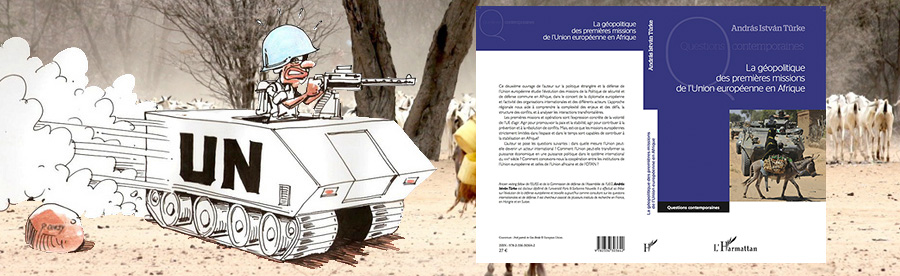
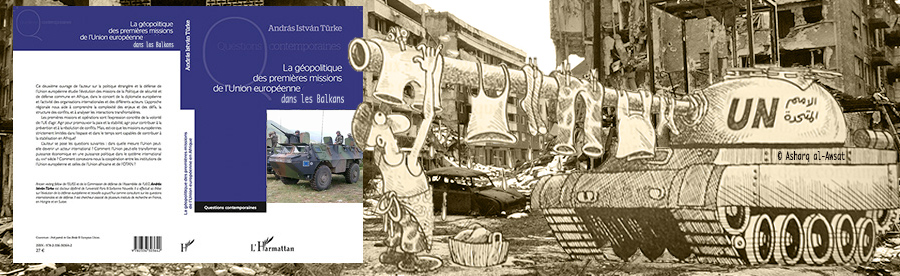
We are looking for sponsors for the English translation of these books, please contact turkeandras(at)gmail(dot)com