
Vous êtes ici
Agrégateur de flux
Climate Change Makes Sacred Ice Vanish in Kashmir, Locals Fear Loss of Livelihoods
Every summer, before dawn breaks over the Himalayas, Bashir Ahmad leads his horses onto the narrow mountain trail that winds toward the Amarnath cave shrine. For decades, the annual Hindu pilgrimage has been the most important season of the year for his family. The money earned over two months pays for food, school fees, winter […]
Catégories: Africa
Afflux de migrants à Ceuta: l'extrême droite met l'unité de l'Union européenne sous pression
L'afflux soudain et éphémère de migrants dans l'enclave espagnole de Ceuta, la semaine dernière, s'est mué en querelle diplomatique au niveau européen sur le sujet très inflammable des flux migratoires et de la protection des frontières extérieures de l'Union européenne. Une réunion d'urgence réunit, ce mardi 4 août, les ministres de l'Intérieur de ses États membres. L'ambiance de la visioconférence risque d'être pesante, tant ces derniers jours ont révélé des fractures politiques et idéologiques entre les 27.
Catégories: Union européenne
Kasindi-Lubirigha : la société civile appelle à une mobilisation collective contre Ebola
Face à la menace persistante de la maladie à virus Ebola dans l'est de la RDC, la société civile de Kasindi-Lubirigha a lancé, lundi 3 aout, un appel pressant à la mobilisation de toute la communauté.
Catégories: Afrique
After Restoring Stability, Argentina Needs to Turn Hard-Won Gains into Lasting Prosperity
Credit IMF Photo/Nicholas Karlin
By Kristalina Georgieva
WASHINGTON DC, Aug 4 2026 (IPS)
My first meeting in Buenos Aires began with an unexpected gift. Economy Minister Luis Caputo presented me with an Argentine national team jersey bearing my name and the number 10—Lionel Messi’s iconic number.
It was a fitting start to my first official visit. When Messi finally lifted the World Cup in Qatar, he was 35 years old—an age when many footballers have already retired. His triumph was the culmination of years of perseverance, setbacks, and relentless dedication. It underscored how great achievements require persistence—and can take longer than expected.
Economic transformation follows a similar path. Restoring stability is difficult. Making it endure is even harder. The greatest rewards come only after years of persistence.
That stuck with me during my visit to Argentina this week. Everywhere I went, I encountered people looking beyond today’s challenges and asking what their country could become over the next decade.
For a country that has spent much of its recent history focused on the next crisis, shifting attention to a longer horizon was, I found, to be the most encouraging sign of all.
Impressive stabilization
Only two and a half years ago, Argentina faced one of the most difficult economic moments in its modern history. The government was running constant deficits. Inflation exceeded 200 percent. The economy was contracting. Poverty had climbed above 50 percent. Families watched the value of their wages and savings fall. Businesses found it difficult to plan beyond the next few weeks.
Today, the picture is markedly different.
Argentina has delivered two consecutive years of primary fiscal surpluses for the first time in 15 years. The economy is growing. Inflation has fallen to around 30 percent. Poverty has declined. The central bank is rebuilding international reserves. Sovereign borrowing costs have fallen.
All three major credit rating agencies have upgraded the country. In addition, more than $45 billion in investment projects have already been approved under Argentina’s large investment incentive framework. The pipeline under development is more than twice that size. These achievements reflect the commitment to stability and determined policy actions by Javier Milei’s administration and, above all, the perseverance of the Argentine people.
From stability to growth and opportunities
Stabilization gives a country back something that isn’t easily measured: time. When families believe prices will remain stable, they start to save instead of simply protecting themselves against inflation. When businesses believe policies will remain predictable, they invest for years rather than months. Banks extend longer-term credit. Governments can focus on improving institutions instead of responding to the next emergency.
In other words, stability extends a country’s time horizon. I know how transformative that can be because I experienced it in my own country.
When Bulgaria suffered hyperinflation and a banking crisis in the 1990s, my mother’s lifetime savings disappeared almost overnight. I kept my own modest savings in dollars, in a tin box hidden in the cupboard. Restoring stability required difficult reforms, stronger institutions, and persistence over many years.
The results did not appear immediately. But because Bulgaria stayed the course, confidence gradually returned. Investment increased. People found work. Living standards improved. Earlier this year, Bulgaria adopted the euro—a milestone that would once have seemed impossible.
The lesson was not simply that stabilization can succeed. It was that its greatest rewards emerge only with time.
That challenge is even greater today. The global economy is becoming more uncertain. Trade patterns are shifting. Geopolitical tensions remain elevated. Artificial intelligence is reshaping industries and labor markets at remarkable speed. Capital is increasingly selective, flowing to countries that combine sound policies with predictable institutions.
In this environment, macroeconomic stability is not merely desirable—it is a prerequisite for attracting investment, creating jobs, and remaining competitive.
Unleashing potential
I saw that opportunity very clearly at the fast-developing Vaca Muerta oil and gas fields, in Neuquén province. That Argentina enjoys world-class natural resources has long been known. Yet Vaca Muerta shows that it also has talented engineers, entrepreneurs, and public and private leaders committed to developing them. And it is doing so at a moment when the world is looking for secure and reliable energy supplies.
Vaca Muerta is only one example of a broader opportunity. Mining investment is accelerating, knowledge-based services export nearly $10 billion annually, and agriculture remains among the world’s most competitive sectors. Beyond its natural resources, Argentina boasts world-class entrepreneurs, strong universities, and exceptional human talent.
The next phase is to ensure that these opportunities spread across the broader economy.
That message came through clearly in my discussions with business leaders. They welcomed the country’s renewed stability and growing investor confidence, while emphasizing the importance of reducing barriers to investment and broadening the recovery across more sectors.
It also came through in two very different conversations.
On my first morning in Buenos Aires, I met Marina, a makeup artist who kindly helped me get ready for the day ahead. She told me she works three jobs and that life remains difficult. Yet she also told me she hopes the country stays the course. Her circumstances have not changed overnight. What’s changing is her confidence that progress can last.
I later met renowned tango dancer Mora Godoy. Beyond her celebrated career, she has built a dance school and offers scholarships to young people who otherwise might never have the chance to learn.
Different stories, different professions—but both reflected the same belief that investing today can create opportunities tomorrow.
I heard that same longer-term perspective from students. Their questions were not about the next six months. They were about artificial intelligence, innovation, leadership, and Argentina’s place in the global economy. They wanted to know how their country could compete—not just next year, but over the coming decades.
Across these conversations with business leaders, workers, and students, I heard a common, encouraging message: Argentina is beginning to look beyond the next crisis to the opportunities ahead.
In the end, success will not be measured only by lower inflation, stronger reserves, or healthier public finances. It will be gauged by whether more businesses invest, small and medium-sized enterprises expand, workers find better jobs and higher wages, and more Argentines see the benefits of economic growth in their daily lives.
The next steps
That same long-term perspective guides the IMF partnership with Argentina.
Our role is to support the policies and institutions that make lasting stability possible. The government’s proposal for a stronger and more independent central bank can help ensure that progress on inflation endures. A durable fiscal responsibility framework, with clear rules and strong institutions, can help future governments preserve today’s hard-won gains. These reforms allow families to plan, businesses to borrow and invest, and governments to look beyond the next crisis.
Argentina’s economic transformation will also take time. The country has laid the foundations for a more stable future. The challenge now is to stay the course—to keep building the institutions, confidence, and opportunities that will allow today’s progress to become lasting prosperity.
Kristalina Georgieva is Managing Director of the International Monetary Fund, Washington DC.
IPS UN Bureau
Follow @IPSNewsUNBureau
!function(d,s,id){var js,fjs=d.getElementsByTagName(s)[0],p=/^http:/.test(d.location)?'http':'https';if(!d.getElementById(id)){js=d.createElement(s);js.id=id;js.src=p+'://platform.twitter.com/widgets.js';fjs.parentNode.insertBefore(js,fjs);}}(document, 'script', 'twitter-wjs');
Catégories: Africa
Trade Liberalisation Never Lifted All Boats
By Jomo Kwame Sundaram
KUALA LUMPUR, Malaysia, Aug 4 2026 (IPS)
President Trump has blamed trade liberalisation advocated by globalists for US deindustrialisation. Instead, his own weaponisation of economic policies, instruments and institutions purport to ‘make America great again’ (MAGA).
Jomo Kwame Sundaram
Trump 1.0 claimed to do so by ‘reshoring’ industries that had relocated abroad. Trump 2.0 uses more threats to secure investments, markets and other economic advantages for US big business, at the expense of others, including allies and especially the Global South.While rejecting globalists’ claim that trade liberalisation enhances growth, employment and incomes for all, his own ‘America First’ policies are slowing the world economy, including the US.
Post-war trade policy
The US has dominated international relations and institutions, including multilateral economic governance, since World War Two (WW2). The US Congress rejected the 1948 Havana Charter proposing the International Trade Organisation (ITO).
Selective trade liberalisation was key to the ‘neoliberal’ Washington Consensus, which has been recommended, if not required, by multilateral economic institutions from the 1980s.
Meanwhile, the neoliberal era has been associated with slower, more volatile growth than the post-war Keynesian ‘Golden Age’ of the first quarter-century after WW2.
The West pushed for the World Trade Organization (WTO) to consolidate the international economic order on a neoliberal basis. The 1994 Marrakech Agreement establishing the WTO left little room for development policy initiatives.
For many in the West, neoliberal trade liberalisation ended with the first Trump presidency from 2017. However, the reversal had begun earlier in the 21st century, especially after the 2008-09 global (actually Western) financial crisis.
However, Trump should be acknowledged for brazenly weaponizing international trade and investment instruments against the rest of the world, including US allies.
Hegemony
Free trade advocate Jagdish Bhagwati showed that anything less than trade multilateralism, including plurilateral and bilateral free trade agreements, is sub-optimal and unfair.
Compromises, including those promoted by international financial institutions and the OECD, have, instead, strengthened US and Western hegemony.
Postwar decolonisation of Asia and Africa has seen discontent grow in multilateral institutions, prompting selective Western undermining of multilateralism after the Cold War.
Unable to ensure the WTO’s dispute settlement system consistently protects and advances its interests, the US has paralysed it by blocking key appointments since the Obama presidency.
Collective assertiveness by developing countries in multilateral fora has mitigated some adverse consequences of international economic integration under Western auspices.
Partial and uneven trade liberalisation has constrained Global South industrialisation. Recent deindustrialisation has reduced manufacturing’s share of national output in many developing countries.
Little new manufacturing capacity has developed in Africa beyond some minimal import-substituting and resource-processing activities protected by high transport costs.
Divide and rule
Economic concessions, such as trade preferences, to developing countries have been used to divide the Global South, including the ‘least developed countries’ and ‘small island developing states’, effectively weakening their collective negotiating strength.
Trade liberalisation has also reduced tariff revenue, especially important for the poorest developing countries, where it often accounted for up to half of total tax collected.
Additional taxes, typically from consumption or income, have never compensated for tariff revenue losses due to trade liberalisation. This has undermined their already weak fiscal capacities, often requiring them to borrow even more.
Promoting food agriculture in supposedly ‘land-abundant’ African countries was supposed to make them more food-secure and even export-competitive but there is no evidence this has happened.
Developing nations have long unsuccessfully asked the Global North to eliminate agricultural subsidies, tariffs, and non-tariff import barriers that protect their output.
This would make food production in developing countries more competitive. But rich countries have long insisted that developing countries must first ‘reciprocate’, e.g., by eliminating their manufacturing tariffs.
Structural adjustment has also undermined agricultural infrastructure and smallholder productivity in many developing countries. Meanwhile, lower farm subsidies in Europe have raised many food import prices in the South.
Gains from trade?
Purported gains from trade liberalisation are often either merely theoretical or one-time gains from static understandings of comparative advantage, with no cumulative potential.
Claims of gains from trade liberalisation presume internationally competitive productive and export capacities capable of generating a strong positive supply response.
Such preconditions are unlikely in most developing countries, especially the poorest, and need to be developed, typically by protecting against external market pressures.
Most studies of realistically achievable outcomes of WTO Doha Round negotiations from 2001, including those for the World Bank, projected net losses for most developing economies, except for a few Asian economies.
There is also no robust evidence of trade liberalisation significantly reducing poverty and hunger. Developing countries, especially the poorest ones and those in sub-Saharan Africa, would be worse off.
One may well ask why developing countries have to be bribed with ‘aid for trade’ if it is in their own best interests to commit to trade liberalisation, multilateral or otherwise.
Worse, trade liberalisation has made sustainable development nearly impossible by significantly reducing policy options for aspiring developmental states, especially for trade, industrial, investment and technology policies.
IPS UN Bureau
Follow @IPSNewsUNBureau
!function(d,s,id){var js,fjs=d.getElementsByTagName(s)[0],p=/^http:/.test(d.location)?'http':'https';if(!d.getElementById(id)){js=d.createElement(s);js.id=id;js.src=p+'://platform.twitter.com/widgets.js';fjs.parentNode.insertBefore(js,fjs);}}(document, 'script', 'twitter-wjs');
Related Articles
- Trump Tariffs Creating Less Manufacturing Jobs
- Trade Liberalisation Undermines Development
- No African Development from Western Trade Policies
- Trump Undresses Rival Trade Myths
- Trump’s ‘Shock and Awe’ Tariffs
- Trade Liberalisation Kicked Away African Development Ladder
- Trade Deception Returns in Pan-Africanist Guise
- Weaponizing Free Trade Agreements
- Trade Liberalization for Development?
- Agricultural Trade Liberalization Undermined Food Security
Catégories: Africa
Infos27: « Génocost : Félix Tshisekedi appelle à préserver la mémoire, la justice et la paix en RDC »
Les journaux et tabloïds parus à Kinshasa consacrent l'essentiel de leurs éditions de ce mardi 4 août à deux principaux sujets : la commémoration, le 2 août, de la Journée nationale du GENOCOST à travers le pays, et la poursuite de la riposte contre la 17ᵉ épidémie de la maladie à virus Ebola dans la province du Nord-Kivu.
Catégories: Afrique
Ituri : Ebola continue de faire des ravages à Tchomia, avec un taux de létalité alarmant de 61 %
L’épidémie d’Ebola poursuit sa progression inquiétante dans la province de l’Ituri. Dans la zone de santé de Tchomia, l’une des plus affectées depuis la déclaration de l’épidémie par le gouvernement le 15 mai dernier, les autorités sanitaires ont déjà enregistré 25 décès sur 41 cas confirmés, soit un taux de létalité de 61 %.
Catégories: Afrique
Malaysia’s DAP to Hold Vote on Whether to Remain in Anwar’s ‘Unity’ Government
The announcement follows the Pakatan Harapan coalition's bruising defeat in the Negeri Sembilan state election on Saturday.
Catégories: Diplomacy & Crisis News
Le Gouvernement lance le recrutement de près de 140 mandataires publics « sur base du mérite »
Le gouvernement congolais procède, depuis vendredi 31 juillet, au processus de recrutement des mandataires publics. Annoncée par la ministre du Portefeuille, Julie Shiku, cette opération vise à promouvoir la méritocratie, la transparence et la performance dans la gestion des entreprises de l'État.
Catégories: Afrique
«Vivant et en liberté», l'opposant russe Boris Nadejdine annonce se trouver en France
Il était l'une des dernières voix critiques du Kremlin toujours en liberté en Russie. Mais ce lundi 3 août, l'opposant à Vladimir Poutine, Boris Nadejdine, a affirmé à ses 85 000 abonnés sur Telegram qu'il avait quitté son pays. Il se trouverait désormais en France.
Catégories: Union européenne
Catherine Wihtol de Wenden, politiste : « Le Maroc a pris conscience depuis longtemps de la place géostratégique qu’il occupe pour l’Europe en termes de migrations »
Comme tend à le montrer l’afflux de migrants dans l’enclave de Ceuta, les 30 et 31 juillet, le royaume chérifien semble utiliser la question migratoire dans sa stratégie diplomatique, à l’image de la Turquie ou de la Biélorussie, analyse la spécialiste des migrations internationales dans une tribune au « Monde ».
Catégories: Afrique
The New Forever Wars
How America gets stuck in its allies’ fights.
Catégories: Diplomacy & Crisis News
Donald Trump’s Tariff Re-Do in Southeast Asia
The capricious treatment of partners and allies threatens to do long-term damage to Washington's standing in the region.
Catégories: Diplomacy & Crisis News
Myanmar’s Detained Leader Aung San Suu Kyi Meets Red Cross Official
The move is intended to weaken ASEAN's determination to hold Myanmar to the Five-Point Consensus and widen the divisions between the bloc's member states.
Catégories: Diplomacy & Crisis News
What Philippine President Marcos Said About China in His State of the Nation Address
His rhetoric was familiar, but carried additional weight in light of recent clashes between Chinese and Philippine vessels in the South China Sea.
Catégories: Diplomacy & Crisis News
China’s Secret Nuclear Tests
The United States has accused China of conducting secret nuclear weapons tests in violation of international norms and testing moratoria. Because of its comparatively limited historical testing record, China has strong incentives to obtain additional test data for the modernization of its nuclear weapons programme. Thus, it would be disadvantageous for Washington to respond by resuming underground nuclear testing, as Russia and China would benefit more from the erosion of international testing norms. For their part, Germany and Europe can take only limited action by promoting greater transparency and confidence-building measures.
Catégories: Diplomacy & Defense Think Tank News
I left my wife and twins behind - why this Nigerian man fled South Africa
Nigerian Richard Itoro is one of tens of thousands who have abandoned their lives in South Africa.
Catégories: Africa
Liban: six ans après, que sait-on de l'explosion du port de Beyrouth?
Six ans jour pour jour. Ce mardi, le Liban commémore la terrible explosion du port de Beyrouth qui a eu lieu le 4 août 2020. La catastrophe a tué 235 personnes, fait 6 500 blessés et ravagé un tiers de la capitale libanaise. C’est l’une des plus grandes explosions non nucléaires de l’histoire. Après avoir été bloquée pendant de longues années à cause de l’hostilité de la classe politique, l’enquête du juge d’instruction Tarek Bitar est aujourd’hui terminée. Que sait-on de l’explosion du port de Beyrouth ? Quelles sont les zones d'ombre ? Quand aura lieu ce procès historique ?
Catégories: Union européenne
Fusion du CSC et de la CIL : L'Assemblée législative du peuple adopte la loi portant création de l'ARCOD
Réunis en séance plénière, les 71 députés présents à l'Assemblée législative du peuple (ALP) ont adopté à l'unanimité, ce lundi 3 août 2026, le projet de loi organique portant dénomination, attributions, composition, organisation et fonctionnement de l'organe de régulation de la communication et de la protection des données à caractère personnel. Il s'agit de l'Autorité de régulation de la communication et du traitement des données à caractère personnel (ARCOD).
Dénommée Autorité de régulation de la communication et du traitement des données à caractère personnel (ARCOD), cette nouvelle institution est issue de la fusion du Conseil supérieur de la communication (CSC) et de la Commission de l'informatique et des libertés (CIL). Elle reprend les compétences de ces deux organes, conformément aux dispositions de la constitution révisée du 20 janvier 2026.
Selon le ministre de la justice, Edasso Rodrigue Bayala, l'adoption de cette loi organique marque une étape décisive dans la mise en œuvre de la réforme institutionnelle engagée à travers la révision constitutionnelle. La nouvelle constitution prévoit en effet la création d'une autorité unique chargée d'assurer à la fois la régulation de la communication et la protection des données à caractère personnel.
À travers cette réforme, le gouvernement entend doter le pays d'un cadre institutionnel mieux adapté aux défis de la transformation numérique, à l'essor des technologies de l'information et de la communication ainsi qu'aux nouveaux enjeux liés à la protection des données personnelles.
Le ministre en charge de la justice, Me Edasso Rodrigue Bayala, a salué l'adoption de cette loi organique par les députés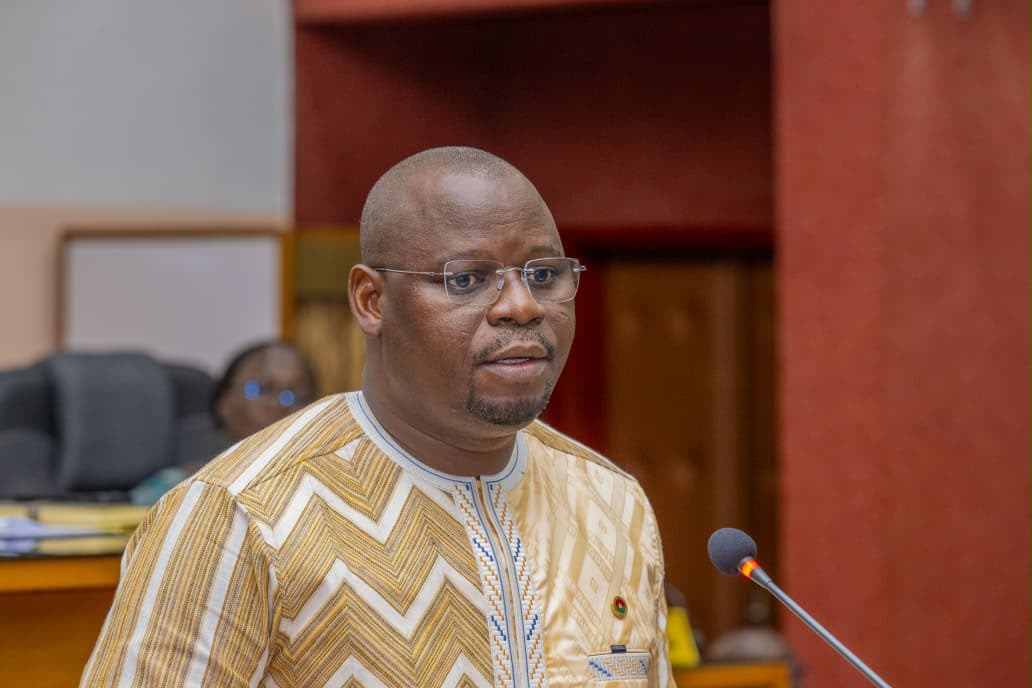
Des innovations majeures
La loi organique fixe les attributions de l'ARCOD, sa composition, son organisation administrative ainsi que les modalités de son fonctionnement.
Parmi les principales innovations figure l'instauration d'un pouvoir réglementaire propre, assorti d'un pouvoir de sanction dont les modalités d'exercice seront précisées par décret pris en conseil des ministres. Le texte renforce également les prérogatives des agents chargés des enquêtes, des vérifications et des contrôles. Il confère en outre au président de l'ARCOD le pouvoir de prendre des mesures conservatoires immédiates lorsque les circonstances l'exigent.
Sur le plan de la gouvernance, l'institution sera dirigée par un collège de onze conseillers désignés par l'exécutif, le parlement, le conseil constitutionnel, les professionnels des médias ainsi que ceux des technologies de l'information et de la communication (TIC). Ces conseillers exerceront un mandat de cinq ans, non renouvelable, et bénéficieront d'une immunité fonctionnelle.
Le projet de loi renforce également le dispositif de protection des données à caractère personnel en habilitant les agents de contrôle à mener leurs missions en toute autonomie. Il prévoit aussi la création éventuelle de services déconcentrés afin de rapprocher l'institution des citoyens.
Autre innovation, l'ARCOD pourra recourir au règlement non juridictionnel des différends, s'autosaisir de certaines affaires, publier ses décisions, recommandations et avis au Journal officiel, et transmettre chaque année un rapport public au président du Faso.
Le président de l'ALP, Dr Ousmane Bougouma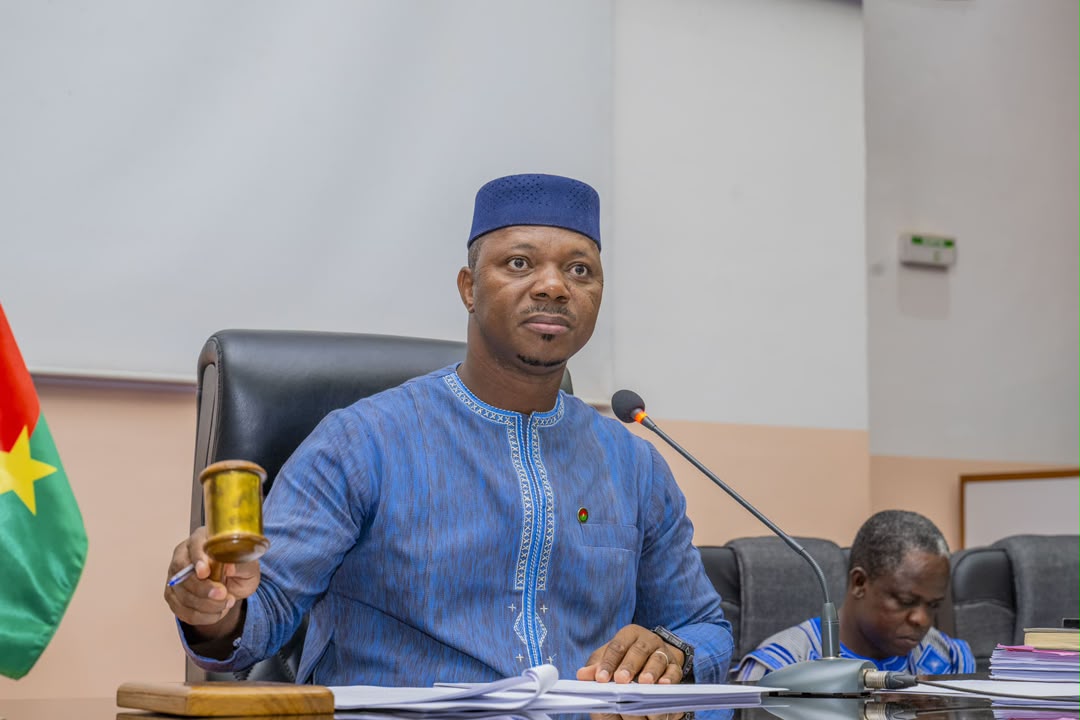
Le texte adopté comprend huit chapitres répartis en 74 articles. Ceux-ci définissent notamment les missions de l'institution, sa composition, son organisation, ses ressources, les procédures de contrôle, les sanctions applicables ainsi que les dispositions transitoires et finales.
À l'issue du vote, le président de l'Assemblée législative du peuple, Dr Ousmane Bougouma, a rappelé que la loi organique devra être soumise au contrôle de conformité du Conseil constitutionnel avant sa promulgation et son entrée en vigueur.
Pour rappel, le Conseil supérieur de la communication, créé en 1995, est l'organe de régulation des médias et de la communication publique. La Commission de l'informatique et des libertés (CIL) est une autorité administrative indépendante créée le 20 avril 2004 portant protection des données à caractère personnel.
Serge Ika Ki
Lefaso.net
Catégories: Afrique
Pages



© 2012-2018 Europa Varietas Foundation © 2015-2018 Europa Varietas Association
www.europavarietas.org | info(@)europavarietas(dot)org | Switzerland




We are looking for sponsors for the English translation of these books, please contact turkeandras(at)gmail(dot)com