
Vous êtes ici
Agrégateur de flux
Why Dowry Still Dictating Women’s Fate?
By Shahiduzzaman
DHAKA, Bangladesh, Oct 29 2026 (IPS)
Dowry is still persisting in society in one form or another. This deeply entrenched social practice continues deepen household poverty and cause violence against women. The question is no longer whether Bangladesh has a law against dowry. It does. The more uncomfortable question is why the law has failed to make dowry socially unacceptable and practically difficult to demand. The Dowry Prohibition Act 2018 makes the demand for dowry a criminal offence. Direct or indirect demands can result in one to five years’ imprisonment, a fine of up to Tk 50,000, or both. Giving, taking or assisting in the giving or taking of dowry is also punishable. The law even makes dowry-related agreements void. Yet, the existence of legislation has not eliminated the practice. Instead, dowry has increasingly adapted itself to modern economic and social realities.
Shahiduzzaman
It may no longer always be described as “dowry”. A demand for a motorcycle, cash for a business, furniture, electronics, a car, money for migration, payment of a loan or financial assistance to the groom’s family can be presented as a “gift”, “help” or “family contribution”. In some cases, demands continue years after marriage. This makes dowry harder to identify, document and prosecute.Research published in Development and Change in 2024 provides a disturbing illustration. In a study of 206 cases involving troubled marriages, 52 per cent involved complaints of continuing dowry demands. In 81 per cent of those cases, the demand was accompanied by violence against wives. The cases crossed economic classes, showing that dowry is not simply a problem of poor families.
The human rights consequences are profound. Dowry transforms marriage from a relationship between two individuals into an economic transaction in which a woman can be treated as a source of wealth. When the expected payment is not made, or when the husband or his family believes it is insufficient, the woman may face humiliation, threats, physical assault, psychological abuse, economic deprivation, abandonment or expulsion from the marital home.
The latest national evidence on violence against women makes the wider context impossible to ignore. The Bangladesh Bureau of Statistics and UNFPA’s 2024 Violence Against Women Survey found that 76 per cent of ever-married women had experienced at least one form of intimate partner violence in their lifetime under the broader Bangladesh-specific definition. Nearly half, 49 per cent, experienced such violence during the previous 12 months. The survey specifically identifies dowry practices among the factors associated with increased risk of intimate partner violence.
This is not merely a women’s issue. It is a human rights issue involving the rights to life, dignity, equality, security and freedom from violence. The most frightening consequence is death. According to figures cited by the European Union Agency for Asylum from Ain o Salish Kendra monitoring, Bangladesh recorded 77 reported incidents of dowry-related violence against women in 2024. Of these, 36 women died as a result of the violence, and another seven reportedly died by suicide. During January-June 2025, 45 incidents were recorded, with 23 women reportedly dying from the violence.
These figures should not be interpreted as the total number of dowry-related deaths in Bangladesh. They represent documented cases recorded by a human rights monitoring organisation, and many incidents may never reach police, courts or the media. Indeed, the national violence survey found that 62 per cent of survivors never disclosed the violence they experienced.
The causes of dowry-related deaths are also revealing. They can include severe beatings, burns, strangulation, poisoning, forced or coerced suicide, and other forms of physical violence. In some cases, what is presented as suicide may follow prolonged harassment, threats and economic coercion. This is why every suspicious death of a married woman following allegations of dowry demand deserves an impartial investigation rather than being dismissed as a “family matter”.
Dowry also makes poor families poorer. For a low-income household, arranging a daughter’s marriage can mean selling land, livestock or productive assets, taking loans, borrowing from relatives or using savings accumulated over years. The World Bank has documented the strong relationship between poverty and dowry in Bangladesh.
This creates a vicious cycle. Poverty encourages families to see marriage as a financial necessity; dowry drains household resources; debt weakens the family’s economic security; and economic dependence can make women less able to leave abusive marriages. Dowry can also contribute to child marriage. UNICEF research notes that despite the 2018 law, families continue to face social pressure surrounding dowry. Because dowry can increase as girls grow older, some families marry daughters earlier to reduce the expected financial burden.
Bangladesh is not facing this problem alone. India offers an important comparison. Indian law not only prohibits dowry but also has a specific legal category for “dowry death”. Under Section 304B, now carried forward as Section 80 of the Bharatiya Nyaya Sanhita, a woman’s unnatural death within seven years of marriage can be treated as dowry death when there is evidence of cruelty or harassment linked to dowry demands. The punishment is a minimum of seven years’ imprisonment and can extend to life imprisonment. But India’s experience also demonstrates that stronger legislation alone is not enough. Official Indian data recorded 6,156 dowry-death cases in 2023.
The lesson for Bangladesh is clear: criminalisation must be accompanied by effective enforcement, investigation, prosecution, survivor protection and social transformation. Bangladesh therefore needs to move beyond symbolic prohibition. First, police must treat dowry complaints as serious criminal allegations rather than private family disputes. Second, investigations into suspicious deaths of married women must examine previous dowry demands, financial transactions, messages, threats, medical records and testimony from neighbours and relatives. Third, victims need accessible legal aid, emergency shelter and economic support. A woman who has no income, no safe place to live and responsibility for children may remain with an abusive husband simply because leaving appears economically impossible.
The deeper problem is not the absence of law. It is the gap between law and social reality. A society cannot claim meaningful progress on women’s rights while a woman can be beaten because her family cannot provide money, forced to leave her marital home because a demand remains unpaid, or lose her life because marriage has been turned into a financial transaction.
The writer is the Editor and CEO of News Network
This story was originally published by The Daily Sun
IPS UN Bureau
Catégories: Africa
„Nagyon kell szeretni azt, amivel dolgozol”
Alaptag a kolozsvári rádiósok csapatában, dilemmázó, szakmai kérdésekben kétségekkel számoló, és folyton szintet lépő. Gergely Zsuzsa nemrég kapta meg a MÚRE Majtényi Ágnes-nívódíját. A Tetőteraszra egy könyvbemutatóra való készülődés „szünetében” lépett be. Házigazda: Rostás-Péter István
Articolul „Nagyon kell szeretni azt, amivel dolgozol” apare prima dată în Kolozsvári Rádió Románia.
Catégories: Határon túli magyar portálok összesített hírei
The Lasting Price of Mbappé’s Apology to China
The commercial fallout for Real Madrid may be temporary, but the precedent for censoring speech beyond China’s borders is far more consequential.
Catégories: Diplomacy & Crisis News
Japan Advances Deep-Sea Mining as Support for a Moratorium Grows
As the first country to have continuously retrieved rare-earth mud from such depths, Japan is in a position to influence the future of the maritime order.
Catégories: Diplomacy & Crisis News
Workshops - Workshop on the misuse of counter-terrorism laws and their implications on HR - 05-11-2026 - Subcommittee on Human Rights
The workshop will examine how the misuse of counter-terrorism laws impact on fundamental rights, affecting civil society, human rights defenders, journalists and political opposition. It will explore recurring patterns, broad terrorism definitions, arbitrary detention and surveillance. Building on a forthcoming paper, discussions will also aim at identifying practical tools for the EU external engagement to ensure counter-terrorism measures comply with international human rights standards.
Location : Spinelli 1E2
Draft programme
Source : © European Union, 2026 - EP
Location : Spinelli 1E2
Draft programme
Source : © European Union, 2026 - EP
Catégories: Union européenne
Highlights - Workshop on the misuse of counter-terrorism laws and their implications on HR - Subcommittee on Human Rights
On 5 November 2026, the workshop on the misuse of counter-terrorism laws and their implications on human rights across the world will examine how the misuse of counter-terrorism laws impact on fundamental rights, affecting civil society, human rights defenders, journalists and political opposition. It will explore recurring patterns, broad terrorism definitions, arbitrary detention and surveillance.
Building on a forthcoming paper, discussions will also aim at identifying practical tools for the EU external engagement to ensure counter-terrorism measures comply with international human rights standards.
Draft programme
Source : © European Union, 2026 - EP
Building on a forthcoming paper, discussions will also aim at identifying practical tools for the EU external engagement to ensure counter-terrorism measures comply with international human rights standards.
Draft programme
Source : © European Union, 2026 - EP
Catégories: Union européenne
‘Made in Vietnam’ Is Harder To Prove Than It Looks
Companies are under increasing pressure to show that goods produced in their new locations are genuinely made there.
Catégories: Diplomacy & Crisis News
COP17 Celebrates Indigenous Leaders Amid Demand for Greater Inclusion in Biodiversity Decisions
Indigenous leaders from Brazil, DRC, Indonesia, Gambia, Peru and Thailand are named the Indigenous People’s Ambassadors for Primary Forests at COP17. Credit: Stella Paul/IPS
By Stella Paul
YEREVAN, Armenia, Oct 29 2026 (IPS)
At the Convention on Biological Diversity (CBD) COP17, the presence of Indigenous Peoples and Local Communities (IPLCs) is impossible to miss. Indigenous representatives speak at side events, participate in contact groups, advise negotiators and engage across multiple forums shaping the future of global biodiversity policy.
Yet amid this growing visibility, one message resonates throughout the conference halls: implementation of the Kunming-Montreal Global Biodiversity Framework (KMGBF) will fall short unless Indigenous peoples are meaningfully involved at every stage, from decision-making and policy design to implementation and monitoring.
Many Indigenous leaders attending COP17 say that reality remains far from that goal. While governments increasingly acknowledge the role of IPLCs in protecting nature, participation is often limited to consultation rather than genuine partnership, they argue. This is particularly concerning because many biodiversity policies directly affect Indigenous territories, traditional knowledge systems, food sovereignty and cultural practices.
For communities that have stewarded ecosystems for generations, the challenge is no longer visibility. It is influence.
Against this backdrop, COP17 offered a rare moment of celebration. Six Indigenous leaders from Brazil, Peru, Indonesia, Thailand, The Gambia and the Democratic Republic of the Congo were named Indigenous Peoples Ambassadors for Primary Forests in recognition of their efforts to protect some of the world’s most ecologically important forests.
Leading the Good Fight for Nature
The awardees, Maimuna Jawara, Pirawan Wongnithisathaporn, Puyr dos Santos Tembé, Joseph Itongwa Miukumo, Julio Cusurichi Palacios and Herkulanus Sutomo Manna, share a common mission: protecting, restoring and stewarding forest ecosystems that sustain biodiversity, store vast amounts of carbon and support traditional ways of life.
The recognition came through the inaugural Indigenous Peoples and Local Communities Award, a joint initiative of the International Union for Conservation of Nature (IUCN), the Global Environment Facility (GEF) and the United Nations Forum on Forests (UNFF). The six winners were selected through an open nomination process that attracted 73 nominations from 27 countries.
Organisers said the award seeks to spotlight individuals whose leadership has helped safeguard primary forests while strengthening the rights and resilience of the communities that depend on them.
“Today we recognise six of these leaders, several of whom the GEF has had the privilege of working alongside in their territories. Their leadership offers important lessons, and we look forward to continuing to learn from it across all our work,” said Diego Mesa, Chief Executive Officer of the Global Environment Facility, during the award ceremony.
The recognition also reflects growing scientific evidence linking Indigenous stewardship with successful conservation outcomes.
“Evidence has shown that securing Indigenous Peoples’ land rights and recognising and respecting traditional knowledge are among the most effective ways to protect forests and biodiversity. Yet Indigenous-led conservation is about more than environmental results; it is about recognising rights, upholding dignity and delivering justice,” said Grethel Aguilar, Director General of IUCN.
Farming, Forests and Cultural Knowledge
For Maimuna Jawara of The Gambia, environmental stewardship begins with everyday life.
Jawara, one of the award recipients from Banjul, is the founder of 1802lab, a research and design laboratory exploring the connections between cultural identity, ecological knowledge and sustainable futures for African fashion. Yet the role she identifies with most deeply is that of a farmer and community agroecology educator.
Growing up in a farming family, Jawara learned to read the seasons, save seeds and care for the soil from an early age. Living close to nature, she came to see environmental stewardship not as a profession but as a way of life.
“As I got older, I realised that agroecology is just remembering how to live in harmony with nature,” Jawara said.
Earlier this year, she was named a Transformative Partnership Platform (TPP) Agroecology Ambassador.
Jawara’s recognition comes at a difficult moment for her country. The Gambia no longer has any primary forests. Studies have attributed their disappearance to fuelwood collection, land clearing for livestock, hunting and advancing desertification.
While the government has enacted laws promoting sustainable natural resource management, implementation remains challenging because of limited financial and human resources. Conservation regulations are also often poorly understood by rural communities.
Yet there are signs of hope. According to Food and Agriculture Organization (FAO) figures, forest cover in The Gambia has increased in recent years through plantations and community-led restoration efforts.
For Jawara, the award is both an honour and a responsibility.
“I hope to amplify voices from the ground and contribute to a transition that is not only ecological but also socially just, inclusive, and rooted in dignity,” she said.
Protecting Ancestral Forests
Another recipient, Herkulanus Sutomo Manna of West Kalimantan, Indonesia, represents the Dayak Iban Menua Sungai Utik Indigenous community, which has gained international recognition for protecting its ancestral forests.
For Herkulanus, protecting forests is inseparable from protecting Indigenous identity, culture and livelihoods.
The community’s struggle dates back to 1998, when it initiated participatory mapping efforts in response to increasing threats from illegal logging. Those efforts helped document customary lands and strengthened the community’s ability to defend its territory from encroachment.
Over time, the initiative became an important example of how Indigenous communities can use traditional knowledge, customary governance and local leadership to conserve forests while maintaining cultural continuity.
Receiving the award at COP17, Herkulanus emphasised that the recognition belonged not only to him but to the broader Indigenous movement. He urged Indigenous communities around the world to continue protecting and managing their ancestral territories, stressing that safeguarding forests today is essential for the survival and well-being of future generations.
Indigenous Voices Across Continents
Among the award recipients was Puyr dos Santos Tembé of Brazil, a leader from the Tembé People and the Alto Rio Guamá Indigenous Territory in the Brazilian Amazon.
Tembé’s work supports ecosystem restoration through native species, community seed collection, agroforestry initiatives and sustainable livelihoods connected to standing forests.
Unlike many Indigenous leaders, she has also developed a strong social media presence and uses digital communication platforms to raise awareness about Indigenous peoples, their cultures and their rights among broader audiences.
Pirawan Wongnithisathaporn is a Karen Indigenous leader who works through the Asia Indigenous Peoples Pact (AIPP), a regional network representing Indigenous communities, including those displaced from their ancestral lands and living in exile.
She serves as a bridge between these communities and regional and global biodiversity and climate negotiations, advocating for Indigenous rights, community forestry, environmental governance and more.
Other recipients included Joseph Itongwa Miukumo of the Democratic Republic of the Congo, a leading advocate for Indigenous and community-conserved territories, and Peru’s Julio Cusurichi Palacios, whose work has advanced forest protection and Indigenous participation in national decision-making.
Recognition Amid Continuing Frustrations
While the awards were welcomed as an important recognition of Indigenous leadership, they also highlighted a wider debate unfolding at COP17 over the place of Indigenous peoples within biodiversity governance.
Many Indigenous representatives attending the conference point out that, despite repeated commitments from governments and international institutions, Indigenous communities remain excluded from many key decisions affecting their territories and livelihoods.
That frustration has surfaced repeatedly during discussions around implementation of the Kunming-Montreal Global Biodiversity Framework.
At COP16 in Colombia, parties agreed to establish a permanent body for Indigenous Peoples and Local Communities to help ensure their effective inclusion across all aspects of the framework’s implementation. The decision was widely hailed as a breakthrough for Indigenous participation.
Two years later, however, many delegates argue that progress has been slow.
IPLC representatives say they continue to face exclusion from decision-making processes at local, sub-national and national levels. Concerns have also intensified around the implementation of the framework’s flagship 30×30 target, which seeks to conserve 30 percent of the world’s lands and waters by 2030.
Many Indigenous organisations argue that their rights over traditional territories are still not being adequately respected as governments pursue conservation commitments.
The debate raises a broader question: can recognition of individual Indigenous leaders help shift political realities on the ground?
For some participants, initiatives such as the Indigenous Peoples Ambassadors for Primary Forests programme could help bring greater visibility to Indigenous leadership and strengthen advocacy for rights-based conservation. Others caution that recognition alone will not address the structural barriers that continue to limit Indigenous participation in decision-making.
“Announcing the new cohort of Indigenous Peoples Ambassadors for Primary Forests is only the beginning. We will continue to partner with and elevate the ambassadors and their communities,” said Paula Prist, Senior Programme Coordinator at IUCN.
IPS UN Bureau Report
Related Articles
Catégories: Africa
Úton Portugáliában, a színes csempék és az óceán ölelésében
A Porta Salus szervezésében szeptember végén egy 52 tagú erdélyi zarándokcsoport járt az Ibériai-félszigeten. Balázs Attila tordaszentlászlói lelkipásztor vezetésével elidőztek az ország történelmének és kultúrájának különböző fejezeteinél, és közben lelkileg is töltekezhettek. Az ország titkait Szőnyi Attila és Hordós László kedves kalauzolásával fedezték fel. Attila eredetileg Pécsről származik, terület- és településfejlesztő geográfusként végzett. Bár vonzza […]
Articolul Úton Portugáliában, a színes csempék és az óceán ölelésében apare prima dată în Kolozsvári Rádió Románia.
Catégories: Határon túli magyar portálok összesített hírei
A Judicial Challenge to India’s Paternalistic Anti-trafficking Framework
The Supreme Court distinguishes trafficking from voluntary adult sex work, but legislative reform and effective implementation remain essential to protect dignity and autonomy.
Catégories: Diplomacy & Crisis News
What a China-US AI Safety Channel Needs
Trump and Xi agreed to set up a China-U.S. AI incident reporting channel. But AI companies in both countries don’t currently provide the necessary information.
Catégories: Diplomacy & Crisis News
Marcel Fratzscher: „Die Zinspause der EZB ist verständlich, aber riskant “
Der Rat der Europäischen Zentralbank (EZB) hat heute beschlossen, das Zinsniveau unverändert zu belassen. Dazu eine Einschätzung von Marcel Fratzscher, Präsident des Deutschen Instituts für Wirtschaftsforschung (DIW Berlin):
Die Pause bei den Zinserhöhungen der EZB ist nachvollziehbar, aber riskant. Die Inflation ist deutlich gestiegen, und die Risiken zeigen weiter nach oben. Vor allem der Krieg im Nahen Osten und die höheren Energiepreise machen es wahrscheinlicher, dass die Inflation auch im kommenden Jahr höher ausfallen wird als bislang erwartet. Im Dezember dürfte die EZB deshalb ihre Inflationsprognose nach oben korrigieren. Mit Verzögerung könnten zudem die Lebensmittelpreise stärker steigen, was vor allem Menschen mit geringen Einkommen treffen würde.
Die gute Nachricht ist, dass bislang keine signifikanten Zweitrundeneffekte erkennbar sind. Weder bei Unternehmensgewinnen noch bei Löhnen gibt es klare Anzeichen für eine sich selbst verstärkende Preis-Lohn-Spirale. Auch die Kerninflation ist deutlich weniger gestiegen als die Gesamtinflation.
Die größere Sorge sind die Inflationserwartungen. Die längerfristigen Erwartungen liegen mit 2,5 Prozent auf fünf Jahre deutlich über dem Zwei-Prozent-Ziel der EZB. Dadurch steigt die Gefahr, dass sich höhere Erwartungen verfestigen und die Glaubwürdigkeit der EZB leidet.
Es ist daher verständlich, dass die EZB zunächst weitere Daten abwarten will. Es könnte sich jedoch als Fehler herausstellen, die Zinsen jetzt nicht angehoben zu haben. Eine Zinserhöhung hätte ein klares Signal gesetzt, dass die EZB ihr Inflationsziel konsequent verteidigt. Die Finanzmärkte rechnen bereits mit weiteren Zinserhöhungen.
Gegen eine sofortige Zinserhöhung spricht, dass die Turbulenzen an den Anleihemärkten die Finanzierungsbedingungen bereits deutlich verschärft haben und damit die schwache wirtschaftliche Erholung zusätzlich bremsen. Die EZB steht daher vor einem schwierigen Dilemma: Ein zu schnelles Handeln könnte die Wirtschaft unnötig schwächen, ein zu langes Abwarten die Inflationserwartungen verfestigen.
Catégories: Diplomacy & Defense Think Tank News
As North Korea’s Loudspeaker Broadcasts Loom, South Korea Has No Good Options
Kim Yo Jong said broadcasts near the border will resume this month. For Seoul, every possible response carries a cost.
Catégories: Diplomacy & Crisis News
Russian Help Would Make North Korea’s Missile-test Flurry Worse News
Many security analysts have attributed North Korean missile progress to the closer relationship between North Korea and Russia.
Catégories: Diplomacy & Crisis News
Asian Cybersecurity in the Age of AI and Quantum Computing
AI has changed – perhaps forever – the tone and tenor of discussions at Singapore International Cyber Week, and probably all cyber forums of equal scale.
Catégories: Diplomacy & Crisis News
Inside the Russia-Africa summit in Moscow
More than 20 heads of state arrived at the summit.
Catégories: Africa
Rumen Radev: A ceasefire in Ukraine and peace negotiations are the only sure way to stop attacks on commercial vessels in the Black Sea
"There is only one way to ensure that these attacks on commercial shipping in the Black Sea finally stop: a ceasefire and a return to the negotiating table for peace talks." Prime Minister Rumen Radev made this statement in response to questions from journalists.
Catégories: Defence`s Feeds
Rumen Radev: The impact of new EU own resources on national budgets must be carefully assessed in the negotiations on the Multiannual Financial Framework
Bulgaria is pursuing a policy aimed at reducing its budget deficit by 2027, while ensuring that the necessary fiscal consolidation takes due account of its implications for the social sphere and the economy, Prime Minister Rumen Radev stated at a meeting with European Commissioner for Budget Piotr Serafin.
Catégories: Defence`s Feeds
Israel nach der Wahl: Große Sorge vor einer nationalen Notlage (mit Muriel Asseburg)
Catégories: Diplomacy & Defense Think Tank News
Pages


© 2012-2018 Europa Varietas Foundation © 2015-2018 Europa Varietas Association
www.europavarietas.org | info(@)europavarietas(dot)org | Switzerland

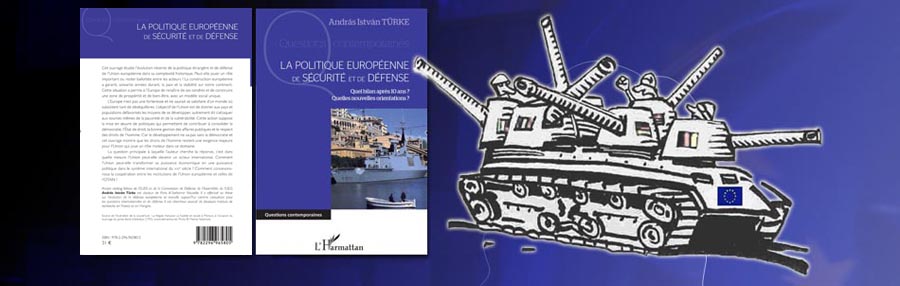
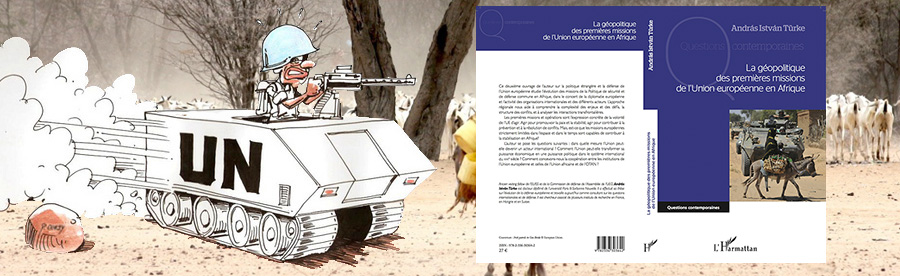
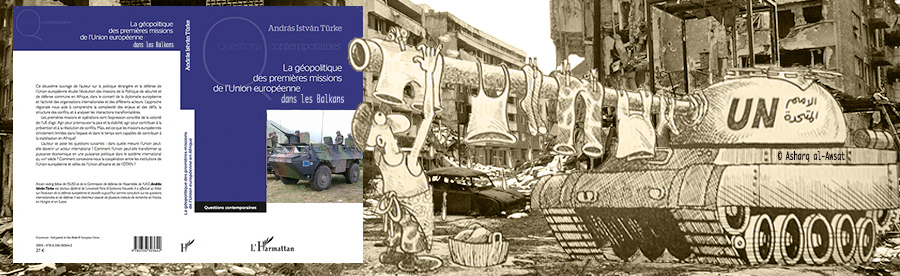
We are looking for sponsors for the English translation of these books, please contact turkeandras(at)gmail(dot)com