
You are here
European Union
Downfall of a Superstar
Picture alliance/Anadolu/Selcuk Acar. Annalena Baerbock, President of the UN General Assembly and former German Foreign Minister.
Germany’s humiliating defeat in the race for a UN Security Council seat reveals the price of a foreign policy increasingly seen as hypocritical abroad.
The United Nations General Assembly on Wednesday elected Austria, Kyrgyzstan, Portugal, Trinidad and Tobago and Zimbabwe to the 15-member U.N. Security Council for two-year terms starting on January 1, 2027.
Germany, which had lobbied hard for a seat, came third for the two places contested by the Western European and Others Group, with 104 votes, against 134 for Portugal and 131 for Austria.-- Reuters
By Marcus Schneider
BEIRUT, Lebanon, Jun 8 2026 (IPS)
This is the downfall of a diplomatic superstar. Germany’s defeat in the election to the UN Security Council is the consequence of a foreign policy that has proven disastrous in recent times, failing to uphold either the values or the interests of the Federal Republic.
The fact that the second-largest contributor to the UN has been punished so severely by Portugal and Austria highlights a global loss of trust that had not yet been fully realised in political Berlin.
‘We are seen as someone who defends the rules-based order; as an advocate of international law’, Foreign Minister Johann Wampold lectured just hours before the election. And in doing so, he revealed the gulf between Germany’s self-perception and the way it is perceived internationally. It is quite clear that on this very issue – the extent to which the Federal Republic actually stands up for binding rules and international law – there has been massive damage to its reputation, which is now, for the first time, resulting in political consequences.
International law à la carte
Germany’s global alienation can be traced very precisely to the Israeli war in Gaza, which stirred up international passions like hardly any other conflict. The problem here is not merely the stance perceived as highly one-sided in large parts of the world.
It is the palpable discrepancy with Germany’s conduct in Ukraine and with the general self-image of a country that likes to parade through the world with a particularly raised moral finger.
If in one instance – quite rightly – one loudly condemns war crimes and calls on the whole world even more loudly to do the same, yet in the other case remains silent, grants the perpetrators diplomatic and political cover, and even supplies them with weapons (even though the crimes are far more serious by all objective standards), it is hardly surprising to be accused of double standards and hypocrisy.
The damage to Germany’s reputation is all the more severe because the country was regarded for decades as a safe bet in foreign policy. Like hardly any other state, the Federal Republic stood for strengthening multilateral institutions.
First, the former capital of West Germany, Bonn, then Berlin, supported the development of an international judiciary. Precisely as a lesson from its own history and in its own well-understood interest as a country at the heart of a continent once ravaged by war, Germany committed itself with vigour and generosity to peace and the balancing of interests.
It is only in recent times that the ‘reason of state’, now invoked like a mantra, has emerged, towering above all else as a foreign-policy creed imbued with an almost sacred significance.
For a long time, incidentally, it was possible to adopt a stance on the Middle East conflict that did justice both to Germany’s historical responsibility towards Israel and to the legitimate concerns of the Palestinians and Arabs. It is only in recent times that the ‘reason of state’, now invoked like a mantra, has emerged, towering above all else as a foreign-policy creed imbued with an almost sacred significance.
Foreign countries in particular, which do indeed take note of the largely self-referential German discourse, may well ask: does this raison d’état actually have any moral limits? Or does it also cover up war crimes, ethnic cleansing and what even highly reputable experts and institutions describe – to put it mildly – as genocidal conditions?
For the raison d’état is, after all, not a product of realpolitik interests, but is proclaimed as a kind of higher morality, and thus as a lesson from German history that other countries should, please, understand. Many there see rather a German failure to draw universal lessons from its own history, possibly even a kind of unwelcome historical continuity.
The self-portrayal as a ‘champion of international law’ – which was, after all, the main argument put forward for the now-failed German campaign for a seat on the UN Security Council – also seems rather odd in light of a series of statements made by the Chancellor. For instance, Friedrich Merz thanked Israel for doing the ‘dirty work’ with regard to the war of aggression against Iran — which, according to the overwhelming majority of legal opinion, is illegal under international law.
He described the legal assessment of the kidnapping of the Venezuelan head of state as ‘complex’, whilst explicitly refraining from offering lectures on international law regarding the recent Israeli-American war of aggression against Iran. As opposition leader, he had expressed outrage over the arrest warrant for the alleged Israeli war criminal Netanyahu, who is accused of serious crimes against humanity. After all, he claimed, the International Criminal Court had supposedly been established solely to ‘hold despots and authoritarian leaders to account’.
One gets the impression of a Chancellor who – speaking for a significant portion of the country’s political and media elites – seeks to replace the rule of law with a kind of higher moral order. Under this system, the supposedly ‘good’ – that is, ourselves and our democratic allies – are effectively permitted to do anything. They are no longer bound by any rules.
It is international law, if it exists at all, à la carte. Above all, it marks a departure from Germany’s decades-long belief in the civilising of international relations through their codification. From the perspective of many states that have withheld their vote from Berlin, the Federal Republic is now too unreliable a partner for the highest body of the global legal order.
Time for a reassessment
The election defeat is not merely a humiliation; it is accompanied by a real loss of influence and prestige for what is, after all, the largest and economically strongest country in the European Union. In future international crises, Berlin will now find itself at the back of the room. For Germany, this should be a moment of self-reflection at best.
What values and interests should guide our policy? In a phase of extreme geopolitical upheaval, the rise of the Global South and the US distancing itself from the world order it once imposed, Germany is dependent not on less, but on more and on resilient international cooperation.
Clearly, the international legal order is not perfect. The institutions of collective security are frequently paralysed, and, as in the past, there will be dilemmas where interests and values make it necessary to strike a balance between politics and law.
However, a complete descent into a dog-eat-dog world – where military might is the only thing that counts, where wars of aggression are launched at will, where warfare is becoming increasingly brutal, and where the international community is sinking into global cultural conflicts – cannot be in Germany’s interests.
Such a world would, sooner or later, also threaten the enduring peace within the EU. As a country with few natural resources, highly integrated economically and dependent on global trade flows, the Federal Republic is reliant on a reasonably functioning world order in which fundamental principles apply even across the boundaries of political regimes.
It is disconcerting to see how much the German government, particularly its conservative wing, celebrates its friendship with an Israeli government in which war criminals and right-wing extremists call the shots.
The restoration of Germany’s lost soft power will also necessitate a reassessment of German Middle East policy. Hardly anyone expects a triumphant switch to the camp of Palestine’s supporters. But a more measured and balanced approach would certainly be appropriate. It is disconcerting to see how much the German government, particularly its conservative wing, celebrates its friendship with an Israeli government in which war criminals and right-wing extremists call the shots.
The fact that, in the global perception, one aligns oneself so closely with a group that is knowingly threatening to turn its own country into an international pariah state defies any rational explanation. The costs of this stance are very real, and they are damaging to Germany.
The embarrassing defeat at the UN may not be a one-off blunder in this matter. In a few years’ time, the International Court of Justice will rule on the case of genocide in Gaza. Further trouble looms here. For those who, for ethical reasons, cannot bring themselves to resolve the completely untenable conditions in the occupied territories through a solution acceptable to the international community, Germany’s well-understood self-interest should tip the balance by then at the latest.
For unlike so many conflicts where Berlin’s contribution is limited to expressing deep concern, the Federal Republic would actually have influence here. So far, this influence has been used very successfully to block any European pressure on a government that wants a great deal, but certainly not a sustainable peace. As soon as that changes, two things would be on the rise again: peace — and Germany’s tarnished reputation.
Marcus Schneider heads the FES regional project for peace and security in the Middle East, based in Beirut, Lebanon. Previously, he worked for the FES as head of the offices in Botswana and Madagascar, among others.
Source: International Politics and Society, Brussels
IPS UN Bureau
Follow @IPSNewsUNBureau
!function(d,s,id){var js,fjs=d.getElementsByTagName(s)[0],p=/^http:/.test(d.location)?'http':'https';if(!d.getElementById(id)){js=d.createElement(s);js.id=id;js.src=p+'://platform.twitter.com/widgets.js';fjs.parentNode.insertBefore(js,fjs);}}(document, 'script', 'twitter-wjs');
Categories: Africa, European Union
Billions Lost as Secret Financial Networks Fuel Forest Destruction in Brazil and Cameroon
Report say illegal logging, hidden ownership structures, and weak transparency laws are depriving governments of badly needed climate and biodiversity financing. Credit: Financial Transparency Coalition
By Umar Manzoor Shah
SRINAGAR, India, Jun 8 2026 (IPS)
A new report has found that billions of dollars linked to illegal deforestation are flowing through global supply chains, with secrecy around land ownership and company records helping timber, soy, and beef products enter international markets unchecked.
The report, Financial Secrets of the Forests: How Secrecy Fuels Deforestation in Brazil and Cameroon, was released by the Financial Transparency Coalition in partnership with the Center for Economics and Finance for Latin American Development (CEFILAT) on May 26, this year, examined forest loss and illicit financial flows in Brazil and Cameroon, two countries that hold some of the world’s largest tropical forests.
Researchers behind the report say illegal logging, hidden ownership structures, and weak transparency laws are depriving governments of badly needed climate and biodiversity financing. They argue that while countries have passed anti-deforestation laws, the lack of public access to company ownership records allows those benefiting from environmental destruction to remain hidden.
The report estimates that trade mispricing linked to timber exports cost Cameroon an average of US$289 million every year between 2013 and 2023. In Brazil, unexplained discrepancies in timber exports amounted to around US$214 million over a similar period.
When asked whether the report argues that financial secrecy is central to illegal deforestation and what the biggest obstacles were faced while trying to identify the real beneficiaries behind timber, soy, and cattle businesses in Brazil and Cameroon, one of the report’s lead authors, Matti Kohonen, Executive Director of the Financial Transparency Coalition, told Inter Press Service (IPS) in an exclusive interview that they weren’t able to identify the beneficial owners of these businesses despite using the best available data, including satellite GIS data.
“For the state of Mato Grosso in Brazil, which represents a fifth of the country’s total deforestation, we identified hundreds of thousands of plots of land which had been illicitly deforested from 2010 to produce soy and cattle but could only find the ID of the plots and, in some cases, companies behind them, but not their beneficial owners. When we asked the local authority for this information for the top plots of land, they replied this could not be provided due to privacy concerns despite this being a clear example of a public interest request,” he said.
“For Cameroon, on the other hand, we focused on timber and were able to map the main timber concessions (Forest Management Units (FMUs) and Sales of Standing Volume (SSVs), described in the report) and the companies that had these concessions were mostly identifiable in the datasets, but we could not find out using the best data whether these were shell companies owned by foreign firms and also could not identify their beneficial owners.”
According to him, Cameroon does have a BO database, but this is not publicly accessible. Matti said that there is some data on mining and fossil fuel companies through the EITI (extractive industries transparency initiative), but forestry is not in their scope.
“When we asked for this information from the Cameroonian government, we didn’t get any reply, not even about the updated list of sanctioned timber companies, which we actually found were still being given concessions as late as July 2025. Some of these sanctioned timber companies were available online, but not for the most recent years and there was no historical data that we found through earlier reporting by Pulitzer.”
The findings suggest that existing international regulations are failing to stop products linked to deforestation from entering global markets. Matti said that the biggest enforcement gaps in producer countries or importing countries are the inability to identify the companies and their beneficial owners responsible for deforestation and the lack of transparency in the supply chains which prevent tracing products to the source.
“This is a good study by WRI highlighting these issues. Another key problem is the lack of political will to tackle these issues. This is reflected in our report in the case of Cameroon, whose authorities didn’t provide us with any data, as well as the state of Mato Grosso, which refused to reveal the beneficial owners of the top plots of land linked to illicit deforestation despite the freedom of information legislation in Brazil.”
Matti added that the lack of publicly available beneficial ownership registries is a key problem as well, preventing NGOs and journalists from finding out those benefitting from the illicit clearing of forests.
“From the importing countries, the lack of political will to stop products from deforested land from entering global markets is also a major problem, especially now in major importing countries like China and Vietnam, which keep importing these products from companies that have been denounced and sanctioned in the past, as we see in Cameroon. That’s why we’re saying that without financial ownership and supply chain transparency it’s largely impossible for initiatives such as EUDR to succeed.”
The report argues that forests are not only being destroyed by chainsaws and fires, but also by opaque financial systems that make it difficult to identify who profits from deforestation.
“Financial and land ownership secrecy is a key driver behind illicit deforestation,” the report states.
In Brazil, investigators focused heavily on Mato Grosso, a state known as one of the world’s largest hubs for soy and cattle production. Satellite data showed that from 2010 to 2023, vast stretches of land were cleared without proper permits. Researchers found that 48 percent of soy production areas and 15 percent of intensive grazing pasture overlapped with plots lacking deforestation permits.
The environmental impact has been severe. Illegal cattle grazing linked to deforestation in Mato Grosso produced an estimated 502 million tonnes of carbon dioxide emissions between 2001 and 2023. Soy cultivation linked to illegal forest clearing generated another 250 million tonnes of emissions during the same period.
Researchers say tracing responsibility is extremely difficult because ownership information is often hidden or inaccessible.
Brazil maintains land and environmental registries, but public access to the real individuals behind companies and land holdings remains restricted. Investigators said even official requests under Brazil’s transparency laws failed to reveal the identities of people linked to illegally cleared land.
One case study highlighted a massive ranch in Mato Grosso called Fazenda Santa Silvia, where more than 3,000 hectares were allegedly cleared illegally between 2022 and 2023. Investigators connected the property to companies involved in soy and cattle production and traced supply chain links to meatpacking giants including JBS and Marfrig.
“We only analysed Mato Grosso but this state we strongly believe reflects the reality across Brazil, so the fact that such a large percentage of land for soy and beef has been illicitly deforested is really concerning. Afterwards, some of these plots get permission to grow soy/pasture but the literature suggests they’re the minority and doesn’t replace the fact that they were illicitly deforested in the first place,” Alfonso Daniels, lead author, said.
“Our data appears to reflect global research done by NGOs, such as a report from the NGO Forest Trends a few years ago that found that at least 69% of tropical forests cleared for agricultural activities such as ranching and farmland between 2013 and 2019 was done in violation of national laws and regulations, with other research showing similar percentages,” he added.
The report says such investigations currently depend on time-consuming fieldwork by journalists and environmental groups because public databases do not reveal beneficial ownership details.
The Congo Basin rainforest, where Cameroon is located, is the second largest rainforest system in the world after the Amazon. Cameroon lost more than 100,000 hectares of forest in 2025 alone, producing an estimated 130 million tonnes of carbon emissions.
Researchers found large discrepancies between the value of timber exports reported by Cameroon and the import figures recorded by trading partners such as China, Vietnam, and European Union countries. Between 2013 and 2023, the trade gap reached US$1.2 billion with China and US$760 million with Vietnam.
The report says this may point to underreporting of exports to evade customs duties and taxes.
Cameroon has introduced reforms requiring companies to disclose beneficial ownership information to tax authorities. However, the registry is not public, making it difficult for watchdog groups and journalists to track who ultimately controls logging companies and forest concessions.
Investigators also found that some companies sanctioned for illegal logging continued receiving logging permits years later. One table in the report lists several firms that were granted new concessions even after being penalized by authorities.
Environmental groups say weak enforcement in importing countries is adding to the problem.
Although the European Union, United Kingdom, and United States have laws banning illegal timber imports, the report argues that companies linked to deforestation continue accessing major markets because ownership structures remain hidden.
The European Union’s new Deforestation Regulation, expected to take effect in late 2026, will ban products linked to recently deforested land. But researchers warn that enforcement will remain difficult unless governments make ownership records fully public.
The report has pitched for public beneficial ownership registries, stronger supply chain transparency, public databases on environmental crimes, and a global asset registry that would reveal who owns forests, farmland, and logging concessions worldwide.
Researchers argue that tackling climate change and biodiversity loss will require more than promises to protect forests. They say governments must also confront the financial secrecy systems that allow environmental crimes to remain profitable.
The report estimates that money lost through illegal logging, tax evasion, and hidden financial flows could help close major global funding gaps for forests, biodiversity, and climate action.
When asked why Cameroon and Brazil both have beneficial ownership registries, yet public access remains limited and why governments continue to resist transparency around land and company ownership despite the environmental stakes, Daniels said that the laws that established these beneficial ownership registries are narrow in their scope concerning the use of the data, often such registries are made in compliance with the Financial Action Task Force (FATF) recent changes in its recommendations 24 and 22 that now require government-run and centralised beneficial ownership registries for anti-money laundering purposes.
“In the case of Cameroon, they are on the FATF grey list and establishing a high-quality and centralised government-run registry gets them off that list, and that’s one of the motivations to establish a BO registry, but there is no requirement to make it public under existing frameworks.
“Only in the case of extractive industries defined as mining and oil/gas do we have the requirement, as Cameroon is a signatory to the Extractive Industries Transparency Initiative (EITI) and they should comply with its requirement for public access, and some data on these is publicly accessible, but forestry is not considered an extractive industry and is outside of its scope,” said Daniels, adding that also, public pressure thus far from inside the country has not made this data fully public for any other reason.
“In the case of Brazil, the federal tax authority runs the beneficial ownership registry established before the FATF rule to comply with the OECD information exchange provisions from 2016 onwards, largely for tax collection reasons,” Daniels said.
According to him, the data is shared also with anti-corruption authorities to comply with later FATF rules. However, Daniels said that this data is not made public. “As Brazil is not a member of the EITI, it also does not make this data public even in the scope of mining, oil and gas companies. There isn’t enough internal pressure from any section of society to make BO registries public, even if this could tackle illicit logging that is a major political concern for the current presidency.”
According to Kohonen, illicit financial flows linked to illicit deforestation can arise at different stages. “If logging takes place without the proper licences, it is considered illegal, and the whole value of timber is therefore illicit. It is important to ensure that sanctions and fines are promptly administered to deter anyone from illegal logging, but currently it is still far too commonplace that land is illegally logged, as up to 30% of all timber comes from land that was illegally logged. This is an enforcement gap, where you can automatically issue sanctions and fines to companies that, based on satellite data, have deforested without adequate licences,” said Kohonen.
“Another stage is at the point of exporting (some 10-15% of all timber in Brazil is exported; the domestic consumption is quite high, while in Cameroon, most of the timber is exported), so at this point, the customs authorities could be checking if the timber is correctly valued at the point of export and if there are irregularities in customs declarations that may then lead to trade mispricing (unexplained value gaps between the export at the source and import prices at the destination country).”
He added that finally, there are also issues with tax authorities, where mispriced timber is often also a case of tax evasion, if this leads to paying less in VAT, royalties or export taxes. Also, according to Kohonen, companies may misdeclare their corporate taxes if they don’t report adequate sales of timber or wood products or if they don’t declare their products grown on deforested land correctly (e.g., soy/beef).
“Finally, companies may engage in profit-shifting activities, where they move taxable profits to offshore tax havens where they are taxed at a lower rate or may attract tax exemptions, or profits could be moved to tax havens through intra-firm transfers that are mispriced (e.g., mispriced internal financing or internal use of brand or IP). These all contribute to making deforestation and deforestation-linked commodities more profitable and less likely to be detected.”
IPS UN Bureau Report
Follow @IPSNewsUNBureau
!function(d,s,id){var js,fjs=d.getElementsByTagName(s)[0],p=/^http:/.test(d.location)?'http':'https';if(!d.getElementById(id)){js=d.createElement(s);js.id=id;js.src=p+'://platform.twitter.com/widgets.js';fjs.parentNode.insertBefore(js,fjs);}}(document, 'script', 'twitter-wjs');
Categories: Africa, European Union
How prepared is the EU for another migration crisis? Reassessing the situation in the wake of the Iran conflict and the Sudanese civil war
Written by Steven Blaakman.
The Iran conflict and the civil war in Sudan have sparked fears that the EU could face a repeat of the 2015 ‘migration crisis’. This crisis led the EU to allocate more resources to secure its borders, adopt measures such as the pact on migration and asylum, and pursue agreements and arrangements with third countries to boost returns and prevent irregular migration. Several countries near Sudan and Iran are currently hosting more refugees than in 2015. By working together with third countries, the EU has achieved some success in reducing irregular migration, but the arrangements have been criticised for their lack of transparency and impact on human rights. At the same time, many EU countries struggle to process the volume of asylum applications and returning irregular migrants in large numbers. Against this backdrop, the EU is developing new legislation on migration. However, it may be challenging for EU countries to reach a consensus on granting temporary protection. Additionally, regularisation is not typically granted to new asylum applicants. The Crisis and Force Majeure Regulation will apply from 1 July 2026, establishing special rules for crisis situations.
Read the complete briefing on ‘How prepared is the EU for another migration crisis?‘ in the Think Tank pages of the European Parliament.
Categories: European Union
Bis zu 14 Franken in einem Jahr: Satte Preiserhöhungen bei beliebten Ausflugsbahnen
Mehrere beliebte Ausflugsbahnen haben ihre Preise deutlich erhöht. So kostet eine Retourfahrt im Matthorn Alpine Crossing 24 Franken mehr als vor zwei Jahren. Andere Bahnen haben in den vergangenen vier Jahren noch stärker an der Preisschraube gedreht. Eine Übersicht.
Categories: European Union, Swiss News
Régularisation des travailleurs sans papiers en France : la circulaire de Bruno Retailleau mise en échec
À l’occasion d’une réunion interministérielle et partenariale le 26 mai, le ministre français de l’Intérieur Laurent Nuñez a exprimé sa volonté de rétablir un cadre […]
L’article Régularisation des travailleurs sans papiers en France : la circulaire de Bruno Retailleau mise en échec est apparu en premier sur .
Categories: Afrique, European Union
Statement by the High Representative on behalf of the EU on Israel and Lebanon
The High Representative issued a statement on behalf of the European Union on Israel and Lebanon.
Categories: Afrique, European Union
Weekly schedule of President António Costa
Weekly schedule of President António Costa, 8-14 June 2026.
Categories: European Union, Swiss News
Press briefing - EU-Republic of Korea summit of 10 June 2026
The press briefing will take place on Tuesday 9 June 2026 at 10:00.
Categories: Diplomacy & Defense Think Tank News, European Union
Media advisory - Transport, Telecommunications and Energy Council (Transport and Telecommunications) of 8 and 9 June 2026
Main agenda items, approximate timing, public sessions and press opportunities.
Categories: Diplomacy & Defense Think Tank News, European Union
Remarks by President António Costa at the press conference following the EU-Western Balkans of 5 June 2026
During the press conference held at the end of the EU-Western Balkans of 5 June 2026, President António Costa presented the main results of the discussions.
Categories: European Union
Remarks by President António Costa at the opening of the EU-Western Balkans Summit of 5 June 2026
At the opening of the plenary session of the EU-Western Balkans Summit of 5 June 2026, European Council President António Costa welcomed EU leaders to Tivat and commended the progress that Montenegro has made in the accession process.
Categories: European Union
MFF 2028-2034: Council agrees partial mandate on new Justice programme
The new programme has a strong focus on digitalisation in cross-border situations and facilitates cooperation on combatting serious crimes.
Categories: Afrique, European Union
Proposed EU regulation on drug precursors [EU Legislation in Progress]
Written by Piotr Bąkowski.
CONTEXTIn the European Union (EU), trade in drug precursors – substances that may have legitimate commercial or industrial applications but are also used to produce illicit drugs – is governed by two regulations, addressing intra-EU and external trade respectively. These laws seek to prevent the diversion of precursors without hindering the commercial interests of lawful operators. However, the mechanism put in place, based on listing individual substances and imposing strict conditions on their trade, has encountered challenges, particularly as a result of developments in drug markets.
To address the concerns confronting the EU framework, several EU policy instruments have announced a revision of the legislation in force. In December 2025, the European Commission presented a proposal that would merge the two regulations. The initiative reflects the European Commission’s intention to reduce the administrative burden for operators and national authorities while setting a regulatory framework more adaptable to drug market developments.
Legislative proposal2025/0384(COD) – Proposal for a regulation of the European Parliament and the Council on monitoring and controlling drug precursors and repealing Regulations (EC) No 273/2004 and (EC) No 111/2005 – (2025) 747 final, 3 December 2025.
NEXT STEPS IN THE EUROPEAN PARLIAMENTFor the latest developments in this legislative procedure, see the Legislative Train Schedule.
Read the complete briefing on ‘Proposed EU regulation on drug precursors‘ in the Think Tank pages of the European Parliament.
Categories: European Union, Swiss News
Debate: UN Security Council: Germany left empty-handed
Germany's bid for a non-permanent seat on the UN Security Council for 2027 and 2028 has failed. In the secret ballot held in the General Assembly, Portugal and Austria secured the necessary two-thirds majorities with 134 and 131 votes respectively while only 104 states voted in favour of Germany's bid, which is customarily submitted every eight years. The media examine the reasons for this defeat.
Categories: European Union, Swiss News
Berlin's stance on Israel worked against it | Aargauer Zeitung - Switzerland
Categories: European Union, Swiss News
Pages
the old site is here


© 2012-2015 Europa Varietas Foundation © 2015-2020 Europa Varietas Association
www.europavarietas.org | info(@)europavarietas(dot)org | Switzerland
This is a GDPR ready site
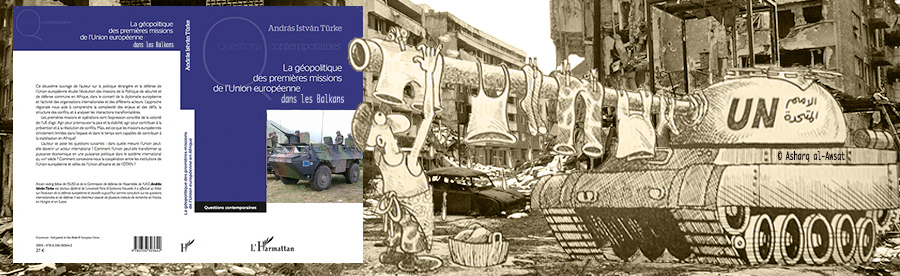
We are looking for sponsors for the English translation of these books, please contact turkeandras(at)gmail(dot)com