
You are here
Feed aggregator
Press release - Press conference: European Democracy Shield findings and recommendations
Following the vote on the report of the Special Committee on the European Democracy Shield, the rapporteur and the committee chair will brief journalists on its findings.
Special Committee on the European Democracy Shield
Source : © European Union, 2026 - EP
Special Committee on the European Democracy Shield
Source : © European Union, 2026 - EP
Categories: Európai Unió : hírek magyarul
Press release - Press conference: European Democracy Shield findings and recommendations
Following the vote on the report of the Special Committee on the European Democracy Shield, the rapporteur and the committee chair will brief journalists on its findings.
Special Committee on the European Democracy Shield
Source : © European Union, 2026 - EP
Special Committee on the European Democracy Shield
Source : © European Union, 2026 - EP
Categories: European Union
Press release - Press conference: European Democracy Shield findings and recommendations
Following the vote on the report of the Special Committee on the European Democracy Shield, the rapporteur and the committee chair will brief journalists on its findings.
Special Committee on the European Democracy Shield
Source : © European Union, 2026 - EP
Special Committee on the European Democracy Shield
Source : © European Union, 2026 - EP
Categories: European Union
A harmadik angol–holland háború 02.
Míg Hollandia a tengereken bármilyen ellenséggel, akár az egyesült angol–francia hajóhaddal szemben is a siker reményében tudta felvenni a küzdelmet, addig a szárazföldön a francia hadsereggel szemben teljesen reménytelennek látszott a helyzete. A Hollandia elleni támadásban közvetlenül 120 ezer francia katona vett részt, de ha ezekhez hozzászámítjuk a hadtápot, a várak helyőrségét, és a többi határon tartalékban álló egységeket, akkor azt látjuk, hogy Franciaország több mint 300 ezer katonát volt képes mozgósítani, ami Európa messze legnagyobb hadserege volt. A mennyiség mellé minőség is társult, ez a hatalmas hadsereg nem csupán létszámát tekintve volt a legnagyobb, hanem felszerelését, kiképzését, és ellátását tekintve is a legjobbak közé tartozott, nem is beszélve arról, hogy kiválóan képzett tisztek irányították, köztük a kor valószínűleg két legkiválóbb hadvezére, Turenne és Condé. A velük szemben álló holland hadsereg összlétszáma alig haladta meg a 80 ezret, és ebben már benne volt az erődök helyőrsége is. Ütközetben a hollandok alig húszezer katonát tudtak volna csak felvonultatni a franciák ellen.
Categories: Biztonságpolitika
RD Congo : comment les soignants luttent contre le virus Ebola ?
Depuis un peu plus d’un mois, la République démocratique du Congo est confrontée à la 17ᵉ épidémie d’Ebola de son histoire. Face à cette nouvelle souche du virus, aucun vaccin n’est encore disponible. Le bilan est déjà très lourd : plus de 200 morts. Nos équipes se sont rendues à Bunia, chef-lieu de la province de l’Ituri et épicentre de l’épidémie. Sur place, médecins et infirmiers racontent leur combat quotidien.
Categories: Afrique
Press release - EP leaders visit Dublin ahead of the Irish EU presidency
European Parliament President Roberta Metsola and political group leaders will visit Dublin to prepare for the upcoming Irish presidency of the Council of the EU.
Source : © European Union, 2026 - EP
Source : © European Union, 2026 - EP
Categories: Union européenne
Press release - EP leaders visit Dublin ahead of the Irish EU presidency
European Parliament President Roberta Metsola and political group leaders will visit Dublin to prepare for the upcoming Irish presidency of the Council of the EU.
Source : © European Union, 2026 - EP
Source : © European Union, 2026 - EP
Categories: Europäische Union
Press release - EP leaders visit Dublin ahead of the Irish EU presidency
European Parliament President Roberta Metsola and political group leaders will visit Dublin to prepare for the upcoming Irish presidency of the Council of the EU.
Source : © European Union, 2026 - EP
Source : © European Union, 2026 - EP
Categories: Európai Unió : hírek magyarul
Press release - EP leaders visit Dublin ahead of the Irish EU presidency
European Parliament President Roberta Metsola and political group leaders will visit Dublin to prepare for the upcoming Irish presidency of the Council of the EU.
Source : © European Union, 2026 - EP
Source : © European Union, 2026 - EP
Categories: European Union
Press release - EP leaders visit Dublin ahead of the Irish EU presidency
European Parliament President Roberta Metsola and political group leaders will visit Dublin to prepare for the upcoming Irish presidency of the Council of the EU.
Source : © European Union, 2026 - EP
Source : © European Union, 2026 - EP
Categories: European Union
Sonko sur France 24, attaque au Niger, progression d'Ebola en RD Congo : l'hebdo Afrique
Categories: Afrique
Entwurf der Tagesordnung - Mittwoch, 24. Juni 2026 - Donnerstag, 25. Juni 2026 - PE789.949v01-00 - Ausschuss für auswärtige Angelegenheiten
Quelle : © Europäische Union, 2026 - EP
Categories: Europäische Union
Tax expenditures country report: Switzerland
Tax expenditures (TEs) constitute a key instrument in Swiss fiscal policy. Although they are widely used at both the federal and cantonal levels to pursue economic, social, and environmental objectives, their fiscal cost, effectiveness, and distributional consequences remain only partially documented. This report reviews the current state of TE reporting, estimation, evaluation, and reform in Switzerland.
The available evidence suggests that annual revenue forgone from federal TEs amounts to more than CHF 24 billion. However, this figure should be interpreted with great caution. It is based on outdated and incomplete information and likely represents a lower-bound estimate of the true fiscal cost of federal TEs. The latest comprehensive federal TE report was published by the Federal Tax Administration (FTA) in 2011, while many of the underlying revenue forgone estimates were themselves derived from an even older study conducted by the FTA in 2009 using tax return data from the canton of Bern and extrapolated to the rest of the country. More recently, the State Secretariat for Economic Affairs (SECO) published a combination of aggregate and provision-level estimates for 2019 in its 2021 report on the “State Footprint”. The figures included new estimates for some TE provisions, namely for TE granted through the mineral oil tax and further excise taxes as well as the vehicle tax and the national road tax. Yet, most of the data was based on the estimates published in 2011. The report estimated the overall yearly revenue forgone stemming from the use of TEs at more than CHF 24 billion.
The 2011 report provides a detailed discussion of the benchmark classification of TE provisions used in Switzerland. The definition of the benchmark tax system is key for TE policy-making as TEs are defined as deviations from the reference or benchmark tax system. Interestingly, and unlike most of the countries worldwide that rely primarily on existing legislation, the benchmark tax system (BTS) for direct taxes in Switzerland is defined based on two theoretically grounded benchmarks: one based on income and an alternative one based consumption.
The lack of reliable and up-to-date information is particularly concerning given the legal framework governing subsidies and TEs. Article 7(g) of the Federal Act on Financial Aids and Compensation Payments (Subsidies Act, SubA) establishes that, in principle, the use of TEs should be avoided. In its 1986 dispatch, the Federal Council explicitly warned that TEs can undermine tax equity, reduce democratic oversight, and escape systematic scrutiny because their fiscal implications are often difficult to quantify. On this note, Article 5 of the SubA requires the federal government to report on TEs every six years as part of its broader subsidy reporting obligations. This requirement has not been fulfilled. The issue has been repeatedly noted by the Federal Council, Parliament, and the Swiss Federal Audit Office (SFAO) and yet, a regular and institutionalized reporting framework has still not been established.
The current estimate of more than CHF 24 billion in TEs on the federal level does not account for the fiscal cost of cantonal TEs. Indeed, at the subnational level, reporting is even more limited with only two significant estimation exercises: a 2011 study conducted by the FTA on personal income-related TEs in the canton of Zug, and a 2025 review of personal income tax (PIT) related TEs published by the canton of Zürich. No canton has established a recurring TE reporting framework. Furthermore, no federal or cantonal estimation exercise currently provides estimates of TEs granted through corporate income tax (CIT), despite the growing importance of tax incentives in the CIT system.
Based on the limited available data from 2011, one can observe that the composition of Swiss TEs is highly concentrated. The ten largest federal provisions account for approximately CHF 16.1 billion, or roughly 63 percent of total reported federal revenue forgone. The largest single provision is the deduction for mandatory second-pillar pension contributions under PIT, estimated at CHF 3.5 billion annually. Other major provisions include the reduced VAT rate on food, plants, and printed products (CHF 2.2 billion), VAT exemptions for real estate transactions and rentals (CHF 2.0 billion), and VAT exemptions for social and health services (CHF 1.9 billion).
Beyond transparency concerns, the absence of robust information undermines the evaluation of TE effectiveness. Switzerland lags significantly behind international standards in this area. There is currently no formal TE evaluation framework providing guidance on ex-ante assessments, ex post evaluations, governance arrangements, or data-sharing procedures. As a result, policymakers often lack the evidence necessary to determine whether TEs represent value for money and achieve their intended objectives; or are ineffective, too costly or generate unintended distributional and economic effects. The combination of weak reporting practices and limited access to administrative tax data has contributed to a striking lack of official ex-post evaluations.
The situation is somewhat more encouraging regarding ex ante assessments. Federal institutions regularly prepare ad hoc analyses in response to parliamentary requests and legislative initiatives. These assessments frequently provide valuable information on the expected fiscal and economic effects of proposed TE reforms and play an important role in informing political debate.
TEs remain high-up in the political debate and reform agendas. Recent years have seen numerous legislative initiatives involving reduced VAT rates, PIT deductions, inheritance and gift tax exemptions, and CIT incentives. Examples include the extension of the lower VAT rate for accommodation services until 2035 (just voted down by the National Council and now with the Council of States), repeated debates on the deductibility of childcare expenses and Pillar 3a contributions, and discussions surrounding cantonal inheritance and gift tax exemptions. In the CIT field, the introduction of patent boxes and research and development (R&D) super-deductions at the cantonal level illustrates the dynamics of TE policy-making involving different tiers of government as this has been triggered by the Federal Act on Tax Reform and AHV Financing (TRAF).
Peter Hongler is a professor of tax law at the University of St. Gallen.
Agustin Redonda is a Senior Fellow with the Council on Economic Policies (CEP), where he leads CEP’s work on
tax expenditures and tax incentives. He is also the co-founder and co-director of the Tax Expenditures Lab, which
hosts the Global Tax Expenditures Database (GTED) and the Global Tax Expenditures Transparency Index (GTETI).
Categories: Diplomacy & Defense Think Tank News
Tax expenditures country report: Switzerland
Tax expenditures (TEs) constitute a key instrument in Swiss fiscal policy. Although they are widely used at both the federal and cantonal levels to pursue economic, social, and environmental objectives, their fiscal cost, effectiveness, and distributional consequences remain only partially documented. This report reviews the current state of TE reporting, estimation, evaluation, and reform in Switzerland.
The available evidence suggests that annual revenue forgone from federal TEs amounts to more than CHF 24 billion. However, this figure should be interpreted with great caution. It is based on outdated and incomplete information and likely represents a lower-bound estimate of the true fiscal cost of federal TEs. The latest comprehensive federal TE report was published by the Federal Tax Administration (FTA) in 2011, while many of the underlying revenue forgone estimates were themselves derived from an even older study conducted by the FTA in 2009 using tax return data from the canton of Bern and extrapolated to the rest of the country. More recently, the State Secretariat for Economic Affairs (SECO) published a combination of aggregate and provision-level estimates for 2019 in its 2021 report on the “State Footprint”. The figures included new estimates for some TE provisions, namely for TE granted through the mineral oil tax and further excise taxes as well as the vehicle tax and the national road tax. Yet, most of the data was based on the estimates published in 2011. The report estimated the overall yearly revenue forgone stemming from the use of TEs at more than CHF 24 billion.
The 2011 report provides a detailed discussion of the benchmark classification of TE provisions used in Switzerland. The definition of the benchmark tax system is key for TE policy-making as TEs are defined as deviations from the reference or benchmark tax system. Interestingly, and unlike most of the countries worldwide that rely primarily on existing legislation, the benchmark tax system (BTS) for direct taxes in Switzerland is defined based on two theoretically grounded benchmarks: one based on income and an alternative one based consumption.
The lack of reliable and up-to-date information is particularly concerning given the legal framework governing subsidies and TEs. Article 7(g) of the Federal Act on Financial Aids and Compensation Payments (Subsidies Act, SubA) establishes that, in principle, the use of TEs should be avoided. In its 1986 dispatch, the Federal Council explicitly warned that TEs can undermine tax equity, reduce democratic oversight, and escape systematic scrutiny because their fiscal implications are often difficult to quantify. On this note, Article 5 of the SubA requires the federal government to report on TEs every six years as part of its broader subsidy reporting obligations. This requirement has not been fulfilled. The issue has been repeatedly noted by the Federal Council, Parliament, and the Swiss Federal Audit Office (SFAO) and yet, a regular and institutionalized reporting framework has still not been established.
The current estimate of more than CHF 24 billion in TEs on the federal level does not account for the fiscal cost of cantonal TEs. Indeed, at the subnational level, reporting is even more limited with only two significant estimation exercises: a 2011 study conducted by the FTA on personal income-related TEs in the canton of Zug, and a 2025 review of personal income tax (PIT) related TEs published by the canton of Zürich. No canton has established a recurring TE reporting framework. Furthermore, no federal or cantonal estimation exercise currently provides estimates of TEs granted through corporate income tax (CIT), despite the growing importance of tax incentives in the CIT system.
Based on the limited available data from 2011, one can observe that the composition of Swiss TEs is highly concentrated. The ten largest federal provisions account for approximately CHF 16.1 billion, or roughly 63 percent of total reported federal revenue forgone. The largest single provision is the deduction for mandatory second-pillar pension contributions under PIT, estimated at CHF 3.5 billion annually. Other major provisions include the reduced VAT rate on food, plants, and printed products (CHF 2.2 billion), VAT exemptions for real estate transactions and rentals (CHF 2.0 billion), and VAT exemptions for social and health services (CHF 1.9 billion).
Beyond transparency concerns, the absence of robust information undermines the evaluation of TE effectiveness. Switzerland lags significantly behind international standards in this area. There is currently no formal TE evaluation framework providing guidance on ex-ante assessments, ex post evaluations, governance arrangements, or data-sharing procedures. As a result, policymakers often lack the evidence necessary to determine whether TEs represent value for money and achieve their intended objectives; or are ineffective, too costly or generate unintended distributional and economic effects. The combination of weak reporting practices and limited access to administrative tax data has contributed to a striking lack of official ex-post evaluations.
The situation is somewhat more encouraging regarding ex ante assessments. Federal institutions regularly prepare ad hoc analyses in response to parliamentary requests and legislative initiatives. These assessments frequently provide valuable information on the expected fiscal and economic effects of proposed TE reforms and play an important role in informing political debate.
TEs remain high-up in the political debate and reform agendas. Recent years have seen numerous legislative initiatives involving reduced VAT rates, PIT deductions, inheritance and gift tax exemptions, and CIT incentives. Examples include the extension of the lower VAT rate for accommodation services until 2035 (just voted down by the National Council and now with the Council of States), repeated debates on the deductibility of childcare expenses and Pillar 3a contributions, and discussions surrounding cantonal inheritance and gift tax exemptions. In the CIT field, the introduction of patent boxes and research and development (R&D) super-deductions at the cantonal level illustrates the dynamics of TE policy-making involving different tiers of government as this has been triggered by the Federal Act on Tax Reform and AHV Financing (TRAF).
Peter Hongler is a professor of tax law at the University of St. Gallen.
Agustin Redonda is a Senior Fellow with the Council on Economic Policies (CEP), where he leads CEP’s work on
tax expenditures and tax incentives. He is also the co-founder and co-director of the Tax Expenditures Lab, which
hosts the Global Tax Expenditures Database (GTED) and the Global Tax Expenditures Transparency Index (GTETI).
Categories: Diplomacy & Defense Think Tank News
Tax expenditures country report: Switzerland
Tax expenditures (TEs) constitute a key instrument in Swiss fiscal policy. Although they are widely used at both the federal and cantonal levels to pursue economic, social, and environmental objectives, their fiscal cost, effectiveness, and distributional consequences remain only partially documented. This report reviews the current state of TE reporting, estimation, evaluation, and reform in Switzerland.
The available evidence suggests that annual revenue forgone from federal TEs amounts to more than CHF 24 billion. However, this figure should be interpreted with great caution. It is based on outdated and incomplete information and likely represents a lower-bound estimate of the true fiscal cost of federal TEs. The latest comprehensive federal TE report was published by the Federal Tax Administration (FTA) in 2011, while many of the underlying revenue forgone estimates were themselves derived from an even older study conducted by the FTA in 2009 using tax return data from the canton of Bern and extrapolated to the rest of the country. More recently, the State Secretariat for Economic Affairs (SECO) published a combination of aggregate and provision-level estimates for 2019 in its 2021 report on the “State Footprint”. The figures included new estimates for some TE provisions, namely for TE granted through the mineral oil tax and further excise taxes as well as the vehicle tax and the national road tax. Yet, most of the data was based on the estimates published in 2011. The report estimated the overall yearly revenue forgone stemming from the use of TEs at more than CHF 24 billion.
The 2011 report provides a detailed discussion of the benchmark classification of TE provisions used in Switzerland. The definition of the benchmark tax system is key for TE policy-making as TEs are defined as deviations from the reference or benchmark tax system. Interestingly, and unlike most of the countries worldwide that rely primarily on existing legislation, the benchmark tax system (BTS) for direct taxes in Switzerland is defined based on two theoretically grounded benchmarks: one based on income and an alternative one based consumption.
The lack of reliable and up-to-date information is particularly concerning given the legal framework governing subsidies and TEs. Article 7(g) of the Federal Act on Financial Aids and Compensation Payments (Subsidies Act, SubA) establishes that, in principle, the use of TEs should be avoided. In its 1986 dispatch, the Federal Council explicitly warned that TEs can undermine tax equity, reduce democratic oversight, and escape systematic scrutiny because their fiscal implications are often difficult to quantify. On this note, Article 5 of the SubA requires the federal government to report on TEs every six years as part of its broader subsidy reporting obligations. This requirement has not been fulfilled. The issue has been repeatedly noted by the Federal Council, Parliament, and the Swiss Federal Audit Office (SFAO) and yet, a regular and institutionalized reporting framework has still not been established.
The current estimate of more than CHF 24 billion in TEs on the federal level does not account for the fiscal cost of cantonal TEs. Indeed, at the subnational level, reporting is even more limited with only two significant estimation exercises: a 2011 study conducted by the FTA on personal income-related TEs in the canton of Zug, and a 2025 review of personal income tax (PIT) related TEs published by the canton of Zürich. No canton has established a recurring TE reporting framework. Furthermore, no federal or cantonal estimation exercise currently provides estimates of TEs granted through corporate income tax (CIT), despite the growing importance of tax incentives in the CIT system.
Based on the limited available data from 2011, one can observe that the composition of Swiss TEs is highly concentrated. The ten largest federal provisions account for approximately CHF 16.1 billion, or roughly 63 percent of total reported federal revenue forgone. The largest single provision is the deduction for mandatory second-pillar pension contributions under PIT, estimated at CHF 3.5 billion annually. Other major provisions include the reduced VAT rate on food, plants, and printed products (CHF 2.2 billion), VAT exemptions for real estate transactions and rentals (CHF 2.0 billion), and VAT exemptions for social and health services (CHF 1.9 billion).
Beyond transparency concerns, the absence of robust information undermines the evaluation of TE effectiveness. Switzerland lags significantly behind international standards in this area. There is currently no formal TE evaluation framework providing guidance on ex-ante assessments, ex post evaluations, governance arrangements, or data-sharing procedures. As a result, policymakers often lack the evidence necessary to determine whether TEs represent value for money and achieve their intended objectives; or are ineffective, too costly or generate unintended distributional and economic effects. The combination of weak reporting practices and limited access to administrative tax data has contributed to a striking lack of official ex-post evaluations.
The situation is somewhat more encouraging regarding ex ante assessments. Federal institutions regularly prepare ad hoc analyses in response to parliamentary requests and legislative initiatives. These assessments frequently provide valuable information on the expected fiscal and economic effects of proposed TE reforms and play an important role in informing political debate.
TEs remain high-up in the political debate and reform agendas. Recent years have seen numerous legislative initiatives involving reduced VAT rates, PIT deductions, inheritance and gift tax exemptions, and CIT incentives. Examples include the extension of the lower VAT rate for accommodation services until 2035 (just voted down by the National Council and now with the Council of States), repeated debates on the deductibility of childcare expenses and Pillar 3a contributions, and discussions surrounding cantonal inheritance and gift tax exemptions. In the CIT field, the introduction of patent boxes and research and development (R&D) super-deductions at the cantonal level illustrates the dynamics of TE policy-making involving different tiers of government as this has been triggered by the Federal Act on Tax Reform and AHV Financing (TRAF).
Peter Hongler is a professor of tax law at the University of St. Gallen.
Agustin Redonda is a Senior Fellow with the Council on Economic Policies (CEP), where he leads CEP’s work on
tax expenditures and tax incentives. He is also the co-founder and co-director of the Tax Expenditures Lab, which
hosts the Global Tax Expenditures Database (GTED) and the Global Tax Expenditures Transparency Index (GTETI).
Categories: Diplomacy & Defense Think Tank News, European Union
Skelette vor dem Brandenburger Tor und gefährliche Standortdaten
Was passiert mit den Standortdaten die meine Apps speichern? Und welche Desinformationskampagnen nutzt Russland um die Politik in westlichen Staaten zu beeinflussen? In dieser Folge Cybernation geht es um den Handel mit Standortdaten und die Frage, warum solche Daten nicht nur ein Datenschutzproblem, sondern auch ein Risiko für die nationale Sicherheit sein können. Außerdem schauen wir auf aktuelle Recherchen zu russischen Desinformationskampagnen in Europa: Was haben Plastikskelette vor dem Brandenburger Tor mit antisemitischen Schmierereien in Frankreich zu tun? Und was erhofft sich Russland von den Aktionen?
Categories: Diplomacy & Defense Think Tank News
Entwurf der Tagesordnung - Montag, 22. Juni 2026 - Dienstag, 23. Juni 2026 - PE789.939v02-00 - Ausschuss für Sicherheit und Verteidigung
Quelle : © Europäische Union, 2026 - EP
Categories: Europäische Union
Modi-Trump Meet Is Unlikely to Reset Relations Torn Over the Past Year
There are increasing questions over the reliability of the United States as a strategic partner.
Categories: Diplomacy & Crisis News
Von Teheran ausmanövriert – Washingtons »Friedensvereinbarung« ist teuer erkauft
Iran hat zwei Atommächte besiegt – so Außenamtssprecher Ismaeil Baghai unmittelbar nach Unterzeichnung der Rahmenvereinbarung, durch die der Krieg zwischen Iran, Israel und den USA beendet werden soll. Zwar steht die Erarbeitung eines endgültigen Abkommens noch aus, doch schon jetzt sieht sich die Islamische Republik als Gewinner. Sollte das Memorandum of Understanding (MoU) Bestand haben, hätte Teheran seine zentralen Kriegsziele weitgehend erreicht.
Ein Frieden nach iranischem DrehbuchTeheran ist in den Konflikt nicht unvorbereitet eingetreten. Seit dem »12 Tage Krieg« 2025 wurden Raketen- und Drohnenkapazitäten erweitert, Kommandostrukturen dezentralisiert und Entscheidungsbefugnisse an untere Ränge delegiert, um Enthauptungsschläge zu überstehen. Parallel sah der Sicherheitsapparat detaillierte Eskalationsoptionen vor. Die Kriegsstrategie umfasste sofortige Vergeltungsschläge gegen Ziele in der Nachbarschaft und eine faktische Schließung der Straße von Hormus.
Davon versprach sich die iranische Führung nicht nur, die politischen und wirtschaftlichen Kosten weit über die Region hinaus in die Höhe zu treiben. Sie sah in der Meerenge im Persischen Golf auch eine Möglichkeit, den Fokus von Verhandlungen zu verschieben. Denn noch bevor die USA ein einziges Problem mit Iran lösen konnten, stellte Teheran sie mit Hormus vor ein weiteres. Nicht das Nuklearprogramm, sondern die Sicherheit der Seewege sollte nun zuerst auf den Verhandlungstisch. Irans ballistische Raketen und regionale Milizen wurden gleich ganz von der Agenda gestrichen.
Oberstes Ziel blieb bei all dem der Systemerhalt. Noch im Januar waren Massen gegen die Islamische Republik auf die Straße gegangen, bevor die Proteste gewaltsam niedergeschlagen wurden. Inzwischen haben die Anhänger des Systems ihre Präsenz verstärkt. Während die USA und Israel zu Beginn noch offen mit einem Regimewechsel drohten, wich die Rhetorik rasch pragmatischen Kriegszielen. Teheran hingegen hielt Kurs: Repression verschärfen, Zugeständnisse meiden und die Gegenseite politisch ermüden.
Der iranische Plan scheint aufzugehen. Teheran erhält Genehmigungen für Ölexporte, mittelfristig Zugriff auf eingefrorene Konten und die Aussicht auf weitere, umfassende Sanktionserleichterungen. Im Gegenzug muss es vor allem die sichere Schifffahrt durch Hormus wieder gewährleisten. Das MoU löst damit in erster Linie Probleme, die durch den Krieg erst geschaffen wurden.
Und Europa hatte doch rechtDabei hatte Trump in seiner ersten Amtszeit beteuert, mit einer Politik des maximalen Drucks ein besseres Ergebnis als die Atomvereinbarung von 2015 erzielen zu können. Zu viel Geld habe Iran erhalten, zu wenig Zugeständnisse gemacht. Die Europäer blieben skeptisch und hielten auch dann noch an der Übereinkunft fest, als Trump sie längst verlassen hatte. Dem schrittweisen Zerfall der Vereinbarung hatten sie am Ende dennoch nur wenig entgegenzusetzen.
Bis heute bleibt das Atomabkommen die weitreichendste Sicherheitsübereinkunft, die je mit Iran erzielt wurde. Die Islamische Republik musste sich einem engmaschigen Kontroll- und Verifikationsregime fügen, mehr als 12.000 Zentrifugen abbauen, Anreicherungsaktivitäten minimieren und die gesamte Infrastruktur so weit zurückbauen, dass mindestens ein Jahr nötig gewesen wäre, um auch nur Spaltmaterial produzieren zu können. Vom Bau einer Atombombe war Iran damit weit entfernt. Vor allem aber musste Teheran monatelang in Vorleistung gehen, bevor eine einzige Sanktion ausgesetzt wurde.
Dagegen profitiert die Islamische Republik im Rahmen des MoU schon jetzt von Sanktionserleichterungen ohne Beschränkung ihres Atomprogramms. Was mit dem 440 Kilogramm schweren Bestand an hoch angereichertem Uran geschehen soll, das sich noch immer im Land befindet, oder wann Atomanlagen wieder umfassender internationaler Kontrolle unterworfen werden, ist noch zu verhandeln. Die nächsten 60 Tage sollen hier Klarheit bringen – ein Zeitfenster, das keine substanziellen Ergebnisse erwarten lässt und in dem Verhandlungserfolge durch anhaltende israelische Angriffe im Libanon unterminiert werden könnten.
Die Europäer stehen schon zu lange an der Seitenlinie. Das MoU zeigt, was passiert, wenn sie dort verharren. Sie verfügen über das technische Know-how und die diplomatische Erfahrung, um tragfähige Pakete für Inspektionen, technische Begrenzungen und realistische Zeitfenster zu schnüren. Jetzt braucht es die Entschlossenheit, diese auch auf den Tisch zu legen.
Categories: Diplomacy & Defense Think Tank News
Que prévoit l'accord entre les États-Unis et l'Iran et qu'est-ce qui pourrait le faire dérailler ?
L'accord n'a pas encore été officiellement signé, mais l'attention se porte déjà sur les principaux défis à venir : la campagne d'Israël au Liban, le programme nucléaire iranien et le détroit d'Ormuz.
Categories: Afrique
Pages


© 2012-2018 Europa Varietas Foundation © 2015-2018 Europa Varietas Association
www.europavarietas.org | info(@)europavarietas(dot)org | Switzerland


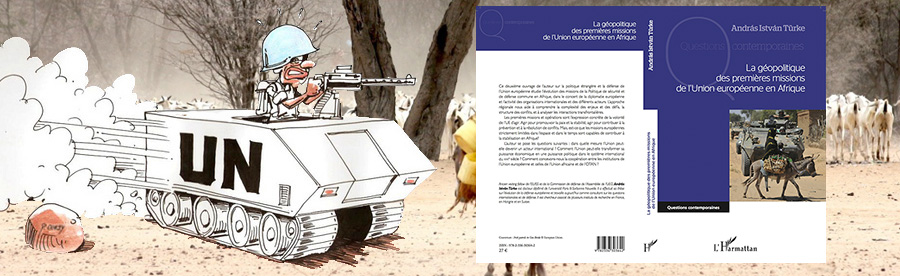
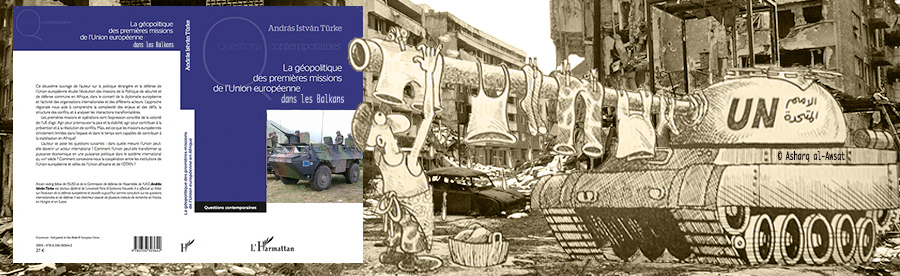
We are looking for sponsors for the English translation of these books, please contact turkeandras(at)gmail(dot)com